Horses
By: Lauren Grace
Table of Contents
Chapter 1: Tack
Chapter 2: Colors
Chapter 3: Care
Chapter 4: Lifespan
Chapter 5: Biggest & Smallest Horses
Chapter 1
                      Tack
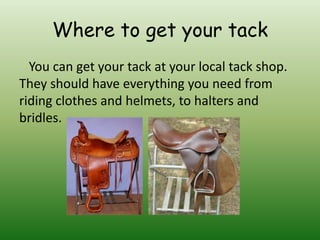
    Tack is what you use for riding equipment. Tack
includes; saddles, saddle pads, bridles, neck straps, and
halters. First, when you’re tacking up, of course you
brush your horse. You get a pad, check it for twigs or
rocks, and put it on. Make sure no mane is caught under
the pad, then get your saddle. As you’re putting on the
saddle, don’t just bang it on your horse’s back, gently
put it on. Fasten the girth. Then, get your bridle. Put
your thumb in your horse’s mouth if he/she doesn’t just
open his/her mouth. Gently press down, and slip the bit
in. Adjust the bridle, and walk your horse out to see if
there’s anything wrong with the saddle, tighten the
girth, and mount.
Where to get your tack
  You can get your tack at your local tack shop.
They should have everything you need from
riding clothes and helmets, to halters and
bridles.
Chapter 2
                 Colors
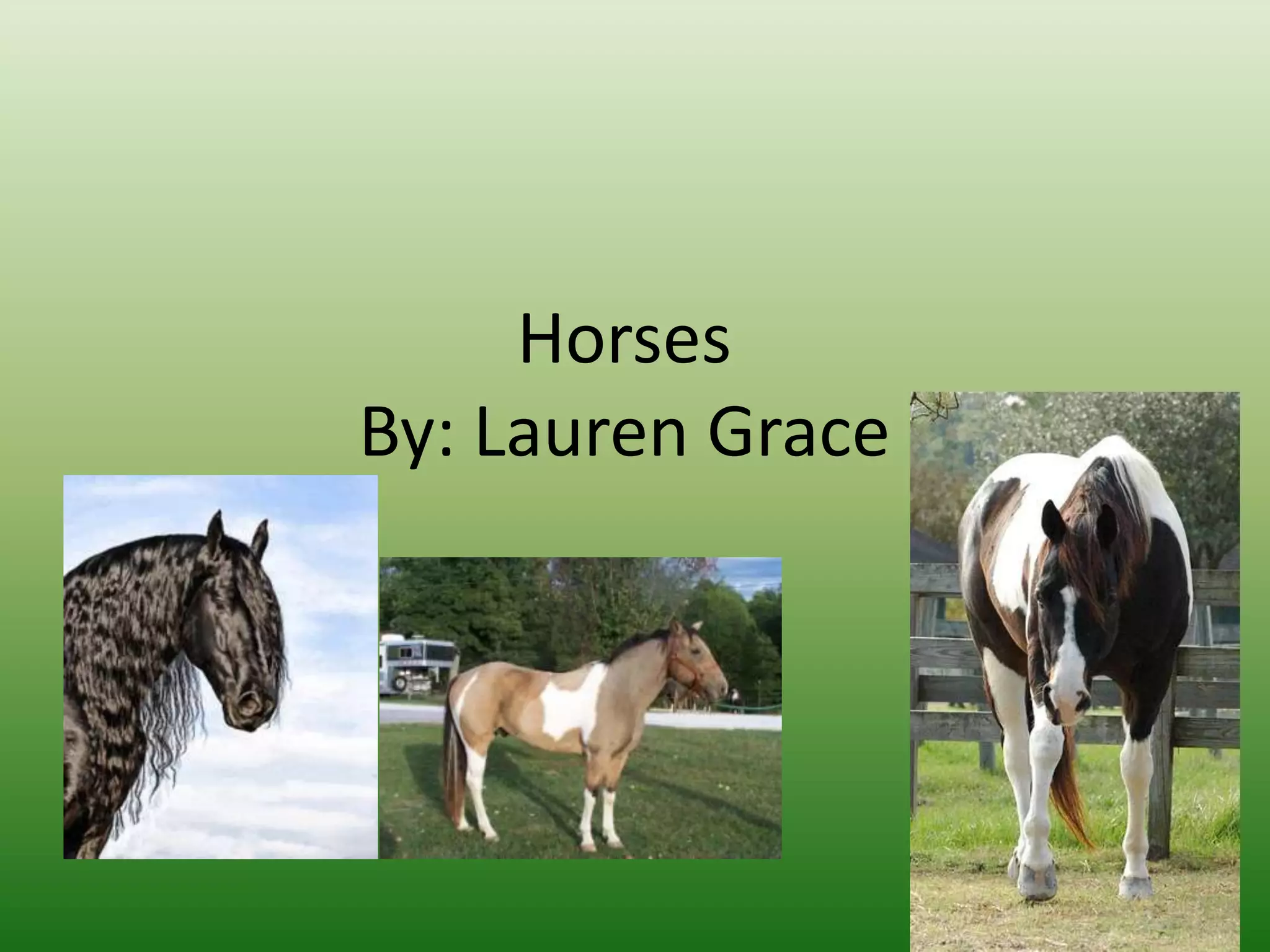
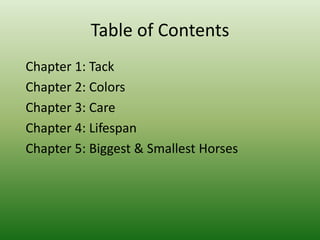
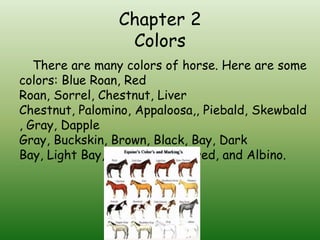
   There are many colors of horse. Here are some
colors: Blue Roan, Red
Roan, Sorrel, Chestnut, Liver
Chestnut, Palomino, Appaloosa,, Piebald, Skewbald
, Gray, Dapple
Gray, Buckskin, Brown, Black, Bay, Dark
Bay, Light Bay, Dun, Odd- Colored, and Albino.
Markings
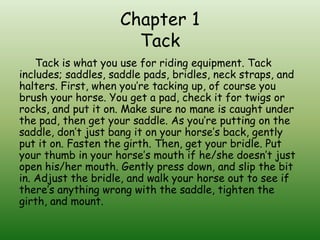
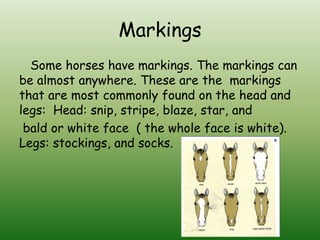
  Some horses have markings. The markings can
be almost anywhere. These are the markings
that are most commonly found on the head and
legs: Head: snip, stripe, blaze, star, and
 bald or white face ( the whole face is white).
Legs: stockings, and socks.
Chapter 3
                   Care
  Caring for a horse is a big responsibility. You
have to have at least one acre of land to have a
horse, and you need to have shelter for your
horse. Also, it would be best if your horse had a
stable mate, such as another horse, or a donkey.
Horses are herd animals, and they do not like to
be left alone.
Tools
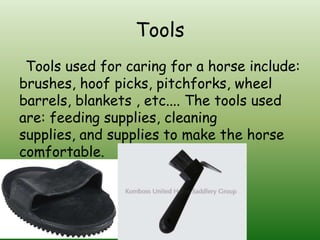
 Tools used for caring for a horse include:
brushes, hoof picks, pitchforks, wheel
barrels, blankets , etc.... The tools used
are: feeding supplies, cleaning
supplies, and supplies to make the horse
comfortable.
Chapter 4
                Lifespan
  Horses normally live to be about 30
years old. Some horses only live up to
their early 20’s. The oldest horse lived in
the 1800’s. It lived to be 62 years old. It
depends. Is your horse healthy? If you
want your horse to live up to an
impressive age, you need to take good
care of him/her.
Chapter 5
         Biggest & Smallest
 The biggest horse ever, was a shire, and
he got to 21 hands! The smallest horse’s
name is Thumbelina. She is so small, that
she sleeps in a dog house, and has a guard
dog companion. Even though she’s
small, she bosses the bigger horses
around, and has even faced down an
elephant.

Horses by Lauren Grace 3

  • 1.
  • 2.
    Table of Contents Chapter1: Tack Chapter 2: Colors Chapter 3: Care Chapter 4: Lifespan Chapter 5: Biggest & Smallest Horses
  • 3.
    Chapter 1 Tack Tack is what you use for riding equipment. Tack includes; saddles, saddle pads, bridles, neck straps, and halters. First, when you’re tacking up, of course you brush your horse. You get a pad, check it for twigs or rocks, and put it on. Make sure no mane is caught under the pad, then get your saddle. As you’re putting on the saddle, don’t just bang it on your horse’s back, gently put it on. Fasten the girth. Then, get your bridle. Put your thumb in your horse’s mouth if he/she doesn’t just open his/her mouth. Gently press down, and slip the bit in. Adjust the bridle, and walk your horse out to see if there’s anything wrong with the saddle, tighten the girth, and mount.
  • 4.
    Where to getyour tack You can get your tack at your local tack shop. They should have everything you need from riding clothes and helmets, to halters and bridles.
  • 5.
    Chapter 2 Colors There are many colors of horse. Here are some colors: Blue Roan, Red Roan, Sorrel, Chestnut, Liver Chestnut, Palomino, Appaloosa,, Piebald, Skewbald , Gray, Dapple Gray, Buckskin, Brown, Black, Bay, Dark Bay, Light Bay, Dun, Odd- Colored, and Albino.
  • 6.
    Markings Somehorses have markings. The markings can be almost anywhere. These are the markings that are most commonly found on the head and legs: Head: snip, stripe, blaze, star, and bald or white face ( the whole face is white). Legs: stockings, and socks.
  • 7.
    Chapter 3 Care Caring for a horse is a big responsibility. You have to have at least one acre of land to have a horse, and you need to have shelter for your horse. Also, it would be best if your horse had a stable mate, such as another horse, or a donkey. Horses are herd animals, and they do not like to be left alone.
  • 8.
    Tools Tools usedfor caring for a horse include: brushes, hoof picks, pitchforks, wheel barrels, blankets , etc.... The tools used are: feeding supplies, cleaning supplies, and supplies to make the horse comfortable.
  • 9.
    Chapter 4 Lifespan Horses normally live to be about 30 years old. Some horses only live up to their early 20’s. The oldest horse lived in the 1800’s. It lived to be 62 years old. It depends. Is your horse healthy? If you want your horse to live up to an impressive age, you need to take good care of him/her.
  • 10.
    Chapter 5 Biggest & Smallest The biggest horse ever, was a shire, and he got to 21 hands! The smallest horse’s name is Thumbelina. She is so small, that she sleeps in a dog house, and has a guard dog companion. Even though she’s small, she bosses the bigger horses around, and has even faced down an elephant.