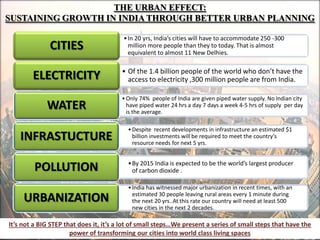
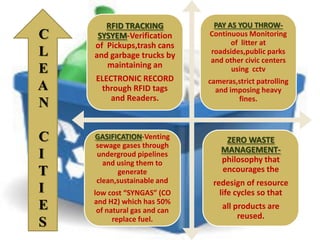
The document discusses solutions for improving urban infrastructure and sustainability in Indian cities. It notes that India's cities will need to accommodate hundreds of millions of new residents in the coming decades, putting strain on resources. It then presents several "small steps" that could be taken to transform cities, including promoting cycling and carpooling to reduce traffic, using algae lamps that absorb carbon dioxide, redeveloping slums through cooperation with residents, and generating fuel and electricity through waste management processes like algae biofuel production and sewage gasification. The document argues that while some solutions may not provide immediate results, together these measures could sustainably develop cities through better planning and resource management over the long run.