




WELCOME
The Neuroarchitecture of Aging and
the “Sensthetic” Response
Upali Nanda PhD, EDAC, Assoc. AIA, Director of Research,
HKS
Angela Lee AIA, ACHA, EDAC, LEED AP
Zhe Wang, PhD, RA, EDAC, LEED AP BD+C
CE Information
AIA - 23 Credit Hours available
 Have the room monitor scan your conference badge before leaving each session you
attend.
 Keep a copy of the AIA CEU form for your records
EDAC - 9 Credit Hours available
 Certified Sessions: T01, T02, T03, E02, E04, E08, E09, E11, E17, E18, E20, E21, E22, E23,
E24, E25, E26, E27, E28, E29, E31, E32, E41, E43, E44, E45.
 The pre-conference does not qualify for EDAC credit.
 It is the candidate’s responsibility to self-submit the credits online
via Castle Worldwide Inc. Renewal notices with login instructions will be
sent from Castle six months and three months prior to the candidate’s renewal date.
Interior Designers - 23 Credit Hours available
 Have your Verification Form STAMPED by the room monitor.
 This is the only proof of attendance that will be accepted as proof of completion
 This is a self-reporting system.
 Contact your interior design association that is responsible for monitoring mandatory
continuing education to fulfill membership requirements.
Reminders
 New this year attendees will be able to fill in a session evaluation via the mobile app,
please go to mobile app. Please take a moment to fill out the session survey, which
can be accessed via the Mobile App:
 Go to:
 Find this session in the agenda
 Click on the title to open the session
 Click on “Session Survey” to access the survey.
 To continue the conversation or to provide additional comments for this session, log
into the EFA Mobile App and search for this session. Post a comment in the
“CHATTER” section.
 To access this presentation, log on to the EFA Mobile App, click on the session title
under “Agenda” and the presentation will be located under “Collateral”.
 If you have CE questions, please refer to the program guide for specific instructions.
 If you were not scanned in for this session, please see the room monitor.
Session
Description
Neuroarchitecture is an emerging field. Understanding the aging brain
and the impact of aging on sensory systems is key to developing
responsive environments for the aging population. This presentation
will look at cutting-edge research in the field of neuroscience and
psycho-physiology and translate the research findings into design and
architectural language that can be widely applied, thereby translating
our “design response” that goes beyond the functional and the
aesthetic, to the “sensthetic.”
Session
Learning
Objectives
• Learn about the neuroscience literature on the aging brain.
• Learn about changes in the sensory systems and the link to brain
behavior.
• Explore how all senses should be taken into account to design for a
healthy brain.
• Learn about specific multisensory design strategies that could be
employed, regardless of type of setting, to respond to the aging
brain.
The
Aging
Brain
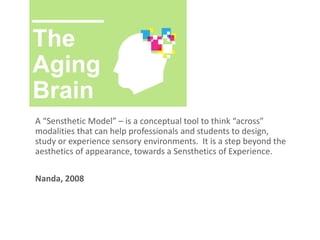
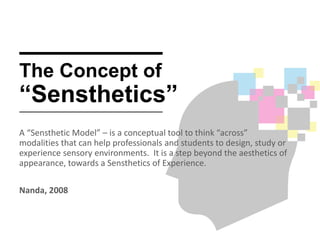
A “Sensthetic Model” – is a conceptual tool to think “across”
modalities that can help professionals and students to design,
study or experience sensory environments. It is a step beyond the
aesthetics of appearance, towards a Sensthetics of Experience.
Nanda, 2008
The
Aging
Brain
Aging is characterized by many changes
that are reflected in the body, the various
sensory systems, and most critically,
the brain itself.
The
Aging
Brain
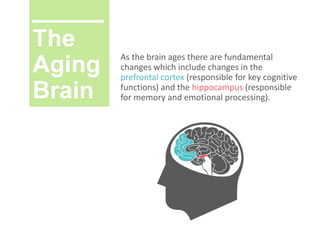
As the brain ages there are fundamental
changes which include changes in the
prefrontal cortex (responsible for key cognitive
functions) and the hippocampus (responsible
for memory and emotional processing).
The
Aging
Brain
The changes in the neurons and neurotransmitters, blood flow, and
development of new cells, reflects in the ability to learn new
things, remember names, perform complex tasks of attention etc.
The
Aging
Brain
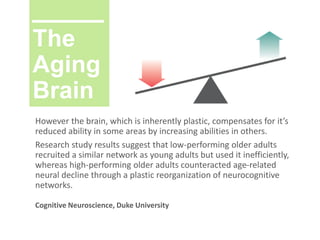
However the brain, which is inherently plastic, compensates for it’s
reduced ability in some areas by increasing abilities in others.
Research study results suggest that low-performing older adults
recruited a similar network as young adults but used it inefficiently,
whereas high-performing older adults counteracted age-related
neural decline through a plastic reorganization of neurocognitive
networks.
Cognitive Neuroscience, Duke University
The
Aging
Brain
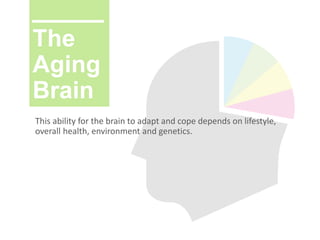
This ability for the brain to adapt and cope depends on lifestyle,
overall health, environment and genetics.
The
Aging
Brain
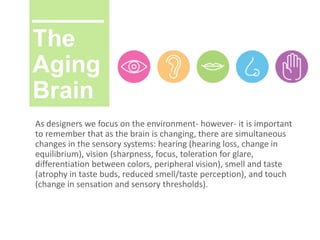
As designers we focus on the environment- however- it is important
to remember that as the brain is changing, there are simultaneous
changes in the sensory systems: hearing (hearing loss, change in
equilibrium), vision (sharpness, focus, toleration for glare,
differentiation between colors, peripheral vision), smell and taste
(atrophy in taste buds, reduced smell/taste perception), and touch
(change in sensation and sensory thresholds).
The
Aging
Brain
This implies that if we want to create environments for aging that
promote a healthy brain- and look at Neuroarchitecture as a field,
our “design response” must go beyond the functional and the
aesthetic, to the “sensthetic”.
The
Aging
Brain
In this presentation we will share findings from a literature review
on the aging brain and the aging changes in the senses. Work by
the NIH on this topic will serve as a foundation
• http://www.nia.nih.gov/alzheimers/publication/part-1-basics-healthy-
brain/changing-brain-healthy-aging
• http://www.nlm.nih.gov/medlineplus/ency/article/004013.htm
Aging
Changes
the
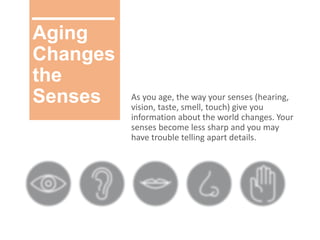
Senses As you age, the way your senses (hearing,
vision, taste, smell, touch) give you
information about the world changes. Your
senses become less sharp and you may
have trouble telling apart details.
Aging
Changes
the
Senses
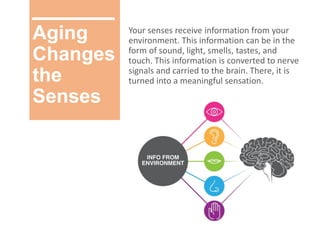
Your senses receive information from your
environment. This information can be in the
form of sound, light, smells, tastes, and
touch. This information is converted to nerve
signals and carried to the brain. There, it is
turned into a meaningful sensation.
Aging
Changes
the
Senses
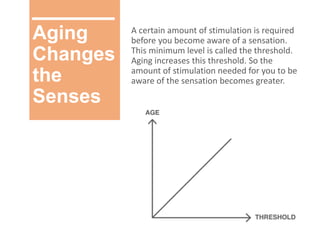
A certain amount of stimulation is required
before you become aware of a sensation.
This minimum level is called the threshold.
Aging increases this threshold. So the
amount of stimulation needed for you to be
aware of the sensation becomes greater.
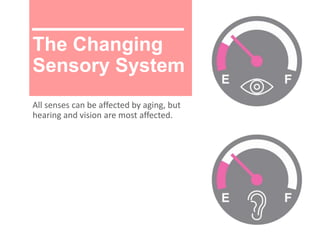
The Changing
Sensory System
All senses can be affected by aging, but
hearing and vision are most affected.
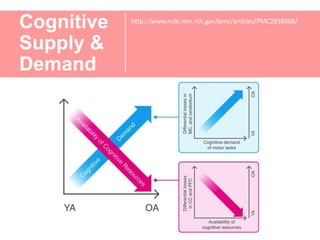
Cognitive
Supply &
Demand
http://www.ncbi.nlm.nih.gov/pmc/articles/PMC2838968/
Visual
Challenges
You may be less able to tolerate glare. Glare
such as from a shiny floor in a sunlit room
can make it difficult to get around indoors.
You may have trouble adapting to darkness
or bright light
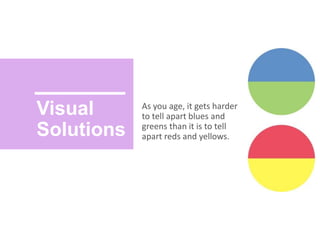
Visual
Solutions
As you age, it gets harder
to tell apart blues and
greens than it is to tell
apart reds and yellows.
Visual
Solutions
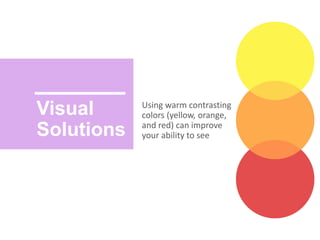
Using warm contrasting
colors (yellow, orange,
and red) can improve
your ability to see
Visual
Solutions
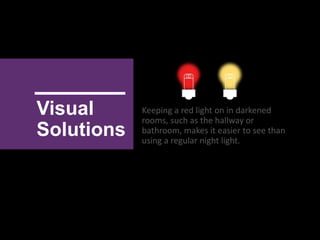
Keeping a red light on in darkened
rooms, such as the hallway or
bathroom, makes it easier to see than
using a regular night light.
Visual
Solutions
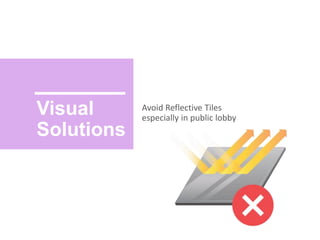
Avoid Reflective Tiles
especially in public lobby
Visual
Solutions
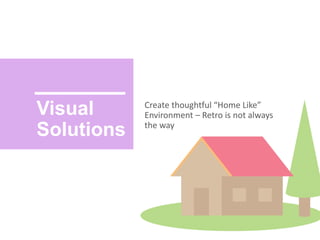
Create thoughtful “Home Like”
Environment – Retro is not always
the way
Visual
Solutions
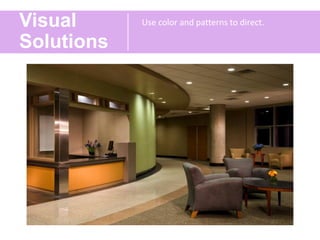
Use color and patterns to direct.
Visual
Solutions
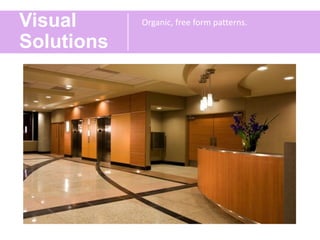
Organic, free form patterns.
Visual
Solutions
Use ceiling lights and different
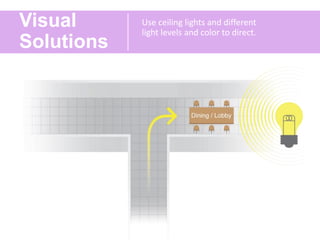
light levels and color to direct.
Auditory and Motor /
Balance Challenges
Our ears have two jobs. One is
hearing and the other is
maintaining balance.
As you age, structures inside the
ear start to change and their
functions decline. Your ability to
pick up sounds decreases. You
may also have problems
maintaining your balance as you
sit, stand, and walk.
Motor performance deficits for older adults
appear to be due to dysfunction of the central
and peripheral nervous systems as well as the
neuromuscular system. Motor performance
deficits include coordination difficulty
(Seidler et al., 2002), increased variability of
movement (Contreras-Vidal et al., 1998; Darling
et al., 1989), slowing of movement (Diggles-
Buckles, 1993), and difficulties with balance and
gait (Tang & Woollacott, 1996) in comparison to
young adults.
The Brain
And Balance
Gait and balance problems are of particular interest as
falls are a major source of injury and morbidity in older
adults: 20-30% of older adults who fall suffer moderate
to severe injuries that limit mobility and reduce quality of
life (Alexander et al., 1992).
Older adults exhibit greater spatial and temporal
movement variability, resulting in less consistent actions
as compared to young adults
(Contreras-Vidal et al., 1998; Cooke et al., 1989; Darling
et al., 1989).
The Brain
And Balance
Approximately one-third of community-dwelling older adults fall each
year; the rate is doubled in senior group dwellings (Gillespie et al., 2001;
Jensen et al., 2002).
Even without injury, falls may cause a loss of self-confidence and result
in reduced active behavior and increased dependency among older
adults (Gallagher et al., 2001). Falls have been identified by the elderly
as the most significant barrier to active behavior (Wilcox et al., 2003).
Risk for Falls
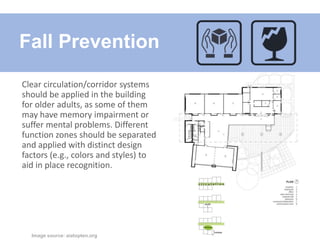
Clear circulation/corridor systems
should be applied in the building
for older adults, as some of them
may have memory impairment or
suffer mental problems. Different
function zones should be separated
and applied with distinct design
factors (e.g., colors and styles) to
aid in place recognition.
Fall Prevention
Image source: aiatopten.org
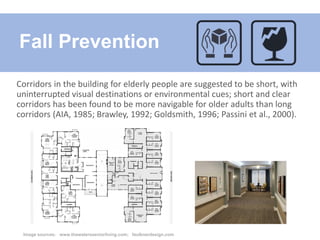
Corridors in the building for elderly people are suggested to be short, with
uninterrupted visual destinations or environmental cues; short and clear
corridors has been found to be more navigable for older adults than long
corridors (AIA, 1985; Brawley, 1992; Goldsmith, 1996; Passini et al., 2000).
Fall Prevention
Image sources: www.thewatersseniorliving.com; faulknerdesign.com
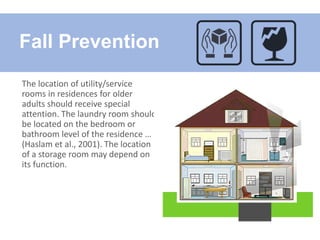
The location of utility/service
rooms in residences for older
adults should receive special
attention. The laundry room should
be located on the bedroom or
bathroom level of the residence …
(Haslam et al., 2001). The location
of a storage room may depend on
its function.
Fall Prevention
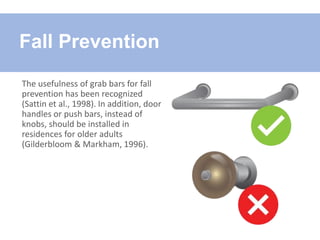
The usefulness of grab bars for fall
prevention has been recognized
(Sattin et al., 1998). In addition, door
handles or push bars, instead of
knobs, should be installed in
residences for older adults
(Gilderbloom & Markham, 1996).
Fall Prevention
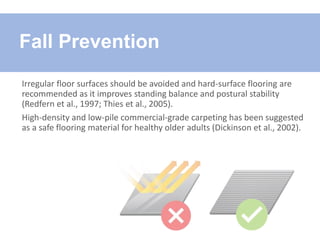
Irregular floor surfaces should be avoided and hard-surface flooring are
recommended as it improves standing balance and postural stability
(Redfern et al., 1997; Thies et al., 2005).
High-density and low-pile commercial-grade carpeting has been suggested
as a safe flooring material for healthy older adults (Dickinson et al., 2002).
Fall Prevention
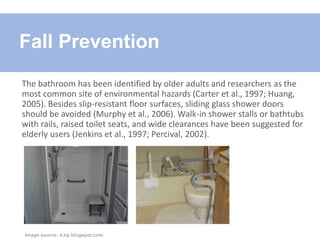
The bathroom has been identified by older adults and researchers as the
most common site of environmental hazards (Carter et al., 1997; Huang,
2005). Besides slip-resistant floor surfaces, sliding glass shower doors
should be avoided (Murphy et al., 2006). Walk-in shower stalls or bathtubs
with rails, raised toilet seats, and wide clearances have been suggested for
elderly users (Jenkins et al., 1997; Percival, 2002).
Fall Prevention
Image source: 4.bp.blogspot.com
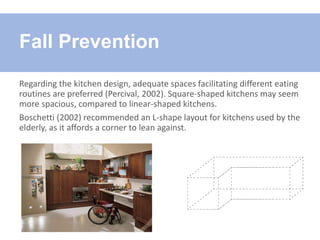
Regarding the kitchen design, adequate spaces facilitating different eating
routines are preferred (Percival, 2002). Square-shaped kitchens may seem
more spacious, compared to linear-shaped kitchens.
Boschetti (2002) recommended an L-shape layout for kitchens used by the
elderly, as it affords a corner to lean against.
Fall Prevention
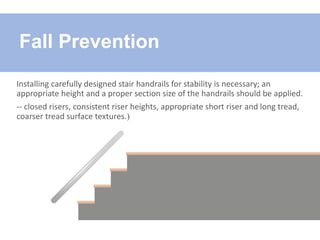
Installing carefully designed stair handrails for stability is necessary; an
appropriate height and a proper section size of the handrails should be applied.
-- closed risers, consistent riser heights, appropriate short riser and long tread,
coarser tread surface textures.)
Fall Prevention
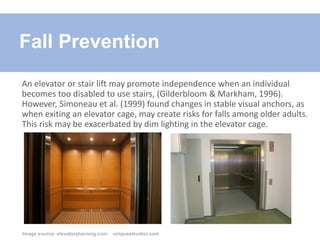
An elevator or stair lift may promote independence when an individual
becomes too disabled to use stairs, (Gilderbloom & Markham, 1996).
However, Simoneau et al. (1999) found changes in stable visual anchors, as
when exiting an elevator cage, may create risks for falls among older adults.
This risk may be exacerbated by dim lighting in the elevator cage.
Fall Prevention
Image source: elevatorplanning.com uniqueelevator.com
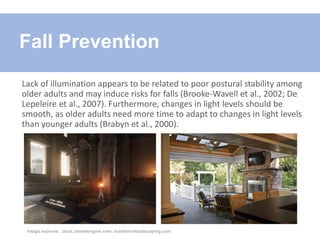
Lack of illumination appears to be related to poor postural stability among
older adults and may induce risks for falls (Brooke-Wavell et al., 2002; De
Lepeleire et al., 2007). Furthermore, changes in light levels should be
smooth, as older adults need more time to adapt to changes in light levels
than younger adults (Brabyn et al., 2000).
Fall Prevention
Image sources: docs.unrealengine.com; sundancelandscaping.com
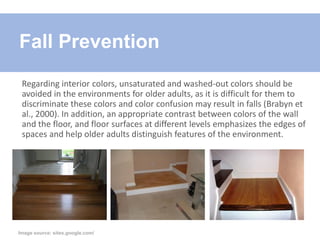
Regarding interior colors, unsaturated and washed-out colors should be
avoided in the environments for older adults, as it is difficult for them to
discriminate these colors and color confusion may result in falls (Brabyn et
al., 2000). In addition, an appropriate contrast between colors of the wall
and the floor, and floor surfaces at different levels emphasizes the edges of
spaces and help older adults distinguish features of the environment.
Fall Prevention
Image source: sites.google.com/
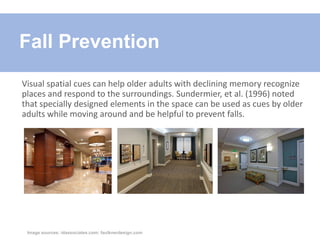
Visual spatial cues can help older adults with declining memory recognize
places and respond to the surroundings. Sundermier, et al. (1996) noted
that specially designed elements in the space can be used as cues by older
adults while moving around and be helpful to prevent falls.
Fall Prevention
Image sources: idassociates.com; faulknerdesign.com
Research by Perritt (2005) on carpet patterns showed that that high
contrasting patterns were associated with more incidents (stumbles,
reaching for handrail, veering, purposeful stepping, pausing, stopping) than
carpeting with low color contrast patterns. Bonato and Bubka (2011) found
that viewing high contrast static patterns (black and white squares laid out
in regular patterns on a rug) can induce motion sickness. In a recent
correlation study by Calkins (2012), it was found that vinyl flooring with
medium size pattern (1”- 6”) was associated with greater falls than no
pattern, small pattern (6”). These few studies suggest that floor glare and
pattern may contribute to falls. However, the underlying relationship, and
ideal condition for each, demands more research.”
Fall Prevention
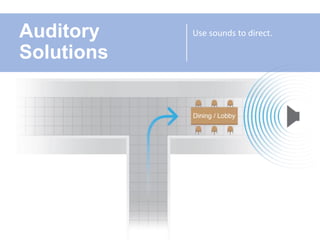
Auditory
Solutions
Use sounds to direct.
Tactile
Challenges
With aging, you may have reduced or changed sensations. These
changes can be related to decreased blood flow to the nerve
endings or to the spinal cord or brain. The spinal cord transmits
nerve signals and the brain interprets the signals.
After age 50, many people have reduced sensitivity to pain. Or
you may feel and recognize pain, but it does not bother you. For
example, when you are injured, you may not know how
severe the injury is because the pain does not trouble you.
Tactile
Challenges
Older persons can develop an increased sensitivity to light touch
because of thinner skin.
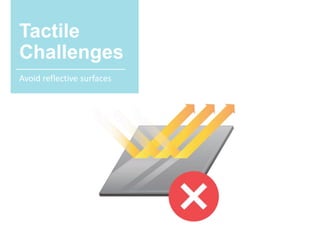
Tactile
Challenges
Avoid reflective surfaces
Tactile
Challenges
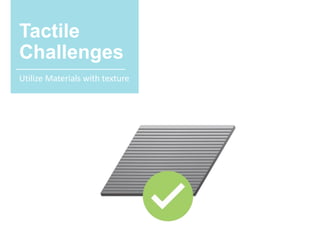
Utilize Materials with texture
Multi-Sensory
Design
Solutions
It also appears that additional brain
regions can be activated in older adults
during cognitive tasks, such as taking a
memory test. Researchers do not fully
understand why this happens, but one
idea is that the brain engages
mechanisms to compensate for
difficulties that certain regions may be
having. For example, the brain may
recruit alternate brain networks in
order to perform a task.
Multi-Sensory
Design
Solutions
Multisensory integration becomes more important during aging as it
helps to counteract the often-destructive consequences of unisensory
deterioration. Mozolic et al. (2012)
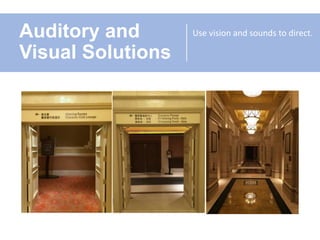
Auditory and
Visual Solutions
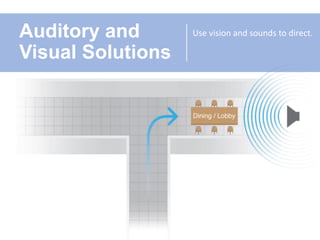
Use vision and sounds to direct.
Auditory and
Visual Solutions
Use vision and sounds to direct.
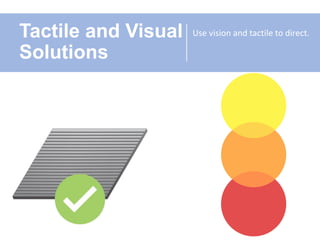
Tactile and Visual
Solutions
Use vision and tactile to direct.
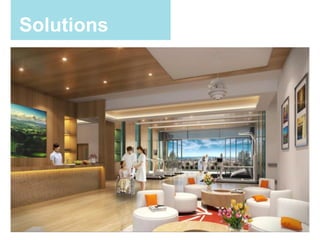
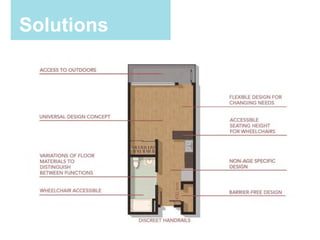
Solutions
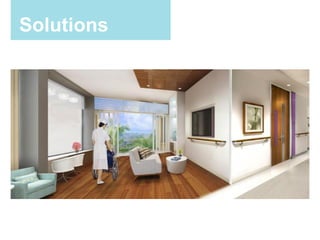
Solutions
Solutions
Solutions
Solutions
Solutions
Solutions
Solutions
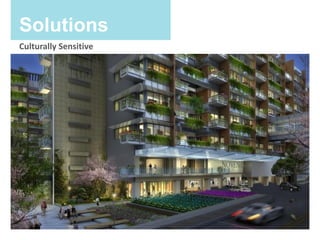
Culturally Sensitive
Solutions
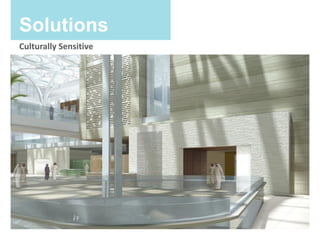
Culturally Sensitive
Solutions
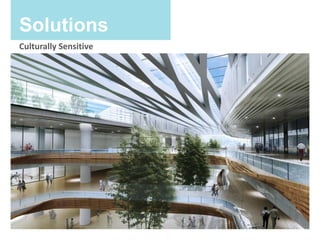
Culturally Sensitive
Solutions
Culturally Sensitive
The Concept of
“Sensthetics”
A “Sensthetic Model” – is a conceptual tool to think “across”
modalities that can help professionals and students to design, study or
experience sensory environments. It is a step beyond the aesthetics of
appearance, towards a Sensthetics of Experience.
Nanda, 2008
EFA_2015_Neuroarchitecture of Aging

EFA_2015_Neuroarchitecture of Aging

  • 2.
  • 3.
    The Neuroarchitecture ofAging and the “Sensthetic” Response Upali Nanda PhD, EDAC, Assoc. AIA, Director of Research, HKS Angela Lee AIA, ACHA, EDAC, LEED AP Zhe Wang, PhD, RA, EDAC, LEED AP BD+C
  • 4.
    CE Information AIA -23 Credit Hours available  Have the room monitor scan your conference badge before leaving each session you attend.  Keep a copy of the AIA CEU form for your records EDAC - 9 Credit Hours available  Certified Sessions: T01, T02, T03, E02, E04, E08, E09, E11, E17, E18, E20, E21, E22, E23, E24, E25, E26, E27, E28, E29, E31, E32, E41, E43, E44, E45.  The pre-conference does not qualify for EDAC credit.  It is the candidate’s responsibility to self-submit the credits online via Castle Worldwide Inc. Renewal notices with login instructions will be sent from Castle six months and three months prior to the candidate’s renewal date. Interior Designers - 23 Credit Hours available  Have your Verification Form STAMPED by the room monitor.  This is the only proof of attendance that will be accepted as proof of completion  This is a self-reporting system.  Contact your interior design association that is responsible for monitoring mandatory continuing education to fulfill membership requirements.
  • 5.
    Reminders  New thisyear attendees will be able to fill in a session evaluation via the mobile app, please go to mobile app. Please take a moment to fill out the session survey, which can be accessed via the Mobile App:  Go to:  Find this session in the agenda  Click on the title to open the session  Click on “Session Survey” to access the survey.  To continue the conversation or to provide additional comments for this session, log into the EFA Mobile App and search for this session. Post a comment in the “CHATTER” section.  To access this presentation, log on to the EFA Mobile App, click on the session title under “Agenda” and the presentation will be located under “Collateral”.  If you have CE questions, please refer to the program guide for specific instructions.  If you were not scanned in for this session, please see the room monitor.
  • 6.
    Session Description Neuroarchitecture is anemerging field. Understanding the aging brain and the impact of aging on sensory systems is key to developing responsive environments for the aging population. This presentation will look at cutting-edge research in the field of neuroscience and psycho-physiology and translate the research findings into design and architectural language that can be widely applied, thereby translating our “design response” that goes beyond the functional and the aesthetic, to the “sensthetic.”
  • 7.
    Session Learning Objectives • Learn aboutthe neuroscience literature on the aging brain. • Learn about changes in the sensory systems and the link to brain behavior. • Explore how all senses should be taken into account to design for a healthy brain. • Learn about specific multisensory design strategies that could be employed, regardless of type of setting, to respond to the aging brain.
  • 8.
    The Aging Brain A “Sensthetic Model”– is a conceptual tool to think “across” modalities that can help professionals and students to design, study or experience sensory environments. It is a step beyond the aesthetics of appearance, towards a Sensthetics of Experience. Nanda, 2008
  • 9.
    The Aging Brain Aging is characterizedby many changes that are reflected in the body, the various sensory systems, and most critically, the brain itself.
  • 10.
    The Aging Brain As the brainages there are fundamental changes which include changes in the prefrontal cortex (responsible for key cognitive functions) and the hippocampus (responsible for memory and emotional processing).
  • 11.
    The Aging Brain The changes inthe neurons and neurotransmitters, blood flow, and development of new cells, reflects in the ability to learn new things, remember names, perform complex tasks of attention etc.
  • 12.
    The Aging Brain However the brain,which is inherently plastic, compensates for it’s reduced ability in some areas by increasing abilities in others. Research study results suggest that low-performing older adults recruited a similar network as young adults but used it inefficiently, whereas high-performing older adults counteracted age-related neural decline through a plastic reorganization of neurocognitive networks. Cognitive Neuroscience, Duke University
  • 13.
    The Aging Brain This ability forthe brain to adapt and cope depends on lifestyle, overall health, environment and genetics.
  • 14.
    The Aging Brain As designers wefocus on the environment- however- it is important to remember that as the brain is changing, there are simultaneous changes in the sensory systems: hearing (hearing loss, change in equilibrium), vision (sharpness, focus, toleration for glare, differentiation between colors, peripheral vision), smell and taste (atrophy in taste buds, reduced smell/taste perception), and touch (change in sensation and sensory thresholds).
  • 15.
    The Aging Brain This implies thatif we want to create environments for aging that promote a healthy brain- and look at Neuroarchitecture as a field, our “design response” must go beyond the functional and the aesthetic, to the “sensthetic”.
  • 16.
    The Aging Brain In this presentationwe will share findings from a literature review on the aging brain and the aging changes in the senses. Work by the NIH on this topic will serve as a foundation • http://www.nia.nih.gov/alzheimers/publication/part-1-basics-healthy- brain/changing-brain-healthy-aging • http://www.nlm.nih.gov/medlineplus/ency/article/004013.htm
  • 17.
    Aging Changes the Senses As youage, the way your senses (hearing, vision, taste, smell, touch) give you information about the world changes. Your senses become less sharp and you may have trouble telling apart details.
  • 18.
    Aging Changes the Senses Your senses receiveinformation from your environment. This information can be in the form of sound, light, smells, tastes, and touch. This information is converted to nerve signals and carried to the brain. There, it is turned into a meaningful sensation.
  • 19.
    Aging Changes the Senses A certain amountof stimulation is required before you become aware of a sensation. This minimum level is called the threshold. Aging increases this threshold. So the amount of stimulation needed for you to be aware of the sensation becomes greater.
  • 20.
    The Changing Sensory System Allsenses can be affected by aging, but hearing and vision are most affected.
  • 21.
  • 22.
    Visual Challenges You may beless able to tolerate glare. Glare such as from a shiny floor in a sunlit room can make it difficult to get around indoors. You may have trouble adapting to darkness or bright light
  • 23.
    Visual Solutions As you age,it gets harder to tell apart blues and greens than it is to tell apart reds and yellows.
  • 24.
    Visual Solutions Using warm contrasting colors(yellow, orange, and red) can improve your ability to see
  • 25.
    Visual Solutions Keeping a redlight on in darkened rooms, such as the hallway or bathroom, makes it easier to see than using a regular night light.
  • 26.
  • 27.
    Visual Solutions Create thoughtful “HomeLike” Environment – Retro is not always the way
  • 28.
    Visual Solutions Use color andpatterns to direct.
  • 29.
  • 30.
    Visual Solutions Use ceiling lightsand different light levels and color to direct.
  • 31.
    Auditory and Motor/ Balance Challenges Our ears have two jobs. One is hearing and the other is maintaining balance. As you age, structures inside the ear start to change and their functions decline. Your ability to pick up sounds decreases. You may also have problems maintaining your balance as you sit, stand, and walk.
  • 32.
    Motor performance deficitsfor older adults appear to be due to dysfunction of the central and peripheral nervous systems as well as the neuromuscular system. Motor performance deficits include coordination difficulty (Seidler et al., 2002), increased variability of movement (Contreras-Vidal et al., 1998; Darling et al., 1989), slowing of movement (Diggles- Buckles, 1993), and difficulties with balance and gait (Tang & Woollacott, 1996) in comparison to young adults. The Brain And Balance
  • 33.
    Gait and balanceproblems are of particular interest as falls are a major source of injury and morbidity in older adults: 20-30% of older adults who fall suffer moderate to severe injuries that limit mobility and reduce quality of life (Alexander et al., 1992). Older adults exhibit greater spatial and temporal movement variability, resulting in less consistent actions as compared to young adults (Contreras-Vidal et al., 1998; Cooke et al., 1989; Darling et al., 1989). The Brain And Balance
  • 34.
    Approximately one-third ofcommunity-dwelling older adults fall each year; the rate is doubled in senior group dwellings (Gillespie et al., 2001; Jensen et al., 2002). Even without injury, falls may cause a loss of self-confidence and result in reduced active behavior and increased dependency among older adults (Gallagher et al., 2001). Falls have been identified by the elderly as the most significant barrier to active behavior (Wilcox et al., 2003). Risk for Falls
  • 35.
    Clear circulation/corridor systems shouldbe applied in the building for older adults, as some of them may have memory impairment or suffer mental problems. Different function zones should be separated and applied with distinct design factors (e.g., colors and styles) to aid in place recognition. Fall Prevention Image source: aiatopten.org
  • 36.
    Corridors in thebuilding for elderly people are suggested to be short, with uninterrupted visual destinations or environmental cues; short and clear corridors has been found to be more navigable for older adults than long corridors (AIA, 1985; Brawley, 1992; Goldsmith, 1996; Passini et al., 2000). Fall Prevention Image sources: www.thewatersseniorliving.com; faulknerdesign.com
  • 37.
    The location ofutility/service rooms in residences for older adults should receive special attention. The laundry room should be located on the bedroom or bathroom level of the residence … (Haslam et al., 2001). The location of a storage room may depend on its function. Fall Prevention
  • 38.
    The usefulness ofgrab bars for fall prevention has been recognized (Sattin et al., 1998). In addition, door handles or push bars, instead of knobs, should be installed in residences for older adults (Gilderbloom & Markham, 1996). Fall Prevention
  • 39.
    Irregular floor surfacesshould be avoided and hard-surface flooring are recommended as it improves standing balance and postural stability (Redfern et al., 1997; Thies et al., 2005). High-density and low-pile commercial-grade carpeting has been suggested as a safe flooring material for healthy older adults (Dickinson et al., 2002). Fall Prevention
  • 40.
    The bathroom hasbeen identified by older adults and researchers as the most common site of environmental hazards (Carter et al., 1997; Huang, 2005). Besides slip-resistant floor surfaces, sliding glass shower doors should be avoided (Murphy et al., 2006). Walk-in shower stalls or bathtubs with rails, raised toilet seats, and wide clearances have been suggested for elderly users (Jenkins et al., 1997; Percival, 2002). Fall Prevention Image source: 4.bp.blogspot.com
  • 41.
    Regarding the kitchendesign, adequate spaces facilitating different eating routines are preferred (Percival, 2002). Square-shaped kitchens may seem more spacious, compared to linear-shaped kitchens. Boschetti (2002) recommended an L-shape layout for kitchens used by the elderly, as it affords a corner to lean against. Fall Prevention
  • 42.
    Installing carefully designedstair handrails for stability is necessary; an appropriate height and a proper section size of the handrails should be applied. -- closed risers, consistent riser heights, appropriate short riser and long tread, coarser tread surface textures.) Fall Prevention
  • 43.
    An elevator orstair lift may promote independence when an individual becomes too disabled to use stairs, (Gilderbloom & Markham, 1996). However, Simoneau et al. (1999) found changes in stable visual anchors, as when exiting an elevator cage, may create risks for falls among older adults. This risk may be exacerbated by dim lighting in the elevator cage. Fall Prevention Image source: elevatorplanning.com uniqueelevator.com
  • 44.
    Lack of illuminationappears to be related to poor postural stability among older adults and may induce risks for falls (Brooke-Wavell et al., 2002; De Lepeleire et al., 2007). Furthermore, changes in light levels should be smooth, as older adults need more time to adapt to changes in light levels than younger adults (Brabyn et al., 2000). Fall Prevention Image sources: docs.unrealengine.com; sundancelandscaping.com
  • 45.
    Regarding interior colors,unsaturated and washed-out colors should be avoided in the environments for older adults, as it is difficult for them to discriminate these colors and color confusion may result in falls (Brabyn et al., 2000). In addition, an appropriate contrast between colors of the wall and the floor, and floor surfaces at different levels emphasizes the edges of spaces and help older adults distinguish features of the environment. Fall Prevention Image source: sites.google.com/
  • 46.
    Visual spatial cuescan help older adults with declining memory recognize places and respond to the surroundings. Sundermier, et al. (1996) noted that specially designed elements in the space can be used as cues by older adults while moving around and be helpful to prevent falls. Fall Prevention Image sources: idassociates.com; faulknerdesign.com
  • 47.
    Research by Perritt(2005) on carpet patterns showed that that high contrasting patterns were associated with more incidents (stumbles, reaching for handrail, veering, purposeful stepping, pausing, stopping) than carpeting with low color contrast patterns. Bonato and Bubka (2011) found that viewing high contrast static patterns (black and white squares laid out in regular patterns on a rug) can induce motion sickness. In a recent correlation study by Calkins (2012), it was found that vinyl flooring with medium size pattern (1”- 6”) was associated with greater falls than no pattern, small pattern (6”). These few studies suggest that floor glare and pattern may contribute to falls. However, the underlying relationship, and ideal condition for each, demands more research.” Fall Prevention
  • 48.
  • 49.
    Tactile Challenges With aging, youmay have reduced or changed sensations. These changes can be related to decreased blood flow to the nerve endings or to the spinal cord or brain. The spinal cord transmits nerve signals and the brain interprets the signals. After age 50, many people have reduced sensitivity to pain. Or you may feel and recognize pain, but it does not bother you. For example, when you are injured, you may not know how severe the injury is because the pain does not trouble you.
  • 50.
    Tactile Challenges Older persons candevelop an increased sensitivity to light touch because of thinner skin.
  • 51.
  • 52.
  • 53.
    Multi-Sensory Design Solutions It also appearsthat additional brain regions can be activated in older adults during cognitive tasks, such as taking a memory test. Researchers do not fully understand why this happens, but one idea is that the brain engages mechanisms to compensate for difficulties that certain regions may be having. For example, the brain may recruit alternate brain networks in order to perform a task.
  • 54.
    Multi-Sensory Design Solutions Multisensory integration becomesmore important during aging as it helps to counteract the often-destructive consequences of unisensory deterioration. Mozolic et al. (2012)
  • 55.
    Auditory and Visual Solutions Usevision and sounds to direct.
  • 56.
    Auditory and Visual Solutions Usevision and sounds to direct.
  • 57.
    Tactile and Visual Solutions Usevision and tactile to direct.
  • 58.
  • 59.
  • 60.
  • 61.
  • 62.
  • 63.
  • 64.
  • 65.
  • 66.
  • 67.
  • 68.
  • 69.
    The Concept of “Sensthetics” A“Sensthetic Model” – is a conceptual tool to think “across” modalities that can help professionals and students to design, study or experience sensory environments. It is a step beyond the aesthetics of appearance, towards a Sensthetics of Experience. Nanda, 2008