HEALTH HISTORY
TAKING
Saphan C. Agaba
RN, BScN, ACLS,ATLS
Uganda Christian University
Nursing Department
• Definition
• Health history
A holistic assessment of all factors affecting a patient’s
health status, including information about social, cultural,
familial, and economic aspects of the patient’s life as well as
any other component of the patient’s lifestyle that affects
health and well-being.
• Why do we take history from the patient?
• What would happen
if we do not make a diagnosis?
or
if we made the wrong diagnosis?
How do we take history?
NOTE
•Always…
• INTRODUCE YOURSELF TO THE PATIENT AND EXPLAIN
TO HIM OR HER WHAT YOU ARE GOING TO DO.
• GET A CHAPERON WHEN YOU INTERVIEW AN OPPOSITE
SEX PATIENT.
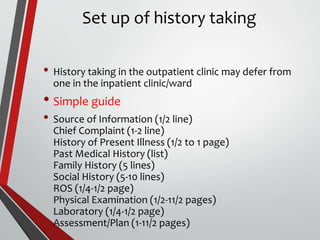
Set up of history taking
• History taking in the outpatient clinic may defer from
one in the inpatient clinic/ward
• Simple guide
• Source of Information (1/2 line)
Chief Complaint (1-2 line)
History of Present Illness (1/2 to 1 page)
Past Medical History (list)
Family History (5 lines)
Social History (5-10 lines)
ROS (1/4-1/2 page)
Physical Examination (1/2-11/2 pages)
Laboratory (1/4-1/2 page)
Assessment/Plan (1-11/2 pages)
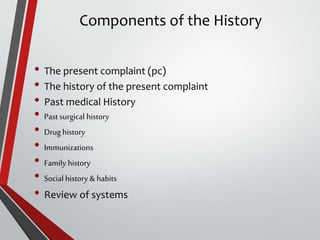
Components of the History
• The present complaint (pc)
• The history of the present complaint
• Past medical History
• Past surgical history
• Drug history
• Immunizations
• Family history
• Social history & habits
• Review of systems
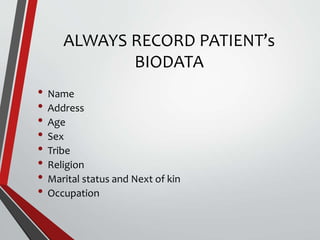
ALWAYS RECORD PATIENT’s
BIODATA
• Name
• Address
• Age
• Sex
• Tribe
• Religion
• Marital status and Next of kin
• Occupation
1-Presenting/Chief complaint
• In patient’s own words with duration.
• YOU MAY ASK
• “What has brought you to the hospital?”
• “What is the problem?”
• “What is the matter?”
What he/she tells you is the presenting complaint
“My tummy hurts so bad, like I dog is eating me from the
inside”
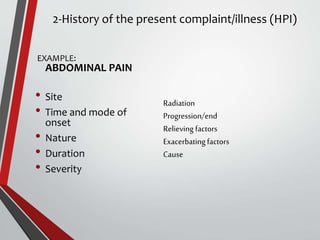
2-History of the present complaint/illness (HPI)
EXAMPLE:
ABDOMINAL PAIN
• Site
• Time and mode of
onset
• Nature
• Duration
• Severity
Radiation
Progression/end
Relieving factors
Exacerbating factors
Cause
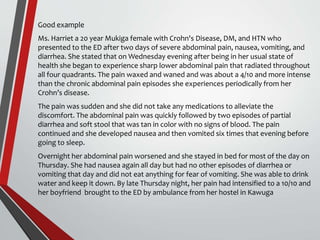
Good example
Ms. Harriet a 20 year Mukiga female with Crohn's Disease, DM, and HTN who
presented to the ED after two days of severe abdominal pain, nausea, vomiting, and
diarrhea. She stated that on Wednesday evening after being in her usual state of
health she began to experience sharp lower abdominal pain that radiated throughout
all four quadrants. The pain waxed and waned and was about a 4/10 and more intense
than the chronic abdominal pain episodes she experiences periodically from her
Crohn’s disease.
The pain was sudden and she did not take any medications to alleviate the
discomfort. The abdominal pain was quickly followed by two episodes of partial
diarrhea and soft stool that was tan in color with no signs of blood. The pain
continued and she developed nausea and then vomited six times that evening before
going to sleep.
Overnight her abdominal pain worsened and she stayed in bed for most of the day on
Thursday. She had nausea again all day but had no other episodes of diarrhea or
vomiting that day and did not eat anything for fear of vomiting. She was able to drink
water and keep it down. By late Thursday night, her pain had intensified to a 10/10 and
her boyfriend brought to the ED by ambulance from her hostel in Kawuga
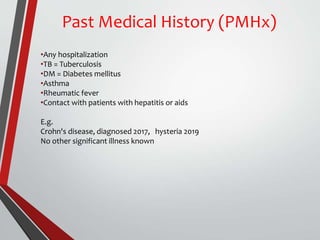
Past Medical History (PMHx)
•Any hospitalization
•TB = Tuberculosis
•DM = Diabetes mellitus
•Asthma
•Rheumatic fever
•Contact with patients with hepatitis or aids
E.g.
Crohn's disease, diagnosed 2017, hysteria 2019
No other significant illness known
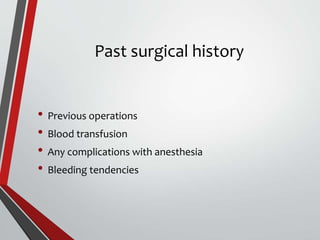
Past surgical history
• Previous operations
• Blood transfusion
• Any complications with anesthesia
• Bleeding tendencies
Drug history
• Medications and allergies.
• Write the meds she took for those illness or ongoing
treatment….
• Steroids
• Insulin
• Antihypertensive drugs
• Hormone replacement therapy
• Does she have any know allergies
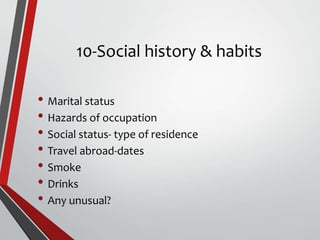
10-Social history & habits
• Marital status
• Hazards of occupation
• Social status- type of residence
• Travel abroad-dates
• Smoke
• Drinks
• Any unusual?
9-Family history
• Health and age or cause of death of patient’s parents
,brothers and sisters
4-Review of systems
• The Gastro-intestinal system
• The Respiratory system
• The Cardiovascular system
• The Urogenital system
• The Nervous system
• The Musculoskeletal system
Gastro-intestinal system
• Appetite
• Diet
• Weight
• Teeth and taste
• Swallowing
• Regurgitation
• Fatulance
Heartburn
Vomiting
Haematemesis
Abdominal PAIN
Abdominal distension
Defecation
Change of color of skin
The Respiratory system
• Cough
• Sputum
• Haemoptysis
• Dyspnoea
• Orthopnoea
• Chest pain
The Cardiovascular system
• CHEST PAIN
• Dyspnoea
• Orthopnoea
• Palpitations
• Cough and sputum
• Dizziness and headache
• Ankle swelling
• Peripheral vascular symptoms
The Urogenital system
• Pain
• Oedema
• Thirst
• Micturition
• Urine
Scrotum and urethra
Menstruation
Pregnancies
Breasts
Secondary sex characteristics
The Nervous system
• Mental state
• Conscious level
• Fits
• TIAS= transient ischemic attacks
• Loss of sensations
• Paraesthesiae (pins and needles)
The musculoskeletal system
• Pain
• Swelling
• Limitation of movements of any joint
Summary
• Patient’s name, age and sex.
• Complaint and the most important positive
characteristics of his/her complaint
• The most important negative features of his complaint.
Analysis of the differential diagnosis
• Review the list you made earlier
What have we gained from the history taking?
• To make a diagnosis
• To formulate a complete picture about this patient
which will enable you to plan his or her management
THANK
YOU

History taking final for BScN Nurses

  • 1.
    HEALTH HISTORY TAKING Saphan C.Agaba RN, BScN, ACLS,ATLS Uganda Christian University Nursing Department
  • 2.
    • Definition • Healthhistory A holistic assessment of all factors affecting a patient’s health status, including information about social, cultural, familial, and economic aspects of the patient’s life as well as any other component of the patient’s lifestyle that affects health and well-being.
  • 3.
    • Why dowe take history from the patient? • What would happen if we do not make a diagnosis? or if we made the wrong diagnosis? How do we take history?
  • 4.
    NOTE •Always… • INTRODUCE YOURSELFTO THE PATIENT AND EXPLAIN TO HIM OR HER WHAT YOU ARE GOING TO DO. • GET A CHAPERON WHEN YOU INTERVIEW AN OPPOSITE SEX PATIENT.
  • 5.
    Set up ofhistory taking • History taking in the outpatient clinic may defer from one in the inpatient clinic/ward • Simple guide • Source of Information (1/2 line) Chief Complaint (1-2 line) History of Present Illness (1/2 to 1 page) Past Medical History (list) Family History (5 lines) Social History (5-10 lines) ROS (1/4-1/2 page) Physical Examination (1/2-11/2 pages) Laboratory (1/4-1/2 page) Assessment/Plan (1-11/2 pages)
  • 6.
    Components of theHistory • The present complaint (pc) • The history of the present complaint • Past medical History • Past surgical history • Drug history • Immunizations • Family history • Social history & habits • Review of systems
  • 7.
    ALWAYS RECORD PATIENT’s BIODATA •Name • Address • Age • Sex • Tribe • Religion • Marital status and Next of kin • Occupation
  • 8.
    1-Presenting/Chief complaint • Inpatient’s own words with duration. • YOU MAY ASK • “What has brought you to the hospital?” • “What is the problem?” • “What is the matter?” What he/she tells you is the presenting complaint “My tummy hurts so bad, like I dog is eating me from the inside”
  • 9.
    2-History of thepresent complaint/illness (HPI) EXAMPLE: ABDOMINAL PAIN • Site • Time and mode of onset • Nature • Duration • Severity Radiation Progression/end Relieving factors Exacerbating factors Cause
  • 10.
    Good example Ms. Harrieta 20 year Mukiga female with Crohn's Disease, DM, and HTN who presented to the ED after two days of severe abdominal pain, nausea, vomiting, and diarrhea. She stated that on Wednesday evening after being in her usual state of health she began to experience sharp lower abdominal pain that radiated throughout all four quadrants. The pain waxed and waned and was about a 4/10 and more intense than the chronic abdominal pain episodes she experiences periodically from her Crohn’s disease. The pain was sudden and she did not take any medications to alleviate the discomfort. The abdominal pain was quickly followed by two episodes of partial diarrhea and soft stool that was tan in color with no signs of blood. The pain continued and she developed nausea and then vomited six times that evening before going to sleep. Overnight her abdominal pain worsened and she stayed in bed for most of the day on Thursday. She had nausea again all day but had no other episodes of diarrhea or vomiting that day and did not eat anything for fear of vomiting. She was able to drink water and keep it down. By late Thursday night, her pain had intensified to a 10/10 and her boyfriend brought to the ED by ambulance from her hostel in Kawuga
  • 11.
    Past Medical History(PMHx) •Any hospitalization •TB = Tuberculosis •DM = Diabetes mellitus •Asthma •Rheumatic fever •Contact with patients with hepatitis or aids E.g. Crohn's disease, diagnosed 2017, hysteria 2019 No other significant illness known
  • 12.
    Past surgical history •Previous operations • Blood transfusion • Any complications with anesthesia • Bleeding tendencies
  • 13.
    Drug history • Medicationsand allergies. • Write the meds she took for those illness or ongoing treatment…. • Steroids • Insulin • Antihypertensive drugs • Hormone replacement therapy • Does she have any know allergies
  • 14.
    10-Social history &habits • Marital status • Hazards of occupation • Social status- type of residence • Travel abroad-dates • Smoke • Drinks • Any unusual?
  • 15.
    9-Family history • Healthand age or cause of death of patient’s parents ,brothers and sisters
  • 16.
    4-Review of systems •The Gastro-intestinal system • The Respiratory system • The Cardiovascular system • The Urogenital system • The Nervous system • The Musculoskeletal system
  • 17.
    Gastro-intestinal system • Appetite •Diet • Weight • Teeth and taste • Swallowing • Regurgitation • Fatulance Heartburn Vomiting Haematemesis Abdominal PAIN Abdominal distension Defecation Change of color of skin
  • 18.
    The Respiratory system •Cough • Sputum • Haemoptysis • Dyspnoea • Orthopnoea • Chest pain
  • 19.
    The Cardiovascular system •CHEST PAIN • Dyspnoea • Orthopnoea • Palpitations • Cough and sputum • Dizziness and headache • Ankle swelling • Peripheral vascular symptoms
  • 20.
    The Urogenital system •Pain • Oedema • Thirst • Micturition • Urine Scrotum and urethra Menstruation Pregnancies Breasts Secondary sex characteristics
  • 21.
    The Nervous system •Mental state • Conscious level • Fits • TIAS= transient ischemic attacks • Loss of sensations • Paraesthesiae (pins and needles)
  • 22.
    The musculoskeletal system •Pain • Swelling • Limitation of movements of any joint
  • 23.
    Summary • Patient’s name,age and sex. • Complaint and the most important positive characteristics of his/her complaint • The most important negative features of his complaint.
  • 24.
    Analysis of thedifferential diagnosis • Review the list you made earlier
  • 25.
    What have wegained from the history taking? • To make a diagnosis • To formulate a complete picture about this patient which will enable you to plan his or her management
  • 26.