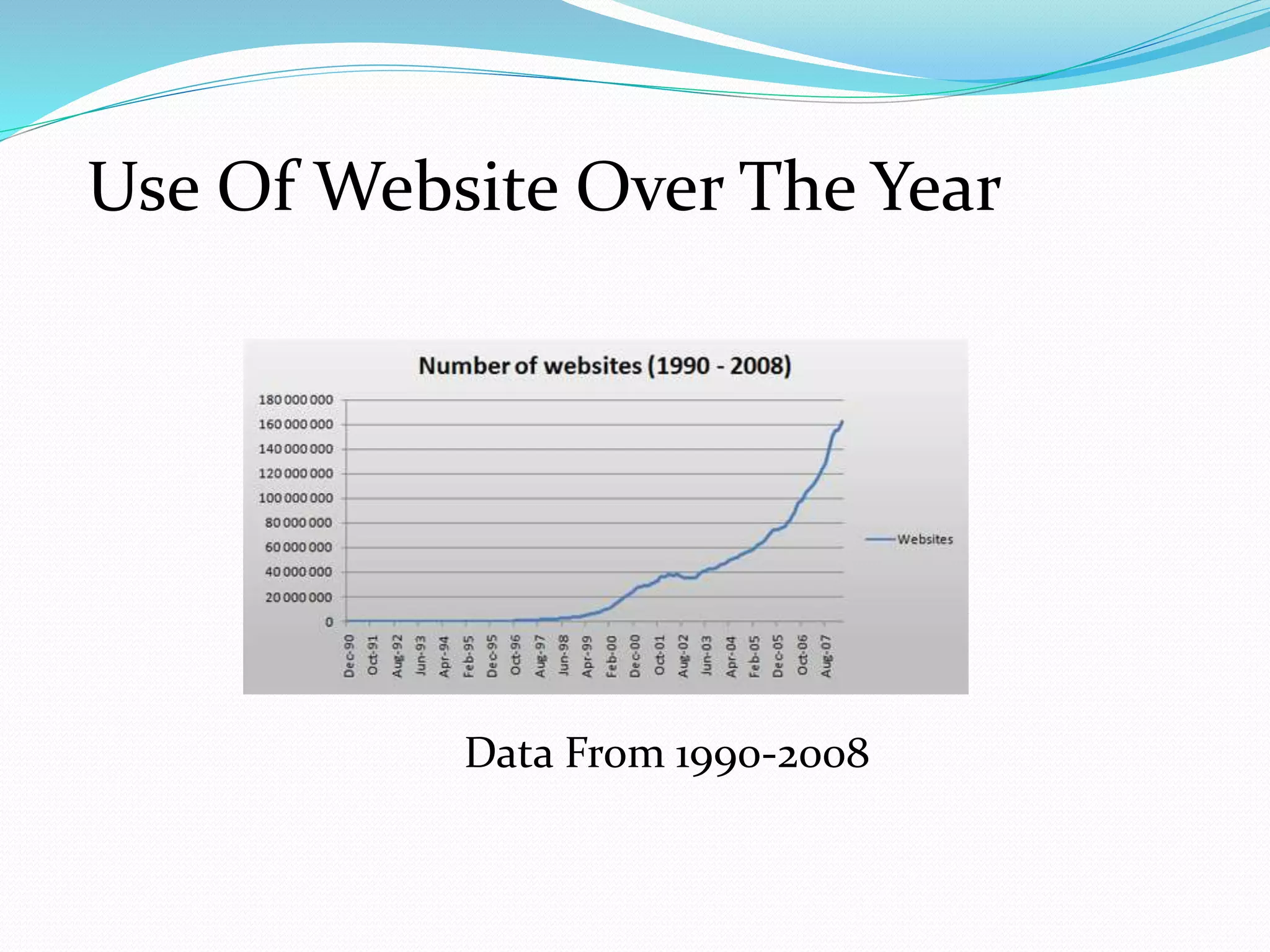
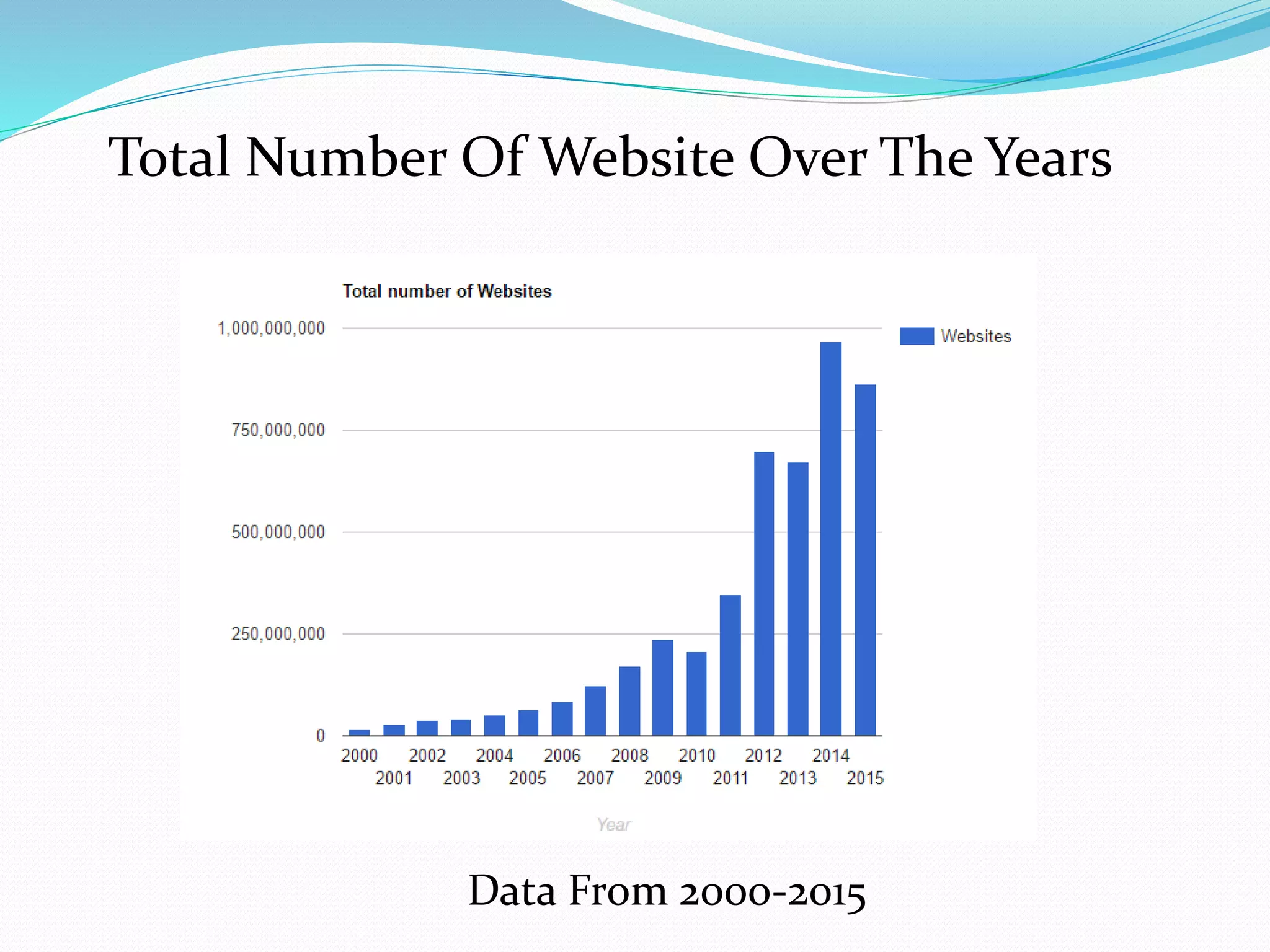
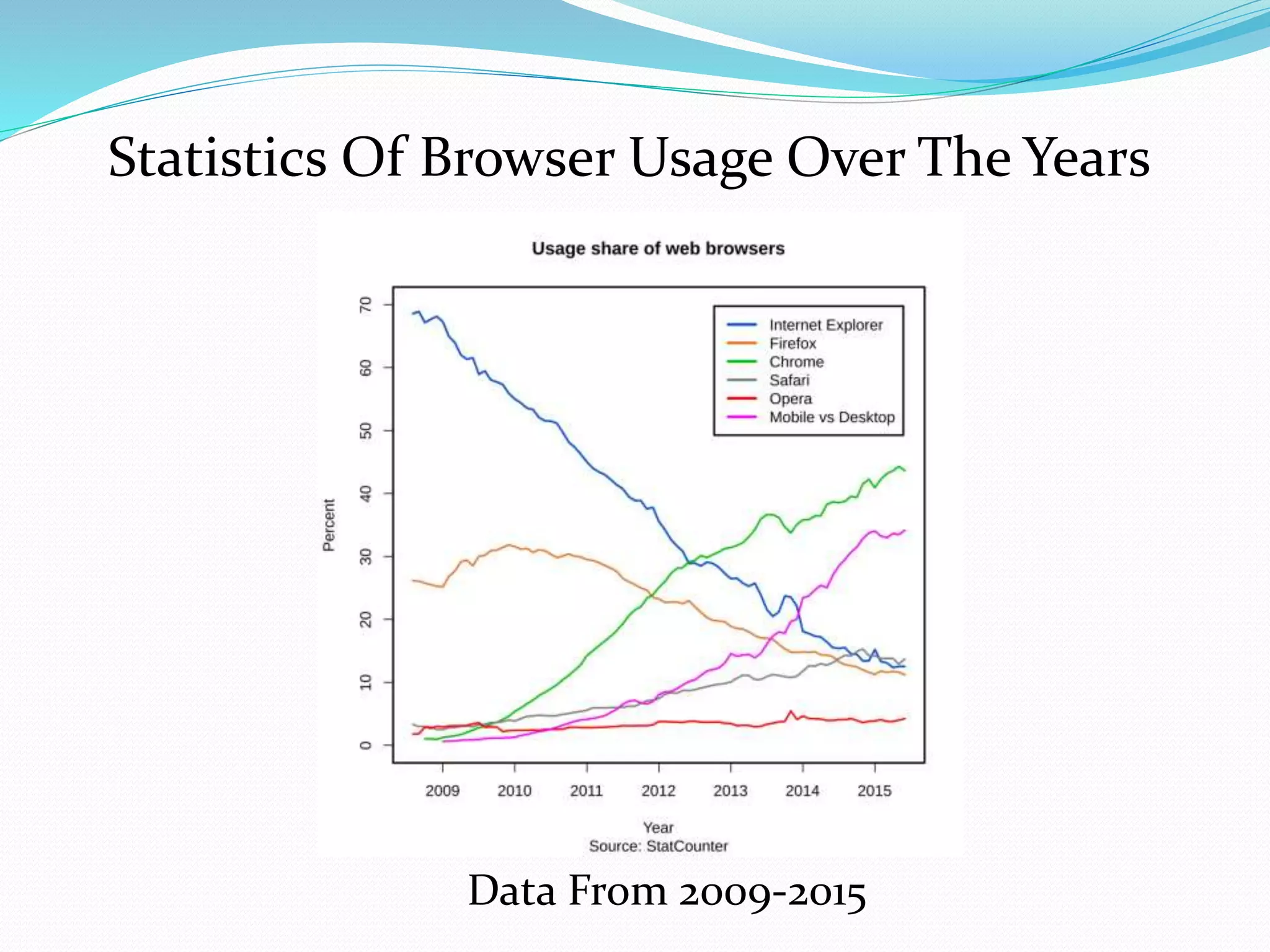
The document summarizes the history of web design from the early 1990s to the present. It describes the evolution from early text-based sites to modern responsive designs that adapt to different devices. Key developments included the introduction of tables and frames in the mid-1990s, Flash in 1996, CSS and JavaScript in the late 1990s and 2000s, responsive design frameworks in the 2010s, and a shift to minimal, flat designs and a focus on content over stylistic elements. Statistics are provided on the growth of websites and changes in browser usage over the past few decades.
History Of WebDesign
For Web Designer’s Nepal By : Bishal Sapkota
3.
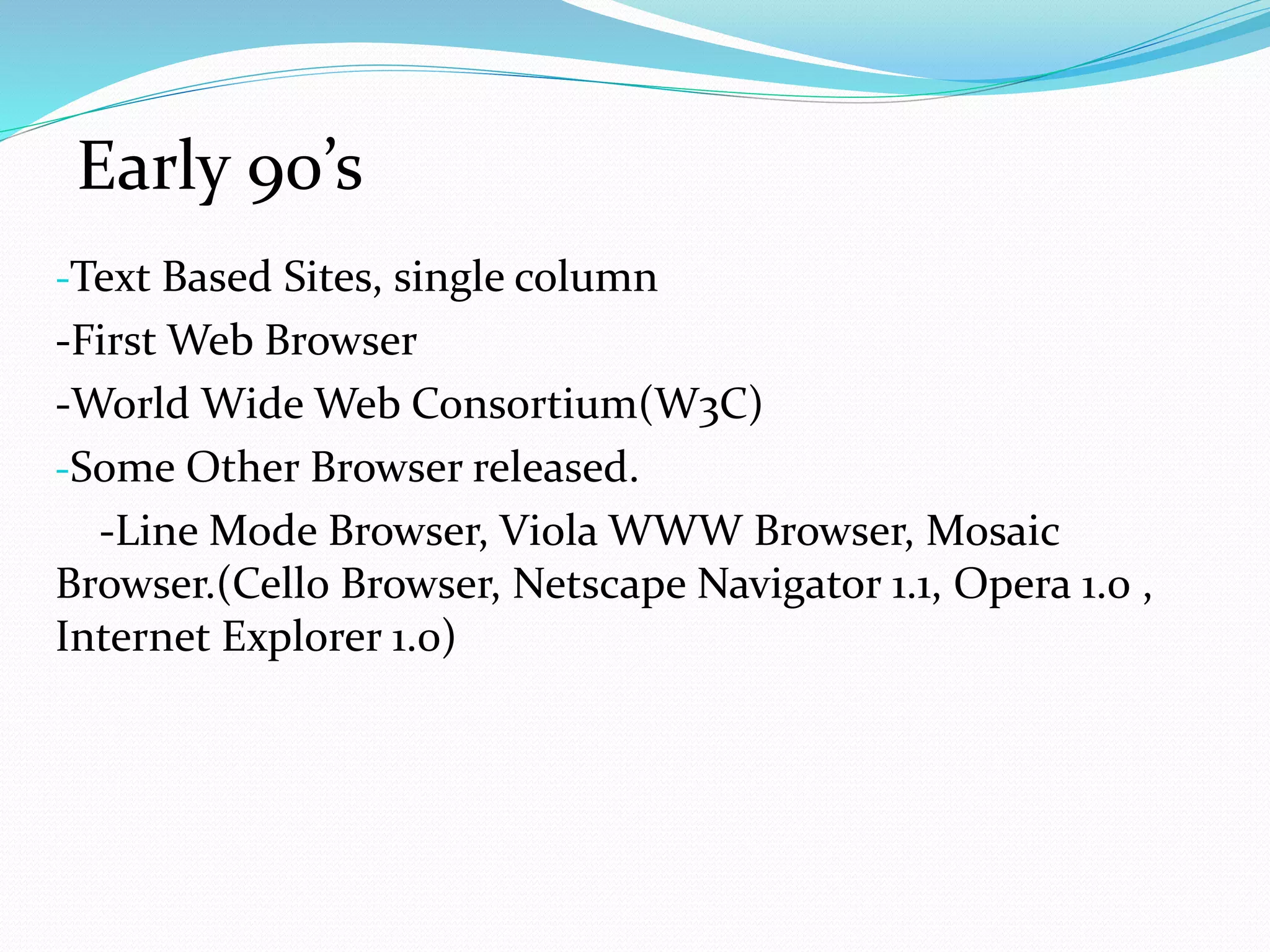
-Text Based Sites,single column
-First Web Browser
-World Wide Web Consortium(W3C)
-Some Other Browser released.
-Line Mode Browser, Viola WWW Browser, Mosaic
Browser.(Cello Browser, Netscape Navigator 1.1, Opera 1.0 ,
Internet Explorer 1.0)
Early 90’s
-Beginning of thetable (1995)
-Multiple Column websites
-Javascript comes to the rescue.( Mocha).
-Animated text, scrolling text and Gif images
The Mid 90’s
-Css Hits Theweb.
-Microsoft Internet Explorer 5 supported better than 99%
of the css.
The Year 2000
10.
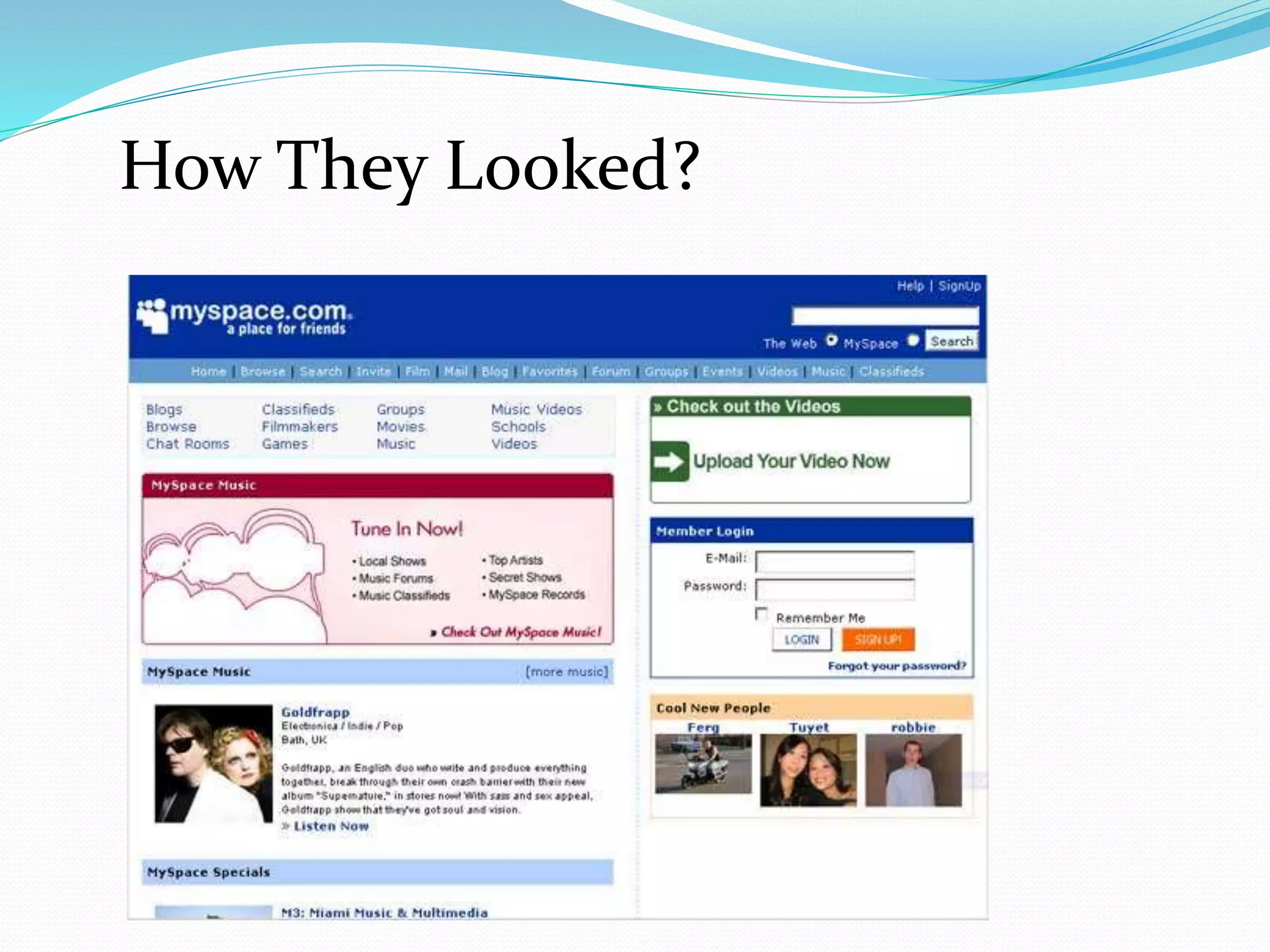
- Rise OfJavascript
-In 2002, allmost all browser supported javascript.
- Using Javascript for Page Layouts.
-Navigation on top.
-Forms Began Making an apperance.
The Early To Mid 2000’s
- Ethan Marcotteapproached for the Responsive
Web Designs in 2010.
-Mobile Safari First Mobile Browser
-Grids Framework like Bootstrap And Foundation
are used.
The Mobile Web
- Minimal Useof stylistic elements
-Focus on use of simple elements, typography and
flat colours.
-Interface Designs are more effiecient.
-Easy to qucikly convey information.
The Flat Designs
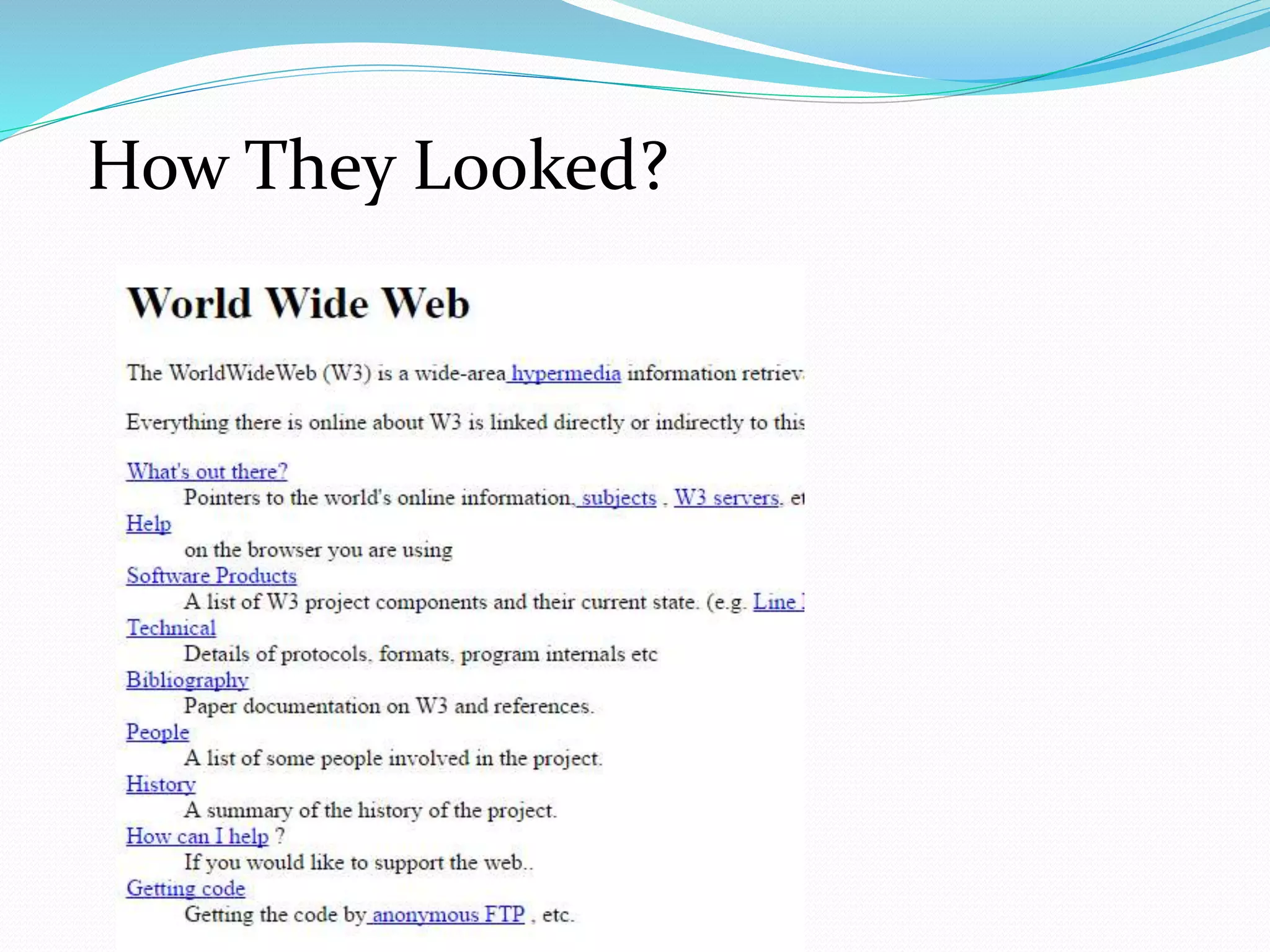
#4 Websites looked liked series of text documents strung together by inline links.
First Web Browser was developed by the Tim Berners Lee.
Also The First Website was published in 1991 August 6 by Tim Berner’s Lee.
The World Wide Web CONSORTIUM(W3C) formed in 1994. It Aims to implement a set of principles and components so the web can be accessed consistently by all.
Mosaic is the first browser to adopt layout still favoured by today’s browser.
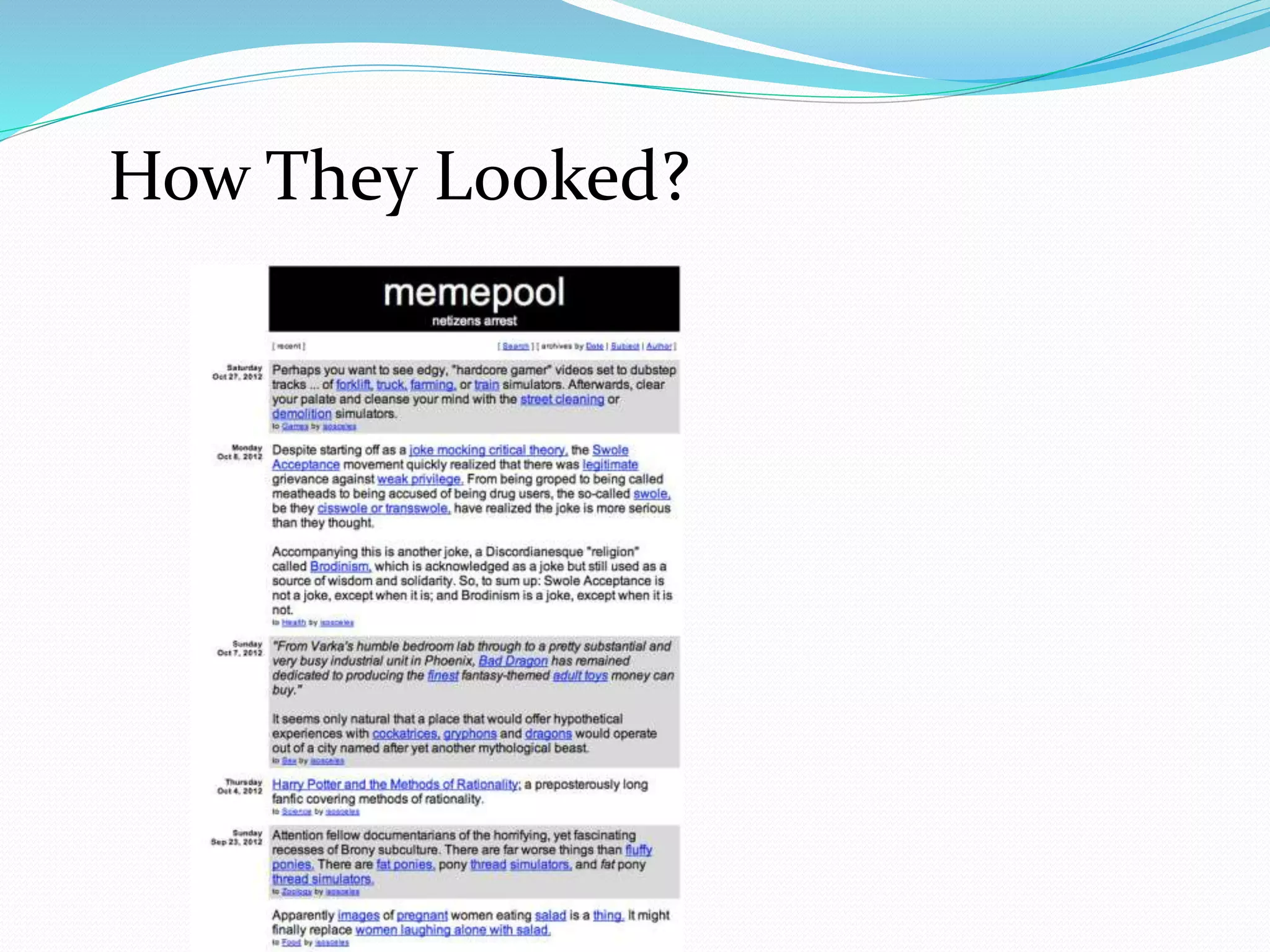
#6 -This expanded the text based design model allowing for better content organization and navigation layout.
-Background Images were Often Sliced up and inserted into table.
-It was on August 19th 1995 that JavaScript was first announced, originally code named 'Mocha'. Javascript was the answer to the limitation of Html. For eg, need a popup window, want to dynamically modify the order of something? The answer was javascript.
-Animated text, scrolling text and Gif Images started dancing across website everywhere.
#8 -To break the limitations of existing web design, a technology was born that promised a freedom never seen before.
-The designer could design any shapes, layouts, animations, interaction, use any font and all this in one tool- flash. The end result is packed as one file and sent to the browser to be displayed.
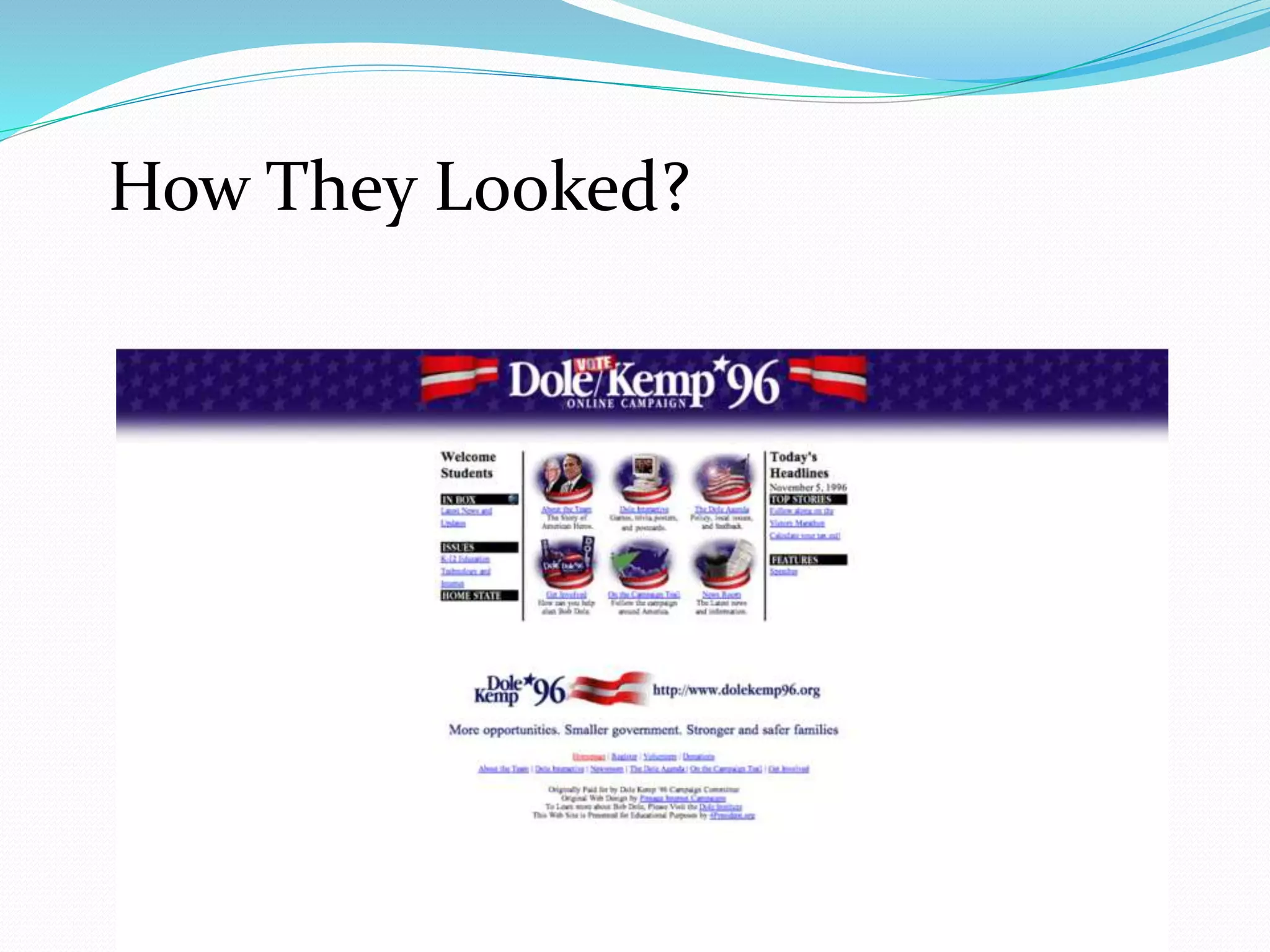
-Many Websites became a combination of table based design and flash elements for spice
-Falsh Animations splash pages featuring company logos bouncing around and sleaming before their home page.
-Flash Based navigation that expanded and changed color when a user clicked on it.
#10 While Css had been around since late 1990’s. 2000 was the year the web began to see its potential
A better approach to structuring design from a technical standpoint was born- Cascading Style Sheets(Css). Basic concept was to separate content from the presentation. So the look and formatting are defined in the css, but the content in HTML. It was not supported by browsers fully in late 90’s. It took few years browser started fully support Css.
In the Year 2000, Microsoft Internet Explorer 5 became the first web browser to achieve Better than 99% support for the css.
#11 In 2000, The W3C recommended the second release of the javascript, And By 2002s. Nearly All Browser supported IT.
Web designer’s began ditching tables and using javascript for the page layouts.
Javascript was one of the first successful attempts to add integlligence to the web. Using it designer’s could animate menus without flash. Compute Data and More.
Forms were used. Allowing user to create and customize online profiles. Journals And Photo Collection
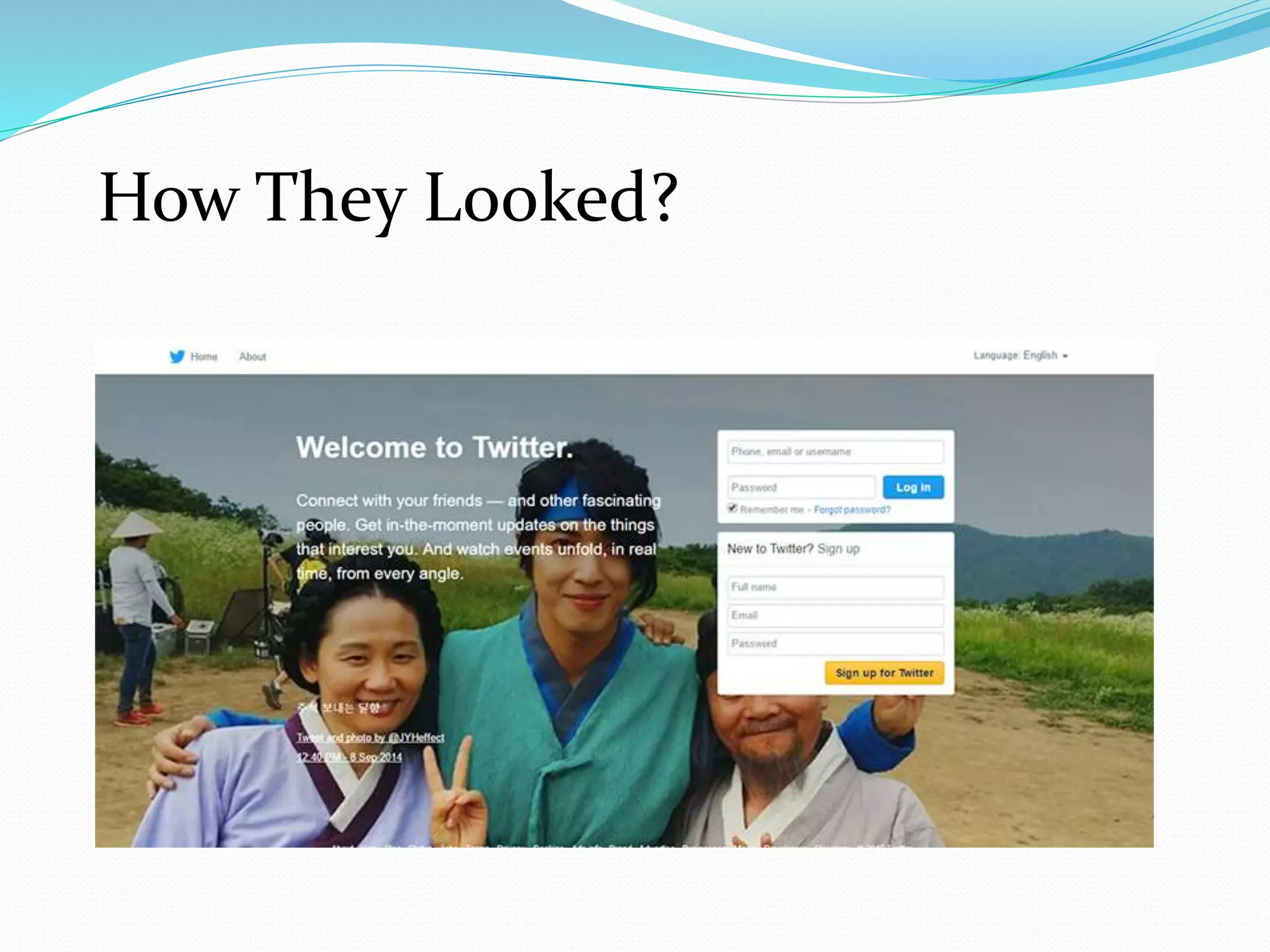
#13 In the late 2000s, Web design began to take a turn toward interactive content and web applications.
Designer’s make a heavy use of javascript and Ajax for the smooth content transition and application development
Interactive content that changes without having to refresh the page.
Powerful Applications have flodded the Internet for processing video, Photos content and More.
Design focus has become more about publishing content then just selling products. Social Geared websites attempt to engage the user and allow him or her to share content.Html 5 gains mainstream exposure. Fifth and current version of the HTML standard.
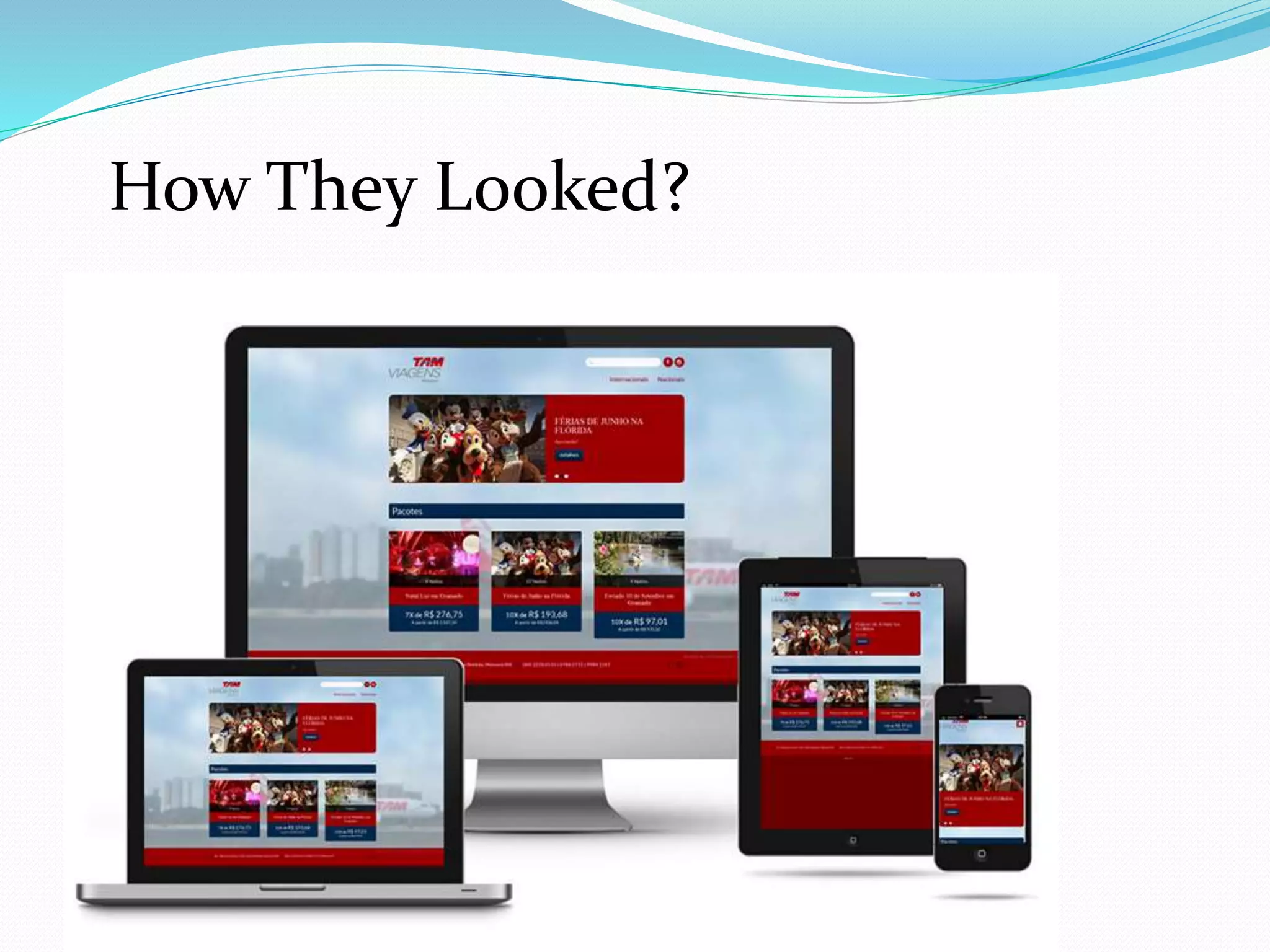
#15 Browsing the web on mobile phone was a whole challenge in itself. There was a question- should the design be the same on the tiny screen or it should be stripped down ?
Ethan Marcotte decided to challenge the existing approach by proposing to use the same content, But different layouts for the design and coined the Term Responsive Web Design.
Rise of the smart phones and tablet computers and driving the popularity of the mobile web.
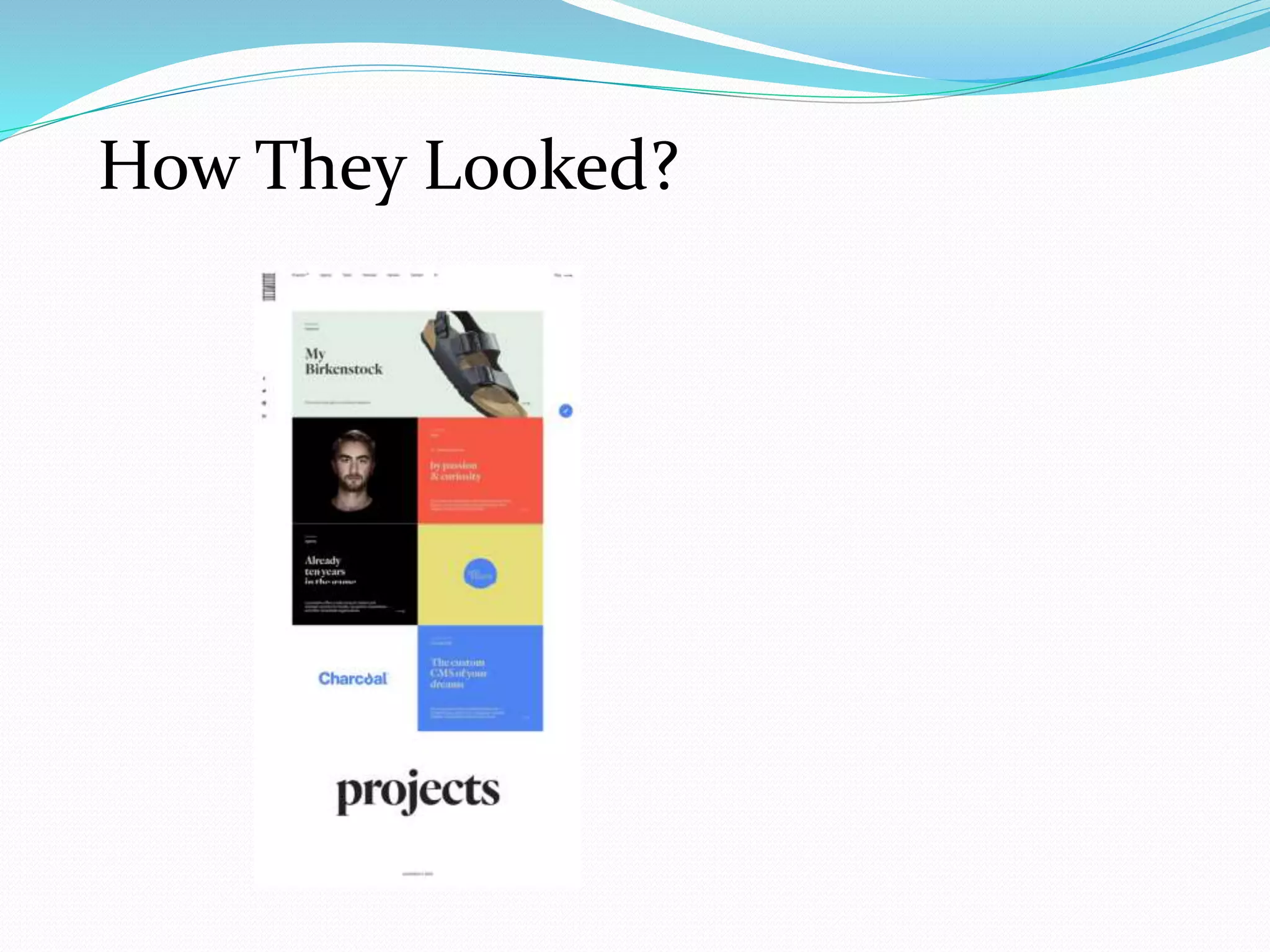
#17 Flat Designs is a style of interface design emphasizing minimum use of stylistic elements that give the illusion of three dimension ( such as use of drop shadows, gradients) and is focused on use of simple elements, typography and flat colours.
Designer’s may prefer flat design because it allows interface designs to be more efficient
-It is easier to quickly convey information while still looking visually appealing and approachable.
- With minimal design elements, websites are able to load faster and resize easily and still look sharp on high definition screens.
#22 -Design methods has been completely changed since last 20 years.
From Dark table designs to the interactive mobile designs, parallax designs , its been developing day by day
So we can imagine the more features in future and Bright Future of the Web Designs.



![AnyTrans for iOS 8.9.14.20251127 With Crack for MacOS [Latest] pptx](https://cdn.slidesharecdn.com/ss_thumbnails/softwareoverview-251207190907-2316965f-thumbnail.jpg?width=640&height=640&fit=bounds)


![WinRAR Crack 7.13 Final Mac Keygen 2026 Download [Latest] Software.pptx](https://cdn.slidesharecdn.com/ss_thumbnails/software-251207185858-eb450678-thumbnail.jpg?width=640&height=640&fit=bounds)


![Moho Pro 14.4 Crack for MacOS Works Until 2050 [Latest] pptx](https://cdn.slidesharecdn.com/ss_thumbnails/softwareoverview-251207192639-797289c4-thumbnail.jpg?width=640&height=640&fit=bounds)
![PowerISO 9.2 Mac Crack + Serial Key Free Download 2026 [Latest] Software.pptx](https://cdn.slidesharecdn.com/ss_thumbnails/software-251207185653-5d5700e6-thumbnail.jpg?width=640&height=640&fit=bounds)
![iStat Menus 7.20 Crack for MacOS 2026 Full Version [Latest] pptx](https://cdn.slidesharecdn.com/ss_thumbnails/softwareoverview-251207191544-22b737dc-thumbnail.jpg?width=640&height=640&fit=bounds)
![Driver Easy Pro Key 7.1.0.2641 Full Mac Crack Free Activated Download [2026]....](https://cdn.slidesharecdn.com/ss_thumbnails/software-251207185324-b2fb71b4-thumbnail.jpg?width=640&height=640&fit=bounds)


