
NHS
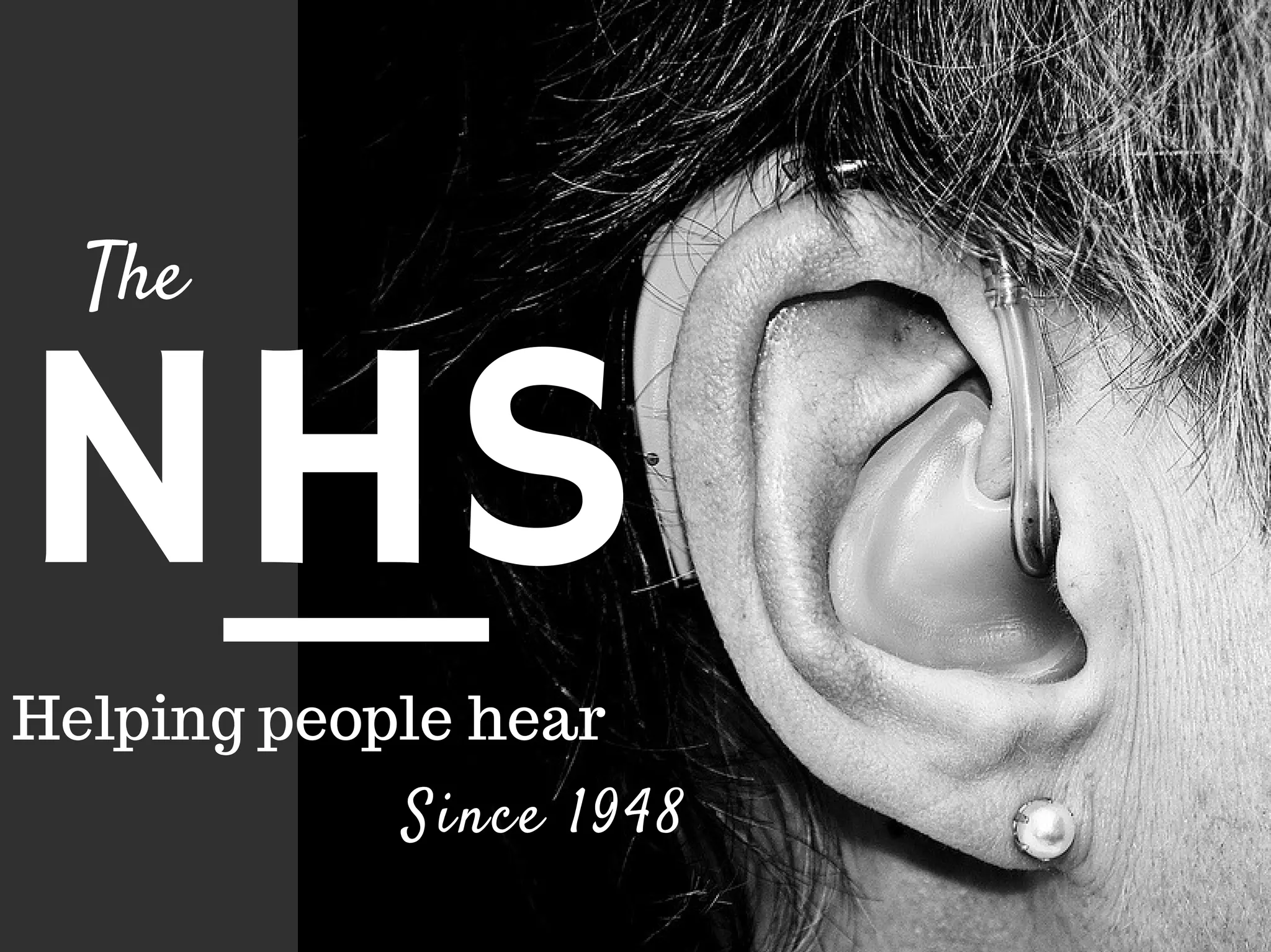
The
Since 1948
Helping people hear
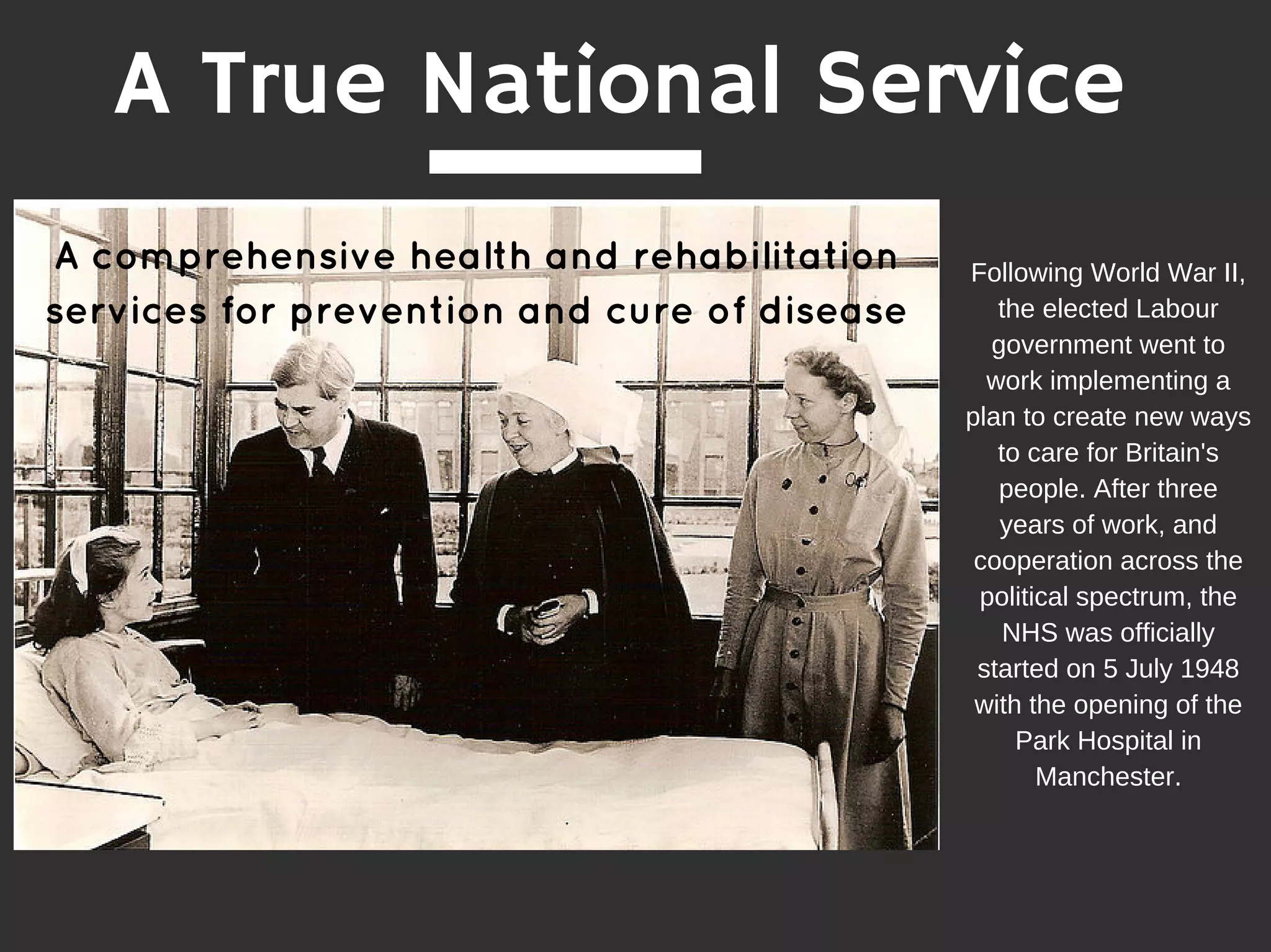
Following World War II,
the elected Labour
government went to
work implementing a
plan to create new ways
to care for Britain's
people. After three
years of work, and
cooperation across the
political spectrum, the
NHS was officially
started on 5 July 1948
with the opening of the
Park Hospital in
Manchester.
A True National Service
A comprehensive health and rehabilitation
services for prevention and cure of disease
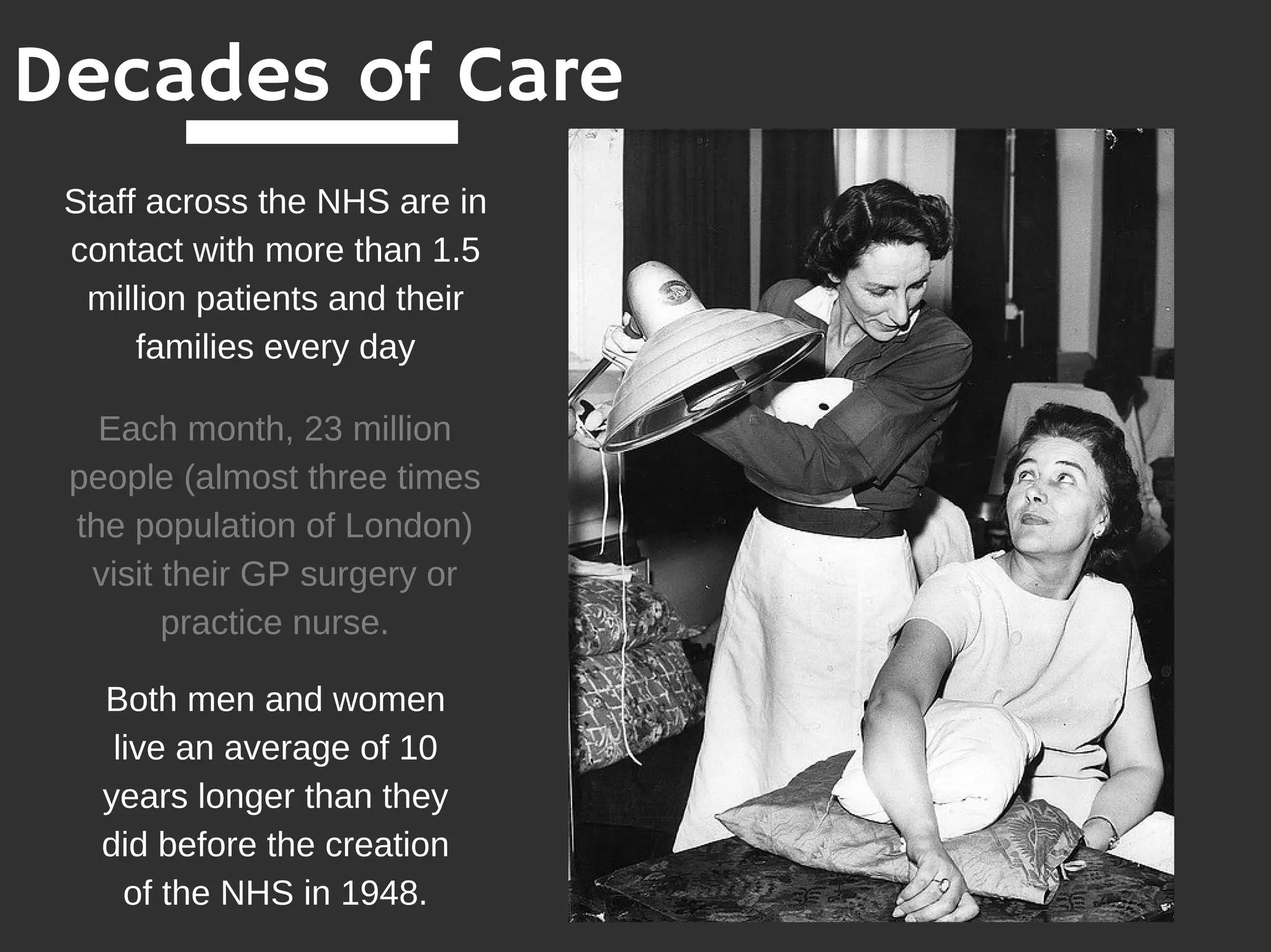
Decades of Care
Staff across the NHS are in
contact with more than 1.5
million patients and their
families every day
Each month, 23 million
people (almost three times
the population of London)
visit their GP surgery or
practice nurse.
Both men and women
live an average of 10
years longer than they
did before the creation
of the NHS in 1948.
1948 through 1957
The three main developments
that affected the treatment of
hearing loss were the use of
antibiotics, the advent of
improved anaesthesia, and the
creation of a new microscope
that allowed for more precise
surgical techniques.
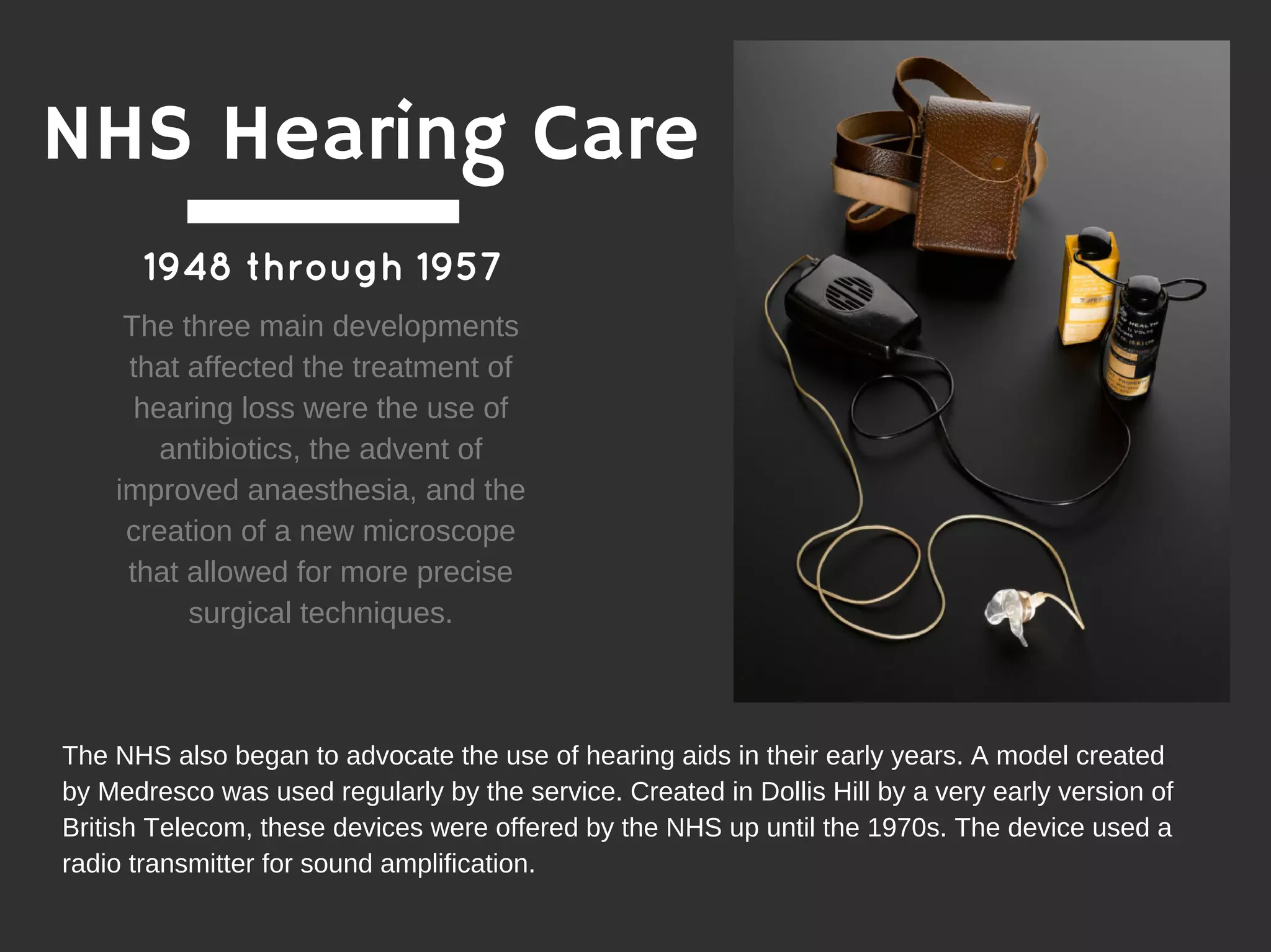
The NHS also began to advocate the use of hearing aids in their early years. A model created
by Medresco was used regularly by the service. Created in Dollis Hill by a very early version of
British Telecom, these devices were offered by the NHS up until the 1970s. The device used a
radio transmitter for sound amplification.
NHS Hearing Care
1958 through 1967
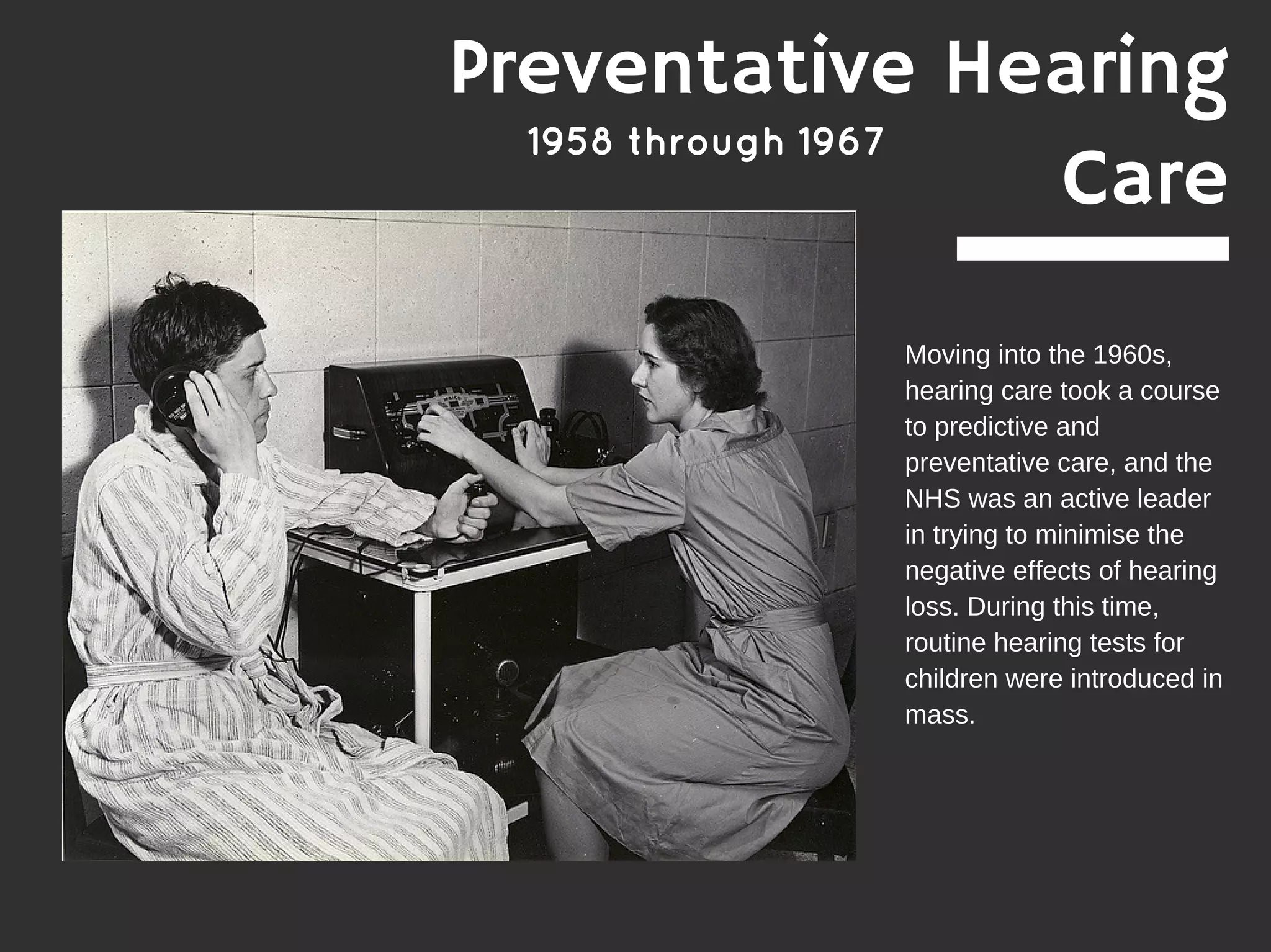
Moving into the 1960s,
hearing care took a course
to predictive and
preventative care, and the
NHS was an active leader
in trying to minimise the
negative effects of hearing
loss. During this time,
routine hearing tests for
children were introduced in
mass.
Preventative Hearing
Care
1968 through 1977
New Technology Changes
the Hearing Aid
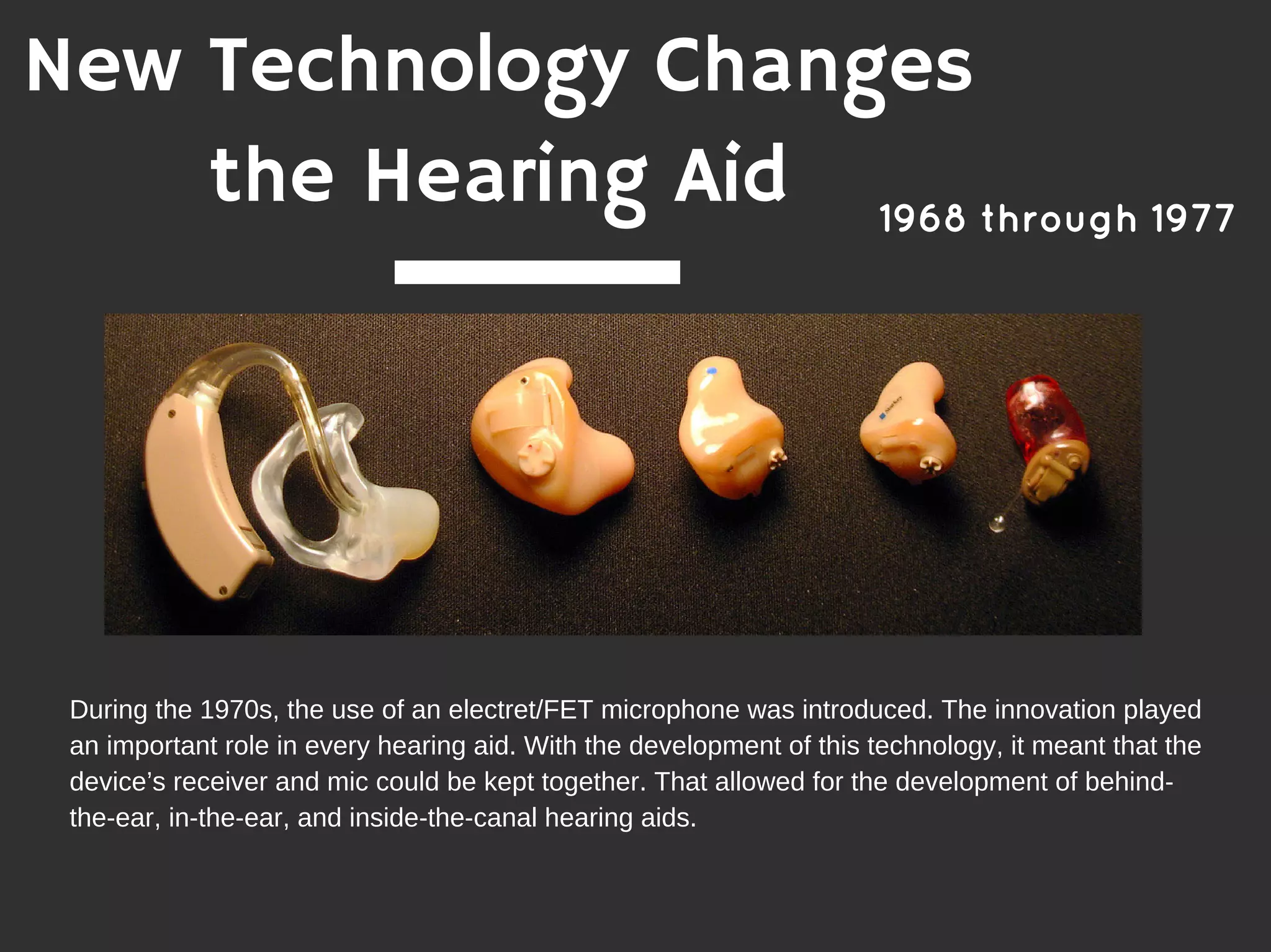
During the 1970s, the use of an electret/FET microphone was introduced. The innovation played
an important role in every hearing aid. With the development of this technology, it meant that the
device’s receiver and mic could be kept together. That allowed for the development of behind-
the-ear, in-the-ear, and inside-the-canal hearing aids.
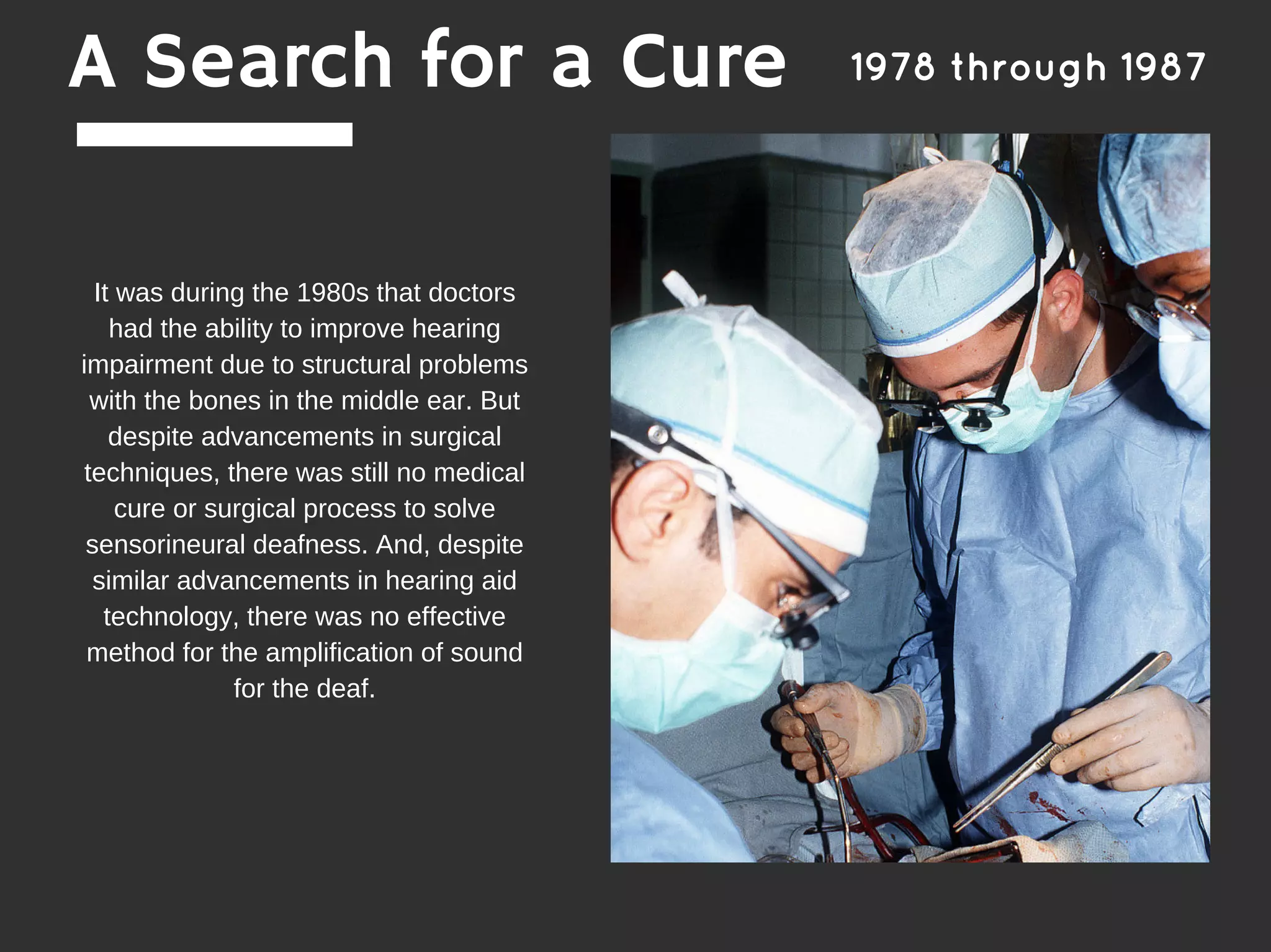
It was during the 1980s that doctors
had the ability to improve hearing
impairment due to structural problems
with the bones in the middle ear. But
despite advancements in surgical
techniques, there was still no medical
cure or surgical process to solve
sensorineural deafness. And, despite
similar advancements in hearing aid
technology, there was no effective
method for the amplification of sound
for the deaf.
A Search for a Cure 1978 through 1987
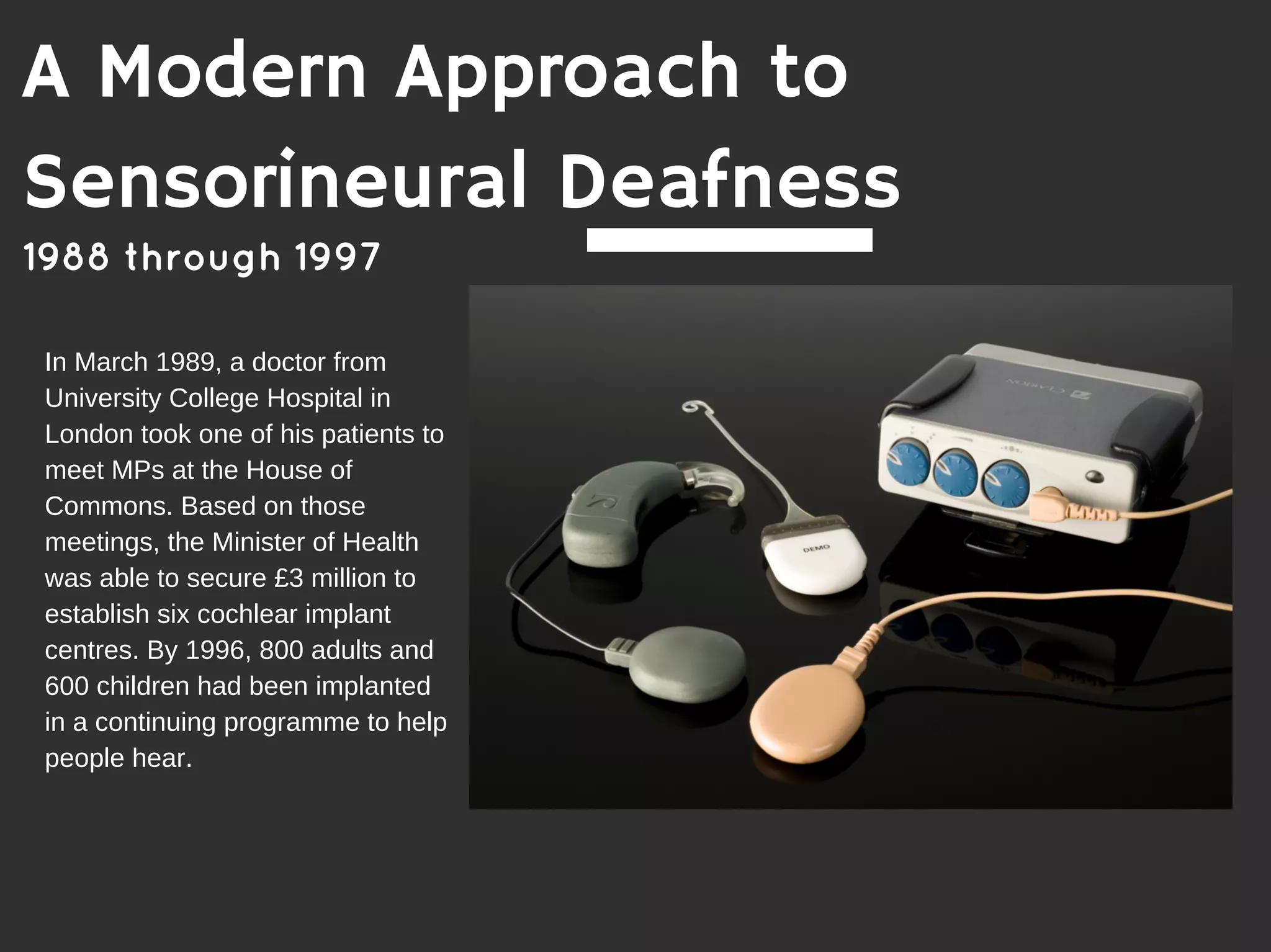
In March 1989, a doctor from
University College Hospital in
London took one of his patients to
meet MPs at the House of
Commons. Based on those
meetings, the Minister of Health
was able to secure £3 million to
establish six cochlear implant
centres. By 1996, 800 adults and
600 children had been implanted
in a continuing programme to help
people hear.
1988 through 1997
A Modern Approach to
Sensorineural Deafness
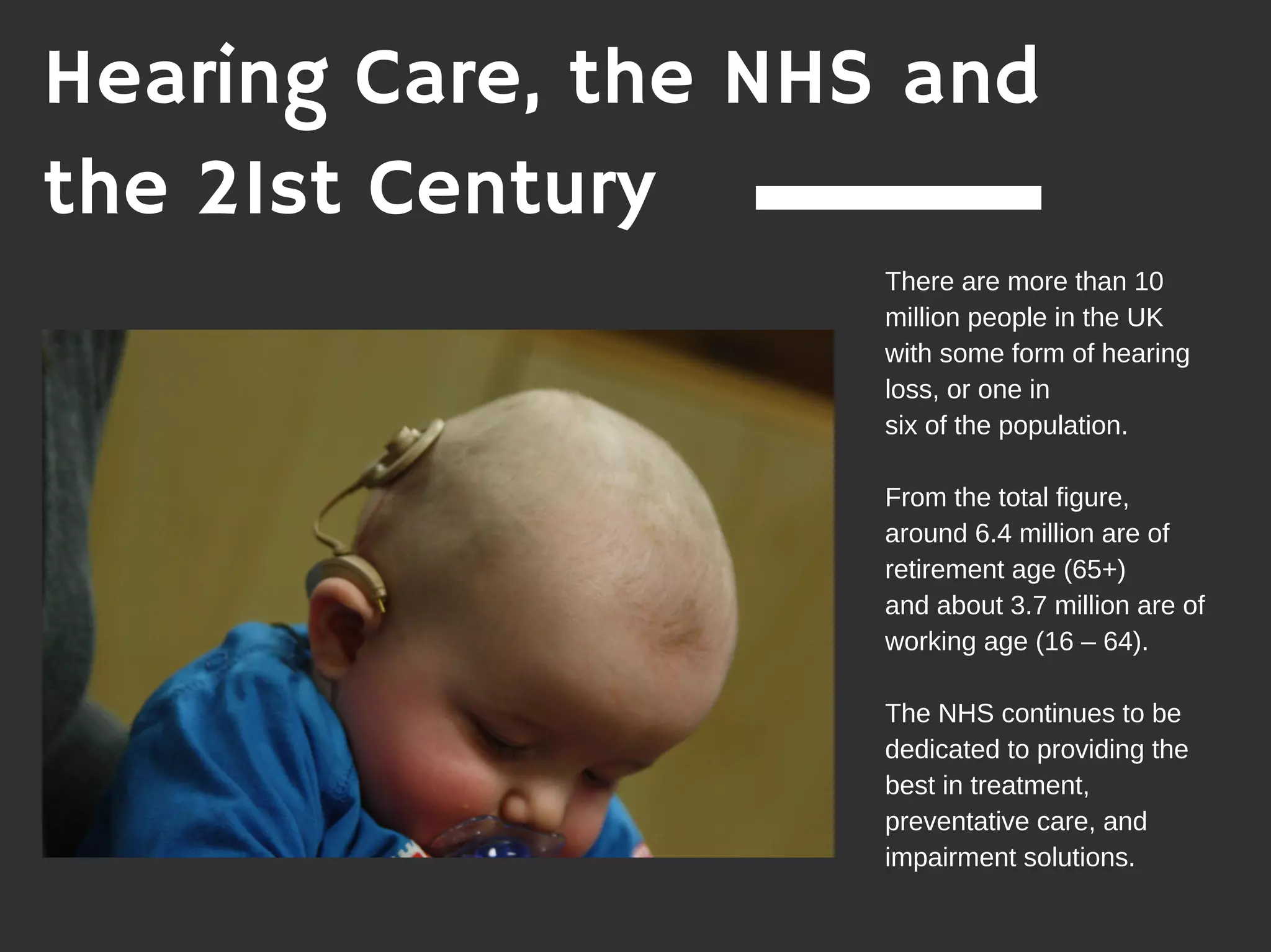
Hearing Care, the NHS and
the 21st Century
There are more than 10
million people in the UK
with some form of hearing
loss, or one in
six of the population.
From the total figure,
around 6.4 million are of
retirement age (65+)
and about 3.7 million are of
working age (16 – 64).
The NHS continues to be
dedicated to providing the
best in treatment,
preventative care, and
impairment solutions.
Budget Challenges
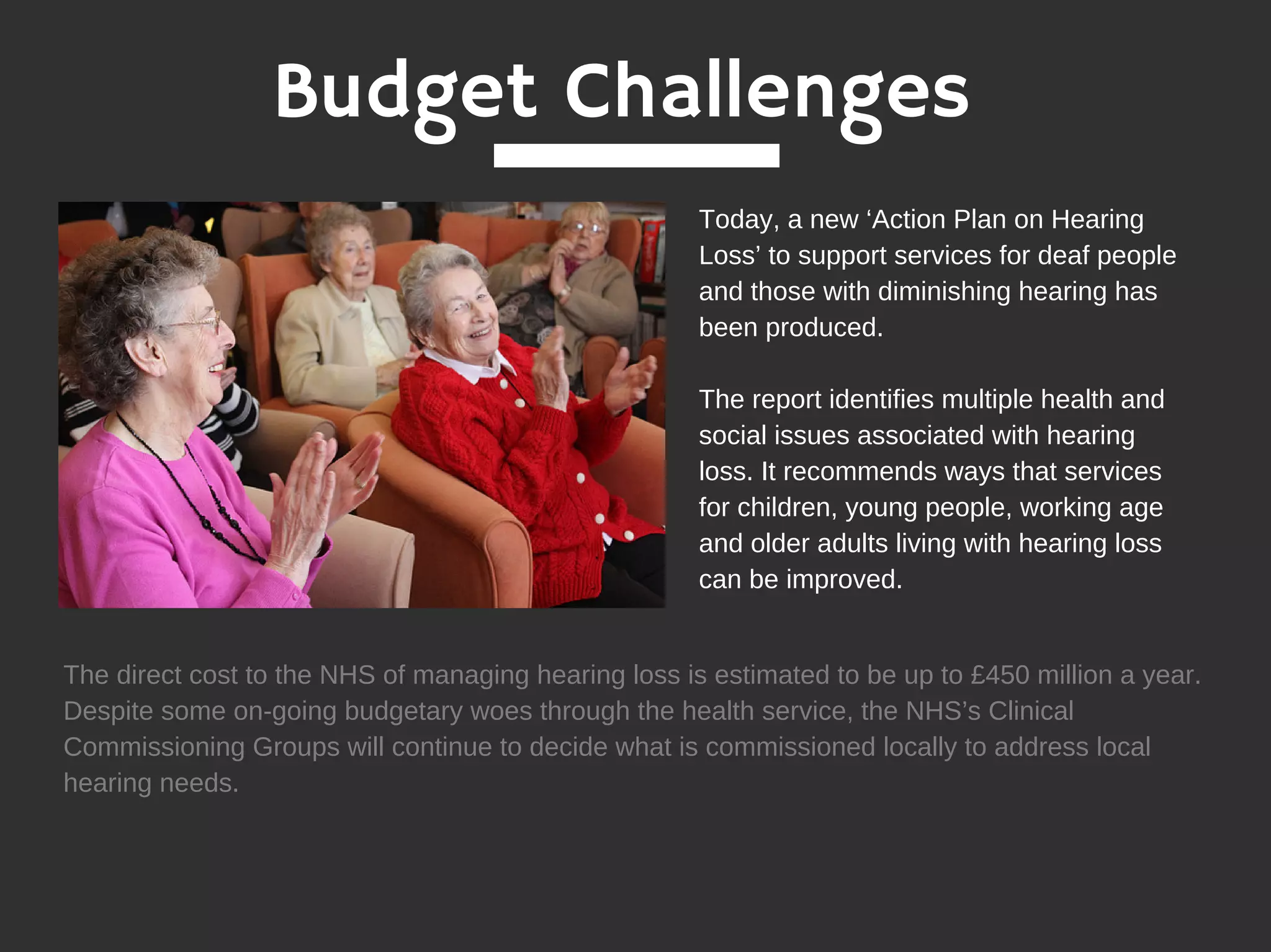
Today, a new ‘Action Plan on Hearing
Loss’ to support services for deaf people
and those with diminishing hearing has
been produced.
The report identifies multiple health and
social issues associated with hearing
loss. It recommends ways that services
for children, young people, working age
and older adults living with hearing loss
can be improved.
The direct cost to the NHS of managing hearing loss is estimated to be up to £450 million a year.
Despite some on-going budgetary woes through the health service, the NHS’s Clinical
Commissioning Groups will continue to decide what is commissioned locally to address local
hearing needs.
Resources
for the
Hearing Impaired
http://www.nhs.uk/conditions/Hearing-impairment/Pages/Introduction.aspx
http://www.actiononhearingloss.org.uk/
http://www.hearinglink.org/
https://hearinglosspages.wordpress.com/
https://hearbetterwithhearingloss.wordpress.com/
http://ahearingloss.com/
http://www.hearingaidknow.com/
http://livingwithhearingloss.com/
http://www.hearingcareblog.com/
http://hearinghealthmatters.org/
http://limpingchicken.com/
http://www.healthyhearing.com/
www.ageukhearingaids.co.uk

History of the NHS

  • 1.
  • 2.
    Following World WarII, the elected Labour government went to work implementing a plan to create new ways to care for Britain's people. After three years of work, and cooperation across the political spectrum, the NHS was officially started on 5 July 1948 with the opening of the Park Hospital in Manchester. A True National Service A comprehensive health and rehabilitation services for prevention and cure of disease
  • 3.
    Decades of Care Staffacross the NHS are in contact with more than 1.5 million patients and their families every day Each month, 23 million people (almost three times the population of London) visit their GP surgery or practice nurse. Both men and women live an average of 10 years longer than they did before the creation of the NHS in 1948.
  • 4.
    1948 through 1957 The three maindevelopments that affected the treatment of hearing loss were the use of antibiotics, the advent of improved anaesthesia, and the creation of a new microscope that allowed for more precise surgical techniques. The NHS also began to advocate the use of hearing aids in their early years. A model created by Medresco was used regularly by the service. Created in Dollis Hill by a very early version of British Telecom, these devices were offered by the NHS up until the 1970s. The device used a radio transmitter for sound amplification. NHS Hearing Care
  • 5.
    1958 through 1967 Moving into the1960s, hearing care took a course to predictive and preventative care, and the NHS was an active leader in trying to minimise the negative effects of hearing loss. During this time, routine hearing tests for children were introduced in mass. Preventative Hearing Care
  • 6.
    1968 through 1977 New Technology Changes theHearing Aid During the 1970s, the use of an electret/FET microphone was introduced. The innovation played an important role in every hearing aid. With the development of this technology, it meant that the device’s receiver and mic could be kept together. That allowed for the development of behind- the-ear, in-the-ear, and inside-the-canal hearing aids.
  • 7.
    It was duringthe 1980s that doctors had the ability to improve hearing impairment due to structural problems with the bones in the middle ear. But despite advancements in surgical techniques, there was still no medical cure or surgical process to solve sensorineural deafness. And, despite similar advancements in hearing aid technology, there was no effective method for the amplification of sound for the deaf. A Search for a Cure 1978 through 1987
  • 8.
    In March 1989,a doctor from University College Hospital in London took one of his patients to meet MPs at the House of Commons. Based on those meetings, the Minister of Health was able to secure £3 million to establish six cochlear implant centres. By 1996, 800 adults and 600 children had been implanted in a continuing programme to help people hear. 1988 through 1997 A Modern Approach to Sensorineural Deafness
  • 9.
    Hearing Care, theNHS and the 21st Century There are more than 10 million people in the UK with some form of hearing loss, or one in six of the population. From the total figure, around 6.4 million are of retirement age (65+) and about 3.7 million are of working age (16 – 64). The NHS continues to be dedicated to providing the best in treatment, preventative care, and impairment solutions.
  • 10.
    Budget Challenges Today, anew ‘Action Plan on Hearing Loss’ to support services for deaf people and those with diminishing hearing has been produced. The report identifies multiple health and social issues associated with hearing loss. It recommends ways that services for children, young people, working age and older adults living with hearing loss can be improved. The direct cost to the NHS of managing hearing loss is estimated to be up to £450 million a year. Despite some on-going budgetary woes through the health service, the NHS’s Clinical Commissioning Groups will continue to decide what is commissioned locally to address local hearing needs.
  • 11.