Project - National Museum and Modern Art Gallery
Group members – Richa Mahendroo
Shaifali Gaba
Rupankshi Aggarwal
Sakshi Sharma
Sanghamitra
Rashmi Singh
Sameer Ansari
Saurabh Kardan

(8334)
(8368)
(8067)
(8320)
(8100)
(8087)
(8371)
(8376)

Supervisor -Manish Karmwar
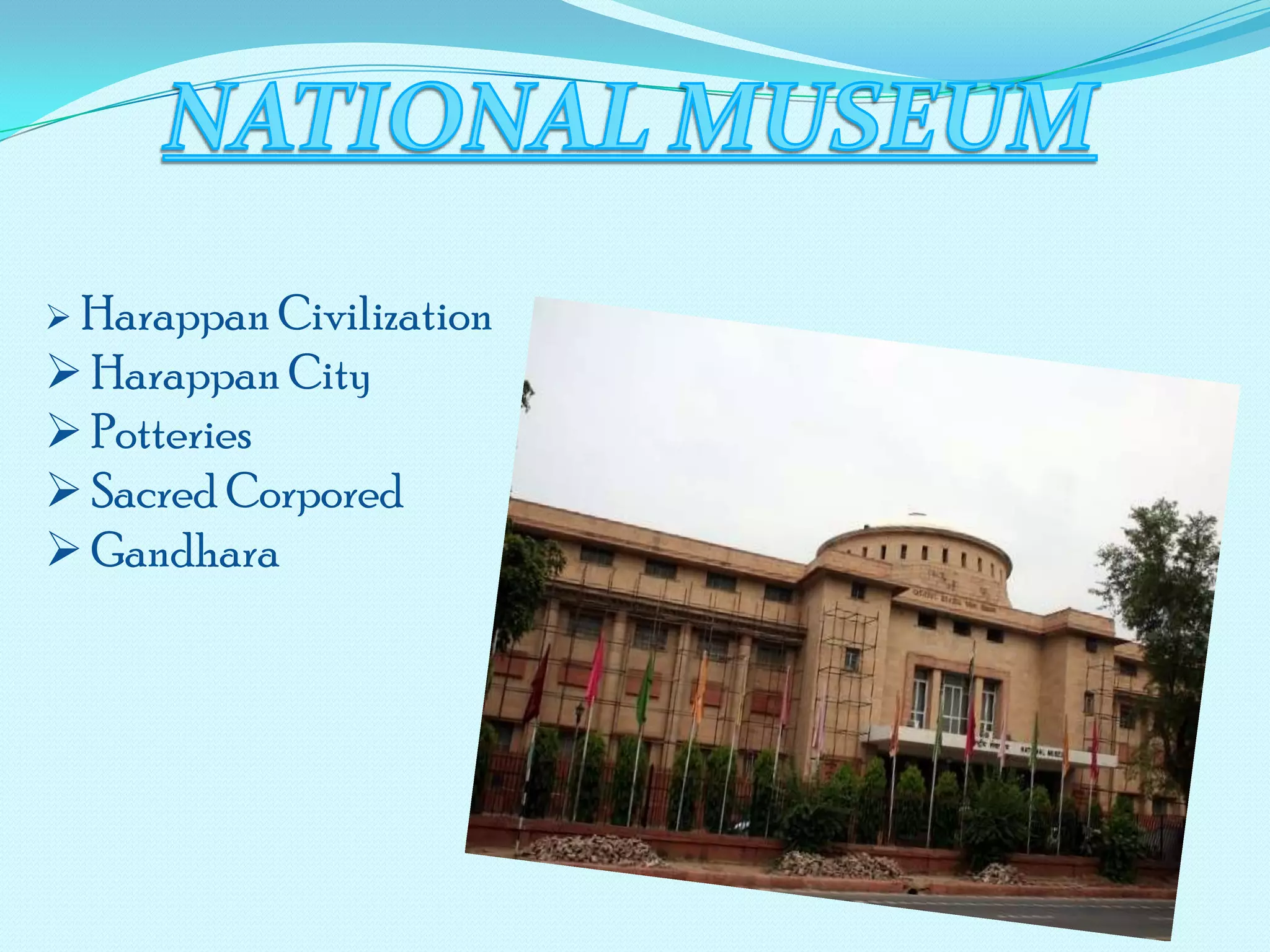
 Harappan Civilization

 Harappan City
 Potteries
 Sacred Corpored
 Gandhara
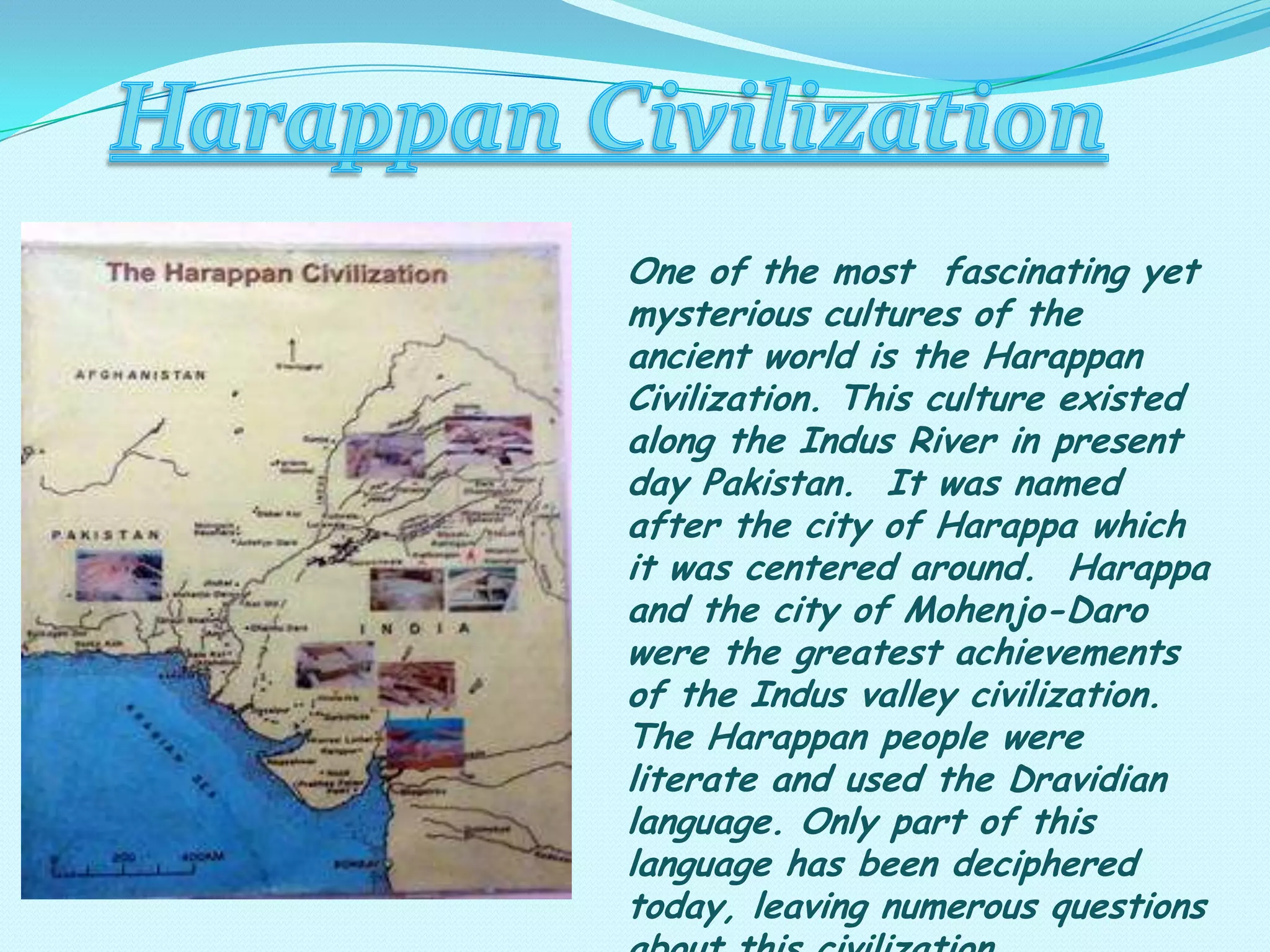
One of the most fascinating yet
mysterious cultures of the
ancient world is the Harappan
Civilization. This culture existed
along the Indus River in present
day Pakistan. It was named
after the city of Harappa which
it was centered around. Harappa
and the city of Mohenjo-Daro
were the greatest achievements
of the Indus valley civilization.
The Harappan people were
literate and used the Dravidian
language. Only part of this
language has been deciphered
today, leaving numerous questions
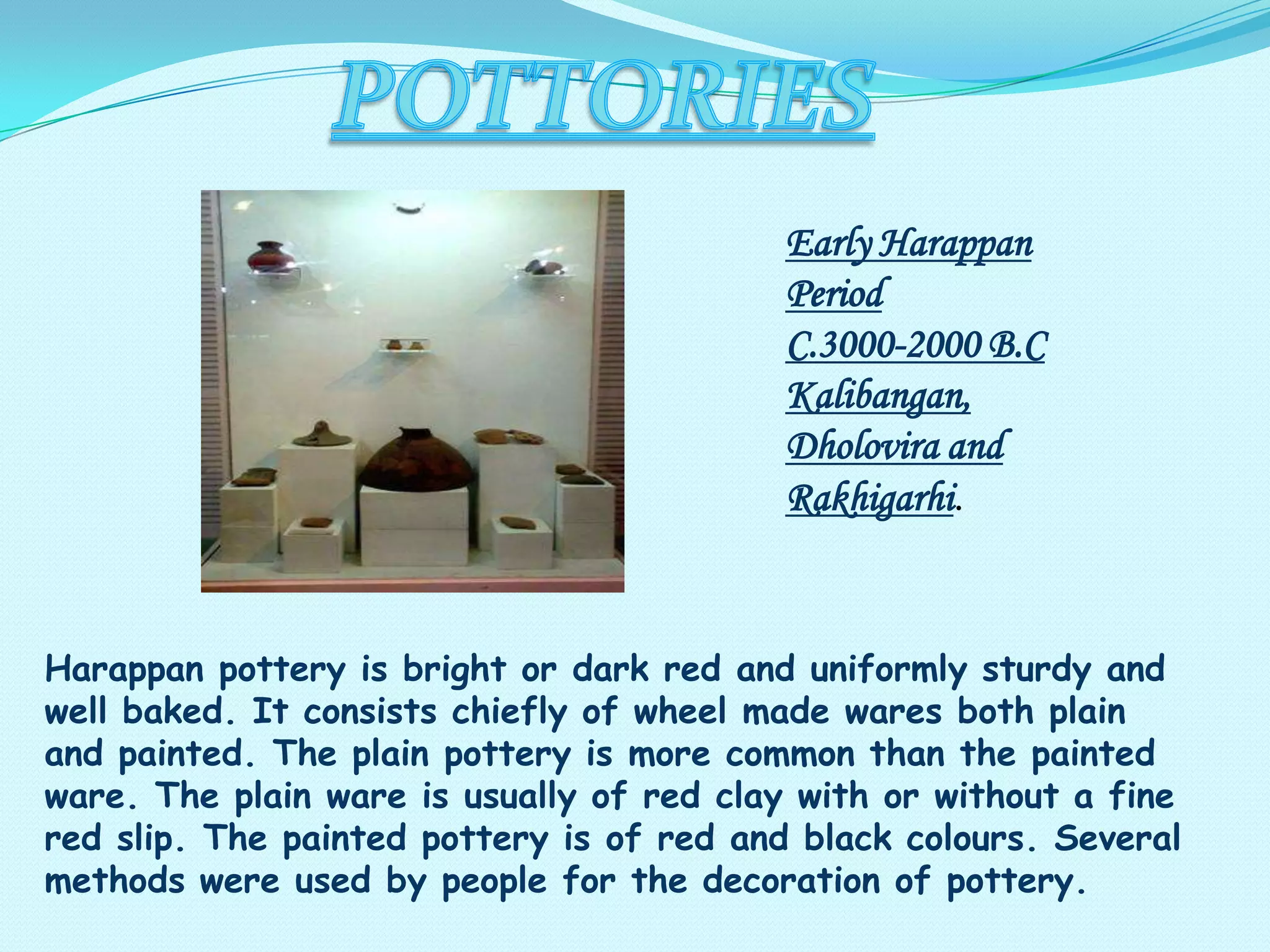
Early Harappan
Period
C.3000-2000 B.C
Kalibangan,
Dholovira and
Rakhigarhi.

Harappan pottery is bright or dark red and uniformly sturdy and
well baked. It consists chiefly of wheel made wares both plain
and painted. The plain pottery is more common than the painted
ware. The plain ware is usually of red clay with or without a fine
red slip. The painted pottery is of red and black colours. Several
methods were used by people for the decoration of pottery.
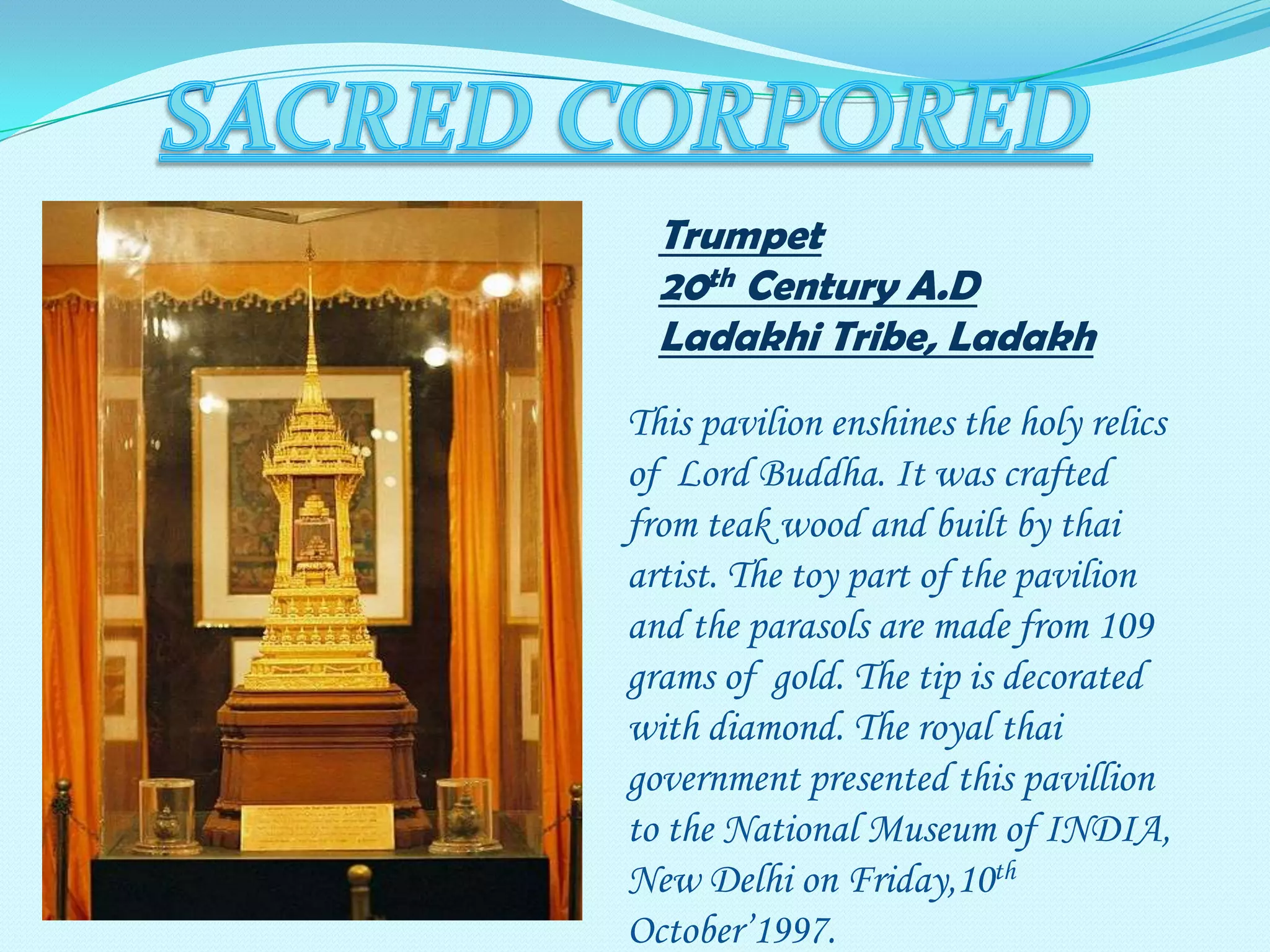
Trumpet
20th Century A.D
Ladakhi Tribe, Ladakh
This pavilion enshines the holy relics
of Lord Buddha. It was crafted
from teak wood and built by thai
artist. The toy part of the pavilion
and the parasols are made from 109
grams of gold. The tip is decorated
with diamond. The royal thai
government presented this pavillion
to the National Museum of INDIA,
New Delhi on Friday,10th
October’1997.
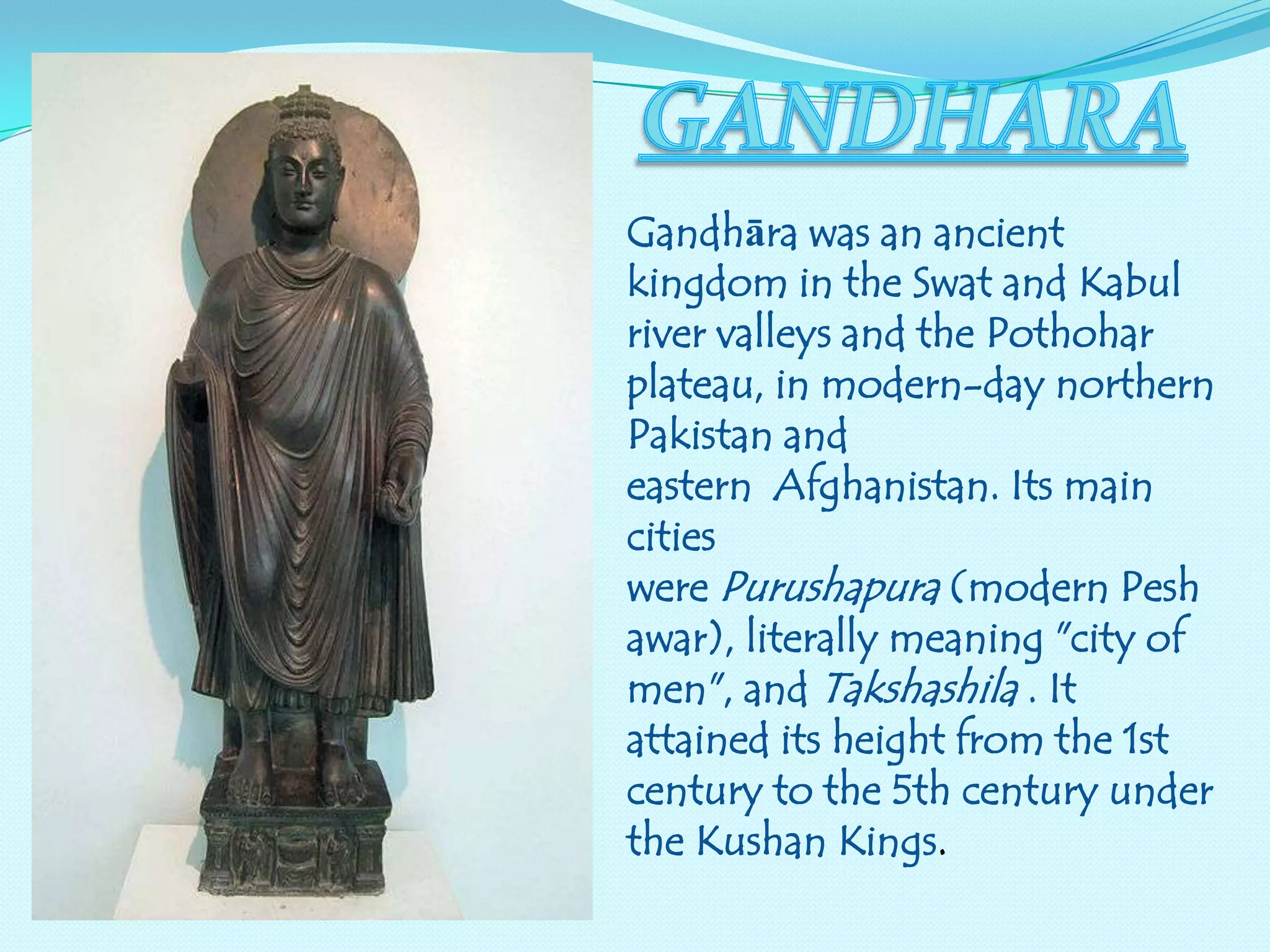
Gandhāra was an ancient
kingdom in the Swat and Kabul
river valleys and the Pothohar
plateau, in modern-day northern
Pakistan and
eastern Afghanistan. Its main
cities
were Purushapura (modern Pesh
awar), literally meaning "city of
men", and Takshashila . It
attained its height from the 1st
century to the 5th century under
the Kushan Kings.
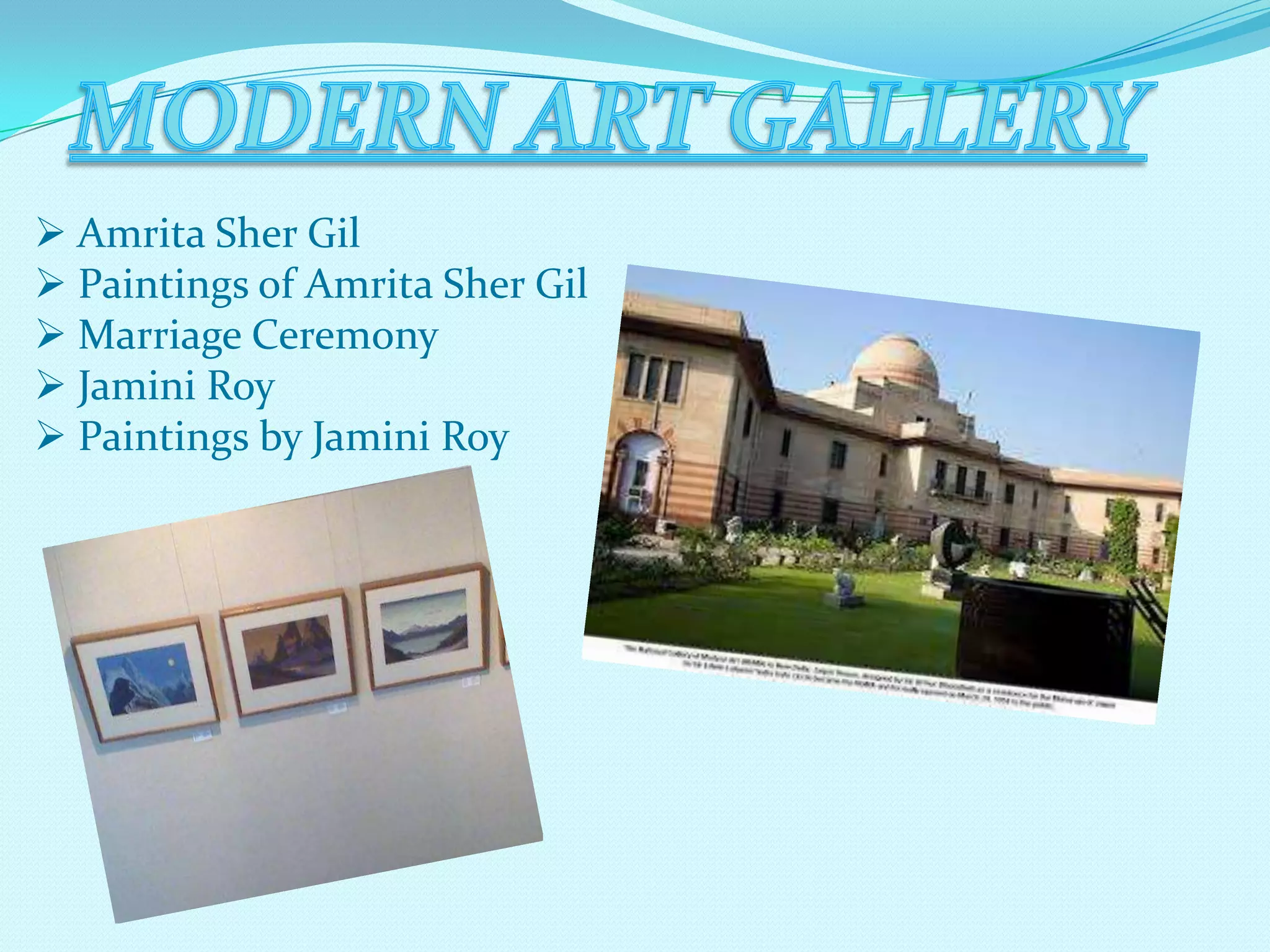
 Amrita Sher Gil
 Paintings of Amrita Sher Gil
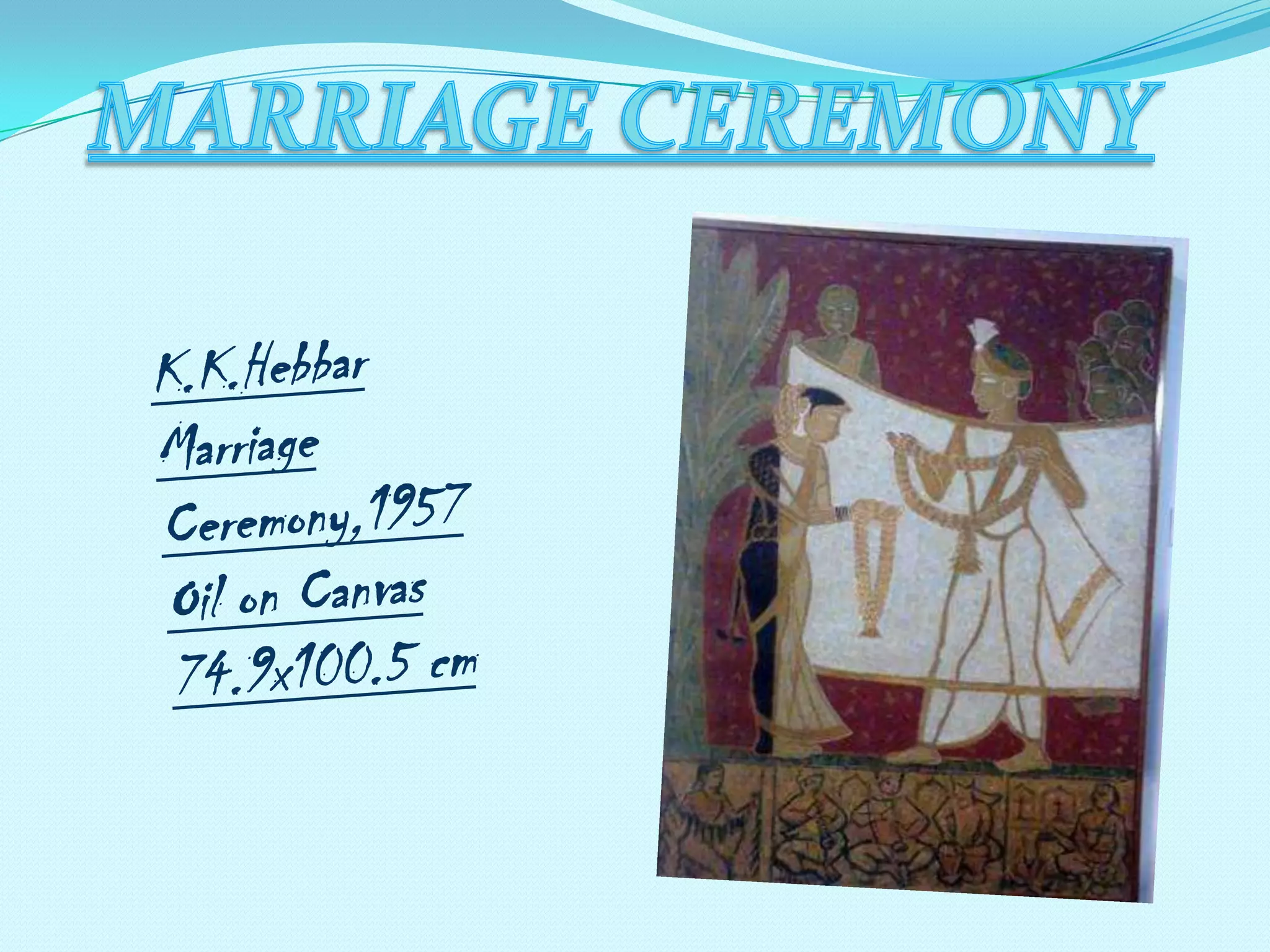
 Marriage Ceremony
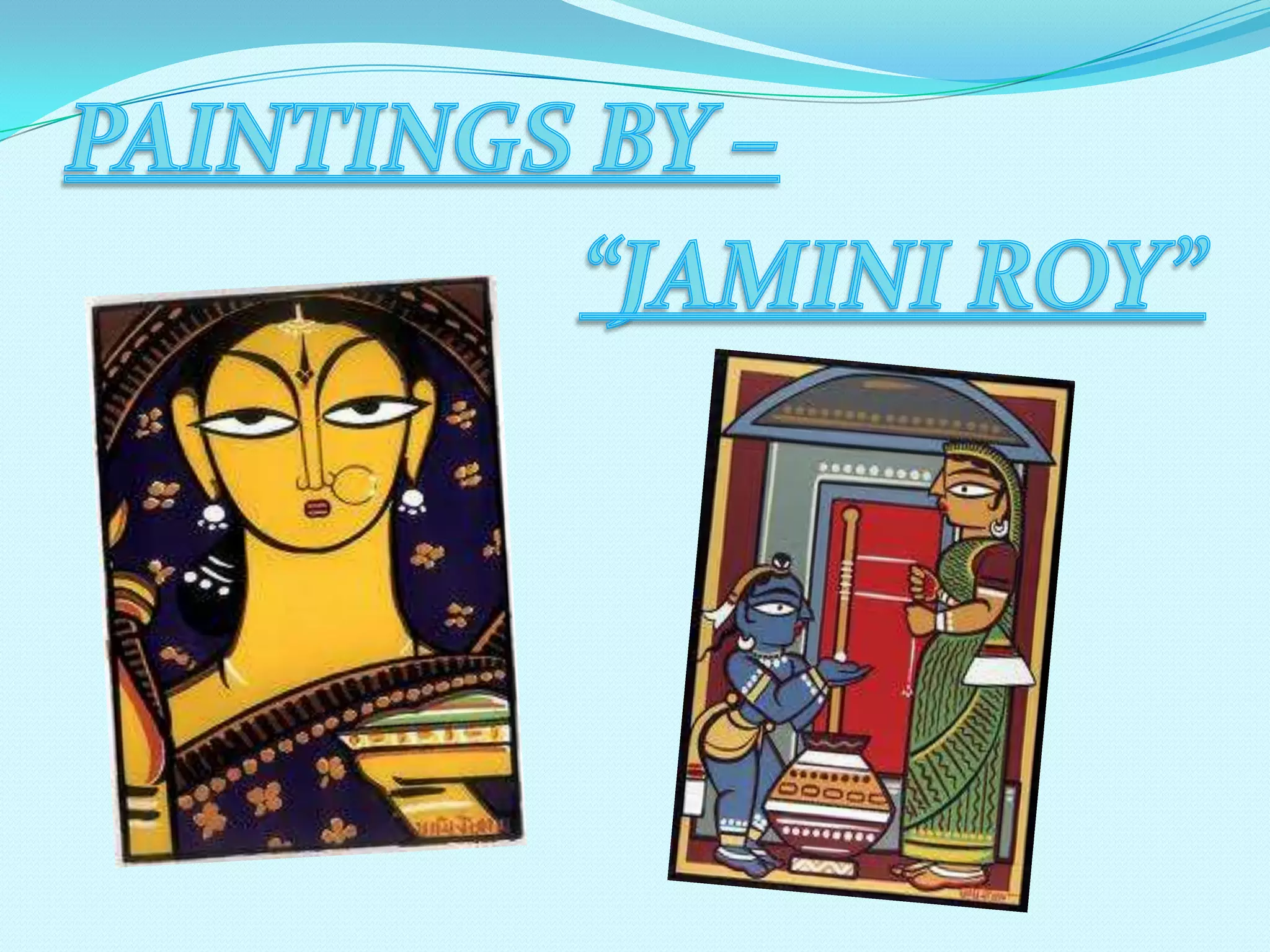
 Jamini Roy
 Paintings by Jamini Roy
Amrita Sher-Gil spent her short life of 28 years
searching passionately fir her own path, as a painter and
as a women in art and in society. The distinctive merit of
her European oeuvre is the rich, sensual pictorial quality
and the fact that, thaugh raised in the tradition of
European academicism at the Ecole des Beaux- Arts and
French post- impressionism in Paris, as well as plein -air
painting in Hungary , she revived and renewed her Indian
painting heritage as a living source of art. Later ,
independent of all ‘modern – isms; she created her own
world of painting.The works embody a heightened
intensity of colour and form, with its individual themes,
its objectivity and subjectivity and can be considered the
creator of Indian modernism.
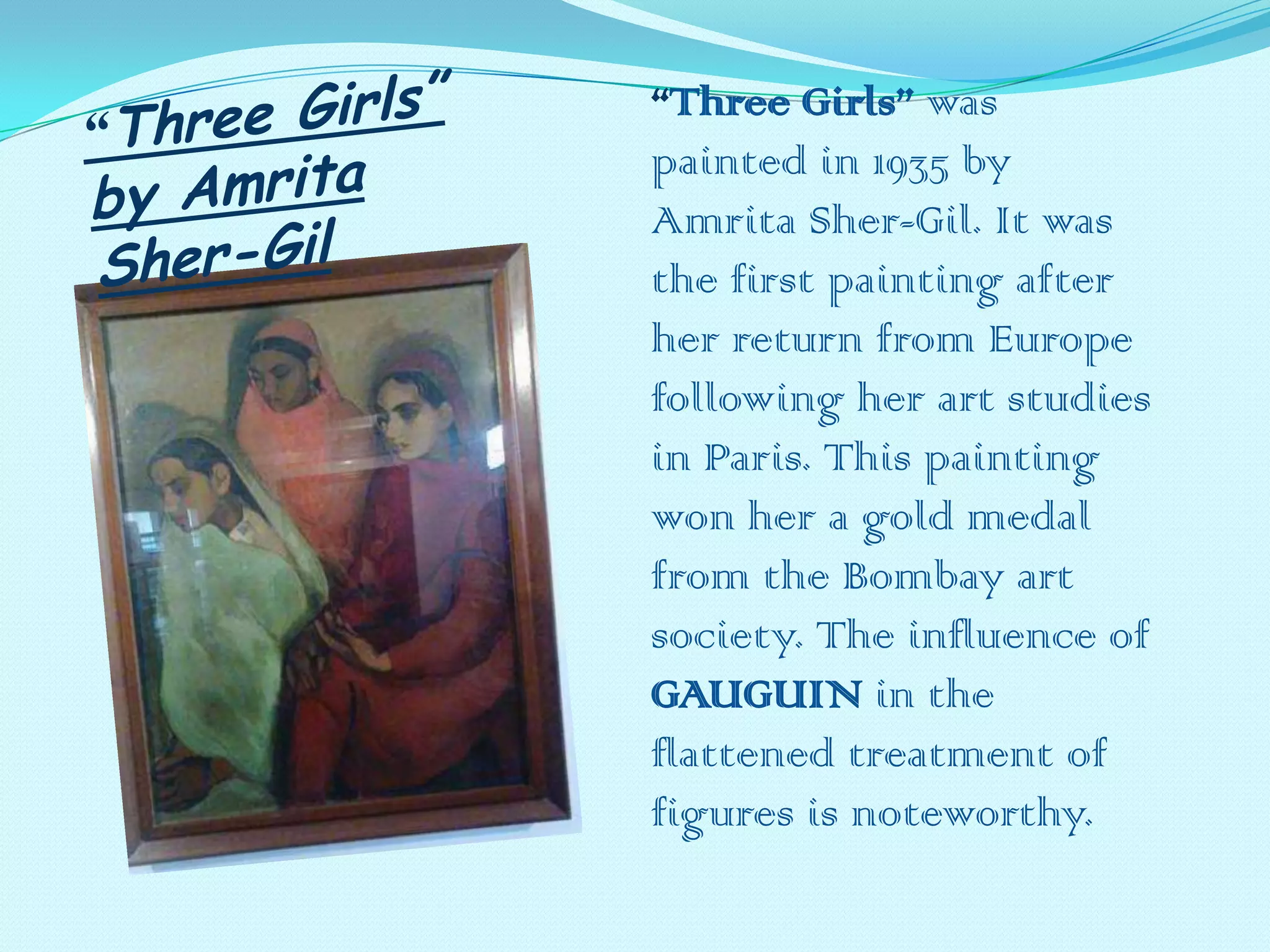
“Three Girls” was
painted in 1935 by
Amrita Sher-Gil. It was
the first painting after
her return from Europe
following her art studies
in Paris. This painting
won her a gold medal
from the Bombay art
society. The influence of
GAUGUIN in the
flattened treatment of
figures is noteworthy.
1887

Born in Beliator,Bankura District, West Bengal.

1916

Graduated from govt. school of arts and craft,Calcutta.was a
skilled portraitist and received plenty of commission.

1920

Changed his paintings style from European nationalism to new
idioms, started a series of paintings featuring santal women.

1924

Once again began searching for a new way to express pure form
painted a series of images with Calligraphic brushwork.

1927

Began painting with traditional mediums and materials. His search
for pure form led him to rediscover the simplicity of folk art and
crafts of Bankura.

1929

Held his first solo show at the govt. school of art and craft.
circle of friends and admirers began to grow. Also received
severe criticism.
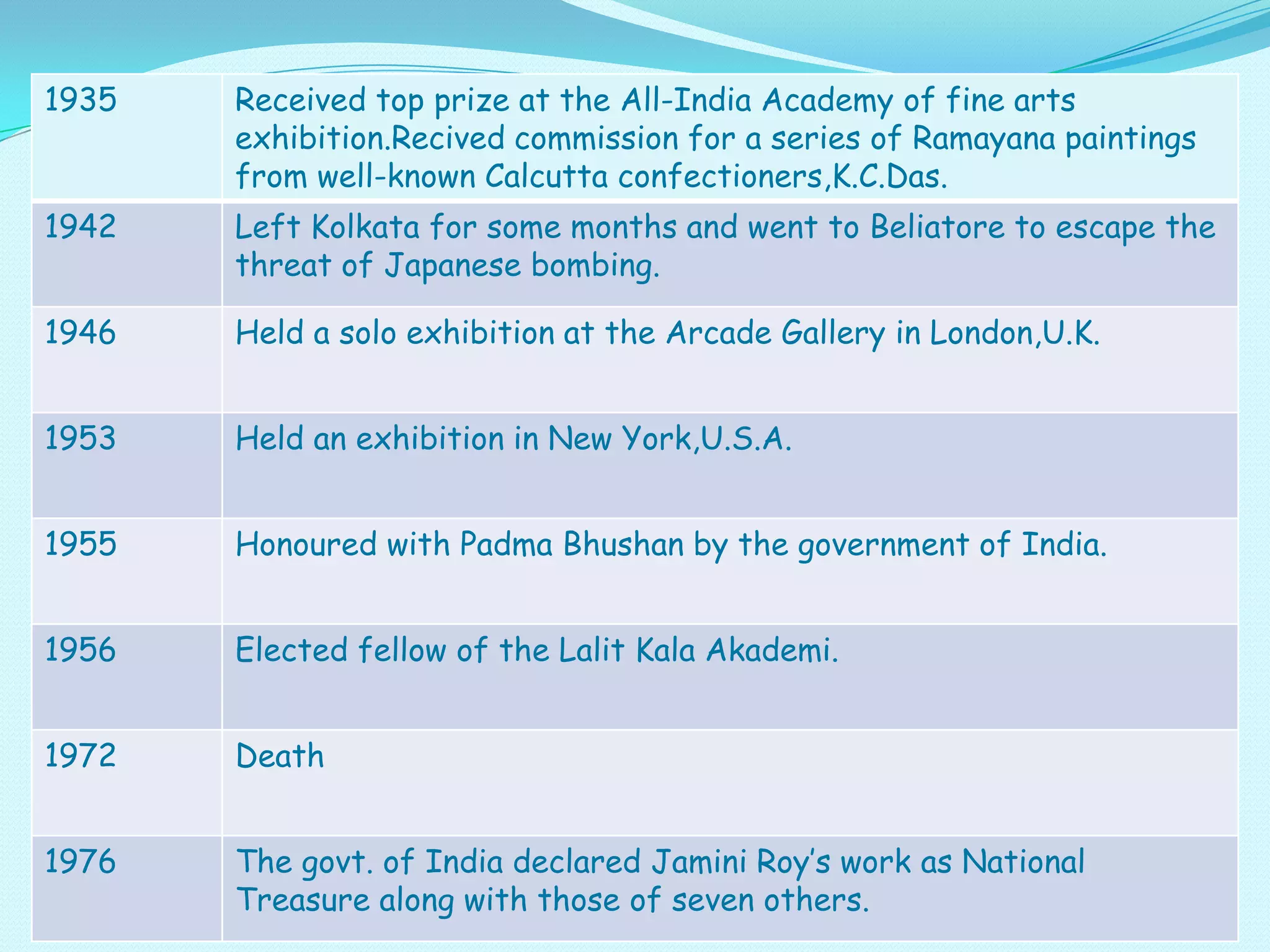
1935

Received top prize at the All-India Academy of fine arts
exhibition.Recived commission for a series of Ramayana paintings
from well-known Calcutta confectioners,K.C.Das.

1942

Left Kolkata for some months and went to Beliatore to escape the
threat of Japanese bombing.

1946

Held a solo exhibition at the Arcade Gallery in London,U.K.

1953

Held an exhibition in New York,U.S.A.

1955

Honoured with Padma Bhushan by the government of India.

1956

Elected fellow of the Lalit Kala Akademi.

1972

Death

1976

The govt. of India declared Jamini Roy’s work as National
Treasure along with those of seven others.
History IHC
History IHC

History IHC

  • 1.
    Project - NationalMuseum and Modern Art Gallery Group members – Richa Mahendroo Shaifali Gaba Rupankshi Aggarwal Sakshi Sharma Sanghamitra Rashmi Singh Sameer Ansari Saurabh Kardan (8334) (8368) (8067) (8320) (8100) (8087) (8371) (8376) Supervisor -Manish Karmwar
  • 2.
     Harappan Civilization Harappan City  Potteries  Sacred Corpored  Gandhara
  • 3.
    One of themost fascinating yet mysterious cultures of the ancient world is the Harappan Civilization. This culture existed along the Indus River in present day Pakistan. It was named after the city of Harappa which it was centered around. Harappa and the city of Mohenjo-Daro were the greatest achievements of the Indus valley civilization. The Harappan people were literate and used the Dravidian language. Only part of this language has been deciphered today, leaving numerous questions
  • 5.
    Early Harappan Period C.3000-2000 B.C Kalibangan, Dholoviraand Rakhigarhi. Harappan pottery is bright or dark red and uniformly sturdy and well baked. It consists chiefly of wheel made wares both plain and painted. The plain pottery is more common than the painted ware. The plain ware is usually of red clay with or without a fine red slip. The painted pottery is of red and black colours. Several methods were used by people for the decoration of pottery.
  • 6.
    Trumpet 20th Century A.D LadakhiTribe, Ladakh This pavilion enshines the holy relics of Lord Buddha. It was crafted from teak wood and built by thai artist. The toy part of the pavilion and the parasols are made from 109 grams of gold. The tip is decorated with diamond. The royal thai government presented this pavillion to the National Museum of INDIA, New Delhi on Friday,10th October’1997.
  • 7.
    Gandhāra was anancient kingdom in the Swat and Kabul river valleys and the Pothohar plateau, in modern-day northern Pakistan and eastern Afghanistan. Its main cities were Purushapura (modern Pesh awar), literally meaning "city of men", and Takshashila . It attained its height from the 1st century to the 5th century under the Kushan Kings.
  • 8.
     Amrita SherGil  Paintings of Amrita Sher Gil  Marriage Ceremony  Jamini Roy  Paintings by Jamini Roy
  • 9.
    Amrita Sher-Gil spenther short life of 28 years searching passionately fir her own path, as a painter and as a women in art and in society. The distinctive merit of her European oeuvre is the rich, sensual pictorial quality and the fact that, thaugh raised in the tradition of European academicism at the Ecole des Beaux- Arts and French post- impressionism in Paris, as well as plein -air painting in Hungary , she revived and renewed her Indian painting heritage as a living source of art. Later , independent of all ‘modern – isms; she created her own world of painting.The works embody a heightened intensity of colour and form, with its individual themes, its objectivity and subjectivity and can be considered the creator of Indian modernism.
  • 10.
    “Three Girls” was paintedin 1935 by Amrita Sher-Gil. It was the first painting after her return from Europe following her art studies in Paris. This painting won her a gold medal from the Bombay art society. The influence of GAUGUIN in the flattened treatment of figures is noteworthy.
  • 12.
    1887 Born in Beliator,BankuraDistrict, West Bengal. 1916 Graduated from govt. school of arts and craft,Calcutta.was a skilled portraitist and received plenty of commission. 1920 Changed his paintings style from European nationalism to new idioms, started a series of paintings featuring santal women. 1924 Once again began searching for a new way to express pure form painted a series of images with Calligraphic brushwork. 1927 Began painting with traditional mediums and materials. His search for pure form led him to rediscover the simplicity of folk art and crafts of Bankura. 1929 Held his first solo show at the govt. school of art and craft. circle of friends and admirers began to grow. Also received severe criticism.
  • 13.
    1935 Received top prizeat the All-India Academy of fine arts exhibition.Recived commission for a series of Ramayana paintings from well-known Calcutta confectioners,K.C.Das. 1942 Left Kolkata for some months and went to Beliatore to escape the threat of Japanese bombing. 1946 Held a solo exhibition at the Arcade Gallery in London,U.K. 1953 Held an exhibition in New York,U.S.A. 1955 Honoured with Padma Bhushan by the government of India. 1956 Elected fellow of the Lalit Kala Akademi. 1972 Death 1976 The govt. of India declared Jamini Roy’s work as National Treasure along with those of seven others.