Changes in Delivery Room Practices
for Newborn Infants across the world
Dr Julian Eason
Consultant Neonatologist
University Hospital Plymouth NHS Trust
England
Introduction
Question?
• What is the point of developing sophisticated ventilators,
doing expensive trials and undertaking expensive
courses on ventilation management if irreversible
damage has been caused before the infant is even
admitted to the NICU?
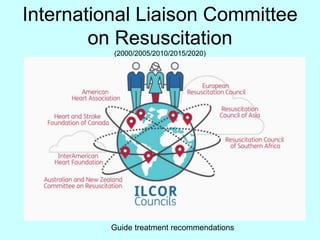
International Liaison Committee
on Resuscitation
(2000/2005/2010/2015/2020)
Guide treatment recommendations
The Latest Paper from ILCOR
• Neonatal Life Support: 2020 International
Consensus on Cardiopulmonary Resuscitation
and Emergency Cardiovascular Care Science
With Treatment Recommendations
• Myra H. Wyckoff, Jonathan Wyllie, Khalid Aziz, Maria Fernanda de Almeida, Jorge Fabres, Joe
Fawke, Ruth Guinsburg, Shigeharu Hosono, Tetsuya Isayama, Vishal S. Kapadia, Han-Suk
Kim, Helen G. Liley, Christopher J.D. McKinlay, Lindsay Mildenhall, Jeffrey M. Perlman, Yacov
Rabi, Charles C. Roehr, Georg M. Schmölzer, Edgardo Szyld, Daniele Trevisanuto, Sithembiso
Velaphi and Gary M. Weiner
• Circulation. 2020;142:S185–S221
• https://www.ahajournals.org/doi/epub/10.1161/CIR.0000000000000895
Resus around the word
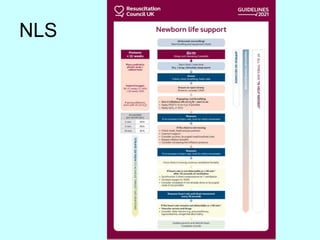
• UK – NLS
• Europe – Euro NLS
• Middle East – Euro NLS/NRP
• Vietnam – Euro NLS/NRP
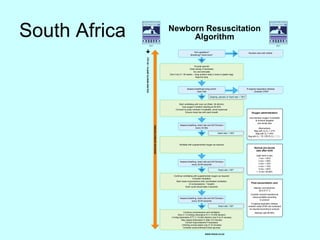
• South Afica – SA NR
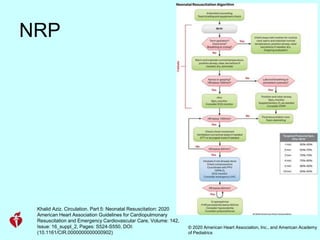
• USA/Canada – NRP
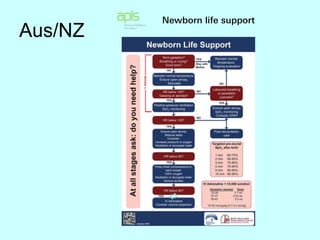
• Australia/New Zealand – ANZCOR NLS
Resus around the world
www.resus.co.za
2021 2021
Provide warmth
Clear airway if necessary
Dry and stimulate
(Don’t dry if < 30 weeks – wrap preterm baby’s torso in plastic bag)
Note the time
Start ventilating with room air (Rate: 30-40/min)
Use oxygen if preterm starting at 30-40%
Connect to pulse oximeter if available, avoid hyperoxia
Ensure chest rise with each breath
Ventilate with supplemental oxygen as required
Continue ventilating with supplemental oxygen as required
Consider intubation
Start chest compressions with coordinated ventilation
(3 compressions: 1 breath)
Each cycle should take 2 seconds
Continue compressions and ventilation
Give 0.1-0.3ml/kg Adrenaline IV (1:10 000 dilution)
(1ml/kg Adrenaline ETT (1:10 000 dilution) only if no IV access)
May repeat Adrenaline IV after 3-5 minutes
Correct hypovolaemia if necessary
(10ml/kg normal saline over 5-10 minutes)
Consider pneumothorax/Check glucose
Newborn Resuscitation
Algorithm
Assess breathing/crying and/or
heart rate
Gasping, apnoeic or heart rate < 100?
Heart rate < 100?
Heart rate < 60?
Heart rate < 60?
Assess breathing, heart rate and SATS/colour
every 30-60s
Assess breathing, heart rate and SATS/colour
every 30-60 seconds
Assess breathing, heart rate and SATS/colour
every 30-60 seconds
Term gestation?
Breathing? Good tone?
Routine care with mother
If ongoing respiratory distress
- consider CPAP
Yes
Yes
Yes
Yes
No
Yes
MAINTAIN
NORMOTHERMIA
GOLDEN
MINUTE
(BIRTH
–
60
sec)
Oxygen administration
Use blended oxygen if available
to achieve targeted
pre-ductal sats
Alternatively:
Bag with no O2 = 21%
Bag with O2 = 40%
Bag with O2 + res ervoir bag ≈ 100%
Normal pre-ductal
sats after birth
(right hand or ear)
1 min: > 60%
2 min: > 65%
3 min: > 70%
4 min: > 75%
5 min: > 80%
> 10 min: 90-95%
Post-resuscitation care
Maintain normothermia:
36.5-37.5° C
Consider induced hypothermia
where available according
to protocol
If ongoing respiratory distress
consider nasal CPAP and surfactant
as required according to protocol
Maintain sats 90-95%
SA
USA
UK Aus/NZ
Edited Resuscitation History
• Chinese philosopher ‘Hwang Ti’ 2698 noted more premature babies
die
• 1472 Mouth to mouth described in a newborn infant in western
literature
• 1745 Midwives in UK were using mouth to mouth on babies but was
not recognised by doctors!
• 1850-1890 resuscitation included the following:
• Swinging the infant
• Squeezing the chest
• Shaking, rubbing and slapping
• Electric shocks
• Oral stimulants (strychnine)
Oxygen Disaster!
• 1942-1954 over 12,000 moderately premature infants
blinded by Retrolental Fibroplasia from Oxygen
• Stevie Wonder
• Many infant still damaged now as resuscitation is
performed in 100% oxygen still causing damage even
after a short exposure
• Blenders are extremely important
The Umbilical Cord - History
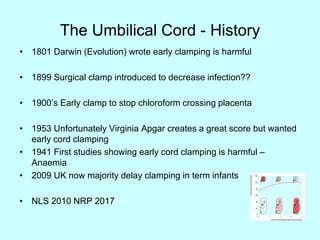
• 1801 Darwin (Evolution) wrote early clamping is harmful
• 1899 Surgical clamp introduced to decrease infection??
• 1900’s Early clamp to stop chloroform crossing placenta
• 1953 Unfortunately Virginia Apgar creates a great score but wanted
early cord clamping
• 1941 First studies showing early cord clamping is harmful –
Anaemia
• 2009 UK now majority delay clamping in term infants
• NLS 2010 NRP 2017
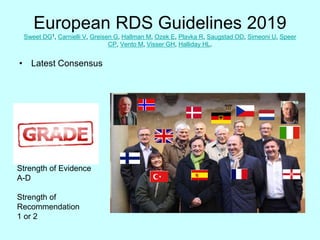
European RDS Guidelines 2019
Sweet DG1, Carnielli V, Greisen G, Hallman M, Ozek E, Plavka R, Saugstad OD, Simeoni U, Speer
CP, Vento M, Visser GH, Halliday HL.
• Latest Consensus
Strength of Evidence
A-D
Strength of
Recommendation
1 or 2
Delivery Room Stabilisation
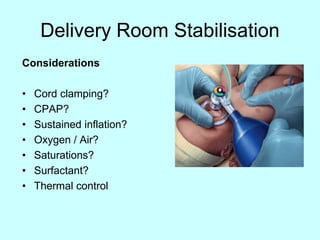
Considerations
• Cord clamping?
• CPAP?
• Sustained inflation?
• Oxygen / Air?
• Saturations?
• Surfactant?
• Thermal control
Recommendations
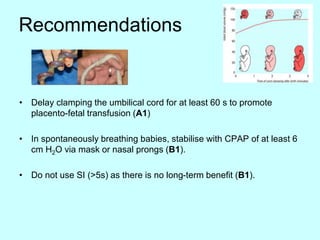
• Delay clamping the umbilical cord for at least 60 s to promote
placento-fetal transfusion (A1)
• In spontaneously breathing babies, stabilise with CPAP of at least 6
cm H2O via mask or nasal prongs (B1).
• Do not use SI (>5s) as there is no long-term benefit (B1).
Recommendation
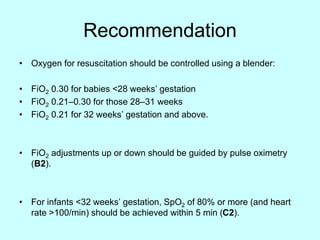
• Oxygen for resuscitation should be controlled using a blender:
• FiO2 0.30 for babies <28 weeks’ gestation
• FiO2 0.21–0.30 for those 28–31 weeks
• FiO2 0.21 for 32 weeks’ gestation and above.
• FiO2 adjustments up or down should be guided by pulse oximetry
(B2).
• For infants <32 weeks’ gestation, SpO2 of 80% or more (and heart
rate >100/min) should be achieved within 5 min (C2).
Recommendations
• Intubation should be reserved for babies not responding to positive
pressure ventilation via face mask or nasal prongs (A1).
• Preterm babies who require intubation for stabilisation should be
given surfactant (B1).
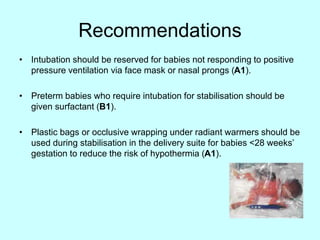
• Plastic bags or occlusive wrapping under radiant warmers should be
used during stabilisation in the delivery suite for babies <28 weeks’
gestation to reduce the risk of hypothermia (A1).
Resuscitation
in
practice
NLS Latest updates for 2021
• Umbilical cord
• Delay cord clamping for 60 seconds
• If not possible then milk the cord if > 28 weeks
• This has shown to reduce transfusions and need
for less inotropic support
Inflation and Ventilation breaths
• Pressures have increased
• <32 weeks 25 cm H2O
• >32 weeks 30 cm H2O
• PEEP at 5cm for all
Laryngeal Masks (LMA)
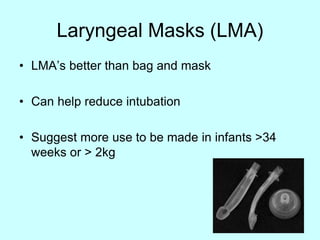
• LMA’s better than bag and mask
• Can help reduce intubation
• Suggest more use to be made in infants >34
weeks or > 2kg
Oxygen: Start Low
• > 32 weeks start in Air
• 28 – 32 weeks start Air - 30%
• <28 weeks start in 30%
• If heart rate not increased after 30 seconds of chest
compressions then increase to 100% Oxygen
Saturations
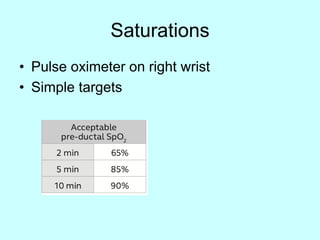
• Pulse oximeter on right wrist
• Simple targets
Thick Meconium
• Do not rush to suction
• If apnoeic then do not delay ventilation
Adrenaline
• 20 micrograms/kg
• (0.2 mL/kg of 1:10,000 adrenaline (1000
micrograms in 10 mL).
• Eg 3kg baby = 0.6ml
• This should be repeated every 3-5 minutes as
needed.
Temperature
• Aim for 36.5 – 37.5 OC
• For infants >32 weeks used humidified gases
where possible
So NLS or NRP?
(minor differences)
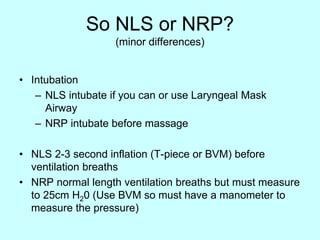
• Intubation
– NLS intubate if you can or use Laryngeal Mask
Airway
– NRP intubate before massage
• NLS 2-3 second inflation (T-piece or BVM) before
ventilation breaths
• NRP normal length ventilation breaths but must measure
to 25cm H20 (Use BVM so must have a manometer to
measure the pressure)
NLS or NRP?
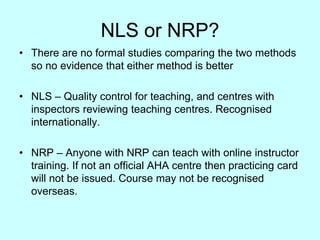
• There are no formal studies comparing the two methods
so no evidence that either method is better
• NLS – Quality control for teaching, and centres with
inspectors reviewing teaching centres. Recognised
internationally.
• NRP – Anyone with NRP can teach with online instructor
training. If not an official AHA centre then practicing card
will not be issued. Course may not be recognised
overseas.
Manuals
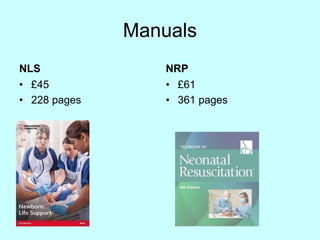
NLS
• £45
• 228 pages
NRP
• £61
• 361 pages
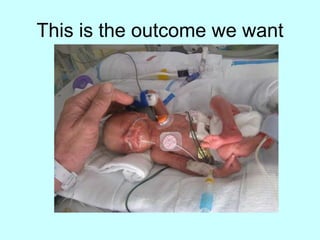
This is the outcome we want
Thank you
NLS
Khalid Aziz. Circulation. Part 5: Neonatal Resuscitation: 2020
American Heart Association Guidelines for Cardiopulmonary
Resuscitation and Emergency Cardiovascular Care, Volume: 142,
Issue: 16_suppl_2, Pages: S524-S550, DOI:
(10.1161/CIR.0000000000000902)
© 2020 American Heart Association, Inc., and American Academy
of Pediatrics
NRP
Aus/NZ
South Africa
www.resus.co.za
2021 2021
Provide warmth
Clear airway if necessary
Dry and stimulate
(Don’t dry if < 30 weeks – wrap preterm baby’s torso in plastic bag)
Note the time
Start ventilating with room air (Rate: 30-40/min)
Use oxygen if preterm starting at 30-40%
Connect to pulse oximeter if available, avoid hyperoxia
Ensure chest rise with each breath
Ventilate with supplemental oxygen as required
Continue ventilating with supplemental oxygen as required
Consider intubation
Start chest compressions with coordinated ventilation
(3 compressions: 1 breath)
Each cycle should take 2 seconds
Continue compressions and ventilation
Give 0.1-0.3ml/kg Adrenaline IV (1:10 000 dilution)
(1ml/kg Adrenaline ETT (1:10 000 dilution) only if no IV access)
May repeat Adrenaline IV after 3-5 minutes
Correct hypovolaemia if necessary
(10ml/kg normal saline over 5-10 minutes)
Consider pneumothorax/Check glucose
Newborn Resuscitation
Algorithm
Assess breathing/crying and/or
heart rate
Gasping, apnoeic or heart rate < 100?
Heart rate < 100?
Heart rate < 60?
Heart rate < 60?
Assess breathing, heart rate and SATS/colour
every 30-60s
Assess breathing, heart rate and SATS/colour
every 30-60 seconds
Assess breathing, heart rate and SATS/colour
every 30-60 seconds
Term gestation?
Breathing? Good tone?
Routine care with mother
If ongoing respiratory distress
- consider CPAP
Yes
Yes
Yes
Yes
No
Yes
MAINTAIN
NORMOTHERMIA
GOLDEN
MINUTE
(BIRTH
–
60
sec)
Oxygen administration
Use blended oxygen if available
to achieve targeted
pre-ductal sats
Alternatively:
Bag with no O2 = 21%
Bag with O2 = 40%
Bag with O2 + res ervoir bag ≈ 100%
Normal pre-ductal
sats after birth
(right hand or ear)
1 min: > 60%
2 min: > 65%
3 min: > 70%
4 min: > 75%
5 min: > 80%
> 10 min: 90-95%
Post-resuscitation care
Maintain normothermia:
36.5-37.5° C
Consider induced hypothermia
where available according
to protocol
If ongoing respiratory distress
consider nasal CPAP and surfactant
as required according to protocol
Maintain sats 90-95%
References
ILCOR Circulation. 2020;142:S185–S221
Newborn Life Support 8th Ed 2021
Neonatal Resuscitation Programme 8th Ed 2021
European Resuscitation Gyidelines
Neonatal Mortality after 21% or 100% O2 resusctiation Saugstad, Ramji, Soll, Vento.
Neonatology 2008

History and World Practice 22.ppt

  • 1.
    Changes in DeliveryRoom Practices for Newborn Infants across the world Dr Julian Eason Consultant Neonatologist University Hospital Plymouth NHS Trust England
  • 2.
    Introduction Question? • What isthe point of developing sophisticated ventilators, doing expensive trials and undertaking expensive courses on ventilation management if irreversible damage has been caused before the infant is even admitted to the NICU?
  • 3.
    International Liaison Committee onResuscitation (2000/2005/2010/2015/2020) Guide treatment recommendations
  • 4.
    The Latest Paperfrom ILCOR • Neonatal Life Support: 2020 International Consensus on Cardiopulmonary Resuscitation and Emergency Cardiovascular Care Science With Treatment Recommendations • Myra H. Wyckoff, Jonathan Wyllie, Khalid Aziz, Maria Fernanda de Almeida, Jorge Fabres, Joe Fawke, Ruth Guinsburg, Shigeharu Hosono, Tetsuya Isayama, Vishal S. Kapadia, Han-Suk Kim, Helen G. Liley, Christopher J.D. McKinlay, Lindsay Mildenhall, Jeffrey M. Perlman, Yacov Rabi, Charles C. Roehr, Georg M. Schmölzer, Edgardo Szyld, Daniele Trevisanuto, Sithembiso Velaphi and Gary M. Weiner • Circulation. 2020;142:S185–S221 • https://www.ahajournals.org/doi/epub/10.1161/CIR.0000000000000895
  • 5.
    Resus around theword • UK – NLS • Europe – Euro NLS • Middle East – Euro NLS/NRP • Vietnam – Euro NLS/NRP • South Afica – SA NR • USA/Canada – NRP • Australia/New Zealand – ANZCOR NLS
  • 6.
    Resus around theworld www.resus.co.za 2021 2021 Provide warmth Clear airway if necessary Dry and stimulate (Don’t dry if < 30 weeks – wrap preterm baby’s torso in plastic bag) Note the time Start ventilating with room air (Rate: 30-40/min) Use oxygen if preterm starting at 30-40% Connect to pulse oximeter if available, avoid hyperoxia Ensure chest rise with each breath Ventilate with supplemental oxygen as required Continue ventilating with supplemental oxygen as required Consider intubation Start chest compressions with coordinated ventilation (3 compressions: 1 breath) Each cycle should take 2 seconds Continue compressions and ventilation Give 0.1-0.3ml/kg Adrenaline IV (1:10 000 dilution) (1ml/kg Adrenaline ETT (1:10 000 dilution) only if no IV access) May repeat Adrenaline IV after 3-5 minutes Correct hypovolaemia if necessary (10ml/kg normal saline over 5-10 minutes) Consider pneumothorax/Check glucose Newborn Resuscitation Algorithm Assess breathing/crying and/or heart rate Gasping, apnoeic or heart rate < 100? Heart rate < 100? Heart rate < 60? Heart rate < 60? Assess breathing, heart rate and SATS/colour every 30-60s Assess breathing, heart rate and SATS/colour every 30-60 seconds Assess breathing, heart rate and SATS/colour every 30-60 seconds Term gestation? Breathing? Good tone? Routine care with mother If ongoing respiratory distress - consider CPAP Yes Yes Yes Yes No Yes MAINTAIN NORMOTHERMIA GOLDEN MINUTE (BIRTH – 60 sec) Oxygen administration Use blended oxygen if available to achieve targeted pre-ductal sats Alternatively: Bag with no O2 = 21% Bag with O2 = 40% Bag with O2 + res ervoir bag ≈ 100% Normal pre-ductal sats after birth (right hand or ear) 1 min: > 60% 2 min: > 65% 3 min: > 70% 4 min: > 75% 5 min: > 80% > 10 min: 90-95% Post-resuscitation care Maintain normothermia: 36.5-37.5° C Consider induced hypothermia where available according to protocol If ongoing respiratory distress consider nasal CPAP and surfactant as required according to protocol Maintain sats 90-95% SA USA UK Aus/NZ
  • 7.
    Edited Resuscitation History •Chinese philosopher ‘Hwang Ti’ 2698 noted more premature babies die • 1472 Mouth to mouth described in a newborn infant in western literature • 1745 Midwives in UK were using mouth to mouth on babies but was not recognised by doctors! • 1850-1890 resuscitation included the following: • Swinging the infant • Squeezing the chest • Shaking, rubbing and slapping • Electric shocks • Oral stimulants (strychnine)
  • 8.
    Oxygen Disaster! • 1942-1954over 12,000 moderately premature infants blinded by Retrolental Fibroplasia from Oxygen • Stevie Wonder • Many infant still damaged now as resuscitation is performed in 100% oxygen still causing damage even after a short exposure • Blenders are extremely important
  • 9.
    The Umbilical Cord- History • 1801 Darwin (Evolution) wrote early clamping is harmful • 1899 Surgical clamp introduced to decrease infection?? • 1900’s Early clamp to stop chloroform crossing placenta • 1953 Unfortunately Virginia Apgar creates a great score but wanted early cord clamping • 1941 First studies showing early cord clamping is harmful – Anaemia • 2009 UK now majority delay clamping in term infants • NLS 2010 NRP 2017
  • 10.
    European RDS Guidelines2019 Sweet DG1, Carnielli V, Greisen G, Hallman M, Ozek E, Plavka R, Saugstad OD, Simeoni U, Speer CP, Vento M, Visser GH, Halliday HL. • Latest Consensus Strength of Evidence A-D Strength of Recommendation 1 or 2
  • 11.
    Delivery Room Stabilisation Considerations •Cord clamping? • CPAP? • Sustained inflation? • Oxygen / Air? • Saturations? • Surfactant? • Thermal control
  • 12.
    Recommendations • Delay clampingthe umbilical cord for at least 60 s to promote placento-fetal transfusion (A1) • In spontaneously breathing babies, stabilise with CPAP of at least 6 cm H2O via mask or nasal prongs (B1). • Do not use SI (>5s) as there is no long-term benefit (B1).
  • 13.
    Recommendation • Oxygen forresuscitation should be controlled using a blender: • FiO2 0.30 for babies <28 weeks’ gestation • FiO2 0.21–0.30 for those 28–31 weeks • FiO2 0.21 for 32 weeks’ gestation and above. • FiO2 adjustments up or down should be guided by pulse oximetry (B2). • For infants <32 weeks’ gestation, SpO2 of 80% or more (and heart rate >100/min) should be achieved within 5 min (C2).
  • 14.
    Recommendations • Intubation shouldbe reserved for babies not responding to positive pressure ventilation via face mask or nasal prongs (A1). • Preterm babies who require intubation for stabilisation should be given surfactant (B1). • Plastic bags or occlusive wrapping under radiant warmers should be used during stabilisation in the delivery suite for babies <28 weeks’ gestation to reduce the risk of hypothermia (A1).
  • 15.
  • 16.
    NLS Latest updatesfor 2021 • Umbilical cord • Delay cord clamping for 60 seconds • If not possible then milk the cord if > 28 weeks • This has shown to reduce transfusions and need for less inotropic support
  • 17.
    Inflation and Ventilationbreaths • Pressures have increased • <32 weeks 25 cm H2O • >32 weeks 30 cm H2O • PEEP at 5cm for all
  • 18.
    Laryngeal Masks (LMA) •LMA’s better than bag and mask • Can help reduce intubation • Suggest more use to be made in infants >34 weeks or > 2kg
  • 19.
    Oxygen: Start Low •> 32 weeks start in Air • 28 – 32 weeks start Air - 30% • <28 weeks start in 30% • If heart rate not increased after 30 seconds of chest compressions then increase to 100% Oxygen
  • 20.
    Saturations • Pulse oximeteron right wrist • Simple targets
  • 21.
    Thick Meconium • Donot rush to suction • If apnoeic then do not delay ventilation
  • 22.
    Adrenaline • 20 micrograms/kg •(0.2 mL/kg of 1:10,000 adrenaline (1000 micrograms in 10 mL). • Eg 3kg baby = 0.6ml • This should be repeated every 3-5 minutes as needed.
  • 23.
    Temperature • Aim for36.5 – 37.5 OC • For infants >32 weeks used humidified gases where possible
  • 24.
    So NLS orNRP? (minor differences) • Intubation – NLS intubate if you can or use Laryngeal Mask Airway – NRP intubate before massage • NLS 2-3 second inflation (T-piece or BVM) before ventilation breaths • NRP normal length ventilation breaths but must measure to 25cm H20 (Use BVM so must have a manometer to measure the pressure)
  • 25.
    NLS or NRP? •There are no formal studies comparing the two methods so no evidence that either method is better • NLS – Quality control for teaching, and centres with inspectors reviewing teaching centres. Recognised internationally. • NRP – Anyone with NRP can teach with online instructor training. If not an official AHA centre then practicing card will not be issued. Course may not be recognised overseas.
  • 26.
    Manuals NLS • £45 • 228pages NRP • £61 • 361 pages
  • 27.
    This is theoutcome we want
  • 28.
  • 29.
  • 30.
    Khalid Aziz. Circulation.Part 5: Neonatal Resuscitation: 2020 American Heart Association Guidelines for Cardiopulmonary Resuscitation and Emergency Cardiovascular Care, Volume: 142, Issue: 16_suppl_2, Pages: S524-S550, DOI: (10.1161/CIR.0000000000000902) © 2020 American Heart Association, Inc., and American Academy of Pediatrics NRP
  • 31.
  • 32.
    South Africa www.resus.co.za 2021 2021 Providewarmth Clear airway if necessary Dry and stimulate (Don’t dry if < 30 weeks – wrap preterm baby’s torso in plastic bag) Note the time Start ventilating with room air (Rate: 30-40/min) Use oxygen if preterm starting at 30-40% Connect to pulse oximeter if available, avoid hyperoxia Ensure chest rise with each breath Ventilate with supplemental oxygen as required Continue ventilating with supplemental oxygen as required Consider intubation Start chest compressions with coordinated ventilation (3 compressions: 1 breath) Each cycle should take 2 seconds Continue compressions and ventilation Give 0.1-0.3ml/kg Adrenaline IV (1:10 000 dilution) (1ml/kg Adrenaline ETT (1:10 000 dilution) only if no IV access) May repeat Adrenaline IV after 3-5 minutes Correct hypovolaemia if necessary (10ml/kg normal saline over 5-10 minutes) Consider pneumothorax/Check glucose Newborn Resuscitation Algorithm Assess breathing/crying and/or heart rate Gasping, apnoeic or heart rate < 100? Heart rate < 100? Heart rate < 60? Heart rate < 60? Assess breathing, heart rate and SATS/colour every 30-60s Assess breathing, heart rate and SATS/colour every 30-60 seconds Assess breathing, heart rate and SATS/colour every 30-60 seconds Term gestation? Breathing? Good tone? Routine care with mother If ongoing respiratory distress - consider CPAP Yes Yes Yes Yes No Yes MAINTAIN NORMOTHERMIA GOLDEN MINUTE (BIRTH – 60 sec) Oxygen administration Use blended oxygen if available to achieve targeted pre-ductal sats Alternatively: Bag with no O2 = 21% Bag with O2 = 40% Bag with O2 + res ervoir bag ≈ 100% Normal pre-ductal sats after birth (right hand or ear) 1 min: > 60% 2 min: > 65% 3 min: > 70% 4 min: > 75% 5 min: > 80% > 10 min: 90-95% Post-resuscitation care Maintain normothermia: 36.5-37.5° C Consider induced hypothermia where available according to protocol If ongoing respiratory distress consider nasal CPAP and surfactant as required according to protocol Maintain sats 90-95%
  • 33.
    References ILCOR Circulation. 2020;142:S185–S221 NewbornLife Support 8th Ed 2021 Neonatal Resuscitation Programme 8th Ed 2021 European Resuscitation Gyidelines Neonatal Mortality after 21% or 100% O2 resusctiation Saugstad, Ramji, Soll, Vento. Neonatology 2008

Editor's Notes

  • #3 This is not just about resuscitation but avoiding harm.
  • #4 ILCOR provides the evidence based research upon which to base guidelines for Neonatal resuscitation
  • #5 This is the link to the paper you can download free
  • #6 Newborn life support is taught all over the world but there are small variations as the ILCOR recommendations are interpreted.
  • #7 Everyone has their own algo rithm
  • #8 It has been known for a long time that more premature babies die. As early as the 15th century mouth to mouth resuscitation was described. Interestingly midwives in the UK used mouth to mouth on babies but the doctors did not agree.
  • #9 Many more unproven practices were tried but the dangers of Oxygen was a painful lesson. Mostly occurred in the USA but Europe and UK affected as well.
  • #10 Cord clamping has changed many times over many years
  • #11 The other paper good to read is the European RDS guidelines which also includes evidence on resuscitation and grades the papers
  • #12 Resuscitation has recently concentrated on the following
  • #13 Current recommendations
  • #16 So in countries where there are resuscitation councils, changes are made when new evidence appears
  • #17 What are the latest changes?
  • #25 So what are the differences? They are small but people get vey agitated about them despite there being no studies to say one is better. NRP you must intubate. As a a bag-valve-mask is used you must have a pressure gauge.
  • #27 Both manuals are available to purchase and read if that helps
  • #28 The most important outcome is that we resuscitate all infants to the best of our abilities.