HINDUIS
M
FESTIVA
LS.
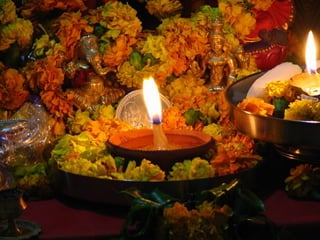
DIWALI
Most well known.
Festival of lights.
Symbolized victory over evil.
Lamps are lit for hope for mankind,
new beginning and positive qualities
one should have.
Also a chance to celebrate Ganesha.
Celebrated for five days in the
month of Oct/Nov.
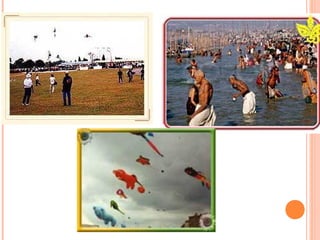
(KITE FESTIVAL).
Mid-winter Hindu festival
Hindu New Year
Festival is celebrated by taking dips
in the Ganges River
Dip is said to purify the self
Celebrated for 3 days and is more of
a cultural festival
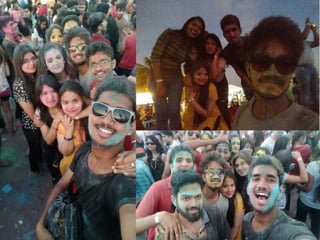
HOLI
 Celebrated on the day after the full moon
in early March
 Festival to celebrate good harvest
 Spring festival
 Also called the “Festival of Colors”
 Day one = bonfire is lit at night
 Day two = people go around and throw
colored powder and water at each other
 End with a feasts at a friends house in the
evening
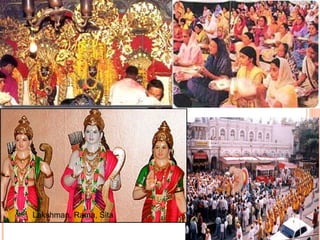
RAM NAVAMI
 ninth day of the Hindu Lunar year
(March)
 birthday of Rama
 Starts off with prey to the Sun
 perform Kalyanotsavam (marriage
celebration) for images of Rama and Sita
 end of the day the Rama is taken to a
procession on the street
 Hindus are supposed to fast
 Temples are decorated and readings of the
Ramayana take place.
Lakshman, Rama, Sita
RAKSHA BANDHAN
Raksha = protection
Bandhan = lasting bond
celebrates the relationship
between brothers and sisters
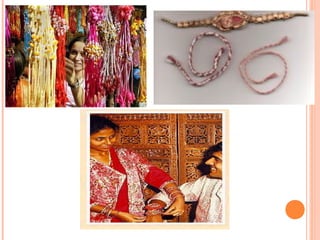
Thread-tying ceremony (rakhi)
sister recognizes the bond
between them
brother vows to look after her
Feed each other sweets
JANMASHTAMI.
 Celebration of the birth of Lord Krishna
◦ Reincarnation of Lord Vishnu
◦ Giver of the Bhagvat Gita
 2007 in Sept 3rd
and 4th
 Celebrated differently in North and South
 In south…….
 begin the festival by fasting on the previous day
 followed by a night-long vigil commemorating the
birth
 At midnight, the deity of the infant Krishna is bathed,
placed in a cradle and worshipped
 the early morning, ladies draw patterns of little
children's feet outside the house with rice-flour paste,
walking towards the house
◦ symbolizes the entry of the infant Krishna into his foster-home
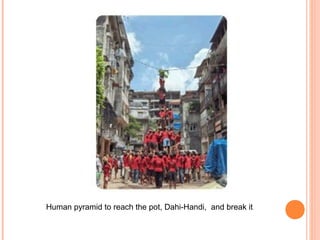
Human pyramid to reach the pot, Dahi-Handi, and break it
GANESHA CHATURTHI.
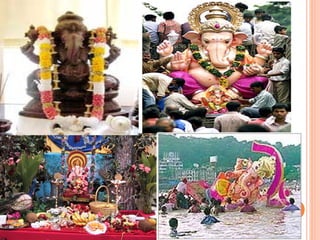
 Annual festival in honor of Ganesh
◦ Elephant headed deity
◦ Remover of obstacles
 celebrated for ten days
 Day 1 = idol placed on platform and
decorated
 For ten days Ganesh is worshipped
 Ends when the idol of Ganesh is
immersed into the most convenient body
of water
 Most popular in Mumbi
NAVRATRI
Nine days of dance
10 days during Sept-Oct
Honor supreme mother goddess –
Durga
Symbolizes good over evil
Celebrated differently throughout
India
Usually with song, dance and
merriment
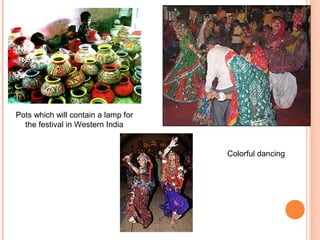
Pots which will contain a lamp for
the festival in Western India
Colorful dancing
RI.
 Celebrated in month of january to february.
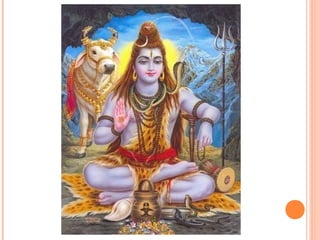
 The night of shiva.
 Strict fasting is observed because this iis
considered to be an extraordinary auspicious day.
 Shiva is the “maha yogi” who controls his
sensuality and meditates with total
concentration for self purification.
 A significant festival commonly observed from
kashmir to kanyakumari.
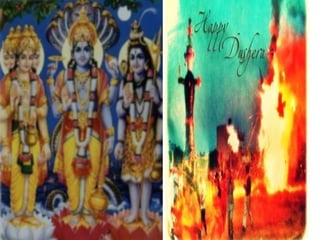
DUSSEHRA.
 This festival known by various names in
different parts of country.
 The victory of goddess durga (kali) over
mahisasura, a grim and mighty demon who had
assumed to be a form of a buffalo and tormented
the world.
 In bengal, the mythical is that durga visit her
parental home in the plain severy year for 3
days
 In north india, this celebration marks the
victory of lord rama of ayodhya over ravana of
lanka.
THANK YOU.

Hinduism festivals

  • 1.
  • 2.
    DIWALI Most well known. Festivalof lights. Symbolized victory over evil. Lamps are lit for hope for mankind, new beginning and positive qualities one should have. Also a chance to celebrate Ganesha. Celebrated for five days in the month of Oct/Nov.
  • 4.
    (KITE FESTIVAL). Mid-winter Hindufestival Hindu New Year Festival is celebrated by taking dips in the Ganges River Dip is said to purify the self Celebrated for 3 days and is more of a cultural festival
  • 6.
    HOLI  Celebrated onthe day after the full moon in early March  Festival to celebrate good harvest  Spring festival  Also called the “Festival of Colors”  Day one = bonfire is lit at night  Day two = people go around and throw colored powder and water at each other  End with a feasts at a friends house in the evening
  • 8.
    RAM NAVAMI  ninthday of the Hindu Lunar year (March)  birthday of Rama  Starts off with prey to the Sun  perform Kalyanotsavam (marriage celebration) for images of Rama and Sita  end of the day the Rama is taken to a procession on the street  Hindus are supposed to fast  Temples are decorated and readings of the Ramayana take place.
  • 9.
  • 10.
    RAKSHA BANDHAN Raksha =protection Bandhan = lasting bond celebrates the relationship between brothers and sisters Thread-tying ceremony (rakhi) sister recognizes the bond between them brother vows to look after her Feed each other sweets
  • 12.
    JANMASHTAMI.  Celebration ofthe birth of Lord Krishna ◦ Reincarnation of Lord Vishnu ◦ Giver of the Bhagvat Gita  2007 in Sept 3rd and 4th  Celebrated differently in North and South  In south…….  begin the festival by fasting on the previous day  followed by a night-long vigil commemorating the birth  At midnight, the deity of the infant Krishna is bathed, placed in a cradle and worshipped  the early morning, ladies draw patterns of little children's feet outside the house with rice-flour paste, walking towards the house ◦ symbolizes the entry of the infant Krishna into his foster-home
  • 13.
    Human pyramid toreach the pot, Dahi-Handi, and break it
  • 14.
    GANESHA CHATURTHI.  Annualfestival in honor of Ganesh ◦ Elephant headed deity ◦ Remover of obstacles  celebrated for ten days  Day 1 = idol placed on platform and decorated  For ten days Ganesh is worshipped  Ends when the idol of Ganesh is immersed into the most convenient body of water  Most popular in Mumbi
  • 16.
    NAVRATRI Nine days ofdance 10 days during Sept-Oct Honor supreme mother goddess – Durga Symbolizes good over evil Celebrated differently throughout India Usually with song, dance and merriment
  • 17.
    Pots which willcontain a lamp for the festival in Western India Colorful dancing
  • 18.
    RI.  Celebrated inmonth of january to february.  The night of shiva.  Strict fasting is observed because this iis considered to be an extraordinary auspicious day.  Shiva is the “maha yogi” who controls his sensuality and meditates with total concentration for self purification.  A significant festival commonly observed from kashmir to kanyakumari.
  • 20.
    DUSSEHRA.  This festivalknown by various names in different parts of country.  The victory of goddess durga (kali) over mahisasura, a grim and mighty demon who had assumed to be a form of a buffalo and tormented the world.  In bengal, the mythical is that durga visit her parental home in the plain severy year for 3 days  In north india, this celebration marks the victory of lord rama of ayodhya over ravana of lanka.
  • 22.