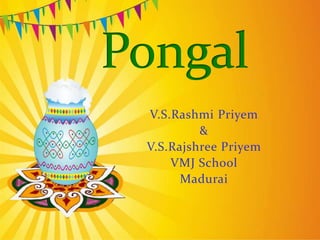
V.S.Rashmi Priyem
&
V.S.Rajshree Priyem
VMJ School
Madurai
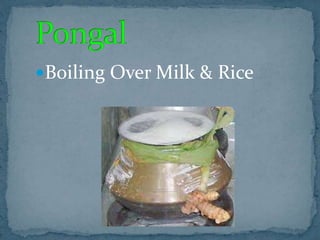
Boiling Over Milk & Rice
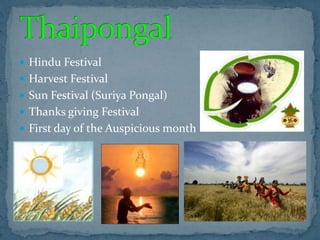
 Hindu Festival
 Harvest Festival
 Sun Festival (Suriya Pongal)
 Thanks giving Festival
 First day of the Auspicious month
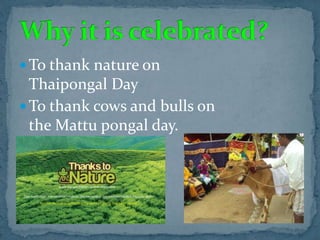
 To thank nature on
Thaipongal Day
 To thank cows and bulls on
the Mattu pongal day.
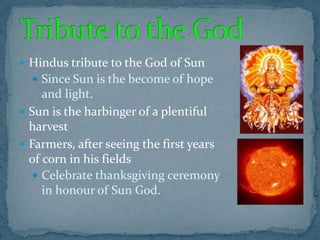
 Hindus tribute to the God of Sun
 Since Sun is the become of hope
and light.
 Sun is the harbinger of a plentiful
harvest
 Farmers, after seeing the first years
of corn in his fields
 Celebrate thanksgiving ceremony
in honour of Sun God.
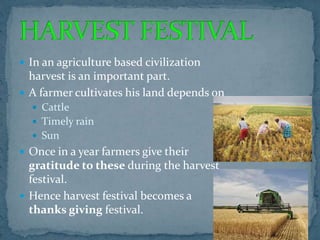
 In an agriculture based civilization
harvest is an important part.
 A farmer cultivates his land depends on
 Cattle
 Timely rain
 Sun
 Once in a year farmers give their
gratitude to these during the harvest
festival.
 Hence harvest festival becomes a
thanks giving festival.
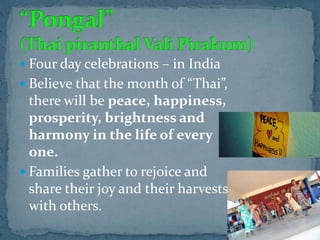
 Four day celebrations – in India
 Believe that the month of “Thai”,
there will be peace, happiness,
prosperity, brightness and
harmony in the life of every
one.
 Families gather to rejoice and
share their joy and their harvests
with others.
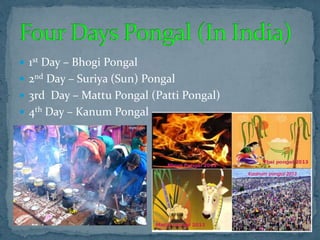
 1st Day – Bhogi Pongal
 2nd Day – Suriya (Sun) Pongal
 3rd Day – Mattu Pongal (Patti Pongal)
 4th Day – Kanum Pongal
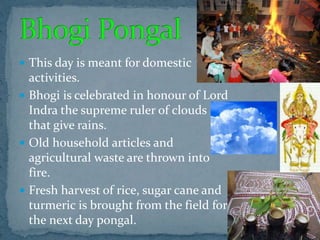
 This day is meant for domestic
activities.
 Bhogi is celebrated in honour of Lord
Indra the supreme ruler of clouds
that give rains.
 Old household articles and
agricultural waste are thrown into
fire.
 Fresh harvest of rice, sugar cane and
turmeric is brought from the field for
the next day pongal.
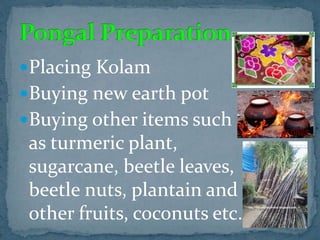
Placing Kolam
Buying new earth pot
Buying other items such
as turmeric plant,
sugarcane, beetle leaves,
beetle nuts, plantain and
other fruits, coconuts etc.
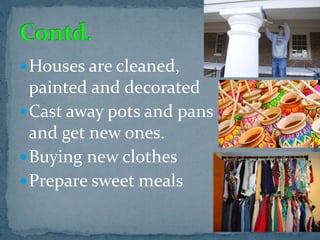
Houses are cleaned,
painted and decorated
Cast away pots and pans
and get new ones.
Buying new clothes
Prepare sweet meals
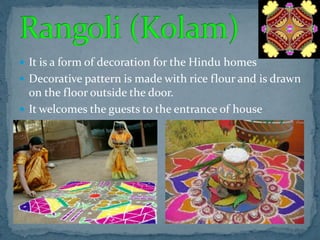
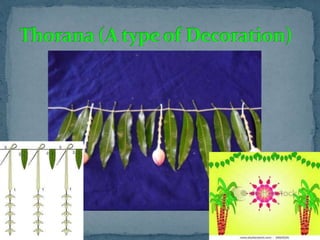
 It is a form of decoration for the Hindu homes
 Decorative pattern is made with rice flour and is drawn
on the floor outside the door.
 It welcomes the guests to the entrance of house
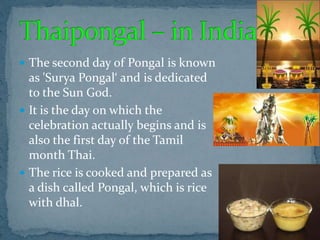
 The second day of Pongal is known
as 'Surya Pongal‘ and is dedicated
to the Sun God.
 It is the day on which the
celebration actually begins and is
also the first day of the Tamil
month Thai.
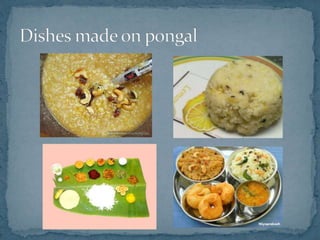
 The rice is cooked and prepared as
a dish called Pongal, which is rice
with dhal.
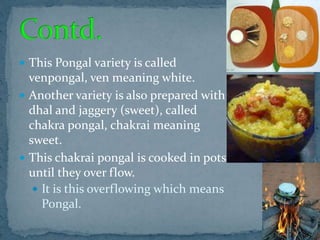
 This Pongal variety is called
venpongal, ven meaning white.
 Another variety is also prepared with
dhal and jaggery (sweet), called
chakra pongal, chakrai meaning
sweet.
 This chakrai pongal is cooked in pots
until they over flow.
 It is this overflowing which means
Pongal.
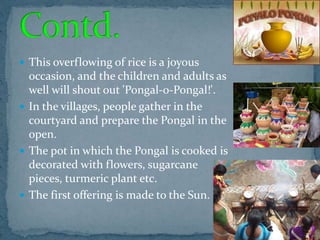
 This overflowing of rice is a joyous
occasion, and the children and adults as
well will shout out 'Pongal-o-Pongal!'.
 In the villages, people gather in the
courtyard and prepare the Pongal in the
open.
 The pot in which the Pongal is cooked is
decorated with flowers, sugarcane
pieces, turmeric plant etc.
 The first offering is made to the Sun.
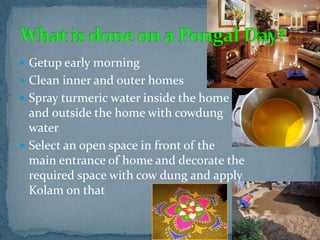
 Getup early morning
 Clean inner and outer homes
 Spray turmeric water inside the home
and outside the home with cowdung
water
 Select an open space in front of the
main entrance of home and decorate the
required space with cow dung and apply
Kolam on that
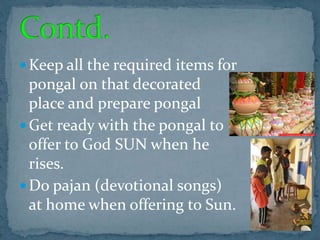
 Keep all the required items for
pongal on that decorated
place and prepare pongal
 Get ready with the pongal to
offer to God SUN when he
rises.
 Do pajan (devotional songs)
at home when offering to Sun.
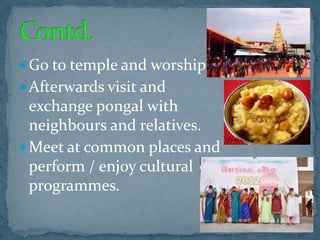
 Go to temple and worship
 Afterwards visit and
exchange pongal with
neighbours and relatives.
 Meet at common places and
perform / enjoy cultural
programmes.
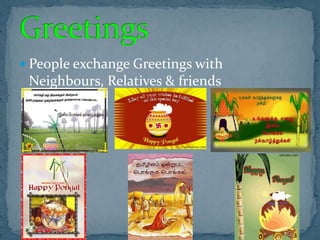
 People exchange Greetings with
Neighbours, Relatives & friends
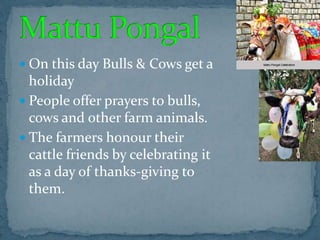
 On this day Bulls & Cows get a
holiday
 People offer prayers to bulls,
cows and other farm animals.
 The farmers honour their
cattle friends by celebrating it
as a day of thanks-giving to
them.
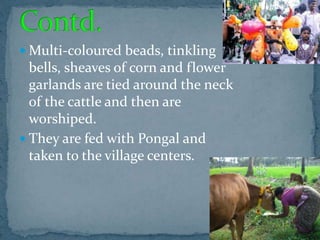
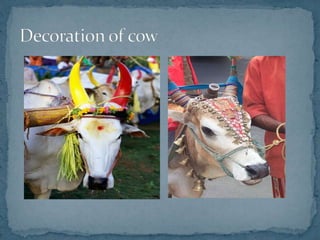
 Multi-coloured beads, tinkling
bells, sheaves of corn and flower
garlands are tied around the neck
of the cattle and then are
worshiped.
 They are fed with Pongal and
taken to the village centers.
 Arati is performed on them,
so as to ward off the evil eye.
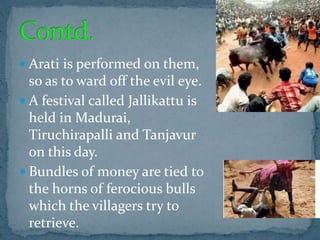
 A festival called Jallikattu is
held in Madurai,
Tiruchirapalli and Tanjavur
on this day.
 Bundles of money are tied to
the horns of ferocious bulls
which the villagers try to
retrieve.
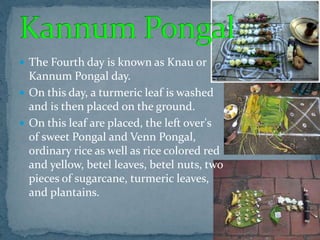
 The Fourth day is known as Knau or
Kannum Pongal day.
 On this day, a turmeric leaf is washed
and is then placed on the ground.
 On this leaf are placed, the left over's
of sweet Pongal and Venn Pongal,
ordinary rice as well as rice colored red
and yellow, betel leaves, betel nuts, two
pieces of sugarcane, turmeric leaves,
and plantains.
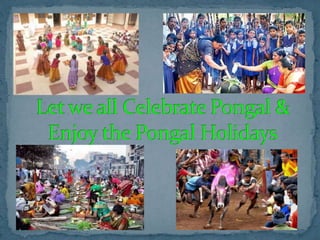
Pongal Celebrations at a Home
Jallikattu
Pongal
Pongal
Pongal

Pongal

  • 1.
  • 2.
  • 3.
     Hindu Festival Harvest Festival  Sun Festival (Suriya Pongal)  Thanks giving Festival  First day of the Auspicious month
  • 4.
     To thanknature on Thaipongal Day  To thank cows and bulls on the Mattu pongal day.
  • 5.
     Hindus tributeto the God of Sun  Since Sun is the become of hope and light.  Sun is the harbinger of a plentiful harvest  Farmers, after seeing the first years of corn in his fields  Celebrate thanksgiving ceremony in honour of Sun God.
  • 6.
     In anagriculture based civilization harvest is an important part.  A farmer cultivates his land depends on  Cattle  Timely rain  Sun  Once in a year farmers give their gratitude to these during the harvest festival.  Hence harvest festival becomes a thanks giving festival.
  • 7.
     Four daycelebrations – in India  Believe that the month of “Thai”, there will be peace, happiness, prosperity, brightness and harmony in the life of every one.  Families gather to rejoice and share their joy and their harvests with others.
  • 8.
     1st Day– Bhogi Pongal  2nd Day – Suriya (Sun) Pongal  3rd Day – Mattu Pongal (Patti Pongal)  4th Day – Kanum Pongal
  • 9.
     This dayis meant for domestic activities.  Bhogi is celebrated in honour of Lord Indra the supreme ruler of clouds that give rains.  Old household articles and agricultural waste are thrown into fire.  Fresh harvest of rice, sugar cane and turmeric is brought from the field for the next day pongal.
  • 10.
    Placing Kolam Buying newearth pot Buying other items such as turmeric plant, sugarcane, beetle leaves, beetle nuts, plantain and other fruits, coconuts etc.
  • 11.
    Houses are cleaned, paintedand decorated Cast away pots and pans and get new ones. Buying new clothes Prepare sweet meals
  • 12.
     It isa form of decoration for the Hindu homes  Decorative pattern is made with rice flour and is drawn on the floor outside the door.  It welcomes the guests to the entrance of house
  • 14.
     The secondday of Pongal is known as 'Surya Pongal‘ and is dedicated to the Sun God.  It is the day on which the celebration actually begins and is also the first day of the Tamil month Thai.  The rice is cooked and prepared as a dish called Pongal, which is rice with dhal.
  • 15.
     This Pongalvariety is called venpongal, ven meaning white.  Another variety is also prepared with dhal and jaggery (sweet), called chakra pongal, chakrai meaning sweet.  This chakrai pongal is cooked in pots until they over flow.  It is this overflowing which means Pongal.
  • 16.
     This overflowingof rice is a joyous occasion, and the children and adults as well will shout out 'Pongal-o-Pongal!'.  In the villages, people gather in the courtyard and prepare the Pongal in the open.  The pot in which the Pongal is cooked is decorated with flowers, sugarcane pieces, turmeric plant etc.  The first offering is made to the Sun.
  • 17.
     Getup earlymorning  Clean inner and outer homes  Spray turmeric water inside the home and outside the home with cowdung water  Select an open space in front of the main entrance of home and decorate the required space with cow dung and apply Kolam on that
  • 18.
     Keep allthe required items for pongal on that decorated place and prepare pongal  Get ready with the pongal to offer to God SUN when he rises.  Do pajan (devotional songs) at home when offering to Sun.
  • 19.
     Go totemple and worship  Afterwards visit and exchange pongal with neighbours and relatives.  Meet at common places and perform / enjoy cultural programmes.
  • 20.
     People exchangeGreetings with Neighbours, Relatives & friends
  • 21.
     On thisday Bulls & Cows get a holiday  People offer prayers to bulls, cows and other farm animals.  The farmers honour their cattle friends by celebrating it as a day of thanks-giving to them.
  • 22.
     Multi-coloured beads,tinkling bells, sheaves of corn and flower garlands are tied around the neck of the cattle and then are worshiped.  They are fed with Pongal and taken to the village centers.
  • 23.
     Arati isperformed on them, so as to ward off the evil eye.  A festival called Jallikattu is held in Madurai, Tiruchirapalli and Tanjavur on this day.  Bundles of money are tied to the horns of ferocious bulls which the villagers try to retrieve.
  • 25.
     The Fourthday is known as Knau or Kannum Pongal day.  On this day, a turmeric leaf is washed and is then placed on the ground.  On this leaf are placed, the left over's of sweet Pongal and Venn Pongal, ordinary rice as well as rice colored red and yellow, betel leaves, betel nuts, two pieces of sugarcane, turmeric leaves, and plantains.
  • 27.
    Pongal Celebrations ata Home Jallikattu