By Dr. Sachi mevada
High voltage pulsed
galvanic stimulation
The high volt pulsed galvanic stimulator
(HVPGS), a type of neuromuscular stimulator is
a short duration (microsecond), micro-amperage
current driven by a high voltage current (up to
300 volts) that is delivered as a twin-peak
monophasic waveform of fixed duration (100
microseconds).
Introduction
This direct current can produce both a
mechanical contraction and a chemical change
within the body.
Typical indications for use include a wide range
of clinical problems where high voltage may be
applied alone or in combination with other
modalities.
Introduction
Galvanic stimulation combines very short pulse
duration (of constant intensity) and high peak
voltage(2-2.5A), yet low total current per
second(1.2-1.5mA), to give relative comfort and
avoid tissue damage while stimulating deep
tissues. It is also an efficient means of exciting
nerve fibers.
Introduction
Introduction
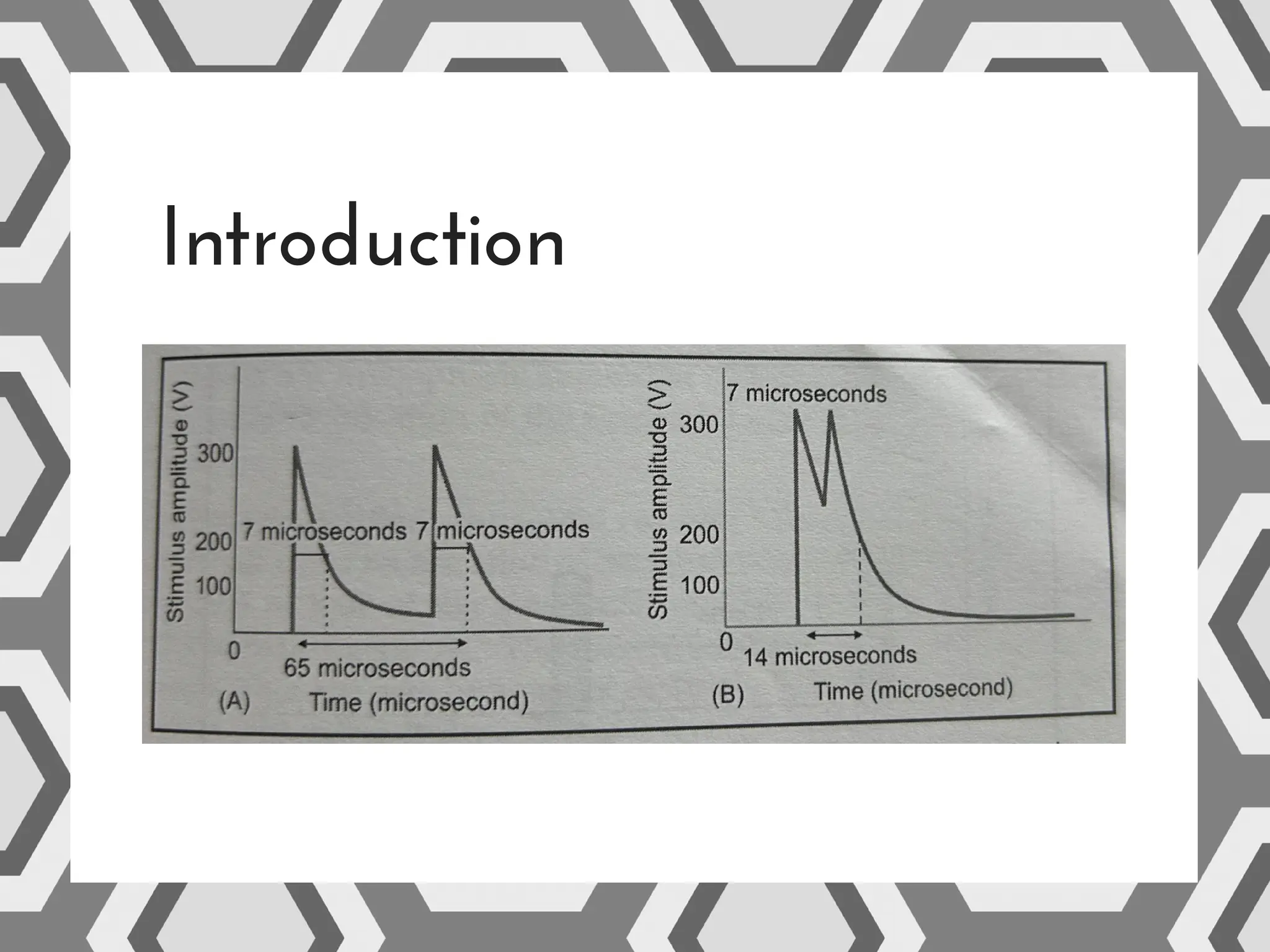
A. The Pulse separation is about 65
microseconds.
B. The twin pulses overlap, the pulse duration is
about 14 microsecond, and the twin pulses
reinforce each other, resulting in a stronger
motor response with the overlapping
waveforms.
Introduction
Continuous mode : the trains of twin pulses
are delivered continuously.
Reciprocate mode : refers to the alternate
application of trains of pulses to one or
other of two active pads and does not mean
that the current direction is reversed.
Surged mode : gives a train of pulses whose
intensity is gradually increased.
Mode of HVPGS
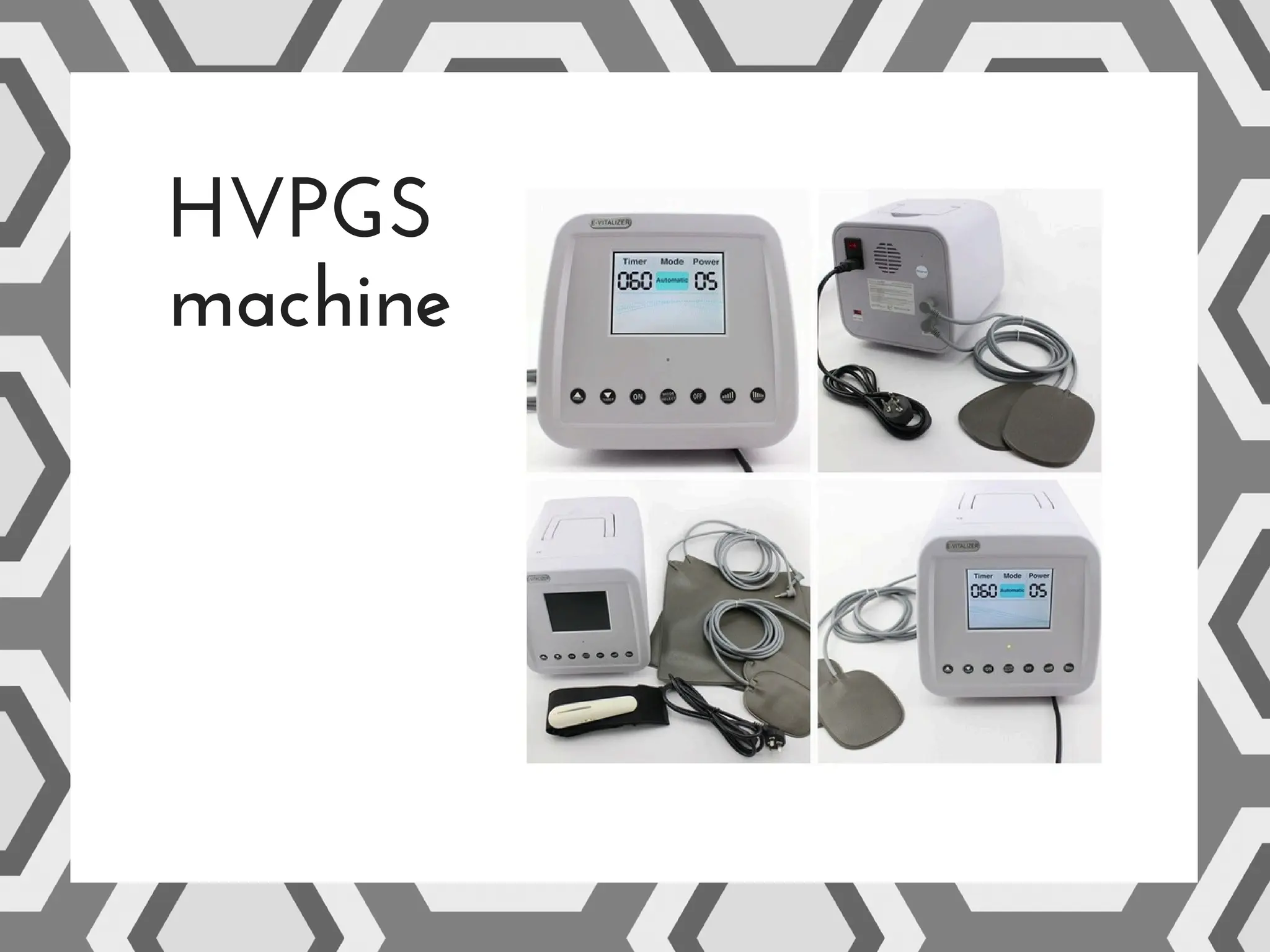
HVPGS
machine
* Maintaining or increasing range of motion.
* Re-educating muscles.
* Edema/swelling/inflammation reduction.
* Reducing motor spasticity.
* Increasing local blood circulation to injured
area and promoting fluid movement to and
from treatment area.
Physiological effect
* Preventing or retarding muscle disuse atrophy.
* Managing chronic/post-traumatic/post-surgical
pain conditions allowing patient to participate in
their pain management program.
* Stimulation and acceleration of wound healing
by promoting blood circulation to wound.
Physiological effect
* Adhesive Capsulitis, Bursitis
* Wound Healing, Odema
* Cervical Sprain/Spasm
* Degenerative Disc, Sciatica
* Epicondylitis
* Lumbosacral Sprain
* Shoulder Subluxation, TMJ
* PostOperative conditions-Arthroscopy,
Discectomy, Spinal Fusion
Indication
Minimum of 30-40 minutes/7 days a week.
Duration
Application
* The positive pad is like ice, tending to reduce
circulation to the area under the pad and
reduction in swelling. The negative pad is like
heat, promoting increased circulation, reportedly
speeding healing.
T h a n k y o u !

High voltage pulsed galvanic stimulation by Dr. Sachi mevada ( Masters in Physiotherapy of Cardio-pulmonary disorders )

  • 1.
    By Dr. Sachimevada High voltage pulsed galvanic stimulation
  • 2.
    The high voltpulsed galvanic stimulator (HVPGS), a type of neuromuscular stimulator is a short duration (microsecond), micro-amperage current driven by a high voltage current (up to 300 volts) that is delivered as a twin-peak monophasic waveform of fixed duration (100 microseconds). Introduction
  • 3.
    This direct currentcan produce both a mechanical contraction and a chemical change within the body. Typical indications for use include a wide range of clinical problems where high voltage may be applied alone or in combination with other modalities. Introduction
  • 4.
    Galvanic stimulation combinesvery short pulse duration (of constant intensity) and high peak voltage(2-2.5A), yet low total current per second(1.2-1.5mA), to give relative comfort and avoid tissue damage while stimulating deep tissues. It is also an efficient means of exciting nerve fibers. Introduction
  • 5.
  • 6.
    A. The Pulseseparation is about 65 microseconds. B. The twin pulses overlap, the pulse duration is about 14 microsecond, and the twin pulses reinforce each other, resulting in a stronger motor response with the overlapping waveforms. Introduction
  • 7.
    Continuous mode :the trains of twin pulses are delivered continuously. Reciprocate mode : refers to the alternate application of trains of pulses to one or other of two active pads and does not mean that the current direction is reversed. Surged mode : gives a train of pulses whose intensity is gradually increased. Mode of HVPGS
  • 8.
  • 9.
    * Maintaining orincreasing range of motion. * Re-educating muscles. * Edema/swelling/inflammation reduction. * Reducing motor spasticity. * Increasing local blood circulation to injured area and promoting fluid movement to and from treatment area. Physiological effect
  • 10.
    * Preventing orretarding muscle disuse atrophy. * Managing chronic/post-traumatic/post-surgical pain conditions allowing patient to participate in their pain management program. * Stimulation and acceleration of wound healing by promoting blood circulation to wound. Physiological effect
  • 11.
    * Adhesive Capsulitis,Bursitis * Wound Healing, Odema * Cervical Sprain/Spasm * Degenerative Disc, Sciatica * Epicondylitis * Lumbosacral Sprain * Shoulder Subluxation, TMJ * PostOperative conditions-Arthroscopy, Discectomy, Spinal Fusion Indication
  • 12.
    Minimum of 30-40minutes/7 days a week. Duration Application * The positive pad is like ice, tending to reduce circulation to the area under the pad and reduction in swelling. The negative pad is like heat, promoting increased circulation, reportedly speeding healing.
  • 13.
    T h an k y o u !