


















High Speed Web Sites At ScaleBuddy Brewer
About BuddyI build web performance monitoring products and help companies make their sites fasterFrom San Francisco Bay Area, CaliforniaCo-Founder Log-Normal, Inc.http://lognormal.com@bbrewer
Does speed matter?How fast is my site?What can I do about it?
In 2006, the average online shopper expected a web page to load in 4 seconds. Today, that same shopper expects your page to load in 2 seconds or less. (Forrester Consulting)A 1-second delay in page load time equals 11% fewer page views, a 16% decrease in customer satisfaction, and 7% loss in conversions. (Aberdeen Group)One e-commerce company found that every 100ms delay cost them 1% of sales. (Amazon.com)
Does speed matter?How fast is my site?What can I do about it?
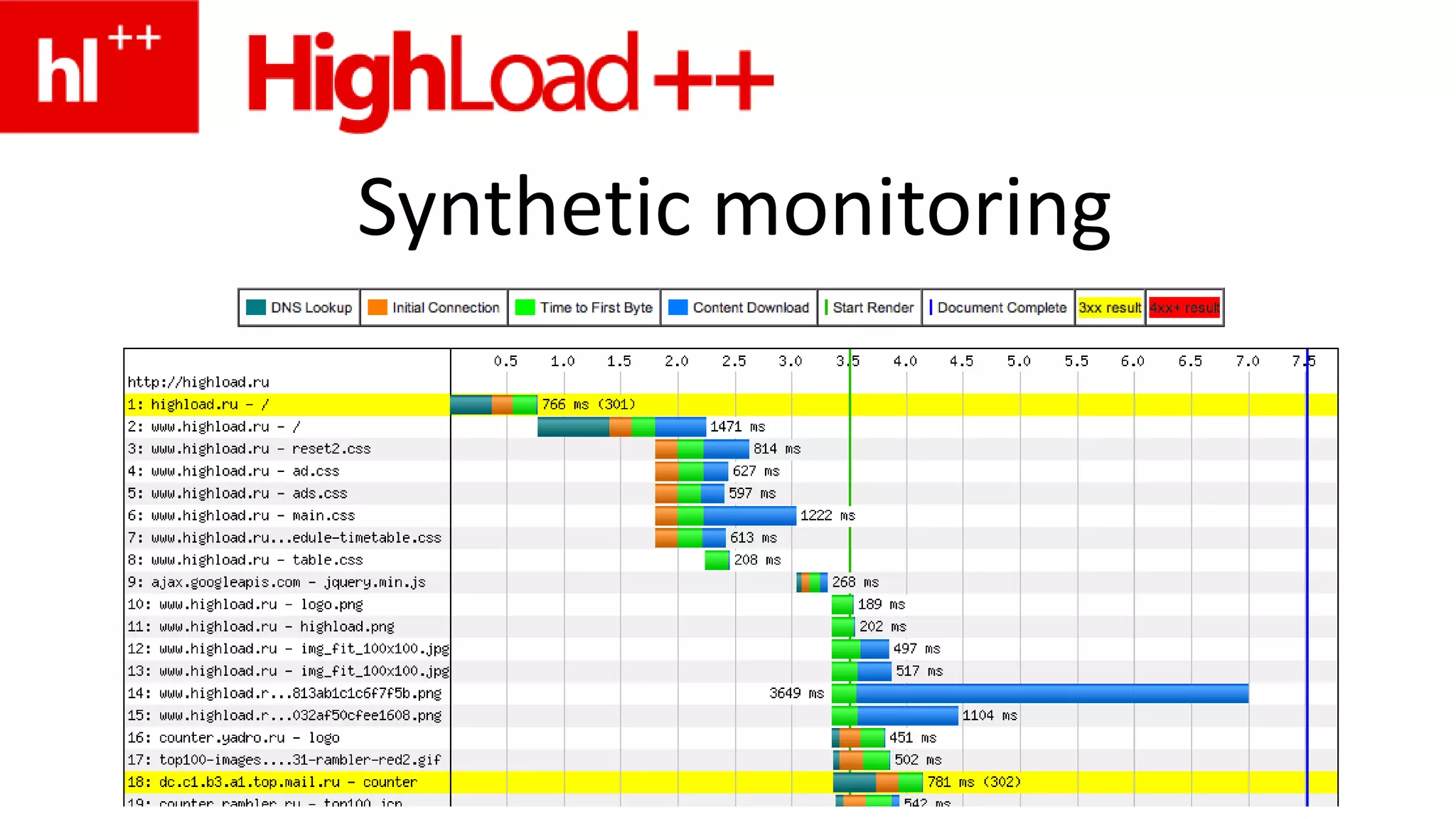
Synthetic monitoring
Synthetic: BenefitsObject-level response times
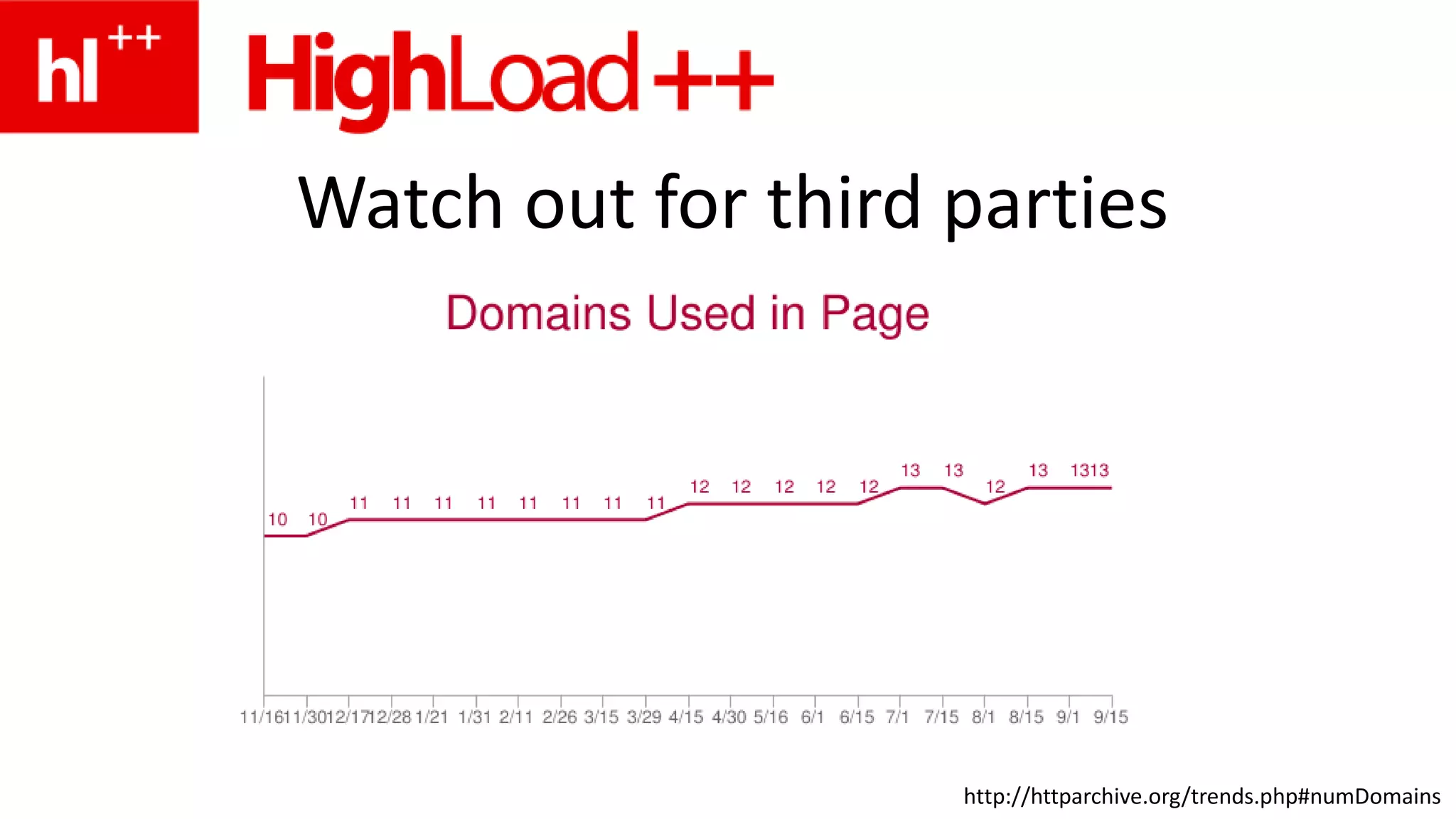
 Visibility into third-party performance
 Visibility into HTTP headers (caching, compression, etc)
 Can test parts of your site that aren’t frequented by users
 Can get back-end performance for older browsersSynthetic: Drawbacks Not representative of real users
 Limited coverage of popular browsers
 Limited insight into mobile devices and connections
 Sometimes limited geographic coverage
 Must know in advance what parts of your site you want to analyze
 Results can be “gamed” by clever third party vendorsReal User Monitoringhttp://www.flickr.com/photos/criminalintent/97181432/
Real User Monitoring: Benefits Represents the “truth” – by measuring real visitors to your site
 You automatically measure the parts of your site that matter to users
 Total browser coverage (as long as they support Javascript)
 Works equally well on today’s mobile and desktop web browsers
 Difficult for third party vendors to game
 Can measure performance in the context of business goals (conversions, etc)Navigation Timinghttps://dvcs.w3.org/hg/webperf/raw-file/tip/specs/NavigationTiming/Overview.html

High Speed Web Sites At Scale

Editor's Notes

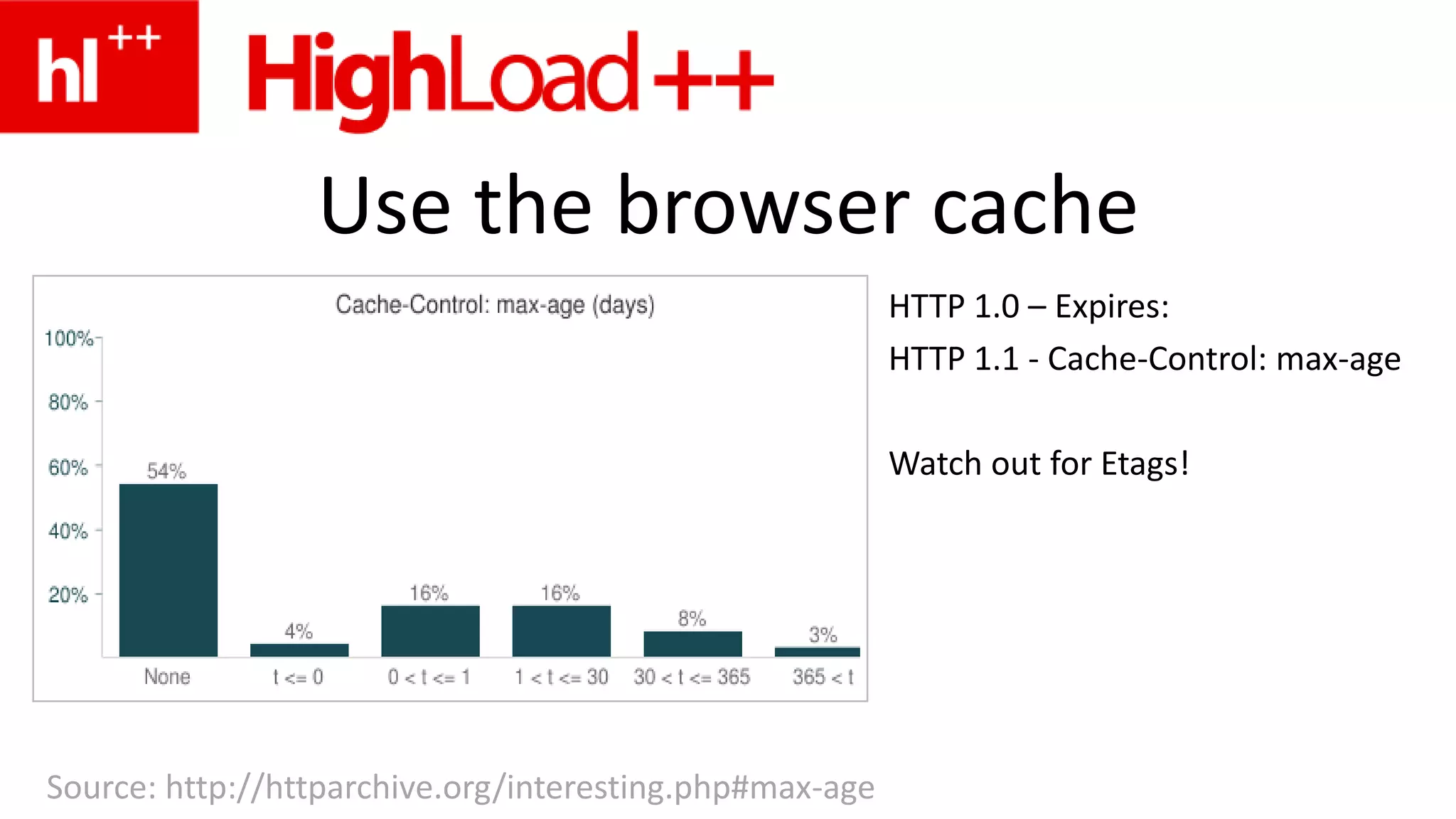
  • #18 And watch out for Etags! On Apache and IIS they are unique by default to the server serving the initial resource, so subsequent requests to another node in the cluster will bust the cache.