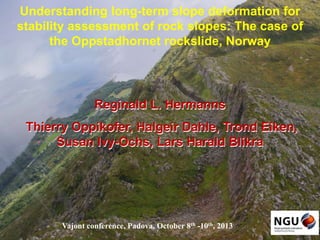
Understanding long-term slope deformation for
stability assessment of rock slopes: The case of
the Oppstadhornet rockslide, Norway

Reginald L. Hermanns
Thierry Oppikofer, Halgeir Dahle, Trond Eiken,
Susan Ivy-Ochs, Lars Harald Blikra

Vajont conference, Padova, October 8th -10th, 2013
Content
• Characterisation of fjord lands
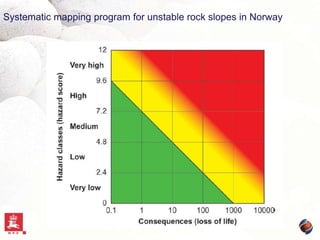
• Systematic mapping program for unstable rock slopes in Norway
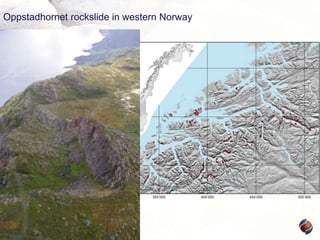
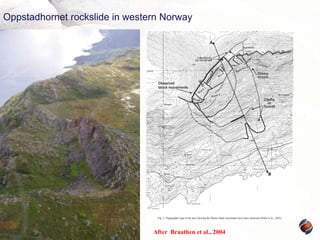
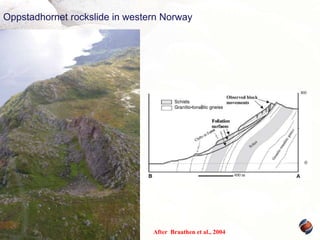
• Oppstadhornet rockslide in western Norway
• Unstable rock slopes and deglaciation in Norway
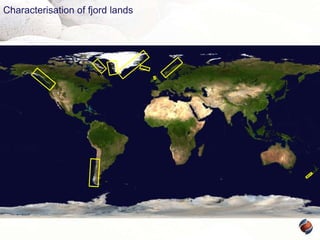
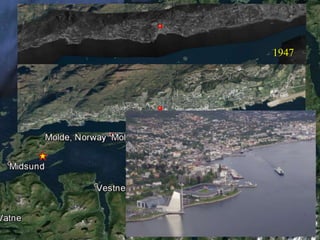
Characterisation of fjord lands
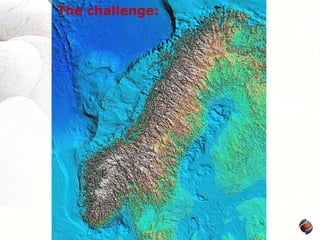
The challenge:
1947

today
Tjelle, 1756
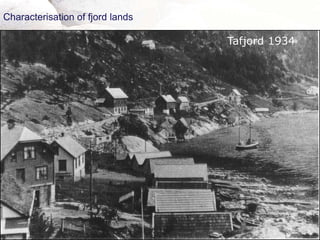
Characterisation of fjord lands

Tafjord 1934
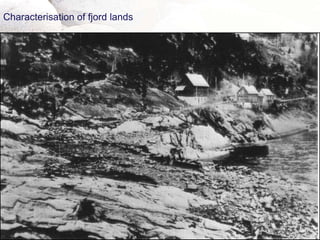
Characterisation of fjord lands
Certain fjellskred events
Name
Tjelle
Tafjordulykka
Skafjellet
Lausneset
Loenulykke 1
Loenulykke 3
Pollfjellet

County
Møre og Romsdal
Møre og Romsdal
Møre og Romsdal
Møre og Romsdal
Sogn og Fjordane
Sogn og Fjordane
Troms

Municipality
Nesset
Norddal
Stranda
Stranda
Stryn
Stryn
Lyngen

Year
1756
1934
1731
1300
1905
1936
1810

Municipality
Sande
Stranda
Stranda
Norddal
Gaular
Årdal

Year
1700
1749
1938
1811
1786
1983

Volume
Displaceme
[Mm3]
Lives
nt wave
15.0
32
Yes
3.0
40
Yes
6.0
17
Yes
0
Yes
0.4
61
Yes
1.0
74
Yes
14
Yes

Uncertain fjellskred events
Name
Storefonna
Geirangerfjorden
Skafjellet
Arnafjord
Hestadfjorden
Årdalsfjorden

County
Møre og Romsdal
Møre og Romsdal
Møre og Romsdal
Sogn og Fjordane
Sogn og Fjordane
Sogn og Fjordane

Volume
[Mm3]
0.1
0.4
0.2

Lives
0
0
0
45
0
0

Displaceme
nt wave
Yes
Yes
Yes
Yes
Yes
Yes
Systematic mapping program for unstable rock slopes in Norway

Tafjord 1934

Assumption:
• Slow deformation indicating slope instability
• Acceleration phase prior to collapse
Systematic mapping program for unstable rock slopes in Norway

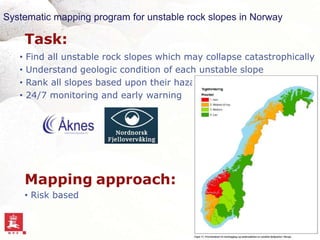
Task:
•
•
•
•

Tafjord 1934

Find all unstable rock slopes which may collapse catastrophically
Understand geologic condition of each unstable slope
Rank all slopes based upon their hazard and risk
24/7 monitoring and early warning

Mapping approach:
• Risk based
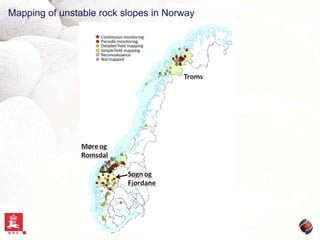
Mapping of unstable rock slopes in Norway
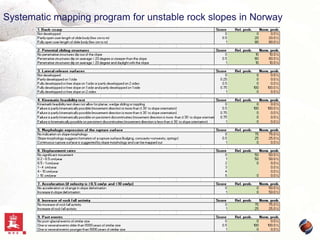
Systematic mapping program for unstable rock slopes in Norway
Oppstadhornet rockslide in western Norway

After Braathen et al., 2004
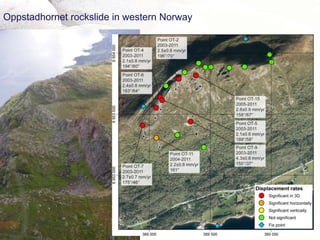
Oppstadhornet rockslide in western Norway

After Braathen et al., 2004
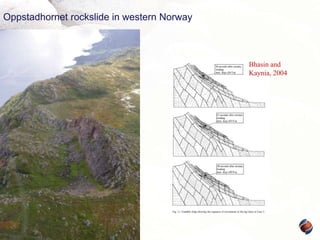
Oppstadhornet rockslide in western Norway

Bhasin and
Kaynia, 2004
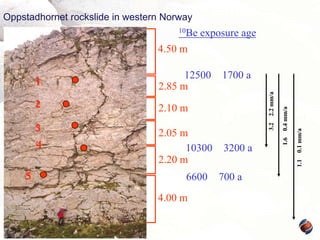
Oppstadhornet rockslide in western Norway
10Be

exposure age

4.50 m

4

5

6600
4.00 m

3200 a

0.1 mm/a

2.05 m
10300
2.20 m

1.1

3

0.4 mm/a

2.10 m

1.6

2

1700 a
2.2 mm/a

12500
2.85 m

3.2

1

700 a
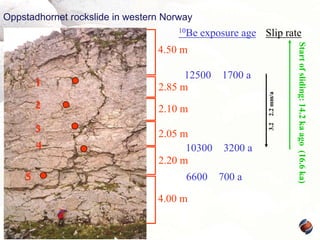
Oppstadhornet rockslide in western Norway
10Be

exposure age Slip rate

2.10 m

3

2.05 m
10300
2.20 m

4
5

6600
4.00 m

2.2 mm/a

2

1700 a

3.2

1

12500
2.85 m

3200 a
700 a

Start of sliding: 14.2 ka ago (16.6 ka)

4.50 m
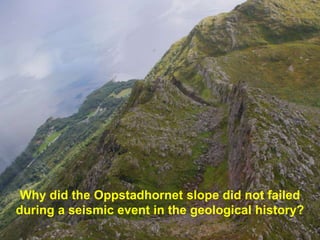
Why did the Oppstadhornet slope did not failed
during a seismic event in the geological history?
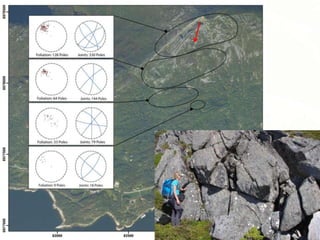
Understand geologic condition of each unstable slope /
Rank all slopes based on their hazard and risk
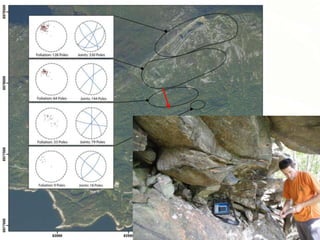
Understand geologic condition of each unstable slope /
Rank all slopes based on their hazard and risk
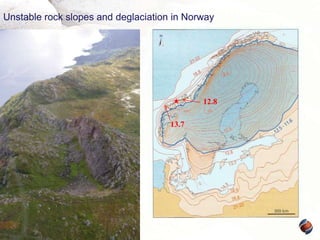
Unstable rock slopes and deglaciation in Norway

12.8
13.7
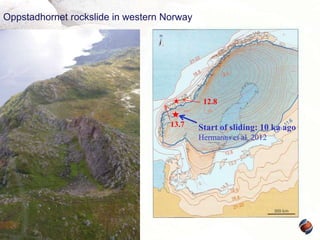
Oppstadhornet rockslide in western Norway

12.8
13.7

Start of sliding: 10 ka ago
Hermanns et al. 2012
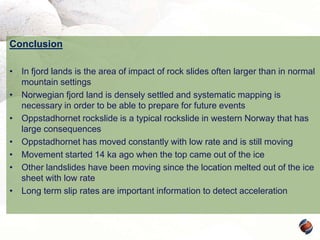
Conclusion
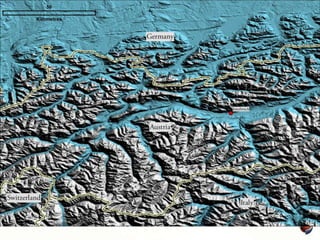
• In fjord lands is the area of impact of rock slides often larger than in normal
mountain settings
• Norwegian fjord land is densely settled and systematic mapping is
necessary in order to be able to prepare for future events
• Oppstadhornet rockslide is a typical rockslide in western Norway that has
large consequences
• Oppstadhornet has moved constantly with low rate and is still moving
• Movement started 14 ka ago when the top came out of the ice
• Other landslides have been moving since the location melted out of the ice
sheet with low rate
• Long term slip rates are important information to detect acceleration
Thank you for your attention

Reginald.Hermanns@NGU.NO

Hermanns - understanding long term slope

  • 1.
    Understanding long-term slopedeformation for stability assessment of rock slopes: The case of the Oppstadhornet rockslide, Norway Reginald L. Hermanns Thierry Oppikofer, Halgeir Dahle, Trond Eiken, Susan Ivy-Ochs, Lars Harald Blikra Vajont conference, Padova, October 8th -10th, 2013
  • 2.
    Content • Characterisation offjord lands • Systematic mapping program for unstable rock slopes in Norway • Oppstadhornet rockslide in western Norway • Unstable rock slopes and deglaciation in Norway
  • 3.
  • 4.
  • 6.
  • 8.
    Characterisation of fjordlands Tafjord 1934
  • 9.
  • 10.
    Certain fjellskred events Name Tjelle Tafjordulykka Skafjellet Lausneset Loenulykke1 Loenulykke 3 Pollfjellet County Møre og Romsdal Møre og Romsdal Møre og Romsdal Møre og Romsdal Sogn og Fjordane Sogn og Fjordane Troms Municipality Nesset Norddal Stranda Stranda Stryn Stryn Lyngen Year 1756 1934 1731 1300 1905 1936 1810 Municipality Sande Stranda Stranda Norddal Gaular Årdal Year 1700 1749 1938 1811 1786 1983 Volume Displaceme [Mm3] Lives nt wave 15.0 32 Yes 3.0 40 Yes 6.0 17 Yes 0 Yes 0.4 61 Yes 1.0 74 Yes 14 Yes Uncertain fjellskred events Name Storefonna Geirangerfjorden Skafjellet Arnafjord Hestadfjorden Årdalsfjorden County Møre og Romsdal Møre og Romsdal Møre og Romsdal Sogn og Fjordane Sogn og Fjordane Sogn og Fjordane Volume [Mm3] 0.1 0.4 0.2 Lives 0 0 0 45 0 0 Displaceme nt wave Yes Yes Yes Yes Yes Yes
  • 11.
    Systematic mapping programfor unstable rock slopes in Norway Tafjord 1934 Assumption: • Slow deformation indicating slope instability • Acceleration phase prior to collapse
  • 12.
    Systematic mapping programfor unstable rock slopes in Norway Task: • • • • Tafjord 1934 Find all unstable rock slopes which may collapse catastrophically Understand geologic condition of each unstable slope Rank all slopes based upon their hazard and risk 24/7 monitoring and early warning Mapping approach: • Risk based
  • 13.
    Mapping of unstablerock slopes in Norway
  • 14.
    Systematic mapping programfor unstable rock slopes in Norway
  • 15.
    Systematic mapping programfor unstable rock slopes in Norway
  • 16.
  • 17.
    Oppstadhornet rockslide inwestern Norway After Braathen et al., 2004
  • 18.
    Oppstadhornet rockslide inwestern Norway After Braathen et al., 2004
  • 19.
    Oppstadhornet rockslide inwestern Norway Bhasin and Kaynia, 2004
  • 20.
  • 21.
    Oppstadhornet rockslide inwestern Norway 10Be exposure age 4.50 m 4 5 6600 4.00 m 3200 a 0.1 mm/a 2.05 m 10300 2.20 m 1.1 3 0.4 mm/a 2.10 m 1.6 2 1700 a 2.2 mm/a 12500 2.85 m 3.2 1 700 a
  • 22.
    Oppstadhornet rockslide inwestern Norway 10Be exposure age Slip rate 2.10 m 3 2.05 m 10300 2.20 m 4 5 6600 4.00 m 2.2 mm/a 2 1700 a 3.2 1 12500 2.85 m 3200 a 700 a Start of sliding: 14.2 ka ago (16.6 ka) 4.50 m
  • 23.
    Why did theOppstadhornet slope did not failed during a seismic event in the geological history?
  • 24.
    Understand geologic conditionof each unstable slope / Rank all slopes based on their hazard and risk
  • 25.
    Understand geologic conditionof each unstable slope / Rank all slopes based on their hazard and risk
  • 26.
    Unstable rock slopesand deglaciation in Norway 12.8 13.7
  • 27.
    Oppstadhornet rockslide inwestern Norway 12.8 13.7 Start of sliding: 10 ka ago Hermanns et al. 2012
  • 28.
    Conclusion • In fjordlands is the area of impact of rock slides often larger than in normal mountain settings • Norwegian fjord land is densely settled and systematic mapping is necessary in order to be able to prepare for future events • Oppstadhornet rockslide is a typical rockslide in western Norway that has large consequences • Oppstadhornet has moved constantly with low rate and is still moving • Movement started 14 ka ago when the top came out of the ice • Other landslides have been moving since the location melted out of the ice sheet with low rate • Long term slip rates are important information to detect acceleration
  • 29.
    Thank you foryour attention Reginald.Hermanns@NGU.NO

Editor's Notes