CARDIOVASCULAR SYSTEM
PREPARED BY: KEERTHANA MPT [CARDIO]
ASSISTANT PROFESSOR
SVCPS COLLEGE OF PHYSIOTHERAPY.
HEART
• The heart is a fist-sized organ that pumps blood
throughout the body.
• It's the primary organ of the circulatory system.
• The heart contains four main sections (chambers)
made of muscle and powered by electrical impulses.
• The brain and nervous system direct the heart's
function.
FUNCTIONS
• The heart's main function is to move blood throughout the body.
• It controls the rhythm and speed of the heart rate.
• Maintains the blood pressure.
LOCATION
• The heart is located in the front of the chest.
• It sits slightly behind and to the left of the
sternum (breastbone).
• The ribcage protects the heart
• The heart is slightly on the left side of the
body.
• It sits between the right and left lungs.
• The left lung is slightly smaller to make room
for the heart in the left chest.
SIZE
• Everyone's heart is a slightly different
size.
• Generally, adult hearts are about the
same size as two clenched fists, and
children's hearts are about the same
size as one clenched fist.
PARTS
The parts of the heart are like the parts of a house.
The heart has:
• Walls.
• Chambers (rooms).
• Valves (doors).
• Blood vessels (plumbing).
• Electrical conduction system (electricity).
HEART WALLS
• The heart walls are the muscles that contract (squeeze) and relax to
send blood throughout the body.
• A layer of muscular tissue called the septum divides the heart walls
into the left and right sides
LAYERS
The heart walls have three layers:
• Endocardium: Inner layer.
• Myocardium: Muscular middle layer.
• Epicardium: Protective outer layer.
• The epicardium is one layer of your pericardium.
• The pericardium is a protective sac that covers your entire heart. It
produces fluid to lubricate your heart and keep it from rubbing
against other organs.
CHAMBERS
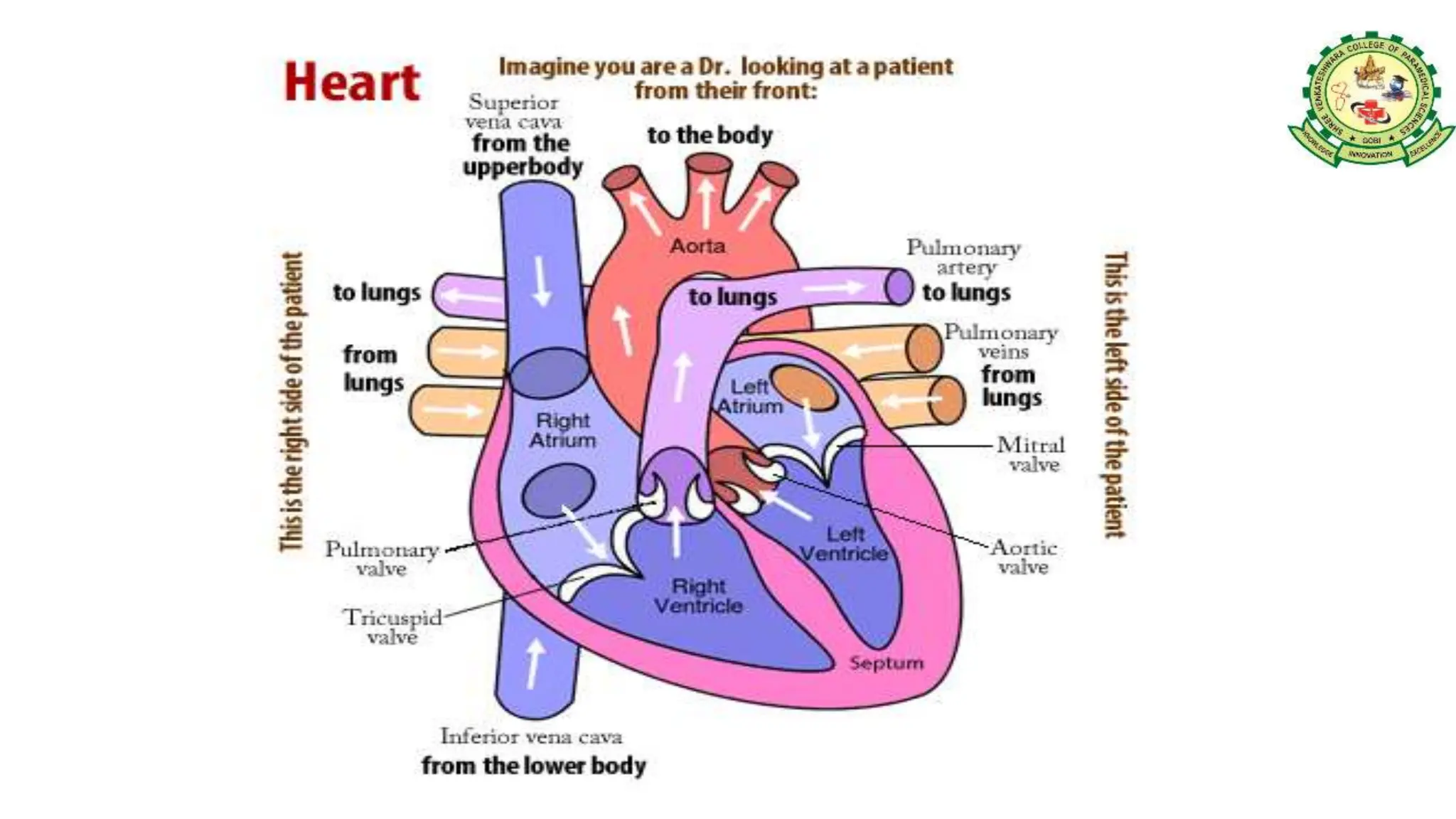
The heart is divided into four chambers.
The two chambers on the top (atrium) and two on the bottom
(ventricles), one on each side of the heart.
• Right atrium: Two large veins deliver oxygen-poor blood to the right
atrium
• The superior vena cava carries blood from the upper body.
• The inferior vena cava brings blood from the lower body.
• Then the right atrium pumps the blood to the right ventricle.
• Right ventricle: The lower right chamber pumps the oxygen-poor
blood to the lungs through the pulmonary artery. The lungs reload
blood with oxygen
• Left atrium: After the lungs fill blood with oxygen, the pulmonary
veins carry the blood to the left atrium. This upper chamber pumps
the blood to the left ventricle.
• Left ventricle: The left ventricle is slightly larger than the right. It
pumps oxygen-rich blood to the rest of the body.
HEART VALVES
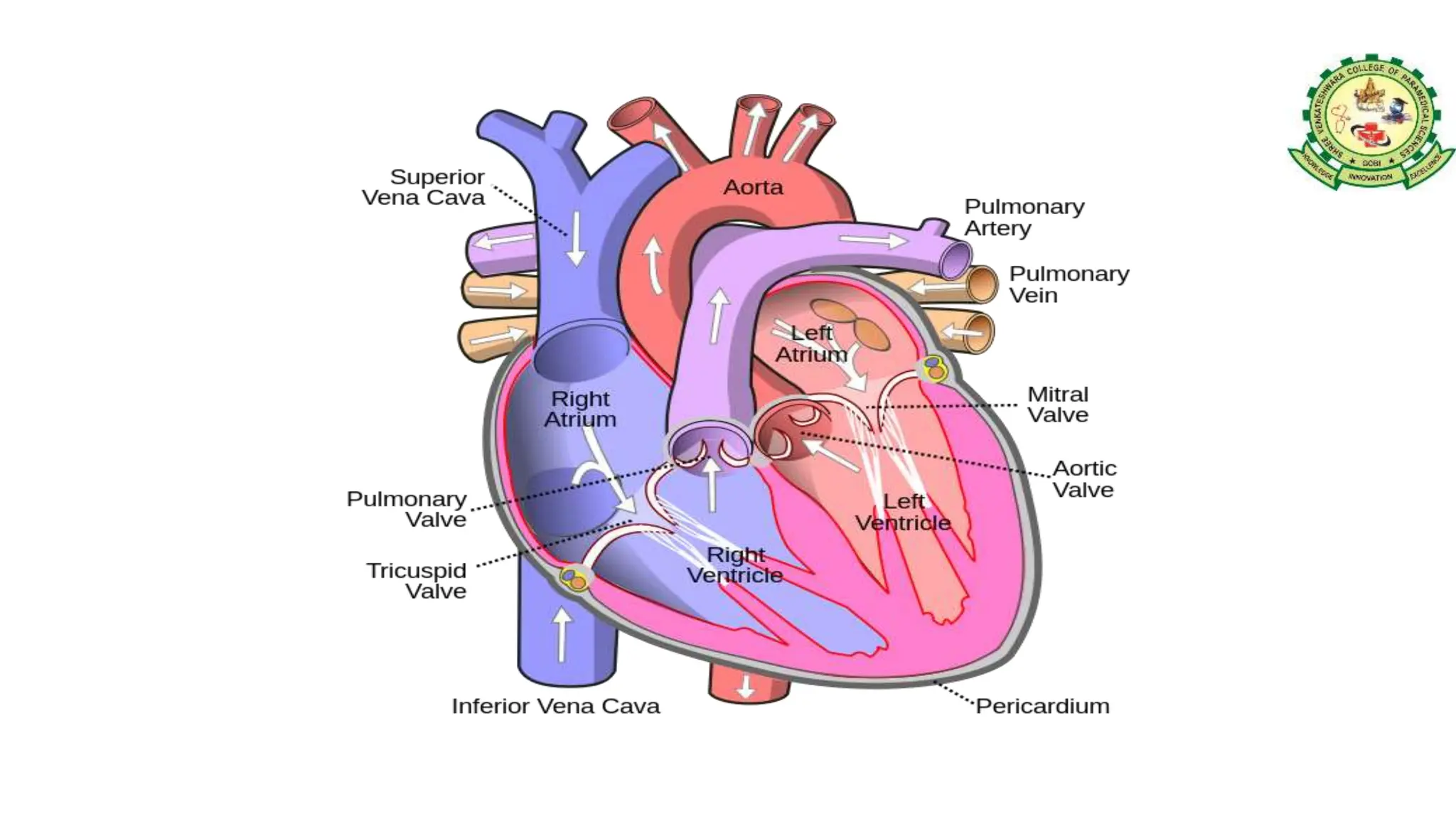
• The heart valves are like doors between the heart chambers. They
open and close to allow blood to flow through.
• The atrioventricular (AV) valves open between the upper and lower
heart chambers. They include:
• Tricuspid valve: Door between the right atrium and right ventricle.
• Mitral valve: Door between the left atrium and left ventricle.
• Semilunar (SL) valves open when blood flows out of the ventricles.
• They include:
• Aortic valve: Opens when blood flows out of the left ventricle to the
aorta (artery that carries oxygen-rich blood to the body
• Pulmonary valve: Opens when blood flows from the right ventricle to
the pulmonary arteries (the only arteries that carry oxygen-poor
blood to the lungs).
BLOOD VESSELS
The heart pumps blood through three types of blood vessels:
• Arteries carry oxygen-rich blood from the heart to the body's tissues.
The exception is pulmonary arteries, which go to the lungs.
• Veins carry oxygen-poor blood back to the heart.
• Capillaries are small blood vessels where the body exchanges oxygen-
rich and oxygen-poor blood.
• The heart receives nutrients through a network of coronary arteries.
These arteries run along the heart's surface. They serve the heart
itself.
• Left coronary artery: Divides into two branches (the circumflex artery and
the left anterior descending artery).
• Circumflex artery: Supplies blood to the left atrium and the side and back
of the left ventricle.
• Left anterior descending artery (LAD): Supplies blood to the front and
bottom of the left ventricle and the front of the septum.
• Right coronary artery (RCA): Supplies blood to the right atrium, right
ventricle, bottom portion of the left ventricle and back of the septum.
ELECTRICAL CONDUCTION SYSTEM
The heart's conduction system is like the electrical wiring of a house. It
controls the rhythm and pace of the heartbeat. It includes:
• Sinoatrial (SA) node: Sends the signals that makes heart beat.
• Atrioventricular (AV) node: Carries electrical signals from the heart's
upper chambers to its lower ones.
• The heart also has a network of electrical bundles and fibers.
• This network includes:
• Left bundle branch: Sends electric impulses to your left ventricle.
• Right bundle branch: Sends electric impulses to your right ventricle.
• Bundle of His: Sends impulses from your AV node to the Purkinje
fibers.
• Purkinje fibers: Make your heart ventricles contract and pump out
blood.
CLINICAL ANATOMY
• Atrial fibrillation (Afib): Irregular electrical impulses in your atrium.
• Arrhythmia: A heartbeat that is too fast, too slow or beats with an
irregular rhythm.
• Cardiomyopathy: Unusual thickening, enlargement or stiffening of
your heart muscle.
• Congestive heart failure: When your heart is too stiff or too weak to
properly pump blood throughout your body.
• Coronary artery disease: Plaque build-up that leads to narrow
coronary arteries.
• Heart attack (myocardial infarction): A sudden coronary artery
blockage that cuts off oxygen to part of your heart muscle.
• Pericarditis: Inflammation in your heart's lining (pericardium
Heart cardiovascular system and its components

Heart cardiovascular system and its components

  • 1.
    CARDIOVASCULAR SYSTEM PREPARED BY:KEERTHANA MPT [CARDIO] ASSISTANT PROFESSOR SVCPS COLLEGE OF PHYSIOTHERAPY.
  • 2.
    HEART • The heartis a fist-sized organ that pumps blood throughout the body. • It's the primary organ of the circulatory system. • The heart contains four main sections (chambers) made of muscle and powered by electrical impulses. • The brain and nervous system direct the heart's function.
  • 4.
    FUNCTIONS • The heart'smain function is to move blood throughout the body. • It controls the rhythm and speed of the heart rate. • Maintains the blood pressure.
  • 6.
    LOCATION • The heartis located in the front of the chest. • It sits slightly behind and to the left of the sternum (breastbone). • The ribcage protects the heart • The heart is slightly on the left side of the body. • It sits between the right and left lungs. • The left lung is slightly smaller to make room for the heart in the left chest.
  • 7.
    SIZE • Everyone's heartis a slightly different size. • Generally, adult hearts are about the same size as two clenched fists, and children's hearts are about the same size as one clenched fist.
  • 8.
    PARTS The parts ofthe heart are like the parts of a house. The heart has: • Walls. • Chambers (rooms). • Valves (doors). • Blood vessels (plumbing). • Electrical conduction system (electricity).
  • 9.
    HEART WALLS • Theheart walls are the muscles that contract (squeeze) and relax to send blood throughout the body. • A layer of muscular tissue called the septum divides the heart walls into the left and right sides
  • 10.
    LAYERS The heart wallshave three layers: • Endocardium: Inner layer. • Myocardium: Muscular middle layer. • Epicardium: Protective outer layer. • The epicardium is one layer of your pericardium. • The pericardium is a protective sac that covers your entire heart. It produces fluid to lubricate your heart and keep it from rubbing against other organs.
  • 13.
    CHAMBERS The heart isdivided into four chambers. The two chambers on the top (atrium) and two on the bottom (ventricles), one on each side of the heart. • Right atrium: Two large veins deliver oxygen-poor blood to the right atrium • The superior vena cava carries blood from the upper body. • The inferior vena cava brings blood from the lower body. • Then the right atrium pumps the blood to the right ventricle.
  • 14.
    • Right ventricle:The lower right chamber pumps the oxygen-poor blood to the lungs through the pulmonary artery. The lungs reload blood with oxygen • Left atrium: After the lungs fill blood with oxygen, the pulmonary veins carry the blood to the left atrium. This upper chamber pumps the blood to the left ventricle. • Left ventricle: The left ventricle is slightly larger than the right. It pumps oxygen-rich blood to the rest of the body.
  • 16.
    HEART VALVES • Theheart valves are like doors between the heart chambers. They open and close to allow blood to flow through. • The atrioventricular (AV) valves open between the upper and lower heart chambers. They include: • Tricuspid valve: Door between the right atrium and right ventricle. • Mitral valve: Door between the left atrium and left ventricle.
  • 17.
    • Semilunar (SL)valves open when blood flows out of the ventricles. • They include: • Aortic valve: Opens when blood flows out of the left ventricle to the aorta (artery that carries oxygen-rich blood to the body • Pulmonary valve: Opens when blood flows from the right ventricle to the pulmonary arteries (the only arteries that carry oxygen-poor blood to the lungs).
  • 19.
    BLOOD VESSELS The heartpumps blood through three types of blood vessels: • Arteries carry oxygen-rich blood from the heart to the body's tissues. The exception is pulmonary arteries, which go to the lungs. • Veins carry oxygen-poor blood back to the heart. • Capillaries are small blood vessels where the body exchanges oxygen- rich and oxygen-poor blood. • The heart receives nutrients through a network of coronary arteries. These arteries run along the heart's surface. They serve the heart itself.
  • 20.
    • Left coronaryartery: Divides into two branches (the circumflex artery and the left anterior descending artery). • Circumflex artery: Supplies blood to the left atrium and the side and back of the left ventricle. • Left anterior descending artery (LAD): Supplies blood to the front and bottom of the left ventricle and the front of the septum. • Right coronary artery (RCA): Supplies blood to the right atrium, right ventricle, bottom portion of the left ventricle and back of the septum.
  • 22.
    ELECTRICAL CONDUCTION SYSTEM Theheart's conduction system is like the electrical wiring of a house. It controls the rhythm and pace of the heartbeat. It includes: • Sinoatrial (SA) node: Sends the signals that makes heart beat. • Atrioventricular (AV) node: Carries electrical signals from the heart's upper chambers to its lower ones. • The heart also has a network of electrical bundles and fibers.
  • 23.
    • This networkincludes: • Left bundle branch: Sends electric impulses to your left ventricle. • Right bundle branch: Sends electric impulses to your right ventricle. • Bundle of His: Sends impulses from your AV node to the Purkinje fibers. • Purkinje fibers: Make your heart ventricles contract and pump out blood.
  • 25.
    CLINICAL ANATOMY • Atrialfibrillation (Afib): Irregular electrical impulses in your atrium. • Arrhythmia: A heartbeat that is too fast, too slow or beats with an irregular rhythm. • Cardiomyopathy: Unusual thickening, enlargement or stiffening of your heart muscle. • Congestive heart failure: When your heart is too stiff or too weak to properly pump blood throughout your body. • Coronary artery disease: Plaque build-up that leads to narrow coronary arteries.
  • 26.
    • Heart attack(myocardial infarction): A sudden coronary artery blockage that cuts off oxygen to part of your heart muscle. • Pericarditis: Inflammation in your heart's lining (pericardium