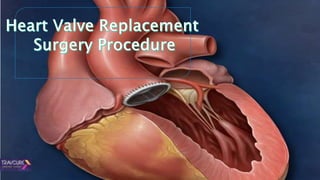
Heart valve
replacement surgery
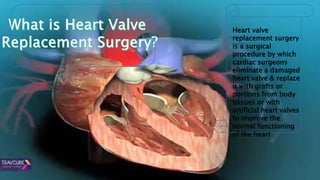
is a surgical
procedure by which
cardiac surgeons
eliminate a damaged
heart valve & replace
it with grafts or
portions from body
tissues or with
artificial heart valves
to improve the
normal functioning
of the heart
Cardiac surgeons may
identify a heart
murmur or other
major signs of heart
valve disease. For
diagnosing heart
valve
disease, surgeons will
ask about patient’s
signs & symptoms.
They may also
perform a physical
examination & judge
patient’s condition
Heart valve replacement
surgery
is a big operation & like any
kind of surgery, it carries a
risk
of post-surgical
complications.
Some of the major risks of
heart
valve replacement include
the
following.
• Blood clots
• Strokes
• Wound, bladder, lung
• Irregular heartbeat which
is temporary
• Bleeding
• Reduced kidney function
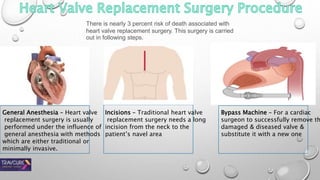
There is nearly 3 percent risk of death associated with
heart valve replacement surgery. This surgery is carried
out in following steps.
General Anesthesia – Heart valve
replacement surgery is usually
performed under the influence of
general anesthesia with methods
which are either traditional or
minimally invasive.
Incisions – Traditional heart valve
replacement surgery needs a long
incision from the neck to the
patient’s navel area
Bypass Machine – For a cardiac
surgeon to successfully remove th
damaged & diseased valve &
substitute it with a new one
THANK YOU
https://travcure.com

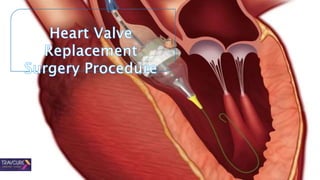
Heart valve replacement surgery procedure

  • 2.
    Heart valve replacement surgery isa surgical procedure by which cardiac surgeons eliminate a damaged heart valve & replace it with grafts or portions from body tissues or with artificial heart valves to improve the normal functioning of the heart
  • 4.
    Cardiac surgeons may identifya heart murmur or other major signs of heart valve disease. For diagnosing heart valve disease, surgeons will ask about patient’s signs & symptoms. They may also perform a physical examination & judge patient’s condition
  • 5.
    Heart valve replacement surgery isa big operation & like any kind of surgery, it carries a risk of post-surgical complications. Some of the major risks of heart valve replacement include the following. • Blood clots • Strokes • Wound, bladder, lung • Irregular heartbeat which is temporary • Bleeding • Reduced kidney function
  • 7.
    There is nearly3 percent risk of death associated with heart valve replacement surgery. This surgery is carried out in following steps. General Anesthesia – Heart valve replacement surgery is usually performed under the influence of general anesthesia with methods which are either traditional or minimally invasive. Incisions – Traditional heart valve replacement surgery needs a long incision from the neck to the patient’s navel area Bypass Machine – For a cardiac surgeon to successfully remove th damaged & diseased valve & substitute it with a new one
  • 8.