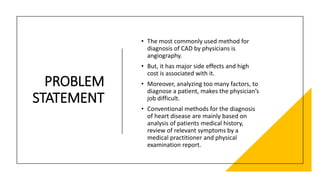
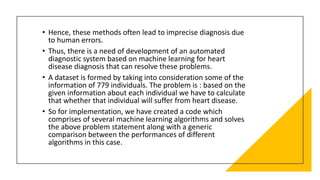
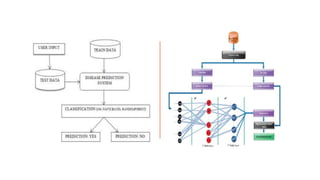
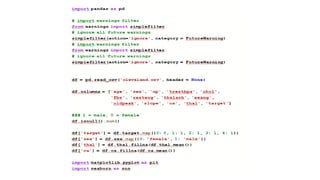
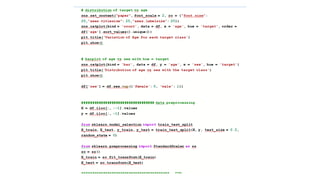
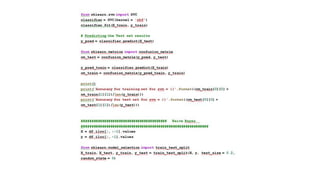
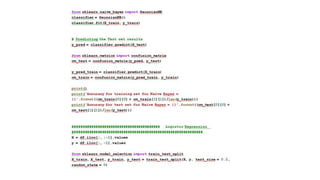
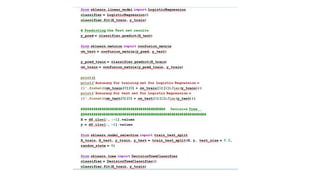
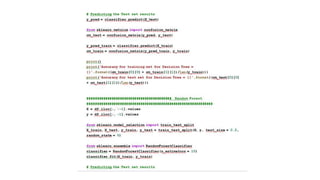
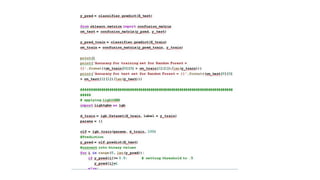
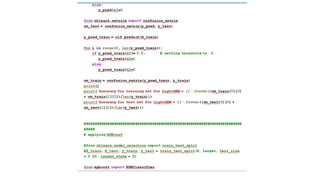
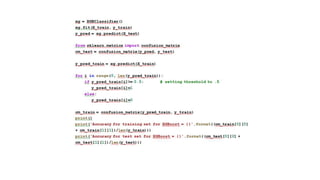
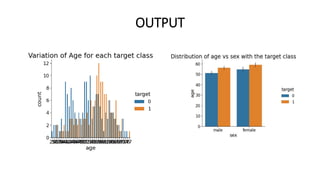
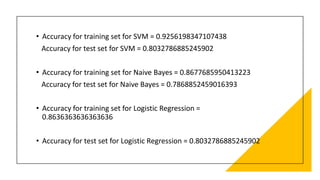
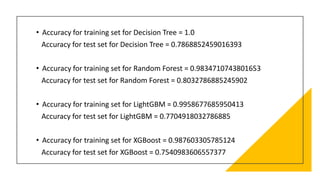
This document proposes using machine learning algorithms to predict heart disease at early stages. It discusses problems with current diagnosis methods and the need for an automated system. The proposed system would use a dataset of 779 individuals and various machine learning algorithms to predict the likelihood of heart disease for new individuals. It describes preprocessing the data, training models like logistic regression, random forest, SVM and comparing their performance. The system architecture involves preprocessing, training models, testing them and predicting heart disease risk. Modules like SVM, decision trees, random forest and naive Bayes are explained. The document concludes by discussing implementation and outputs like algorithm accuracies for training and test sets.