11
22
College of DentistryCollege of Dentistry
Human Dentition IIHuman Dentition II
Deciduous Posterior Teeth - 01Deciduous Posterior Teeth - 01
Dr. Hazem Al AjramiDr. Hazem Al Ajrami
Deciduous Maxillary Molars
44
Deciduous Maxillary First Molar
It is the predecessor for the maxillary first
premolar.
The deciduous maxillary first molar is so
different from the permanent maxillary first
molar. Yet, it more closely resembles the tooth
that will replace it (the maxillary first
premolar).
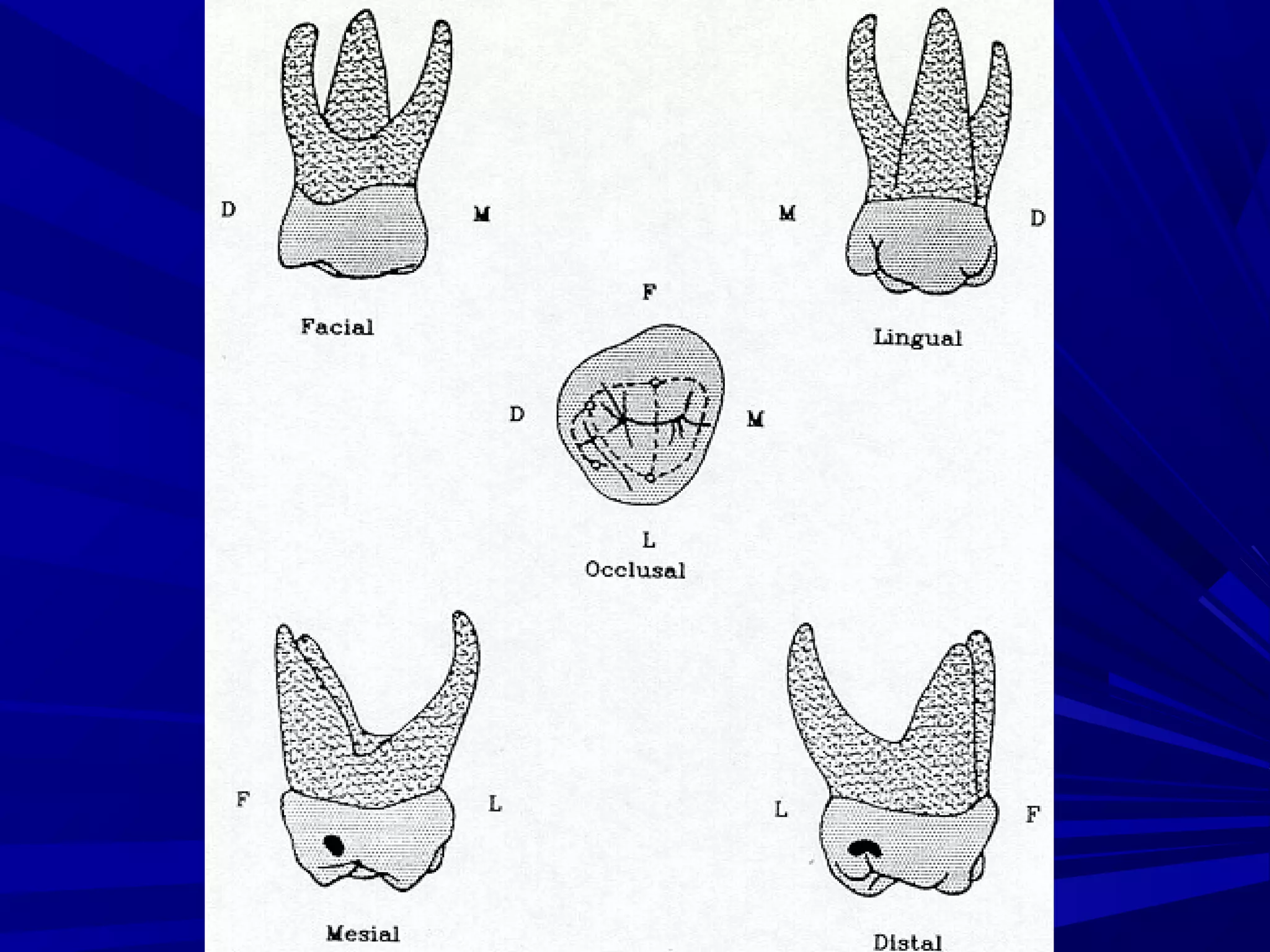
This tooth may have one of two types: either
four-cusp type that has two buccal and two
lingual cusps or three-cusp type having two
buccal cusps and one lingual cusp. Both types
have three roots; two buccal and one lingual.
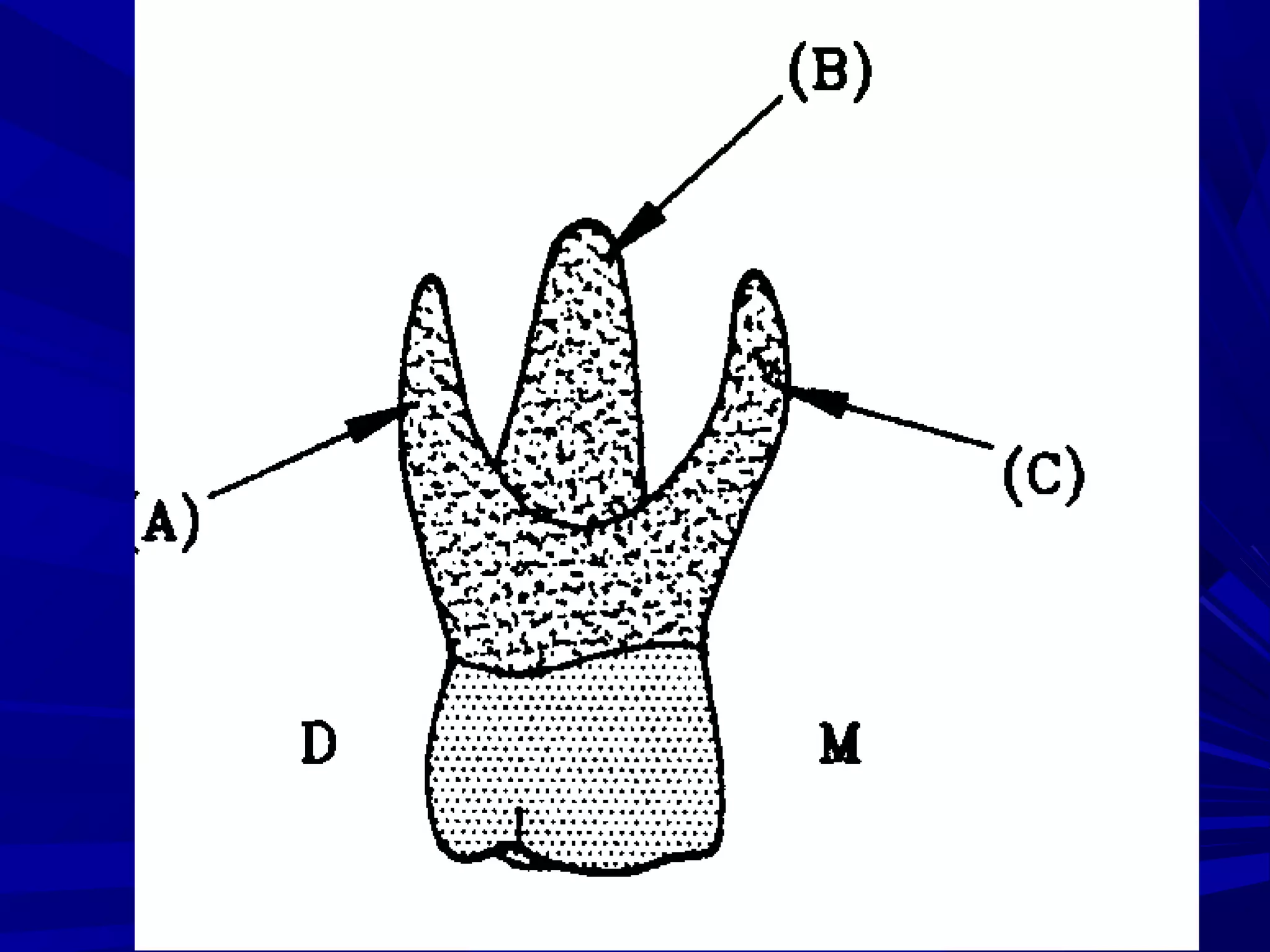
Buccal Aspect
The crown outline is trapezoid in shape.
Mesial outline is straight from the cervical
line till it contacts the canine in the occlusal
third.
99
Distal outline is more convex than the
mesial, and it contacts the second molar in
the middle third.
Occlusal outline: the border of the occlusal
surface is scalloped with no definite cusp
ridge form. There is a large mesiobuccal
cusp and a small distobuccal cusp.
Cervical line: it is convex towards the root with
the crest of curvature is present mesially to
outline the most bulging part of the cervical
ridge. The mesiodistal dimension of the crown at
the cervix is 2 mm. less than that at the contact
areas due to the marked convergence of the
crown cervically.
Surface: there is no buccal groove on the buccal
surface but a notch, which separates the large
mesiobuccal cusp from the indistinct distobuccal
cusp. This groove is presented distal to the
center. There is a prominent cervical ridge
running mesiodistally with more prominence on
the mesial half of the buccal surface.
1212
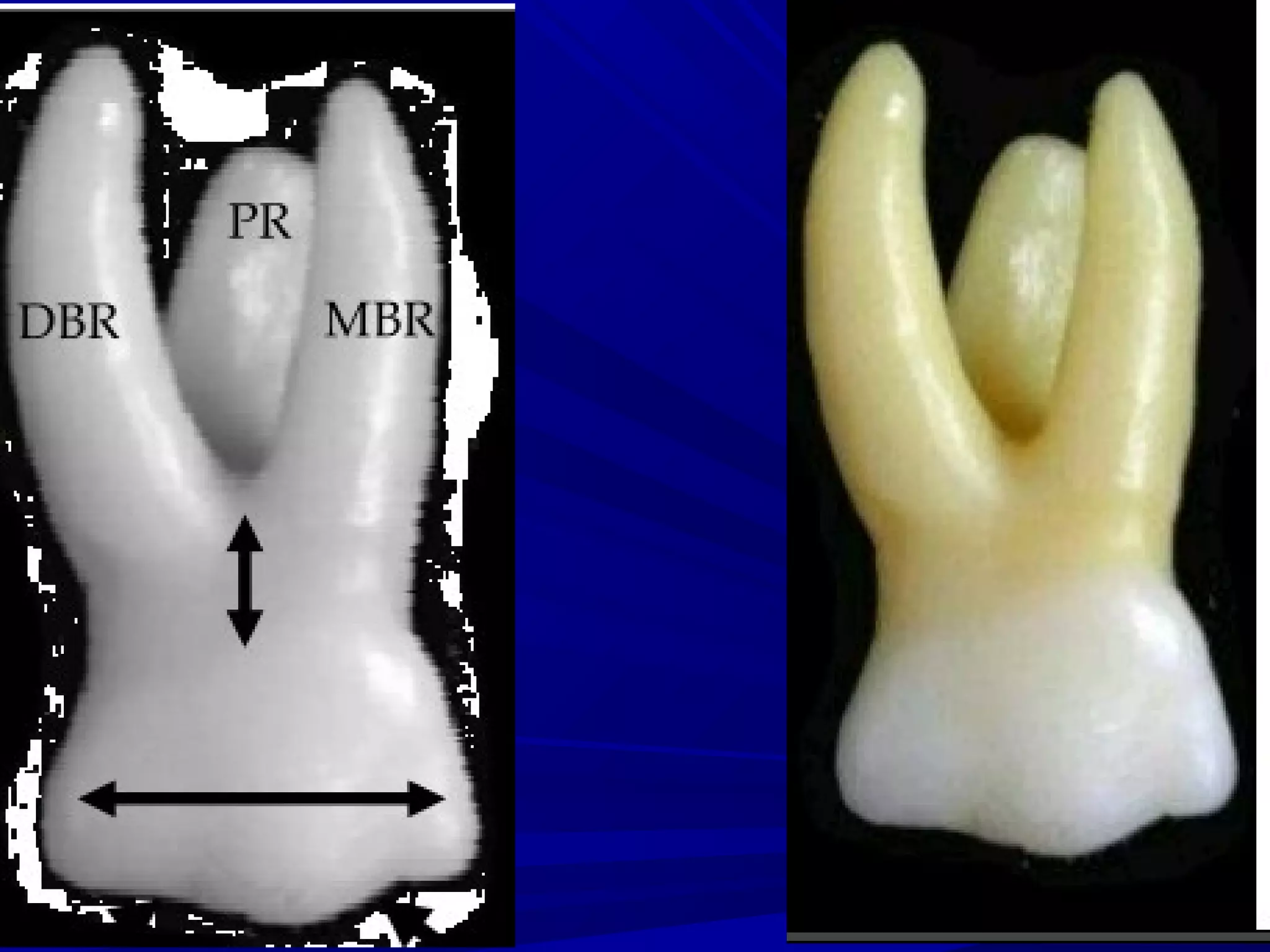
Roots: the three roots (mesiobuccal,
distobuccal and lingual) are thin and widely
spread and there is no root trunk; the
furcation is close to the cervical line. The
distal root is considerably shorter than the
mesial root.
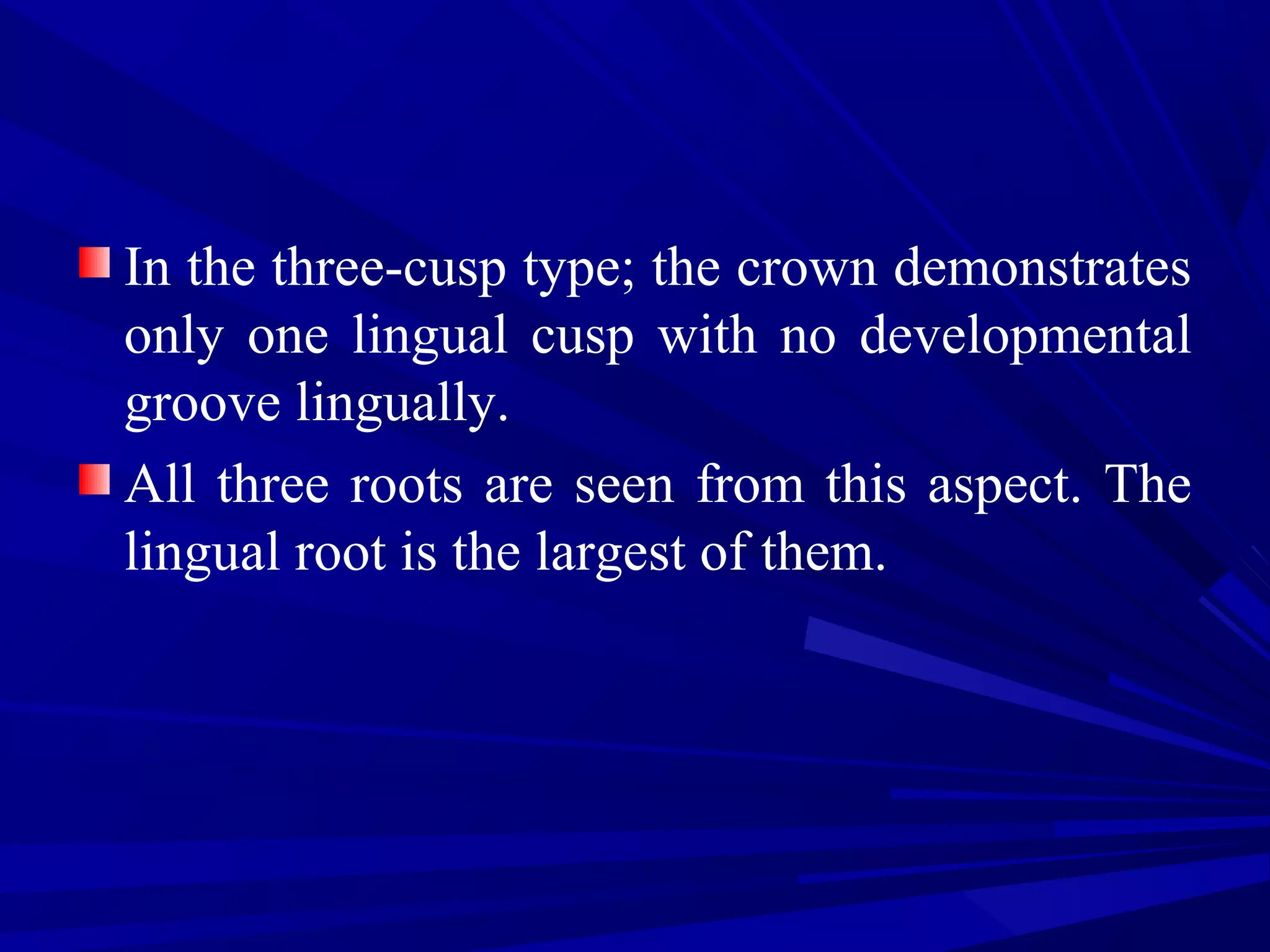
Lingual Aspect
The crown is narrower due to the lingual
convergence and its surface is very convex.
The mesiolingual cusp is sharper and slightly
longer than the mesiobuccal cusp.
In the four-cusp type; the distolingual cusp is
poorly defined. It often appears as a small
rounded nodule on the distal marginal ridge. A
lingual groove between the two lingual cusps is
present only when the distolingual cusp is
definite.
1515
In the three-cusp type; the crown demonstrates
only one lingual cusp with no developmental
groove lingually.
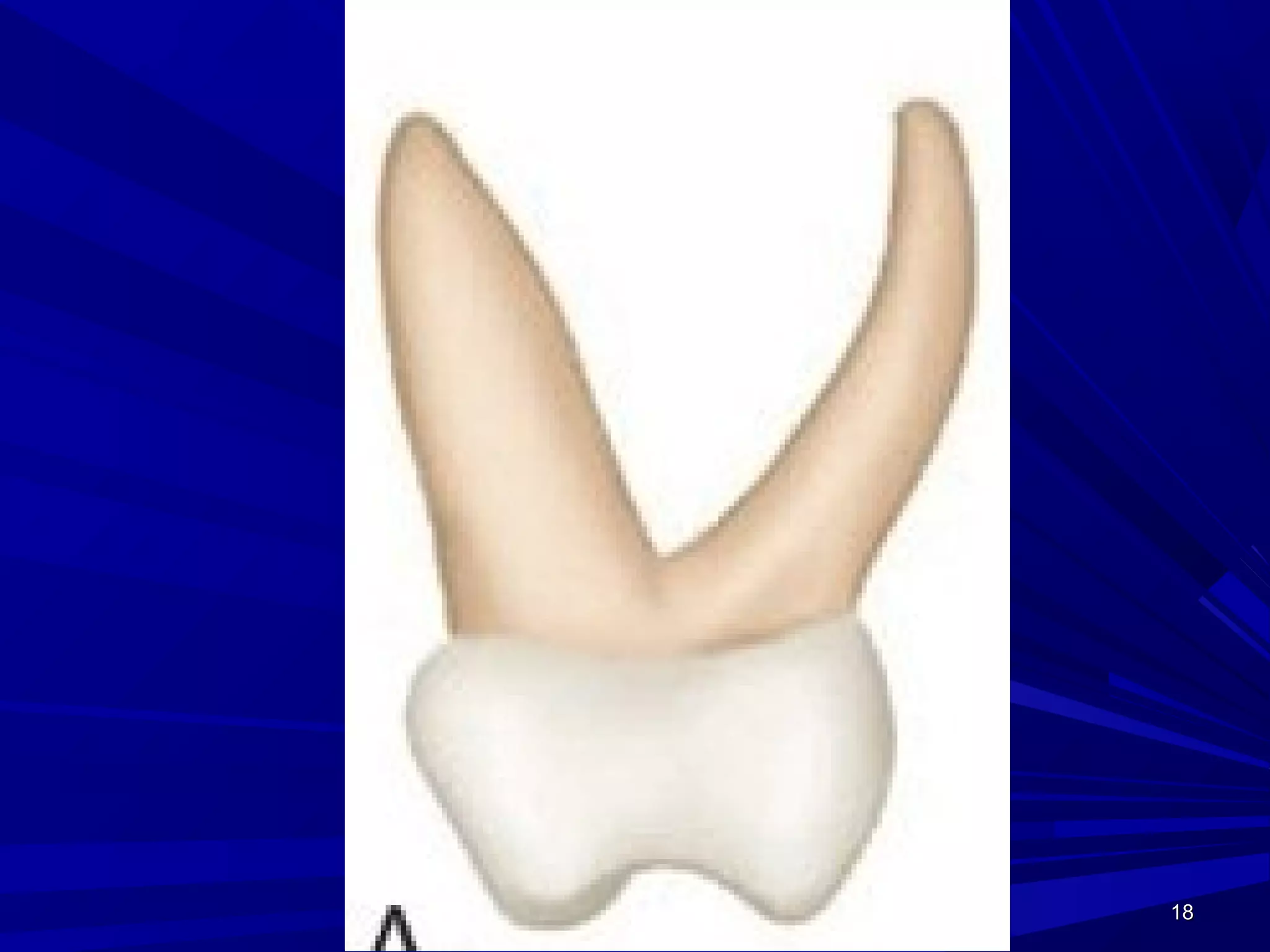
All three roots are seen from this aspect. The
lingual root is the largest of them.
Mesial Aspect
Outline form is trapezoid with the shortest of
the uneven sides is present occlusally.
Buccal outline: the buccal outline of the crown
is very convex cervically representing the
prominent mesiobuccal cervical ridge then it
becomes straight from the ridge to the occlusal
margin.
1818
1919
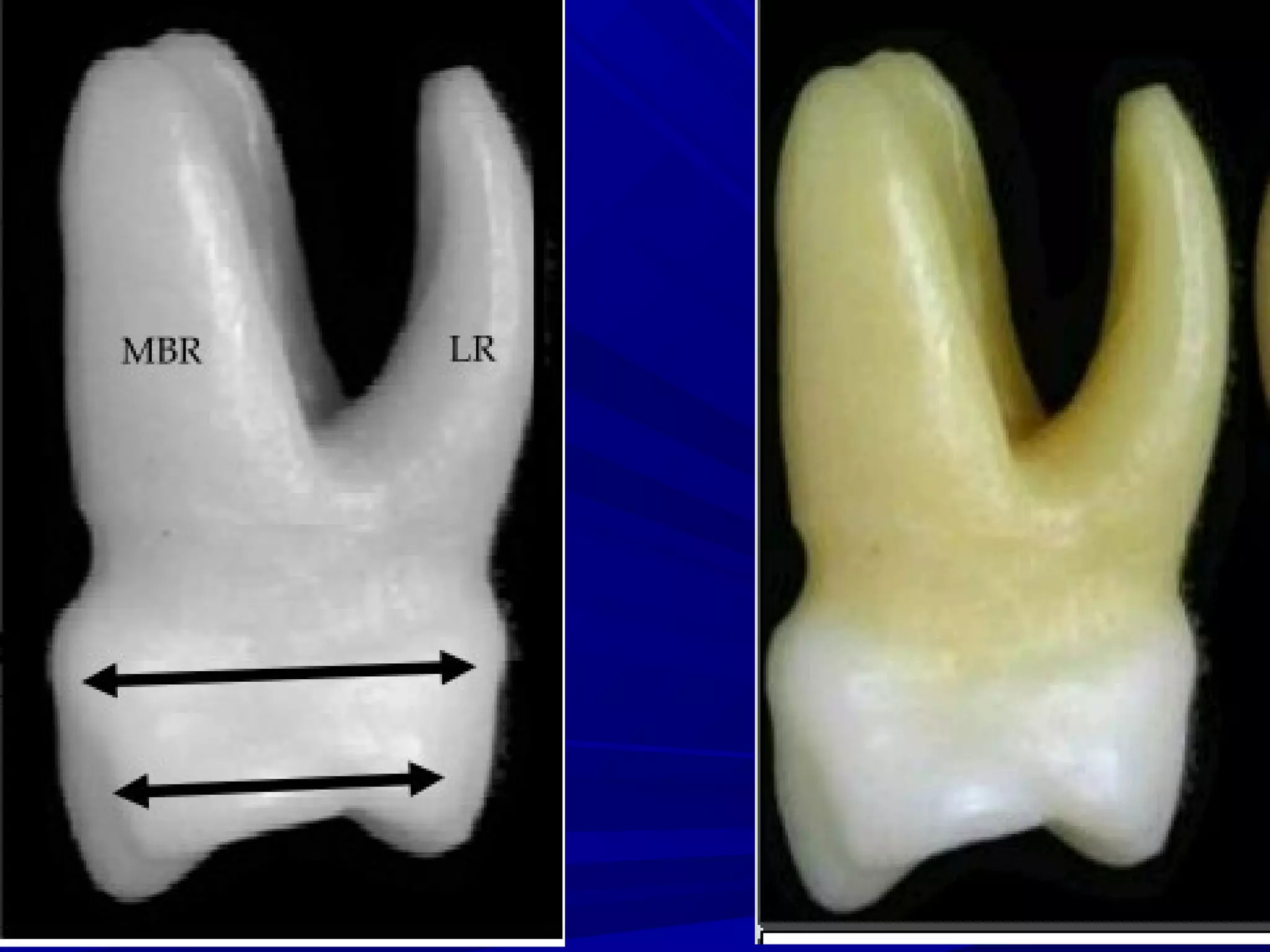
Lingual outline: it is more gradually convex
in the cervical and middle thirds and straight
in the occlusal third.
Occlusal outline: two cusps appear with the
mesiolingual cusp is sharper than the
mesiobuccal cusp. The mesial marginal ridge
is nearly as wide buccolingually as the cusp
tips. It may be crossed by a marginal groove.
Occlusally, the crown is markedly
constricted than cervically.
Cervical line: shows some curvature
occlusally.
Roots: there is a short root trunk, and the
lingual root is widely separated from the
mesiobuccal root, which is sufficiently wide
to hide the distobuccal root.
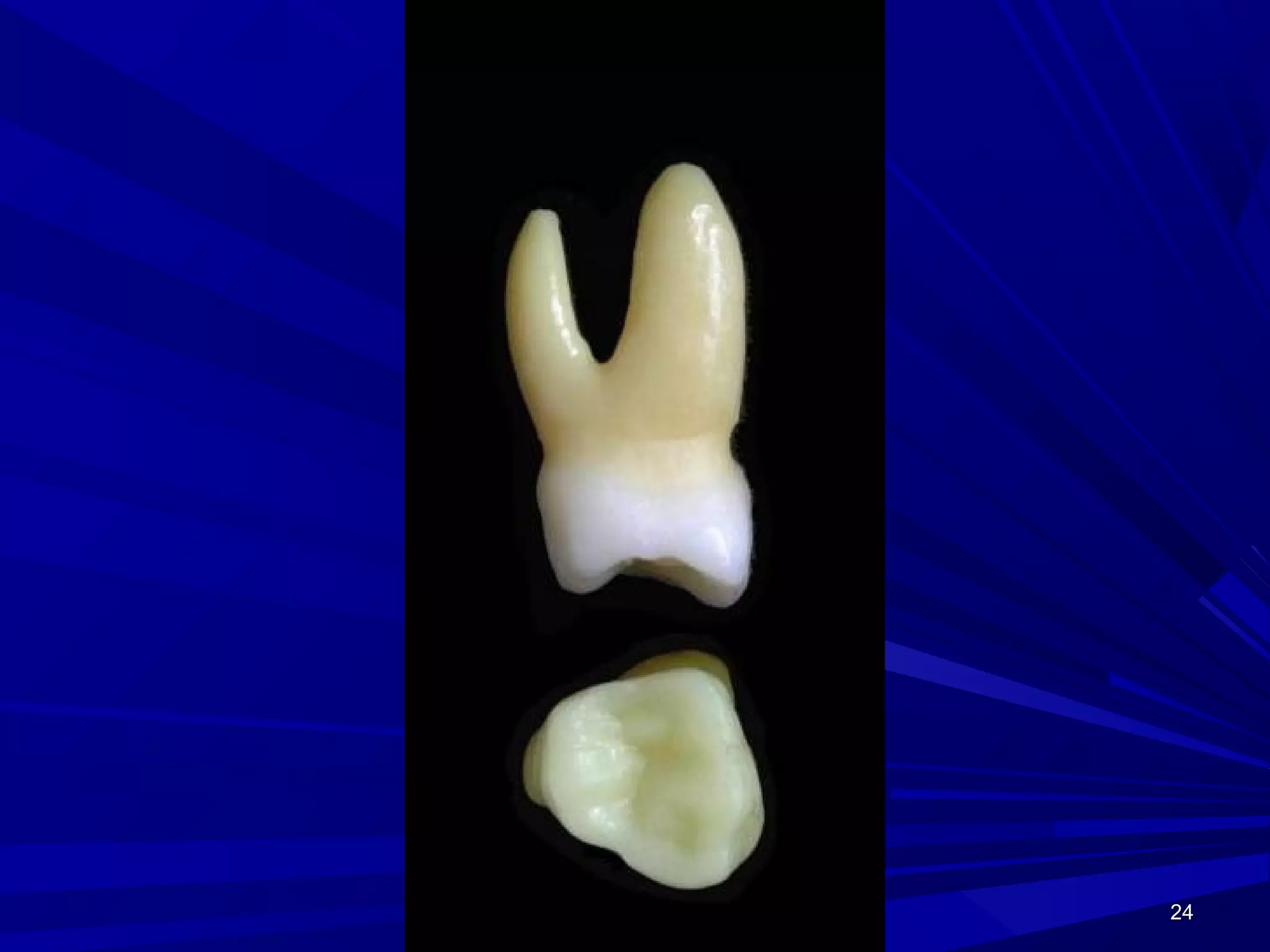
Distal Aspect
The crown is narrower and shorter on the
distal side than on the mesial side.
The distal marginal ridge is more cervically
oriented.
In the four-cusp type the distolingual cusp, is
poorly developed and shorter than the
distobuccal cusp.
In the three-cusp type, the distobuccal cusp
and the lingual cusp appear in this aspect.
The cervical ridge on the buccal surface is
less prominent from the distal aspect than
from the mesial.
2424
The curvature of the cervical line is less
distally than it is mesially.
All three roots are seen from this aspect, but
the distobuccal root is superimposed on the
mesiobuccal root so that only the buccal
surface and the apex of the latter may be
seen.
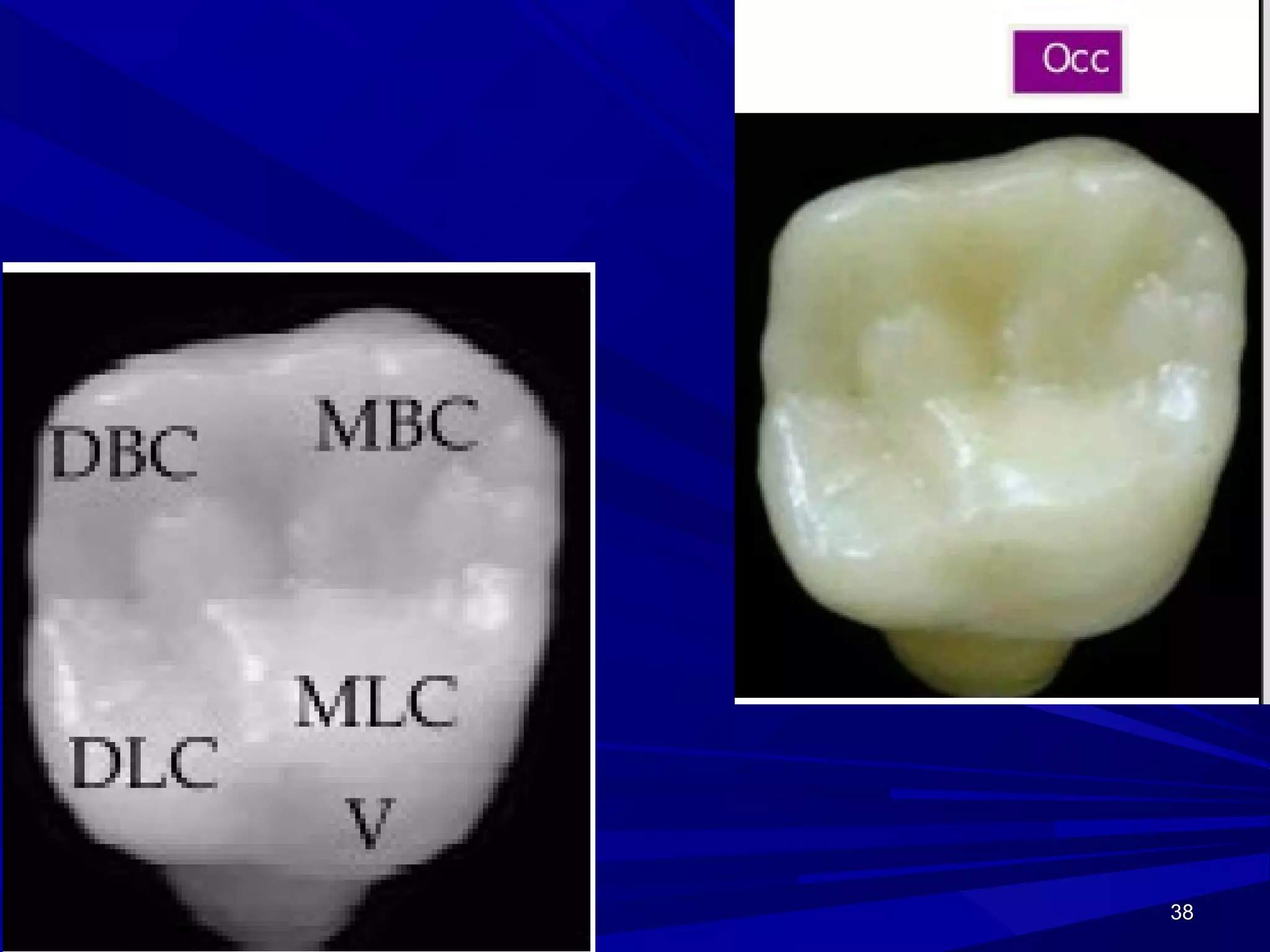
Occlusal Aspect
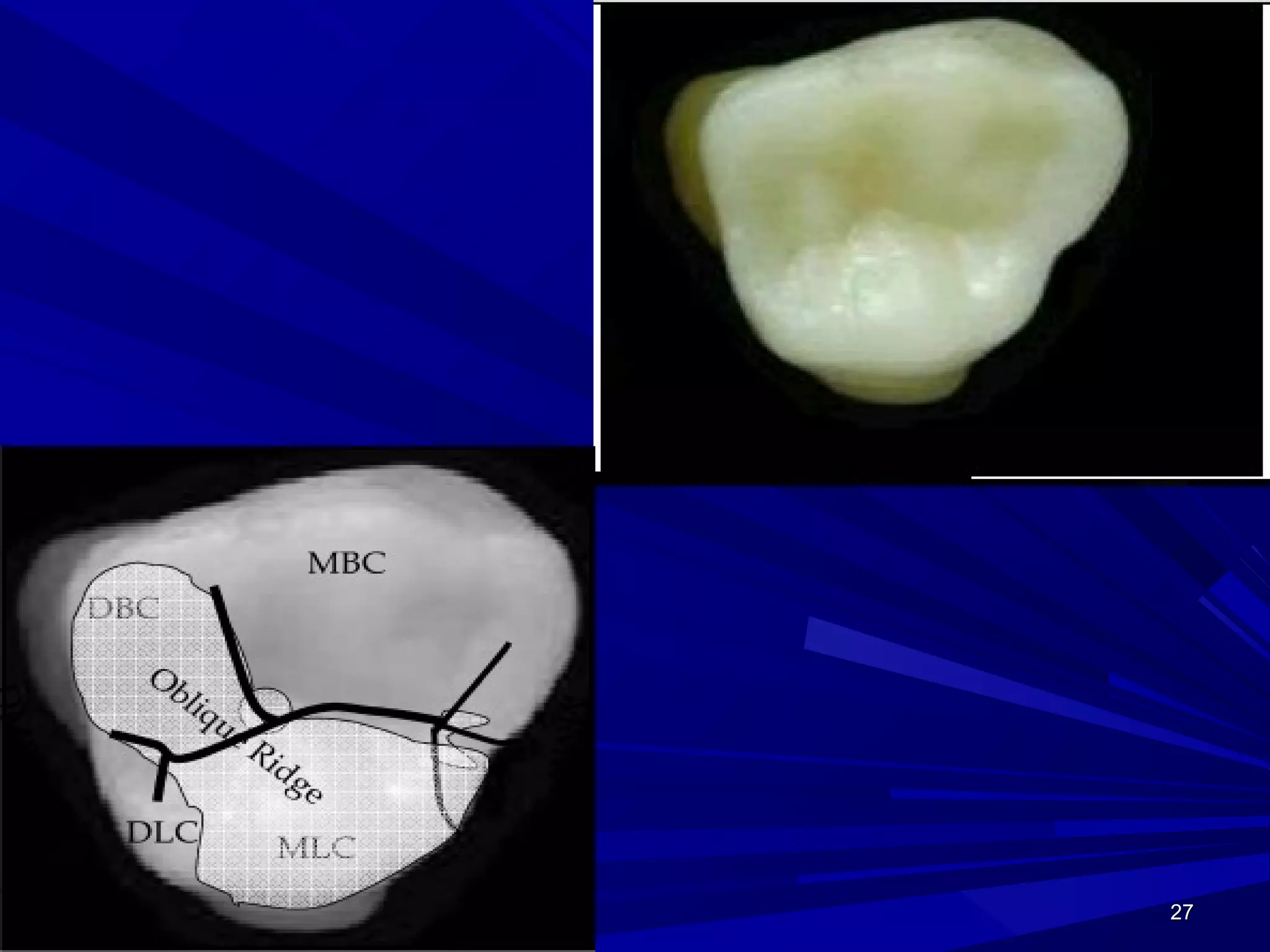
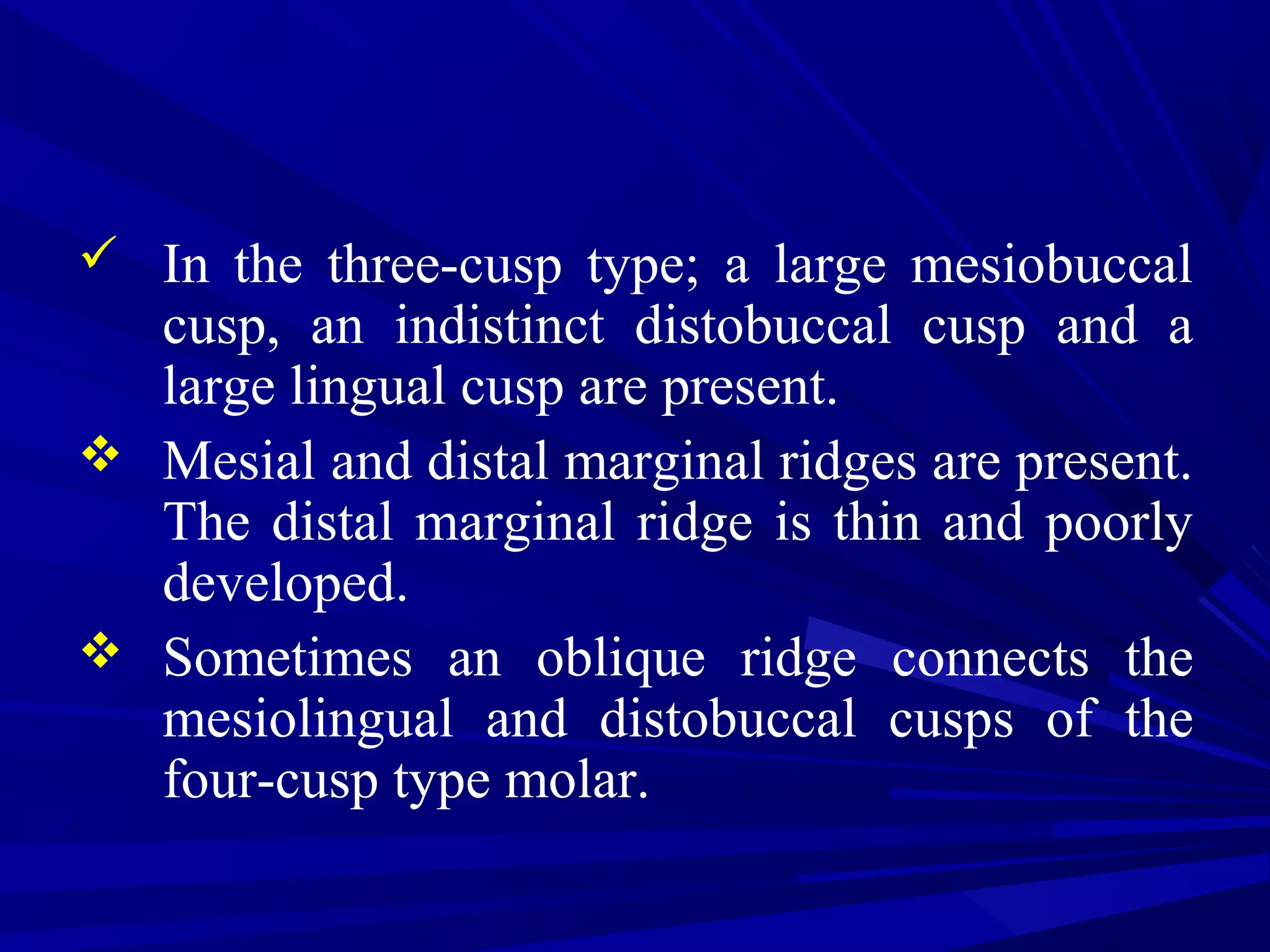
 Outline form: rectangular with the buccal
side is broader than the lingual (lingual
convergence) and the mesial side is broader
than the distal side (distal convergence).
 Cusps and ridges:
 In the four-cusp type: the occlusal table has
two large cusps (mesiobuccal and
mesiolingual) and two very small cusps
(distobuccal and distolingual).
2727
 In the three-cusp type; a large mesiobuccal
cusp, an indistinct distobuccal cusp and a
large lingual cusp are present.
 Mesial and distal marginal ridges are present.
The distal marginal ridge is thin and poorly
developed.
 Sometimes an oblique ridge connects the
mesiolingual and distobuccal cusps of the
four-cusp type molar.
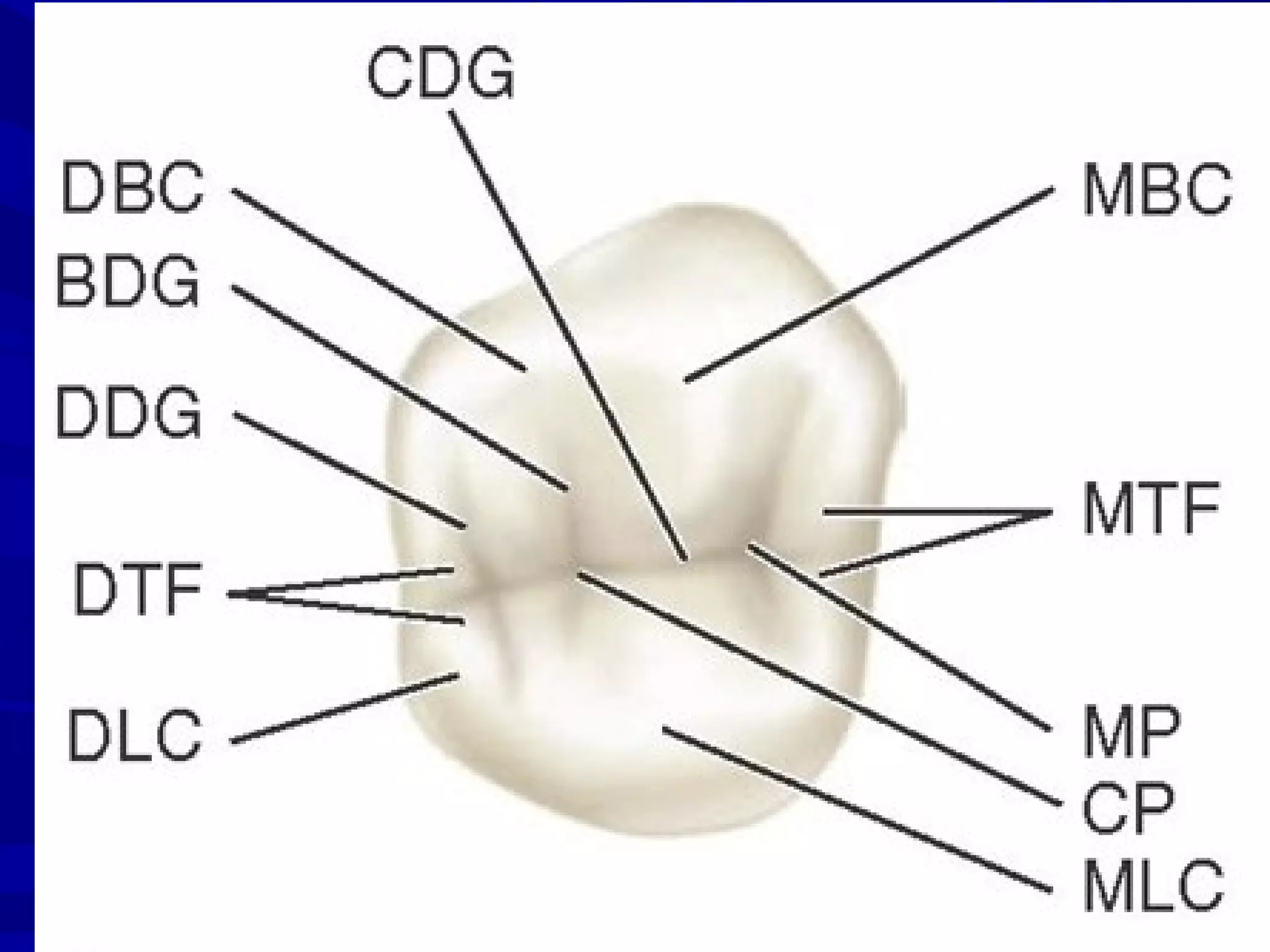
 Fossae, grooves and pits:
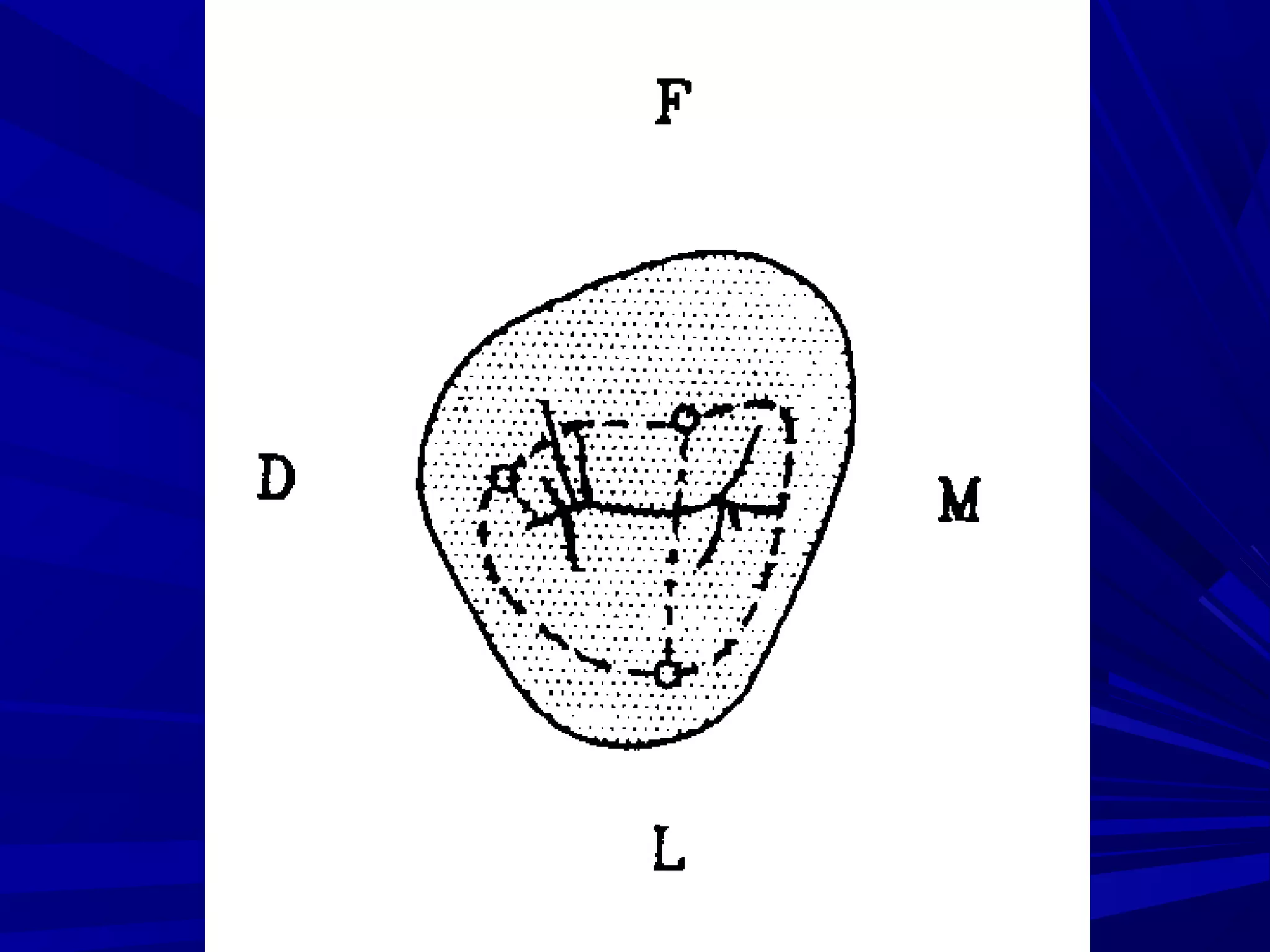
 Central fossa in the middle of the occlusal
surface, a mesial triangular fossa and a distal
triangular fossa are seen.
 A central developmental groove runs
mesiodistally and connects the mesial,
central and distal fossae.
 A buccal developmental groove arises from
the central fossa dividing the two buccal
cusps and not extending on the buccal
surface.
 A disto-occlusal (or disto-lingual)
developmental groove arises from the distal
triangular fossa and extend obliquely
between the two lingual cusps and it may or
may not extend to the lingual surface.
 Three supplemental grooves are running
from inside the mesial triangular fossa
(buccally, lingually and mesially). The
mesial supplemental groove sometimes
traverse the mesial marginal ridge to extend
for a some distance on the mesial surface.
 There are usually three pits: mesial, central
and distal.
3333
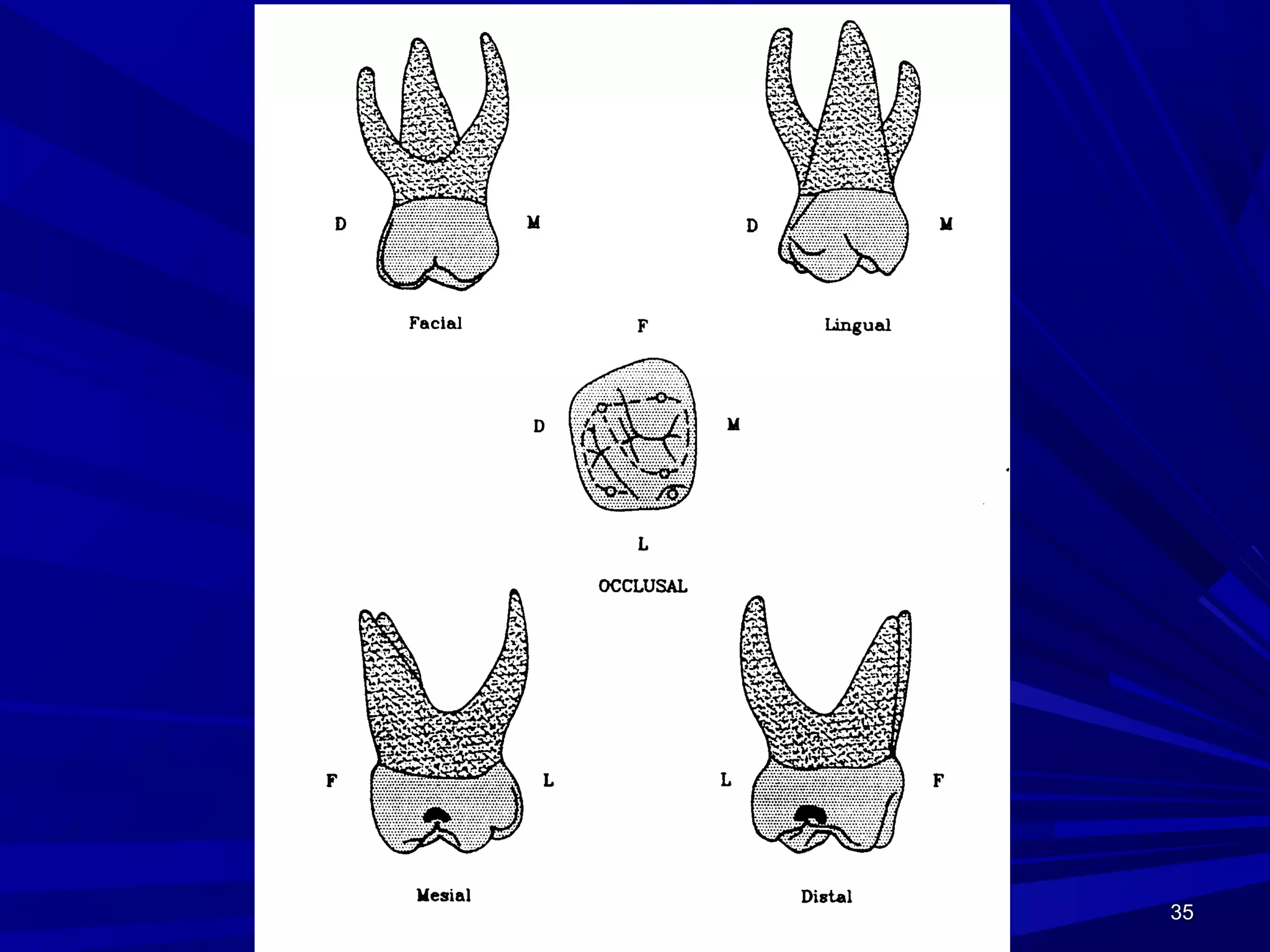
Deciduous Maxillary Second Molar
It is the predecessor of the maxillary second
premolar.
This molar is considerably larger than the
deciduous maxillary first molar and its roots
are noticeably shorter.
It greatly resembles the permanent maxillary
first molar in:
From the all aspects the outline form is the
same.
3535
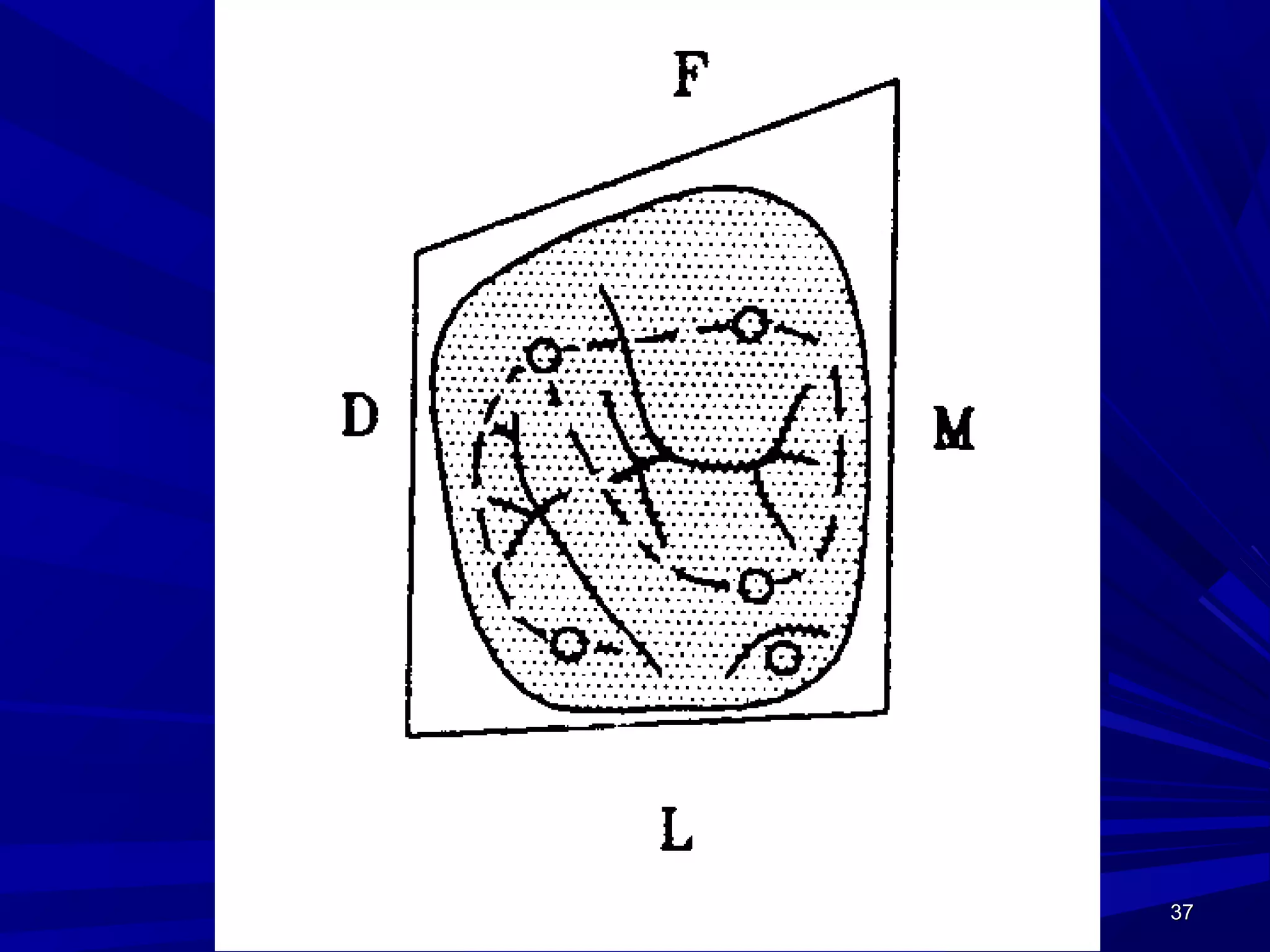
 All of the cusp ridges and depressions
correspond to those of the permanent first
molar.
 There is even a tubercle of Carabelli on the
mesiolingual cusp of it.
 So the differences between these two teeth are
the general differences that mentioned before
between the permanent and deciduous
posterior teeth.
3737
3838
H.d. ii 08 [1]

H.d. ii 08 [1]

  • 1.
  • 2.
    22 College of DentistryCollegeof Dentistry Human Dentition IIHuman Dentition II Deciduous Posterior Teeth - 01Deciduous Posterior Teeth - 01 Dr. Hazem Al AjramiDr. Hazem Al Ajrami
  • 3.
  • 4.
  • 5.
    Deciduous Maxillary FirstMolar It is the predecessor for the maxillary first premolar. The deciduous maxillary first molar is so different from the permanent maxillary first molar. Yet, it more closely resembles the tooth that will replace it (the maxillary first premolar).
  • 7.
    This tooth mayhave one of two types: either four-cusp type that has two buccal and two lingual cusps or three-cusp type having two buccal cusps and one lingual cusp. Both types have three roots; two buccal and one lingual.
  • 8.
    Buccal Aspect The crownoutline is trapezoid in shape. Mesial outline is straight from the cervical line till it contacts the canine in the occlusal third.
  • 9.
  • 10.
    Distal outline ismore convex than the mesial, and it contacts the second molar in the middle third. Occlusal outline: the border of the occlusal surface is scalloped with no definite cusp ridge form. There is a large mesiobuccal cusp and a small distobuccal cusp.
  • 11.
    Cervical line: itis convex towards the root with the crest of curvature is present mesially to outline the most bulging part of the cervical ridge. The mesiodistal dimension of the crown at the cervix is 2 mm. less than that at the contact areas due to the marked convergence of the crown cervically. Surface: there is no buccal groove on the buccal surface but a notch, which separates the large mesiobuccal cusp from the indistinct distobuccal cusp. This groove is presented distal to the center. There is a prominent cervical ridge running mesiodistally with more prominence on the mesial half of the buccal surface.
  • 12.
  • 13.
    Roots: the threeroots (mesiobuccal, distobuccal and lingual) are thin and widely spread and there is no root trunk; the furcation is close to the cervical line. The distal root is considerably shorter than the mesial root.
  • 14.
    Lingual Aspect The crownis narrower due to the lingual convergence and its surface is very convex. The mesiolingual cusp is sharper and slightly longer than the mesiobuccal cusp. In the four-cusp type; the distolingual cusp is poorly defined. It often appears as a small rounded nodule on the distal marginal ridge. A lingual groove between the two lingual cusps is present only when the distolingual cusp is definite.
  • 15.
  • 16.
    In the three-cusptype; the crown demonstrates only one lingual cusp with no developmental groove lingually. All three roots are seen from this aspect. The lingual root is the largest of them.
  • 17.
    Mesial Aspect Outline formis trapezoid with the shortest of the uneven sides is present occlusally. Buccal outline: the buccal outline of the crown is very convex cervically representing the prominent mesiobuccal cervical ridge then it becomes straight from the ridge to the occlusal margin.
  • 18.
  • 19.
  • 20.
    Lingual outline: itis more gradually convex in the cervical and middle thirds and straight in the occlusal third. Occlusal outline: two cusps appear with the mesiolingual cusp is sharper than the mesiobuccal cusp. The mesial marginal ridge is nearly as wide buccolingually as the cusp tips. It may be crossed by a marginal groove. Occlusally, the crown is markedly constricted than cervically.
  • 21.
    Cervical line: showssome curvature occlusally. Roots: there is a short root trunk, and the lingual root is widely separated from the mesiobuccal root, which is sufficiently wide to hide the distobuccal root.
  • 22.
    Distal Aspect The crownis narrower and shorter on the distal side than on the mesial side. The distal marginal ridge is more cervically oriented. In the four-cusp type the distolingual cusp, is poorly developed and shorter than the distobuccal cusp.
  • 23.
    In the three-cusptype, the distobuccal cusp and the lingual cusp appear in this aspect. The cervical ridge on the buccal surface is less prominent from the distal aspect than from the mesial.
  • 24.
  • 25.
    The curvature ofthe cervical line is less distally than it is mesially. All three roots are seen from this aspect, but the distobuccal root is superimposed on the mesiobuccal root so that only the buccal surface and the apex of the latter may be seen.
  • 26.
    Occlusal Aspect  Outlineform: rectangular with the buccal side is broader than the lingual (lingual convergence) and the mesial side is broader than the distal side (distal convergence).  Cusps and ridges:  In the four-cusp type: the occlusal table has two large cusps (mesiobuccal and mesiolingual) and two very small cusps (distobuccal and distolingual).
  • 27.
  • 28.
     In thethree-cusp type; a large mesiobuccal cusp, an indistinct distobuccal cusp and a large lingual cusp are present.  Mesial and distal marginal ridges are present. The distal marginal ridge is thin and poorly developed.  Sometimes an oblique ridge connects the mesiolingual and distobuccal cusps of the four-cusp type molar.
  • 30.
     Fossae, groovesand pits:  Central fossa in the middle of the occlusal surface, a mesial triangular fossa and a distal triangular fossa are seen.  A central developmental groove runs mesiodistally and connects the mesial, central and distal fossae.
  • 31.
     A buccaldevelopmental groove arises from the central fossa dividing the two buccal cusps and not extending on the buccal surface.  A disto-occlusal (or disto-lingual) developmental groove arises from the distal triangular fossa and extend obliquely between the two lingual cusps and it may or may not extend to the lingual surface.
  • 32.
     Three supplementalgrooves are running from inside the mesial triangular fossa (buccally, lingually and mesially). The mesial supplemental groove sometimes traverse the mesial marginal ridge to extend for a some distance on the mesial surface.  There are usually three pits: mesial, central and distal.
  • 33.
  • 34.
    Deciduous Maxillary SecondMolar It is the predecessor of the maxillary second premolar. This molar is considerably larger than the deciduous maxillary first molar and its roots are noticeably shorter. It greatly resembles the permanent maxillary first molar in: From the all aspects the outline form is the same.
  • 35.
  • 36.
     All ofthe cusp ridges and depressions correspond to those of the permanent first molar.  There is even a tubercle of Carabelli on the mesiolingual cusp of it.  So the differences between these two teeth are the general differences that mentioned before between the permanent and deciduous posterior teeth.
  • 37.
  • 38.