My experience running Human Centered
Design workshops
Presented by Nicole Lin
@terrascura
linkedin.com/in/nicoleyuelin
Design Kit
Facilitator’s Guide
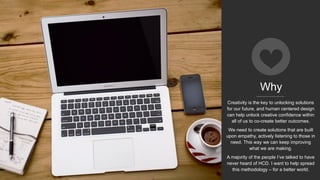
Why
Creativity is the key to unlocking solutions
for our future, and human centered design
can help unlock creative confidence within
all of us to co-create better outcomes.
We need to create solutions that are built
upon empathy, actively listening to those in
need. This way we can keep improving
what we are making.
A majority of the people I’ve talked to have
never heard of HCD. I want to help spread
this methodology – for a better world.
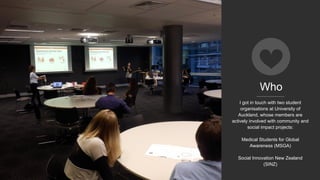
Who
I got in touch with two student
organisations at University of
Auckland, whose members are
actively involved with community and
social impact projects:
Medical Students for Global
Awareness (MSGA)
Social Innovation New Zealand
(SINZ)
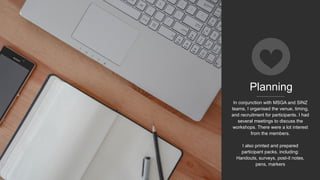
Planning
In conjunction with MSGA and SINZ
teams, I organised the venue, timing,
and recruitment for participants. I had
several meetings to discuss the
workshops. There were a lot interest
from the members.
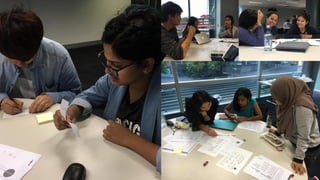
I also printed and prepared
participant packs, including:
Handouts, surveys, post-it notes,
pens, markers
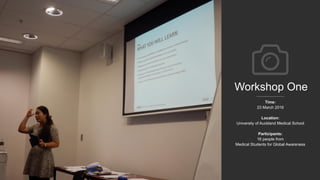
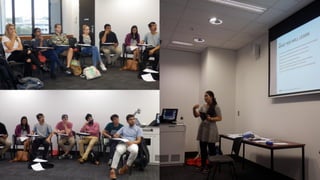
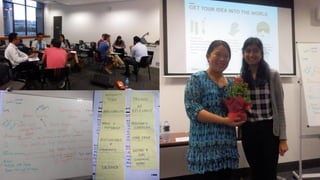
Workshop One
Time:
23 March 2016
Location:
University of Auckland Medical School
Participants:
16 people from
Medical Students for Global Awareness
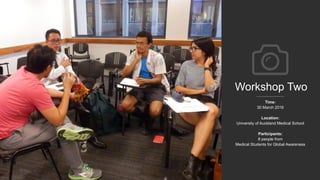
Workshop Two
Time:
30 March 2016
Location:
University of Auckland Medical School
Participants:
8 people from
Medical Students for Global Awareness
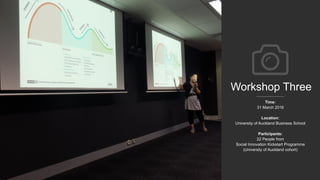
Workshop Three
Time:
31 March 2016
Location:
University of Auckland Business School
Participants:
22 People from
Social Innovation Kickstart Programme
(University of Auckland cohort)
Process
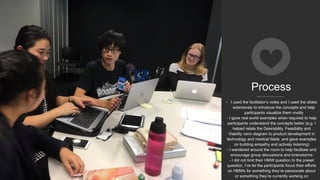
- I used the facilitator’s notes and I used the slides
extensively to introduce the concepts and help
participants visualize them vividly
- I gave real world examples when required to help
participants understand the concepts better (e.g. I
helped relate the Desirability, Feasibility and
Viability venn diagram to product development in
technology and medical fields, and gave examples
on building empathy and actively listening)
- I wandered around the room to help facilitate and
encourage group discussions and brainstorms
- I did not limit their HMW question to the preset
question, I’ve let the participants focus their efforts
on HMWs for something they’re passionate about
or something they’re currently working on
Outcome
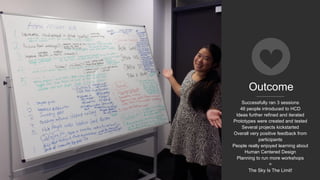
Successfully ran 3 sessions
46 people introduced to HCD
Ideas further refined and iterated
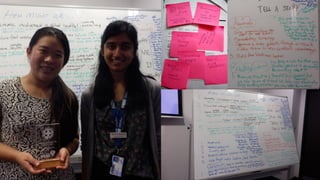
Prototypes were created and tested
Several projects kickstarted
Overall very positive feedback from
participants
People really enjoyed learning about
Human Centered Design
Planning to run more workshops
=
The Sky Is The Limit!
Feedback
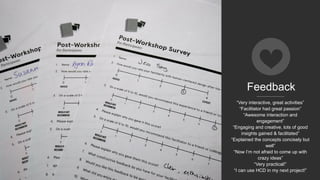
“Very interactive, great activities”
“Facilitator had great passion”
“Awesome interaction and
engagement”
“Engaging and creative, lots of good
insights gained & facilitated”
“Explained the concepts concisely but
well”
“Now I’m not afraid to come up with
crazy ideas”
“Very practical!”
“I can use HCD in my next project!”
Thanks for being part of this journey!
Nicole Lin
@terrascura
linkedin.com/in/nicoleyuelin

HCD Workshop Experiences - Nicole Lin

  • 1.
    My experience runningHuman Centered Design workshops Presented by Nicole Lin @terrascura linkedin.com/in/nicoleyuelin Design Kit Facilitator’s Guide
  • 2.
    Why Creativity is thekey to unlocking solutions for our future, and human centered design can help unlock creative confidence within all of us to co-create better outcomes. We need to create solutions that are built upon empathy, actively listening to those in need. This way we can keep improving what we are making. A majority of the people I’ve talked to have never heard of HCD. I want to help spread this methodology – for a better world.
  • 3.
    Who I got intouch with two student organisations at University of Auckland, whose members are actively involved with community and social impact projects: Medical Students for Global Awareness (MSGA) Social Innovation New Zealand (SINZ)
  • 4.
    Planning In conjunction withMSGA and SINZ teams, I organised the venue, timing, and recruitment for participants. I had several meetings to discuss the workshops. There were a lot interest from the members. I also printed and prepared participant packs, including: Handouts, surveys, post-it notes, pens, markers
  • 5.
    Workshop One Time: 23 March2016 Location: University of Auckland Medical School Participants: 16 people from Medical Students for Global Awareness
  • 8.
    Workshop Two Time: 30 March2016 Location: University of Auckland Medical School Participants: 8 people from Medical Students for Global Awareness
  • 10.
    Workshop Three Time: 31 March2016 Location: University of Auckland Business School Participants: 22 People from Social Innovation Kickstart Programme (University of Auckland cohort)
  • 14.
    Process - I usedthe facilitator’s notes and I used the slides extensively to introduce the concepts and help participants visualize them vividly - I gave real world examples when required to help participants understand the concepts better (e.g. I helped relate the Desirability, Feasibility and Viability venn diagram to product development in technology and medical fields, and gave examples on building empathy and actively listening) - I wandered around the room to help facilitate and encourage group discussions and brainstorms - I did not limit their HMW question to the preset question, I’ve let the participants focus their efforts on HMWs for something they’re passionate about or something they’re currently working on
  • 15.
    Outcome Successfully ran 3sessions 46 people introduced to HCD Ideas further refined and iterated Prototypes were created and tested Several projects kickstarted Overall very positive feedback from participants People really enjoyed learning about Human Centered Design Planning to run more workshops = The Sky Is The Limit!
  • 16.
    Feedback “Very interactive, greatactivities” “Facilitator had great passion” “Awesome interaction and engagement” “Engaging and creative, lots of good insights gained & facilitated” “Explained the concepts concisely but well” “Now I’m not afraid to come up with crazy ideas” “Very practical!” “I can use HCD in my next project!”
  • 17.
    Thanks for beingpart of this journey! Nicole Lin @terrascura linkedin.com/in/nicoleyuelin