HBase from	the	Trenches
Avinash	Ramineni
Email: avinash@clairvoyantsoft.com
LinkedIn: https://www.linkedin.com/in/avinashramineni
Agenda
• Intro	to	HBase
– Overview
– Data	Model
– Architecture
• Common	Problems
• Best	Practices
• Tools	and	Utilities
Intro	to	HBase
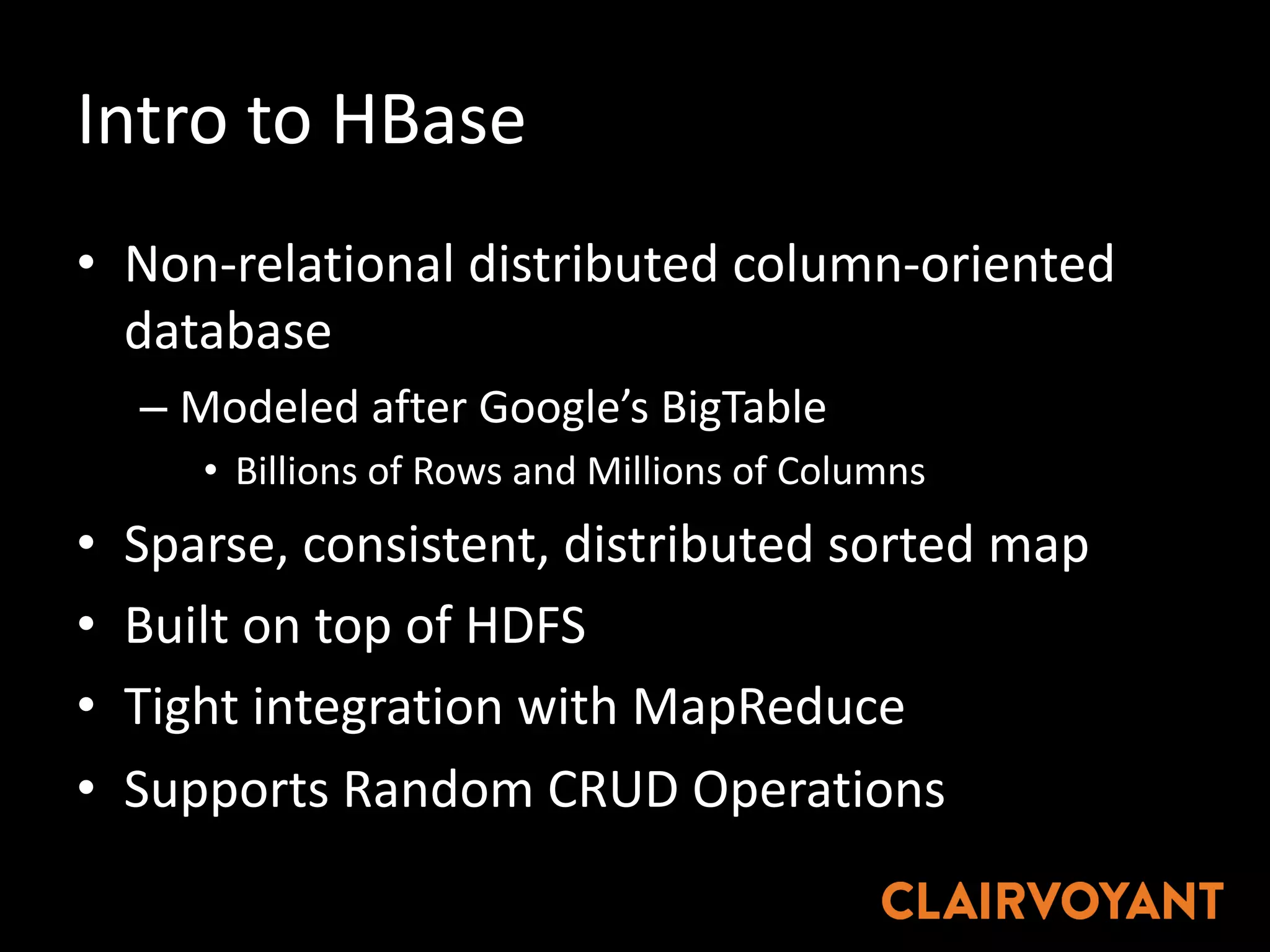
• Non-relational	distributed	column-oriented	
database
– Modeled	after	Google’s	BigTable
• Billions	of	Rows	and	Millions	of	Columns
• Sparse,	consistent,	distributed	sorted	map
• Built	on	top	of	HDFS
• Tight	integration	with	MapReduce
• Supports	Random	CRUD	Operations
Intro	to	HBase
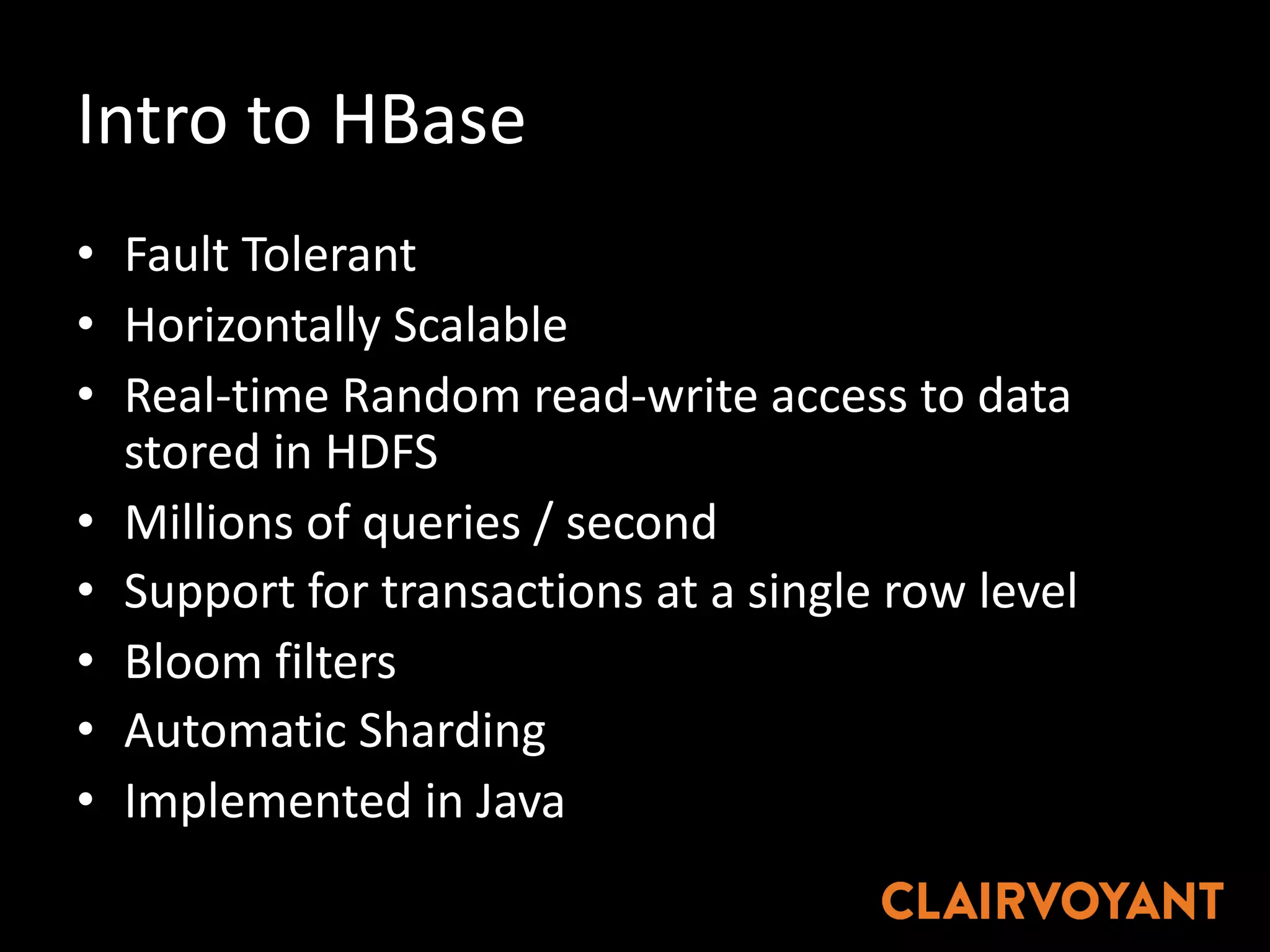
• Fault	Tolerant
• Horizontally	Scalable
• Real-time	Random	read-write	access	to	data	
stored	in	HDFS
• Millions	of	queries	/	second
• Support	for	transactions	at	a	single	row	level
• Bloom	filters
• Automatic	Sharding
• Implemented	in	Java
Data	Model
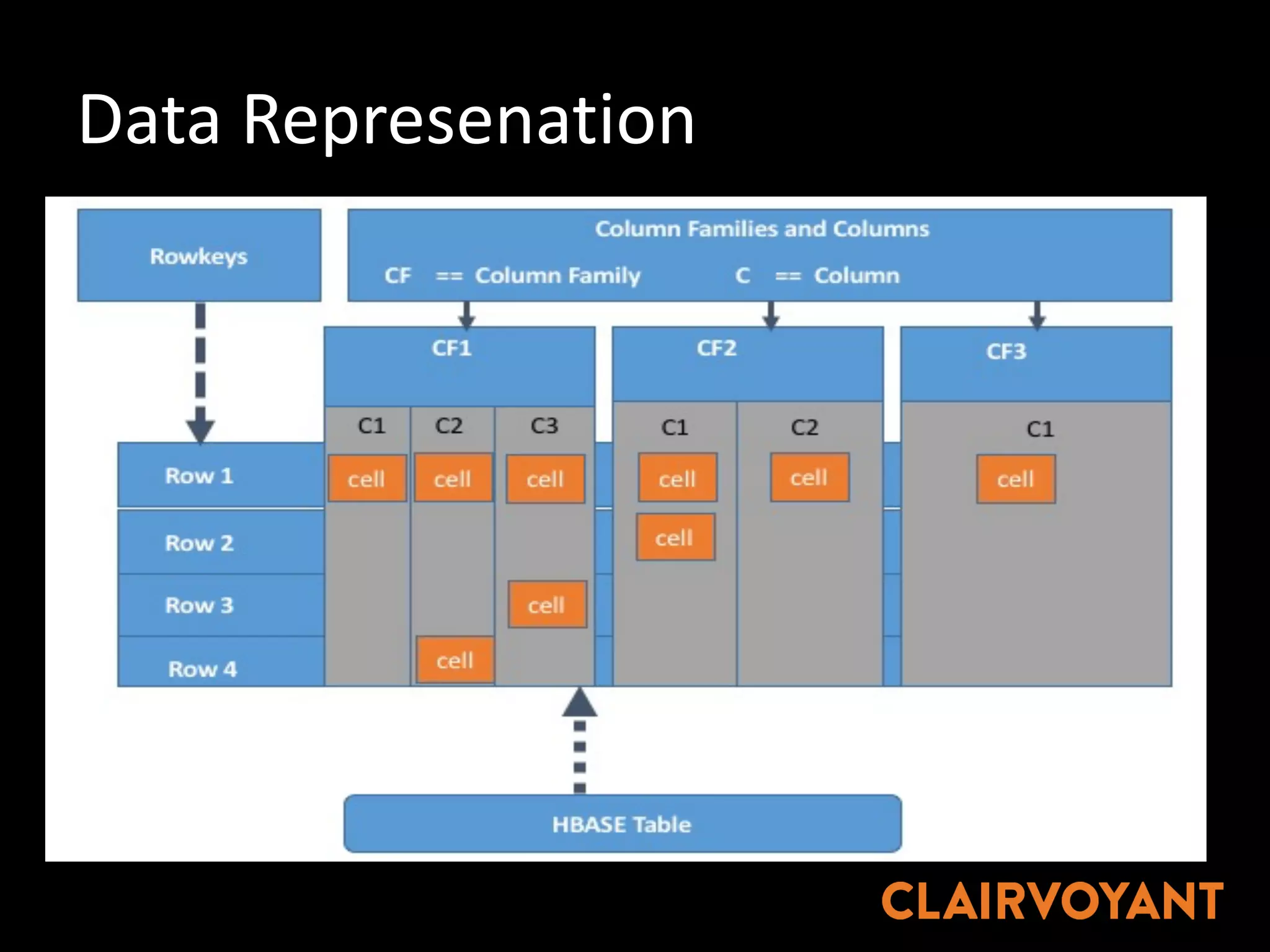
• Data	is	stored	in	Tables
• Tables	contain	rows
– Rows	are	referenced	by	a	unique	key	- Rowkey
• Rows	are	made	of	columns	which	are	grouped	
in	column	families
• Rows	are	sorted
• Everything	is	stored	as	a	sequence	of	bytes
• All	entries	are	versioned	and	timestamped
Data	Represenation
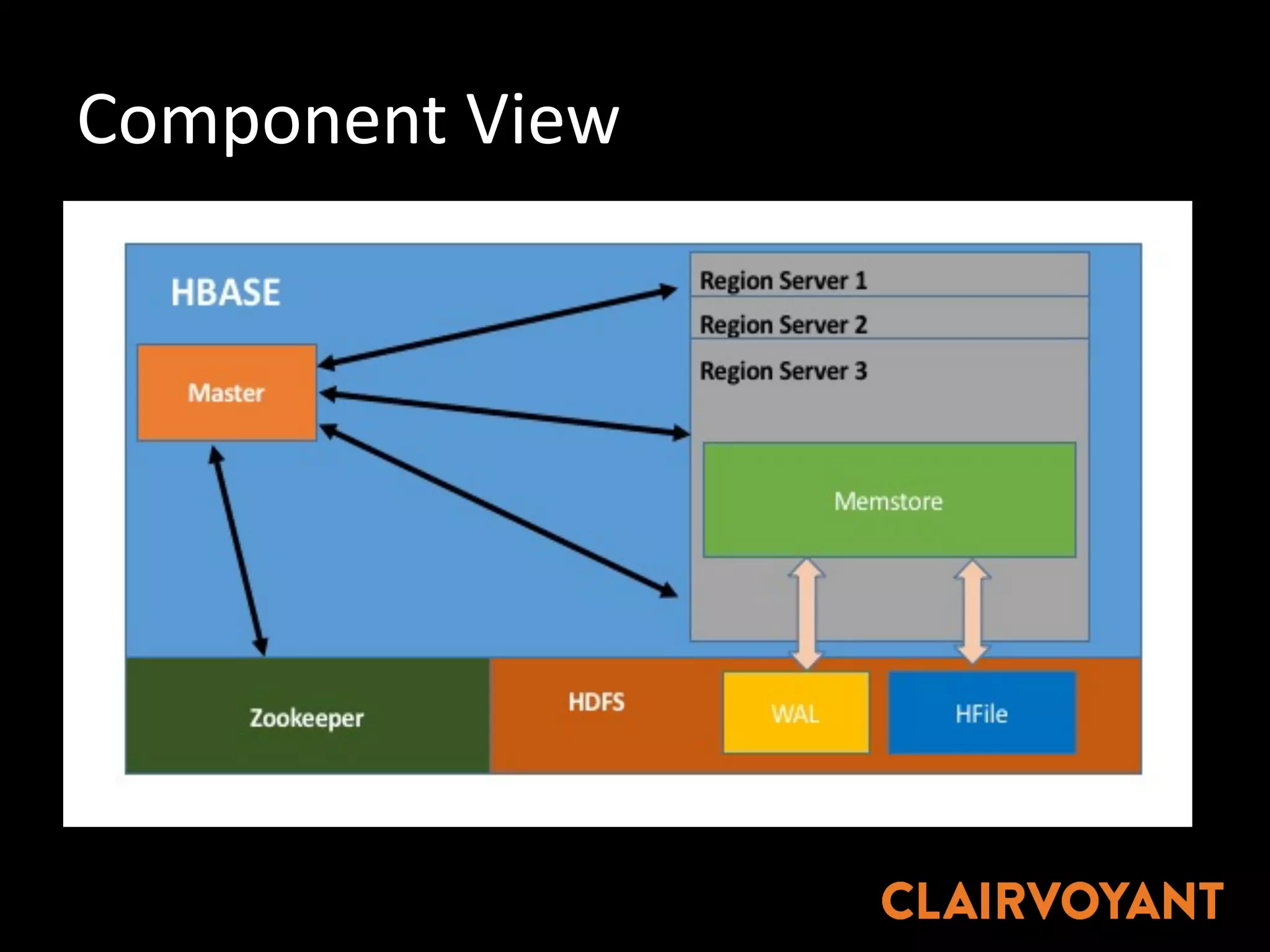
HBase Cluster
• HBase Master
• Zookeeper
• Region	Servers
• HDFS	- Data	Nodes
Component	View
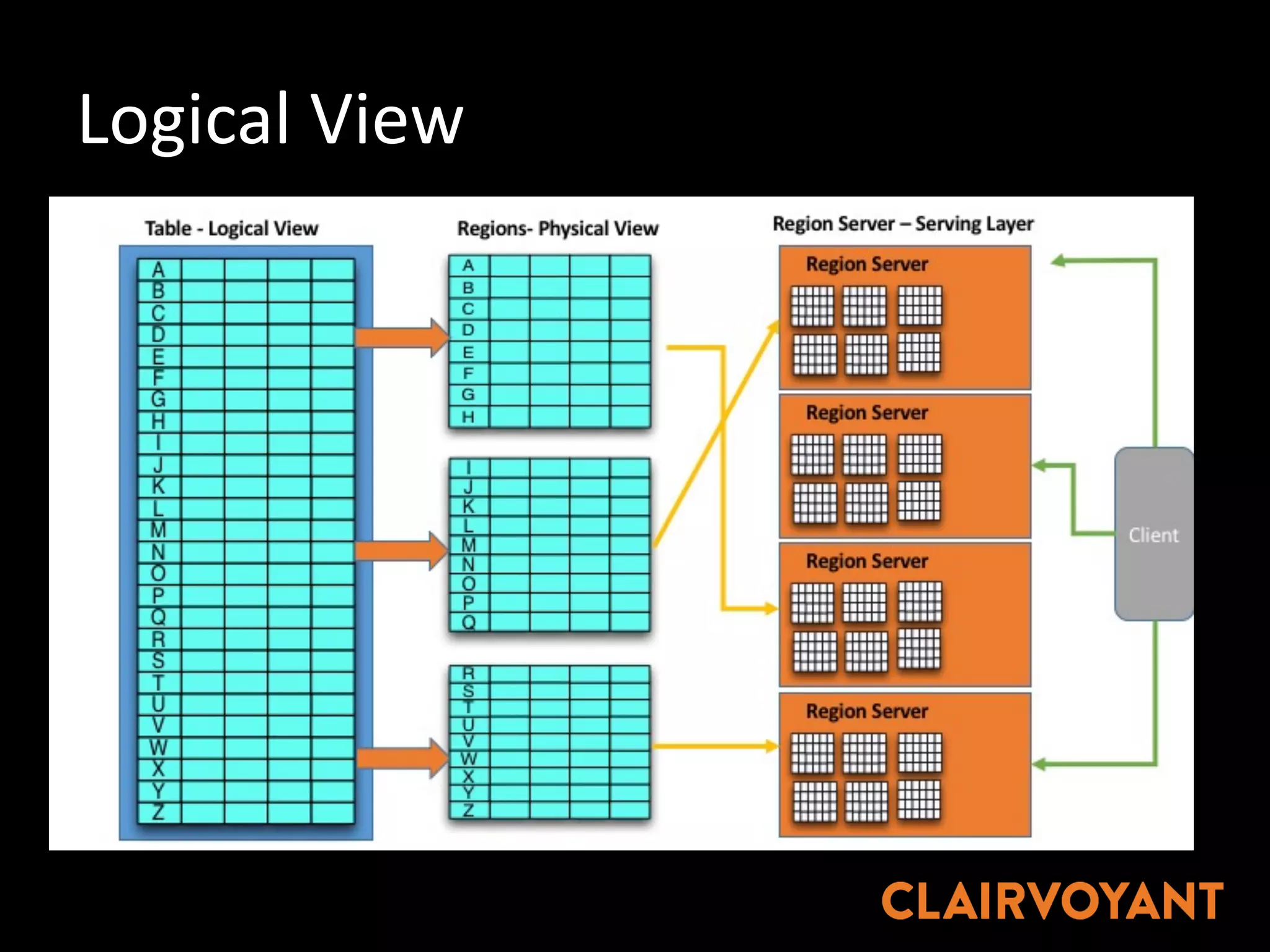
Logical	View
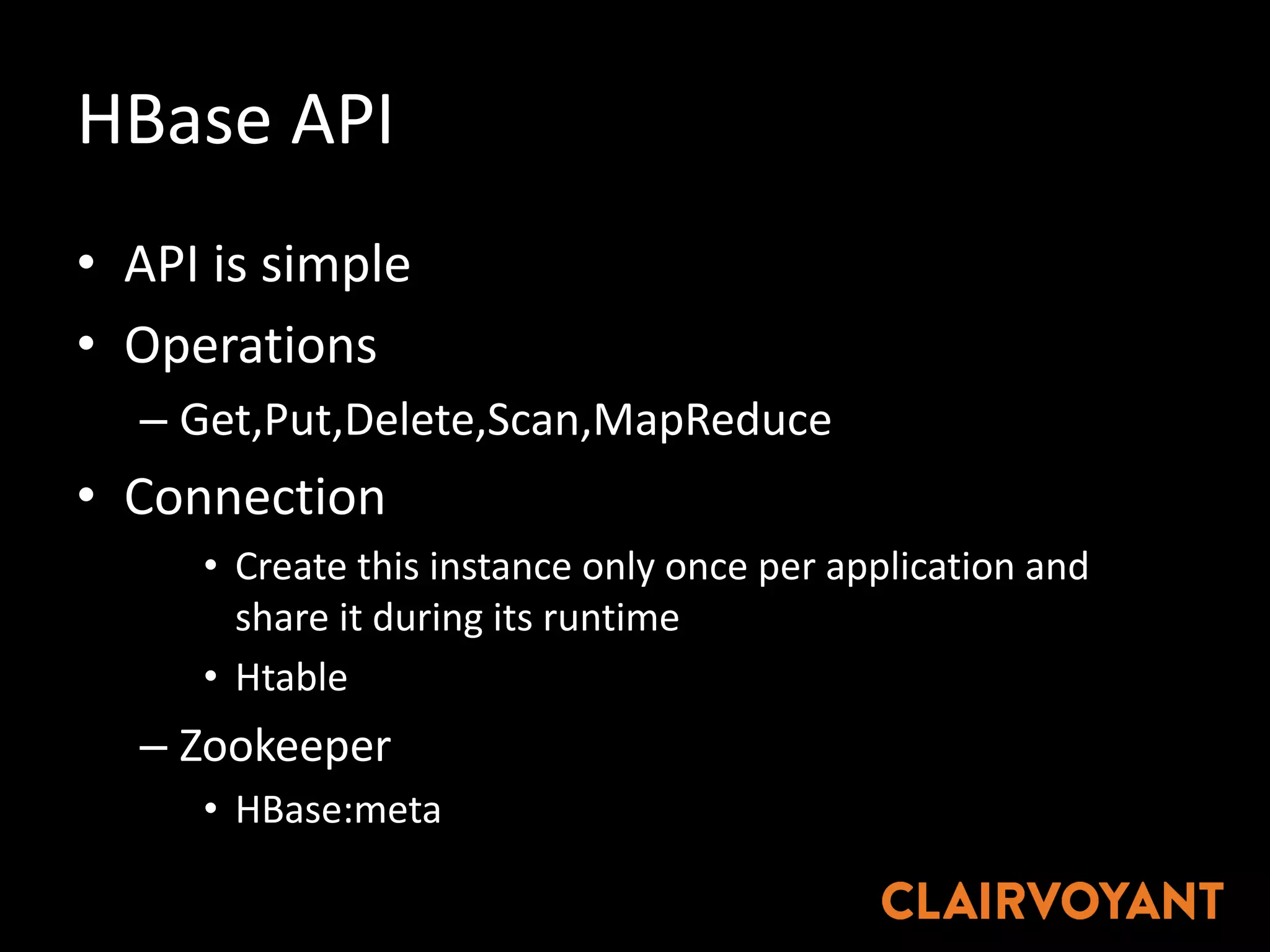
HBase API
• API	is	simple
• Operations
– Get,Put,Delete,Scan,MapReduce
• Connection
• Create	this	instance	only	once	per	application	and	
share	it	during	its	runtime
• Htable
– Zookeeper	
• HBase:meta
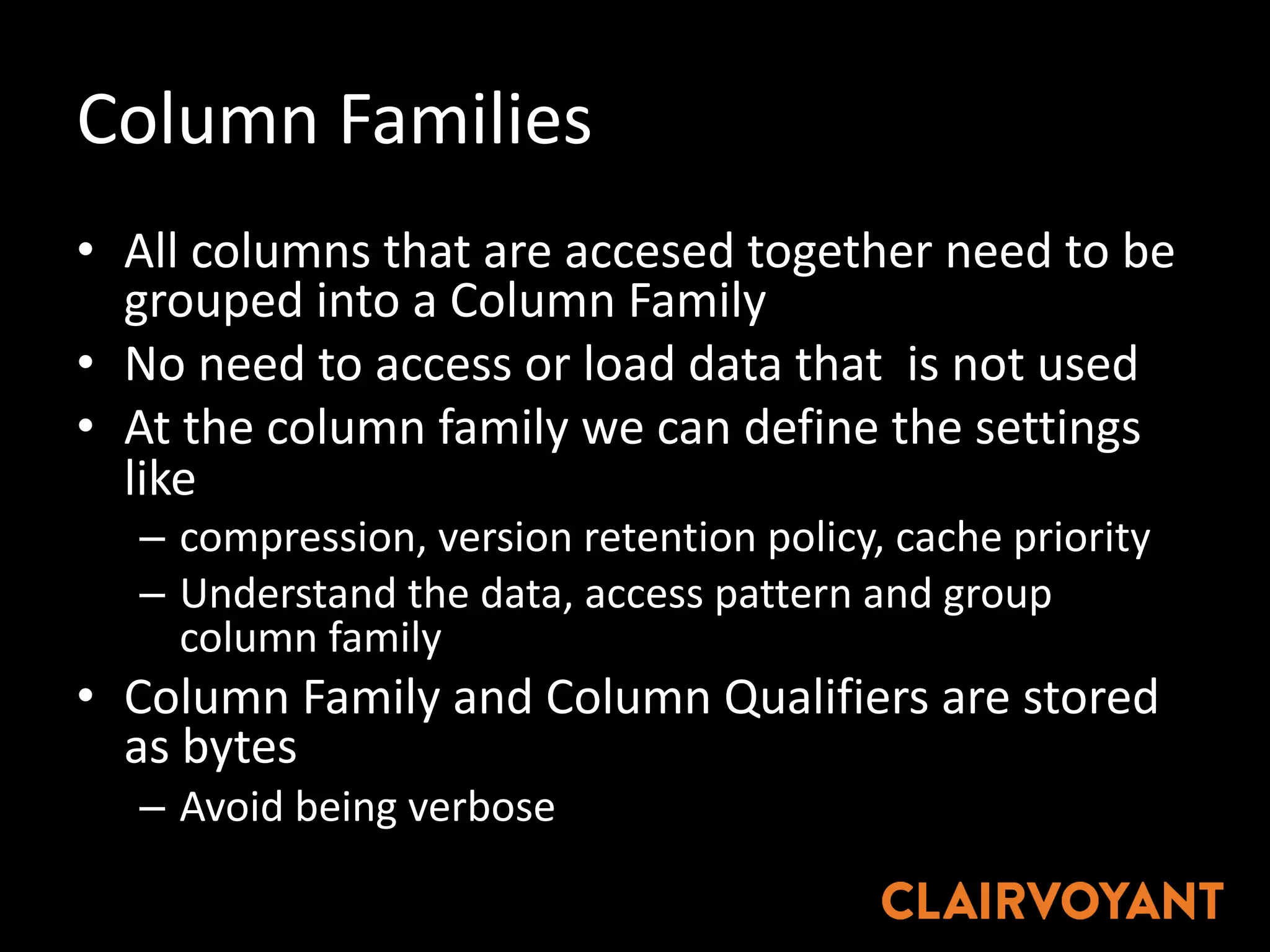
Column	Families
• All	columns	that	are	accesed together	need	to	be	
grouped	into	a	Column	Family
• No	need	to	access	or	load	data	that		is	not	used
• At	the	column	family	we	can	define	the	settings	
like	
– compression,	version	retention	policy,	cache	priority
– Understand	the	data,	access	pattern	and	group	
column	family
• Column	Family	and	Column	Qualifiers	are	stored	
as	bytes
– Avoid	being	verbose
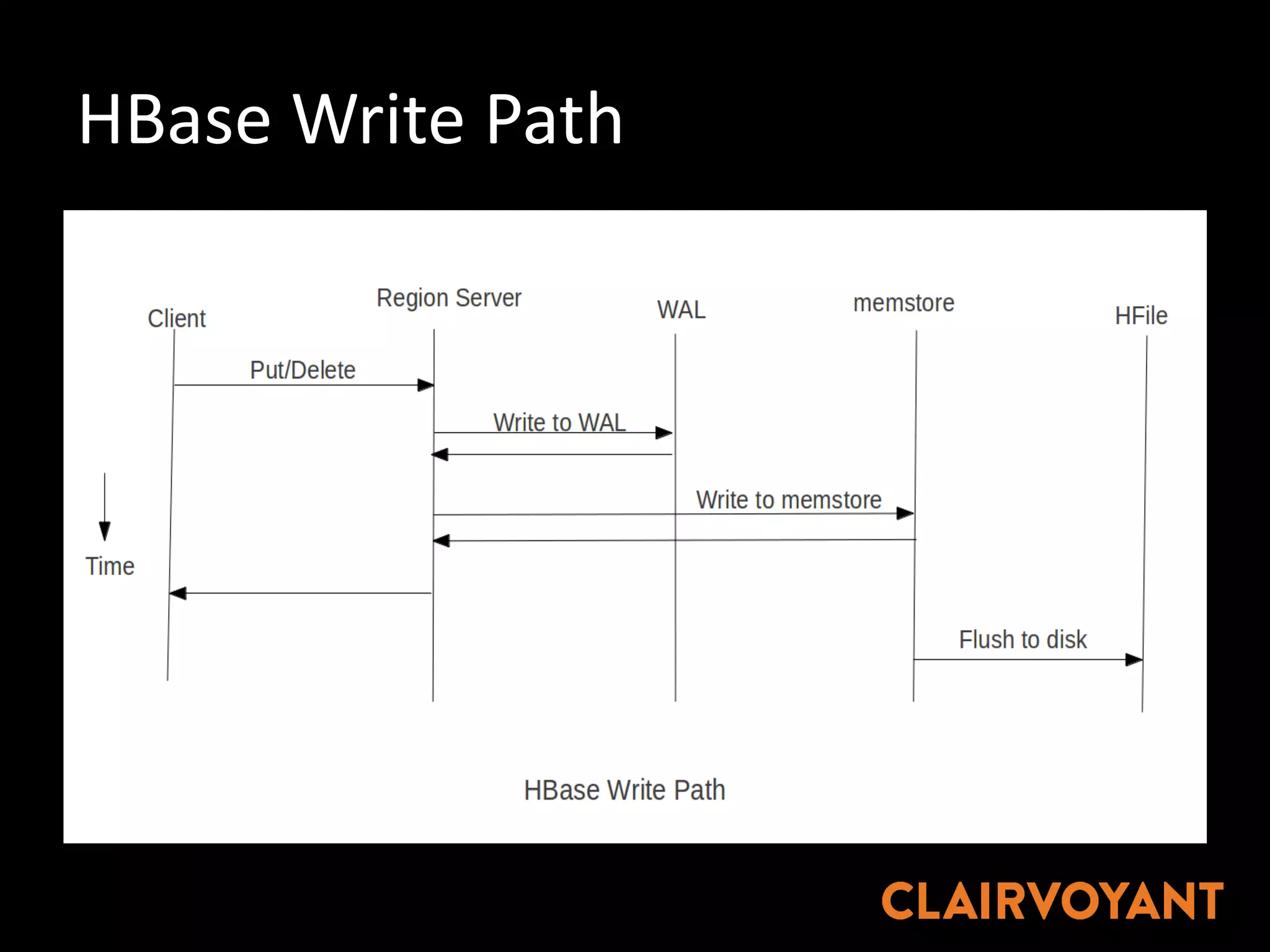
HBase Write	Path
HBase Compactions
• HDFS	does	not	support	updates	
– HFiles	are	immutable
– New	HFiles	are	created
• Minor	Compactions
– Small	HFiles	are	merged	into	larger	Hfiles
– Deletes	are	not	applied
• Major	Compactions
– Hfiles with	in	column	family	are	merged		into	Single	
Hfile
– Deletes	are	applied
Rowkey
• Immutable
• Get	it	right	the	first	time	before	a	lot	of	data	is	
loaded
• What	if	we	got		it	wrong	?
– New	table	and	load	the	data
– If	TTL	set..let the	data	expire
Secondary	Indexes
• Querying	/	Accessing	records	other	than	by	
Rowkey
• Map	Reduce	jobs	to	populate	index	table
– Periodic	update
• Build	a	secondary	index	with	dual	writes
• Co-processors
Region	Hotspotting
• Client	traffic	not	equally	distributed	across	the	region	
servers
– Performance	degradation
– Region	unavailability
• Poor	rowkey	design
– Monotonically	increasing	RowKey
• Timeseries	or	Sequence
– Salting
• Read	Vs	Writes
• GET	?
– Hashing
• Salt	with	one-way	hash	of	rowkey
Short	Circuit	Reads
• Region	Servers	are	co-located	with	data	nodes
• HMaster assigns	Regions	keeping	data	locality	
in	to	consideration	(mostly)
• dfs.client.read.short-circuit
– Region	Servers	read	the	data	directly	from	HDFS	
rather	than	going	through	Datanode
• Locality	Loss
Pre-Splitting
• Region	splitting
– Grows	untill it	needs	to	be	split	
– Region	at	a	time	is	served	by	only	1		Region	Server
• Pre-split	a	table	into	regions	at	table	creation	
time
– Uniformly	distribute	write	load	across	region	servers
– Understand	the	keyspace
• Risk	of	uneven	load	distribution	
• Auto	splitting
– Constant	size	region	split	policy
– IncreasingToUpperBoundRegionSplitPolicy
Bulk	Loading
• Native	API
– Disable	WAL	
• MapReduce Job	to	generate	Hfile
– Load	using	completebulkload /	importTSV tool
• Loads	into	relevant	region
– Faster	than	going	through	normal	write	path
• No	writes	to	WAL	and	Memstore
• No	flushing	and	compacting
Troubleshooting
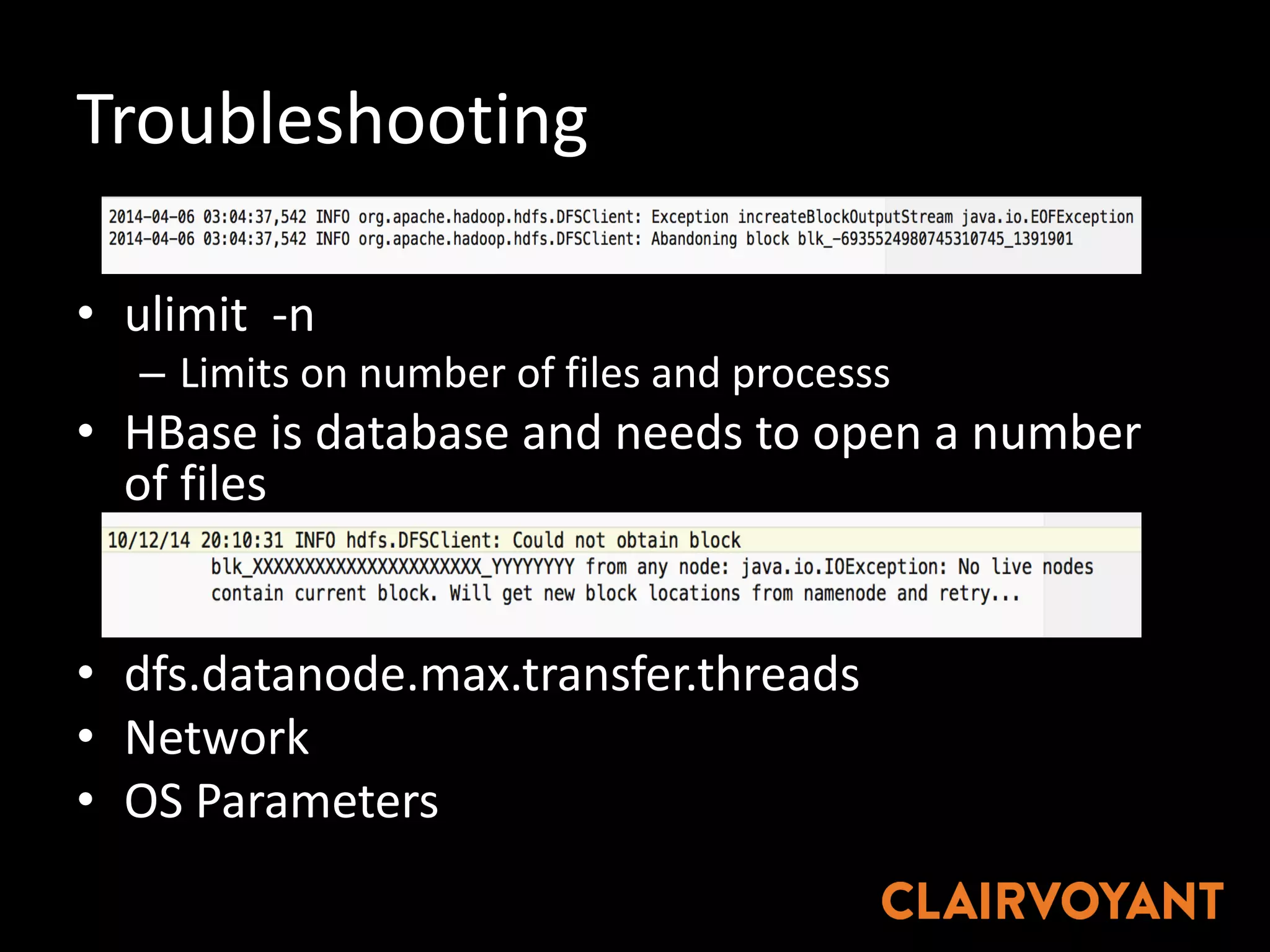
• ulimit -n
– Limits	on	number	of	files	and	processs
• HBase is	database	and	needs	to	open	a	number	
of	files
• dfs.datanode.max.transfer.threadsrr.
• Network
• OS	Parameters
You	are	Dead	Exception
• Region	Servers	going	down	
– Zookeeper
• Distributed	co-ordinated service
– HBase Master	asks	the	region	server	to	shutdown
– Garbage	Collection
– Zookeeper	session	timeout
Performance	Tuning
• Compression
– Reduces	data	stored	on	disk	and	transferred
– Compression	speed	over	ratio
• Load	Balancing	- Balancer
• Merging	Regions
• Batch	Writes
– Client	Write	Buffer
– AutoFlush
• MemStore-local	allocation	buffers
– Garbage	Collection	Issues
Tuning	
• Heavy	Writes
– Flushes,	compacting,splitting increase	IO	and	degrade	
cluster	performance
• Keep	Region	sizes	larger
• Keep	Hfile size	large	
• Heavy		Sequential	Reads
• Higher	block	size	
• Avoid	Caching	on	table
• Heavy	Random	Reads
• Higher	Blocklevel cache
• Lower	Memstore limit
• Smaller	block	size
Apache	Phoenix
• SQL	over	Hbase
– Compiles	into	Hbase Scans
– Orchetrates parallel	execution
– Aggregate	queries
• JDBC	API’s	over	Native	HBase API.
• Salting	Buckets	PreSplitting
• Trafodion
– Transactional	SQL	on	HBase
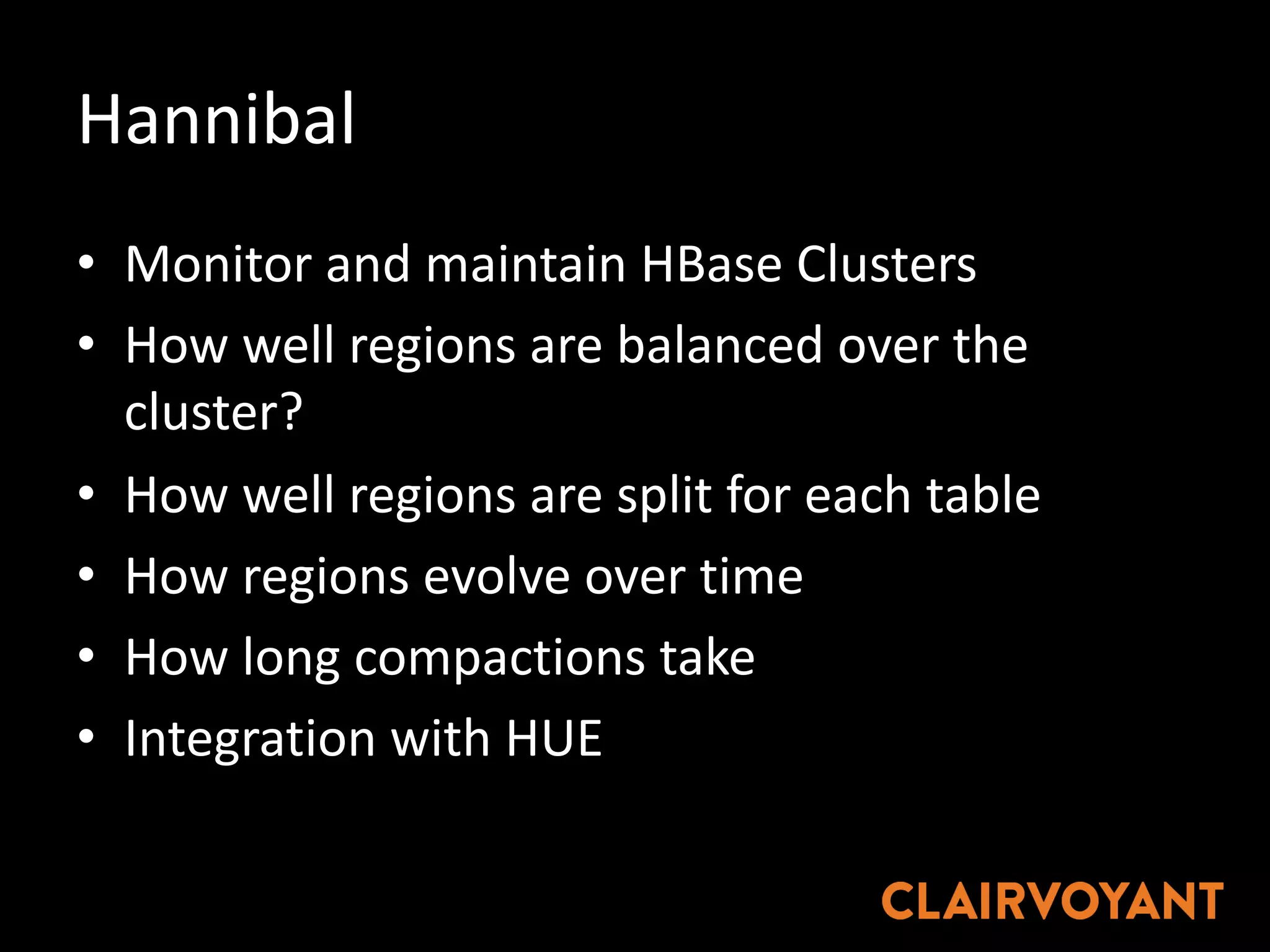
Hannibal
• Monitor	and	maintain	HBase Clusters
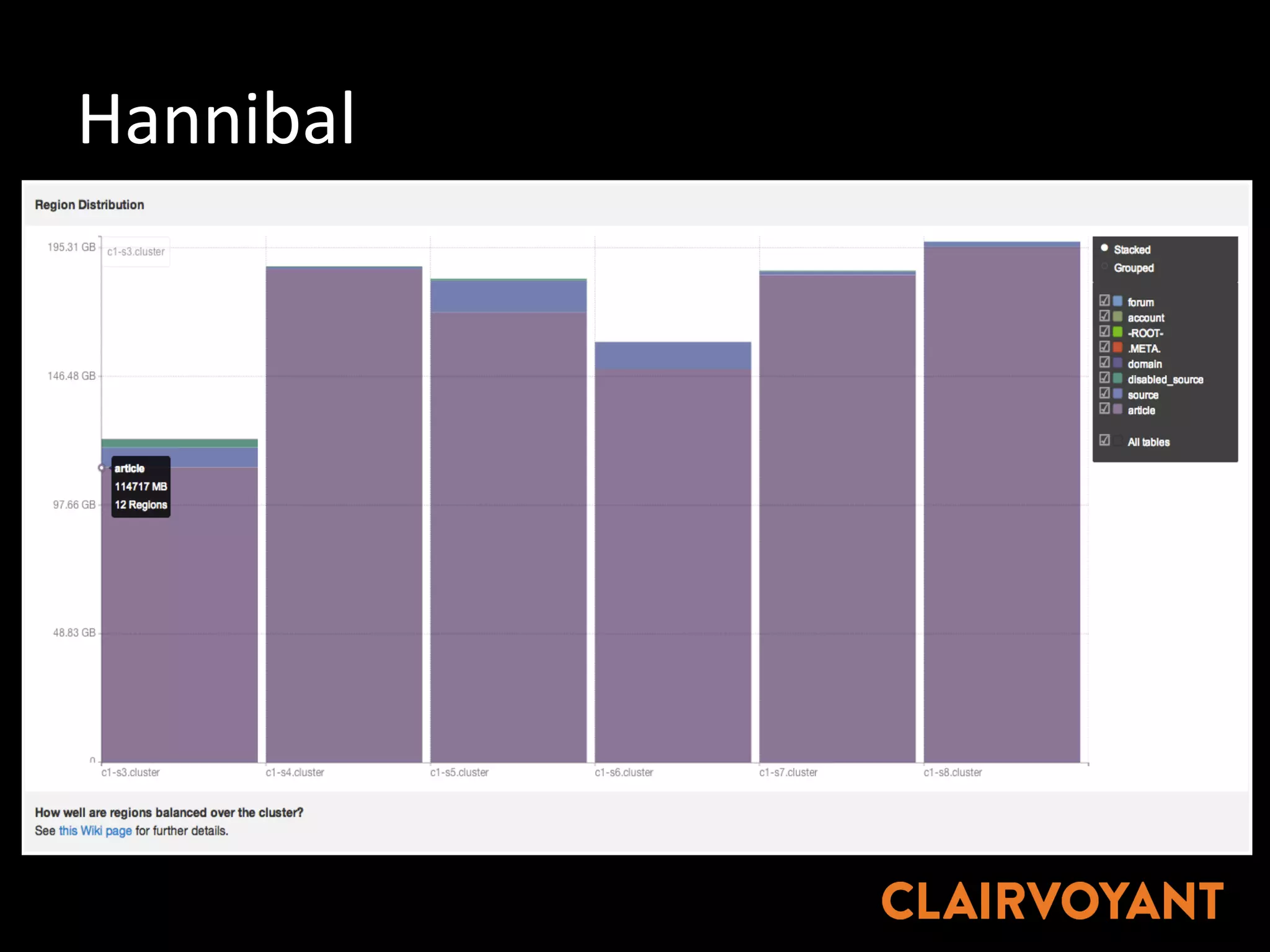
• How	well	regions	are	balanced	over	the	
cluster?
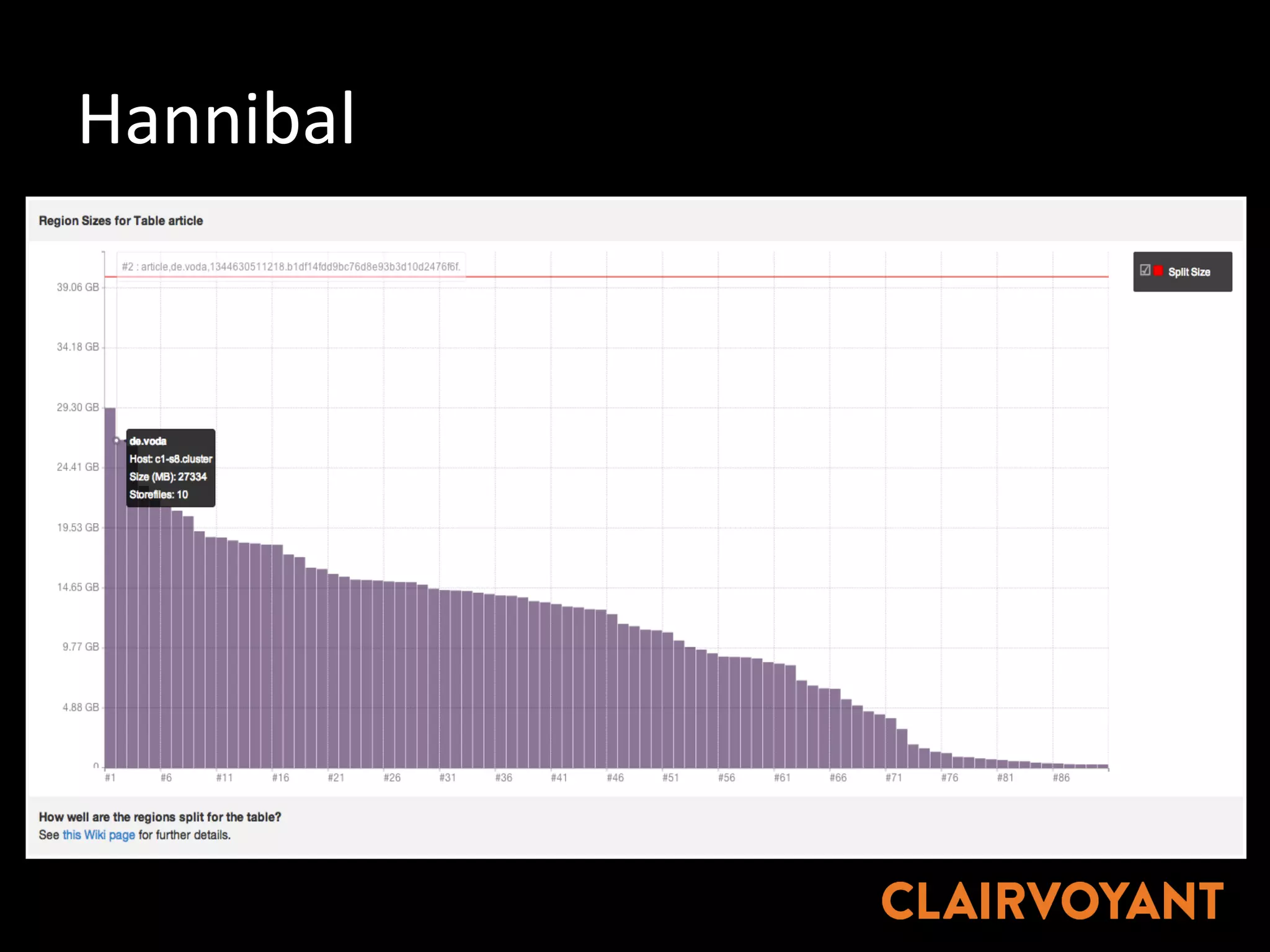
• How	well	regions	are	split	for	each	table
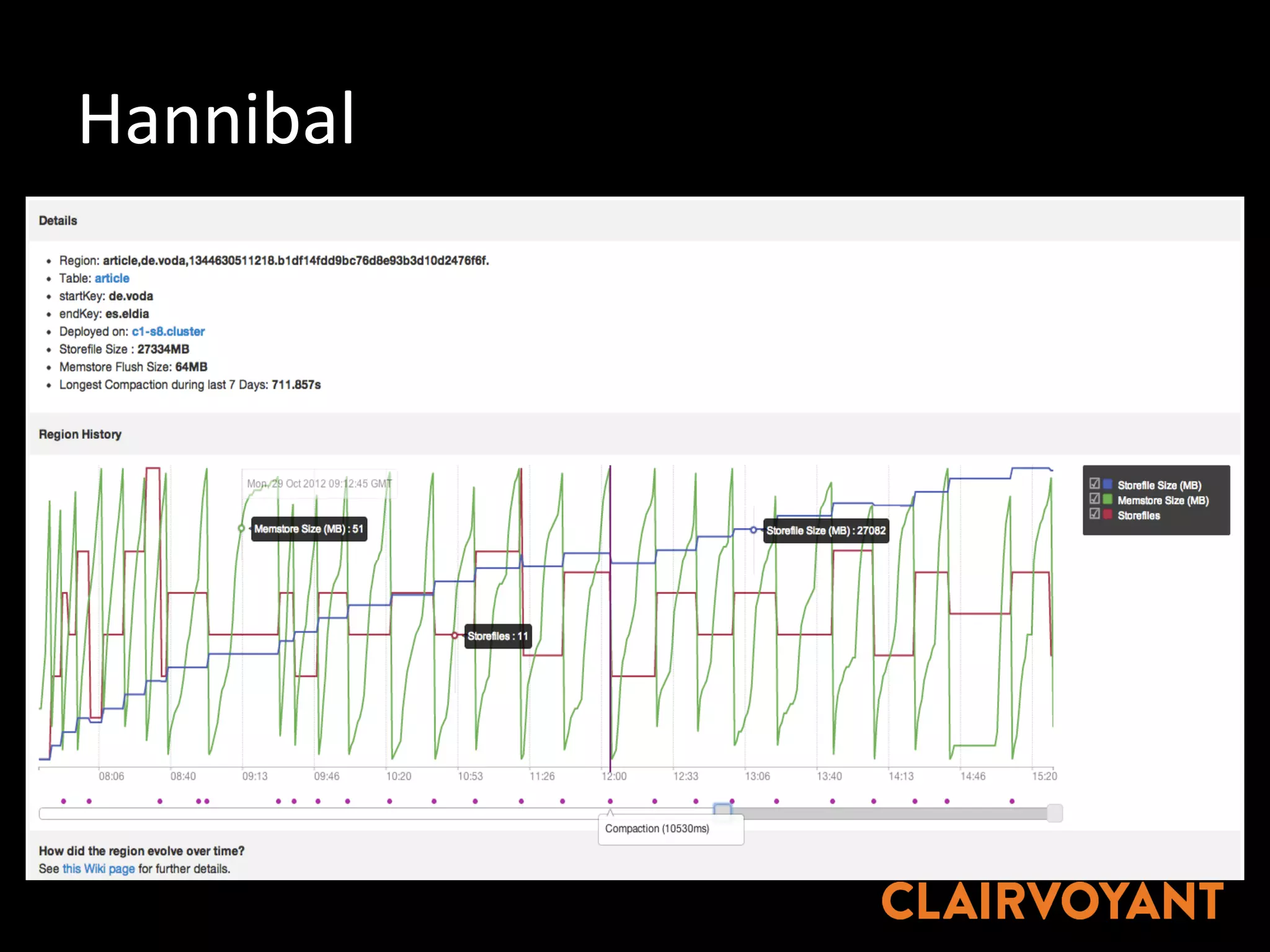
• How	regions	evolve	over	time
• How	long	compactions	take
• Integration	with	HUE
Hannibal
Hannibal
Hannibal
Operational	Aspects
• Metrics
– Master
• Cluster	requests,split time,split size
– RegionServer
• Blockcache,memstore,compaction,store,IO
• Htrace
– Trace	tool	for	parallel	distributed	system
• Monitoring
– Nagios
– Hannibal
– Ganglia
– Graphite
– OpenTSDB
• Backup
– Export,CopyTable,Snapshot
Questions?
avinash@clairvoyantsoft.com
HBase from the Trenches - Phoenix Data Conference 2015

HBase from the Trenches - Phoenix Data Conference 2015