Harnessingthe blend:
Creatingauthenticlearningexperiences
Debbie HolleyPhDSrCMALTPFHEANTFFRSA
ProfessorofLearningInnovation,
Deptof NursingSciences
Twitter: followme@debbieholley1
Email: dholley@bournemouth.ac.uk
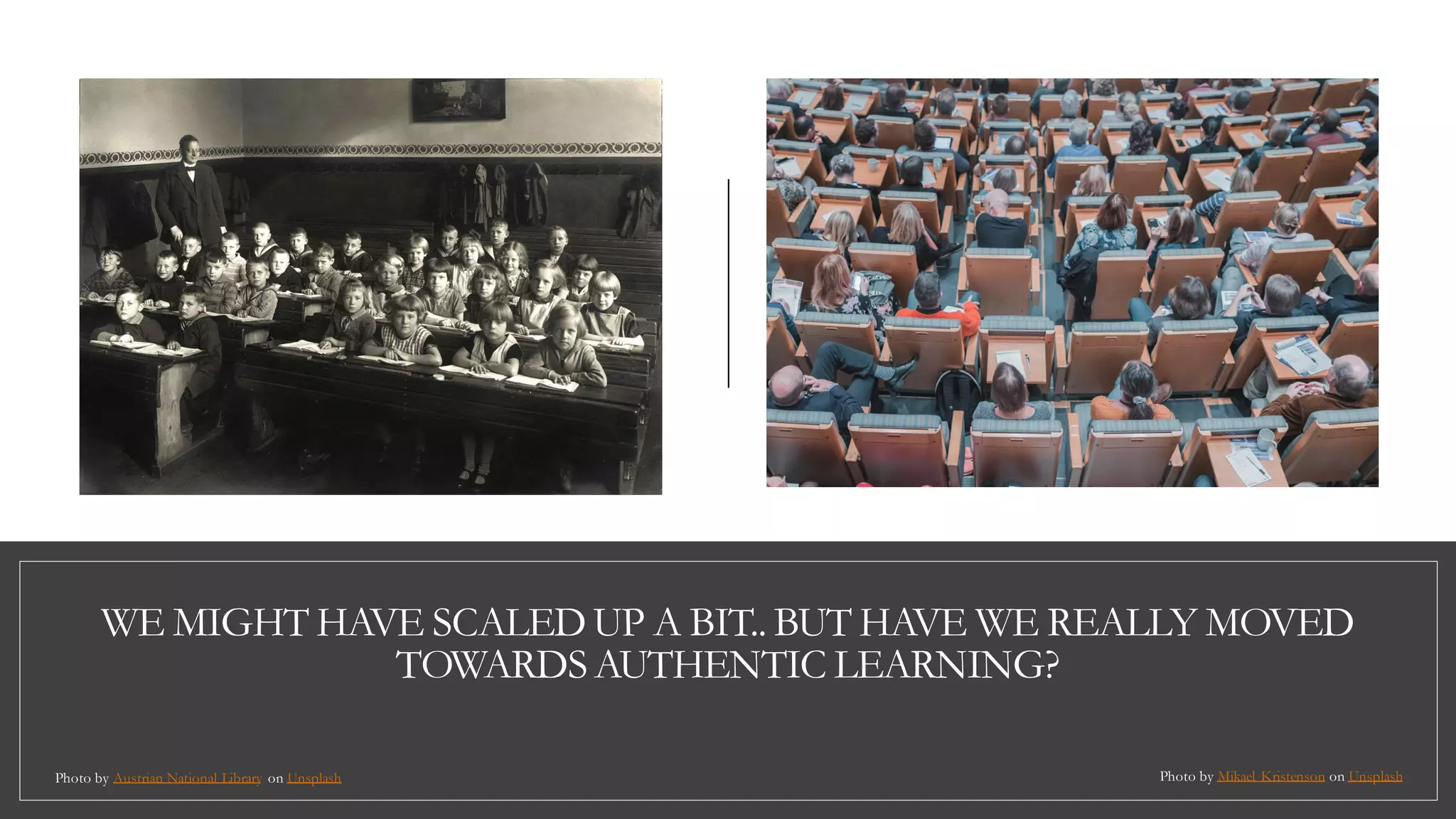
WE MIGHT HAVE SCALEDUP A BIT.. BUT HAVE WE REALLY MOVED
TOWARDSAUTHENTIC LEARNING?
Photo by Mikael Kristenson on Unsplash
Photo by Austrian National Library on Unsplash
Any discussion needs to start
with digital inclusion
Digitalinclusion is defined by the United Nations
(UN) as “Equitable,meaningful,and safe access to
use, lead, and design of digital technologies,
services, and associatedopportunitiesfor
everyone, everywhere”
(UN RoundTable).
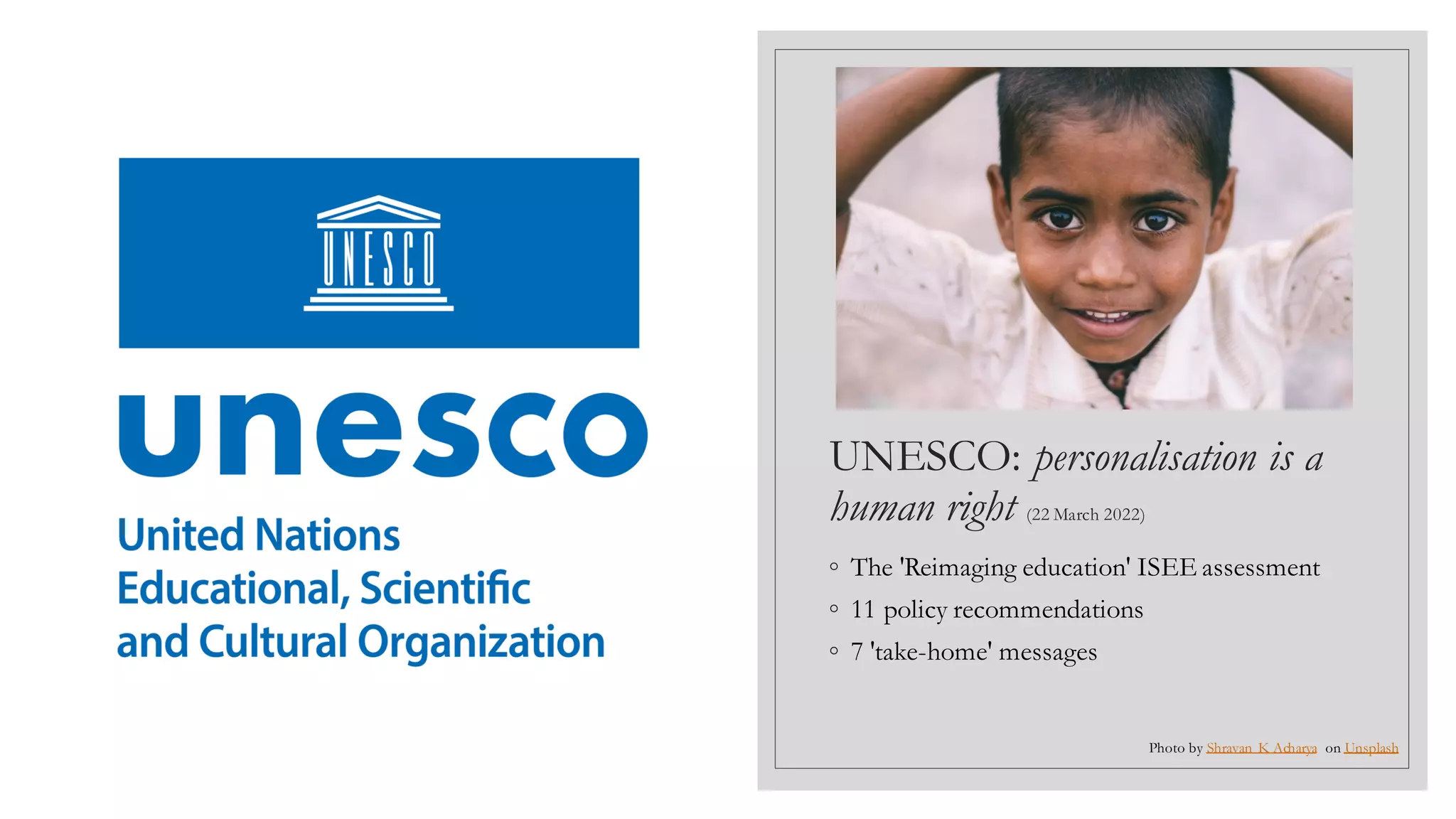
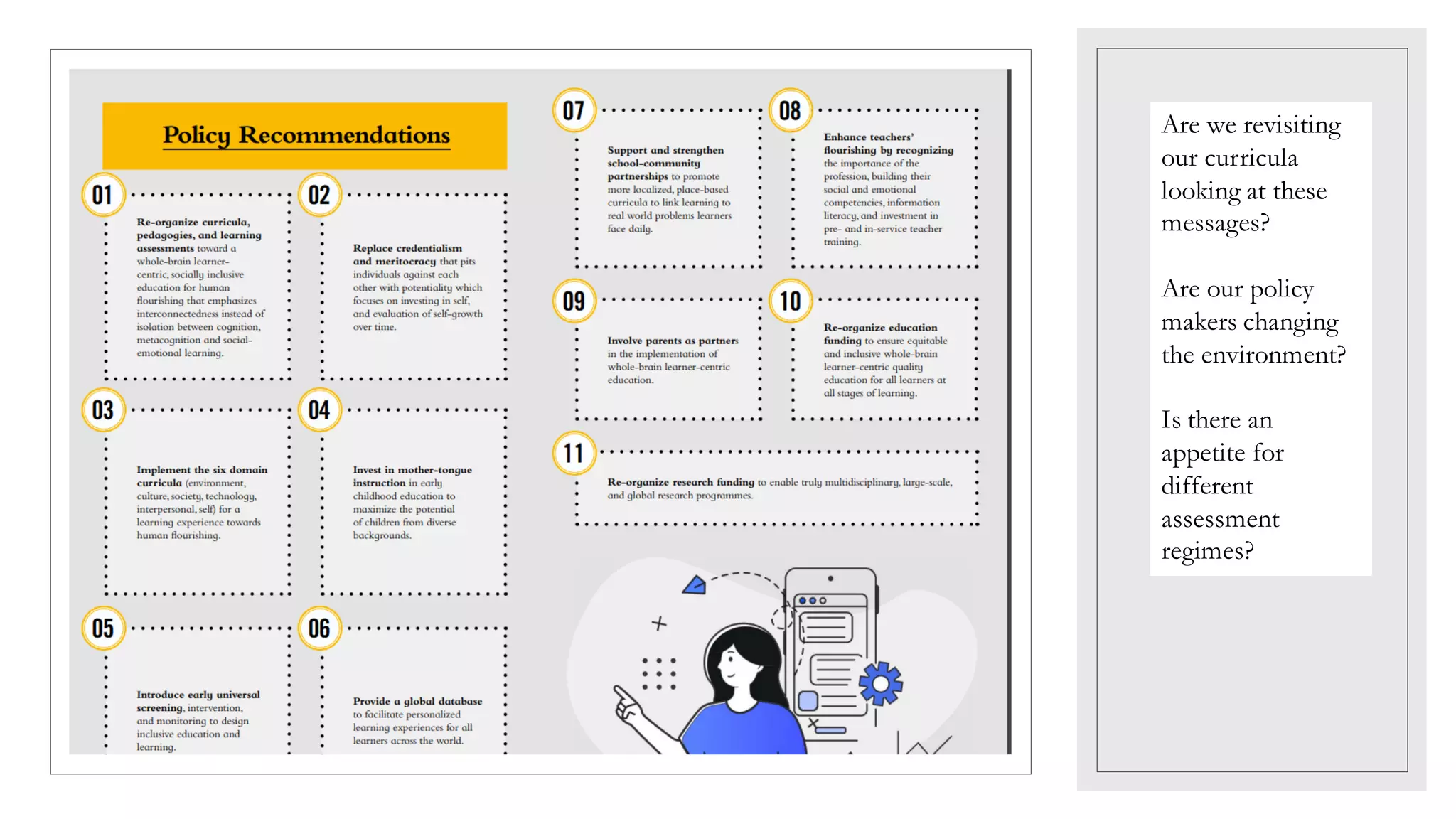
UNESCO: personalisation is a
human right (22 March 2022)
◦ The 'Reimaging education' ISEE assessment
◦ 11 policy recommendations
◦ 7 'take-home' messages
Photo by Shravan K Acharya on Unsplash
Are we revisiting
our curricula
looking at these
messages?
Are our policy
makers changing
the environment?
Is there an
appetite for
different
assessment
regimes?
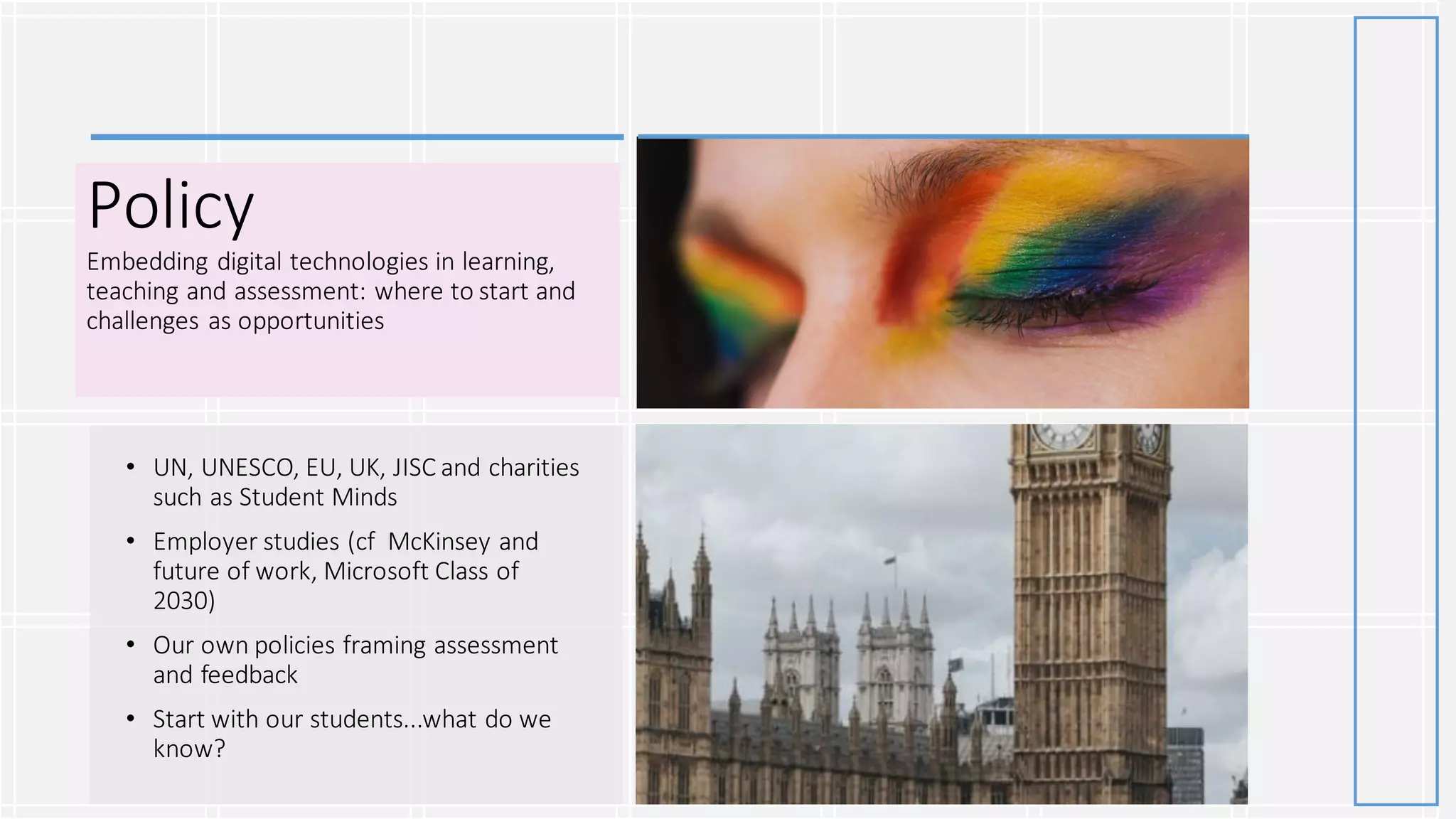
Policy
Embedding digital technologies in learning,
teaching and assessment: where to start and
challenges as opportunities
• UN, UNESCO, EU, UK, JISC and charities
such as Student Minds
• Employer studies (cf McKinsey and
future of work, Microsoft Class of
2030)
• Our own policies framing assessment
and feedback
• Start with our students...what do we
know?
Digital inequity:
• Office for Students in their Digital Poverty Report (2020). This cites
disadvantage for those from Black and Minority Ethnic (BAME), low
income backgrounds and students with a disability
• During the pandemic 4% (104,000) students had no internet at all
• The way our students are accessing their learning materials is
changing – 90% of 16-24s use a smartphone to go online compared
to 68% of those aged 65+. Younger adults are also more likely to only
use a smartphone to go online, with a third of 25-34s reporting this
as the only way they go online, (OFCOM 2022 Online Nation)
• Need to change our learning designs and pedagogic
practices..(Holley and Biggins 2023)
• Adaptive/adaptable learning spaces. That is, the flip side of passive,
VLE learning spaces, and they see the hybrid blend moving ahead as
opportunities for learning to become more active and diverse. Their
conclusions suggest space will be utilised in surprising ways, and the
authors predict that the space design itself will facilitate students and
their freedom to innovate (Gil et al 2022)
• A commitment to open education will ensure that digital resources
are free to use/reuse for educational purposes, within the constraints
of digital equity (Creative Commons)
Changing pedagogical practice:
identifying issues and exploring
collaborative solutions
•AdvanceHE/HEPI survey (2022): Epidemic here where 4
in 10 students are self-reporting high anxiety, with
trans, LGB+, nonbinary, black and international students
all significantly above the average, and that showing up
as an important factor in non-continuation risk.
•Work by Lui (2021) identifies intersectionality
as significant with BAME females with lower social
status having the lowest computer/smart
phone ownership
•The National Union of Students (2020) conducted
a survey during the COVID-19 pandemic which found
that 20% of students struggled with access to online
learning, with black, Asian and minority
ethnic students, those from poorer backgrounds, care
leavers, students with caring responsibilities and students
with disabilities particularly impacted.
New opportunities: to design
in wellbeing and to promote
positive mental health
• Starting with a ‘non digital’
point of reference on the
digital/non digital continuum
(cf. widened uses and
gratifications approach by
(Krcmar 2009)
• The working group argued
that this is a crucial aspect in
terms of the future framing of
models for health and
wellbeing in the digital era.
• Digitalhealthand
wellbeingmattersforallof
us, educators and students
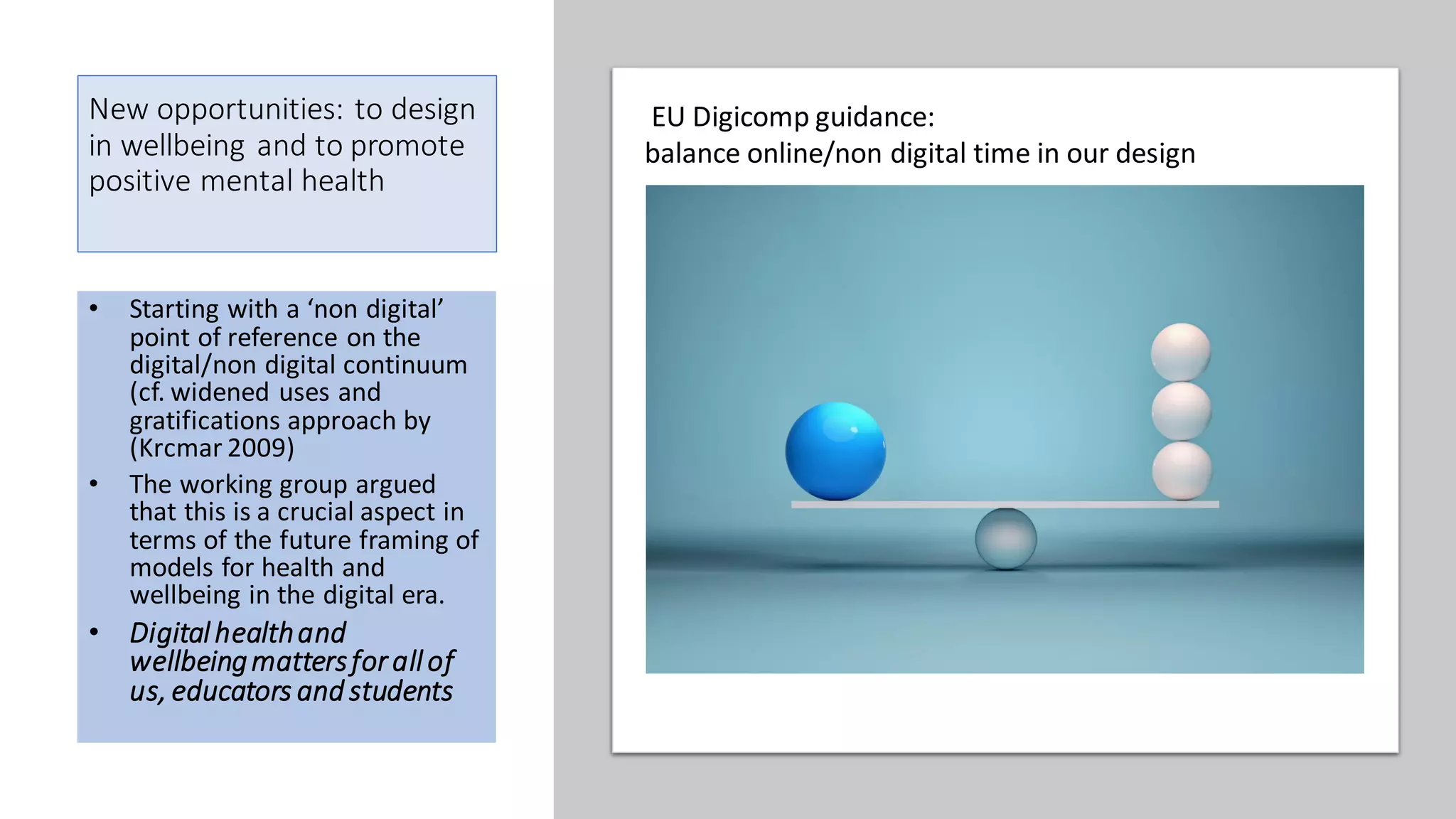
EU Digicomp guidance:
balance online/non digital time in our design
Wicked problem? It's
me...and you
• It turns out we are the 'wicked problem'
• A campus challenge identified as a 'wicked problem' is
re-defining the role of educators with
the expansion of technologies (NMC New Horizons
2018)- a challenge that is hard to define and we do not
have the problems to resolve...
• JISC: 43% of students want more community in their
online experiences
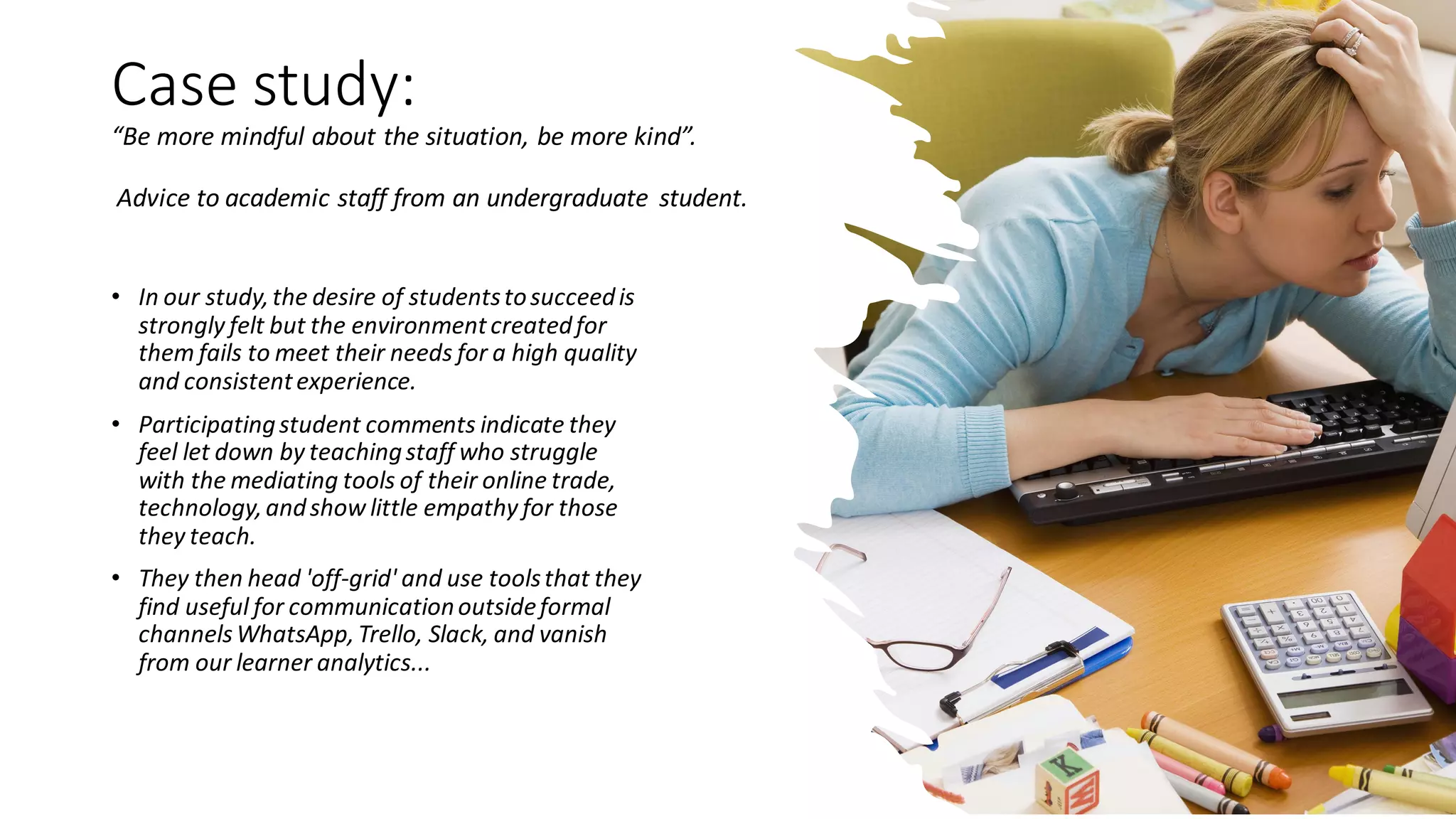
Case study:
“Be more mindful about the situation, be more kind”.
Advice to academic staff from an undergraduate student.
• In our study,the desire of studentstosucceedis
strongly felt but the environmentcreatedfor
them fails to meet their needs for a high quality
and consistentexperience.
• Participatingstudent comments indicate they
feel let down by teachingstaff who struggle
with the mediating tools of their online trade,
technology,andshow little empathy for those
they teach.
• They then head 'off-grid' and use toolsthat they
find useful for communicationoutsideformal
channelsWhatsApp,Trello, Slack, and vanish
from our learner analytics...
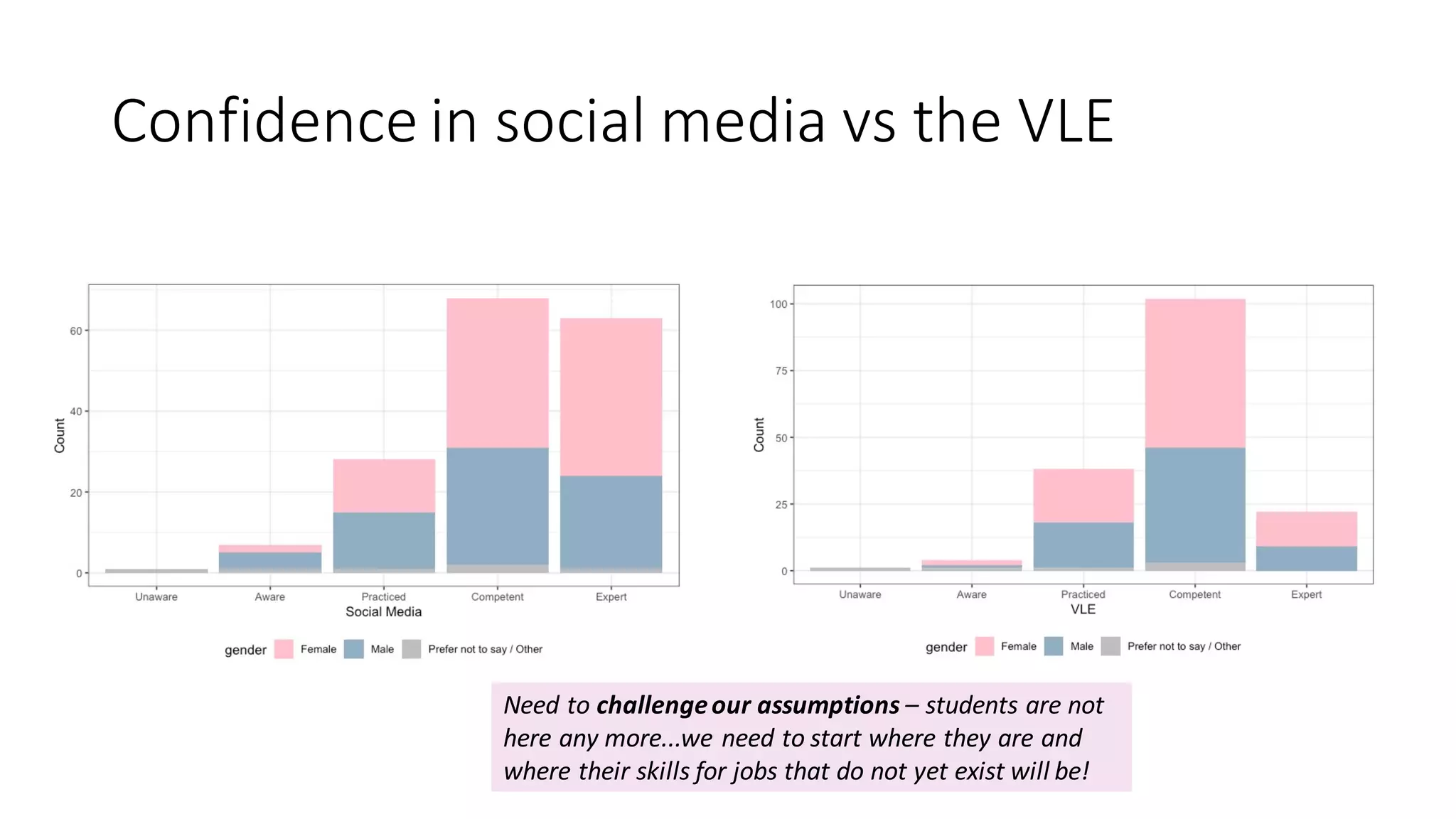
Confidence in social media vs the VLE
Need to challengeour assumptions – students are not
here any more...we need to start where they are and
where their skills for jobs that do not yet exist will be!
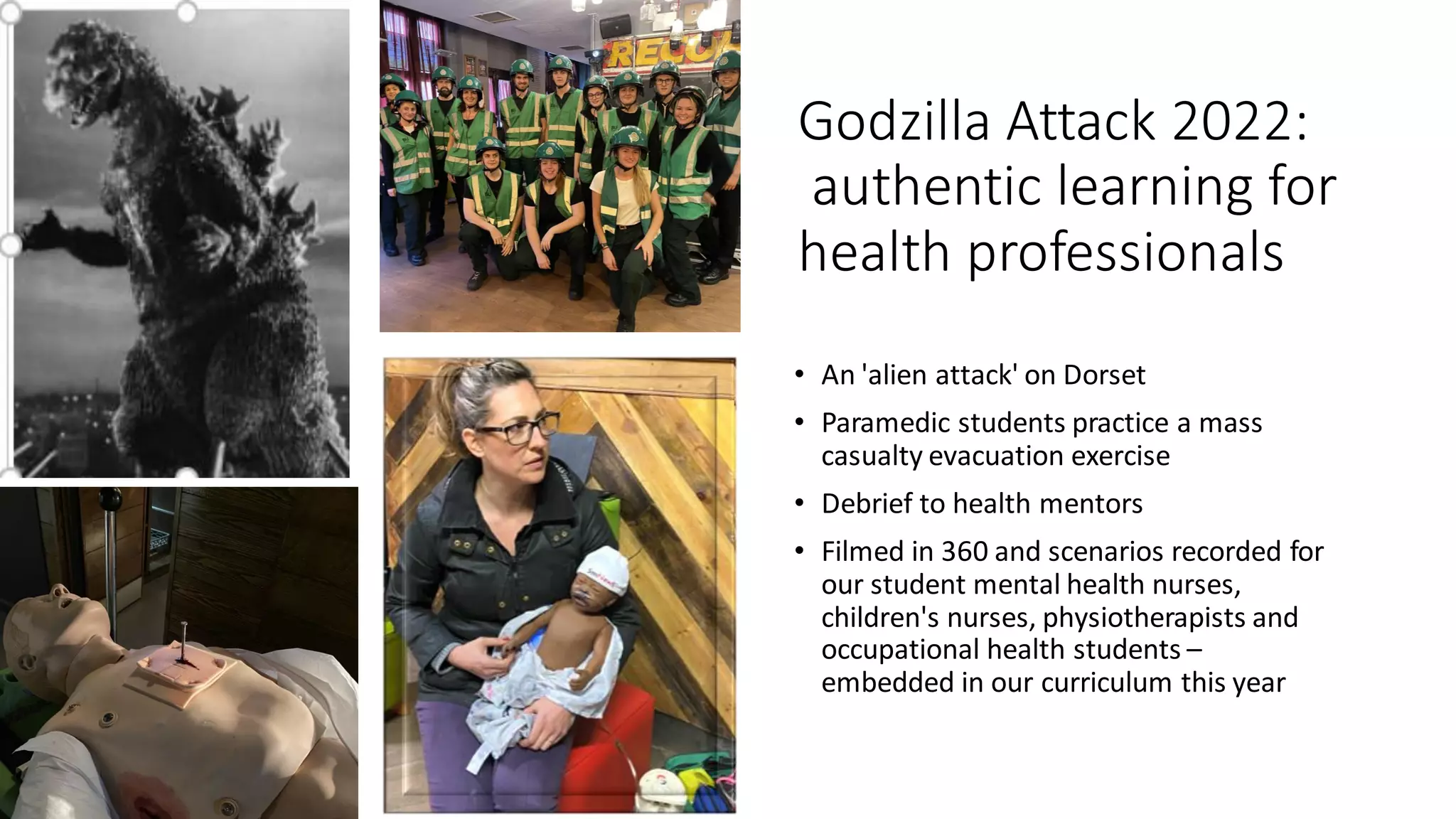
Godzilla Attack 2022:
authentic learning for
health professionals
• An 'alien attack' on Dorset
• Paramedic students practice a mass
casualty evacuation exercise
• Debrief to health mentors
• Filmed in 360 and scenarios recorded for
our student mental health nurses,
children's nurses, physiotherapists and
occupational health students –
embedded in our curriculum this year
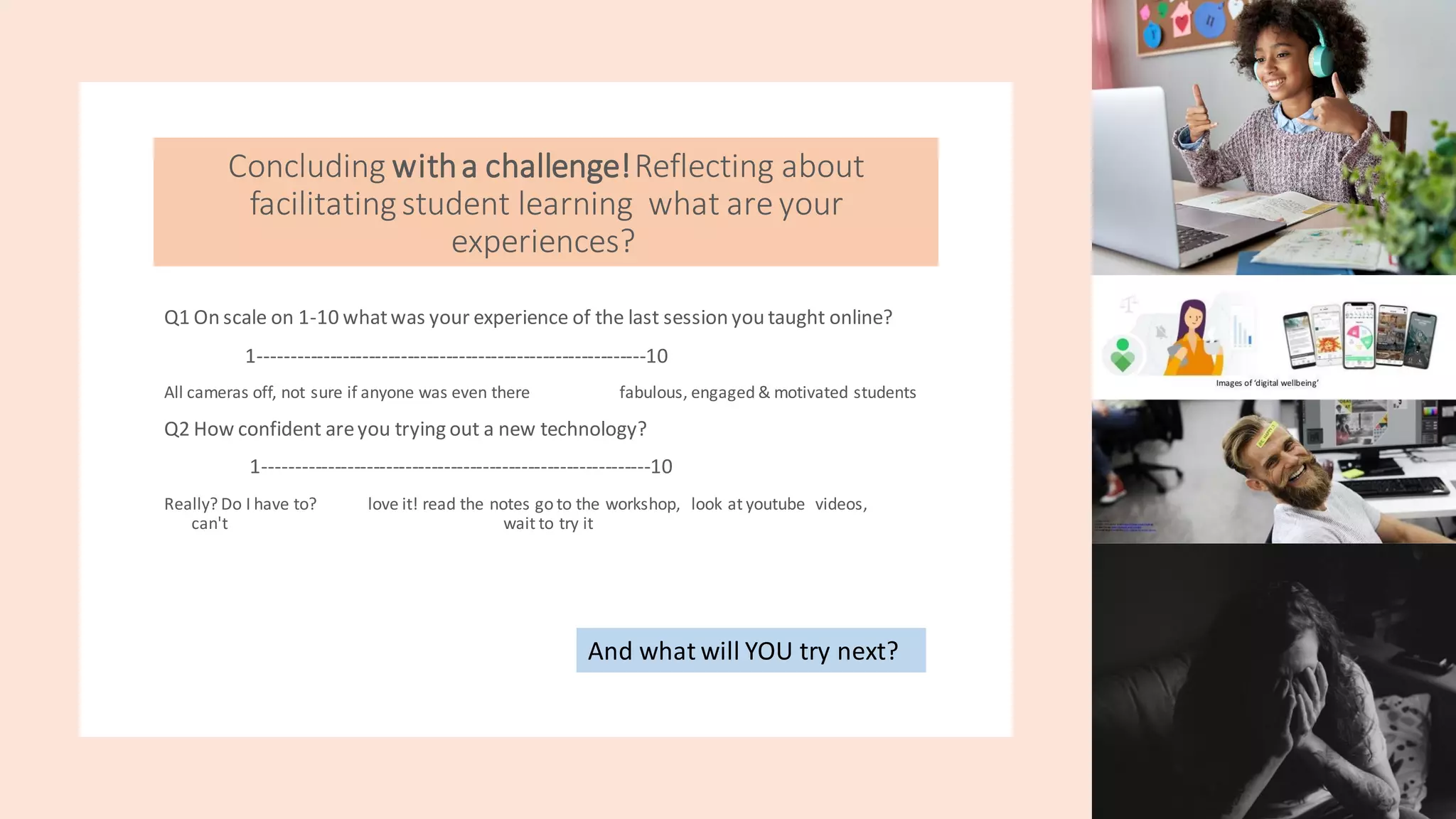
Concluding witha challenge!Reflecting about
facilitatingstudent learning what areyour
experiences?
Q1 On scale on 1-10 whatwas your experience of the last session you taught online?
1------------------------------------------------------------10
All cameras off, not sure if anyone was even there fabulous, engaged & motivated students
Q2 How confident areyou trying out a new technology?
1------------------------------------------------------------10
Really? Do I have to? love it! read the notes go to the workshop, look at youtube videos,
can't wait to try it
And what will YOU try next?
References:
• Bleckmann., PHolley, D andBitzer, E. (2021) Digitalbalance literacy:a model forsupportingwellbeinginthe digital era ALT C2021, 7-9
September (Online)https://www.slideshare.net/debbieholley1/digital-balance-literacy-a-model-for-supporting-wellbeing-in-the-digital-era
• Biggins, D. and Holley, D., 2023. Designingfor student wellbeing:challenging assumptions about where our students
learn. Jour https://journal.aldinhe.ac.uk/index.php/jldhe/article/view/938 Journal of Learning Development inHigher
Education, 27(April).https://doi.org/10.47408/jldhe.vi27.938
• EU Digital Competence Framework https://ec.europa.eu/jrc/en/digcomp/digital-competence-framework
• Gil, E., Mor, Y., Dimitriadis, Y. andKöppe, C., 2022. Hybrid learningspaces. Cham:Springer International.
• Krcmar, M., 2009. Living without the screen:Causes and consequencesof life without television. Routledge.
• Lee, M. J. W., Georgieva, M., Alexander, B., Craig, E. andRichter, J. 2021. State ofXR & Immersive LearningOutlookReport 2021. Walnut,
CA: Immersive LearningResearchNetwork.
• OFCOM Online Nation Report., 2022. https://www.ofcom.org.uk/__data/assets/pdf_file/0023/238361/online-nation-2022-report.pdf
• Office forStudents., 2020. Digital Povertyrisks leaving students behind. https://www.officeforstudents.org.uk/news-blog-and-
events/press-and-media/digital-poverty-risks-leaving-students-behind/
• Office for Students., 2022. Blendedlearning and OfS regulation. https://www.officeforstudents.org.uk/publications/blended-learning-and-
ofs-regulation/summary/
• UNESCO, 2012. Information document on the World Congresson OpenEducational Resources. Paris, 2012. Available at
https://unesdoc.unesco.org/ark:/48223/pf0000222585.
• Langdon, M., 2022.An educational framework for a post-capitalistworld?:A review of the 2021 report from UNESCO’s
International Commission of the Futures of Education. Education in the North.

Harnessing the Blend: Creating authentic learning experiences

  • 1.
  • 2.
    WE MIGHT HAVESCALEDUP A BIT.. BUT HAVE WE REALLY MOVED TOWARDSAUTHENTIC LEARNING? Photo by Mikael Kristenson on Unsplash Photo by Austrian National Library on Unsplash
  • 3.
    Any discussion needsto start with digital inclusion Digitalinclusion is defined by the United Nations (UN) as “Equitable,meaningful,and safe access to use, lead, and design of digital technologies, services, and associatedopportunitiesfor everyone, everywhere” (UN RoundTable).
  • 4.
    UNESCO: personalisation isa human right (22 March 2022) ◦ The 'Reimaging education' ISEE assessment ◦ 11 policy recommendations ◦ 7 'take-home' messages Photo by Shravan K Acharya on Unsplash
  • 5.
    Are we revisiting ourcurricula looking at these messages? Are our policy makers changing the environment? Is there an appetite for different assessment regimes?
  • 6.
    Policy Embedding digital technologiesin learning, teaching and assessment: where to start and challenges as opportunities • UN, UNESCO, EU, UK, JISC and charities such as Student Minds • Employer studies (cf McKinsey and future of work, Microsoft Class of 2030) • Our own policies framing assessment and feedback • Start with our students...what do we know?
  • 7.
    Digital inequity: • Officefor Students in their Digital Poverty Report (2020). This cites disadvantage for those from Black and Minority Ethnic (BAME), low income backgrounds and students with a disability • During the pandemic 4% (104,000) students had no internet at all • The way our students are accessing their learning materials is changing – 90% of 16-24s use a smartphone to go online compared to 68% of those aged 65+. Younger adults are also more likely to only use a smartphone to go online, with a third of 25-34s reporting this as the only way they go online, (OFCOM 2022 Online Nation) • Need to change our learning designs and pedagogic practices..(Holley and Biggins 2023) • Adaptive/adaptable learning spaces. That is, the flip side of passive, VLE learning spaces, and they see the hybrid blend moving ahead as opportunities for learning to become more active and diverse. Their conclusions suggest space will be utilised in surprising ways, and the authors predict that the space design itself will facilitate students and their freedom to innovate (Gil et al 2022) • A commitment to open education will ensure that digital resources are free to use/reuse for educational purposes, within the constraints of digital equity (Creative Commons)
  • 8.
    Changing pedagogical practice: identifyingissues and exploring collaborative solutions •AdvanceHE/HEPI survey (2022): Epidemic here where 4 in 10 students are self-reporting high anxiety, with trans, LGB+, nonbinary, black and international students all significantly above the average, and that showing up as an important factor in non-continuation risk. •Work by Lui (2021) identifies intersectionality as significant with BAME females with lower social status having the lowest computer/smart phone ownership •The National Union of Students (2020) conducted a survey during the COVID-19 pandemic which found that 20% of students struggled with access to online learning, with black, Asian and minority ethnic students, those from poorer backgrounds, care leavers, students with caring responsibilities and students with disabilities particularly impacted.
  • 9.
    New opportunities: todesign in wellbeing and to promote positive mental health • Starting with a ‘non digital’ point of reference on the digital/non digital continuum (cf. widened uses and gratifications approach by (Krcmar 2009) • The working group argued that this is a crucial aspect in terms of the future framing of models for health and wellbeing in the digital era. • Digitalhealthand wellbeingmattersforallof us, educators and students EU Digicomp guidance: balance online/non digital time in our design
  • 10.
    Wicked problem? It's me...andyou • It turns out we are the 'wicked problem' • A campus challenge identified as a 'wicked problem' is re-defining the role of educators with the expansion of technologies (NMC New Horizons 2018)- a challenge that is hard to define and we do not have the problems to resolve... • JISC: 43% of students want more community in their online experiences
  • 11.
    Case study: “Be moremindful about the situation, be more kind”. Advice to academic staff from an undergraduate student. • In our study,the desire of studentstosucceedis strongly felt but the environmentcreatedfor them fails to meet their needs for a high quality and consistentexperience. • Participatingstudent comments indicate they feel let down by teachingstaff who struggle with the mediating tools of their online trade, technology,andshow little empathy for those they teach. • They then head 'off-grid' and use toolsthat they find useful for communicationoutsideformal channelsWhatsApp,Trello, Slack, and vanish from our learner analytics...
  • 12.
    Confidence in socialmedia vs the VLE Need to challengeour assumptions – students are not here any more...we need to start where they are and where their skills for jobs that do not yet exist will be!
  • 13.
    Godzilla Attack 2022: authenticlearning for health professionals • An 'alien attack' on Dorset • Paramedic students practice a mass casualty evacuation exercise • Debrief to health mentors • Filmed in 360 and scenarios recorded for our student mental health nurses, children's nurses, physiotherapists and occupational health students – embedded in our curriculum this year
  • 14.
    Concluding witha challenge!Reflectingabout facilitatingstudent learning what areyour experiences? Q1 On scale on 1-10 whatwas your experience of the last session you taught online? 1------------------------------------------------------------10 All cameras off, not sure if anyone was even there fabulous, engaged & motivated students Q2 How confident areyou trying out a new technology? 1------------------------------------------------------------10 Really? Do I have to? love it! read the notes go to the workshop, look at youtube videos, can't wait to try it And what will YOU try next?
  • 15.
    References: • Bleckmann., PHolley,D andBitzer, E. (2021) Digitalbalance literacy:a model forsupportingwellbeinginthe digital era ALT C2021, 7-9 September (Online)https://www.slideshare.net/debbieholley1/digital-balance-literacy-a-model-for-supporting-wellbeing-in-the-digital-era • Biggins, D. and Holley, D., 2023. Designingfor student wellbeing:challenging assumptions about where our students learn. Jour https://journal.aldinhe.ac.uk/index.php/jldhe/article/view/938 Journal of Learning Development inHigher Education, 27(April).https://doi.org/10.47408/jldhe.vi27.938 • EU Digital Competence Framework https://ec.europa.eu/jrc/en/digcomp/digital-competence-framework • Gil, E., Mor, Y., Dimitriadis, Y. andKöppe, C., 2022. Hybrid learningspaces. Cham:Springer International. • Krcmar, M., 2009. Living without the screen:Causes and consequencesof life without television. Routledge. • Lee, M. J. W., Georgieva, M., Alexander, B., Craig, E. andRichter, J. 2021. State ofXR & Immersive LearningOutlookReport 2021. Walnut, CA: Immersive LearningResearchNetwork. • OFCOM Online Nation Report., 2022. https://www.ofcom.org.uk/__data/assets/pdf_file/0023/238361/online-nation-2022-report.pdf • Office forStudents., 2020. Digital Povertyrisks leaving students behind. https://www.officeforstudents.org.uk/news-blog-and- events/press-and-media/digital-poverty-risks-leaving-students-behind/ • Office for Students., 2022. Blendedlearning and OfS regulation. https://www.officeforstudents.org.uk/publications/blended-learning-and- ofs-regulation/summary/ • UNESCO, 2012. Information document on the World Congresson OpenEducational Resources. Paris, 2012. Available at https://unesdoc.unesco.org/ark:/48223/pf0000222585. • Langdon, M., 2022.An educational framework for a post-capitalistworld?:A review of the 2021 report from UNESCO’s International Commission of the Futures of Education. Education in the North.