Intellectual Property & Digital Age
Done by:
 Hamdan Mohamed Saeed Al-shehhi
 Applied Technology High School
G: 11.02
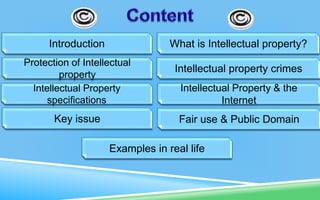
Introduction What is Intellectual property?
Intellectual Property
specifications
Protection of Intellectual
property
Key issue
Intellectual Property & the
Internet
Examples in real life
Intellectual property crimes
Fair use & Public Domain
 Properties are things you own. For example,
your books, phone, computer, and many
things.
 Your ideas are valuable properties. Ideas
and thoughts of human being made the way
to people to create, build, produce, make the
imaginative objects to be realistic objects.
 Expressions of Ideas are one kind of
Intellectual properties.
Property
What is meant by the Intellectual properties
?
 Intellectual property (IP) refers to creations of the
mind: inventions, literary and artistic works, symbols,
images and designs that are intangible when created
but become valuable in tangible form as products
used in commerce.
 Intellectual property is unique, as it is the fruit of
personal creation and inventiveness.
 Why does intellectual property need protection?
Encourage the production
of inventions and works
Help the innovators make
a living from their work.
Satisfy the needs of both
the creator and the user.
Spur economic growth
create new jobs and
industries Enhance the quality and
enjoyment of life.
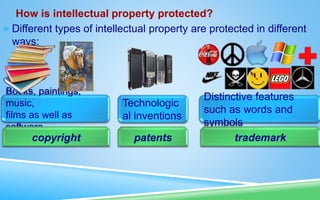
 Different types of intellectual property are protected in different
ways:
How is intellectual property protected?
Books, paintings,
music,
films as well as
software.
copyright
Technologic
al inventions
patents
Distinctive features
such as words and
symbols
trademark
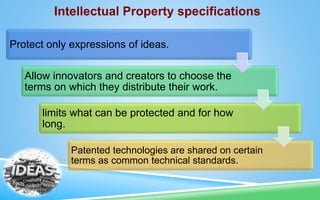
Intellectual Property specifications
Protect only expressions of ideas.
Allow innovators and creators to choose the
terms on which they distribute their work.
limits what can be protected and for how
long.
Patented technologies are shared on certain
terms as common technical standards.
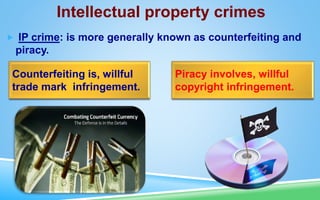
 IP crime: is more generally known as counterfeiting and
piracy.
Intellectual property crimes
Counterfeiting is, willful
trade mark infringement.
Piracy involves, willful
copyright infringement.
Intellectual property crimes
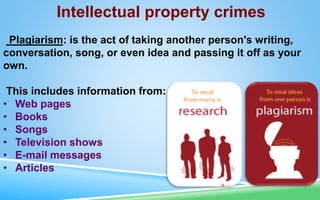
Plagiarism: is the act of taking another person's writing,
conversation, song, or even idea and passing it off as your
own.
This includes information from:
• Web pages
• Books
• Songs
• Television shows
• E-mail messages
• Articles
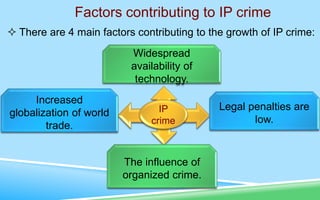
 There are 4 main factors contributing to the growth of IP crime:
Factors contributing to IP crime
Increased
globalization of world
trade.
Widespread
availability of
technology.
Legal penalties are
low.
The influence of
organized crime.
IP
crime
The curbing of widespread IP crime including the reduction of
influence of organized IP crime, requires a multi pronged and
collaborative approach on the part of the various stake holders
in bringing about:
 Increased awareness amongst the public.
 legislature and enforcement authorities of the perilous nature
and devastative impact of IP crime.
Managing IP crime
Intellectual Property & the Internet
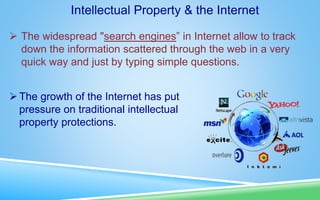
 The widespread "search engines” in Internet allow to track
down the information scattered through the web in a very
quick way and just by typing simple questions.
The growth of the Internet has put
pressure on traditional intellectual
property protections.
 Some forms of information, when made accessible on the
Internet, are easily copied. Because the costs of copying are
low and because copying is often anonymous, publishers
have often responded with more aggressive enforcement of
existing intellectual property rights and with calls for
extensions of those rights to cover additional content, new
media and new forms of access.
Intellectual Property & the Internet
Intellectual property is currently at the center of an
international debate in many different forums regarding how
to reconcile the potential of the Internet with traditional
intellectual property approaches, including how to stop
unlawful transactions on the Internet. Two principal
approaches have emerged:
o Involving Internet intermediaries in enforcement
o Using Internet technical measures to prevent access to
unauthorized content.
Intellectual Property & the Internet
Knowledge Prospecting Knowledge Piracy
Vs.
• Key issue : Ownership of Knowledge
If a work is copied, the original author/inventor may lose
potential sales and profits, and thus an environment that permits
copying reduces the innovation incentive. Inventors will choose
not to create.
Fair use
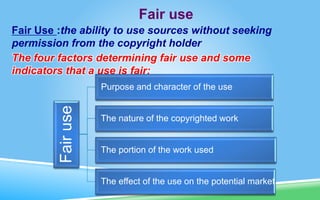
Fair Use :the ability to use sources without seeking
permission from the copyright holder
The four factors determining fair use and some
indicators that a use is fair:
Fair
use
Purpose and character of the use
The nature of the copyrighted work
The portion of the work used
The effect of the use on the potential market
Fair use
Allows you to
Quote passages from a book or a journal article as long as
it is credited/cited
Reproduce short segments of songs and movies as long as
it is cited/credited to the author.
use an entire work depending on the circumstances.
Examples
o Professor giving you a copy of an article
o Photocopying selections of materials for your own use
o Library Electronic Reserves
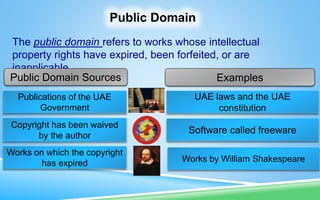
Public Domain
The public domain refers to works whose intellectual
property rights have expired, been forfeited, or are
inapplicable.
Public Domain Sources Examples
Publications of the UAE
Government
Copyright has been waived
by the author
Works on which the copyright
has expired
UAE laws and the UAE
constitution
Software called freeware
Works by William Shakespeare
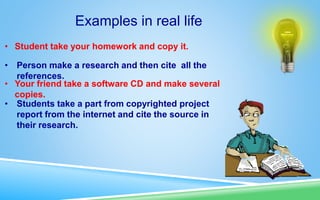
Examples in real life
• Student take your homework and copy it.
• Person make a research and then cite all the
references.
• Your friend take a software CD and make several
copies.
• Students take a part from copyrighted project
report from the internet and cite the source in
their research.
References & Sources
Resource 1
Resource 2
Resource 3
Resource 4
Resource 5
Resource 6
Resource 7
Resource 8
Hamdan mohammed al shehhi

Hamdan mohammed al shehhi

  • 1.
    Intellectual Property &Digital Age Done by:  Hamdan Mohamed Saeed Al-shehhi  Applied Technology High School G: 11.02
  • 2.
    Introduction What isIntellectual property? Intellectual Property specifications Protection of Intellectual property Key issue Intellectual Property & the Internet Examples in real life Intellectual property crimes Fair use & Public Domain
  • 3.
     Properties arethings you own. For example, your books, phone, computer, and many things.  Your ideas are valuable properties. Ideas and thoughts of human being made the way to people to create, build, produce, make the imaginative objects to be realistic objects.  Expressions of Ideas are one kind of Intellectual properties. Property
  • 4.
    What is meantby the Intellectual properties ?  Intellectual property (IP) refers to creations of the mind: inventions, literary and artistic works, symbols, images and designs that are intangible when created but become valuable in tangible form as products used in commerce.  Intellectual property is unique, as it is the fruit of personal creation and inventiveness.
  • 5.
     Why doesintellectual property need protection? Encourage the production of inventions and works Help the innovators make a living from their work. Satisfy the needs of both the creator and the user. Spur economic growth create new jobs and industries Enhance the quality and enjoyment of life.
  • 6.
     Different typesof intellectual property are protected in different ways: How is intellectual property protected? Books, paintings, music, films as well as software. copyright Technologic al inventions patents Distinctive features such as words and symbols trademark
  • 7.
    Intellectual Property specifications Protectonly expressions of ideas. Allow innovators and creators to choose the terms on which they distribute their work. limits what can be protected and for how long. Patented technologies are shared on certain terms as common technical standards.
  • 8.
     IP crime:is more generally known as counterfeiting and piracy. Intellectual property crimes Counterfeiting is, willful trade mark infringement. Piracy involves, willful copyright infringement.
  • 9.
    Intellectual property crimes Plagiarism:is the act of taking another person's writing, conversation, song, or even idea and passing it off as your own. This includes information from: • Web pages • Books • Songs • Television shows • E-mail messages • Articles
  • 10.
     There are4 main factors contributing to the growth of IP crime: Factors contributing to IP crime Increased globalization of world trade. Widespread availability of technology. Legal penalties are low. The influence of organized crime. IP crime
  • 11.
    The curbing ofwidespread IP crime including the reduction of influence of organized IP crime, requires a multi pronged and collaborative approach on the part of the various stake holders in bringing about:  Increased awareness amongst the public.  legislature and enforcement authorities of the perilous nature and devastative impact of IP crime. Managing IP crime
  • 12.
    Intellectual Property &the Internet  The widespread "search engines” in Internet allow to track down the information scattered through the web in a very quick way and just by typing simple questions. The growth of the Internet has put pressure on traditional intellectual property protections.
  • 13.
     Some formsof information, when made accessible on the Internet, are easily copied. Because the costs of copying are low and because copying is often anonymous, publishers have often responded with more aggressive enforcement of existing intellectual property rights and with calls for extensions of those rights to cover additional content, new media and new forms of access. Intellectual Property & the Internet
  • 14.
    Intellectual property iscurrently at the center of an international debate in many different forums regarding how to reconcile the potential of the Internet with traditional intellectual property approaches, including how to stop unlawful transactions on the Internet. Two principal approaches have emerged: o Involving Internet intermediaries in enforcement o Using Internet technical measures to prevent access to unauthorized content. Intellectual Property & the Internet
  • 15.
    Knowledge Prospecting KnowledgePiracy Vs. • Key issue : Ownership of Knowledge If a work is copied, the original author/inventor may lose potential sales and profits, and thus an environment that permits copying reduces the innovation incentive. Inventors will choose not to create.
  • 16.
    Fair use Fair Use:the ability to use sources without seeking permission from the copyright holder The four factors determining fair use and some indicators that a use is fair: Fair use Purpose and character of the use The nature of the copyrighted work The portion of the work used The effect of the use on the potential market
  • 17.
    Fair use Allows youto Quote passages from a book or a journal article as long as it is credited/cited Reproduce short segments of songs and movies as long as it is cited/credited to the author. use an entire work depending on the circumstances. Examples o Professor giving you a copy of an article o Photocopying selections of materials for your own use o Library Electronic Reserves
  • 18.
    Public Domain The publicdomain refers to works whose intellectual property rights have expired, been forfeited, or are inapplicable. Public Domain Sources Examples Publications of the UAE Government Copyright has been waived by the author Works on which the copyright has expired UAE laws and the UAE constitution Software called freeware Works by William Shakespeare
  • 19.
    Examples in reallife • Student take your homework and copy it. • Person make a research and then cite all the references. • Your friend take a software CD and make several copies. • Students take a part from copyrighted project report from the internet and cite the source in their research.
  • 20.
    References & Sources Resource1 Resource 2 Resource 3 Resource 4 Resource 5 Resource 6 Resource 7 Resource 8