H1N1 VirusSwine FluBy: Lisa HillThursdays 4-7
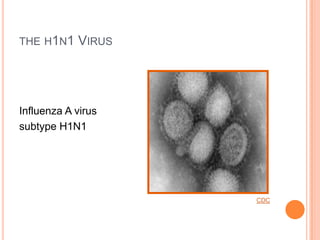
the h1n1 VirusInfluenza A virus subtype H1N1CDC
ImportanceCausing DeathsAffecting all age groupsHigh risksAffecting Education
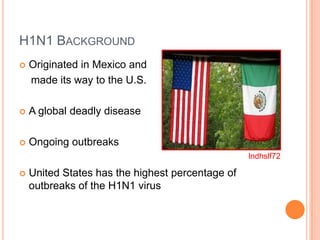
H1N1 BackgroundOriginated in Mexico and    made its way to the U.S.A global deadly disease Ongoing outbreaks United States has the highest percentage of outbreaks of the H1N1 viruslndhslf72
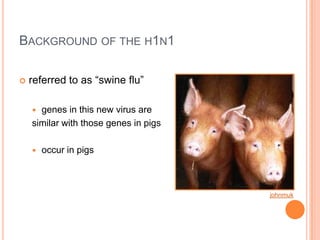
Background of the h1n1 referred to as “swine flu”genes in this new virus are similar with those genes in pigsoccur in pigsjohnmuk
H1N1 BackgroundSome recover without hospitalized care, others need  to be hospitalizedMore cases, more hospitalizations and more deaths associated with this infection 50 states in the United States and surrounding countries have reported cases
H1N1 Recovering and Symptoms Recovery Symptoms Most recover without medical treatmentRanges from mild to severe Stay home and avoid contact with other peopleDrink fluidsfevercough sore throat runny or stuffy nose body achesheadachechills and fatigueVomiting Respiratory Problems
H1n1 impacting schools in the united statesLack of public support when they do or don’t shut down the schoolEffecting the schools resourcesLoosing money  Effecting students emotionally and physically Eliminating safe place for students
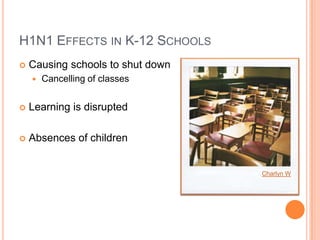
H1N1 Effects in K-12 Schools Causing schools to shut downCancelling of classesLearning is disruptedAbsences of children Charlyn W
Addressing the problem h1n1 flu in schoolslimiting disruption of day-to-day activities Stay home when sickClosing schools Respiratory etiquette
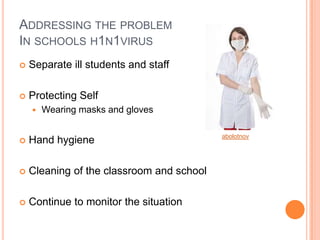
Addressing the problemIn schools h1n1virusSeparate ill students and staffProtecting SelfWearing masks and glovesHand hygieneCleaning of the classroom and schoolContinue to monitor the situationabolotnov
Conclusion A serious issue that effects many peopleShould know about the diseases that can effect anyone. Schools are looking more into this disease and taking care of the situation.
ReferencesInformationCenters for Disease Control and Prevention. (2009)	2009 H1N1 Flu (Swine Flu)http://www.cdc.gov/h1n1flu/Photoslndhslf72'shttp://www.cdc.gov/h1n1flu/images.htmlndhslf72'shttp://www.flickr.com/photos/jm999uk/184100079johnmukhttp://www.flickr.com/photos/charlynw/2704288003/sizes/o/Charlyn Whttp://www.flickr.com/photos/abolotnov/3540135469abolotnovhttp://www.flickr.com/photos/7954439@N06/1465206043

H1 N1 Virus

  • 1.
    H1N1 VirusSwine FluBy:Lisa HillThursdays 4-7
  • 2.
    the h1n1 VirusInfluenzaA virus subtype H1N1CDC
  • 3.
    ImportanceCausing DeathsAffecting allage groupsHigh risksAffecting Education
  • 4.
    H1N1 BackgroundOriginated inMexico and made its way to the U.S.A global deadly disease Ongoing outbreaks United States has the highest percentage of outbreaks of the H1N1 viruslndhslf72
  • 5.
    Background of theh1n1 referred to as “swine flu”genes in this new virus are similar with those genes in pigsoccur in pigsjohnmuk
  • 6.
    H1N1 BackgroundSome recoverwithout hospitalized care, others need to be hospitalizedMore cases, more hospitalizations and more deaths associated with this infection 50 states in the United States and surrounding countries have reported cases
  • 7.
    H1N1 Recovering andSymptoms Recovery Symptoms Most recover without medical treatmentRanges from mild to severe Stay home and avoid contact with other peopleDrink fluidsfevercough sore throat runny or stuffy nose body achesheadachechills and fatigueVomiting Respiratory Problems
  • 8.
    H1n1 impacting schoolsin the united statesLack of public support when they do or don’t shut down the schoolEffecting the schools resourcesLoosing money Effecting students emotionally and physically Eliminating safe place for students
  • 9.
    H1N1 Effects inK-12 Schools Causing schools to shut downCancelling of classesLearning is disruptedAbsences of children Charlyn W
  • 10.
    Addressing the problemh1n1 flu in schoolslimiting disruption of day-to-day activities Stay home when sickClosing schools Respiratory etiquette
  • 11.
    Addressing the problemInschools h1n1virusSeparate ill students and staffProtecting SelfWearing masks and glovesHand hygieneCleaning of the classroom and schoolContinue to monitor the situationabolotnov
  • 12.
    Conclusion A seriousissue that effects many peopleShould know about the diseases that can effect anyone. Schools are looking more into this disease and taking care of the situation.
  • 13.
    ReferencesInformationCenters for DiseaseControl and Prevention. (2009) 2009 H1N1 Flu (Swine Flu)http://www.cdc.gov/h1n1flu/Photoslndhslf72'shttp://www.cdc.gov/h1n1flu/images.htmlndhslf72'shttp://www.flickr.com/photos/jm999uk/184100079johnmukhttp://www.flickr.com/photos/charlynw/2704288003/sizes/o/Charlyn Whttp://www.flickr.com/photos/abolotnov/3540135469abolotnovhttp://www.flickr.com/photos/7954439@N06/1465206043

Editor's Notes

  • #2 Made By Lisa HillCurrent Educational Issue Power PointEDU 290 Thursdays 4-7pm
  • #3 H1N1 also know as “swine flu” or Influenza A-H1N1 is a virus causing illness in people. Influenza A is the common flu This virus is contagious and is spreading from person-to-person worldwide, virus is thought to occur in the same way that seasonal flu spreads. It is being spread mainly through coughing or sneezing by people with the infection. You can even catch it by touching infected surfaces and then touching you mouth of nose.
  • #4 October 10 2009, the united states reported 292 laboratory-confirmed deaths caused by the 2009 H1N1 virusAll ages are being affected, age 0to 65 and olderHigh risks are most common in people 65 years and older, children younger than five years old, pregnant women, and people of any age with certain chronic medical conditionsAffecting education because of schools being shut down and absences of students
  • #5 Swine flu originated in Mexico. The first reported illness was in Mexico in March, 2009, the flu came across the U.S Mexican boarder. Outbreaks keep being recorded, and are expected to rise even more in the winter and continuing into spring of 2010 The United States continues to report the largest number of H1N1 cases, more than any other country worldwideOn April 26, 2009, the United States Government declared a public health emergency in effect because of the h1n1 virus(http://www.cdc.gov/h1n1flu/background.htm)
  • #6 referred to as “swine flu” because laboratory testing showed that many of the genes in this new virus were very similar to viruses genes that normally occur in pigs in North America (Centers for Disease Control and Prevention )
  • #7 June 19 2009, all 50 states in the United States, the District of Columbia, Puerto Rico, and the U.S. Virgin Islands have reported infections of the H1N1 virus.(http://www.cdc.gov/h1n1flu/background.htm)
  • #8 Thevirus in people include fever, cough, sore throat, runny or stuffy nose, body aches, headache, chills and fatigue. Some people may have vomiting and diarrhea and a few people with this flu has experienced respiratory problems without a fever.Although most people who have been sick have recovered without needing medical treatment, but some hospitalizations and deaths have occurred from infection of this virus. If you have any of these symptoms doctors are urging you to stay home for 24hours and seek medical attention. If you have came down with this flu doctors are urging you to see a medical consultant and drink plenty of fluids such as water and drinks that are filled with many electrolytes. (http://www.cdc.gov/h1n1flu/qa.htm)
  • #9 Parents of the children are getting mad because the schools are either not shutting to protect the children and some parents are getting mad because the schools are closing and they don’t know what to do with their kids as they are going throughout the day. Schools being shut down are limiting resources to people in the community. The buildings are being completely shut down, allowing no axis to anyone. Schools are loosing money because of them having to be shut down, extracurricular activities and other money making programs are being cancelled Students are emotionally and physically affected because most are scared and unsure as to what to do in this crisis. Many children are being left alone, the schools being shut down is eliminating their secured safe place. (http://www.cdc.gov/h1n1flu/qa.htm)
  • #10 The flu is making schools shut down because of the effects the flu is having in the community. Dismissals of the schools are being used to help decrease the spread of flu. Schools are to be shut down if the cannot maintain normal functions.With the schools being shut down some of the students are being left home alone, students are missing meals, caregivers, and are missing their needs. Learning is being disrupted because of the schools are needing to be shut down. A maximum of 5-7 schools days are allowed to be shut down because of the flu. Absences of children are increasing on a normal basis. Children who are around the flu and may have it are suppose to stay home a minimum of 5days, causing the child to fall behind and miss learning and school work. (http://www.cdc.gov/h1n1flu/schools/schoolguidance.htm)
  • #11 Medical supervisors are urging people to stay home when they have any symptoms of this flu. Those with flu-like illness should stay home for at least 24 hours after they no longer have a fever, or signs of a fever.By closing schools the risk of catching this flu is lower, there being closed to protect the children in the community. (http://www.cdc.gov/h1n1flu/schools/)
  • #12 Students and staff who appear to have flu-like illness should be sent to a room separate from others until they can be sent home. Ones are to protect self, by wearing protective gear like masks over their mouth and nose and gloves for their hands when dealing with people and surfaces.Hang hygiene must wash hands frequently with soap and water whenever possible, and cover noses and mouths with a tissue when coughing or sneezing.Cleaning of the classroom and school. Schools have to have staff clean areas that students and staff touch often with the cleaners they typically use. The staff must disinfection all environmental surfaces. Routine cleaning is required.All school administrators should monitor this Flu on a day to day basis and the effects it is having in their community. (http://www.cdc.gov/h1n1flu/schools/)
  • #13 People should be informed about diseases that are going on in their environments and understand that they can harm them. Schools are starting to take control the situation and doing what is best to protect the students.