HSEB Capabilities
Human Systems Integration in Aviation
1
2
Began in 1980 to study man-in-the-loop ECM/ECCM,
expanded to include full range of human engineering services
Core expertise in human systems integration (HSI), user-
centered design, and system development and test
Extensive experience in crew vehicle interface design,
advanced sensors, integrated systems, and intelligence
platforms
Also perform basic and applied research in human factors and
human performance
Human Systems
Engineering Branch
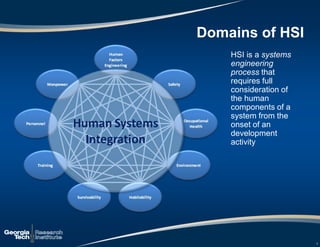
HSI is a systems
engineering
process that
requires full
consideration of
the human
components of a
system from the
onset of an
development
activity
3
Domains of HSI
HSI Mandate
DoD Instruction 5000.2 requires an acquisition
program manager to initiate a Human Systems
Integration program in order to:
optimize total system performance,
minimize total ownership costs, and
ensure that the system is built to accommodate the
characteristics of the user population that will operate,
maintain, and support the system
Ultimately, HSI is the responsibility of the Program Manager
4
5
SH-2G(A) Integrated Tactical Avionics System
H-1 Upgrade Integrated Avionics System
AH-1W Stores Management System
MH-53(J) IDAS/MATT
MH-53(J) Integrated EW System
Rotary Wing Flight Symbology Standardization Panel
Rotary Wing Programs
6
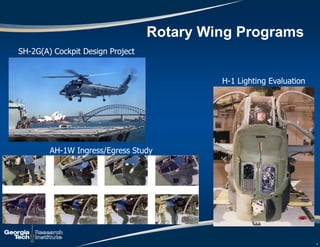
AH-1W Ingress/Egress Study
H-1 Lighting Evaluation
SH-2G(A) Cockpit Design Project
7
P-8(A) Poseidon MMA
EP-X
C-130 CAAP/AMP, SOF C-130 WIRED
SOF C-130 Consolidated EW Display
START
B-52 SADI
JAST IHAVS
A-10 Cockpit Upgrade Design Study, A-10 CDU v2.0
F-16 block 40, 42, 50, 52 Effectiveness evaluation of EW suite upgrade
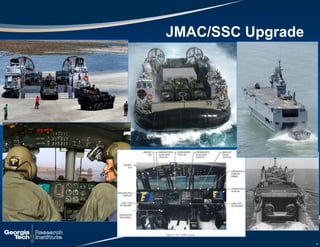
JMAC/SSC Hovercraft cockpit design and workload analysis
AT-6B ASE Suite Human Engineering Assessment
Fixed Wing Programs
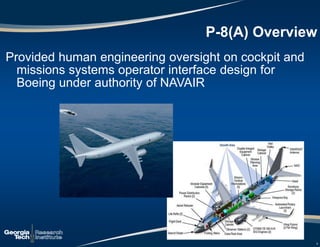
P-8(A) Overview
Provided human engineering oversight on cockpit and
missions systems operator interface design for
Boeing under authority of NAVAIR
8
8
9
JMAC/SSC Upgrade
10
BAMS UAS
Mission task analysis
Workload analysis
Workstation prototyping
Air vehicle operator fatigue assessment
Training analysis
Unmanned Programs
BAMS UAS Overview
11
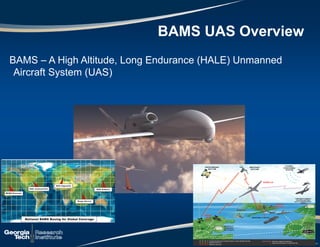
BAMS – A High Altitude, Long Endurance (HALE) Unmanned
Aircraft System (UAS)
11
12
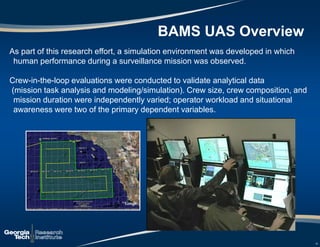
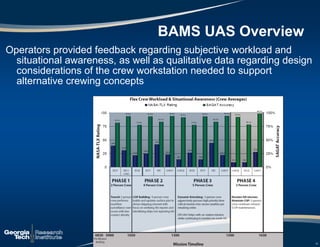
As part of this research effort, a simulation environment was developed in which
human performance during a surveillance mission was observed.
Crew-in-the-loop evaluations were conducted to validate analytical data
(mission task analysis and modeling/simulation). Crew size, crew composition, and
mission duration were independently varied; operator workload and situational
awareness were two of the primary dependent variables.
12
BAMS UAS Overview
Operators provided feedback regarding subjective workload and
situational awareness, as well as qualitative data regarding design
considerations of the crew workstation needed to support
alternative crewing concepts
13
13
BAMS UAS Overview
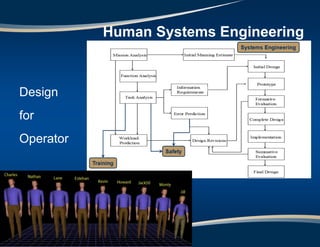
Human Systems Engineering
Design
for
Operator
15
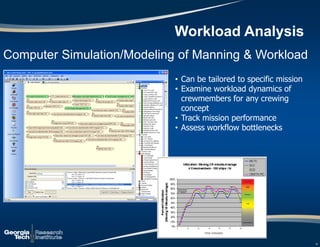
Computer Simulation/Modeling of Manning & Workload
• Can be tailored to specific mission
• Examine workload dynamics of
crewmembers for any crewing
concept
• Track mission performance
• Assess workflow bottlenecks
Workload Analysis
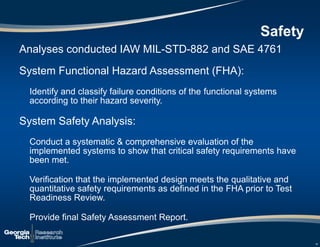
Analyses conducted IAW MIL-STD-882 and SAE 4761
System Functional Hazard Assessment (FHA):
Identify and classify failure conditions of the functional systems
according to their hazard severity.
System Safety Analysis:
Conduct a systematic & comprehensive evaluation of the
implemented systems to show that critical safety requirements have
been met.
Verification that the implemented design meets the qualitative and
quantitative safety requirements as defined in the FHA prior to Test
Readiness Review.
Provide final Safety Assessment Report.
16
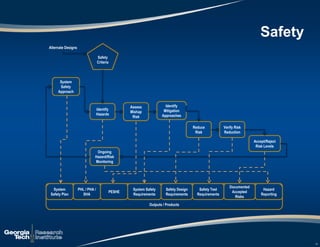
Safety
Safety
17
System
Safety
Approach
Ongoing
Hazard/Risk
Monitoring
Reduce
Risk
Identify
Mitigation
Approaches
Assess
Mishap
Risk
Identify
Hazards
Accept/Reject
Risk Levels
Verify Risk
Reduction
Safety
Criteria
System
Safety Plan
PHL / PHA /
SHA
PESHE
System Safety
Requirements
Safety Design
Requirements
Safety Test
Requirements
Documented
Accepted
Risks
Hazard
Reporting
Outputs / Products
Alternate Designs
18
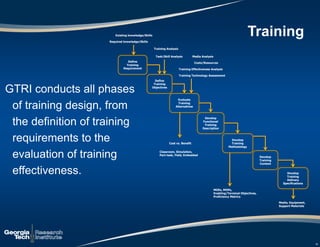
Define
Training
Requirement
Define
Training
Objectives
Evaluate
Training
Alternatives
Develop
Functional
Training
Description
Develop
Training
Methodology
Develop
Training
Content
Develop
Training
Delivery
Specifications
Existing knowledge/Skills
Required knowledge/Skills
Training Analysis
Task/Skill Analysis
Costs/Resources
Training Effectiveness Analysis
Training Technology Assessment
Media Analysis
Cost vs. Benefit
MOEs, MOPs,
Enabling/Terminal Objectives,
Proficiency Metrics
Media, Equipment,
Support Materials
Classroom, Simulation,
Part-task, Field, Embedded
GTRI conducts all phases
of training design, from
the definition of training
requirements to the
evaluation of training
effectiveness.
Training
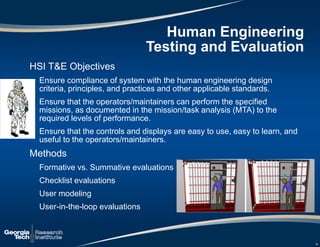
Human Engineering
Testing and Evaluation
HSI T&E Objectives
Ensure compliance of system with the human engineering design
criteria, principles, and practices and other applicable standards.
Ensure that the operators/maintainers can perform the specified
missions, as documented in the mission/task analysis (MTA) to the
required levels of performance.
Ensure that the controls and displays are easy to use, easy to learn, and
useful to the operators/maintainers.
Methods
Formative vs. Summative evaluations
Checklist evaluations
User modeling
User-in-the-loop evaluations
19
20
CONTACT
Dr. Brad Fain
(404) 407-7261
brad.fain@gtri.gatech.edu
For More Information

GTRI ELSYS HSEB in Aviation

  • 1.
    HSEB Capabilities Human SystemsIntegration in Aviation 1
  • 2.
    2 Began in 1980to study man-in-the-loop ECM/ECCM, expanded to include full range of human engineering services Core expertise in human systems integration (HSI), user- centered design, and system development and test Extensive experience in crew vehicle interface design, advanced sensors, integrated systems, and intelligence platforms Also perform basic and applied research in human factors and human performance Human Systems Engineering Branch
  • 3.
    HSI is asystems engineering process that requires full consideration of the human components of a system from the onset of an development activity 3 Domains of HSI
  • 4.
    HSI Mandate DoD Instruction5000.2 requires an acquisition program manager to initiate a Human Systems Integration program in order to: optimize total system performance, minimize total ownership costs, and ensure that the system is built to accommodate the characteristics of the user population that will operate, maintain, and support the system Ultimately, HSI is the responsibility of the Program Manager 4
  • 5.
    5 SH-2G(A) Integrated TacticalAvionics System H-1 Upgrade Integrated Avionics System AH-1W Stores Management System MH-53(J) IDAS/MATT MH-53(J) Integrated EW System Rotary Wing Flight Symbology Standardization Panel Rotary Wing Programs
  • 6.
    Rotary Wing Programs 6 AH-1WIngress/Egress Study H-1 Lighting Evaluation SH-2G(A) Cockpit Design Project
  • 7.
    7 P-8(A) Poseidon MMA EP-X C-130CAAP/AMP, SOF C-130 WIRED SOF C-130 Consolidated EW Display START B-52 SADI JAST IHAVS A-10 Cockpit Upgrade Design Study, A-10 CDU v2.0 F-16 block 40, 42, 50, 52 Effectiveness evaluation of EW suite upgrade JMAC/SSC Hovercraft cockpit design and workload analysis AT-6B ASE Suite Human Engineering Assessment Fixed Wing Programs
  • 8.
    P-8(A) Overview Provided humanengineering oversight on cockpit and missions systems operator interface design for Boeing under authority of NAVAIR 8 8
  • 9.
  • 10.
    10 BAMS UAS Mission taskanalysis Workload analysis Workstation prototyping Air vehicle operator fatigue assessment Training analysis Unmanned Programs
  • 11.
    BAMS UAS Overview 11 BAMS– A High Altitude, Long Endurance (HALE) Unmanned Aircraft System (UAS) 11
  • 12.
    12 As part ofthis research effort, a simulation environment was developed in which human performance during a surveillance mission was observed. Crew-in-the-loop evaluations were conducted to validate analytical data (mission task analysis and modeling/simulation). Crew size, crew composition, and mission duration were independently varied; operator workload and situational awareness were two of the primary dependent variables. 12 BAMS UAS Overview
  • 13.
    Operators provided feedbackregarding subjective workload and situational awareness, as well as qualitative data regarding design considerations of the crew workstation needed to support alternative crewing concepts 13 13 BAMS UAS Overview
  • 14.
  • 15.
    15 Computer Simulation/Modeling ofManning & Workload • Can be tailored to specific mission • Examine workload dynamics of crewmembers for any crewing concept • Track mission performance • Assess workflow bottlenecks Workload Analysis
  • 16.
    Analyses conducted IAWMIL-STD-882 and SAE 4761 System Functional Hazard Assessment (FHA): Identify and classify failure conditions of the functional systems according to their hazard severity. System Safety Analysis: Conduct a systematic & comprehensive evaluation of the implemented systems to show that critical safety requirements have been met. Verification that the implemented design meets the qualitative and quantitative safety requirements as defined in the FHA prior to Test Readiness Review. Provide final Safety Assessment Report. 16 Safety
  • 17.
    Safety 17 System Safety Approach Ongoing Hazard/Risk Monitoring Reduce Risk Identify Mitigation Approaches Assess Mishap Risk Identify Hazards Accept/Reject Risk Levels Verify Risk Reduction Safety Criteria System SafetyPlan PHL / PHA / SHA PESHE System Safety Requirements Safety Design Requirements Safety Test Requirements Documented Accepted Risks Hazard Reporting Outputs / Products Alternate Designs
  • 18.
    18 Define Training Requirement Define Training Objectives Evaluate Training Alternatives Develop Functional Training Description Develop Training Methodology Develop Training Content Develop Training Delivery Specifications Existing knowledge/Skills Required knowledge/Skills TrainingAnalysis Task/Skill Analysis Costs/Resources Training Effectiveness Analysis Training Technology Assessment Media Analysis Cost vs. Benefit MOEs, MOPs, Enabling/Terminal Objectives, Proficiency Metrics Media, Equipment, Support Materials Classroom, Simulation, Part-task, Field, Embedded GTRI conducts all phases of training design, from the definition of training requirements to the evaluation of training effectiveness. Training
  • 19.
    Human Engineering Testing andEvaluation HSI T&E Objectives Ensure compliance of system with the human engineering design criteria, principles, and practices and other applicable standards. Ensure that the operators/maintainers can perform the specified missions, as documented in the mission/task analysis (MTA) to the required levels of performance. Ensure that the controls and displays are easy to use, easy to learn, and useful to the operators/maintainers. Methods Formative vs. Summative evaluations Checklist evaluations User modeling User-in-the-loop evaluations 19
  • 20.
    20 CONTACT Dr. Brad Fain (404)407-7261 brad.fain@gtri.gatech.edu For More Information