PIAGET &
VYGOTSKY
GROUP 11
                 KIM, NA-RI
           KIM, MOON-JEONG
            AN, JEONG-YOON
               LEE, JAE-MIN
           PYO, MIN-KYOUNG


                          1 / 18
CONTENTS
- Comparison between PIAGET – VYGOTSKY
• Similarities
• Differences
    Key factors
    Strength & Weakness
    Types of Learning
    Strategies
    Role of Learner and Instructor
-Role Playing
• Summary
-conclusion
- Q&A
                                         2 / 18
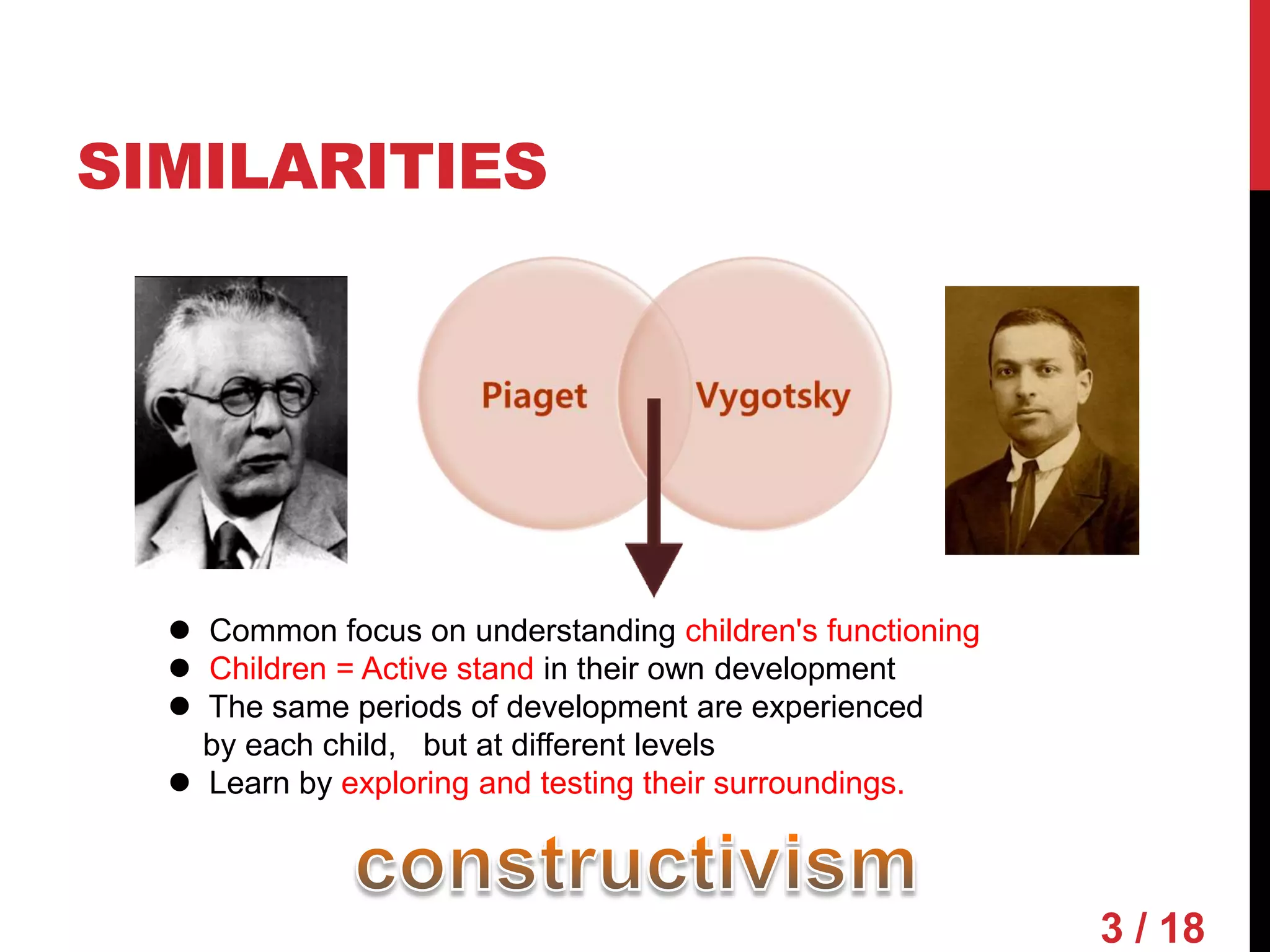
SIMILARITIES


   Common focus on understanding children's functioning
   Children = Active stand in their own development
   The same periods of development are experienced
    by each child, but at different levels
   Learn by exploring and testing their surroundings.


                                                           3 / 18
DIFFERENCES


      Piaget   VS Vygotsky


                             4 / 18
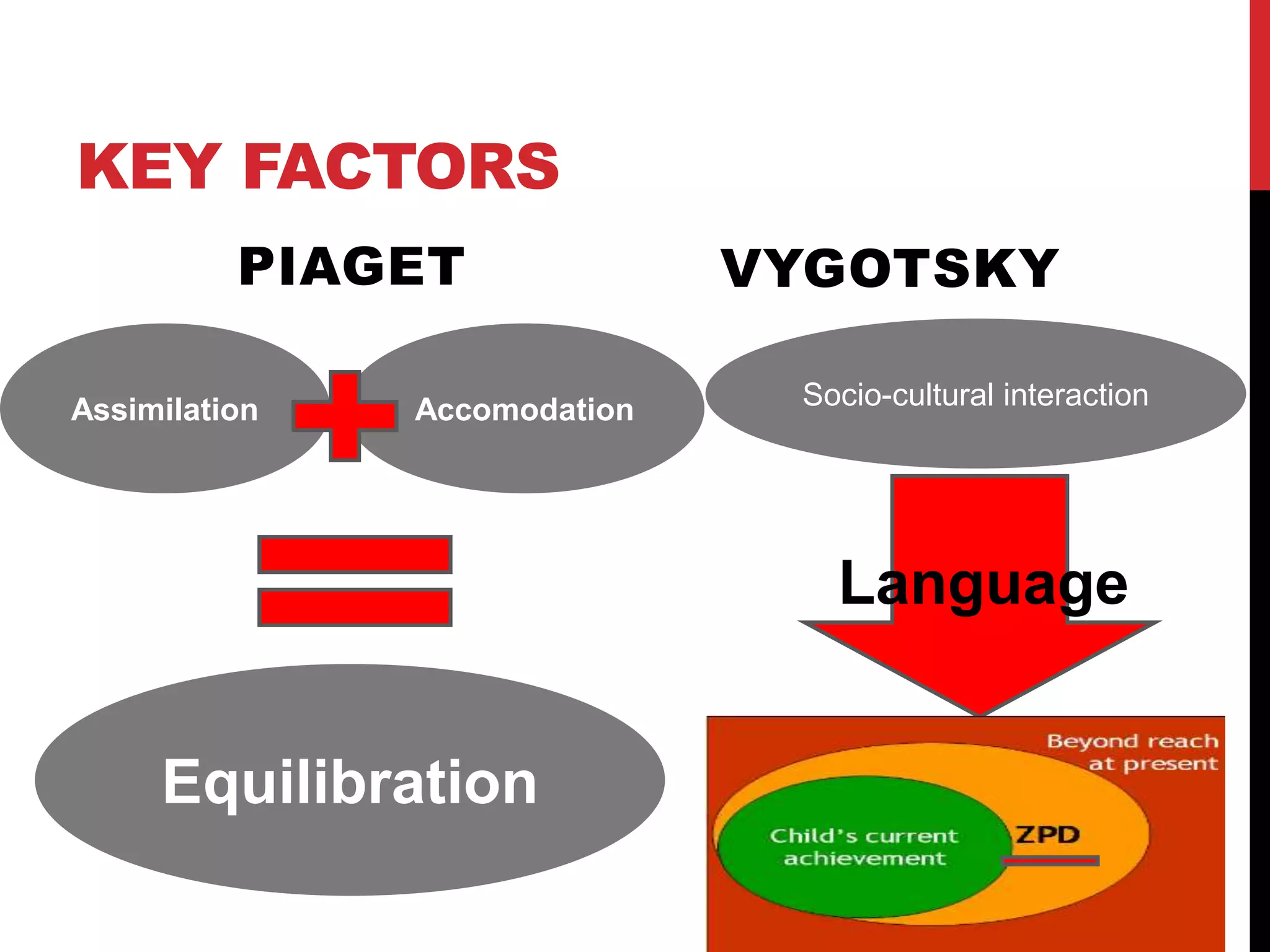
KEY FACTORS
          PIAGET              VYGOTSKY

Assimilation   Accomodation    Socio-cultural interaction


                                 Language


     Equilibration

                                                     5 / 18
STRENGTH
           piaget                         vygotsky
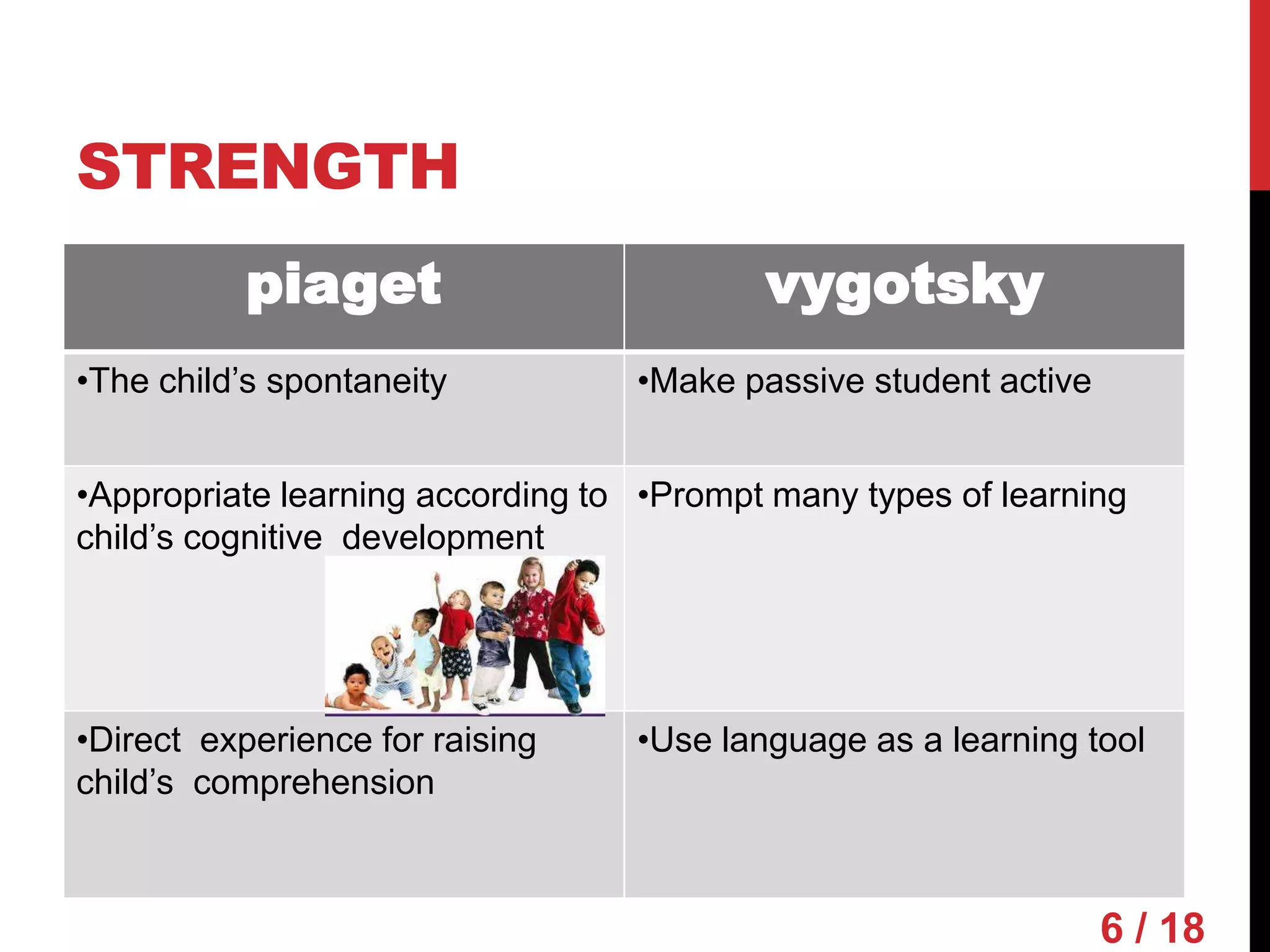
•The child’s spontaneity          •Make passive student active


•Appropriate learning according to •Prompt many types of learning
child’s cognitive development


•Direct experience for raising    •Use language as a learning tool
child’s comprehension


                                                                 6 / 18
WEAKNESS
          piaget                          vygotsky
•Standardized stages              •No exact guidelines


• No explanation after final      • A lot of time and resources
  stages                          required


•Overlooked social and cultural   •Problems to examine individual
characteristics                   participation


                                                                  7 / 18
TYPES OF LEARNING
      PIAGET             VYGOTSKY
  • Audio-visual aids    • Anchored
                           instruction

  • Digital multimedia
                         • Cognitive
                           apprenticeships
  • Individualized
    learning
                         • Problem-based
                           learning (PBL)


                                            8 / 18
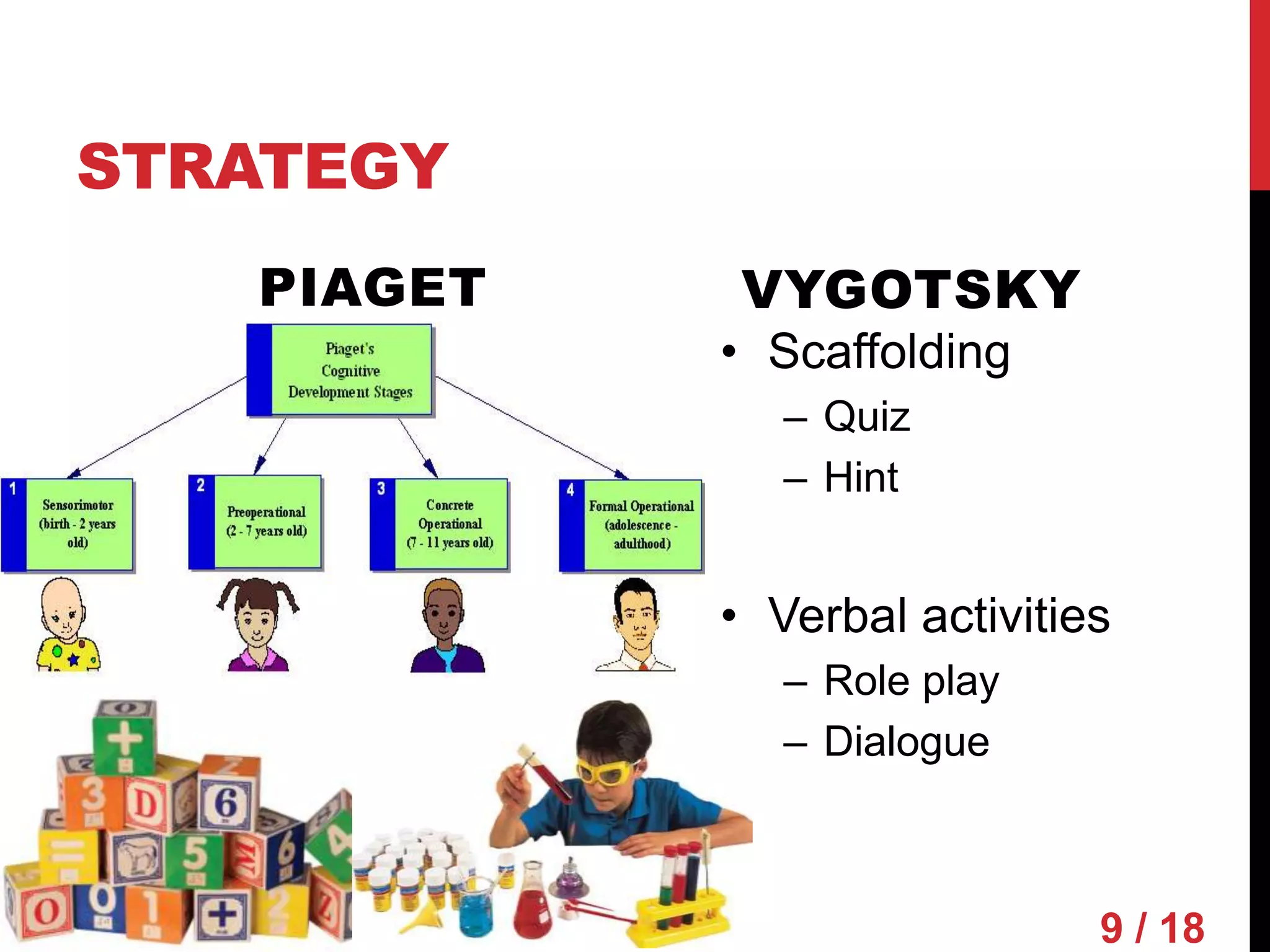
STRATEGY
         PIAGET                  VYGOTSKY
• Proper learning environment   • Scaffolding
  according to learners’           – Quiz
  developmental stage(4)
                                   – Hint


                                • Verbal activities
                                   – Role play
• Experimentation with             – Dialogue
  physical object


                                                  9 / 18
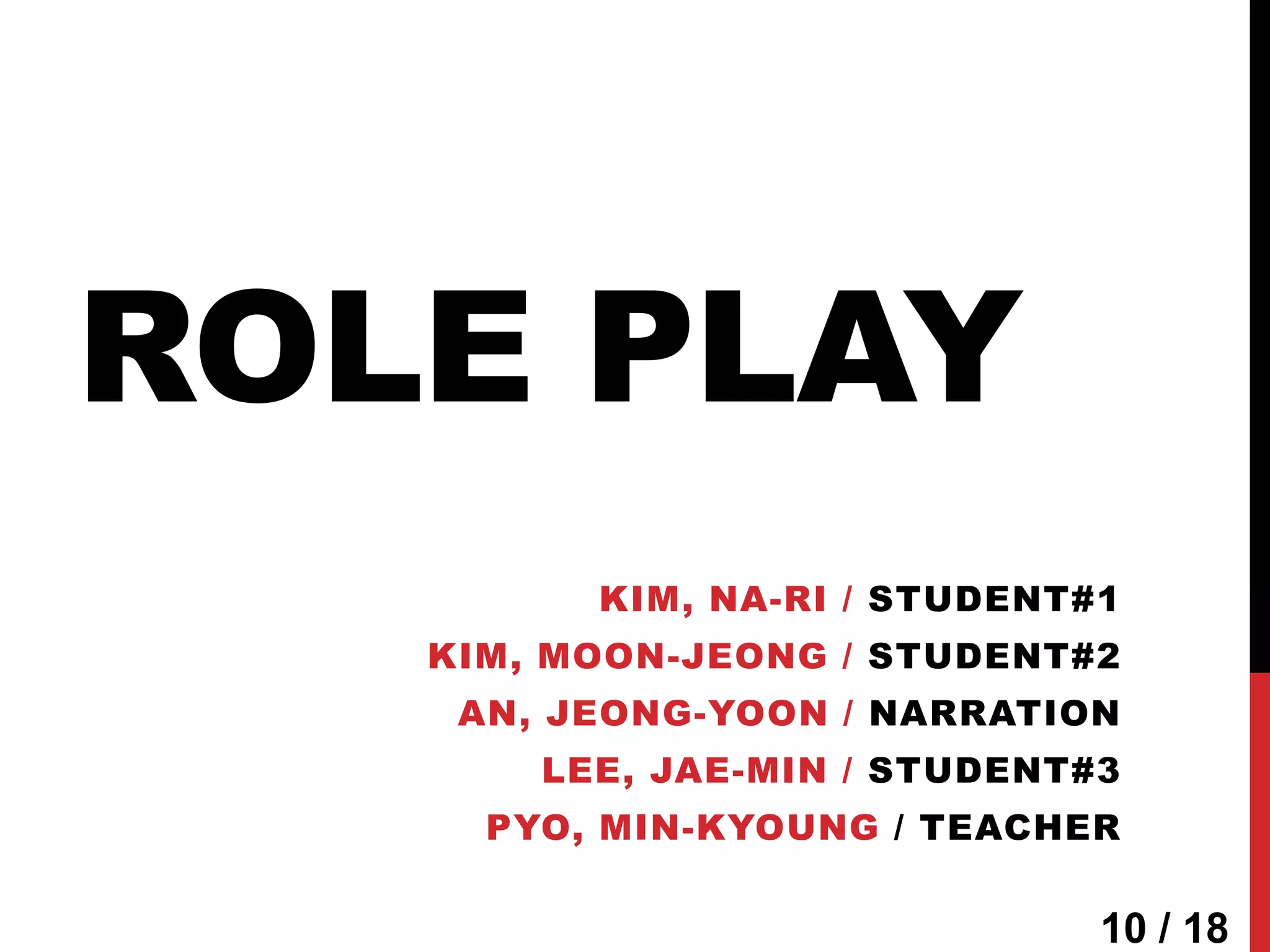
ROLE PLAY
         KIM, NA-RI / STUDENT#1
   KIM, MOON-JEONG / STUDENT#2
    AN, JEONG-YOON / NARRATION
       LEE, JAE-MIN / STUDENT#3
     PYO, MIN-KYOUNG / TEACHER

                              10 / 18
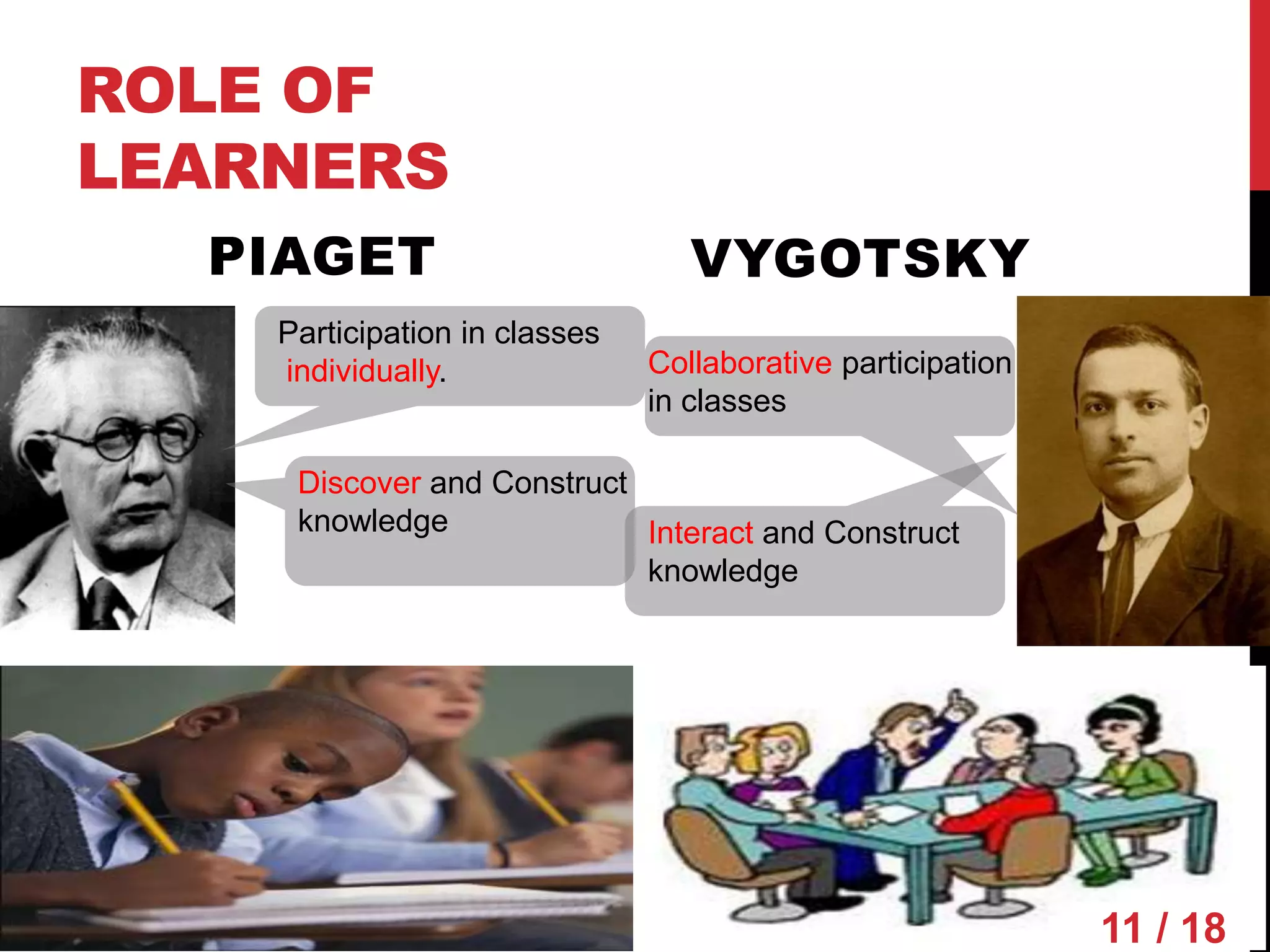
ROLE OF
LEARNERS
  PIAGET                          VYGOTSKY
    Participation in classes
    individually.              Collaborative participation
                               in classes

     Discover and Construct
     knowledge              Interact and Construct
                            knowledge


                                                             11 / 18
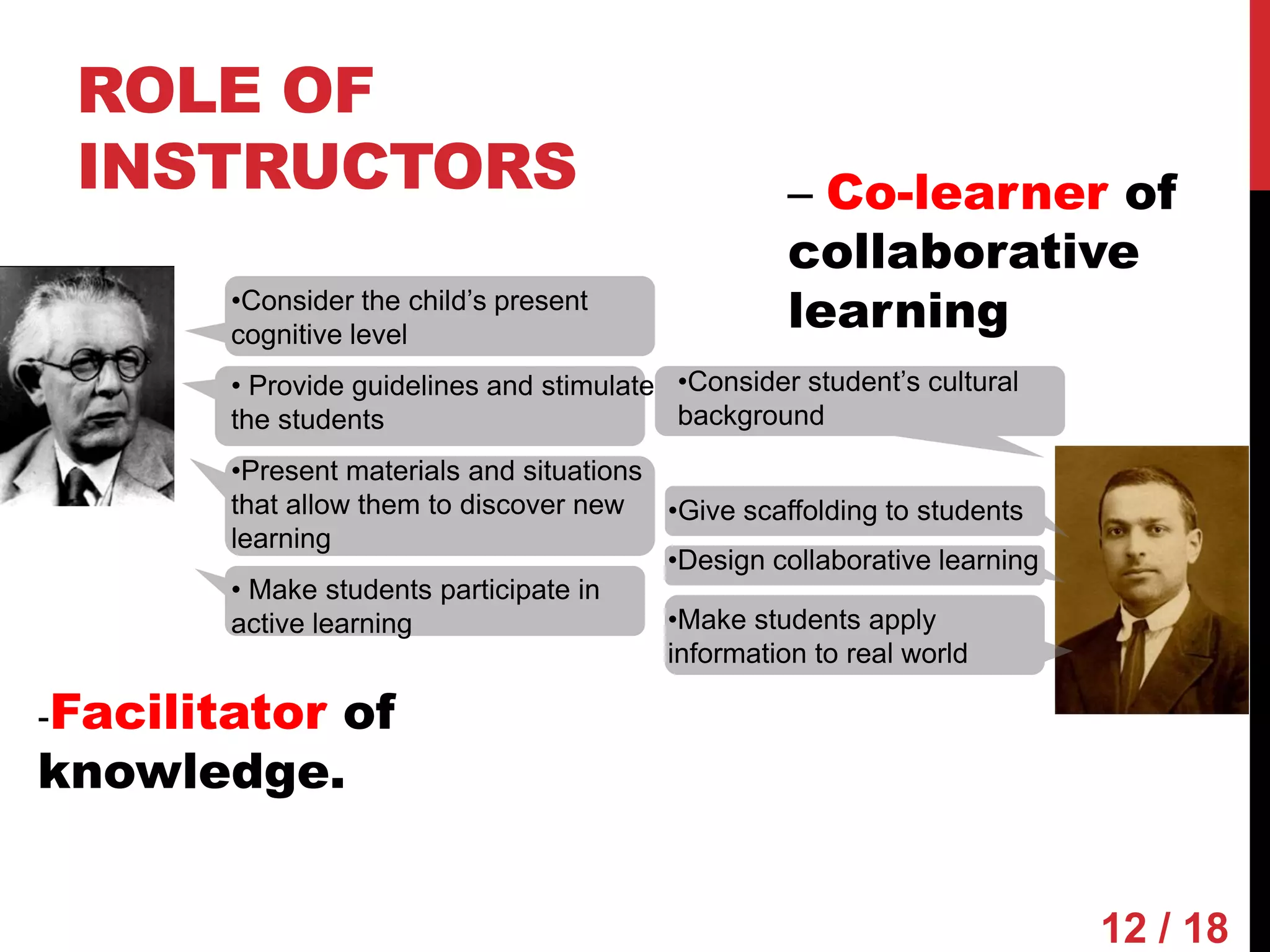
ROLE OF
 INSTRUCTORS                                        – Co-learner of
                                                    collaborative
        •Consider the child’s present
        cognitive level
                                                    learning
        • Provide guidelines and stimulate •Consider student’s cultural
        the students                       background
        •Present materials and situations
        that allow them to discover new   •Give scaffolding to students
        learning
                                          •Design collaborative learning
        • Make students participate in
        active learning                   •Make students apply
                                          information to real world

-Facilitator
          of
knowledge.


                                                                           12 / 18
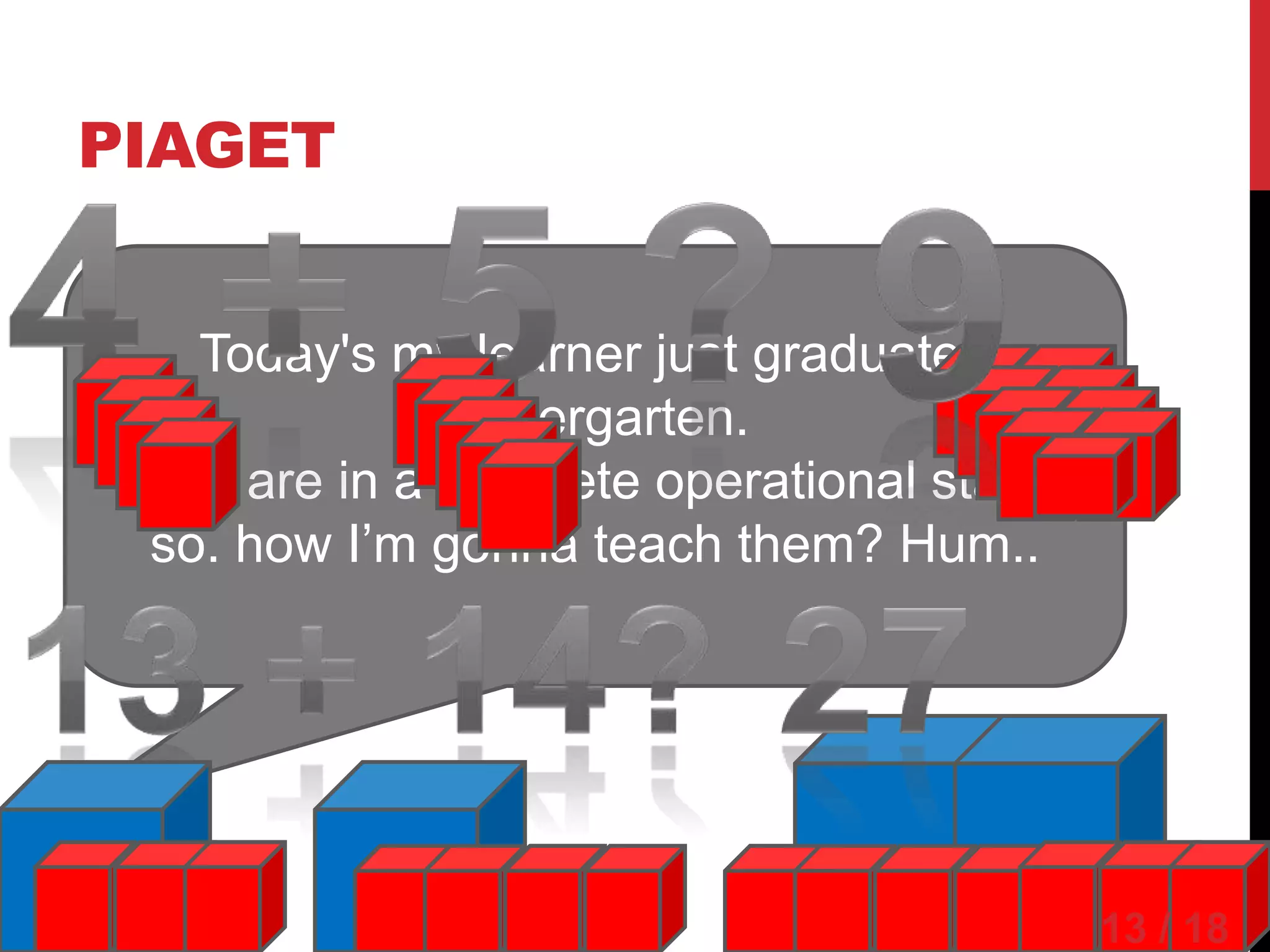
PIAGET


   Today's my learner just graduated
              kindergarten.
They are in a concrete operational stage.
 so. how I’m gonna teach them? Hum..


                                            13 / 18
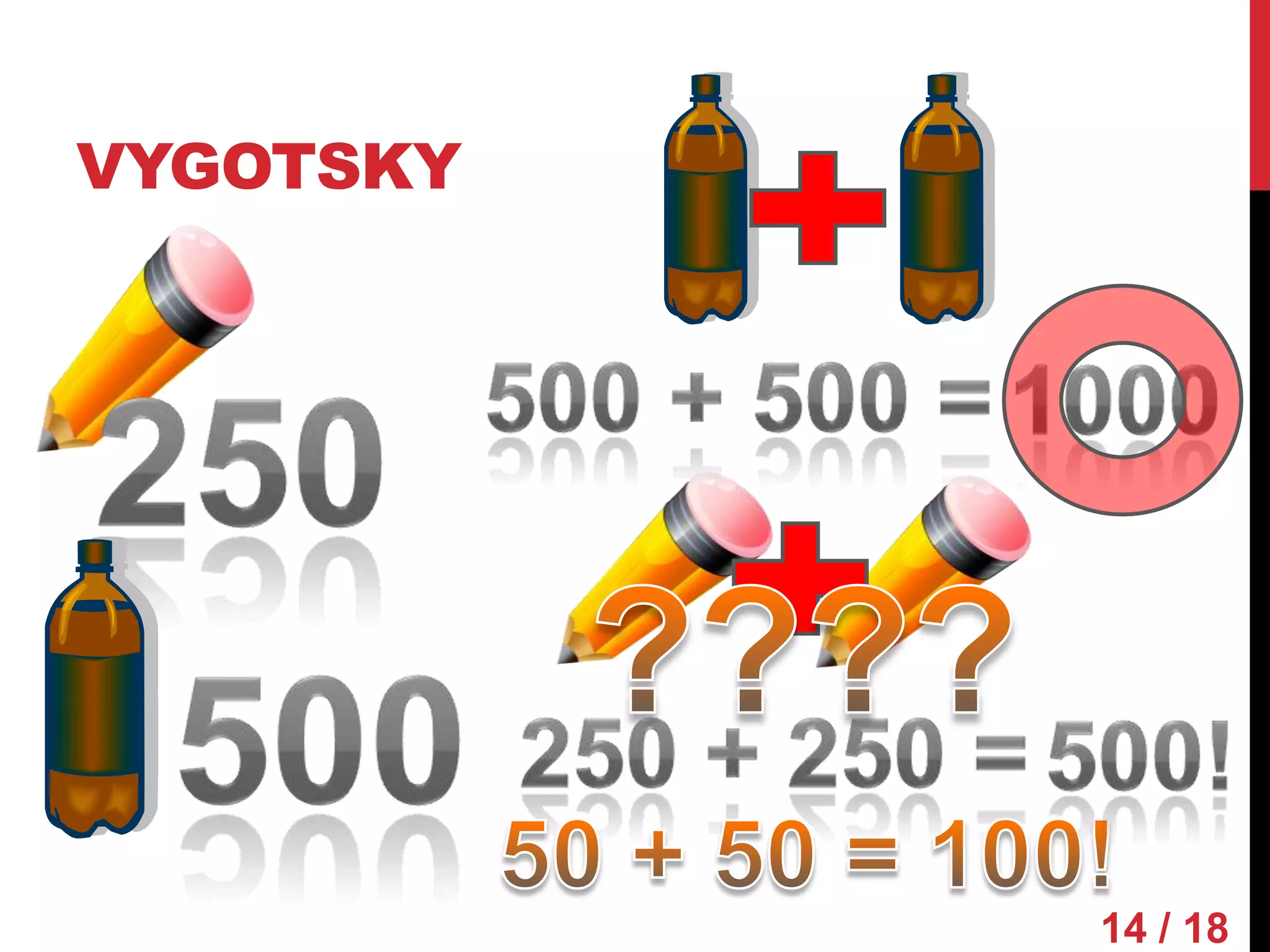
VYGOTSKY


           14 / 18
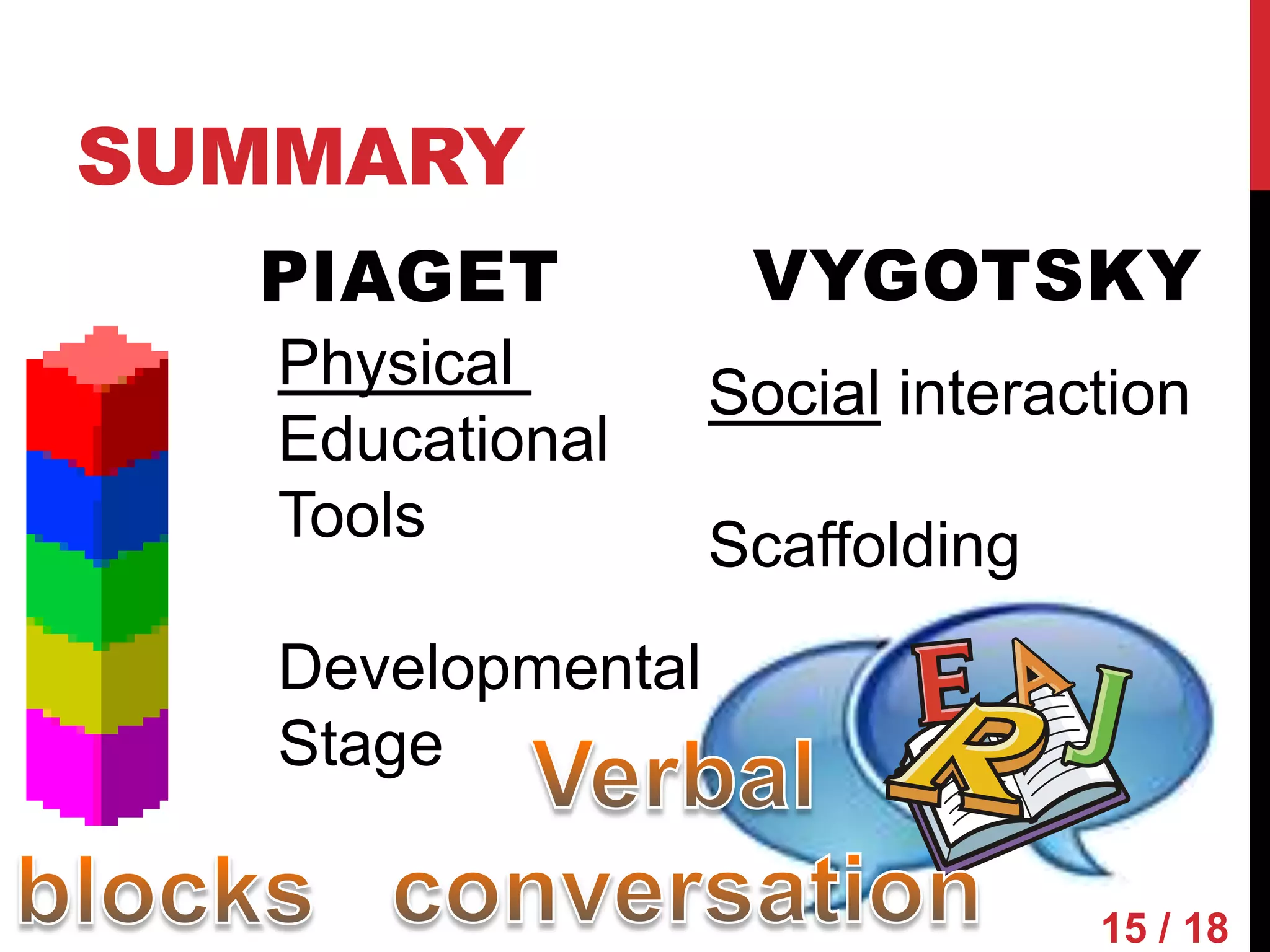
SUMMARY
  PIAGET            VYGOTSKY
   Physical        Social interaction
   Educational
   Tools           Scaffolding
   Developmental
   Stage

                                 15 / 18
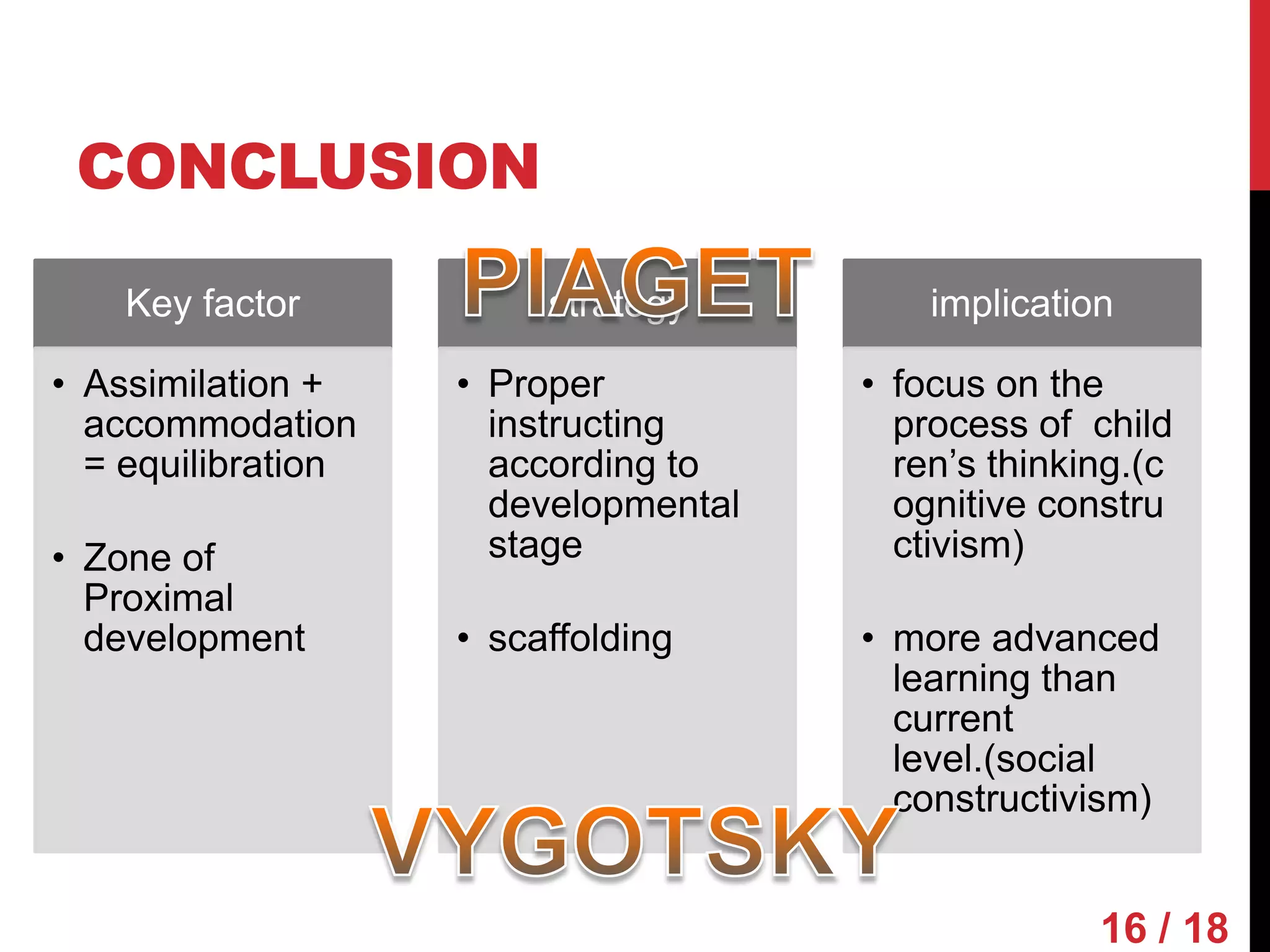
CONCLUSION

    Key factor           strategy         implication

• Assimilation +    • Proper          • focus on the
  accommodation       instructing       process of child
  = equilibration     according to      ren’s thinking.(c
                      developmental     ognitive constru
• Zone of             stage             ctivism)
  Proximal
  development       • scaffolding     • more advanced
                                        learning than
                                        current
                                        level.(social
                                        constructivism)


                                                    16 / 18
17 / 18
18 / 18

Group11 final

  • 1.
    PIAGET & VYGOTSKY GROUP 11 KIM, NA-RI KIM, MOON-JEONG AN, JEONG-YOON LEE, JAE-MIN PYO, MIN-KYOUNG 1 / 18
  • 2.
    CONTENTS - Comparison betweenPIAGET – VYGOTSKY • Similarities • Differences  Key factors  Strength & Weakness  Types of Learning  Strategies  Role of Learner and Instructor -Role Playing • Summary -conclusion - Q&A 2 / 18
  • 3.
    SIMILARITIES Common focus on understanding children's functioning  Children = Active stand in their own development  The same periods of development are experienced by each child, but at different levels  Learn by exploring and testing their surroundings. 3 / 18
  • 4.
    DIFFERENCES Piaget VS Vygotsky 4 / 18
  • 5.
    KEY FACTORS PIAGET VYGOTSKY Assimilation Accomodation Socio-cultural interaction Language Equilibration 5 / 18
  • 6.
    STRENGTH piaget vygotsky •The child’s spontaneity •Make passive student active •Appropriate learning according to •Prompt many types of learning child’s cognitive development •Direct experience for raising •Use language as a learning tool child’s comprehension 6 / 18
  • 7.
    WEAKNESS piaget vygotsky •Standardized stages •No exact guidelines • No explanation after final • A lot of time and resources stages required •Overlooked social and cultural •Problems to examine individual characteristics participation 7 / 18
  • 8.
    TYPES OF LEARNING PIAGET VYGOTSKY • Audio-visual aids • Anchored instruction • Digital multimedia • Cognitive apprenticeships • Individualized learning • Problem-based learning (PBL) 8 / 18
  • 9.
    STRATEGY PIAGET VYGOTSKY • Proper learning environment • Scaffolding according to learners’ – Quiz developmental stage(4) – Hint • Verbal activities – Role play • Experimentation with – Dialogue physical object 9 / 18
  • 10.
    ROLE PLAY KIM, NA-RI / STUDENT#1 KIM, MOON-JEONG / STUDENT#2 AN, JEONG-YOON / NARRATION LEE, JAE-MIN / STUDENT#3 PYO, MIN-KYOUNG / TEACHER 10 / 18
  • 11.
    ROLE OF LEARNERS PIAGET VYGOTSKY Participation in classes individually. Collaborative participation in classes Discover and Construct knowledge Interact and Construct knowledge 11 / 18
  • 12.
    ROLE OF INSTRUCTORS – Co-learner of collaborative •Consider the child’s present cognitive level learning • Provide guidelines and stimulate •Consider student’s cultural the students background •Present materials and situations that allow them to discover new •Give scaffolding to students learning •Design collaborative learning • Make students participate in active learning •Make students apply information to real world -Facilitator of knowledge. 12 / 18
  • 13.
    PIAGET Today's my learner just graduated kindergarten. They are in a concrete operational stage. so. how I’m gonna teach them? Hum.. 13 / 18
  • 14.
    VYGOTSKY 14 / 18
  • 15.
    SUMMARY PIAGET VYGOTSKY Physical Social interaction Educational Tools Scaffolding Developmental Stage 15 / 18
  • 16.
    CONCLUSION Key factor strategy implication • Assimilation + • Proper • focus on the accommodation instructing process of child = equilibration according to ren’s thinking.(c developmental ognitive constru • Zone of stage ctivism) Proximal development • scaffolding • more advanced learning than current level.(social constructivism) 16 / 18
  • 17.
  • 18.