Faculty Meeting, 19th October 2009
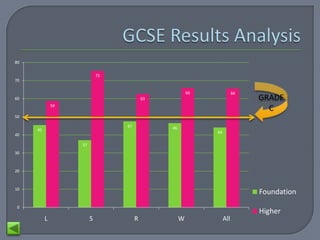
80


                            75
70

                                                        66              66
60                                        63                                 GRADE
              59
                                                                               C
50

                                 47            46
     45
                                                             44
40

                   37
30


20


10
                                                                             Foundation
 0
                                                                             Higher
          L             S             R             W             All
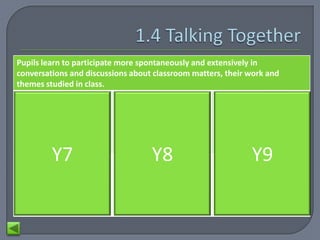
Pupils learn to participate more spontaneously and extensively in
conversations and discussions about classroom matters, their work and
themes studied in class.
Construct and generate         initiate and participate in    make extended and/or
language, using a stock of     unrehearsed pupil-teacher      frequent contributions to
words, phrases and             and pupil-pupil exchanges      classroom talk
sentences for social
communication and to talk
about their work
          Y7
make effective use of simple              Y8
                               plan and carry out                        Y9
                                                              deal effectively with
verbal or visual prompts in    unscripted conversations       unexpected responses in
order to take part in          and discussions, taking into   order to sustain
conversations and              account the                    conversations and
discussions                    views, preferences and ideas   discussions
                               of each group member
By the end weaknesses inprecisestudents
   Common of Key Stage 3 most     provision for
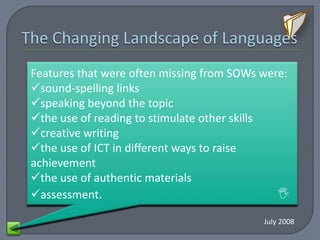
Features that were often missing from SOWs were:
sound-spelling linksgiven less
However, they are
  secondary modern languages included
                                        feedback
   on speaking. This feedback doesrange of
    could usually understand a not often
speaking beyond the topic
A insufficient and engagedother skills
         tenses opportunities to develop
the use of hindrance to speaking their
    further readingthey could improvefluently
     focus on how to stimulate in basic
creative speaking does not links not been
 pronunciation and skills or independent
    good writing
  was that sound-spelling encourage them
      conversations with peers or their
the use from memory quicklyStudents’
to work of ICT inand writing.toenough, which
       speaking taughtpronunciation was
                  different ways raise
   teachers, but their well.
achievement there are an area of particular
speaking skills were times when the most
  means that accurate and they were
the use of not
      often authentic materials
   able weakness innot challenged enough.
         students arewhen speaking.
           hesitant both key stages. 
assessment.

                                          July 2008
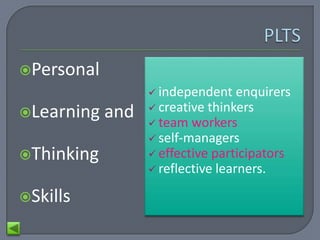
Personal
                   independent    enquirers
                   creative thinkers
Learning   and    team workers
                   self-managers
Thinking          effective participators
                   reflective learners.

Skills
But equally important seems to be the task of looking ahead
     from Year 9 into KS4 and working to ensure that what
learners experience is really 'joined up'. I've talked to a lot of
teachers who are fired up but what they are now teaching at
KS3 but concerned that they will need to return to something
 much more conservative and less interesting at KS4. So are
  we resigned to it being a case of our KS3 learners being 'all
 linguistically challenged and highly motivated with nowhere
   to go' at KS4? Or can we make suitable links between the
  learning to join both key stages together (without risking a
      dip in the all too important performance indicators)?
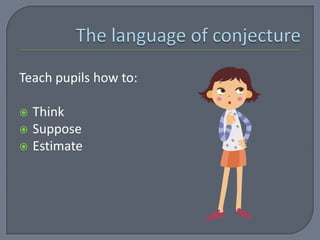
Teach pupils how to:

   Think
   Suppose
   Estimate
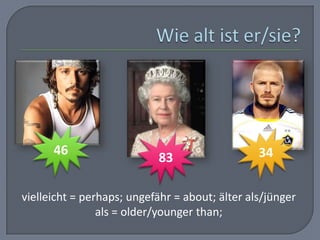
46                                        34
                           83

vielleicht = perhaps; ungefähr = about; älter als/jünger
                als = older/younger than;
 Opportunitiesfor MFL pupil talk can be limiting in
 scope and inherently finite.

 Theemphasis can often be misplaced on the
 completion of a mundane task where only specific
 language structures seem valid.

 Transactionalrole playing can build a false perception
 of language in pupils’ minds.
 Only   the target language is spoken

 Interaction   between a small group of pupils

 Tasks   demand opinion, conjecture and debate

 Language    is often colloquial

 Responses     are spontaneous

 There   is no set finishing line
   Give pupils the linguistic skills and regular opportunities
    to use:
   the language of conjecture
   disputational talk (arguments!)

   Plan for speaking activities in small groups as well as pairs

   Choose speaking stimuli which will engage and provoke
    spontaneous responses (avoid transactional tasks)

   All of this will be achieved by implementing the Group
    Talk project in your classroom and department
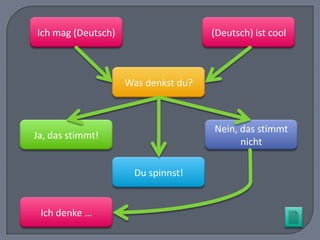
Ich mag (Deutsch)                    (Deutsch) ist cool


                    Was denkst du?


                                     Nein, das stimmt
Ja, das stimmt!
                                           nicht

                     Du spinnst!


 Ich denke …

Group Talk

  • 1.
  • 3.
    80 75 70 66 66 60 63 GRADE 59 C 50 47 46 45 44 40 37 30 20 10 Foundation 0 Higher L S R W All
  • 4.
    Pupils learn toparticipate more spontaneously and extensively in conversations and discussions about classroom matters, their work and themes studied in class. Construct and generate initiate and participate in make extended and/or language, using a stock of unrehearsed pupil-teacher frequent contributions to words, phrases and and pupil-pupil exchanges classroom talk sentences for social communication and to talk about their work Y7 make effective use of simple Y8 plan and carry out Y9 deal effectively with verbal or visual prompts in unscripted conversations unexpected responses in order to take part in and discussions, taking into order to sustain conversations and account the conversations and discussions views, preferences and ideas discussions of each group member
  • 5.
    By the endweaknesses inprecisestudents Common of Key Stage 3 most provision for Features that were often missing from SOWs were: sound-spelling linksgiven less However, they are secondary modern languages included feedback on speaking. This feedback doesrange of could usually understand a not often speaking beyond the topic A insufficient and engagedother skills tenses opportunities to develop the use of hindrance to speaking their further readingthey could improvefluently focus on how to stimulate in basic creative speaking does not links not been pronunciation and skills or independent good writing was that sound-spelling encourage them conversations with peers or their the use from memory quicklyStudents’ to work of ICT inand writing.toenough, which speaking taughtpronunciation was different ways raise teachers, but their well. achievement there are an area of particular speaking skills were times when the most means that accurate and they were the use of not often authentic materials able weakness innot challenged enough. students arewhen speaking. hesitant both key stages.  assessment. July 2008
  • 6.
    Personal  independent enquirers  creative thinkers Learning and  team workers  self-managers Thinking  effective participators  reflective learners. Skills
  • 7.
    But equally importantseems to be the task of looking ahead from Year 9 into KS4 and working to ensure that what learners experience is really 'joined up'. I've talked to a lot of teachers who are fired up but what they are now teaching at KS3 but concerned that they will need to return to something much more conservative and less interesting at KS4. So are we resigned to it being a case of our KS3 learners being 'all linguistically challenged and highly motivated with nowhere to go' at KS4? Or can we make suitable links between the learning to join both key stages together (without risking a dip in the all too important performance indicators)?
  • 8.
    Teach pupils howto:  Think  Suppose  Estimate
  • 9.
    46 34 83 vielleicht = perhaps; ungefähr = about; älter als/jünger als = older/younger than;
  • 10.
     Opportunitiesfor MFLpupil talk can be limiting in scope and inherently finite.  Theemphasis can often be misplaced on the completion of a mundane task where only specific language structures seem valid.  Transactionalrole playing can build a false perception of language in pupils’ minds.
  • 11.
     Only the target language is spoken  Interaction between a small group of pupils  Tasks demand opinion, conjecture and debate  Language is often colloquial  Responses are spontaneous  There is no set finishing line
  • 12.
    Give pupils the linguistic skills and regular opportunities to use:  the language of conjecture  disputational talk (arguments!)  Plan for speaking activities in small groups as well as pairs  Choose speaking stimuli which will engage and provoke spontaneous responses (avoid transactional tasks)  All of this will be achieved by implementing the Group Talk project in your classroom and department
  • 13.
    Ich mag (Deutsch) (Deutsch) ist cool Was denkst du? Nein, das stimmt Ja, das stimmt! nicht Du spinnst! Ich denke …