Group Six
DEtermining teaching-learning
method and assessment
procedures
Maria Paulina Rohi
1.
Rosyidatul Jalila
2.
Rifka Rahmita
3.
POINTS TO BE DISCUSSED
Determining Teaching and Learning Method
Overview on Teaching and Learning Method
Principles of learning
Criteria for Organizing Learning Activities
Selecting Teaching learning methods
Determining Assessment Procedure
Overview on Assessment
Goals of Assessment
Types of Assessment
Types of Assessment Task
Steps of Assessment Cycle
“Good intentions, fine goals and objectives, excellent content,
flawless evaluation procedures, then, are all for naught if the learning
activities in which students engage do not provide them with
experience whose consequences are educational. (Robert Zais, 1976
:350)”
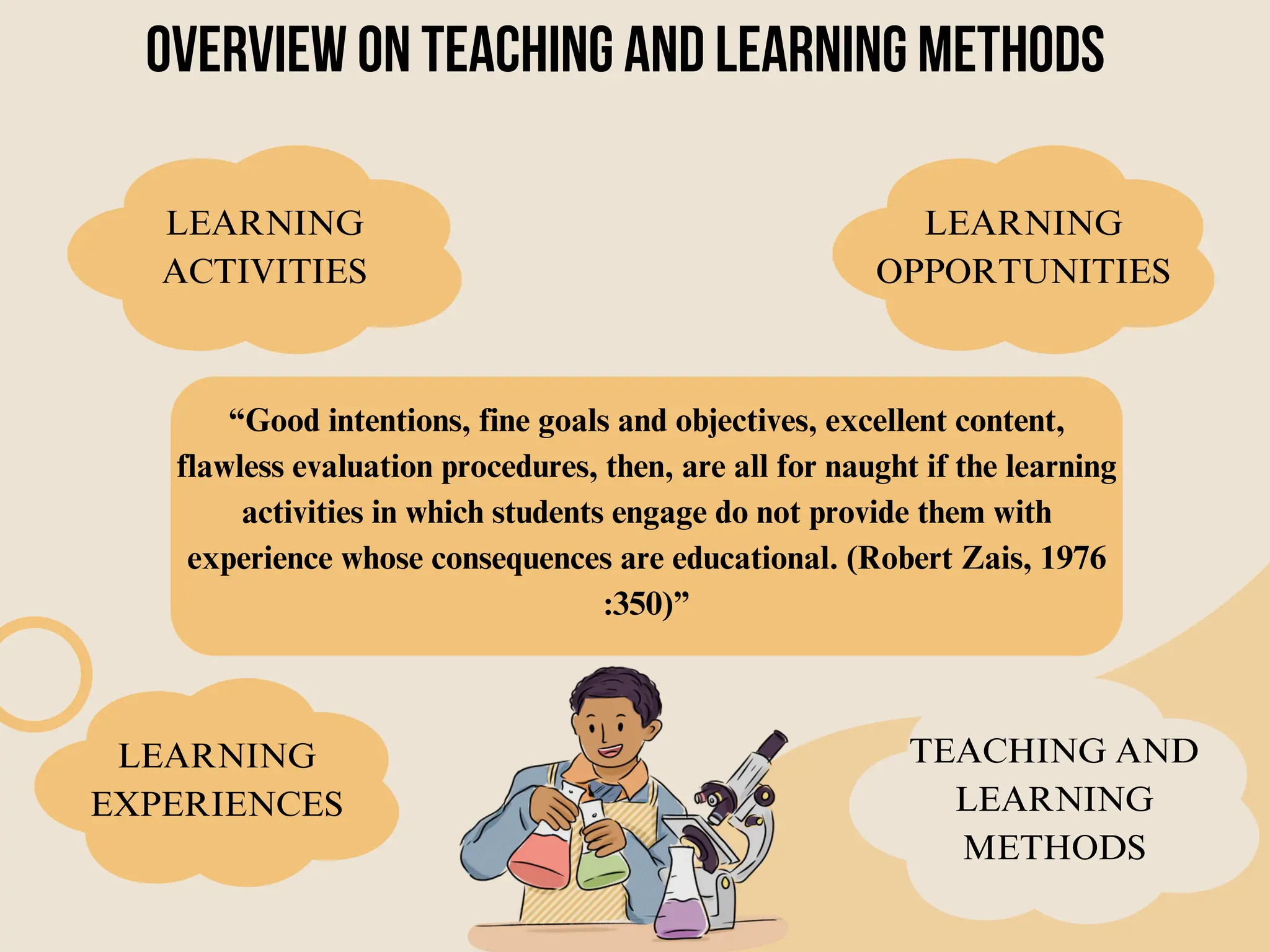
LEARNING
OPPORTUNITIES
OVERVIEW ON TEACHING AND LEARNING METHODS
LEARNING
ACTIVITIES
LEARNING
EXPERIENCES
TEACHING AND
LEARNING
METHODS
Principles of Learning
Wheeler (1967) proposed the following principles of learning:
Individual Differences: Learners exhibit diverse backgrounds, experiences, abilities, interests, and
learning styles.
1.
Prior Knowledge: Learners build new knowledge and skills based on their existing understanding
and prior experiences.
2.
Meaningful Learning: Learners are more likely to remember and understand information that is
meaningful to them
3.
Motivation: Learners' motivation influences their engagement, effort, and persistence in learning
activities.
4.
Developmental Readiness: Learners' readiness to learn varies based on their cognitive, social,
emotional, and physical development.
5.
Social Influences: Learners' interactions with peers, teachers, families, and communities influence
their learning experiences and outcomes
6.
Contextual Influences: Learners' learning experiences are shaped by the social, cultural,
environmental, and institutional contexts in which they occur
7.
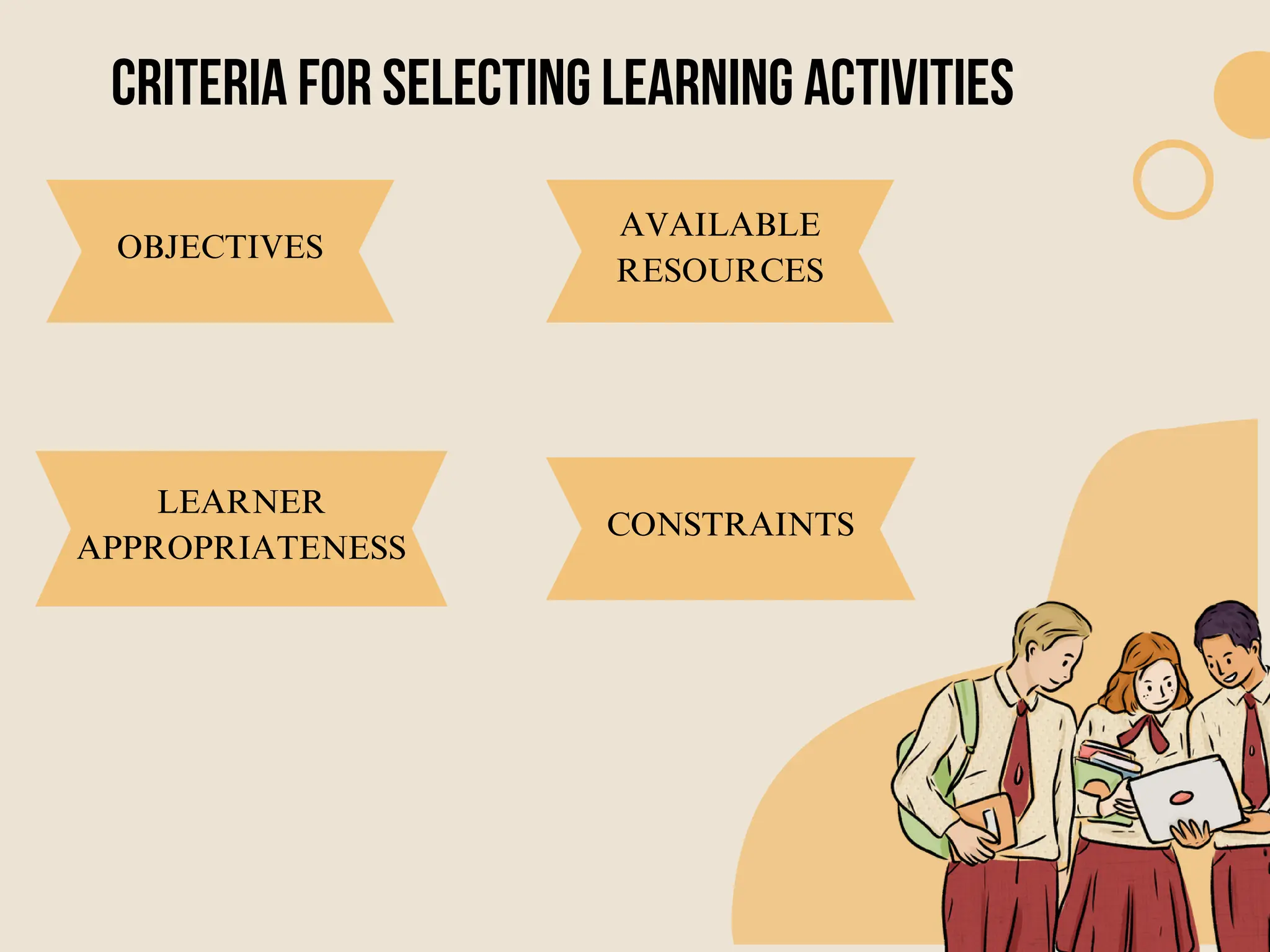
OBJECTIVES
Criteria for selecting Learning Activities
CONSTRAINTS
LEARNER
APPROPRIATENESS
AVAILABLE
RESOURCES
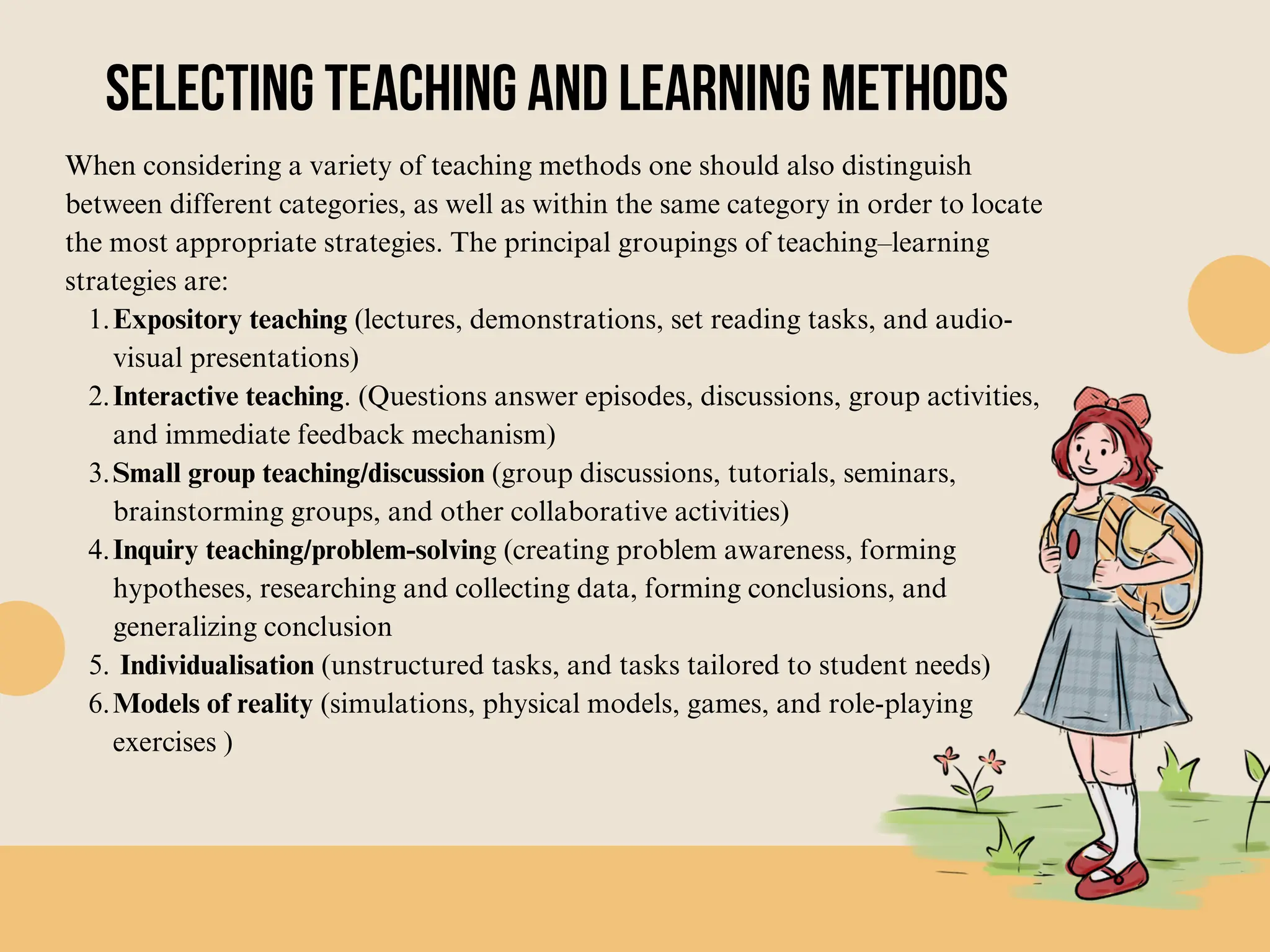
Selecting TEACHING AND LEARNING METHODs
When considering a variety of teaching methods one should also distinguish
between different categories, as well as within the same category in order to locate
the most appropriate strategies. The principal groupings of teaching–learning
strategies are:
Expository teaching (lectures, demonstrations, set reading tasks, and audio-
visual presentations)
1.
Interactive teaching. (Questions answer episodes, discussions, group activities,
and immediate feedback mechanism)
2.
Small group teaching/discussion (group discussions, tutorials, seminars,
brainstorming groups, and other collaborative activities)
3.
Inquiry teaching/problem-solving (creating problem awareness, forming
hypotheses, researching and collecting data, forming conclusions, and
generalizing conclusion
4.
Individualisation (unstructured tasks, and tasks tailored to student needs)
5.
Models of reality (simulations, physical models, games, and role-playing
exercises )
6.
Assessment is the systematic collection, review, and use of
information about educational programs undertaken for the
purpose of improving student learning and development.
(Palomba and Banta 1999)
OVERVIEW ON DETERMINING ASSESMENT
PROCEDURE
Goal of assesment
A clear conceptualization of intended student
learning outcomes.
A description of how these outcomes are assessed
and measured
A description of the results obtained from these
measures
A description of how these results validate current
practices or point to changes needed to improve
student learning.
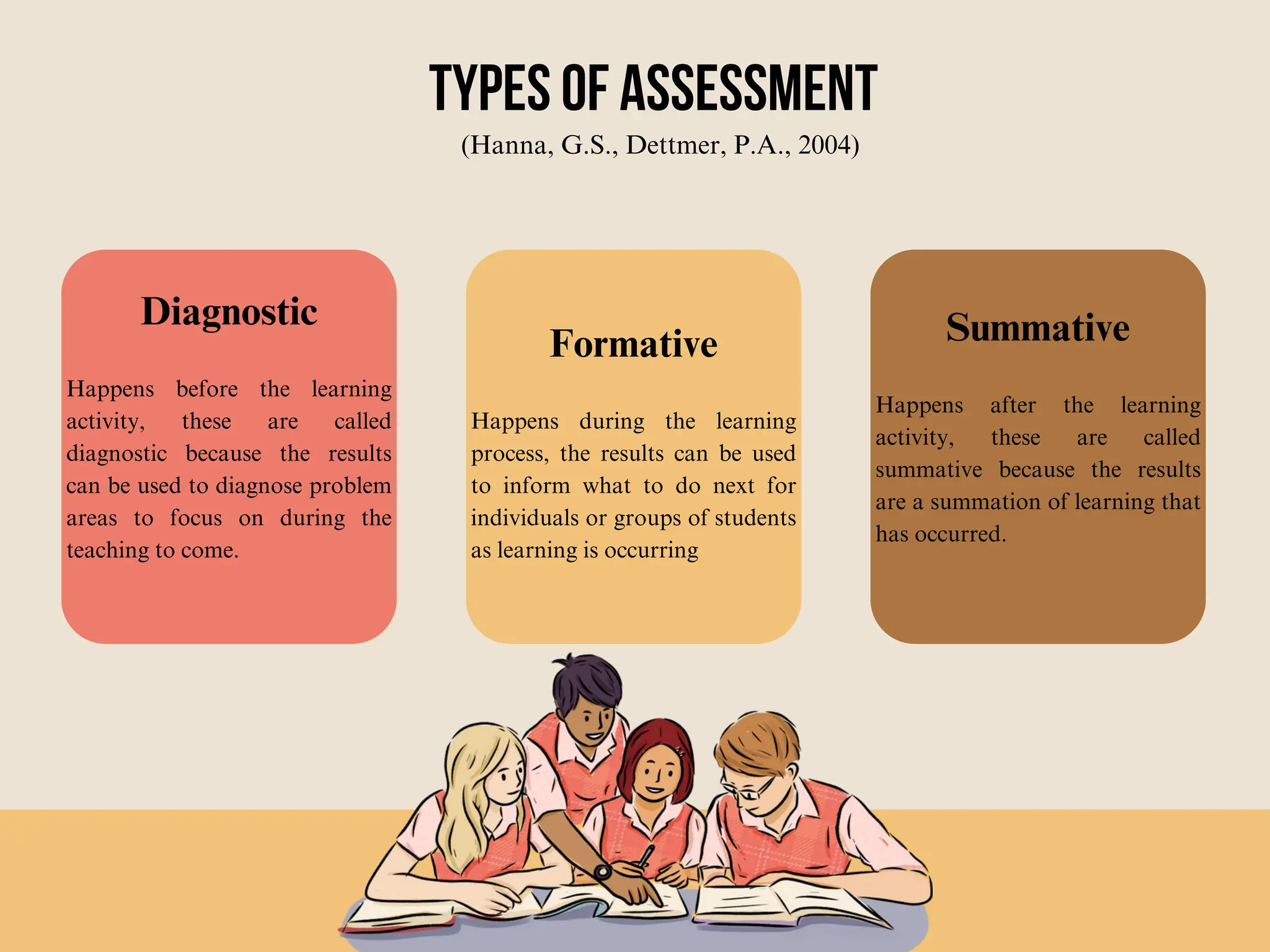
Diagnostic
Happens before the learning
activity, these are called
diagnostic because the results
can be used to diagnose problem
areas to focus on during the
teaching to come.
Summative
Happens after the learning
activity, these are called
summative because the results
are a summation of learning that
has occurred.
Formative
Happens during the learning
process, the results can be used
to inform what to do next for
individuals or groups of students
as learning is occurring
Types of Assessment
(Hanna, G.S., Dettmer, P.A., 2004)
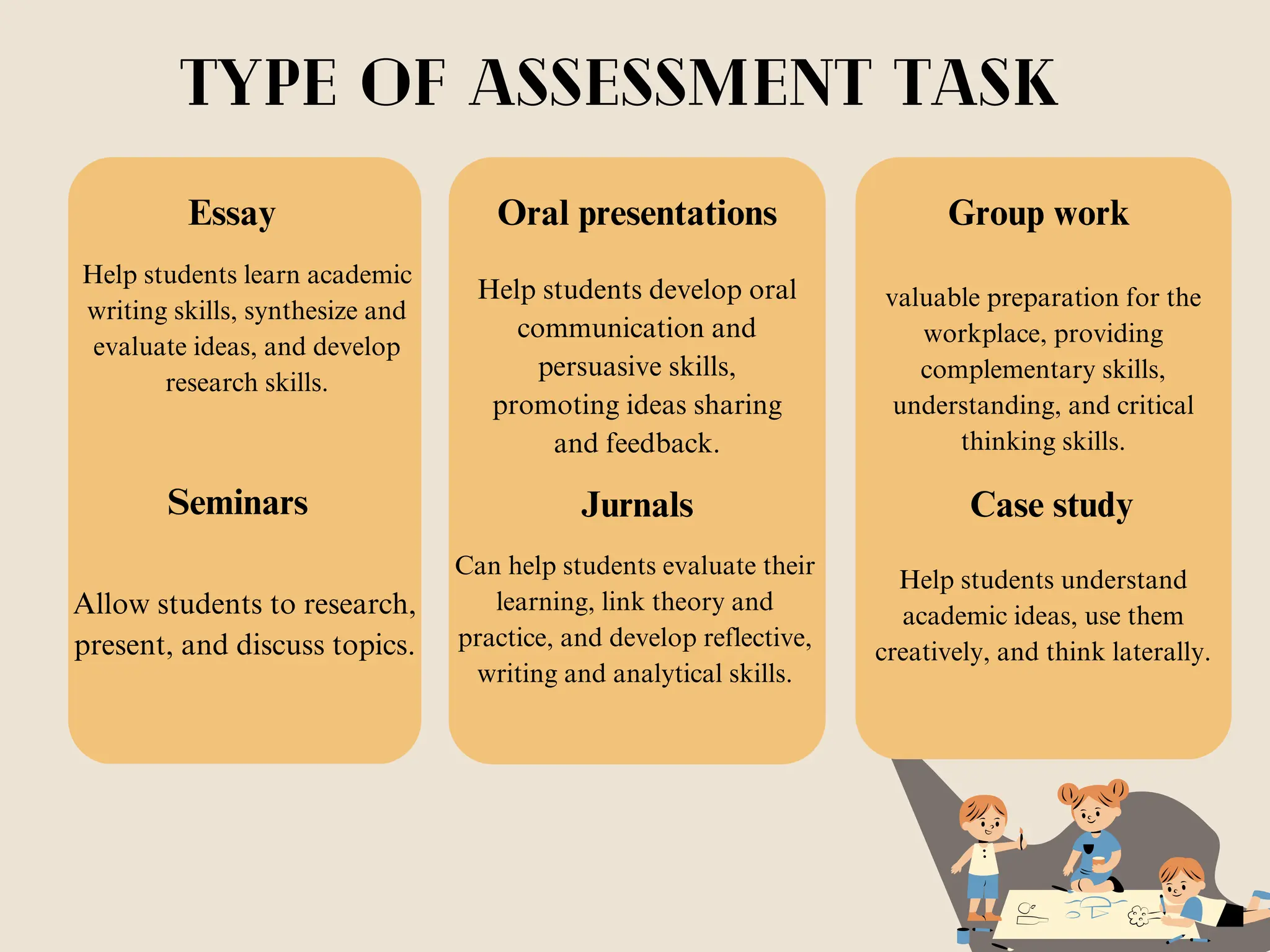
Type of Assessment Task
Essay
Help students learn academic
writing skills, synthesize and
evaluate ideas, and develop
research skills.
Oral presentations
Help students develop oral
communication and
persuasive skills,
promoting ideas sharing
and feedback.
Group work
valuable preparation for the
workplace, providing
complementary skills,
understanding, and critical
thinking skills.
Seminars
Allow students to research,
present, and discuss topics.
Jurnals
Can help students evaluate their
learning, link theory and
practice, and develop reflective,
writing and analytical skills.
Case study
Help students understand
academic ideas, use them
creatively, and think laterally.
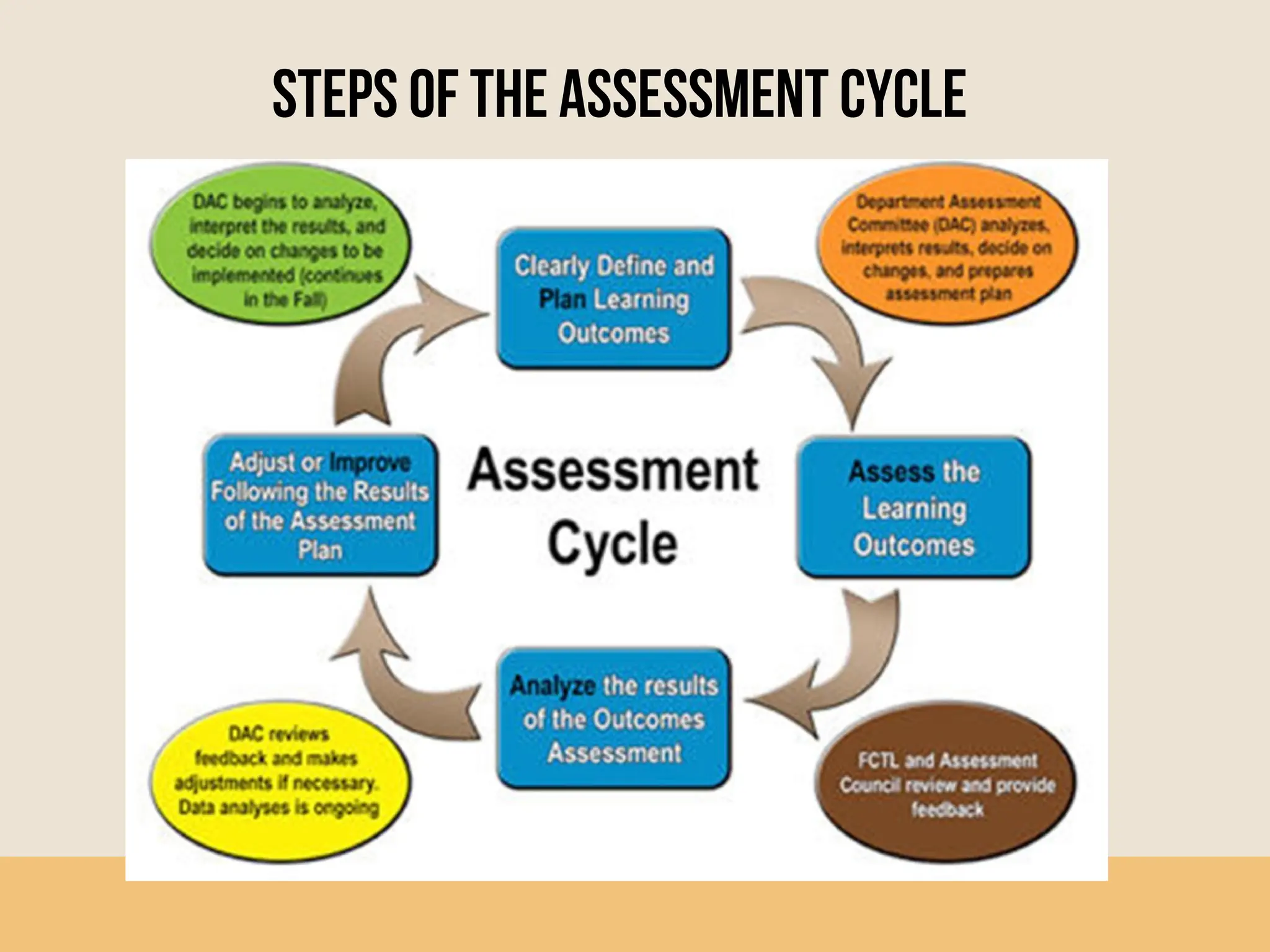
steps of the assessment cycle
do you have any questions?
THANK YOU

Group 6_Determining Teaching-Learning Method and Assessment Procedures.pdf

  • 1.
    Group Six DEtermining teaching-learning methodand assessment procedures Maria Paulina Rohi 1. Rosyidatul Jalila 2. Rifka Rahmita 3.
  • 2.
    POINTS TO BEDISCUSSED Determining Teaching and Learning Method Overview on Teaching and Learning Method Principles of learning Criteria for Organizing Learning Activities Selecting Teaching learning methods Determining Assessment Procedure Overview on Assessment Goals of Assessment Types of Assessment Types of Assessment Task Steps of Assessment Cycle
  • 3.
    “Good intentions, finegoals and objectives, excellent content, flawless evaluation procedures, then, are all for naught if the learning activities in which students engage do not provide them with experience whose consequences are educational. (Robert Zais, 1976 :350)” LEARNING OPPORTUNITIES OVERVIEW ON TEACHING AND LEARNING METHODS LEARNING ACTIVITIES LEARNING EXPERIENCES TEACHING AND LEARNING METHODS
  • 4.
    Principles of Learning Wheeler(1967) proposed the following principles of learning: Individual Differences: Learners exhibit diverse backgrounds, experiences, abilities, interests, and learning styles. 1. Prior Knowledge: Learners build new knowledge and skills based on their existing understanding and prior experiences. 2. Meaningful Learning: Learners are more likely to remember and understand information that is meaningful to them 3. Motivation: Learners' motivation influences their engagement, effort, and persistence in learning activities. 4. Developmental Readiness: Learners' readiness to learn varies based on their cognitive, social, emotional, and physical development. 5. Social Influences: Learners' interactions with peers, teachers, families, and communities influence their learning experiences and outcomes 6. Contextual Influences: Learners' learning experiences are shaped by the social, cultural, environmental, and institutional contexts in which they occur 7.
  • 5.
    OBJECTIVES Criteria for selectingLearning Activities CONSTRAINTS LEARNER APPROPRIATENESS AVAILABLE RESOURCES
  • 6.
    Selecting TEACHING ANDLEARNING METHODs When considering a variety of teaching methods one should also distinguish between different categories, as well as within the same category in order to locate the most appropriate strategies. The principal groupings of teaching–learning strategies are: Expository teaching (lectures, demonstrations, set reading tasks, and audio- visual presentations) 1. Interactive teaching. (Questions answer episodes, discussions, group activities, and immediate feedback mechanism) 2. Small group teaching/discussion (group discussions, tutorials, seminars, brainstorming groups, and other collaborative activities) 3. Inquiry teaching/problem-solving (creating problem awareness, forming hypotheses, researching and collecting data, forming conclusions, and generalizing conclusion 4. Individualisation (unstructured tasks, and tasks tailored to student needs) 5. Models of reality (simulations, physical models, games, and role-playing exercises ) 6.
  • 7.
    Assessment is thesystematic collection, review, and use of information about educational programs undertaken for the purpose of improving student learning and development. (Palomba and Banta 1999) OVERVIEW ON DETERMINING ASSESMENT PROCEDURE
  • 8.
    Goal of assesment Aclear conceptualization of intended student learning outcomes. A description of how these outcomes are assessed and measured A description of the results obtained from these measures A description of how these results validate current practices or point to changes needed to improve student learning.
  • 9.
    Diagnostic Happens before thelearning activity, these are called diagnostic because the results can be used to diagnose problem areas to focus on during the teaching to come. Summative Happens after the learning activity, these are called summative because the results are a summation of learning that has occurred. Formative Happens during the learning process, the results can be used to inform what to do next for individuals or groups of students as learning is occurring Types of Assessment (Hanna, G.S., Dettmer, P.A., 2004)
  • 10.
    Type of AssessmentTask Essay Help students learn academic writing skills, synthesize and evaluate ideas, and develop research skills. Oral presentations Help students develop oral communication and persuasive skills, promoting ideas sharing and feedback. Group work valuable preparation for the workplace, providing complementary skills, understanding, and critical thinking skills. Seminars Allow students to research, present, and discuss topics. Jurnals Can help students evaluate their learning, link theory and practice, and develop reflective, writing and analytical skills. Case study Help students understand academic ideas, use them creatively, and think laterally.
  • 11.
    steps of theassessment cycle
  • 12.
    do you haveany questions?
  • 13.