Word #1
EOSYTIC
SOCIETY
Word #2
PNSCILIEID
DISCIPLINE
Word #3
ADISE
IDEAS
Word #4
URCUSTERT
STRUCTURE
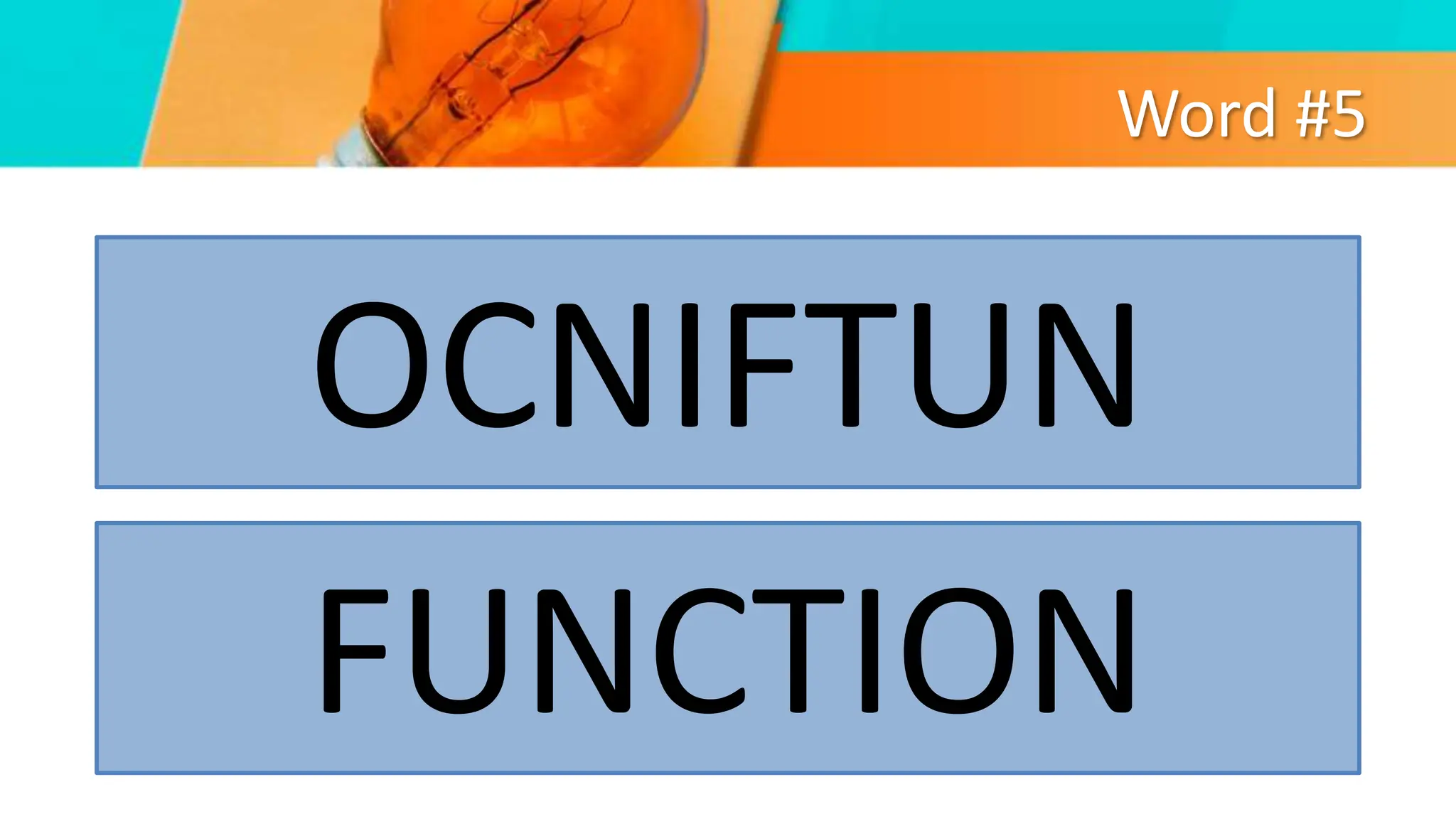
Word #5
OCNIFTUN
FUNCTION
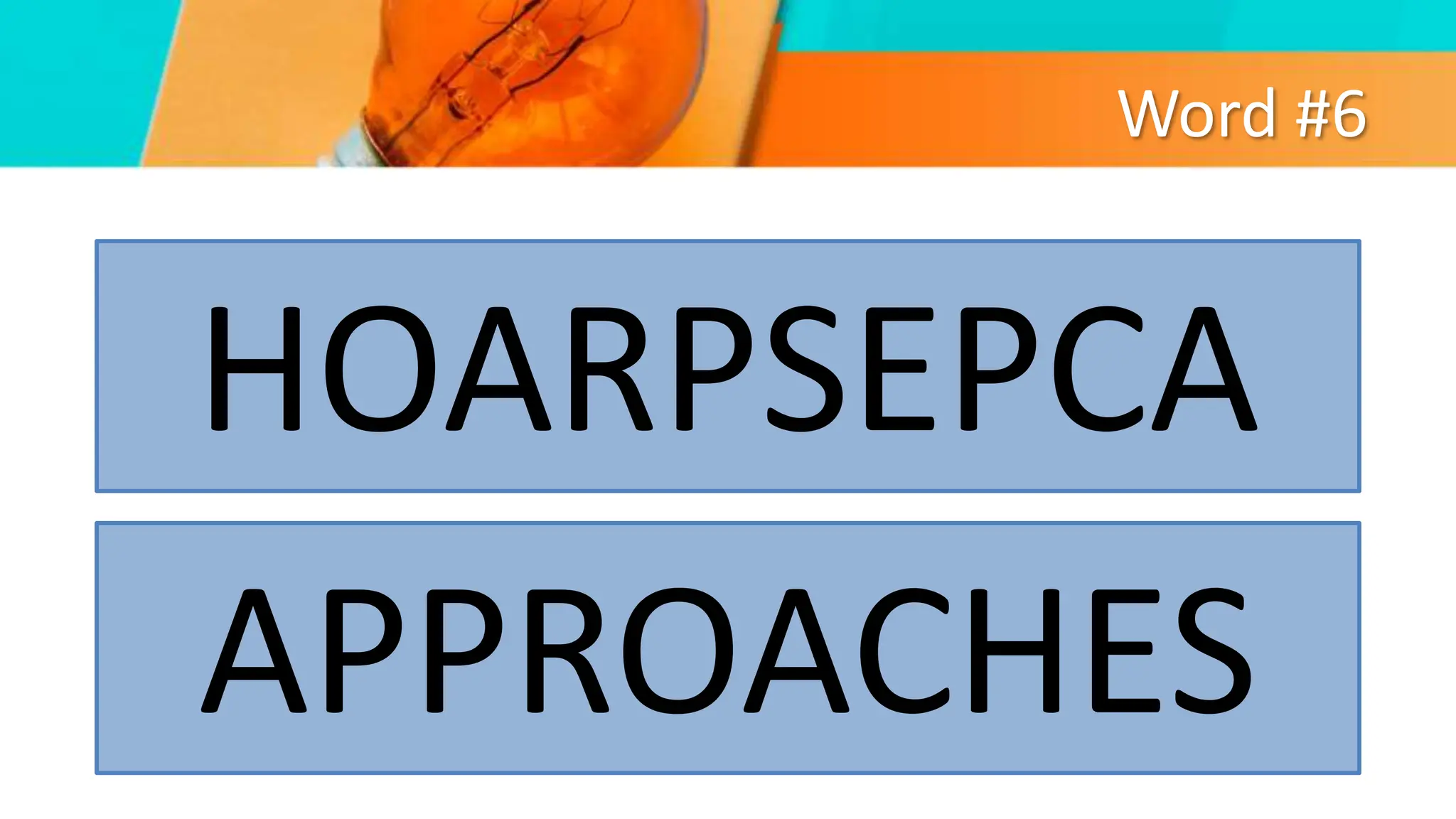
Word #6
HOARPSEPCA
APPROACHES
Word #7
ENVTGNOERM
GOVERNMENT
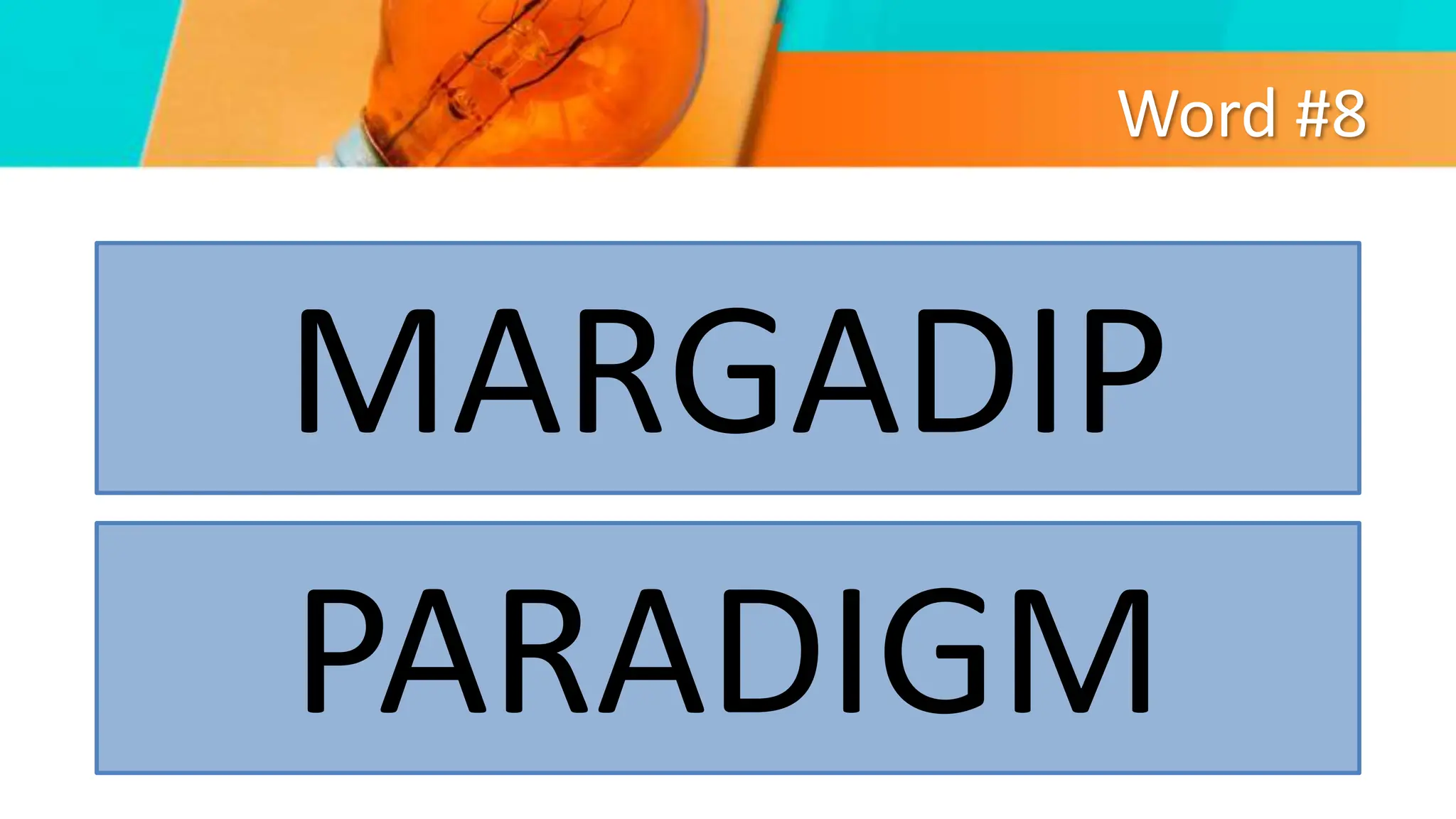
Word #8
MARGADIP
PARADIGM
Dominant Approaches and Ideas
in the Social Sciences
DISS
2nd quarter
Approach
•A way of looking at
the world.
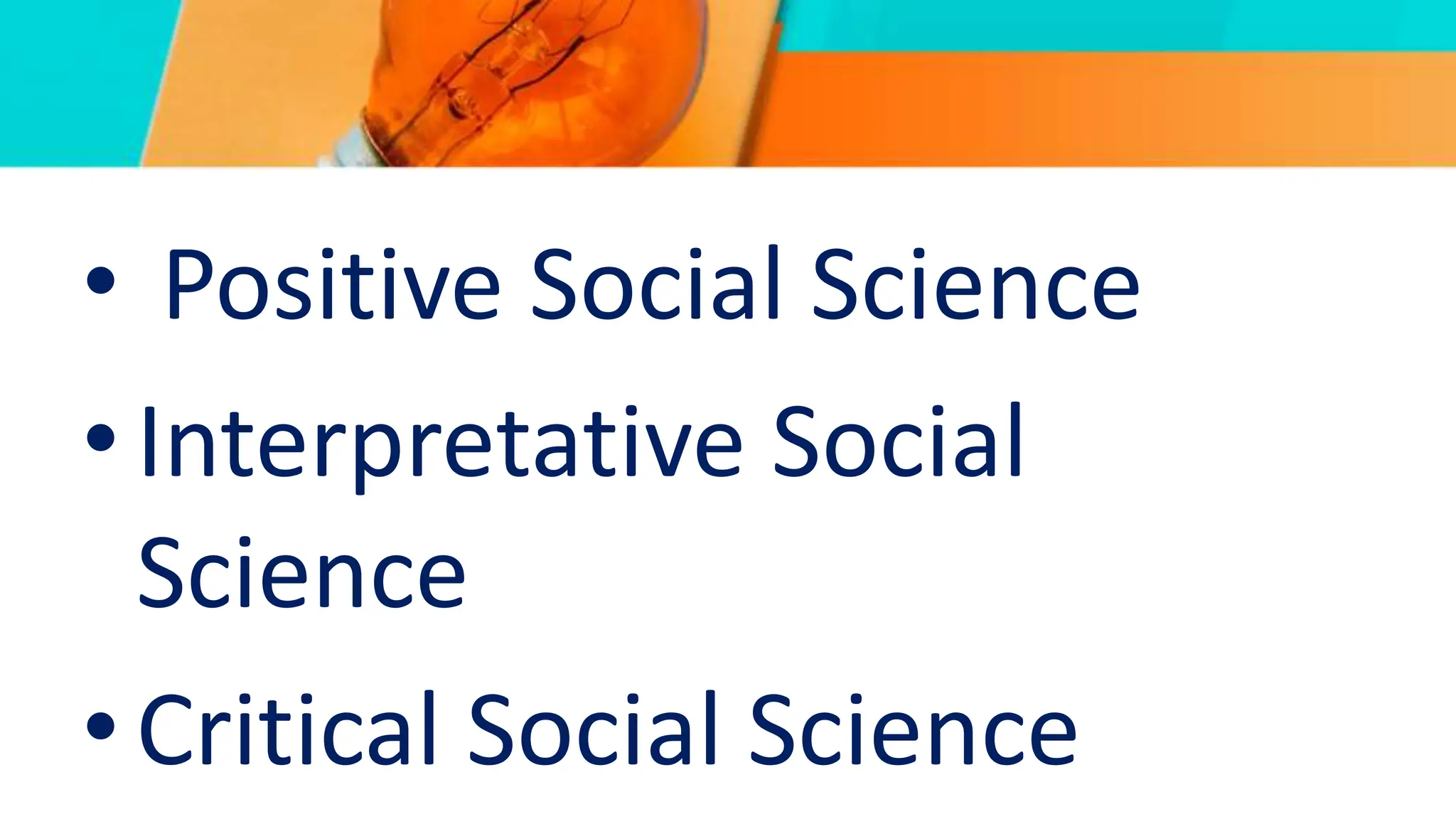
• Positive Social Science
• Interpretative Social
Science
• Critical Social Science
Positive Social Science
Positivism
• It refers to the philosophy of science
that asserts that the only source of
trustworthy knowledge is the
information obtained from rational
conducts and reports of sensory
experience.
• The concept of empirical
evidences, or the
established data
received are important.
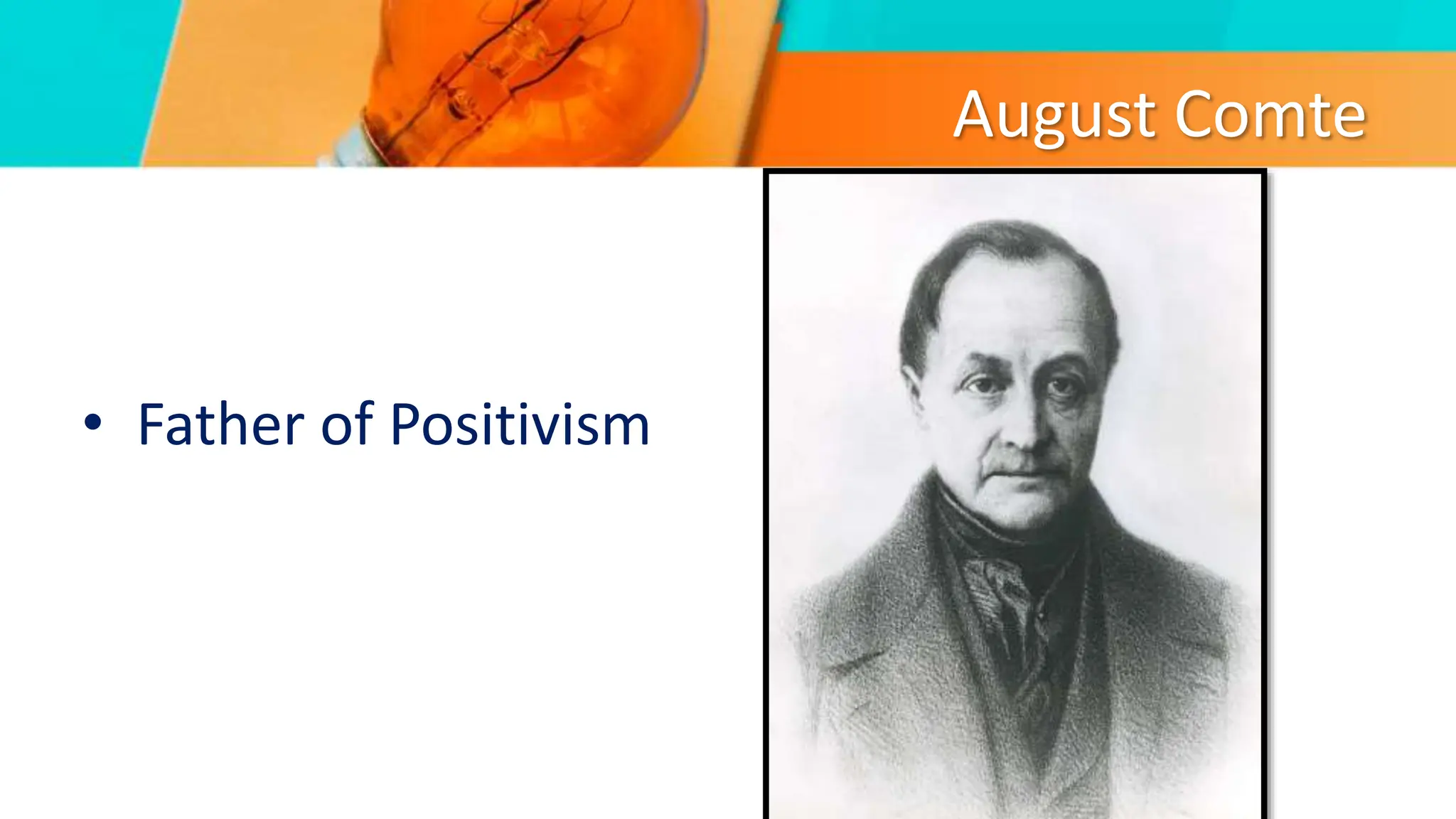
August Comte
• Father of Positivism
Positivism
•Asserts that every
claim can be
scientifically
verified.
According to W. Lawrence Neuman
• Among of all the different
paradigms in the social
sciences, positivism is
considered as the oldest and
the most extensively used
paradigm.
Paradigm
•A particular way of
observing, measuring
and understanding social
reality.
• Positivist research
prefers exact
quantitative data and
often uses experiments,
surveys and statistics.
Structural-functionalism
• It claims that parts of society all
contribute to the “functional”
operation of the system in
general.
• Social balance and
equilibrium are
created when all parts
of society are
operating well.
Structural-functionalism
• It is more concern with the
place of individuals in the
social order itself than with
the individual action.
“Everything
is
functional”
Historical context
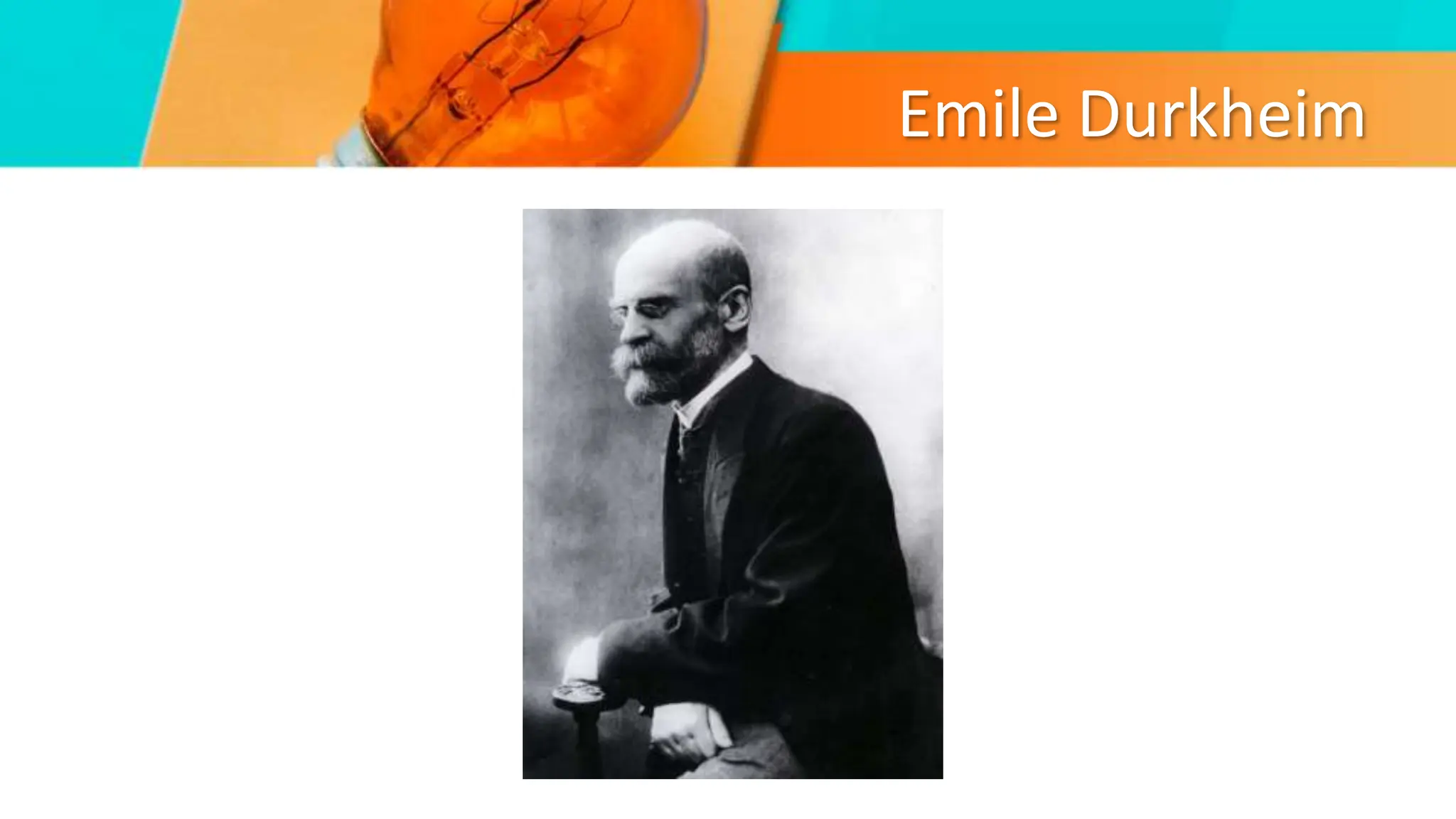
Emile Durkheim
• Born on April 15, 1858 and
died on November 15, 1917.
• He was a french sociologist
who is considered as the most
important foundation of
structural-functionalist ideas.
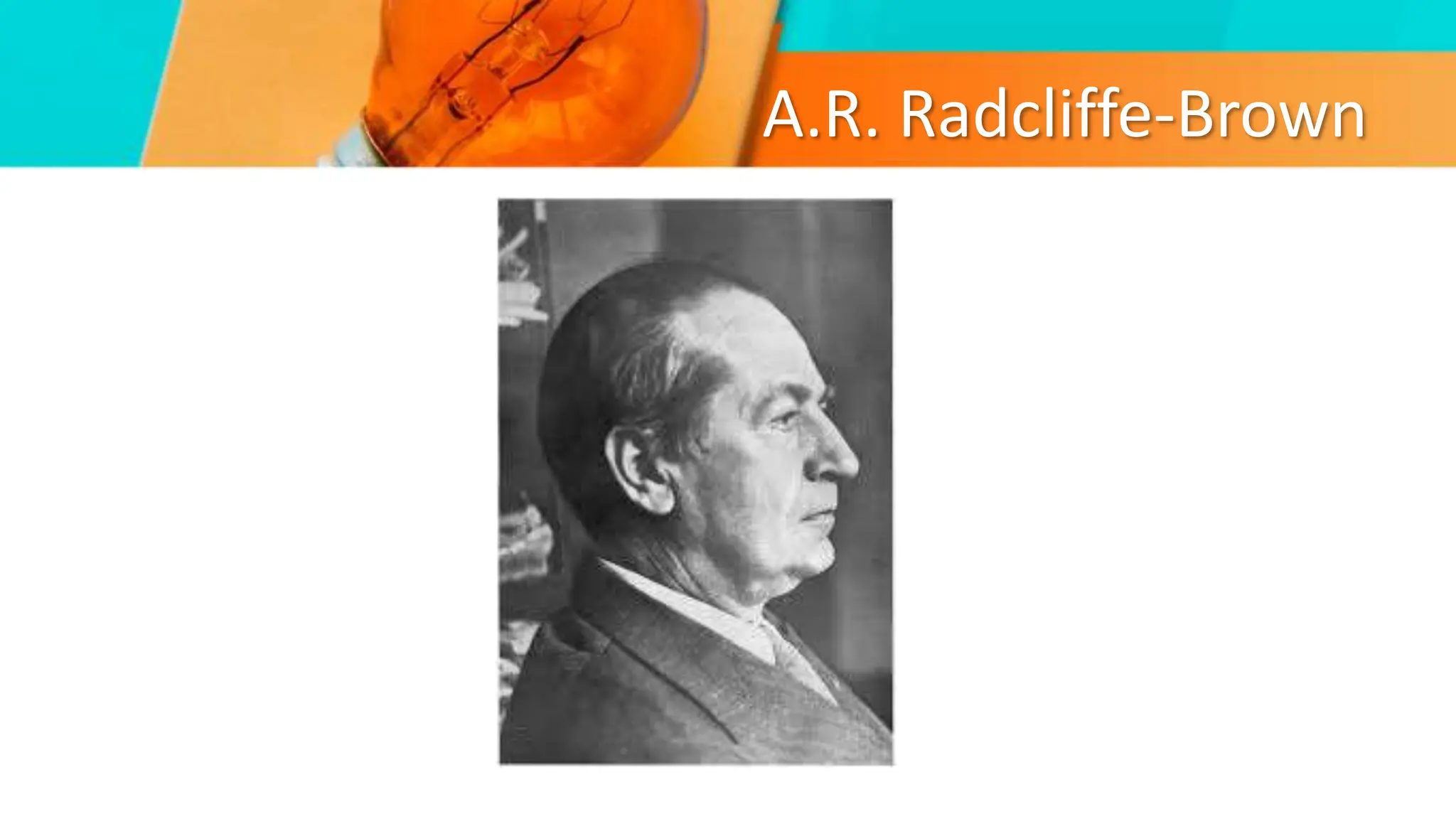
A.R. Radcliffe-Brown
• Born in Birmingham in 1881.
• Served as Director of
Education of Kingdom of
Tonga during World war 1.
• Proposed idea of single,
unified social science.
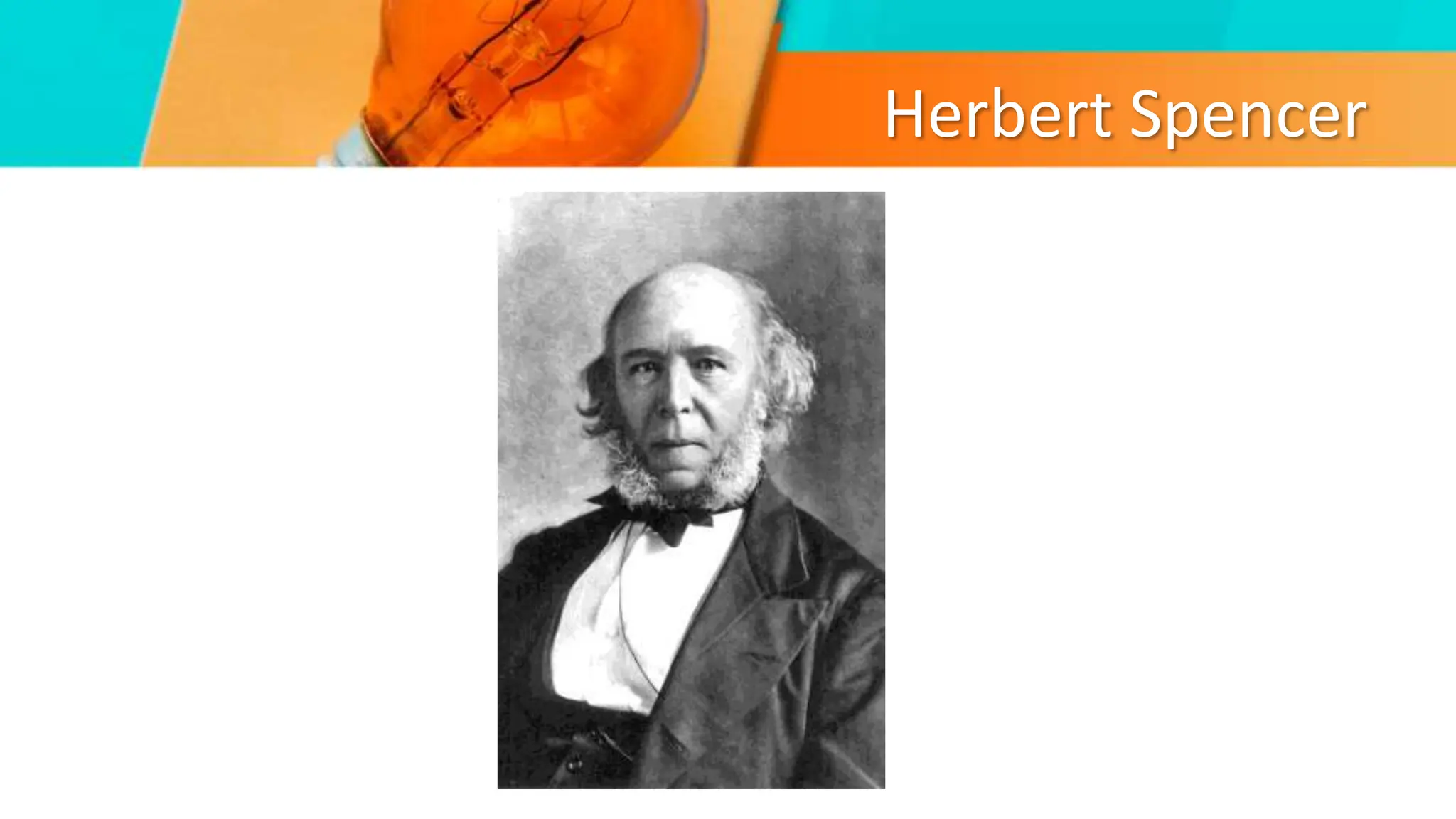
Herbert Spencer
• Born on 27 April 1820 – 8
December 1903
• He was an English
philosopher, biologist, anthropolo
gist, sociologist, and
prominent classical liberal
political theorist of the Victorian
era.
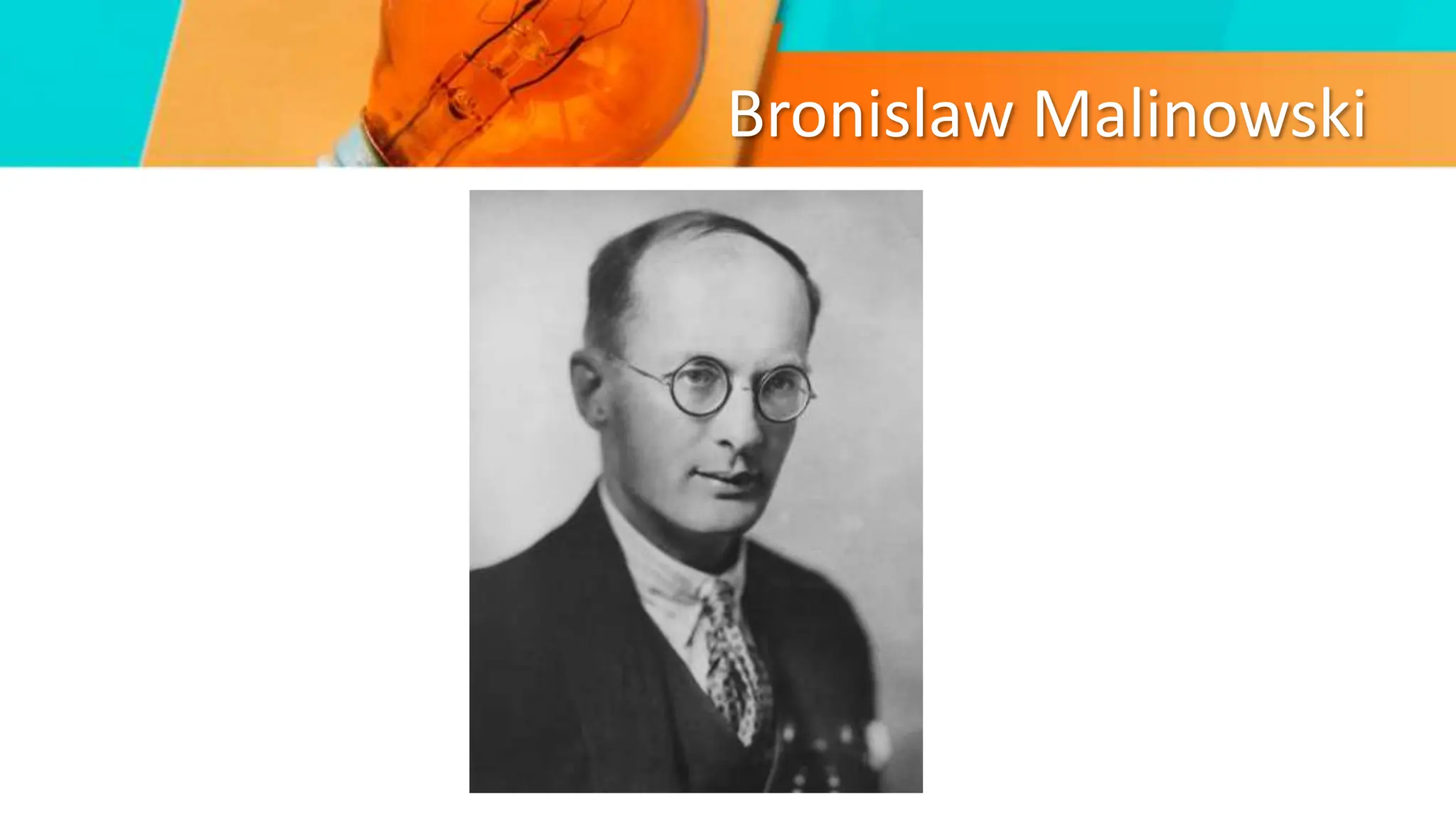
Bronislaw Malinowski
• Born in Cracow, Poland in
1884.
• He studied anthropology.
• With highest honor on
Austrian Empire.
Key concepts
Social Structure
• It subscribed that the
society is systematically
structured.
Government
Church
School
Media
Social Functions
• It refers to results or effects for
the operation of the society in
general.
Manifest and
Latent Functions
Social Dysfunctions
May also be manifest or
latent and have a
negative effect on
society.
Manifest dysfunctions
• Are expected disruptions of social
life.
• Example: Heavy Migration from rural
to urban areas might include
overpopulation and unemployment.
Latent dysfunctions
• The unexpected effect or
outcome of disruptions.
• Example: Rise of crime.
Strengths and
Criticisms of
Structural-
Functionalism
Strengths
• Existence of general agreement on
values and norms in society.
• Keeps order and harmony in society.
• Tends to seek stability and avoid
conflict.
Criticisms
• Being wary of social change due to its
focus on integration and consensus.
• Viewing society as static.
• Tendency to ignore inequality in terms of
race, gender and class which cause
conflict.
Group 5 Diss approach.pdf and approaches

Group 5 Diss approach.pdf and approaches