QQuuaalliittaattiivvee RReesseeaarrcchh MMeetthhooddss 
GGrroouunnddeedd TThheeoorryy
Grounded Theory 
o History 
 Introduced in 1967 by Glaser and 
Strauss in the book The Discovery of 
Grounded Theory 
- Challenged: 
1. divisions between theory and 
research 
2. the notion that qualitative research 
was a precursor to more “rigorous” 
quantitative research
Grounded Theory 
o History 
- Challenged: 
3. beliefs that qualitative research 
methods are impressionistic and 
unsystematic 
4. the separation of data collection 
and analysis 
5. assumptions that qualitative 
research could produce only 
descriptive cast studies rather than 
theory development
Grounded Theory 
o History 
 Strauss believed that the quality of a 
theory can be evaluated by the 
process by which that theory was 
constructed, which is in contrast to 
the scientific perspective that states 
the quality of a theory is determined 
by its ability to explain new data.
Grounded Theory 
o Defining 
Grounded Theory: refers to theory 
that is developed inductively from a 
corpus of data 
(Steve Borgatti: 
http://www.analytictech.com/mb870/introtoGT.htm)
Grounded Theory 
o Defining 
Grounded Theory: the systematic 
generation of theory from systematic 
research; a set of rigorous research 
procedures leading to the emergence 
of conceptual categories
Grounded Theory 
o Characteristics 
1. Purpose is to develop to theory 
about phenomenon of interest 
- should be grounded or rooted in 
observation 
2. Allows researcher to seek out and 
conceptualize latent social patterns 
and structures through constant 
comparisons
Grounded Theory 
o Characteristics 
3. Iterative (repetitive) process 
4. Rich description is important, but 
not primary focus 
5. Purposive sampling
Grounded Theory 
o Glaserian Hallmarks 
1. Researchers must find the core 
variable (the main concern and its 
recurrent solutions) as the first 
stage of the study, and limit the 
scope of their study to that
Grounded Theory 
o Glaserian Hallmarks 
2. Researcher must suspend existing 
beliefs/preconceptions, remain 
open, and trust in the emergence of 
concepts from the data
Grounded Theory 
o Glaserian Hallmarks 
Use constant comparison method to 
provide abstract conceptualizations 
and avoid descriptive 
interpretations 
- is the heart of GT 
- helps facilitate the discovery of 
patterns in the data
Grounded Theory 
o Stages/Steps 
1. Topic selection and preparation 
- minimize preconceptions 
- Do not do a literature review at 
this point! 
2. Data collection 
- a variety of methods can be used
Grounded Theory 
o Stages/Steps 
3. Analysis 
constant comparative method: 
involves comparing one segment of 
data with another to determine 
similarities and differences 
a. overall objective is to identify 
patterns in the data
Grounded Theory 
o Stages/Steps 
3. Analysis 
b. While you do comparisons you 
will be taking notes and coding 
coding: identifying categories and 
properties 
- can be done formally or 
informally
Grounded Theory 
o Stages/Steps 
3. Analysis 
c. Ask 3 general questions of the 
data: 
1. What is the data a study of? 
2. What category does this 
incident indicate? 
3. What is actually happening in 
the data?
Grounded Theory 
o Stages/Steps 
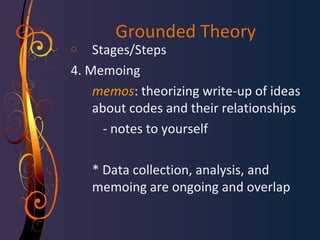
4. Memoing 
memos: theorizing write-up of ideas 
about codes and their relationships 
- notes to yourself 
* Data collection, analysis, and 
memoing are ongoing and overlap
Grounded Theory 
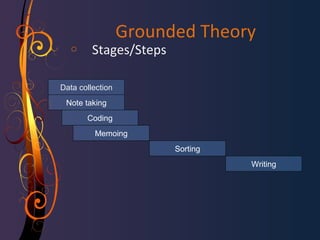
o Stages/Steps 
Data collection 
Note taking 
Coding 
Memoing 
Sorting 
Writing
Grounded Theory 
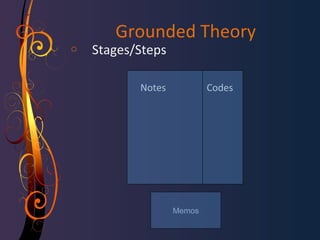
o Stages/Steps 
Notes Codes 
Memos
Grounded Theory 
o Stages/Steps 
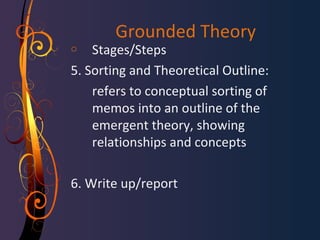
5. Sorting and Theoretical Outline: 
refers to conceptual sorting of 
memos into an outline of the 
emergent theory, showing 
relationships and concepts 
6. Write up/report
Grounded Theory 
o The Literature 
1. Avoid reading literature regarding 
the specifics of your study at first, 
rather read broadly 
2. Access relevant literature as it 
becomes relevant 
3. Can be used as data
Grounded Theory 
o Adequacy of Theory 
2 Criteria: 
1. The theory must fit the situation 
2. The theory must work
Grounded Theory 
o YouTube Videos 
• http://www.youtube.com/watch?v=7S1kJ0k3yHk 
• http://www.youtube.com/watch?v=OcpxaLQDnLk 
• http://www.youtube.com/watch?v=WwR9K17kul0 
• http://www.youtube.com/watch?v=r6RpQelvS1k

Grounded theory tropf

  • 1.
  • 2.
    Grounded Theory oHistory  Introduced in 1967 by Glaser and Strauss in the book The Discovery of Grounded Theory - Challenged: 1. divisions between theory and research 2. the notion that qualitative research was a precursor to more “rigorous” quantitative research
  • 3.
    Grounded Theory oHistory - Challenged: 3. beliefs that qualitative research methods are impressionistic and unsystematic 4. the separation of data collection and analysis 5. assumptions that qualitative research could produce only descriptive cast studies rather than theory development
  • 4.
    Grounded Theory oHistory  Strauss believed that the quality of a theory can be evaluated by the process by which that theory was constructed, which is in contrast to the scientific perspective that states the quality of a theory is determined by its ability to explain new data.
  • 5.
    Grounded Theory oDefining Grounded Theory: refers to theory that is developed inductively from a corpus of data (Steve Borgatti: http://www.analytictech.com/mb870/introtoGT.htm)
  • 6.
    Grounded Theory oDefining Grounded Theory: the systematic generation of theory from systematic research; a set of rigorous research procedures leading to the emergence of conceptual categories
  • 7.
    Grounded Theory oCharacteristics 1. Purpose is to develop to theory about phenomenon of interest - should be grounded or rooted in observation 2. Allows researcher to seek out and conceptualize latent social patterns and structures through constant comparisons
  • 8.
    Grounded Theory oCharacteristics 3. Iterative (repetitive) process 4. Rich description is important, but not primary focus 5. Purposive sampling
  • 9.
    Grounded Theory oGlaserian Hallmarks 1. Researchers must find the core variable (the main concern and its recurrent solutions) as the first stage of the study, and limit the scope of their study to that
  • 10.
    Grounded Theory oGlaserian Hallmarks 2. Researcher must suspend existing beliefs/preconceptions, remain open, and trust in the emergence of concepts from the data
  • 11.
    Grounded Theory oGlaserian Hallmarks Use constant comparison method to provide abstract conceptualizations and avoid descriptive interpretations - is the heart of GT - helps facilitate the discovery of patterns in the data
  • 12.
    Grounded Theory oStages/Steps 1. Topic selection and preparation - minimize preconceptions - Do not do a literature review at this point! 2. Data collection - a variety of methods can be used
  • 13.
    Grounded Theory oStages/Steps 3. Analysis constant comparative method: involves comparing one segment of data with another to determine similarities and differences a. overall objective is to identify patterns in the data
  • 14.
    Grounded Theory oStages/Steps 3. Analysis b. While you do comparisons you will be taking notes and coding coding: identifying categories and properties - can be done formally or informally
  • 15.
    Grounded Theory oStages/Steps 3. Analysis c. Ask 3 general questions of the data: 1. What is the data a study of? 2. What category does this incident indicate? 3. What is actually happening in the data?
  • 16.
    Grounded Theory oStages/Steps 4. Memoing memos: theorizing write-up of ideas about codes and their relationships - notes to yourself * Data collection, analysis, and memoing are ongoing and overlap
  • 17.
    Grounded Theory oStages/Steps Data collection Note taking Coding Memoing Sorting Writing
  • 18.
    Grounded Theory oStages/Steps Notes Codes Memos
  • 19.
    Grounded Theory oStages/Steps 5. Sorting and Theoretical Outline: refers to conceptual sorting of memos into an outline of the emergent theory, showing relationships and concepts 6. Write up/report
  • 20.
    Grounded Theory oThe Literature 1. Avoid reading literature regarding the specifics of your study at first, rather read broadly 2. Access relevant literature as it becomes relevant 3. Can be used as data
  • 21.
    Grounded Theory oAdequacy of Theory 2 Criteria: 1. The theory must fit the situation 2. The theory must work
  • 22.
    Grounded Theory oYouTube Videos • http://www.youtube.com/watch?v=7S1kJ0k3yHk • http://www.youtube.com/watch?v=OcpxaLQDnLk • http://www.youtube.com/watch?v=WwR9K17kul0 • http://www.youtube.com/watch?v=r6RpQelvS1k