Green micro-algae façade becomes reality in Hamburg
Last September we wrote about a project to develop a bioreactive façade using micro-algae: this is
now a reality at the BIQ house, the world’s first pilot project to showcase a bioreactive façade at the
International Building Exhibition (IBA) in Hamburg.
From theory to practice: the micro-algae façade is in
place
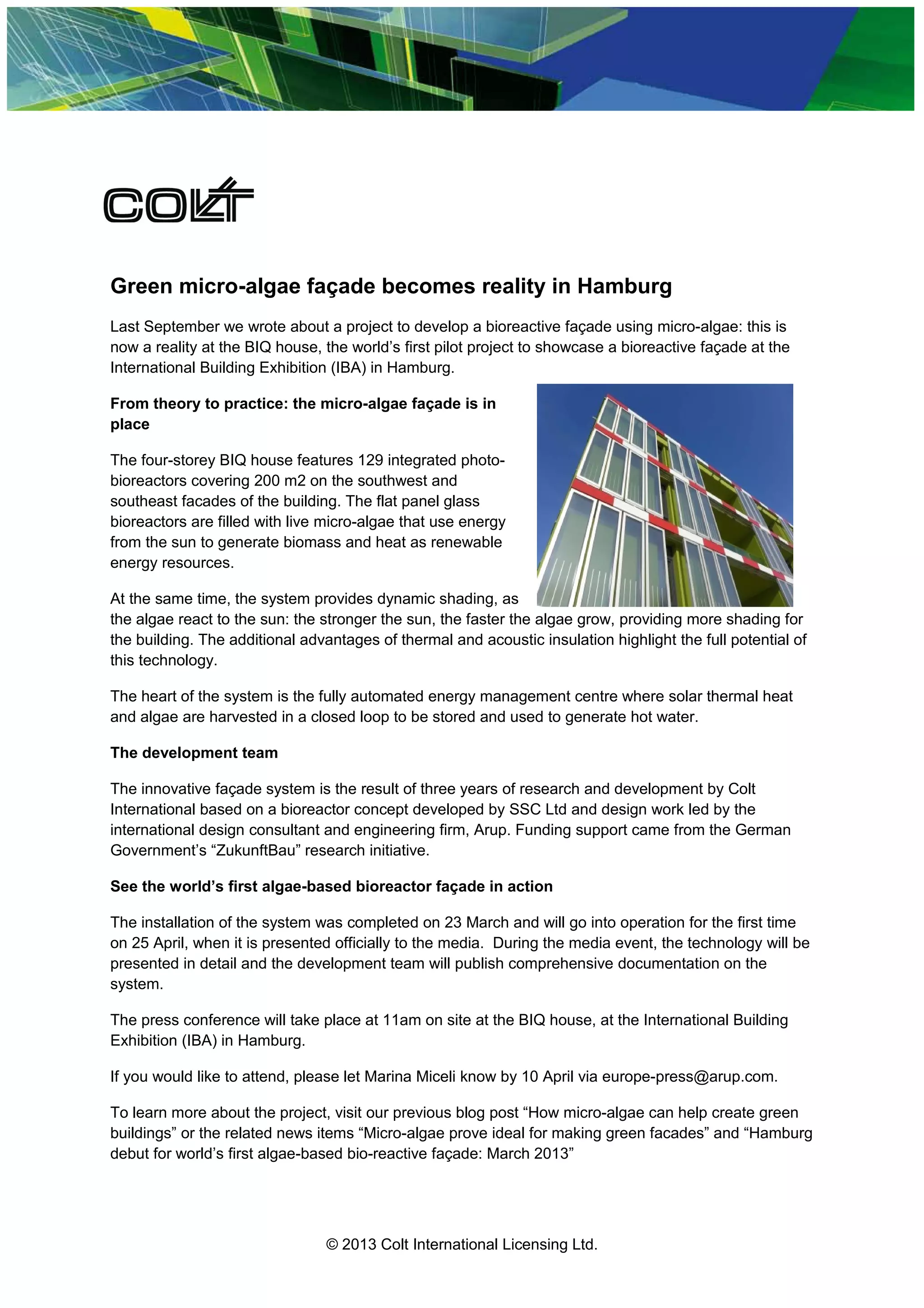
The four-storey BIQ house features 129 integrated photo-
bioreactors covering 200 m2 on the southwest and
southeast facades of the building. The flat panel glass
bioreactors are filled with live micro-algae that use energy
from the sun to generate biomass and heat as renewable
energy resources.
At the same time, the system provides dynamic shading, as
the algae react to the sun: the stronger the sun, the faster the algae grow, providing more shading for
the building. The additional advantages of thermal and acoustic insulation highlight the full potential of
this technology.
The heart of the system is the fully automated energy management centre where solar thermal heat
and algae are harvested in a closed loop to be stored and used to generate hot water.
The development team
The innovative façade system is the result of three years of research and development by Colt
International based on a bioreactor concept developed by SSC Ltd and design work led by the
international design consultant and engineering firm, Arup. Funding support came from the German
Government’s “ZukunftBau” research initiative.
See the world’s first algae-based bioreactor façade in action
The installation of the system was completed on 23 March and will go into operation for the first time
on 25 April, when it is presented officially to the media. During the media event, the technology will be
presented in detail and the development team will publish comprehensive documentation on the
system.
The press conference will take place at 11am on site at the BIQ house, at the International Building
Exhibition (IBA) in Hamburg.
If you would like to attend, please let Marina Miceli know by 10 April via europe-press@arup.com.
To learn more about the project, visit our previous blog post “How micro-algae can help create green
buildings” or the related news items “Micro-algae prove ideal for making green facades” and “Hamburg
debut for world’s first algae-based bio-reactive façade: March 2013”
© 2013 Colt International Licensing Ltd.
To find out more about the latest news and developments, visit our news page.
--------------------------------------------------------------------------------
Paul is a Technical Director for Colt, experienced in smoke control, HVAC, solar shading and louvre
systems.
Tags: Solar Shading, Sustainable buildings, Sustainable design, Bio Facade
© 2013 Colt International Licensing Ltd.

Green micro-algae façade becomes reality in Hamburg

  • 1.
    Green micro-algae façadebecomes reality in Hamburg Last September we wrote about a project to develop a bioreactive façade using micro-algae: this is now a reality at the BIQ house, the world’s first pilot project to showcase a bioreactive façade at the International Building Exhibition (IBA) in Hamburg. From theory to practice: the micro-algae façade is in place The four-storey BIQ house features 129 integrated photo- bioreactors covering 200 m2 on the southwest and southeast facades of the building. The flat panel glass bioreactors are filled with live micro-algae that use energy from the sun to generate biomass and heat as renewable energy resources. At the same time, the system provides dynamic shading, as the algae react to the sun: the stronger the sun, the faster the algae grow, providing more shading for the building. The additional advantages of thermal and acoustic insulation highlight the full potential of this technology. The heart of the system is the fully automated energy management centre where solar thermal heat and algae are harvested in a closed loop to be stored and used to generate hot water. The development team The innovative façade system is the result of three years of research and development by Colt International based on a bioreactor concept developed by SSC Ltd and design work led by the international design consultant and engineering firm, Arup. Funding support came from the German Government’s “ZukunftBau” research initiative. See the world’s first algae-based bioreactor façade in action The installation of the system was completed on 23 March and will go into operation for the first time on 25 April, when it is presented officially to the media. During the media event, the technology will be presented in detail and the development team will publish comprehensive documentation on the system. The press conference will take place at 11am on site at the BIQ house, at the International Building Exhibition (IBA) in Hamburg. If you would like to attend, please let Marina Miceli know by 10 April via europe-press@arup.com. To learn more about the project, visit our previous blog post “How micro-algae can help create green buildings” or the related news items “Micro-algae prove ideal for making green facades” and “Hamburg debut for world’s first algae-based bio-reactive façade: March 2013” © 2013 Colt International Licensing Ltd.
  • 2.
    To find outmore about the latest news and developments, visit our news page. -------------------------------------------------------------------------------- Paul is a Technical Director for Colt, experienced in smoke control, HVAC, solar shading and louvre systems. Tags: Solar Shading, Sustainable buildings, Sustainable design, Bio Facade © 2013 Colt International Licensing Ltd.