E-COMMERCE
PRESENTATION
page 01
page 02
WHAT IS
E-COMMERCE
E-commerce involves the
exchange of products or
services between businesses,
consumers, or both, facilitated
through platforms like
websites, mobile apps, or
online marketplaces.
Instead of physical stores, e-
commerce businesses have
virtual storefronts where
customers can browse and
purchase products or services
online.
E Commerce
page 03
SCOPE OF
E-COMMERCE
The scope of e-commerce refers to the vast range of activities
related to buying, selling, and conducting business
transactions over the internet. It includes:
1.
E-commerce Models: Various types of transactions such as Business-
to-Consumer (B2C), Business-to-Business (B2B), Consumer-to-
Consumer (C2C), and Consumer-to-Business (C2B).
2. Online Marketplaces: Platforms like Amazon, eBay, and niche
marketplaces where businesses and consumers interact.
3. Mobile Commerce (M-commerce): Shopping via mobile
devices and apps.
page 04
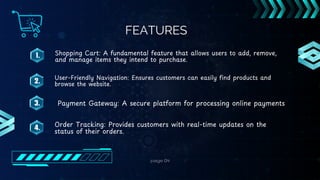
FEATURES
1.
2.
3.
4.
Shopping Cart: A fundamental feature that allows users to add, remove,
and manage items they intend to purchase.
User-Friendly Navigation: Ensures customers can easily find products and
browse the website.
Payment Gateway: A secure platform for processing online payments
Order Tracking: Provides customers with real-time updates on the
status of their orders.
page 05
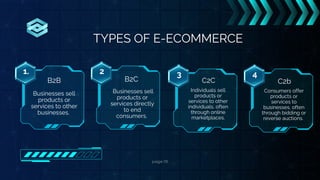
B2B
Businesses sell
products or
services to other
businesses.
1.
TYPES OF E-ECOMMERCE
B2C
Businesses sell
products or
services directly
to end
consumers.
2
C2C
Individuals sell
products or
services to other
individuals, often
through online
marketplaces.
3
C2b
Consumers offer
products or
services to
businesses, often
through bidding or
reverse auctions.
4
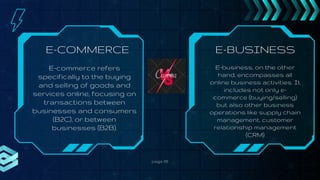
E-BUSINESS
page 06
E-COMMERCE
E-commerce refers
specifically to the buying
and selling of goods and
services online, focusing on
transactions between
businesses and consumers
(B2C), or between
businesses (B2B).
E-business, on the other
hand, encompasses all
online business activities. It
includes not only e-
commerce (buying/selling)
but also other business
operations like supply chain
management, customer
relationship management
(CRM)
page 07
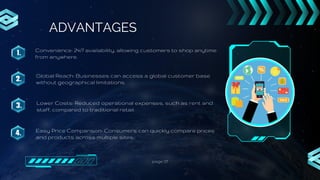
ADVANTAGES
1.
2.
3.
4.
Convenience: 24/7 availability, allowing customers to shop anytime
from anywhere.
Global Reach: Businesses can access a global customer base
without geographical limitations.
Lower Costs: Reduced operational expenses, such as rent and
staff, compared to traditional retail.
Easy Price Comparison: Consumers can quickly compare prices
and products across multiple sites.
page 08
DISADVANTAGES
1.
2.
3.
4.
Security Concerns: Online transactions can be
vulnerable to hacking, fraud, and data breaches.
Lack of Personal Interaction: No face-to-face
interaction with customers, which can impact customer
service and trust.
Shipping Costs and Delays: Delivery fees, longer
shipping times, and potential issues with returns can be
drawbacks for customers.
Shipping Costs and Delays: Delivery fees, longer
shipping times, and potential issues with returns can be
drawbacks for customers.
page 09
THANK YOU!

Green Blue Modern business Presentation.pdf

  • 1.
  • 2.
    page 02 WHAT IS E-COMMERCE E-commerceinvolves the exchange of products or services between businesses, consumers, or both, facilitated through platforms like websites, mobile apps, or online marketplaces. Instead of physical stores, e- commerce businesses have virtual storefronts where customers can browse and purchase products or services online. E Commerce
  • 3.
    page 03 SCOPE OF E-COMMERCE Thescope of e-commerce refers to the vast range of activities related to buying, selling, and conducting business transactions over the internet. It includes: 1. E-commerce Models: Various types of transactions such as Business- to-Consumer (B2C), Business-to-Business (B2B), Consumer-to- Consumer (C2C), and Consumer-to-Business (C2B). 2. Online Marketplaces: Platforms like Amazon, eBay, and niche marketplaces where businesses and consumers interact. 3. Mobile Commerce (M-commerce): Shopping via mobile devices and apps.
  • 4.
    page 04 FEATURES 1. 2. 3. 4. Shopping Cart:A fundamental feature that allows users to add, remove, and manage items they intend to purchase. User-Friendly Navigation: Ensures customers can easily find products and browse the website. Payment Gateway: A secure platform for processing online payments Order Tracking: Provides customers with real-time updates on the status of their orders.
  • 5.
    page 05 B2B Businesses sell productsor services to other businesses. 1. TYPES OF E-ECOMMERCE B2C Businesses sell products or services directly to end consumers. 2 C2C Individuals sell products or services to other individuals, often through online marketplaces. 3 C2b Consumers offer products or services to businesses, often through bidding or reverse auctions. 4
  • 6.
    E-BUSINESS page 06 E-COMMERCE E-commerce refers specificallyto the buying and selling of goods and services online, focusing on transactions between businesses and consumers (B2C), or between businesses (B2B). E-business, on the other hand, encompasses all online business activities. It includes not only e- commerce (buying/selling) but also other business operations like supply chain management, customer relationship management (CRM)
  • 7.
    page 07 ADVANTAGES 1. 2. 3. 4. Convenience: 24/7availability, allowing customers to shop anytime from anywhere. Global Reach: Businesses can access a global customer base without geographical limitations. Lower Costs: Reduced operational expenses, such as rent and staff, compared to traditional retail. Easy Price Comparison: Consumers can quickly compare prices and products across multiple sites.
  • 8.
    page 08 DISADVANTAGES 1. 2. 3. 4. Security Concerns:Online transactions can be vulnerable to hacking, fraud, and data breaches. Lack of Personal Interaction: No face-to-face interaction with customers, which can impact customer service and trust. Shipping Costs and Delays: Delivery fees, longer shipping times, and potential issues with returns can be drawbacks for customers. Shipping Costs and Delays: Delivery fees, longer shipping times, and potential issues with returns can be drawbacks for customers.
  • 9.