Download to read offline
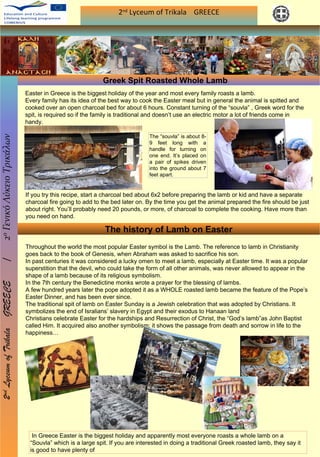
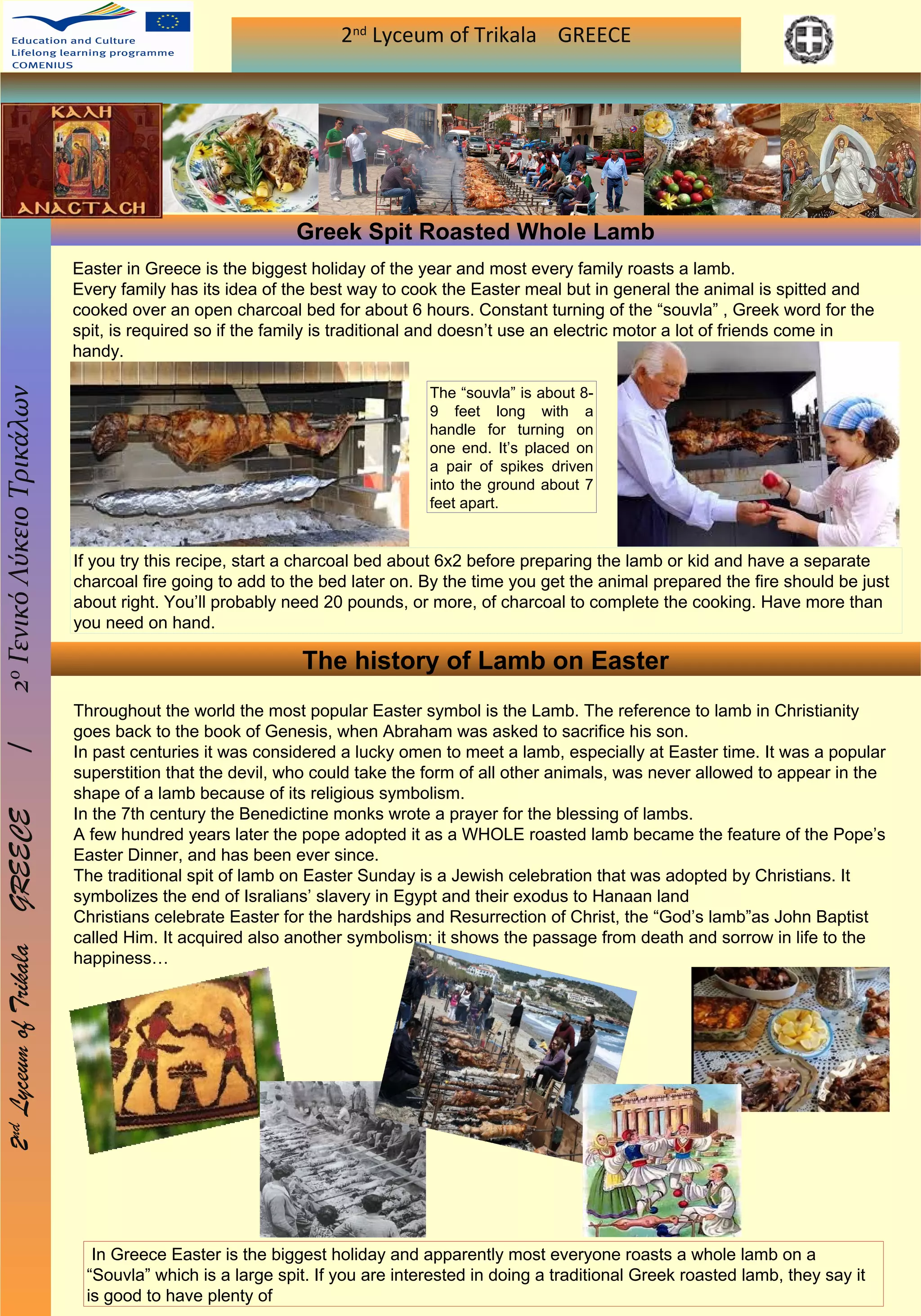

Greek families traditionally roast whole lamb for Easter over an open charcoal fire. The lamb is placed on a large spit called a "souvla" that is about 8-9 feet long and turned constantly over 6 hours of cooking. Roasting whole lamb on Easter symbolizes religious meanings in both Jewish and Christian traditions, representing the end of slavery in Egypt and the hardships and resurrection of Jesus Christ. In Greece, Easter is the largest holiday and roasting whole lamb on a spit is a popular tradition.


