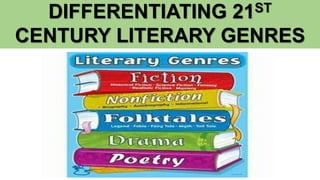
DIFFERENTIATING 21ST
CENTURY LITERARY GENRES
REVIEW: Determine what is being
described in each statement
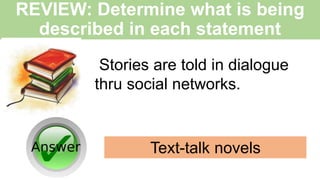
Stories are told in dialogue
thru social networks.
Text-talk novels
REVIEW: Determine what is being
described in each statement
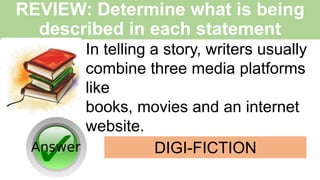
In telling a story, writers usually
combine three media platforms
like
books, movies and an internet
website.
DIGI-FICTION
REVIEW: Determine what is being
described in each statement
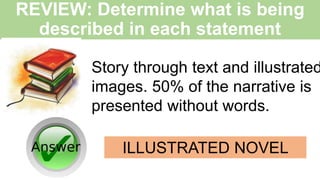
Story through text and illustrated
images. 50% of the narrative is
presented without words.
ILLUSTRATED NOVEL
REVIEW: Determine what is being
described in each statement
It is a humorous fictional genre
dealing with issues on modern
womanhood.
CHICKLIT
REVIEW: Determine what is being
described in each statement
Comic books originally published
in Japan.
MANGA
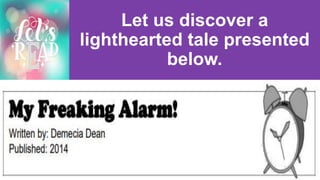
Let us discover a
lighthearted tale presented
below.
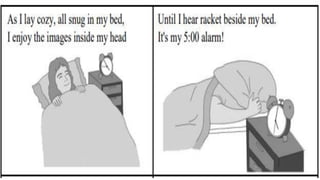
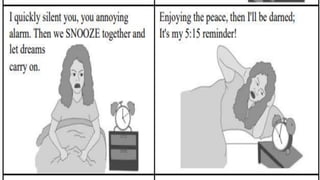
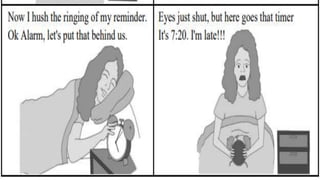
1. How does the speaker feel whenever it rings?
2. How did she react when she realized she was
already late?
3. Would you react the same way, if this happens
to you?
4. What 21st century literary genre is presented
in the story?
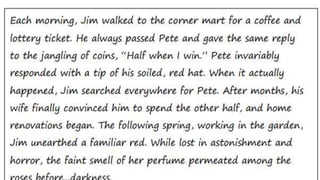
Now, let us explore a story
that is more serious than
the first one.
1. What is Pete always wearing whenever Jim sees him?
2. After Jim won, Pete went missing. Who convinced Jim
to spend Pete’s
half of the money for house renovations?
3. What is the “familiar red” Jim unearthed in the garden
one spring that
made him horrified?
4. What happened to Jim in the end?4. What 21st century
literary genre is presented in the story?
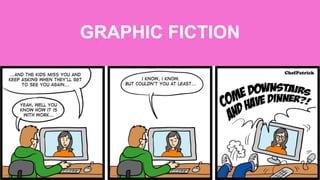
GRAPHIC FICTION
Graphic fiction or a graphic novel
-is a comic book narrative that is
equivalent in form and dimension to the prose novel
(Campbell 2009). The pictures are arranged in sequenced
in image panels and
dialogues are written in speech bubbles. The illustrations
allow the
readers to imagine and experience the characters and
events in the
story.
Here are some of the features of graphic fiction or
graphic novel according to Singh (2012).
1. Autographic forms are the marks of author’s
handwriting which
creates an impact that the whole novel is a
manuscript and thus
provides a sense of intimacy.
2. Graphic novels encourage interactivity in the
minds of the reader as
he fills in the blanks between image panels.
Here are some of the features of graphic fiction or
graphic novel according to Singh (2012).
3. Filling in the blanks between image panels makes
the reader imagine
the actions portrayed in the story.
4. The language, syntax and meaning of a graphic
novel spring primarily
through the relationship between images than
words.
5. Graphic fiction combines book and screen.
Some of the examples of graphic
novels are the following:
1. “In the Shadow of No Tower: 9/11” by Art Spiegelmen in 2004
which tells the story about the terrorist attack on September 11 in
America. This also depicts the traumatic and tragic experiences of
American people during the 9/11 terrorist attack.
2. “The Barn Owl’s Wondrous Capers” by Sarnath Banerjee in 2009
portrays 18th century Calcutta exploiting the myth of the “Wandering
Jew”.
3. “Louis Riel” by Chester Brown in 2003 is a fictionalized violent
rebellion in the 19th Century on the Canadian praire who led by Riel.
FLASH FICTION
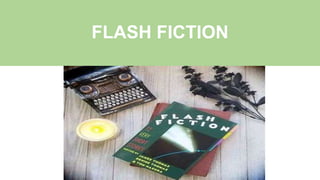
FLASH FICTION
• is imaginative literature of extreme brevity. It could
range
• from a word to a thousand (Gacusan 2018). It is
known as micro
• stories, postcard fiction, nanotales and short
shorts.
According to Sustana (2020), most of the flash fictions
have these common characteristics.
1. Brevity. Flash fiction presents the story with fewest
words as possible.
2. Complete plot. Flash fiction emphasizes the
development of plot. It has a beginning, middle and
ending of the story.
3. Surprising ending. The successful hallmark of a
flash fiction is its twist at the end of the story.
Here some of the flash fictions
● “Angels and Blueberries” by Tara Campbell is a
story of various explanations for the color of the sky
that involves angels and blueberries. First lines:
“Why is the sky blue?” you ask. Well, it all depends
on who’s answering.
● “Taylor Swift” by Hugh Behm-Steinberg tells a
weird story of how anyone can order a perfectly
clone of Taylor Swift at his doorstep. First line: You’re
in love; it’s great, you swipe on your phone and
order: the next day a Taylor Swift clone shows up at
your house.
● “Unnecessary Things” by Tatyana Tolstaya is a story of
finding an old and torn teddy bear, “unnecessary things”
(items that do not serve any useful purpose), that she
adored as a child. First lines: This Teddy bear once had
amber eyes made from special glass — each one had a
pupil and an iris. The bear itself was gray and stiff, with wiry
fur. I adored him.
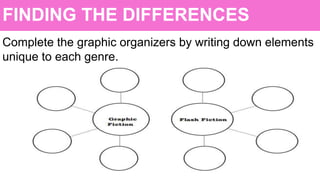
FINDING THE DIFFERENCES
Complete the graphic organizers by writing down elements
unique to each genre.
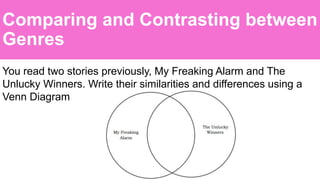
Comparing and Contrasting between
Genres
You read two stories previously, My Freaking Alarm and The
Unlucky Winners. Write their similarities and differences using a
Venn Diagram

GRAPHIC-FICTION-VS-FLASH-FICTION.pptx

  • 1.
  • 2.
    REVIEW: Determine whatis being described in each statement Stories are told in dialogue thru social networks. Text-talk novels
  • 3.
    REVIEW: Determine whatis being described in each statement In telling a story, writers usually combine three media platforms like books, movies and an internet website. DIGI-FICTION
  • 4.
    REVIEW: Determine whatis being described in each statement Story through text and illustrated images. 50% of the narrative is presented without words. ILLUSTRATED NOVEL
  • 5.
    REVIEW: Determine whatis being described in each statement It is a humorous fictional genre dealing with issues on modern womanhood. CHICKLIT
  • 6.
    REVIEW: Determine whatis being described in each statement Comic books originally published in Japan. MANGA
  • 7.
    Let us discovera lighthearted tale presented below.
  • 11.
    1. How doesthe speaker feel whenever it rings? 2. How did she react when she realized she was already late? 3. Would you react the same way, if this happens to you? 4. What 21st century literary genre is presented in the story?
  • 12.
    Now, let usexplore a story that is more serious than the first one.
  • 14.
    1. What isPete always wearing whenever Jim sees him? 2. After Jim won, Pete went missing. Who convinced Jim to spend Pete’s half of the money for house renovations? 3. What is the “familiar red” Jim unearthed in the garden one spring that made him horrified? 4. What happened to Jim in the end?4. What 21st century literary genre is presented in the story?
  • 15.
  • 16.
    Graphic fiction ora graphic novel -is a comic book narrative that is equivalent in form and dimension to the prose novel (Campbell 2009). The pictures are arranged in sequenced in image panels and dialogues are written in speech bubbles. The illustrations allow the readers to imagine and experience the characters and events in the story.
  • 17.
    Here are someof the features of graphic fiction or graphic novel according to Singh (2012). 1. Autographic forms are the marks of author’s handwriting which creates an impact that the whole novel is a manuscript and thus provides a sense of intimacy. 2. Graphic novels encourage interactivity in the minds of the reader as he fills in the blanks between image panels.
  • 18.
    Here are someof the features of graphic fiction or graphic novel according to Singh (2012). 3. Filling in the blanks between image panels makes the reader imagine the actions portrayed in the story. 4. The language, syntax and meaning of a graphic novel spring primarily through the relationship between images than words. 5. Graphic fiction combines book and screen.
  • 19.
    Some of theexamples of graphic novels are the following: 1. “In the Shadow of No Tower: 9/11” by Art Spiegelmen in 2004 which tells the story about the terrorist attack on September 11 in America. This also depicts the traumatic and tragic experiences of American people during the 9/11 terrorist attack. 2. “The Barn Owl’s Wondrous Capers” by Sarnath Banerjee in 2009 portrays 18th century Calcutta exploiting the myth of the “Wandering Jew”. 3. “Louis Riel” by Chester Brown in 2003 is a fictionalized violent rebellion in the 19th Century on the Canadian praire who led by Riel.
  • 20.
  • 21.
    FLASH FICTION • isimaginative literature of extreme brevity. It could range • from a word to a thousand (Gacusan 2018). It is known as micro • stories, postcard fiction, nanotales and short shorts.
  • 22.
    According to Sustana(2020), most of the flash fictions have these common characteristics. 1. Brevity. Flash fiction presents the story with fewest words as possible. 2. Complete plot. Flash fiction emphasizes the development of plot. It has a beginning, middle and ending of the story. 3. Surprising ending. The successful hallmark of a flash fiction is its twist at the end of the story.
  • 23.
    Here some ofthe flash fictions
  • 24.
    ● “Angels andBlueberries” by Tara Campbell is a story of various explanations for the color of the sky that involves angels and blueberries. First lines: “Why is the sky blue?” you ask. Well, it all depends on who’s answering. ● “Taylor Swift” by Hugh Behm-Steinberg tells a weird story of how anyone can order a perfectly clone of Taylor Swift at his doorstep. First line: You’re in love; it’s great, you swipe on your phone and order: the next day a Taylor Swift clone shows up at your house.
  • 25.
    ● “Unnecessary Things”by Tatyana Tolstaya is a story of finding an old and torn teddy bear, “unnecessary things” (items that do not serve any useful purpose), that she adored as a child. First lines: This Teddy bear once had amber eyes made from special glass — each one had a pupil and an iris. The bear itself was gray and stiff, with wiry fur. I adored him.
  • 26.
    FINDING THE DIFFERENCES Completethe graphic organizers by writing down elements unique to each genre.
  • 27.
    Comparing and Contrastingbetween Genres You read two stories previously, My Freaking Alarm and The Unlucky Winners. Write their similarities and differences using a Venn Diagram