
Graph-based cluster labeling using
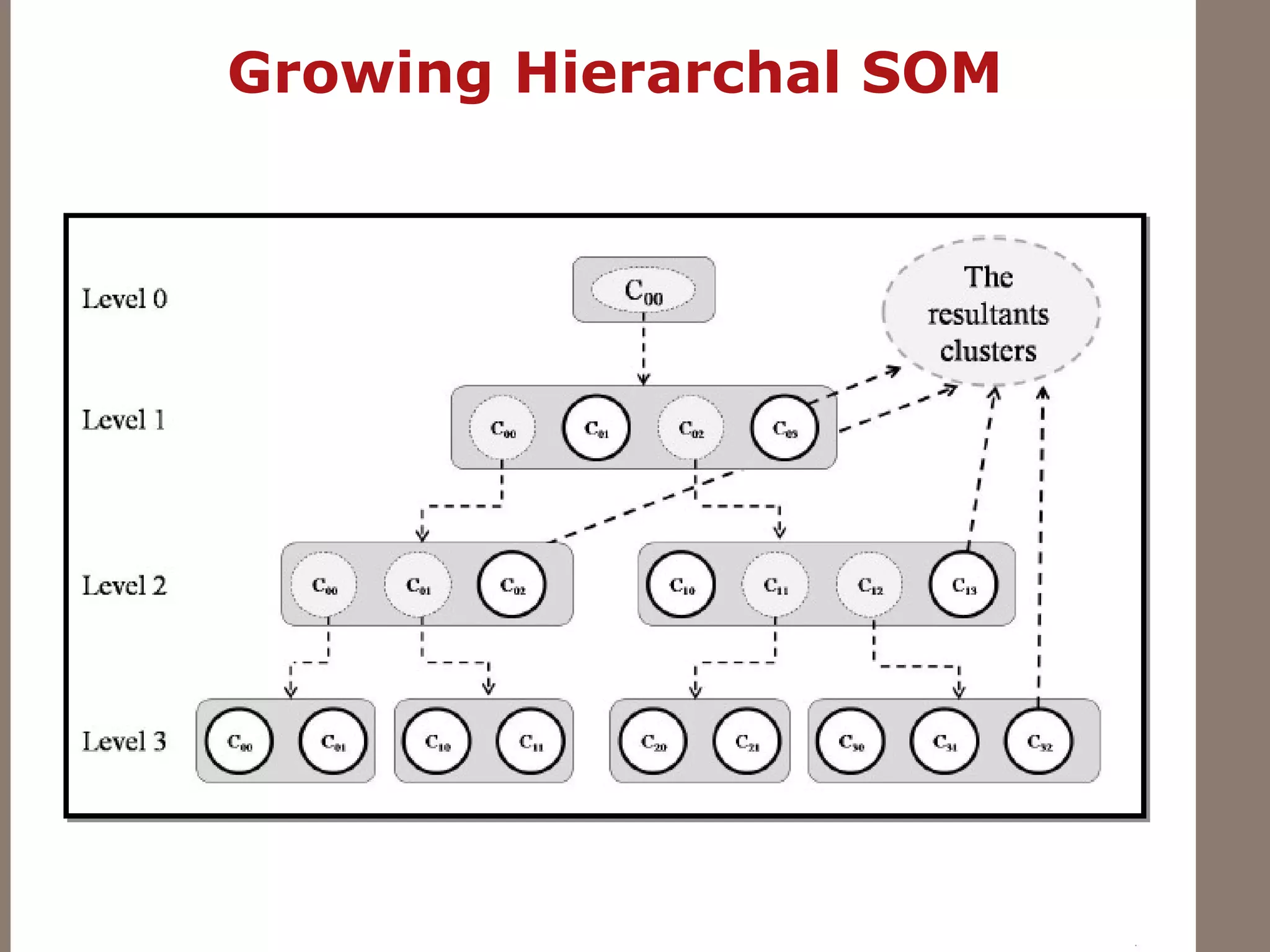
Growing Hierarchal SOM
Mahmoud Rafeek Alfarra
College Of Science & Technology
m.farra@cst.ps
The second International conference of Applied Science & natural
Ayman Shehda Ghabayen
College Of Science & Technology
a.ghabayen@cst.ps
Prepared by:
Out Line
 Labeling, What and why ?
 Graph based Representation
 Growing Hierarchal SOM
 Extraction of labeles of clusters
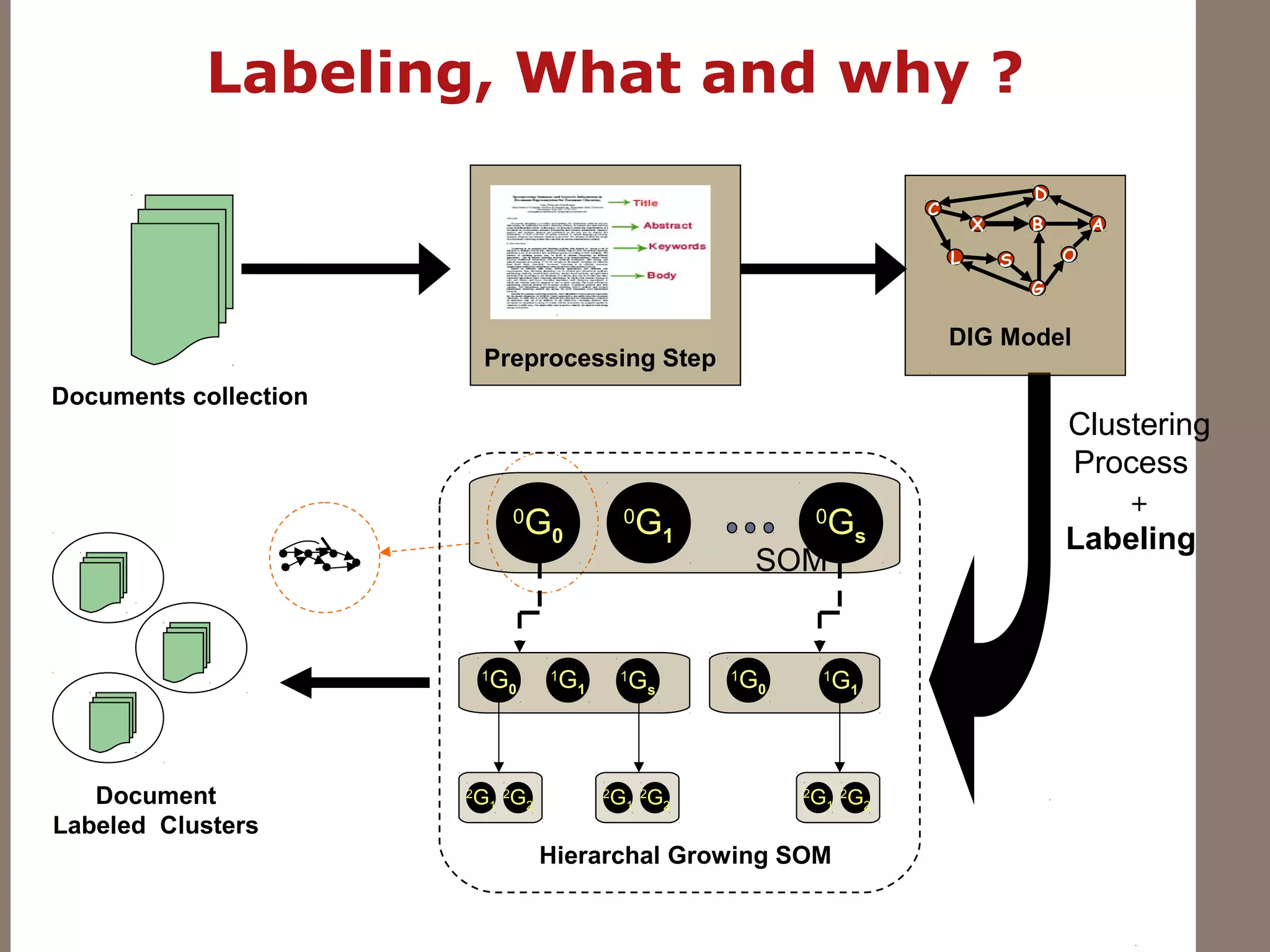
Labeling, What and why ?
 Cluster labeling: process tries to select
descriptive labels (Key words) for the clusters
obtained through a clustering algorithm.
Labeling, What and why ?
Cluster labeling is an increasingly important
task that:
1. The document collections grow larger.
2. Help To: work with processing of news,
email threads, blogs, reviews, and
search results
Labeling, What and why ?
Documents collection
Document
Labeled Clusters
Preprocessing Step
DIG Model
X B
S OL
A
G
C
D
Clustering
Process
+
Labeling
0
G0
0
G1
0
Gs
SOM
1
G0
1
G1
1
Gs
2
G1
2
G2
Hierarchal Growing SOM
2
G1
2
G2
1
G0
1
G1
2
G1
2
G2
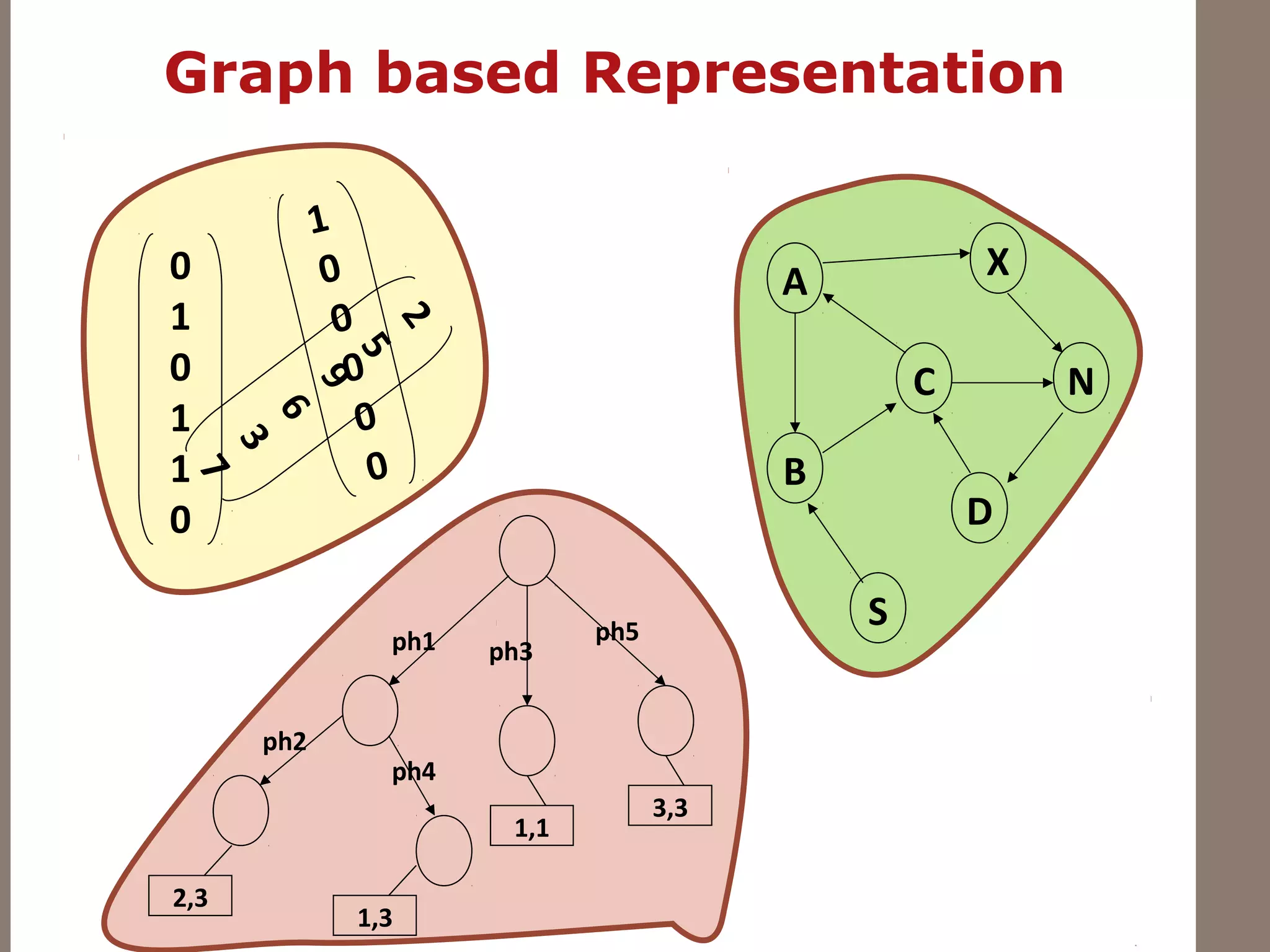
Graph based Representation
0
1
0
1
1
0
2
5
9
6
3
7
1
0
0
0
0
0
A
B
X
D
NC
S
2,3
3,3
1,3
1,1
ph1
ph2
ph3
ph4
ph5
Graph based Representation
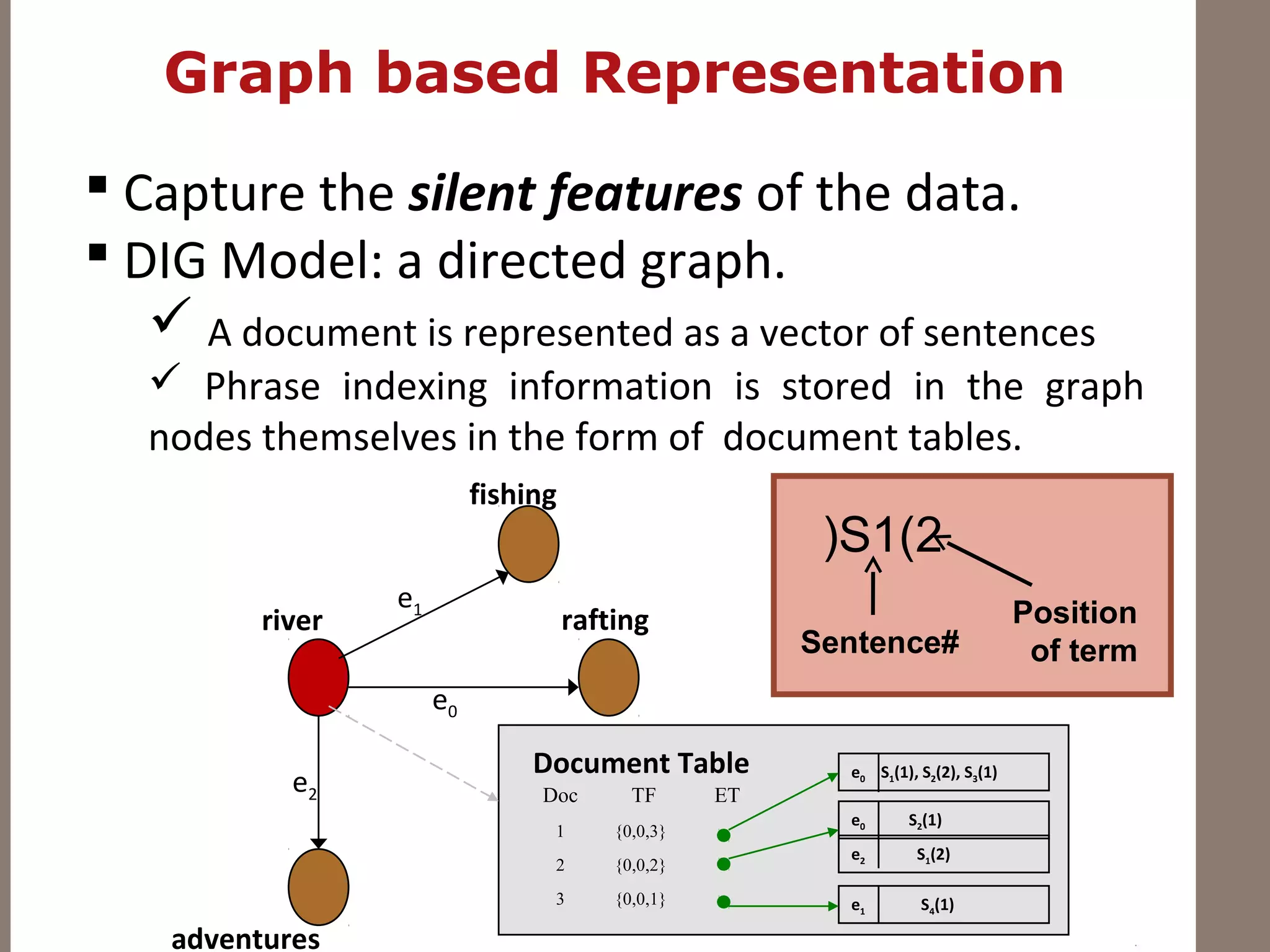
 Capture the silent features of the data.
 DIG Model: a directed graph.
 A document is represented as a vector of sentences
 Phrase indexing information is stored in the graph
nodes themselves in the form of document tables.
e1
e0
e2
rafting
adventures
river
Document Table e0 S1(1), S2(2), S3(1)
e0 S2(1)
e2 S1(2)
e1 S4(1)
fishing
Doc TF ET
1 {0,0,3}
2 {0,0,2}
3 {0,0,1}
S1(2(
#Sentence
Position
of term
Graph based Representation
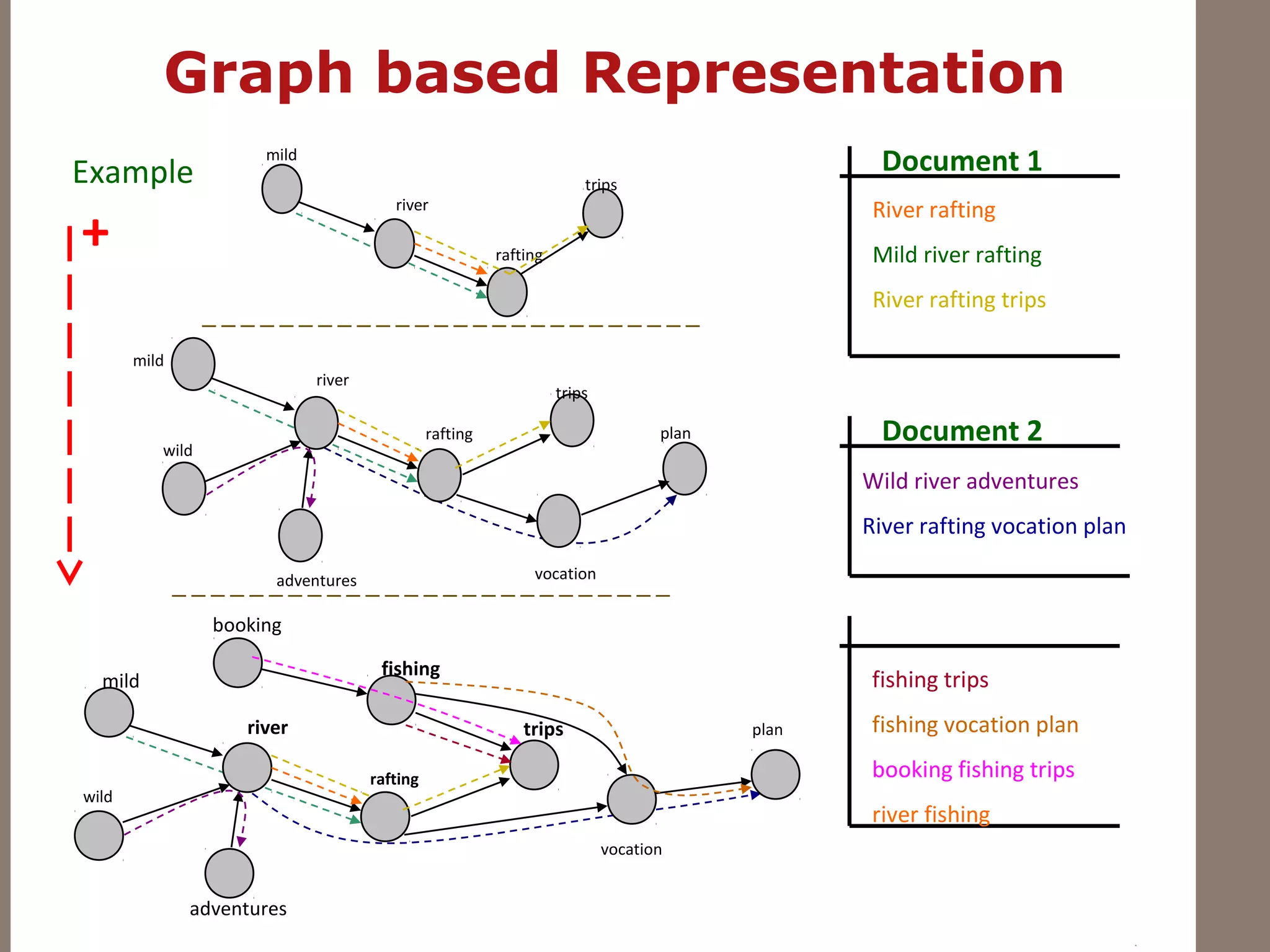
Example Document 1
River rafting
Mild river rafting
River rafting trips
Document 2
Wild river adventures
River rafting vocation plan
fishing trips
fishing vocation plan
booking fishing trips
river fishing
mild
river
rafting
trips
mild
river
rafting
trips
wild
adventures vocation
plan
wild
plan
mild
river
rafting
trips
adventures
vocation
booking
fishing
+
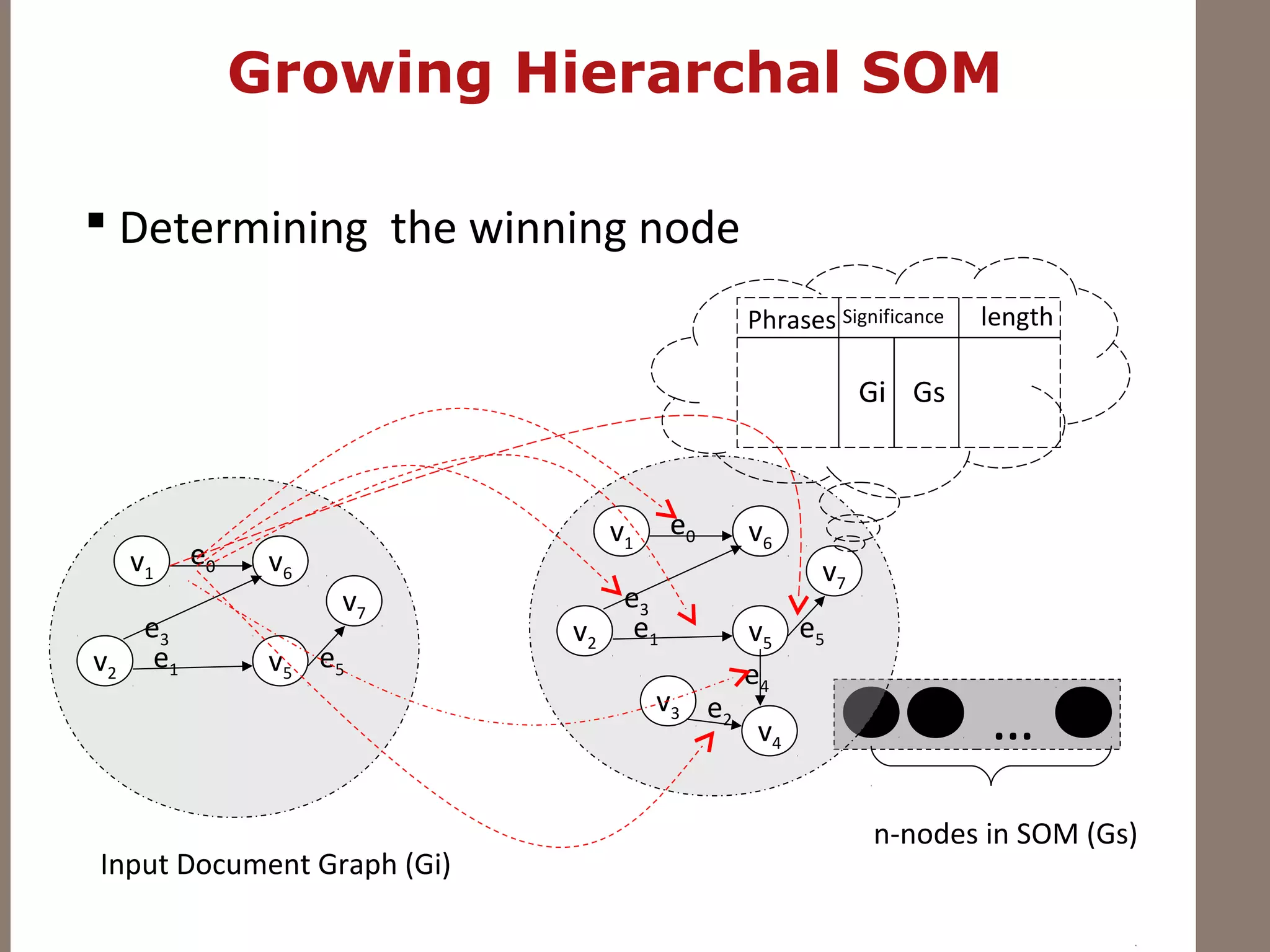
Growing Hierarchal SOM
 Determining the winning node
…
v1
v2
v3
v5
v4
v7
e0 v6
e0
e1 e5
e3
e2
e4
n-nodes in SOM (Gs)
v1
v2 v5
v7
e0 v6
e0
e1 e5
e3
Input Document Graph (Gi)
Phrases Significance
Gi Gs
length
Gi
Growing Hierarchal SOM
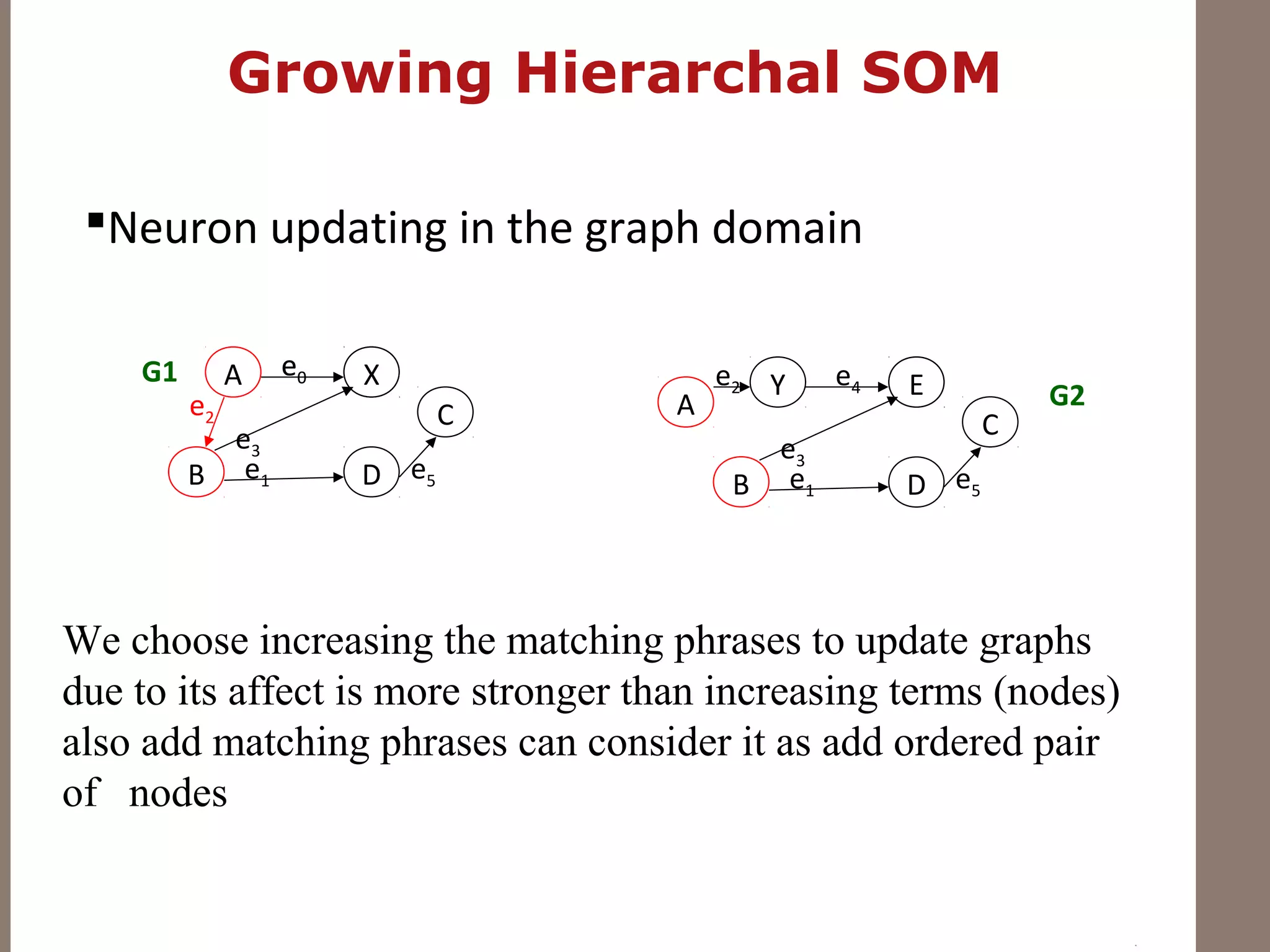
Neuron updating in the graph domain
A
B D
C
e0 Xe0
e1 e5
e3
Y
B D
C
Ee4
e1 e5
e3
A
e2
e2
G1
G2
We choose increasing the matching phrases to update graphs
due to its affect is more stronger than increasing terms (nodes)
also add matching phrases can consider it as add ordered pair
of nodes
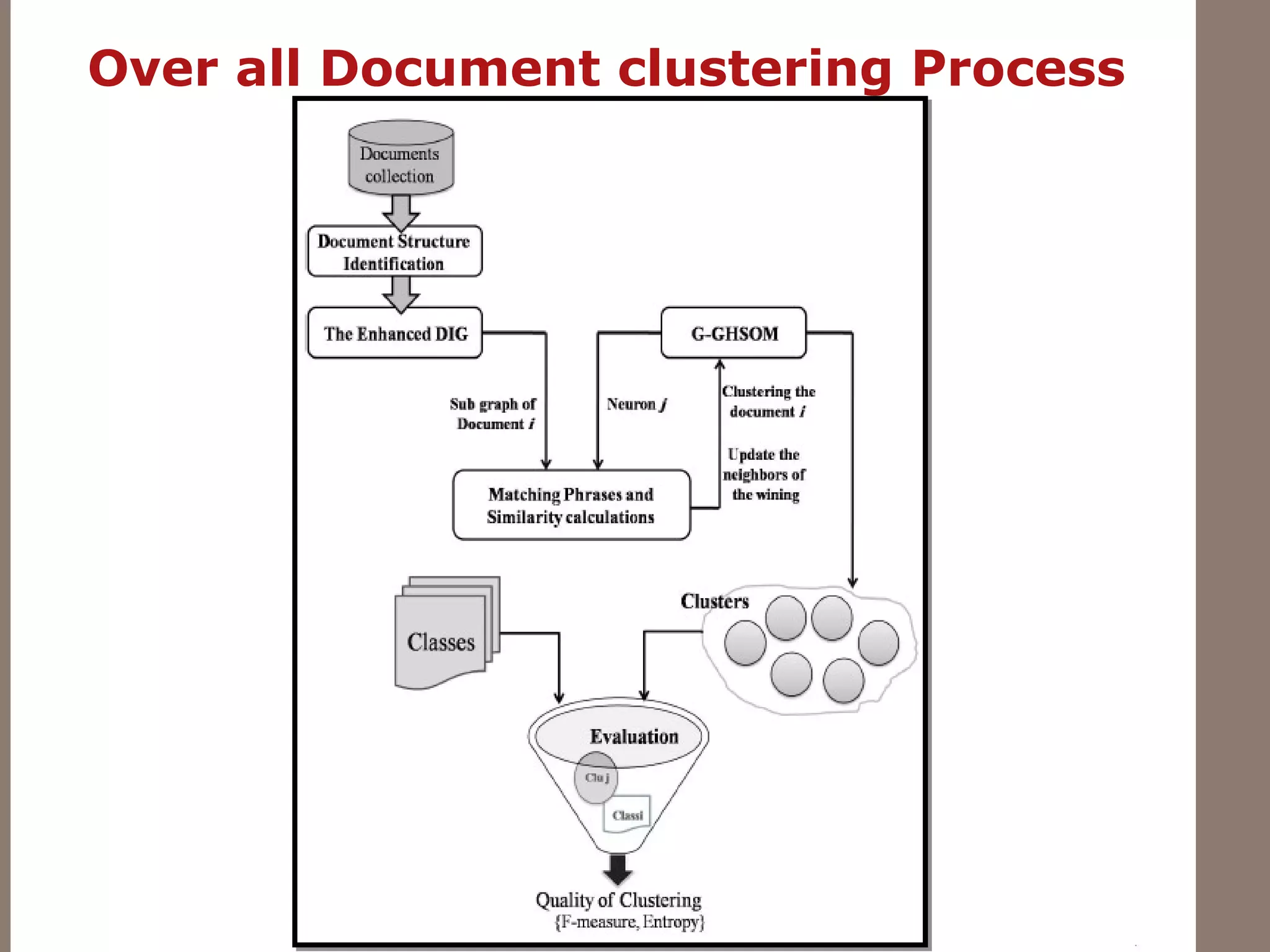
Over all Document clustering Process
Extracting labeling of clusters
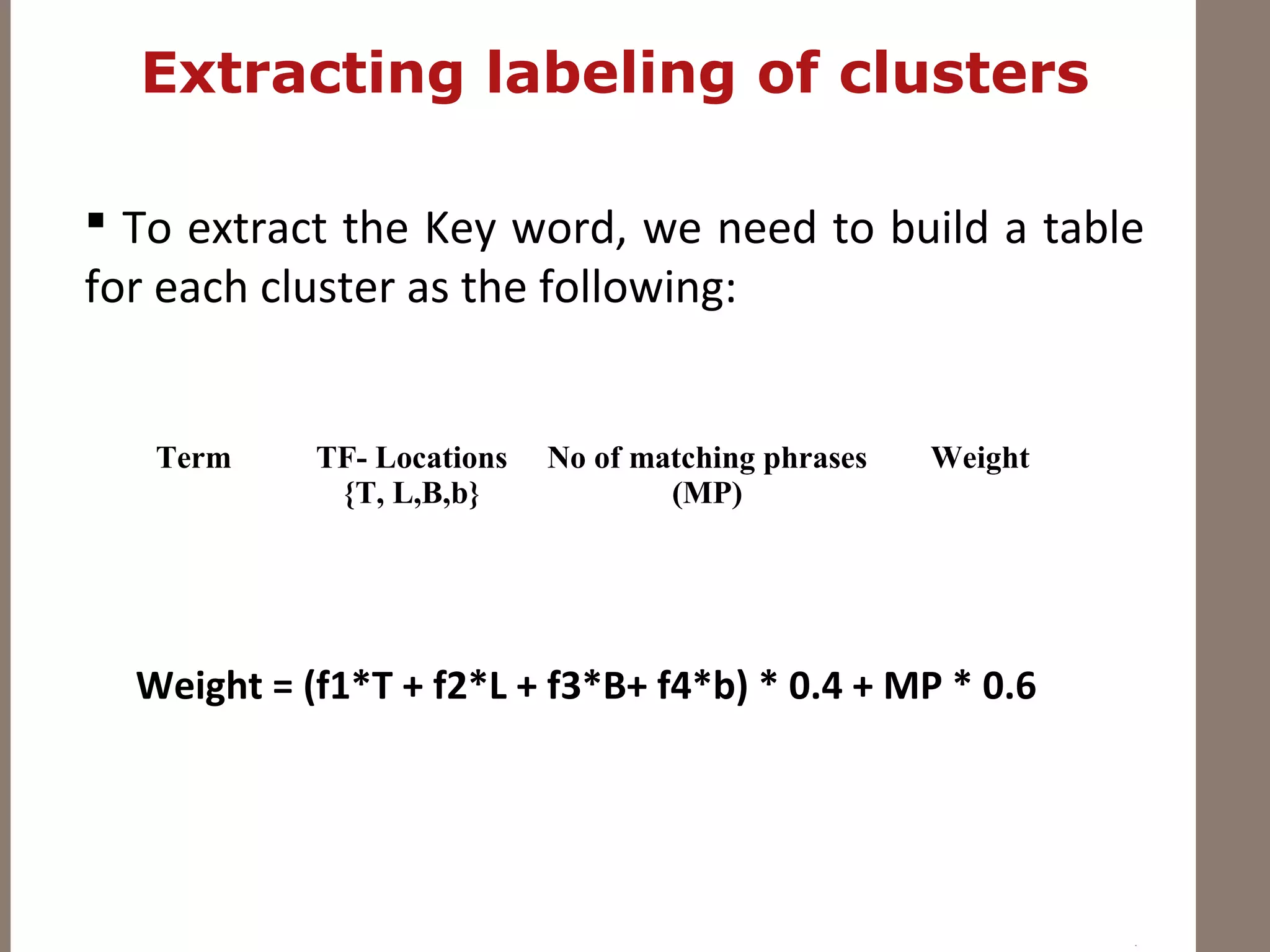
 To extract the Key word, we need to build a table
for each cluster as the following:
Term TF- Locations
{T, L,B,b}
No of matching phrases
(MP)
Weight
Weight = (f1*T + f2*L + f3*B+ f4*b) * 0.4 + MP * 0.6
Extracting labeling of clusters
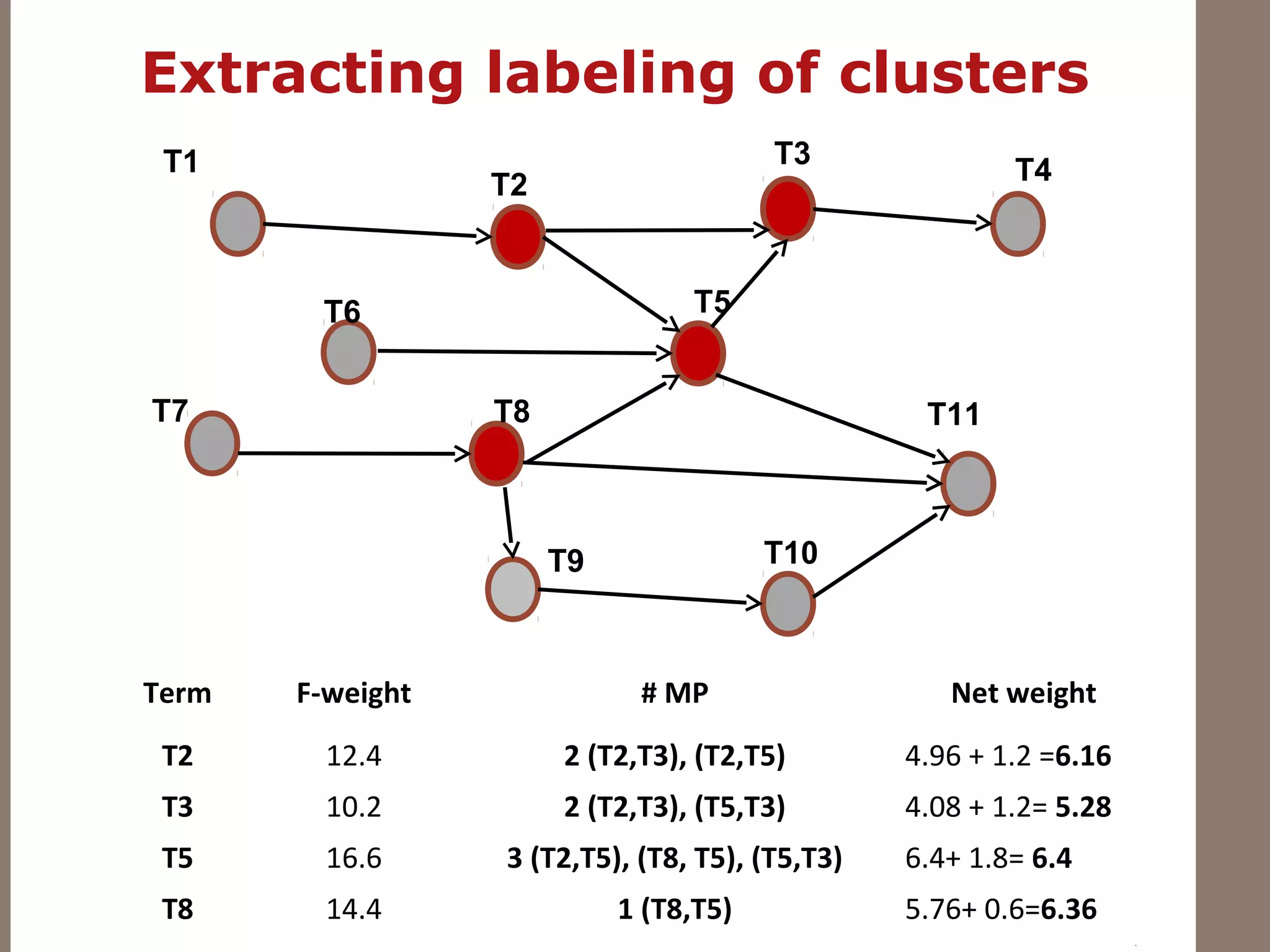
T1
T2
T3
T10
T4
T7 T8 T11
T6 T5
T9
Term F-weight # MP Net weight
T2 12.4 2 (T2,T3), (T2,T5) 4.96 + 1.2 =6.16
T3 10.2 2 (T2,T3), (T5,T3) 4.08 + 1.2= 5.28
T5 16.6 3 (T2,T5), (T8, T5), (T5,T3) 6.4+ 1.8= 6.4
T8 14.4 1 (T8,T5) 5.76+ 0.6=6.36
Thank You … Questions

graph based cluster labeling using GHSOM

  • 1.
    Graph-based cluster labelingusing Growing Hierarchal SOM Mahmoud Rafeek Alfarra College Of Science & Technology m.farra@cst.ps The second International conference of Applied Science & natural Ayman Shehda Ghabayen College Of Science & Technology a.ghabayen@cst.ps Prepared by:
  • 2.
    Out Line  Labeling,What and why ?  Graph based Representation  Growing Hierarchal SOM  Extraction of labeles of clusters
  • 3.
    Labeling, What andwhy ?  Cluster labeling: process tries to select descriptive labels (Key words) for the clusters obtained through a clustering algorithm.
  • 4.
    Labeling, What andwhy ? Cluster labeling is an increasingly important task that: 1. The document collections grow larger. 2. Help To: work with processing of news, email threads, blogs, reviews, and search results
  • 5.
    Labeling, What andwhy ? Documents collection Document Labeled Clusters Preprocessing Step DIG Model X B S OL A G C D Clustering Process + Labeling 0 G0 0 G1 0 Gs SOM 1 G0 1 G1 1 Gs 2 G1 2 G2 Hierarchal Growing SOM 2 G1 2 G2 1 G0 1 G1 2 G1 2 G2
  • 6.
  • 7.
    Graph based Representation Capture the silent features of the data.  DIG Model: a directed graph.  A document is represented as a vector of sentences  Phrase indexing information is stored in the graph nodes themselves in the form of document tables. e1 e0 e2 rafting adventures river Document Table e0 S1(1), S2(2), S3(1) e0 S2(1) e2 S1(2) e1 S4(1) fishing Doc TF ET 1 {0,0,3} 2 {0,0,2} 3 {0,0,1} S1(2( #Sentence Position of term
  • 8.
    Graph based Representation ExampleDocument 1 River rafting Mild river rafting River rafting trips Document 2 Wild river adventures River rafting vocation plan fishing trips fishing vocation plan booking fishing trips river fishing mild river rafting trips mild river rafting trips wild adventures vocation plan wild plan mild river rafting trips adventures vocation booking fishing +
  • 9.
  • 10.
    Growing Hierarchal SOM Determining the winning node … v1 v2 v3 v5 v4 v7 e0 v6 e0 e1 e5 e3 e2 e4 n-nodes in SOM (Gs) v1 v2 v5 v7 e0 v6 e0 e1 e5 e3 Input Document Graph (Gi) Phrases Significance Gi Gs length Gi
  • 11.
    Growing Hierarchal SOM Neuronupdating in the graph domain A B D C e0 Xe0 e1 e5 e3 Y B D C Ee4 e1 e5 e3 A e2 e2 G1 G2 We choose increasing the matching phrases to update graphs due to its affect is more stronger than increasing terms (nodes) also add matching phrases can consider it as add ordered pair of nodes
  • 12.
    Over all Documentclustering Process
  • 13.
    Extracting labeling ofclusters  To extract the Key word, we need to build a table for each cluster as the following: Term TF- Locations {T, L,B,b} No of matching phrases (MP) Weight Weight = (f1*T + f2*L + f3*B+ f4*b) * 0.4 + MP * 0.6
  • 14.
    Extracting labeling ofclusters T1 T2 T3 T10 T4 T7 T8 T11 T6 T5 T9 Term F-weight # MP Net weight T2 12.4 2 (T2,T3), (T2,T5) 4.96 + 1.2 =6.16 T3 10.2 2 (T2,T3), (T5,T3) 4.08 + 1.2= 5.28 T5 16.6 3 (T2,T5), (T8, T5), (T5,T3) 6.4+ 1.8= 6.4 T8 14.4 1 (T8,T5) 5.76+ 0.6=6.36
  • 15.
    Thank You …Questions