GRAMMAR
 From
 The Magic Lens by
 Michael Clay Thompson
Grammar is a way of THINKING
about language.
4 Levels of Grammar:
    Parts of speech
    Parts of a sentence
    Phrases
    Clauses
The 8 Parts of
Speech
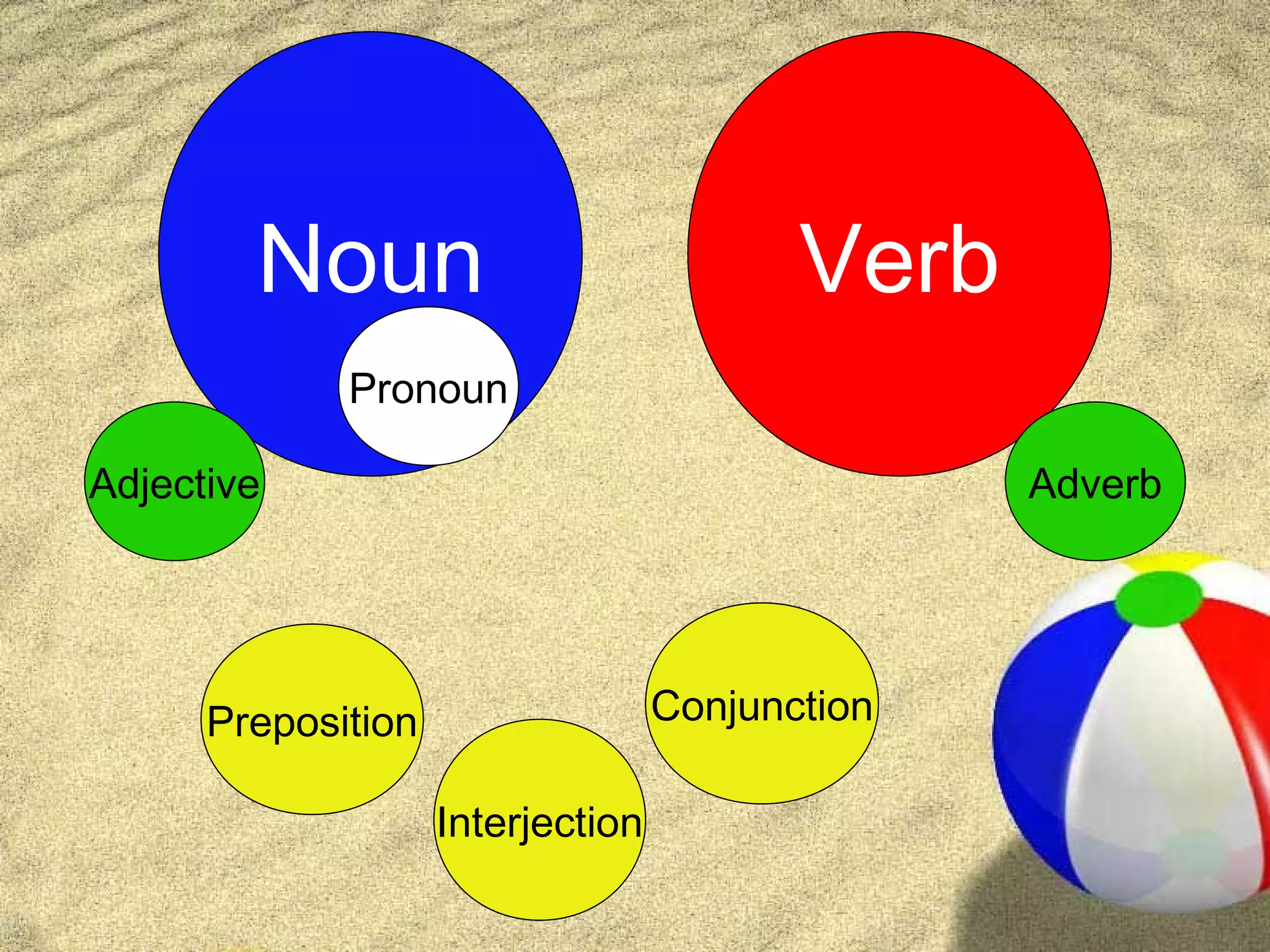
Noun                              Verb
             Pronoun

Adjective                                        Adverb


      Preposition                  Conjunction

                    Interjection
Noun
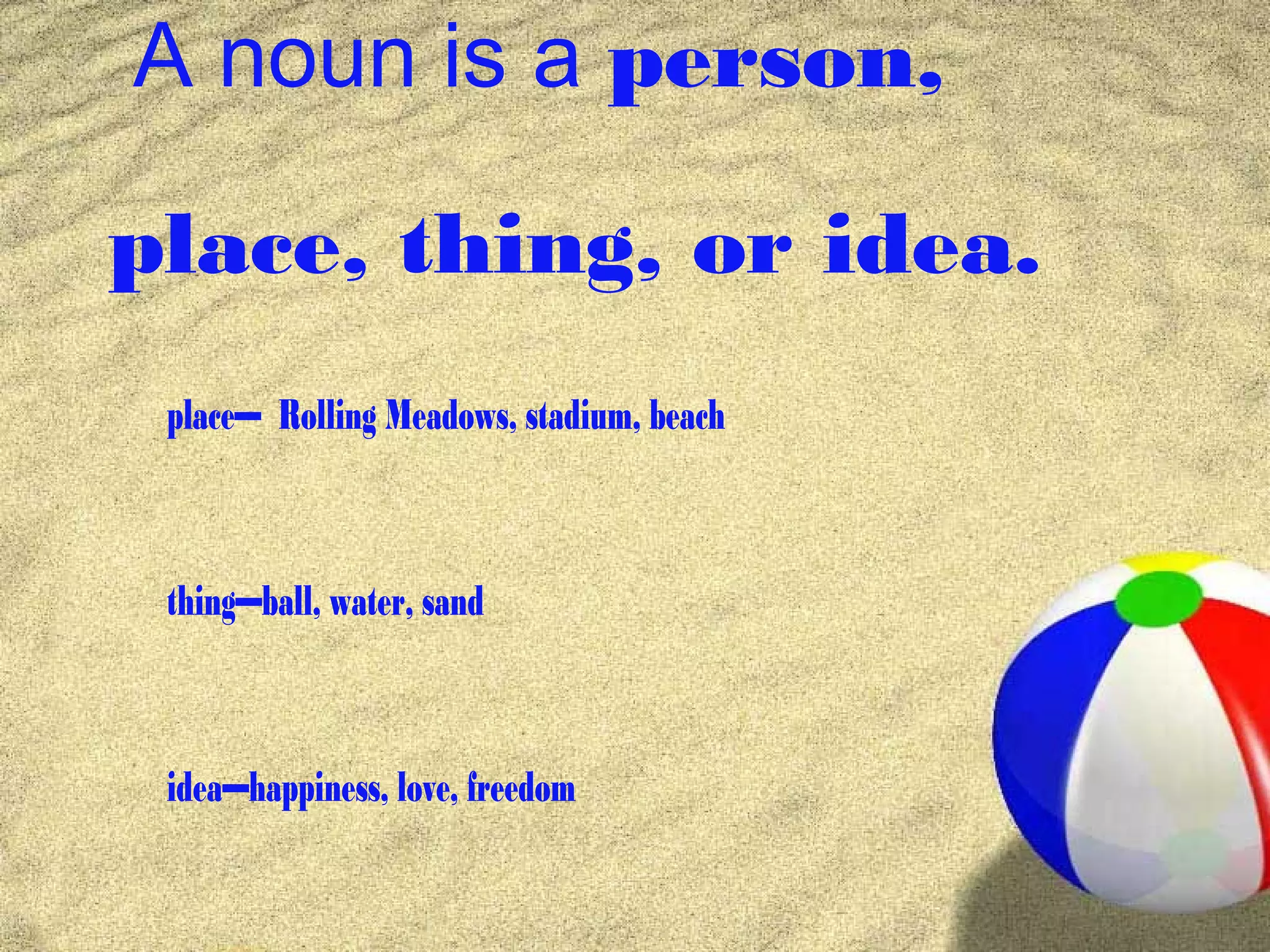
A noun is a person,

place, thing, or idea.
 place— Rolling Meadows, stadium, beach


 thing—ball, water, sand


 idea—happiness, love, freedom
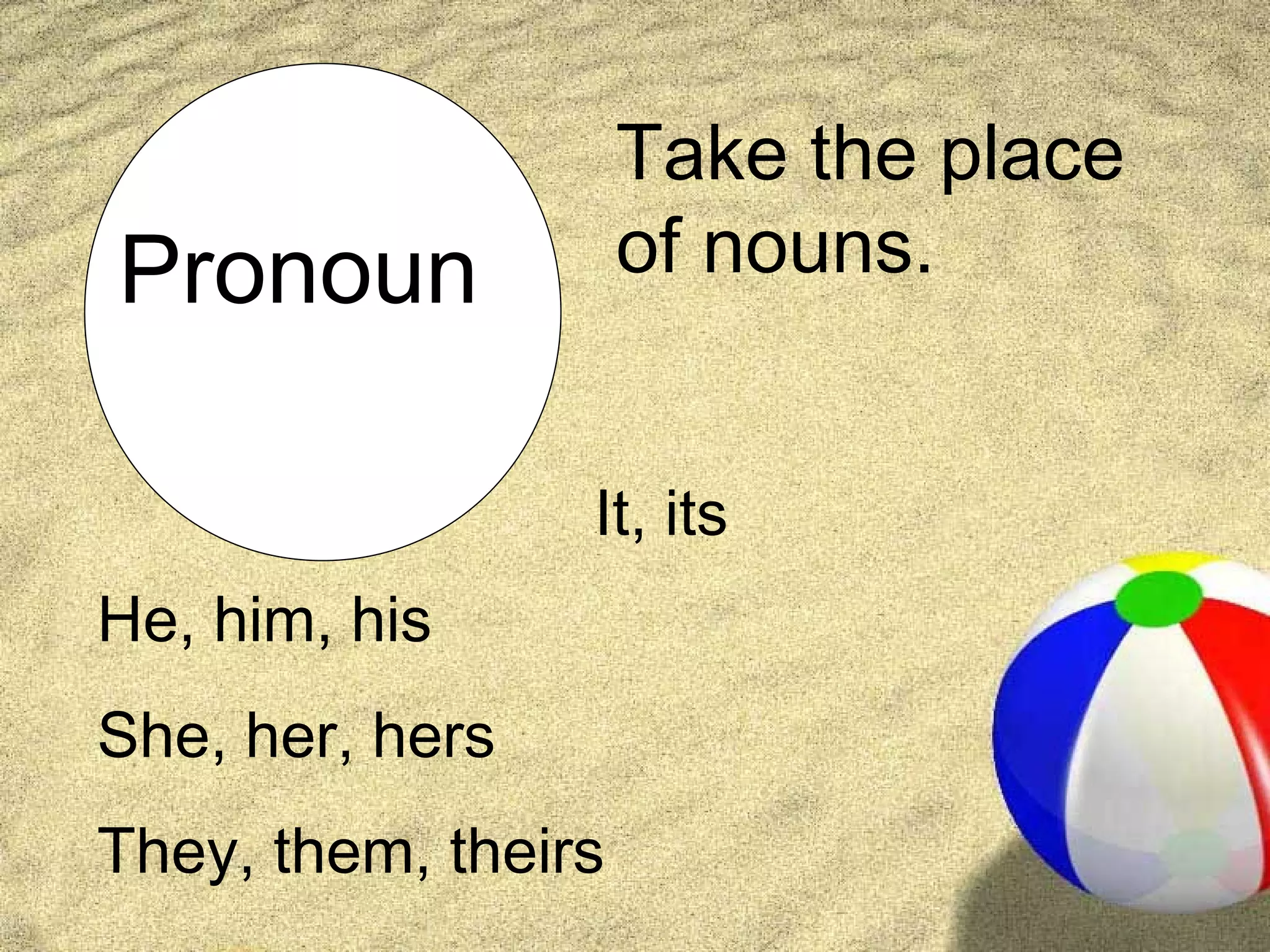
Take the place
Pronoun              of nouns.


                 It, its
He, him, his
She, her, hers
They, them, theirs
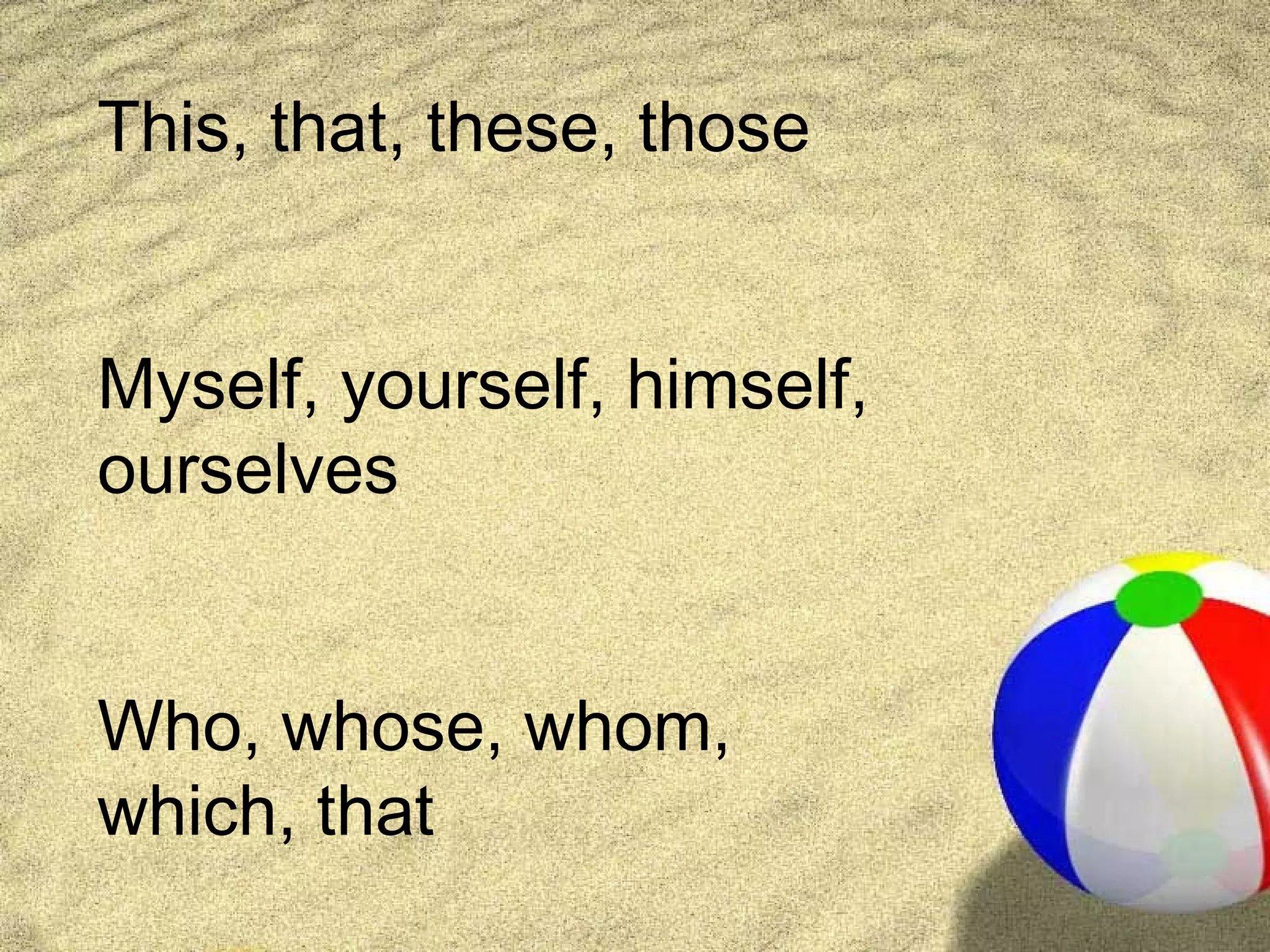
This, that, these, those


Myself, yourself, himself,
ourselves


Who, whose, whom,
which, that
Verb
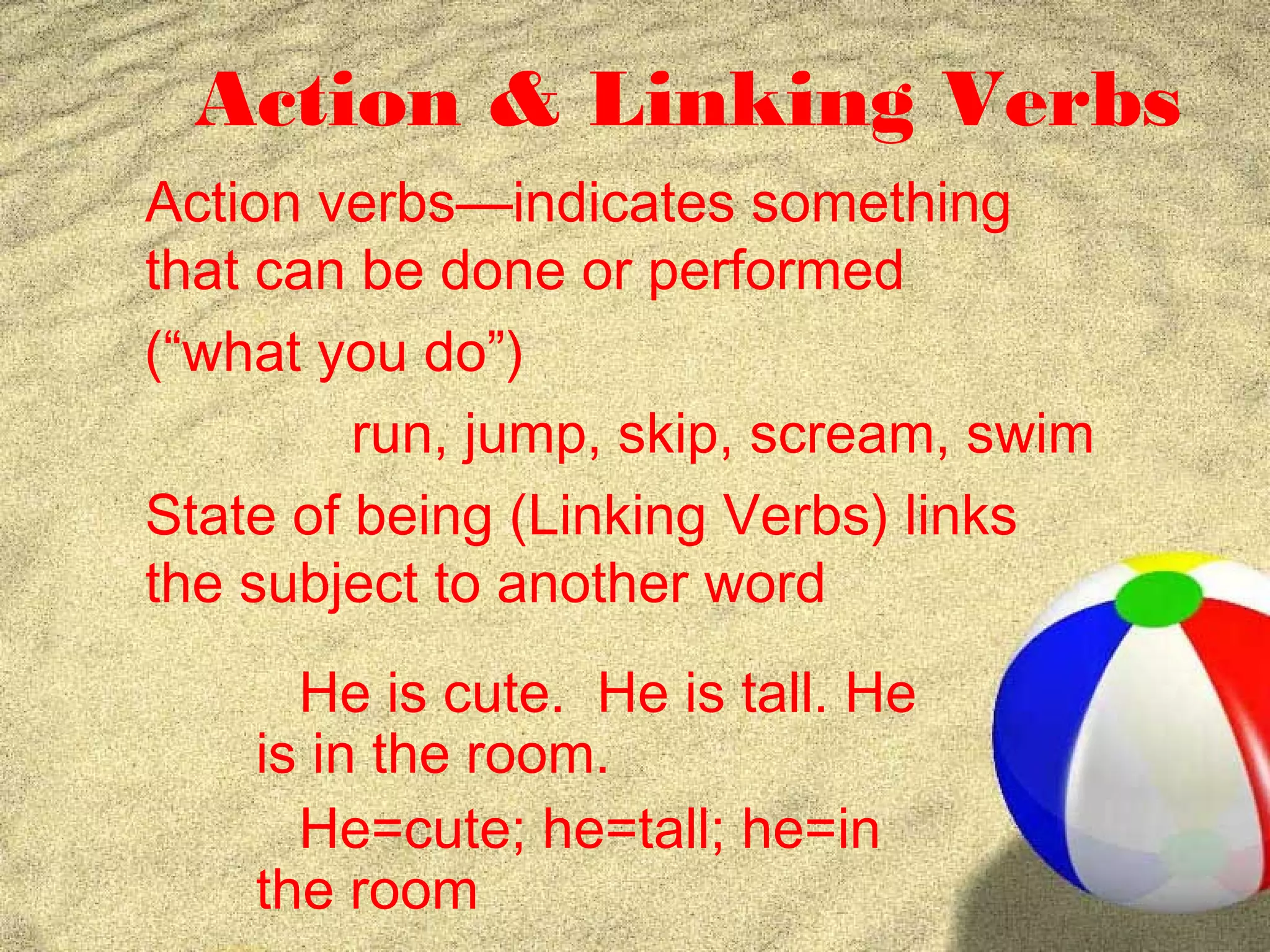
Action & Linking Verbs
Action verbs—indicates something
that can be done or performed
(“what you do”)
         run, jump, skip, scream, swim
State of being (Linking Verbs) links
the subject to another word
      He is cute. He is tall. He
    is in the room.
      He=cute; he=tall; he=in
    the room
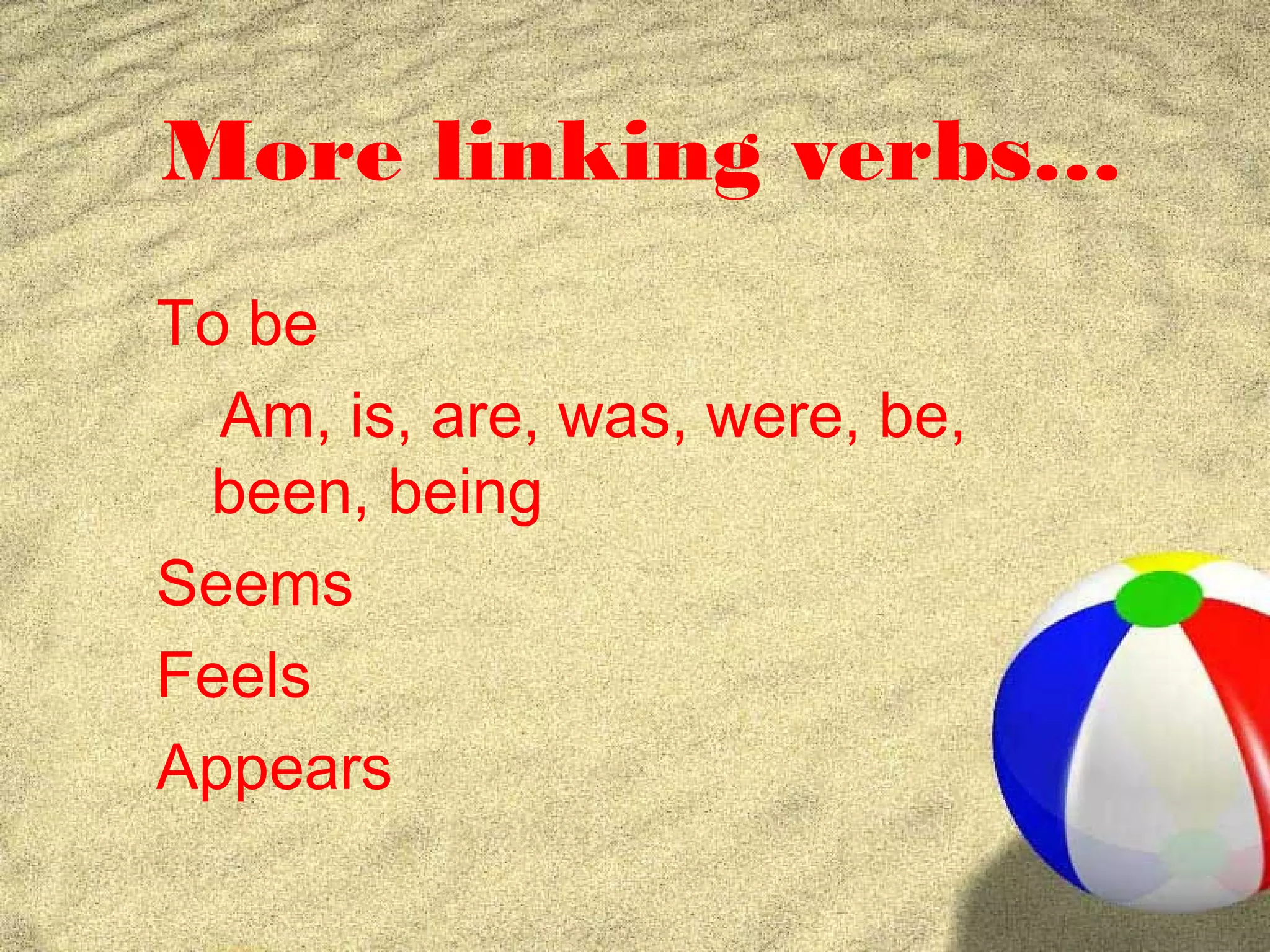
More linking verbs…
To be
  Am, is, are, was, were, be,
 been, being
Seems
Feels
Appears
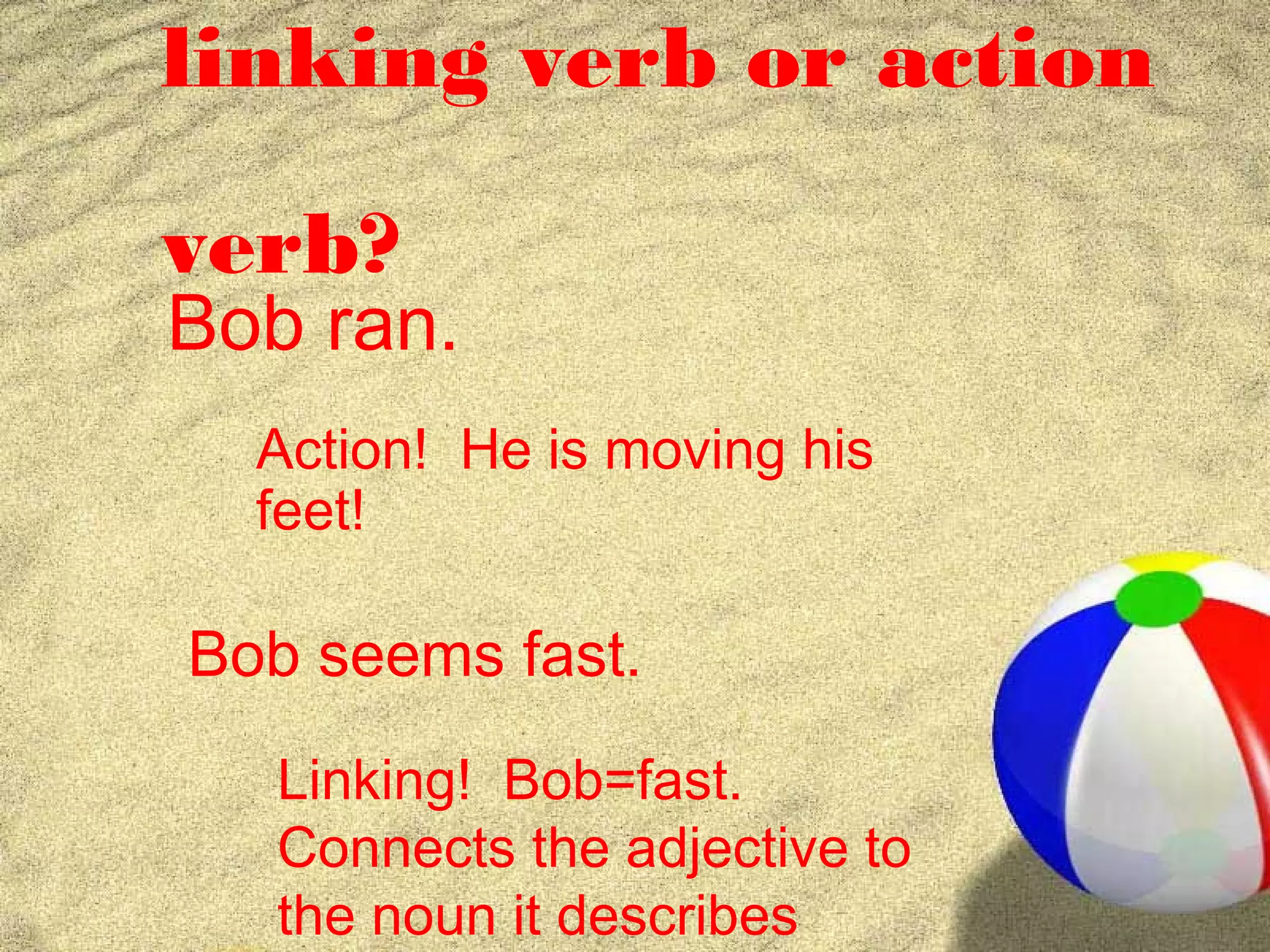
linking verb or action

verb?
Bob ran.
  Action! He is moving his
  feet!

Bob seems fast.
   Linking! Bob=fast.
   Connects the adjective to
   the noun it describes
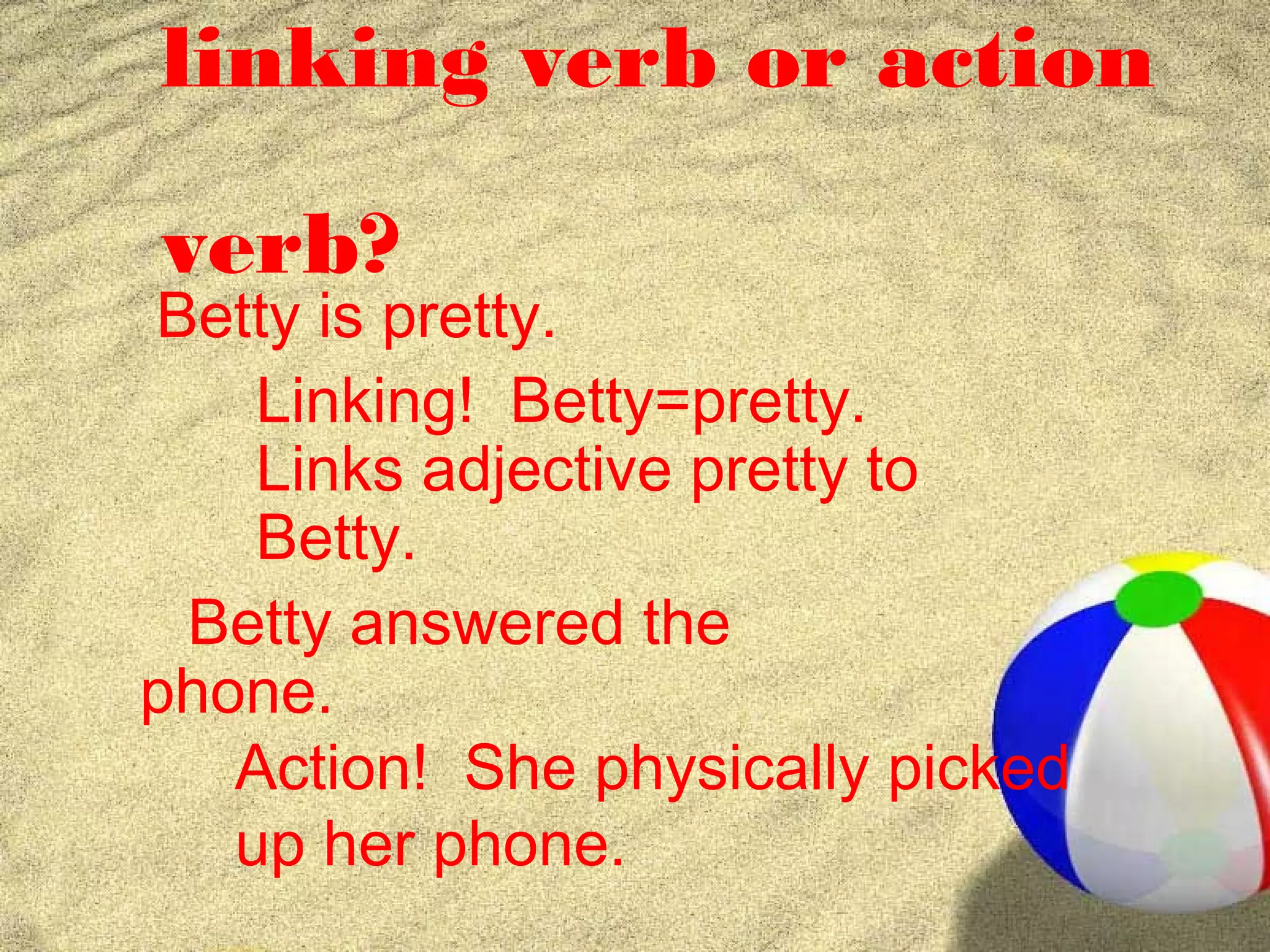
linking verb or action

verb?
Betty is pretty.
    Linking! Betty=pretty.
    Links adjective pretty to
    Betty.
 Betty answered the
phone.
   Action! She physically picked
   up her phone.
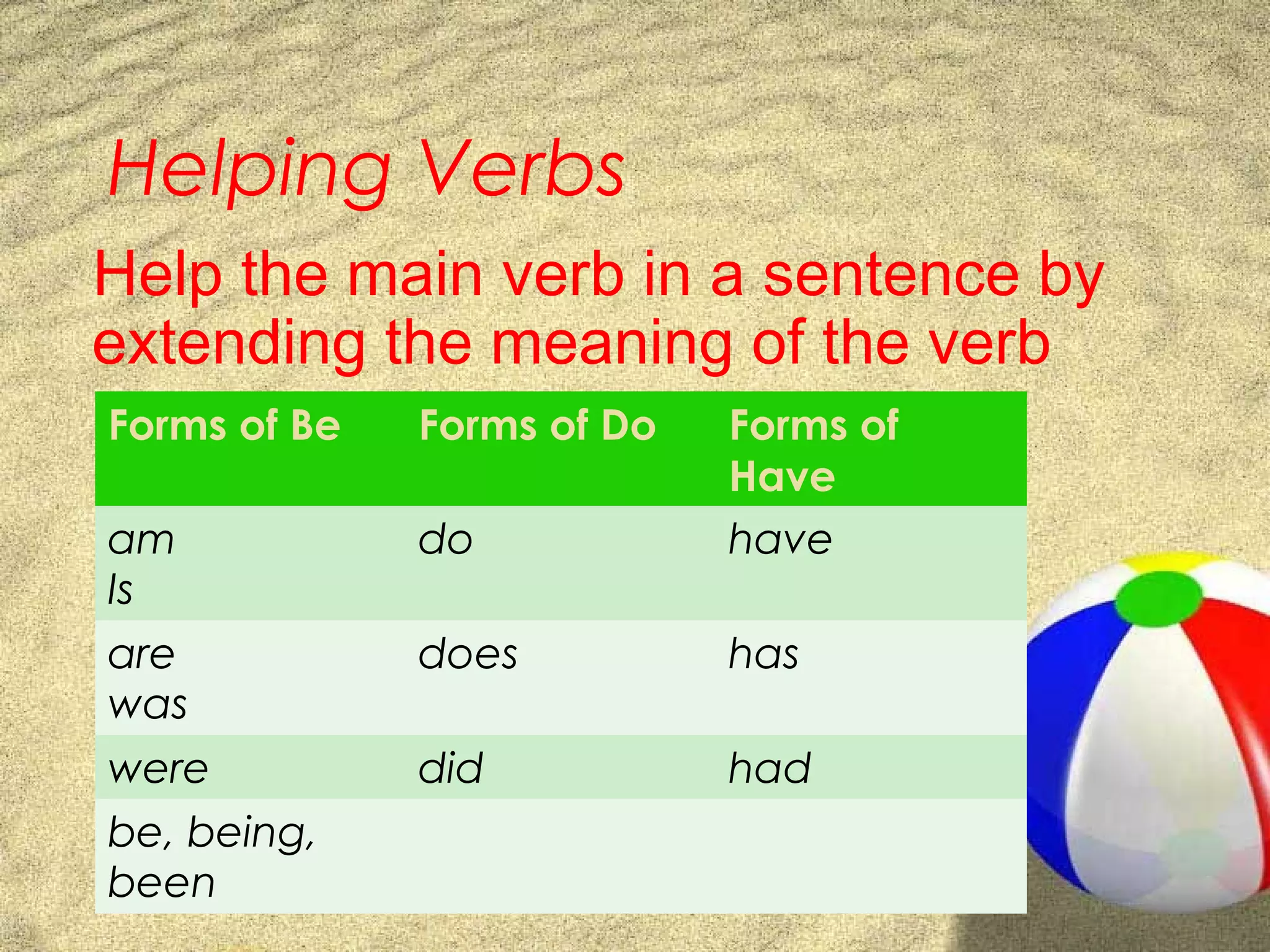
Helping Verbs
Help the main verb in a sentence by
extending the meaning of the verb
Forms of Be   Forms of Do   Forms of
                            Have
am            do            have
Is
are           does          has
was
were          did           had
be, being,
been
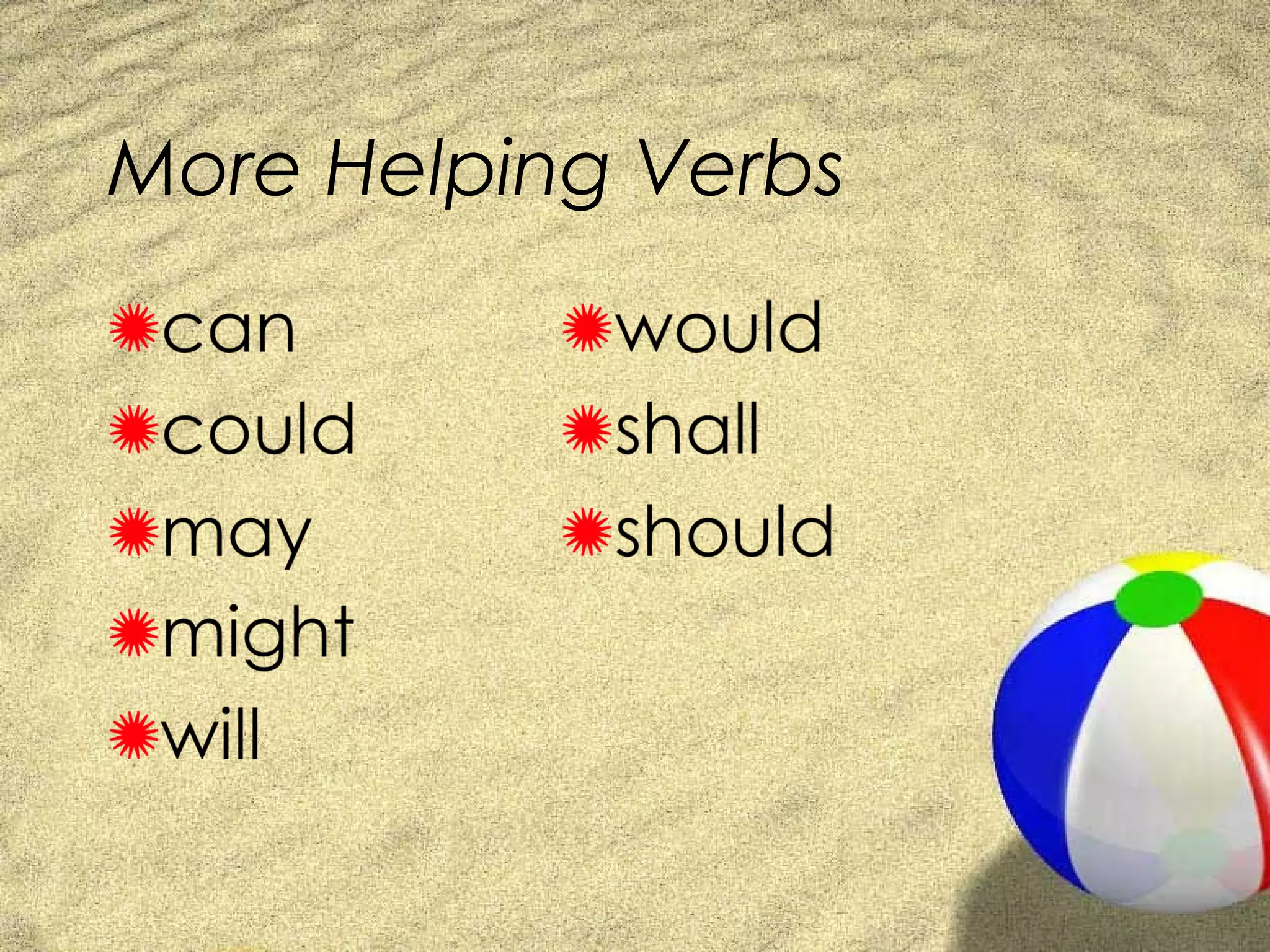
More Helping Verbs
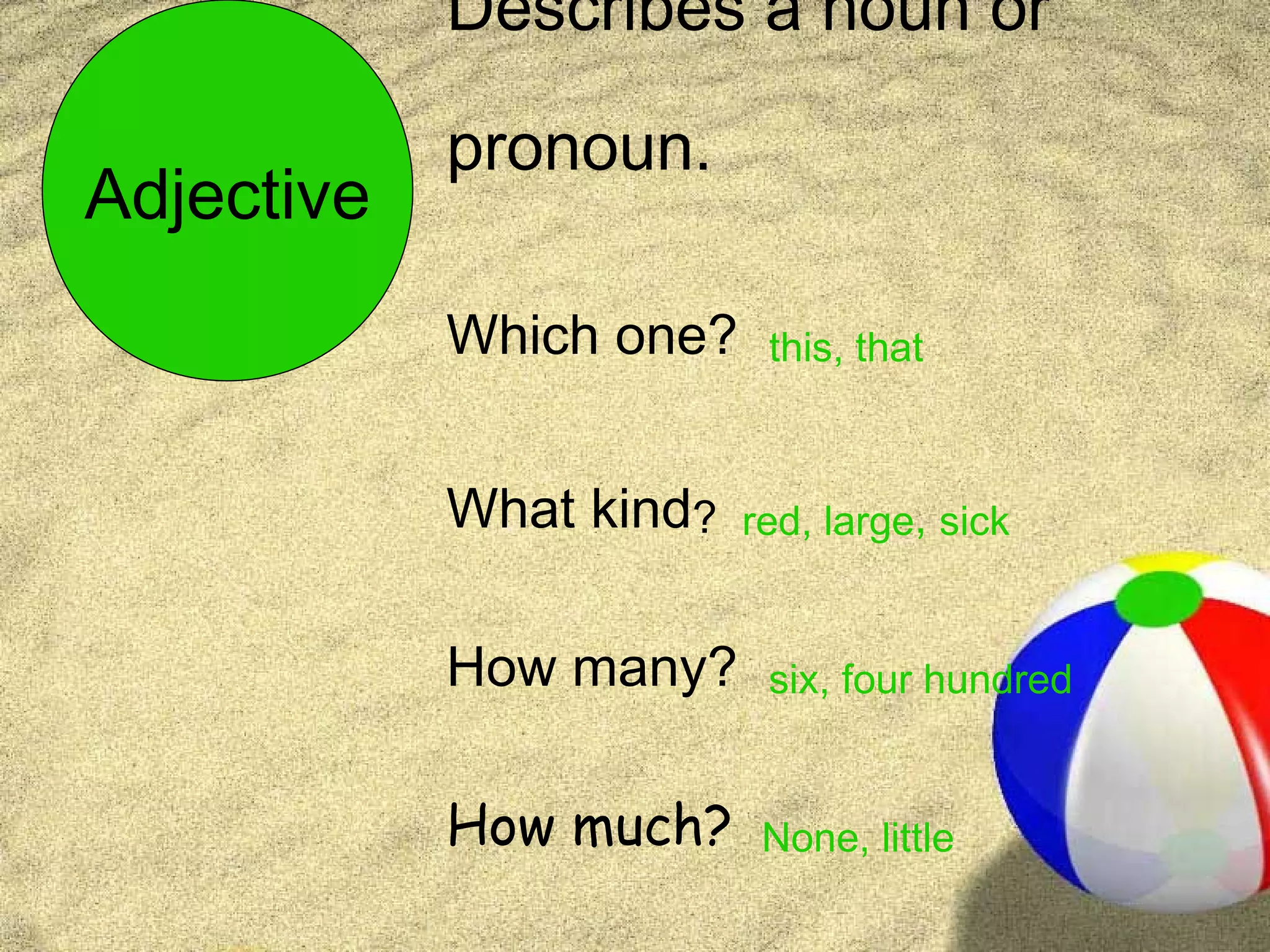
Describes a noun or

            pronoun.
Adjective
            Which one?    this, that


            What kind?   red, large, sick


            How many?     six, four hundred


            How much?     None, little
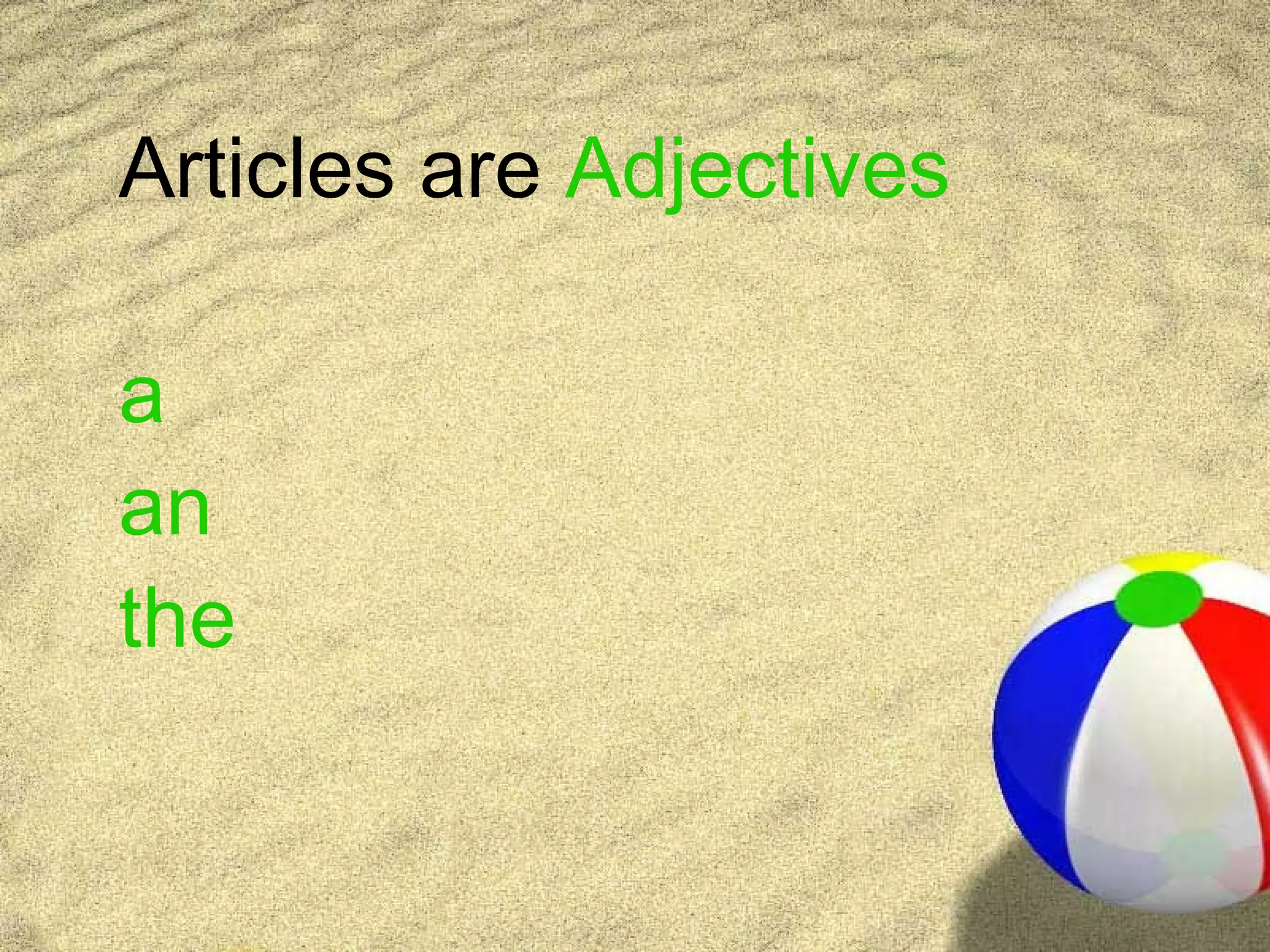
Articles are Adjectives

a
an
the
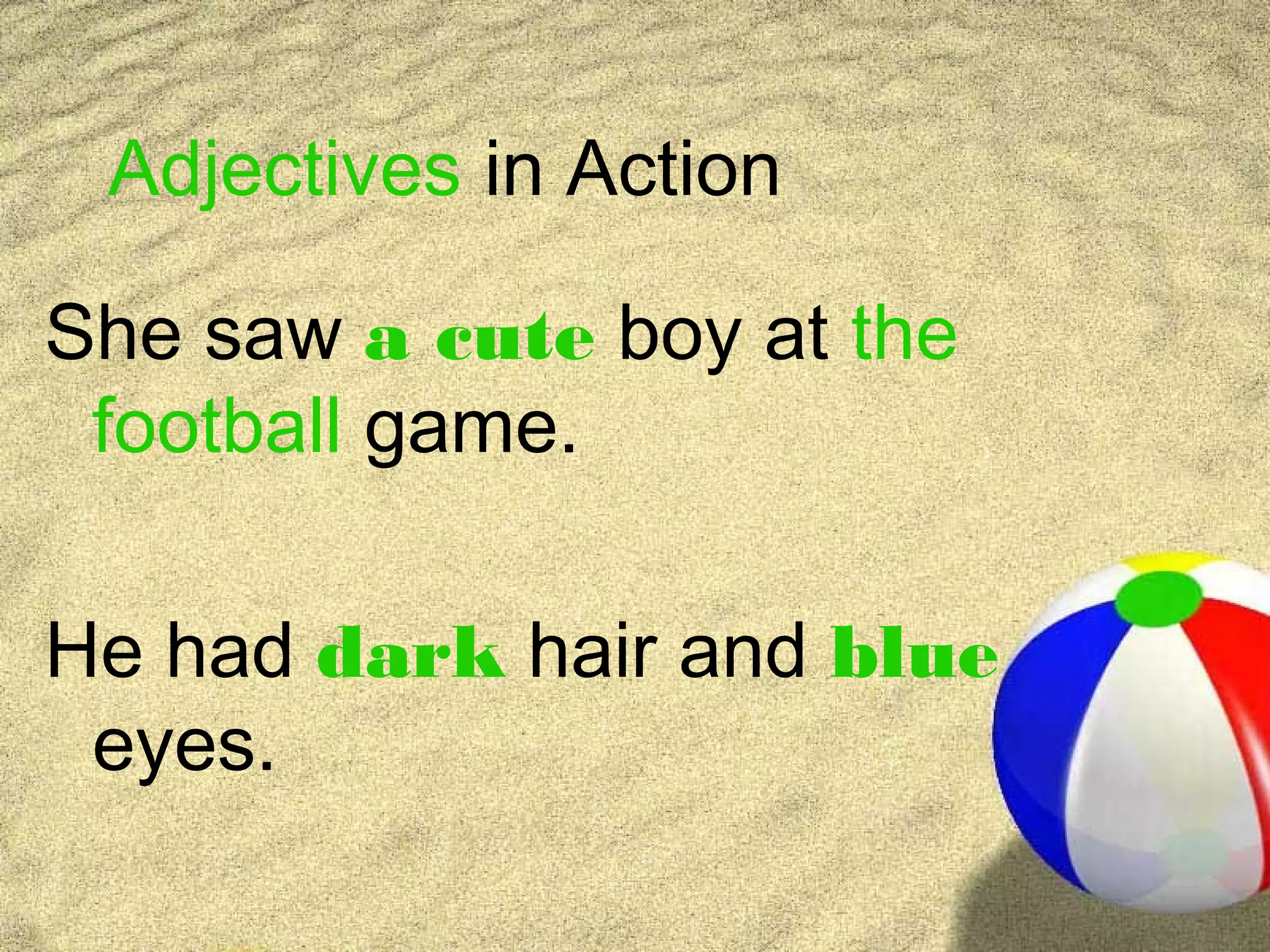
Adjectives in Action

She saw a cute boy at the
 football game.

He had dark hair and blue
 eyes.
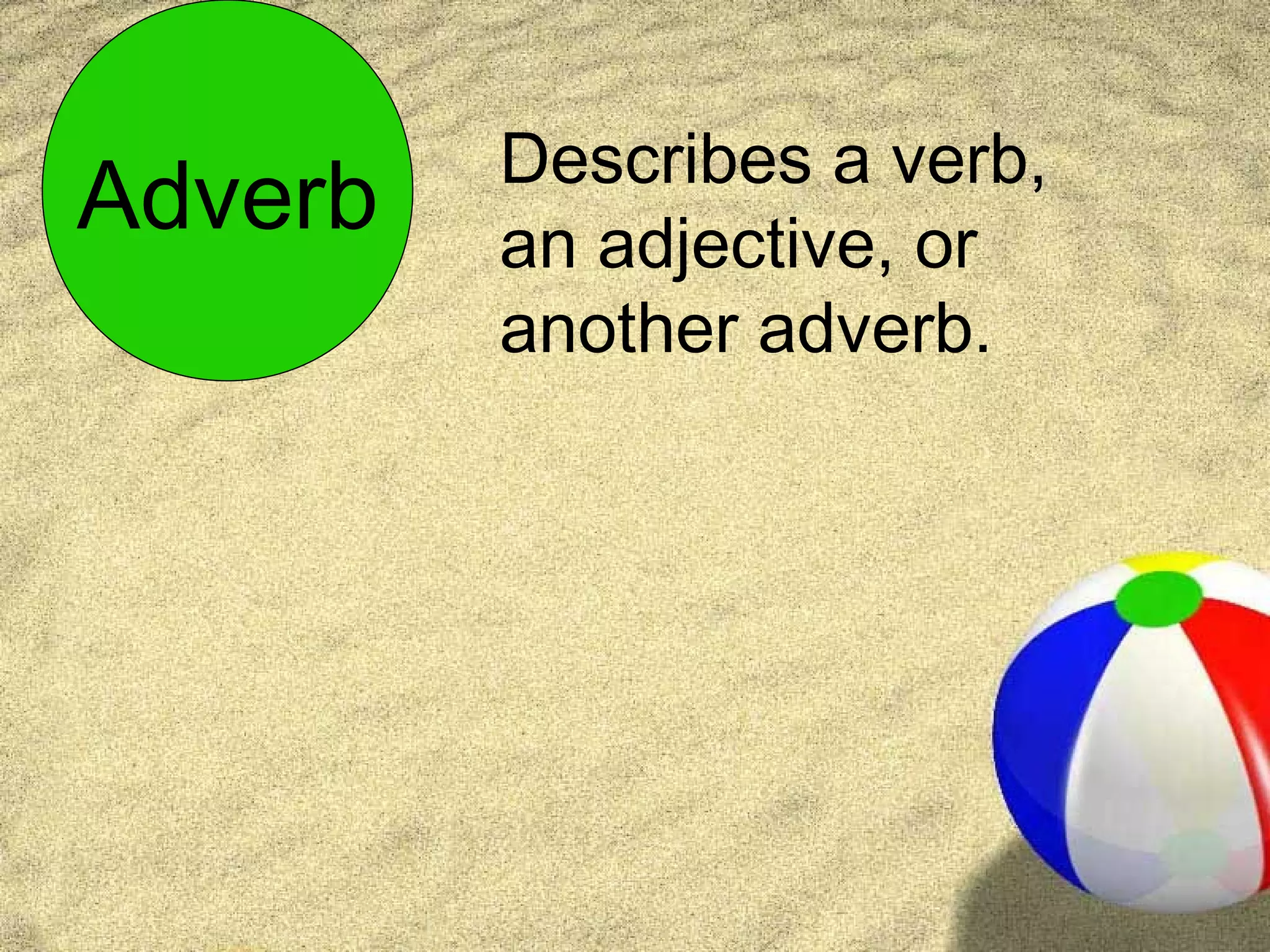
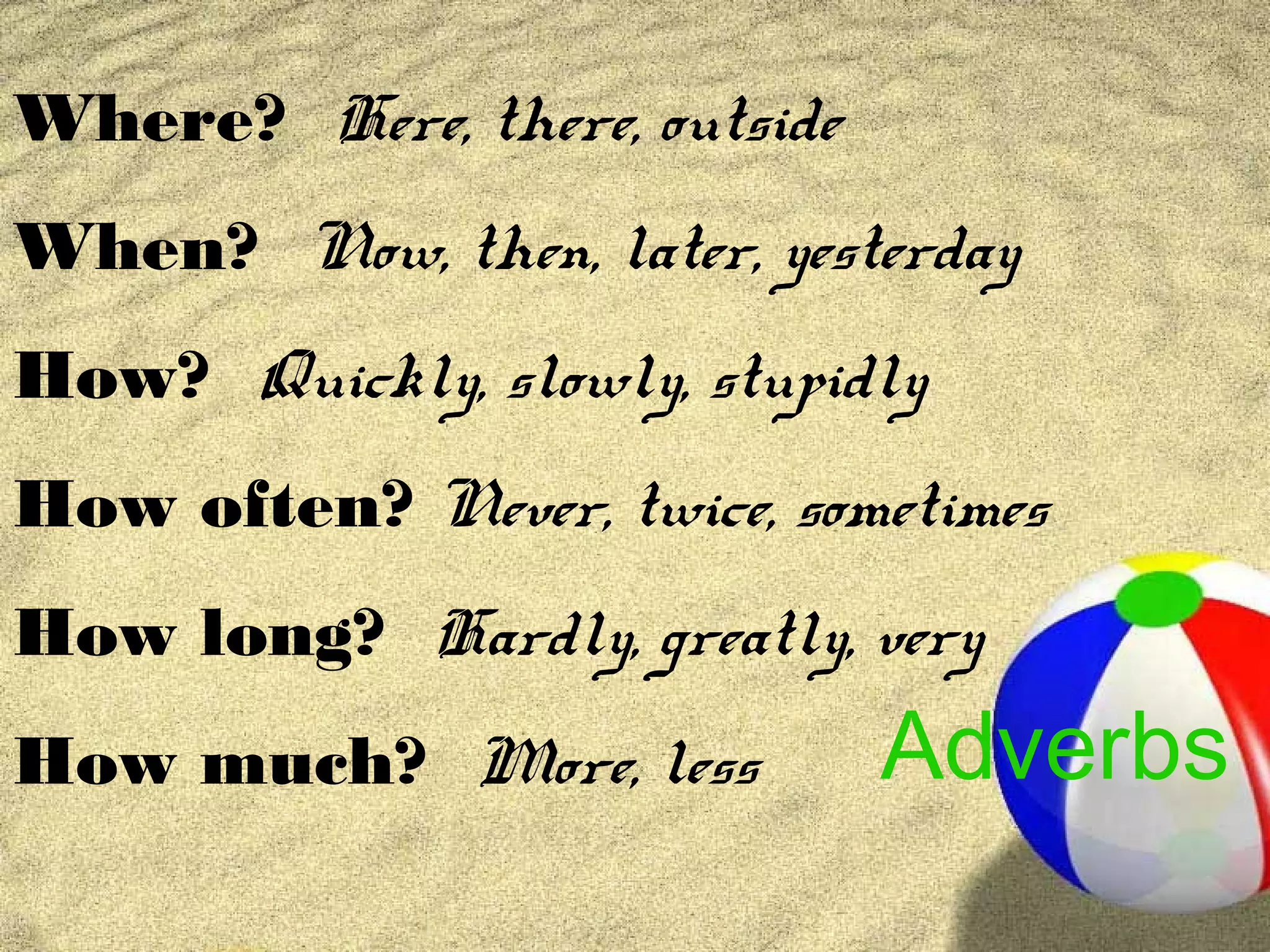
Describes a verb,
Adverb   an adjective, or
         another adverb.
Where? Here, there, outside
When? Now, then, later, yesterday
How? Quickly, slowly, stupidly
How often? Never, twice, sometimes
How long? Hardly, greatly, very
How much? More, less          Adverbs
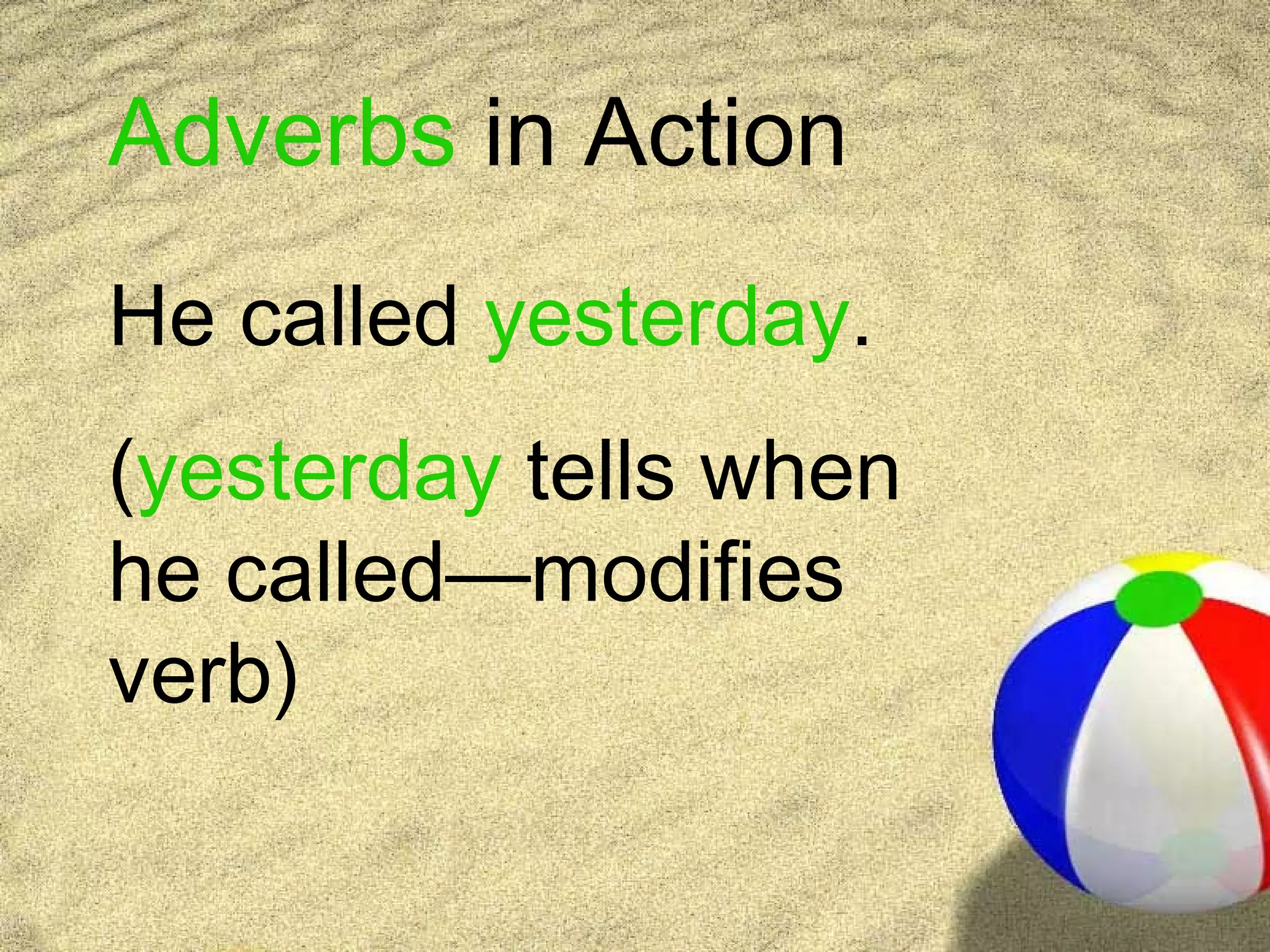
Adverbs in Action
He called yesterday.
(yesterday tells when
he called—modifies
verb)
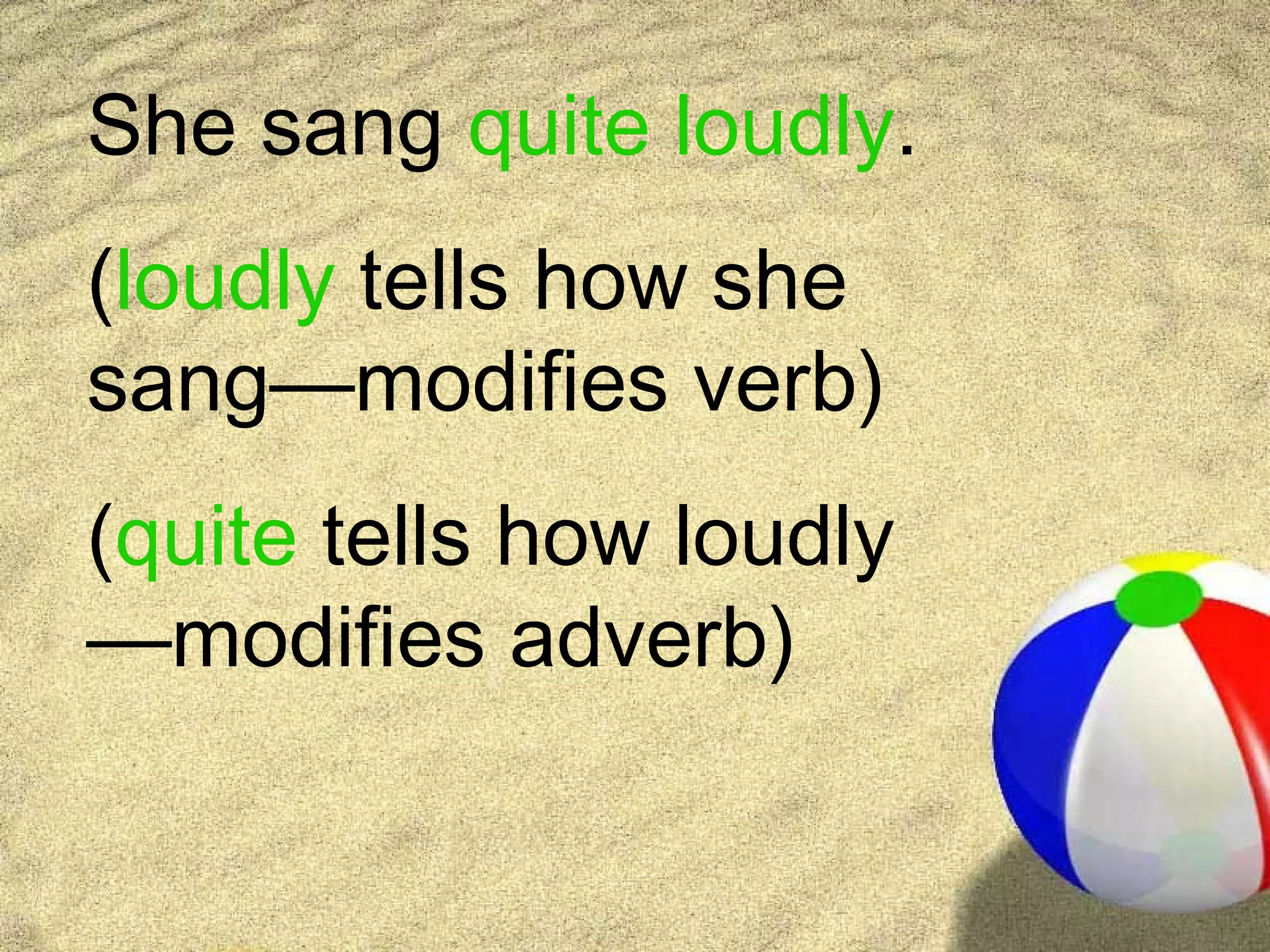
She sang quite loudly.
(loudly tells how she
sang—modifies verb)
(quite tells how loudly
—modifies adverb)
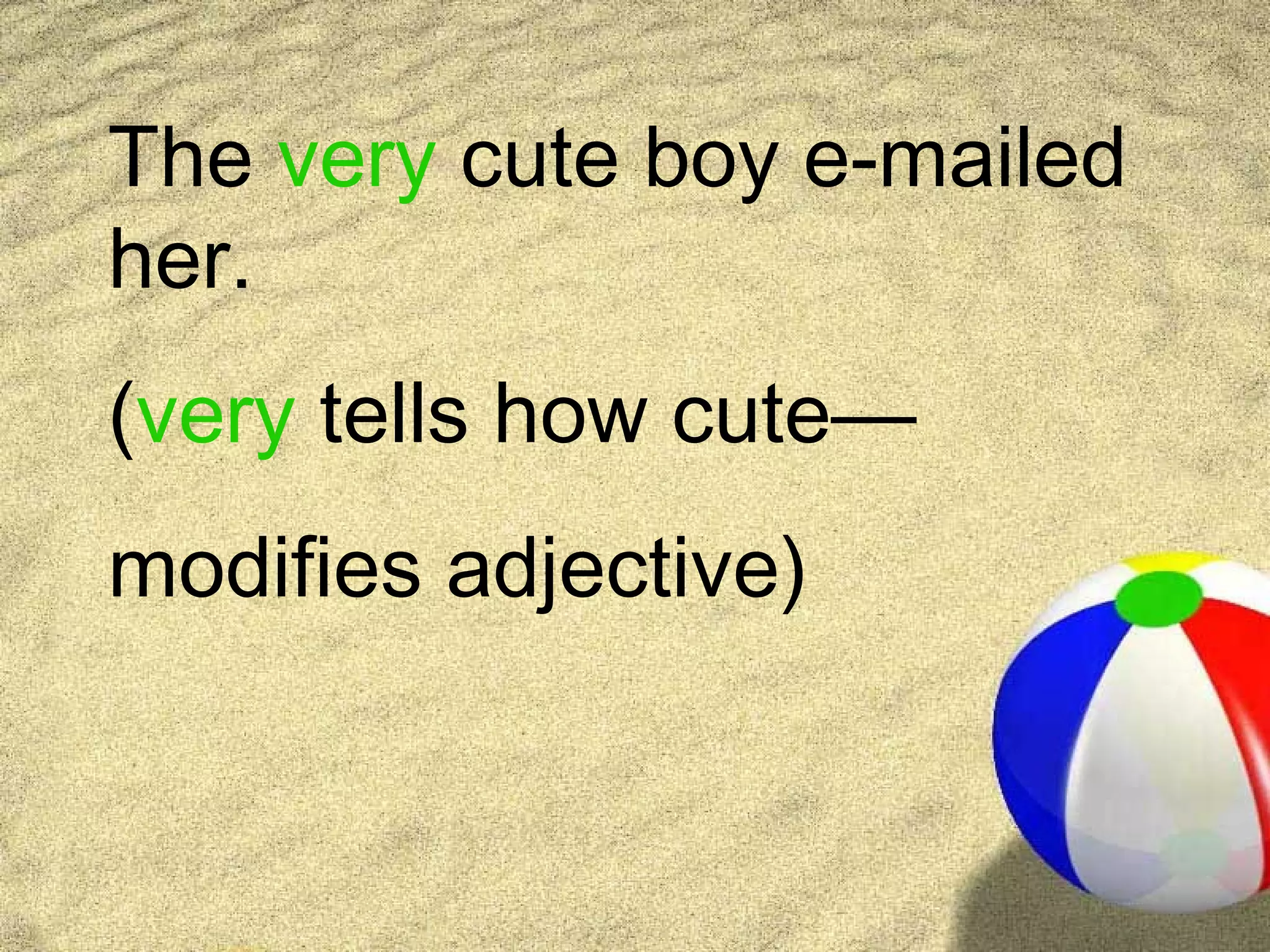
The very cute boy e-mailed
her.
(very tells how cute—
modifies adjective)
Conjunctions


      Link together
      words, phrases,
      and clauses.
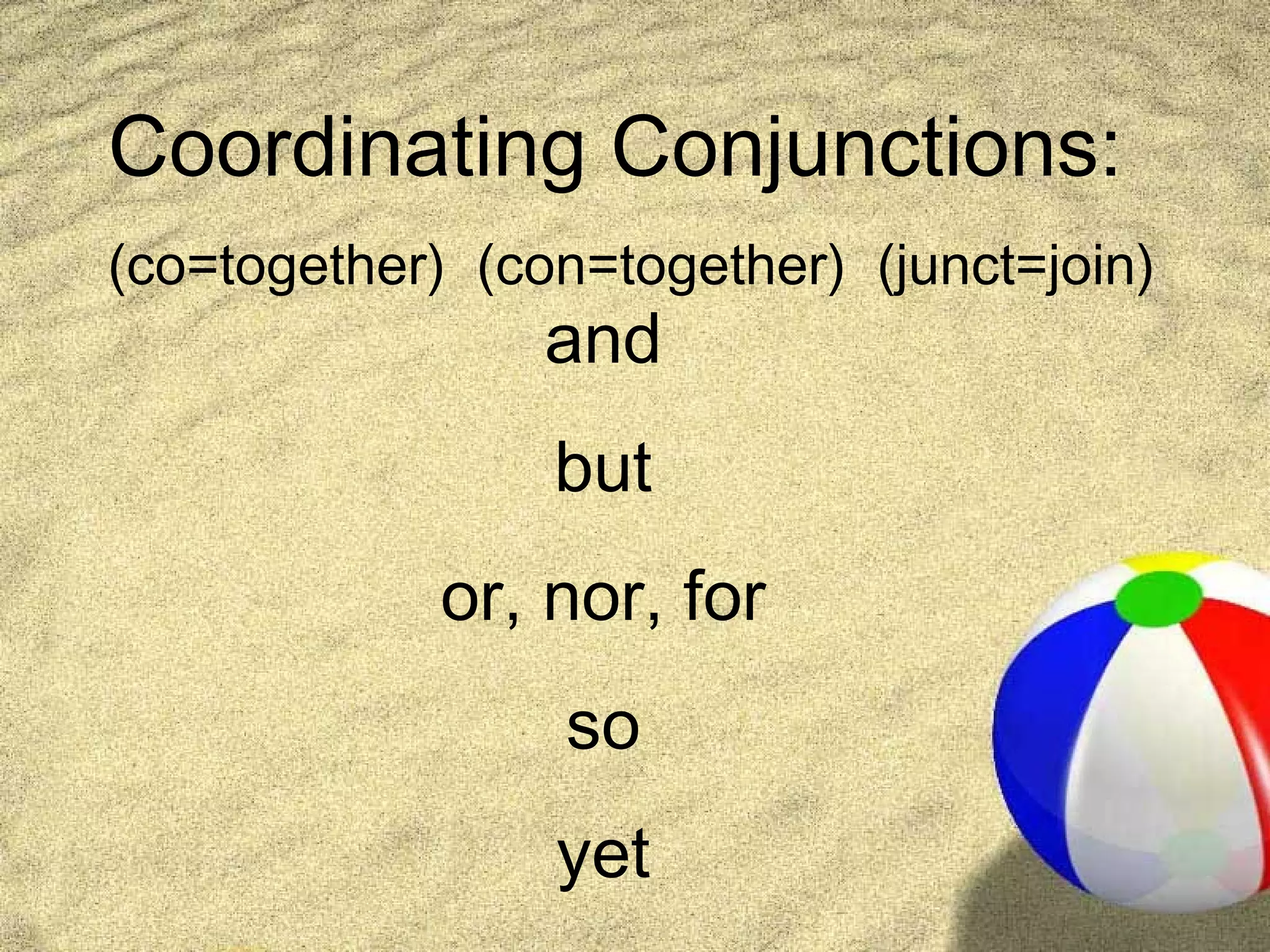
Coordinating Conjunctions:
(co=together) (con=together) (junct=join)
                 and
                 but
             or, nor, for
                 so
                 yet
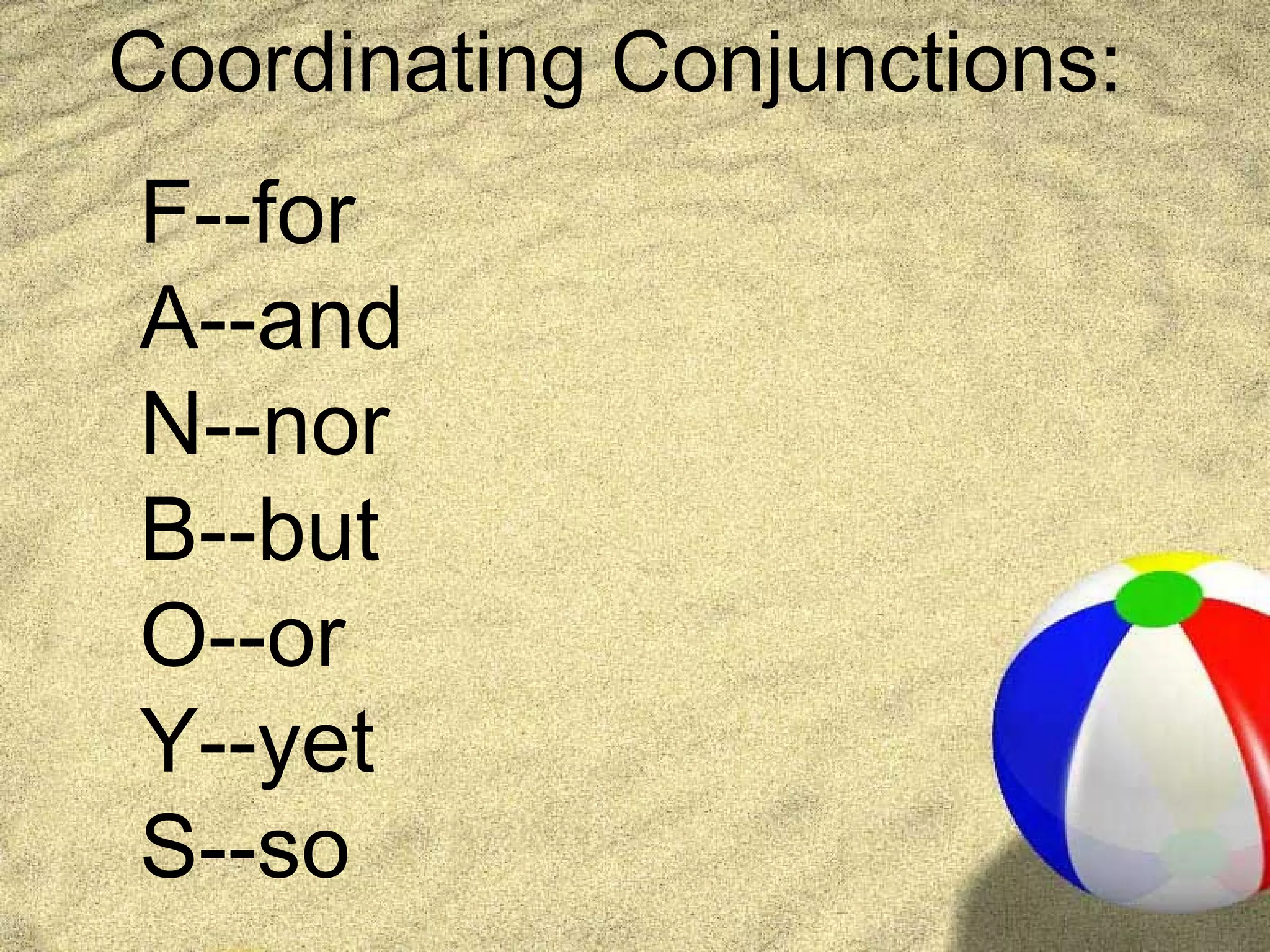
Coordinating Conjunctions:
F--for
A--and
N--nor
B--but
O--or
Y--yet
S--so
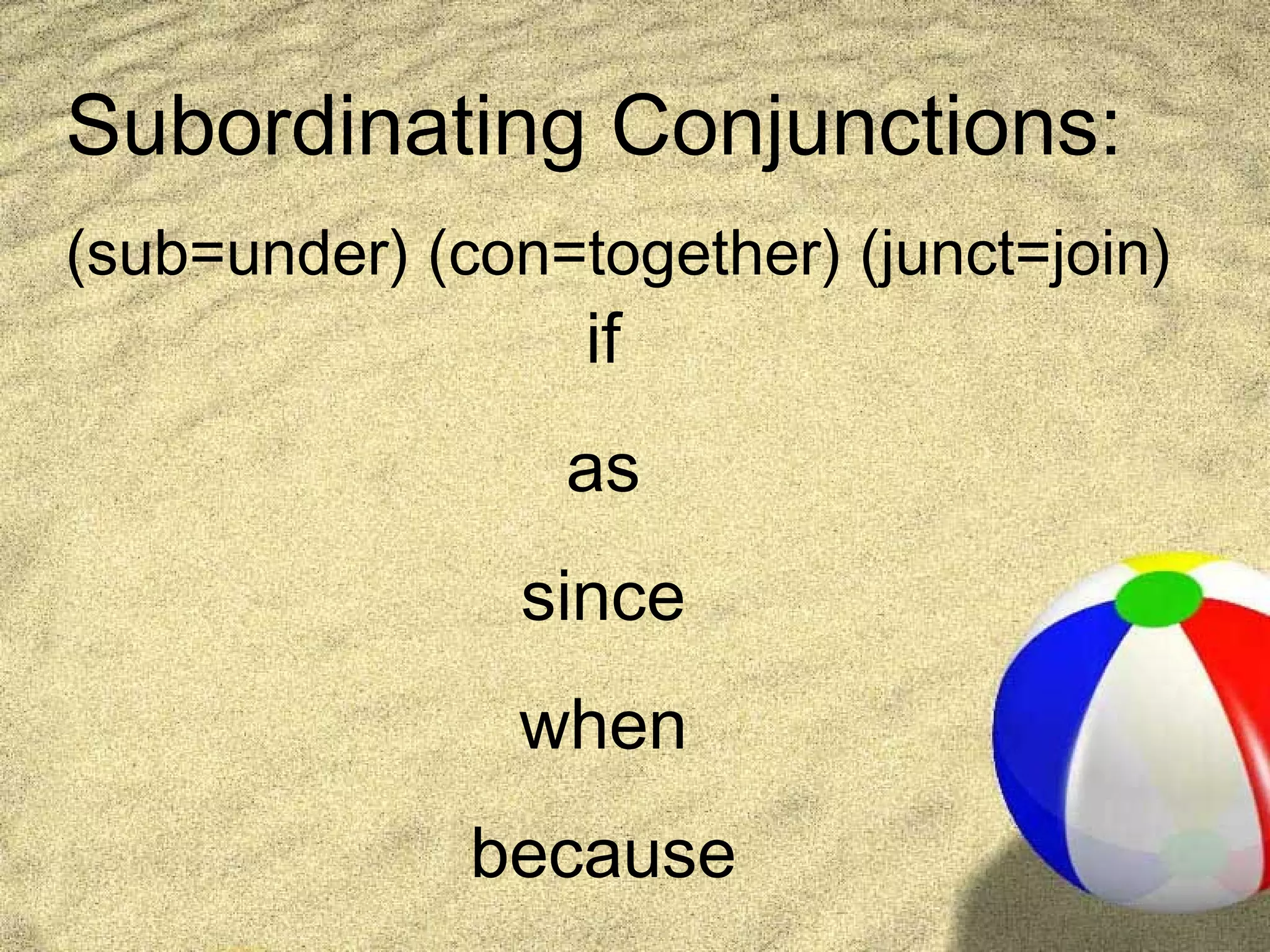
Subordinating Conjunctions:
(sub=under) (con=together) (junct=join)
                  if
                 as
                since
               when
              because
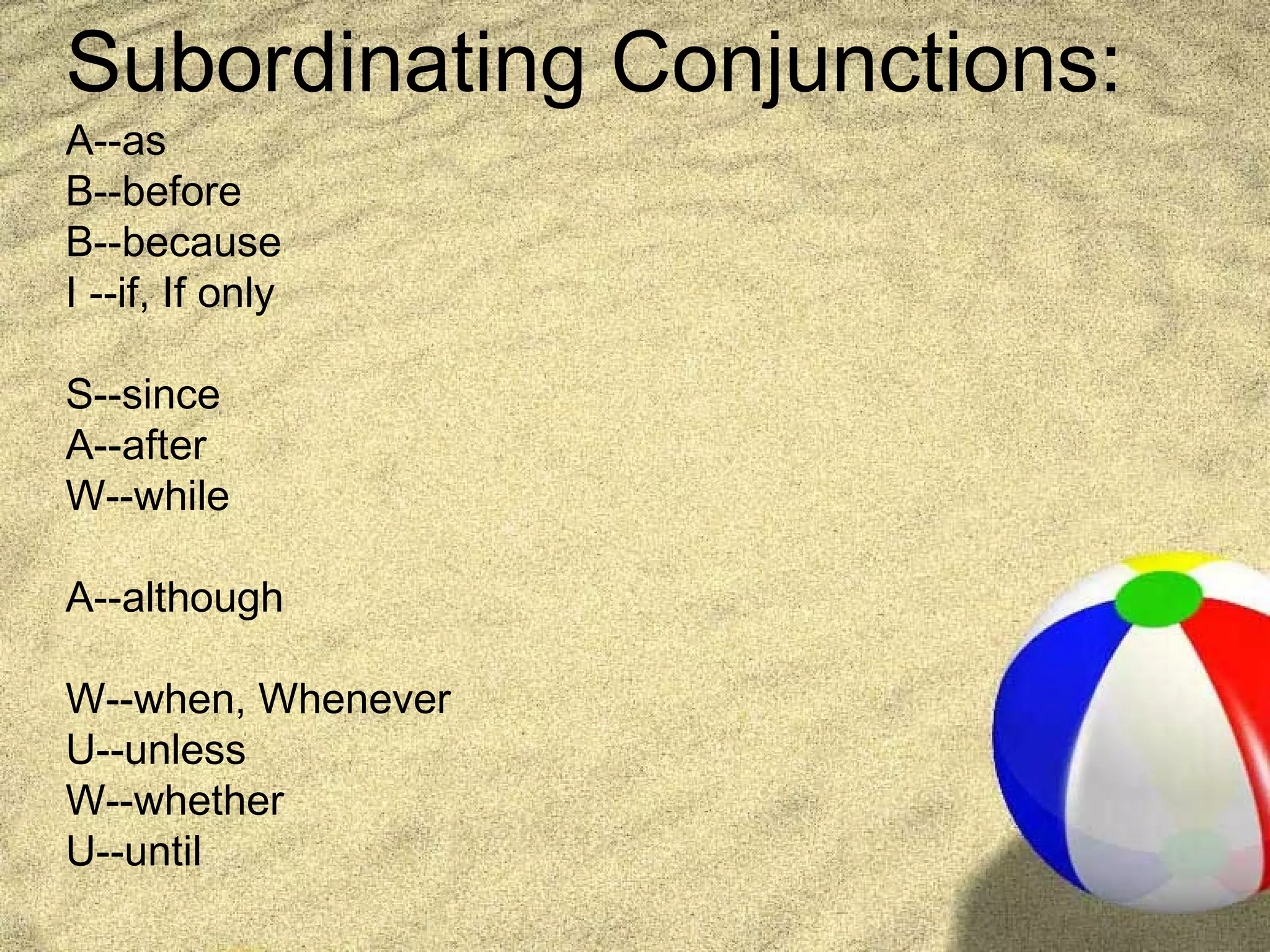
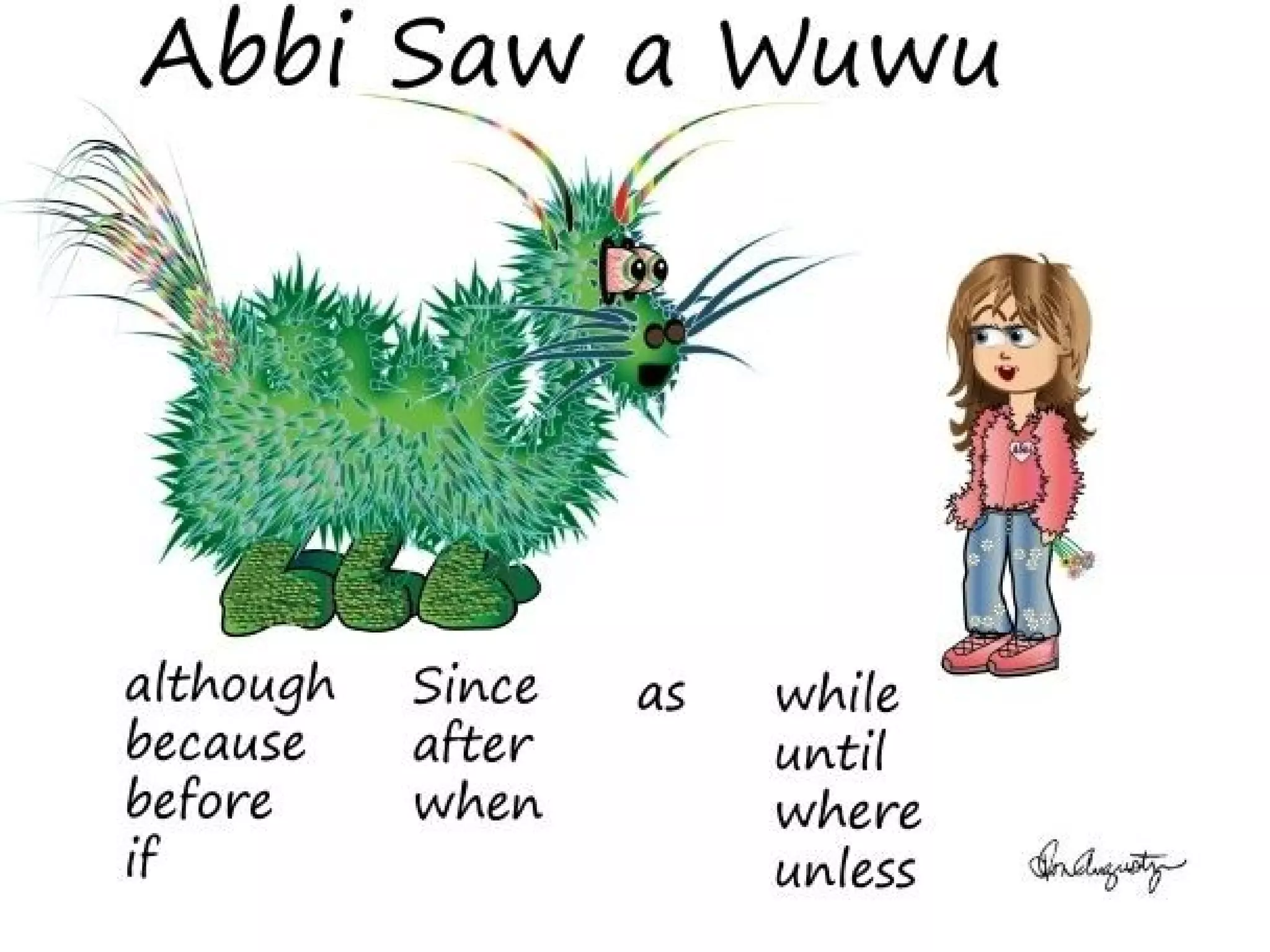
Subordinating Conjunctions:
A--as
B--before
B--because
I --if, If only

S--since
A--after
W--while

A--although

W--when, Whenever
U--unless
W--whether
U--until
Subordinating Conjunctions:
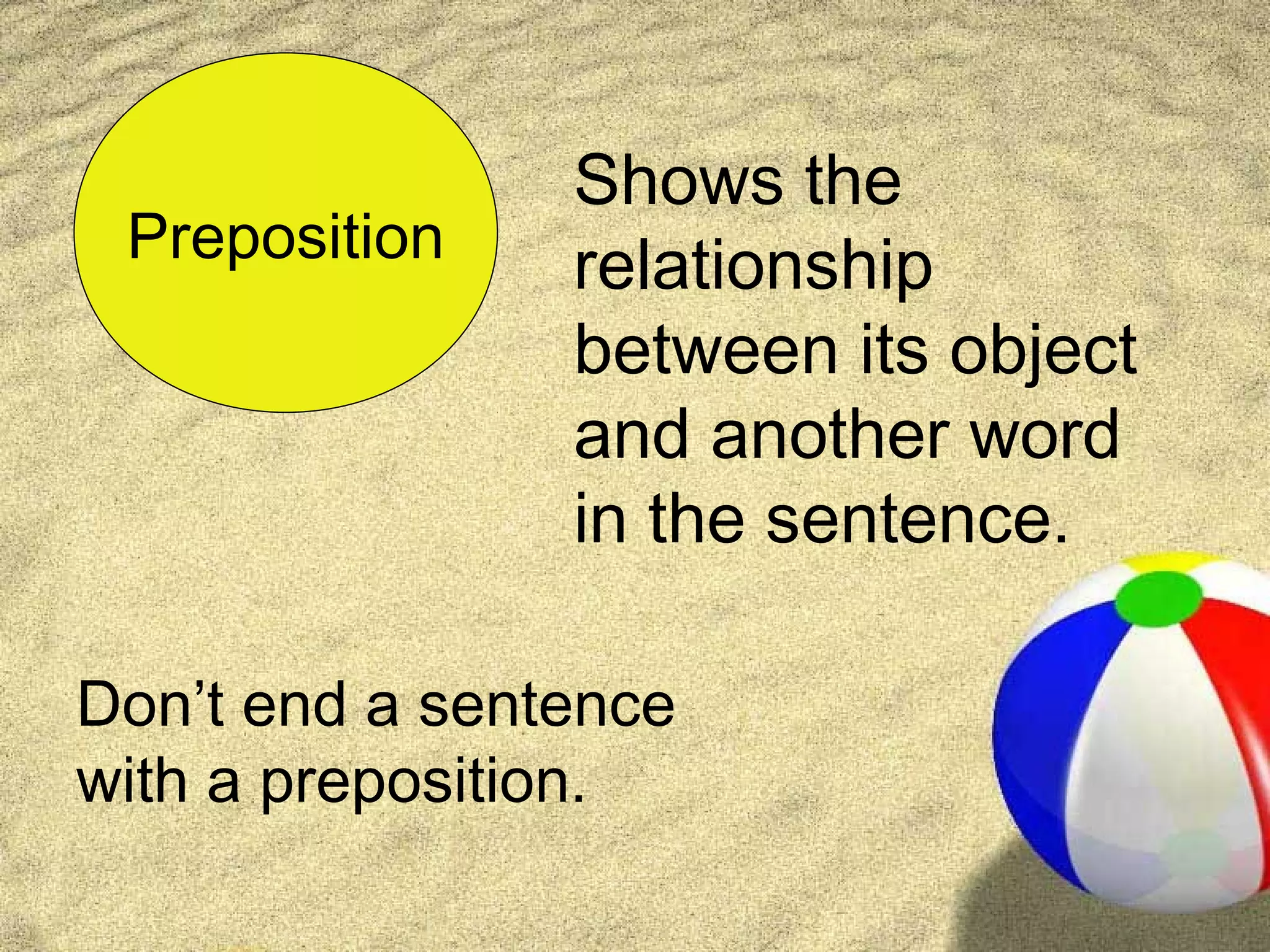
Shows the
 Preposition    relationship
                between its object
                and another word
                in the sentence.

Don’t end a sentence
with a preposition.
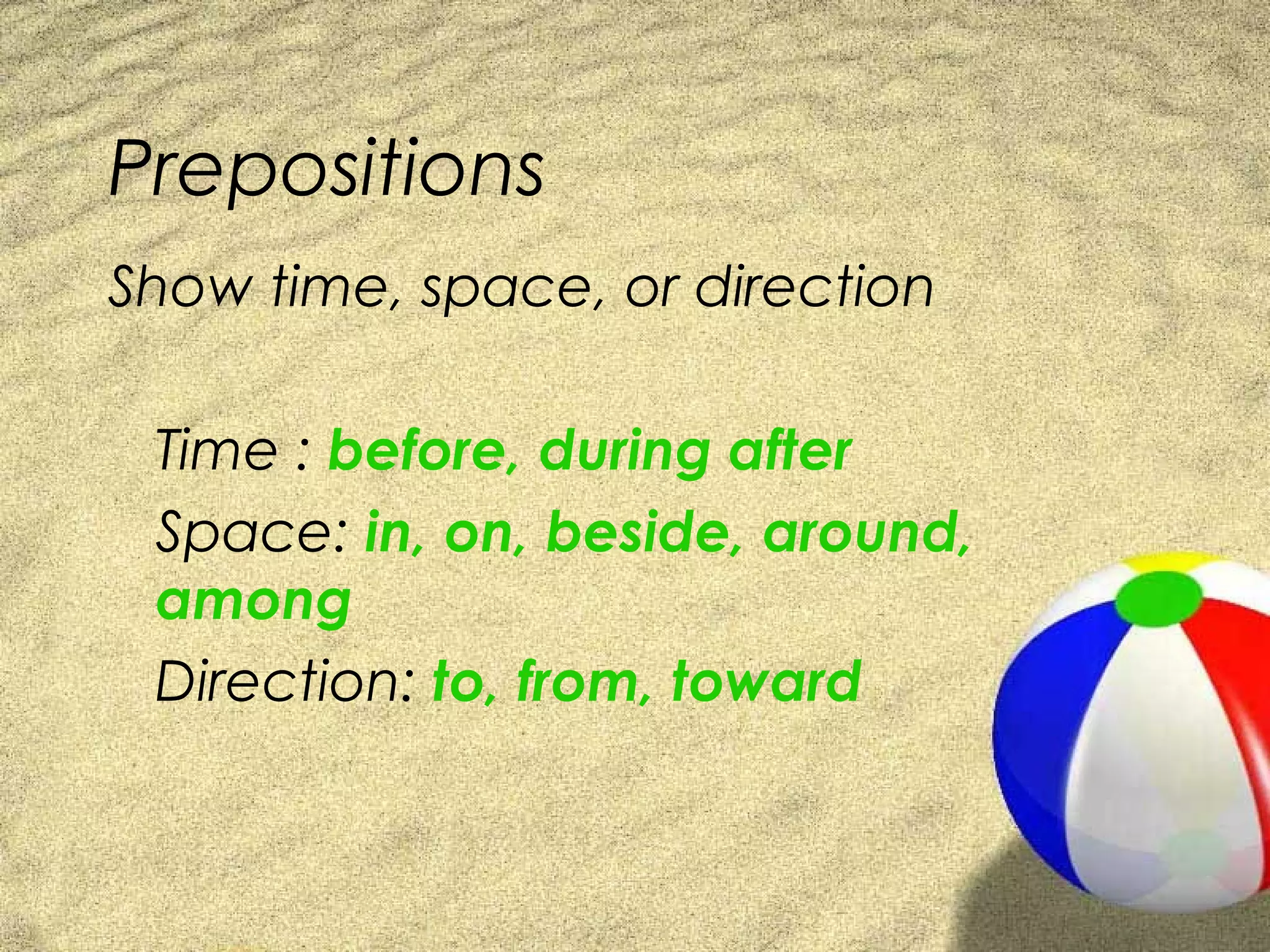
Prepositions
Show time, space, or direction

 Time : before, during after
 Space: in, on, beside, around,
 among
 Direction: to, from, toward
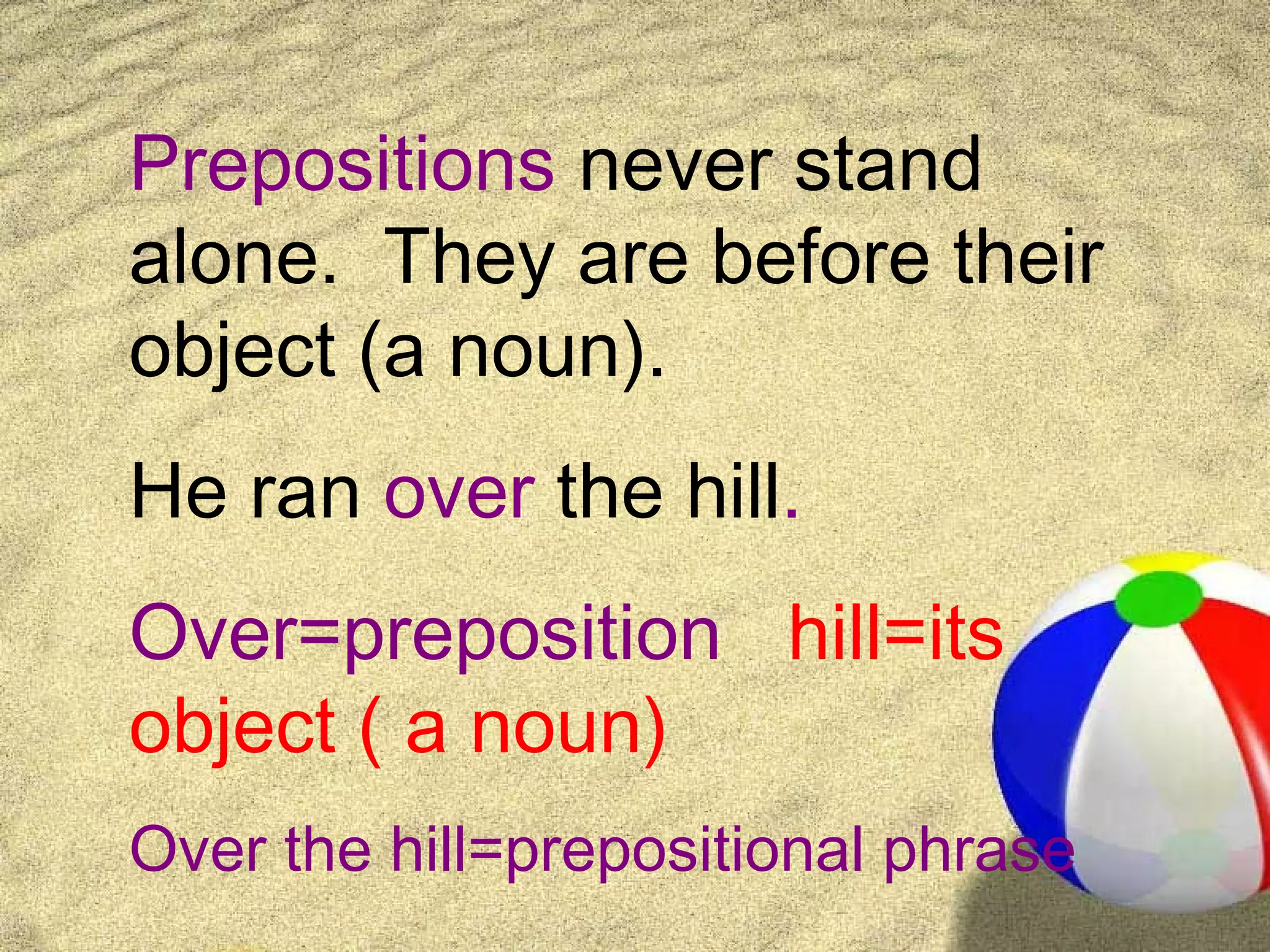
Prepositions never stand
alone. They are before their
object (a noun).
He ran over the hill.
Over=preposition hill=its
object ( a noun)
Over the hill=prepositional phrase
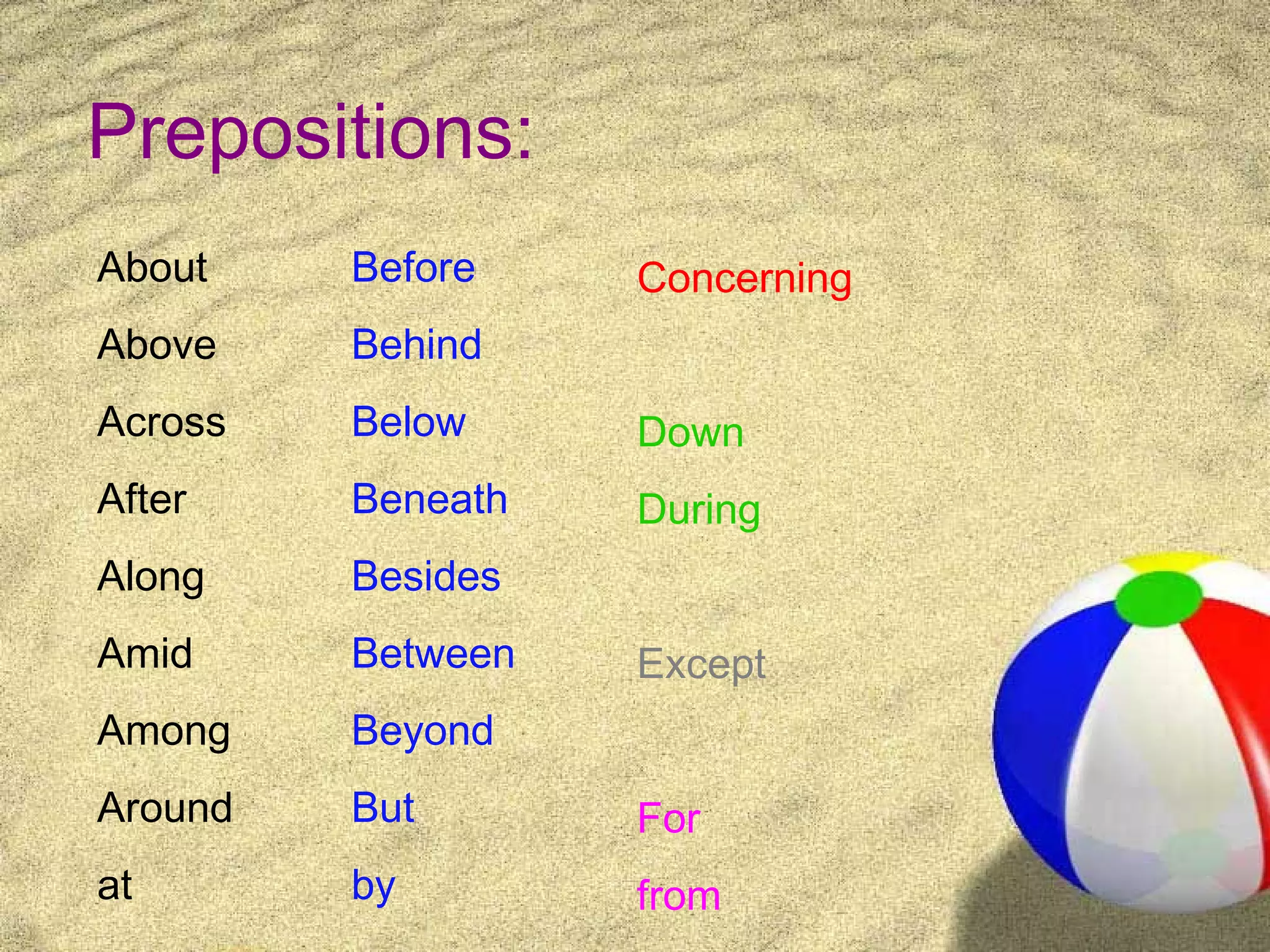
Prepositions:
About    Before    Concerning
Above    Behind
Across   Below     Down
After    Beneath   During
Along    Besides
Amid     Between   Except
Among    Beyond
Around   But       For
at       by        from
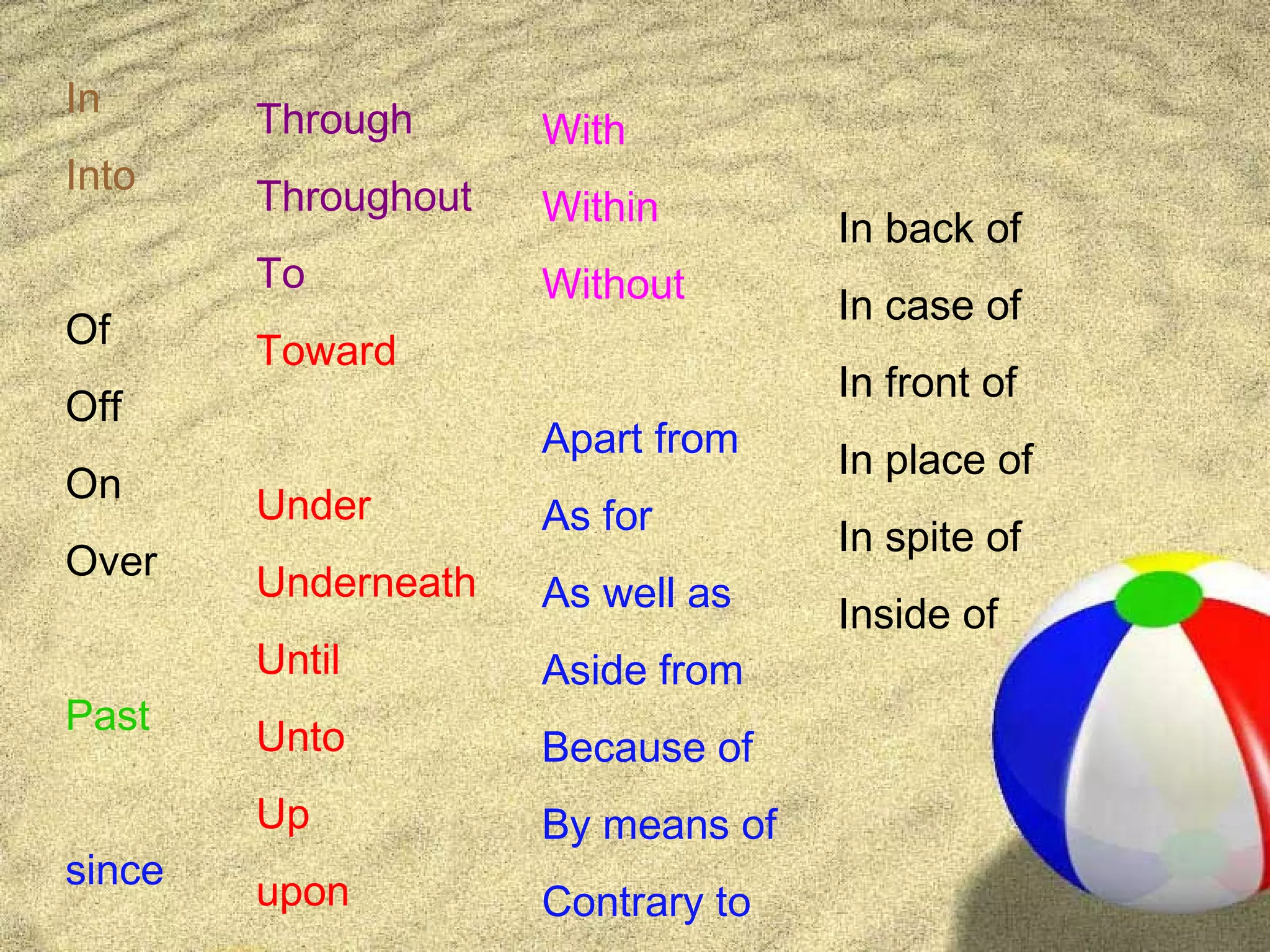
In      Through      With
Into    Throughout   Within        In back of
        To           Without       In case of
Of      Toward
                                   In front of
Off
                     Apart from    In place of
On      Under        As for        In spite of
Over    Underneath   As well as    Inside of
        Until        Aside from
Past    Unto         Because of
        Up           By means of
since   upon         Contrary to
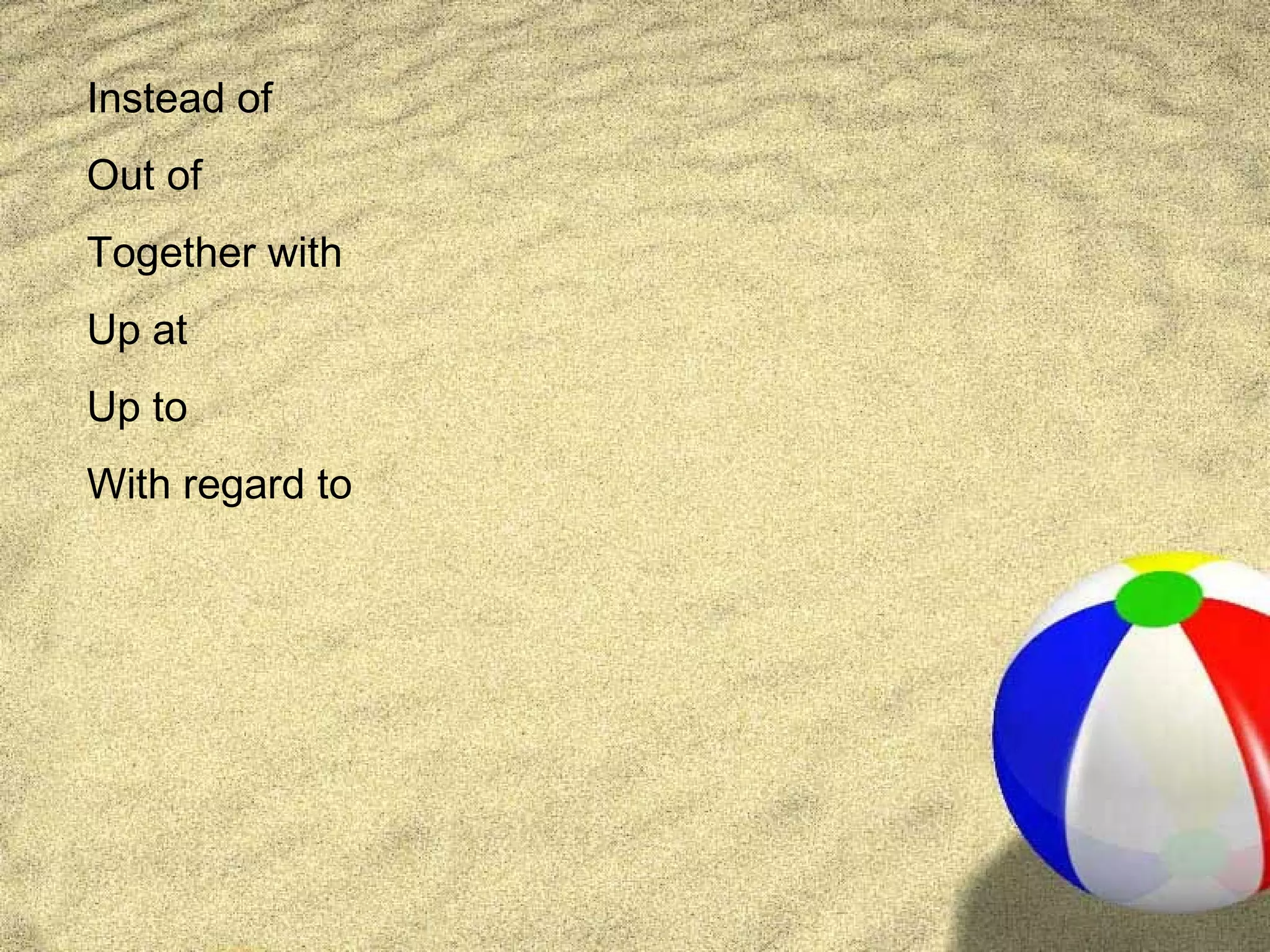
Instead of
Out of
Together with
Up at
Up to
With regard to
A little word that
 Interjection               expresses a
                            feeling, calls
                            attention, says
                            yes or no, or
                            indicates a
                            pause.
Wow!   Gee!   Yep!   Hey!   Well,   Ah!

Grammar: Parts of Speech