LAD   GRAMMAR WORKSHOP Center for Language Development Across the Disciplines LAD/FIPSE/FAR
What is a sentence? A  sentence  is a group of words that expresses a complete thought. Ex.  This gift is for you. Every sentence has two parts: Subject Predicate
Subject The  subject  tells who or  what the sentence is about . Complete subject : My tutors  are outstanding. Simple subject : Yvette  is a tutor.
Predicate Complete predicate : words that tell what the subject is or does  Verb :  the key word of the complete predicate – also known as  simple   predicate Ex. The girl  runs  real fast .
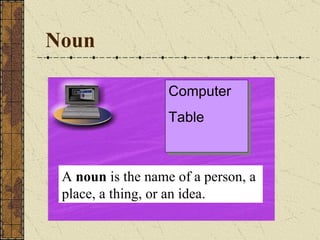
Noun A  noun  is the name of a person, a place, a thing, or an idea. Computer Table
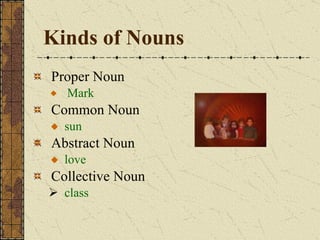
Kinds of Nouns Proper Noun Mark Common Noun sun Abstract Noun love Collective Noun class
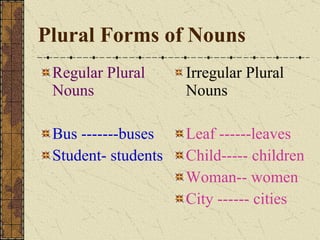
Plural Forms of Nouns Regular Plural Nouns Bus -------buses Student- students Irregular Plural Nouns Leaf ------leaves Child----- children Woman-- women City ------ cities
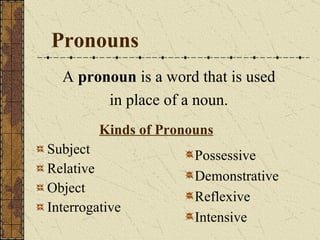
Pronouns Kinds of Pronouns Subject Relative Object Interrogative Possessive Demonstrative Reflexive Intensive A  pronoun  is a word that is used  in place of a noun.
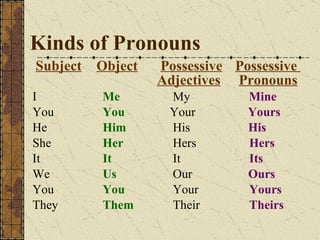
Kinds of Pronouns   Subject Object Possessive   Possessive    Adjectives   Pronouns I     Me   My  Mine You   You   Your  Yours He   Him     His   His She   Her   Hers   Hers It   It   It   Its We   Us   Our   Ours You   You   Your   Yours They   Them   Their   Theirs
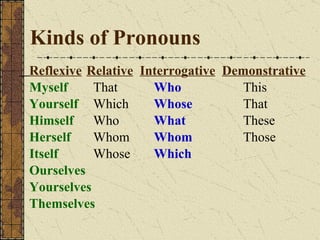
Kinds of Pronouns Reflexive   Relative   Interrogative   Demonstrative Myself   That   Who This Yourself   Which   Whose That Himself   Who   What These Herself   Whom   Whom Those Itself   Whose   Which Ourselves Yourselves Themselves
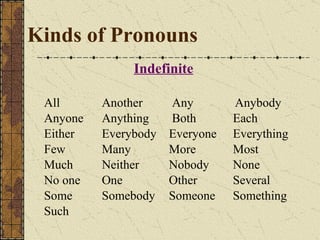
Kinds of Pronouns Indefinite All Another   Any   Anybody Anyone Anything   Both  Each   Either Everybody  Everyone  Everything   Few Many  More  Most   Much  Neither  Nobody  None No one One  Other  Several   Some Somebody  Someone  Something   Such
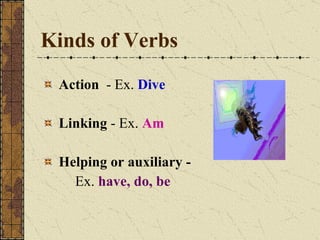
Kinds of Verbs Action   - Ex.  Dive Linking  - Ex.  Am Helping or auxiliary - Ex.  have, do, be
Verb Tenses Present Past Future Present Progressive Past Progressive Future Progressive Present Perfect  Past Perfect Future Perfect
Adjective An adjective describes or modifies a noun or pronoun. Answers the questions: What kind ?   I like the  long, green  rectangle.  Which one? I want  that  dress. How many? I  see  twelve  circles.
Adverb A word that modifies verbs, adjectives, or other adverbs. Answers the questions : When ?  I will see you  tomorrow . Where ?  The dog is  outside .   How?  She worked  happily.   To what extent or degree ? They swam  deeper into   the ocean .   In what manner ?  Mary sang  beautifully .
Prepositions A word that shows a relationship between a noun or pronoun and some other words in the sentence. Example: The students  of   this university  are dynamic.
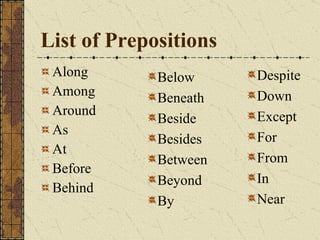
List of Prepositions Along Among Around  As At Before Behind Below Beneath Beside Besides Between Beyond By Despite Down Except For From In Near
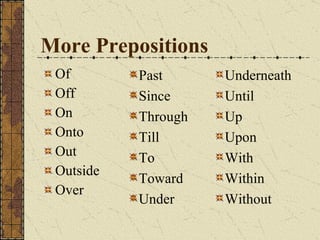
More Prepositions Of Off On Onto Out Outside Over Past Since Through Till To Toward Under Underneath Until Up Upon With Within Without
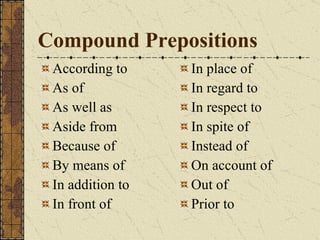
Compound Prepositions According to As of As well as Aside from Because of By means of In addition to In front of In place of In regard to In respect to In spite of Instead of On account of Out of Prior to
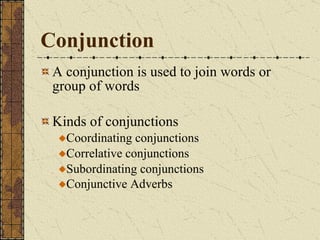
Conjunction A conjunction is used to join words or group of words Kinds of conjunctions Coordinating conjunctions Correlative conjunctions Subordinating conjunctions Conjunctive Adverbs
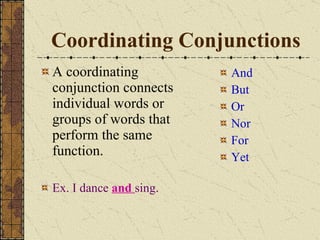
Coordinating Conjunctions A coordinating conjunction connects individual words or groups of words that perform the same function. Ex. I dance  and  sing. And But Or Nor For Yet
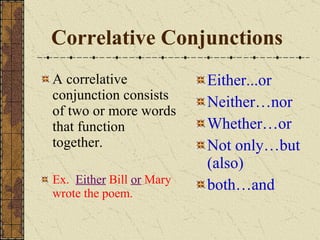
Correlative Conjunctions A correlative conjunction consists of two or more words that function together. Ex.  Either  Bill  or   Mary wrote the poem. Either...or Neither…nor Whether…or Not only…but (also) both…and
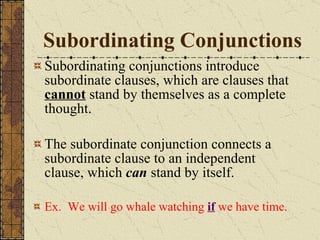
Subordinating Conjunctions Subordinating conjunctions introduce subordinate clauses, which are clauses that  cannot  stand by themselves as a complete thought. The subordinate conjunction connects a subordinate clause to an independent clause, which  can  stand by itself. Ex.  We will go whale watching  if   we have time.
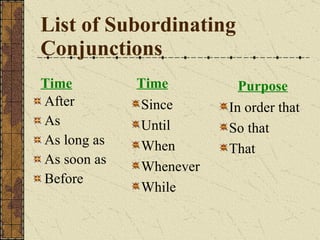
List of Subordinating Conjunctions   After As As long as As soon as Before In order that So that That Since Until When Whenever While Time Purpose Time
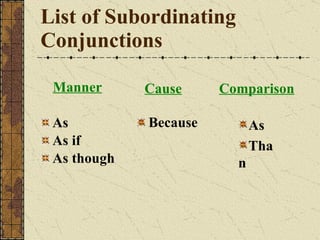
List of Subordinating Conjunctions Manner As As if As though     Because As Than Cause Comparison
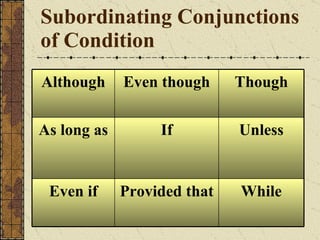
Subordinating Conjunctions of Condition While Provided that Even if Unless If As long as Though Even though Although
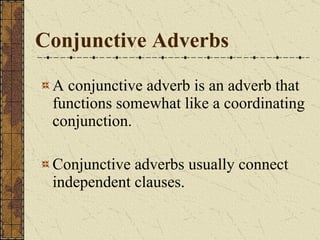
Conjunctive Adverbs A conjunctive adverb is an adverb that functions somewhat like a coordinating conjunction. Conjunctive adverbs usually connect independent clauses.
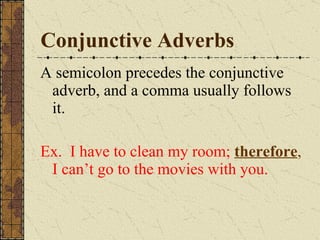
Conjunctive Adverbs A semicolon precedes the conjunctive adverb, and a comma usually follows it. Ex.  I have to clean my room;  therefore ,  I can’t go to the movies with you.
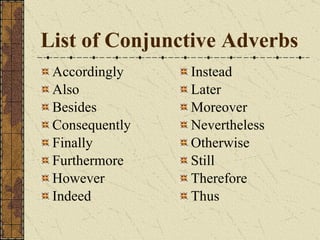
List of Conjunctive   Adverbs   Accordingly Also Besides Consequently Finally Furthermore However Indeed Instead Later Moreover Nevertheless Otherwise Still Therefore Thus
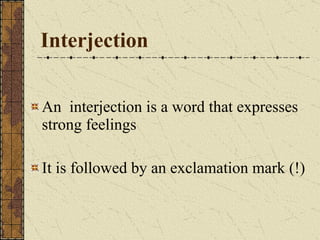
Interjection An  interjection is a word that expresses strong feelings It is followed by an exclamation mark (!)
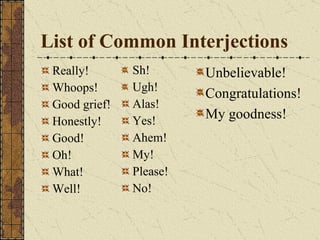
List of Common Interjections Really! Whoops! Good grief! Honestly! Good! Oh! What! Well! Sh! Ugh! Alas! Yes! Ahem! My! Please! No! Unbelievable! Congratulations!  My goodness!
Acknowledgments Faculty Enrichment and Educational Technology Center Zobeida Rosado
LAD  GRAMMAR  WORKSHOP Prepared by Professors Delia Serrano and Jennifer Soler University of the Sacred Heart Department of Humanities copyright  ©  August 2002

Grammar Workshop

  • 1.
    LAD GRAMMAR WORKSHOP Center for Language Development Across the Disciplines LAD/FIPSE/FAR
  • 2.
    What is asentence? A sentence is a group of words that expresses a complete thought. Ex. This gift is for you. Every sentence has two parts: Subject Predicate
  • 3.
    Subject The subject tells who or what the sentence is about . Complete subject : My tutors are outstanding. Simple subject : Yvette is a tutor.
  • 4.
    Predicate Complete predicate: words that tell what the subject is or does Verb : the key word of the complete predicate – also known as simple predicate Ex. The girl runs real fast .
  • 5.
    Noun A noun is the name of a person, a place, a thing, or an idea. Computer Table
  • 6.
    Kinds of NounsProper Noun Mark Common Noun sun Abstract Noun love Collective Noun class
  • 7.
    Plural Forms ofNouns Regular Plural Nouns Bus -------buses Student- students Irregular Plural Nouns Leaf ------leaves Child----- children Woman-- women City ------ cities
  • 8.
    Pronouns Kinds ofPronouns Subject Relative Object Interrogative Possessive Demonstrative Reflexive Intensive A pronoun is a word that is used in place of a noun.
  • 9.
    Kinds of Pronouns Subject Object Possessive Possessive Adjectives Pronouns I Me My Mine You You Your Yours He Him His His She Her Hers Hers It It It Its We Us Our Ours You You Your Yours They Them Their Theirs
  • 10.
    Kinds of PronounsReflexive Relative Interrogative Demonstrative Myself That Who This Yourself Which Whose That Himself Who What These Herself Whom Whom Those Itself Whose Which Ourselves Yourselves Themselves
  • 11.
    Kinds of PronounsIndefinite All Another Any Anybody Anyone Anything Both Each Either Everybody Everyone Everything Few Many More Most Much Neither Nobody None No one One Other Several Some Somebody Someone Something Such
  • 12.
    Kinds of VerbsAction - Ex. Dive Linking - Ex. Am Helping or auxiliary - Ex. have, do, be
  • 13.
    Verb Tenses PresentPast Future Present Progressive Past Progressive Future Progressive Present Perfect Past Perfect Future Perfect
  • 14.
    Adjective An adjectivedescribes or modifies a noun or pronoun. Answers the questions: What kind ? I like the long, green rectangle. Which one? I want that dress. How many? I see twelve circles.
  • 15.
    Adverb A wordthat modifies verbs, adjectives, or other adverbs. Answers the questions : When ? I will see you tomorrow . Where ? The dog is outside . How? She worked happily. To what extent or degree ? They swam deeper into the ocean . In what manner ? Mary sang beautifully .
  • 16.
    Prepositions A wordthat shows a relationship between a noun or pronoun and some other words in the sentence. Example: The students of this university are dynamic.
  • 17.
    List of PrepositionsAlong Among Around As At Before Behind Below Beneath Beside Besides Between Beyond By Despite Down Except For From In Near
  • 18.
    More Prepositions OfOff On Onto Out Outside Over Past Since Through Till To Toward Under Underneath Until Up Upon With Within Without
  • 19.
    Compound Prepositions Accordingto As of As well as Aside from Because of By means of In addition to In front of In place of In regard to In respect to In spite of Instead of On account of Out of Prior to
  • 20.
    Conjunction A conjunctionis used to join words or group of words Kinds of conjunctions Coordinating conjunctions Correlative conjunctions Subordinating conjunctions Conjunctive Adverbs
  • 21.
    Coordinating Conjunctions Acoordinating conjunction connects individual words or groups of words that perform the same function. Ex. I dance and sing. And But Or Nor For Yet
  • 22.
    Correlative Conjunctions Acorrelative conjunction consists of two or more words that function together. Ex. Either Bill or Mary wrote the poem. Either...or Neither…nor Whether…or Not only…but (also) both…and
  • 23.
    Subordinating Conjunctions Subordinatingconjunctions introduce subordinate clauses, which are clauses that cannot stand by themselves as a complete thought. The subordinate conjunction connects a subordinate clause to an independent clause, which can stand by itself. Ex. We will go whale watching if we have time.
  • 24.
    List of SubordinatingConjunctions After As As long as As soon as Before In order that So that That Since Until When Whenever While Time Purpose Time
  • 25.
    List of SubordinatingConjunctions Manner As As if As though Because As Than Cause Comparison
  • 26.
    Subordinating Conjunctions ofCondition While Provided that Even if Unless If As long as Though Even though Although
  • 27.
    Conjunctive Adverbs Aconjunctive adverb is an adverb that functions somewhat like a coordinating conjunction. Conjunctive adverbs usually connect independent clauses.
  • 28.
    Conjunctive Adverbs Asemicolon precedes the conjunctive adverb, and a comma usually follows it. Ex. I have to clean my room; therefore , I can’t go to the movies with you.
  • 29.
    List of Conjunctive Adverbs Accordingly Also Besides Consequently Finally Furthermore However Indeed Instead Later Moreover Nevertheless Otherwise Still Therefore Thus
  • 30.
    Interjection An interjection is a word that expresses strong feelings It is followed by an exclamation mark (!)
  • 31.
    List of CommonInterjections Really! Whoops! Good grief! Honestly! Good! Oh! What! Well! Sh! Ugh! Alas! Yes! Ahem! My! Please! No! Unbelievable! Congratulations! My goodness!
  • 32.
    Acknowledgments Faculty Enrichmentand Educational Technology Center Zobeida Rosado
  • 33.
    LAD GRAMMAR WORKSHOP Prepared by Professors Delia Serrano and Jennifer Soler University of the Sacred Heart Department of Humanities copyright © August 2002