



Grammar & ESL
Wordsmith Workshop #2
Effective Legal Writing
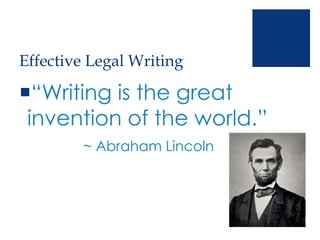
“Writing is the great
invention of the world.”
~ Abraham Lincoln
Legal Language
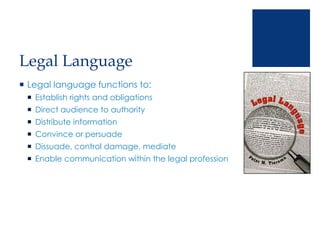
 Legal language functions to:
 Establish rights and obligations
 Direct audience to authority
 Distribute information
 Convince or persuade
 Dissuade, control damage, mediate
 Enable communication within the legal profession
Legal Language
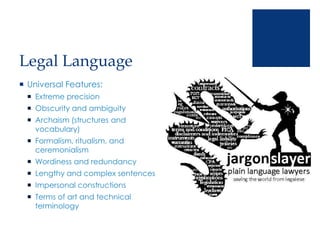
 Universal Features:
 Extreme precision
 Obscurity and ambiguity
 Archaism (structures and
vocabulary)
 Formalism, ritualism, and
ceremonialism
 Wordiness and redundancy
 Lengthy and complex sentences
 Impersonal constructions
 Terms of art and technical
terminology
Characteristics of Good Legal Writing
 Conciseness
 Completeness
 Courtesy
 Clarity
 Correctness
 Accurate + Analytical
 Relevant + Organized
 Thorough + Specific and Concrete
 Logical + Correct
 Persuasive + Clear
Seven Suggestions for Effective
Legal Writing
1. Credibility
2. Clarity
3. Brevity
4. Know Your Audience
5. Using Your Facts to Tell Your Story
6. Organizing Legal Arguments
7. Avoid Visual Fatigue
Dictionary & Thesaurus
 Take the time to find the definition ( Black’s Law Dictionary).
 Learn how it is used by the courts ( Words & phrases).
 Understand the context.
Example: “Stipulate”
Grammar –
Connectors
 The use of connectors
makes your writing easier
to understand.
 Connectors are used for
transitions, i.e. moving from
one idea to another.
Connectors link sentences
and paragraphs.
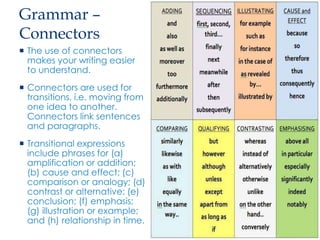
 Transitional expressions
include phrases for (a)
amplification or addition;
(b) cause and effect; (c)
comparison or analogy; (d)
contrast or alternative; (e)
conclusion; (f) emphasis;
(g) illustration or example;
and (h) relationship in time.
Commas
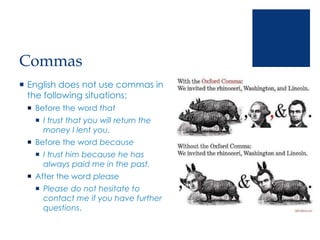
 English does not use commas in
the following situations:
 Before the word that
 I trust that you will return the
money I lent you.
 Before the word because
 I trust him because he has
always paid me in the past.
 After the word please
 Please do not hesitate to
contact me if you have further
questions.
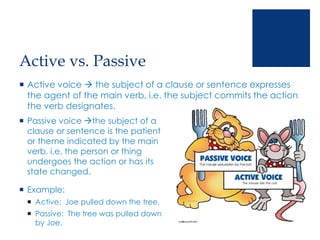
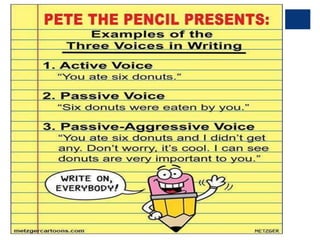
Active vs. Passive
 Active voice  the subject of a clause or sentence expresses
the agent of the main verb, i.e. the subject commits the action
the verb designates.
 Passive voice the subject of a
clause or sentence is the patient
or theme indicated by the main
verb, i.e. the person or thing
undergoes the action or has its
state changed.
 Example:
 Active: Joe pulled down the tree.
 Passive: The tree was pulled down
by Joe.
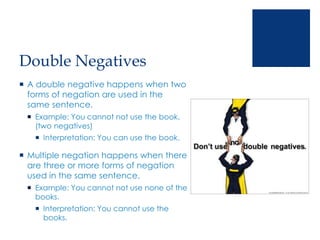
Double Negatives
 A double negative happens when two
forms of negation are used in the
same sentence.
 Example: You cannot not use the book.
(two negatives)
 Interpretation: You can use the book.
 Multiple negation happens when there
are three or more forms of negation
used in the same sentence.
 Example: You cannot not use none of the
books.
 Interpretation: You cannot use the
books.
Subject-Verb Agreement
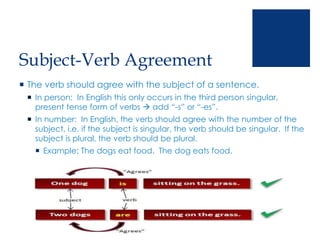
 The verb should agree with the subject of a sentence.
 In person: In English this only occurs in the third person singular,
present tense form of verbs  add “-s” or “-es”.
 In number: In English, the verb should agree with the number of the
subject, i.e. if the subject is singular, the verb should be singular. If the
subject is plural, the verb should be plural.
 Example: The dogs eat food. The dog eats food.
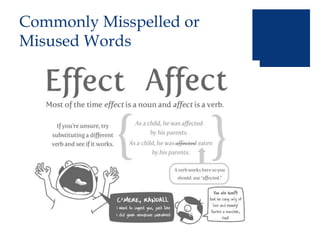
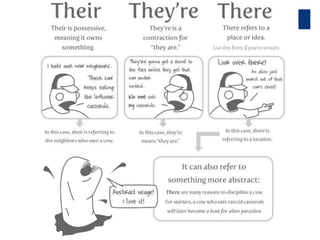
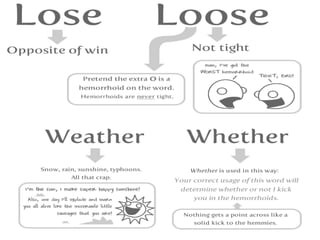
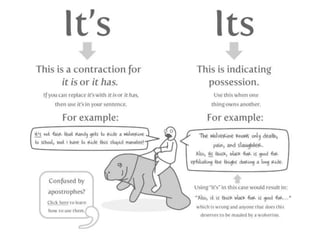
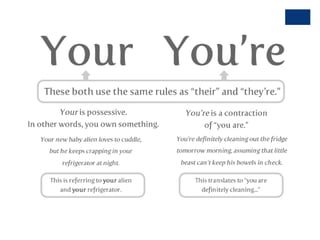
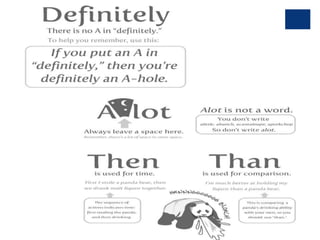
Commonly Misspelled or
Misused Words
"Punctuation and Grammar"
http://www.cali.org/lesson/585
"Punctuation and Grammar:
Advanced"
http://www.cali.org/lesson/108
3
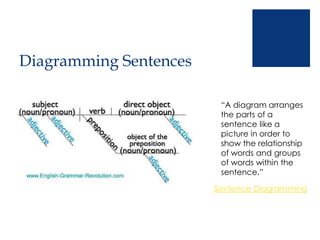
Diagramming Sentences
“A diagram arranges
the parts of a
sentence like a
picture in order to
show the relationship
of words and groups
of words within the
sentence.”
Sentence Diagramming
Synonyms & Antonyms
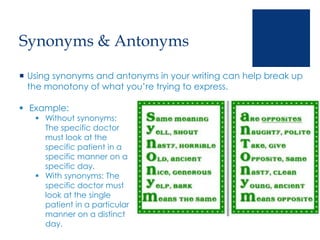
 Using synonyms and antonyms in your writing can help break up
the monotony of what you’re trying to express.
 Example:
 Without synonyms:
The specific doctor
must look at the
specific patient in a
specific manner on a
specific day.
 With synonyms: The
specific doctor must
look at the single
patient in a particular
manner on a distinct
day.
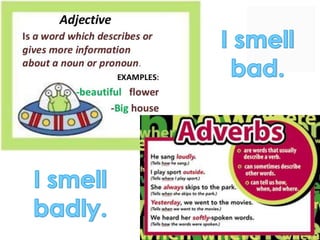
Adjective vs. Adverb
Contractions
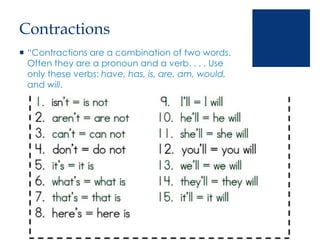
 “Contractions are a combination of two words.
Often they are a pronoun and a verb. . . . Use
only these verbs: have, has, is, are, am, would,
and will.
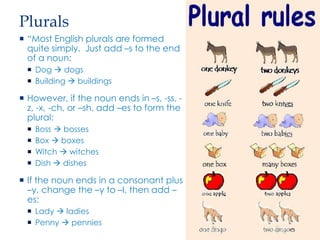
Plurals
 “Most English plurals are formed
quite simply. Just add –s to the end
of a noun:
 Dog  dogs
 Building  buildings
 However, if the noun ends in –s, -ss, -
z, -x, -ch, or –sh, add –es to form the
plural:
 Boss  bosses
 Box  boxes
 Witch  witches
 Dish  dishes
 If the noun ends in a consonant plus
–y, change the –y to –I, then add –
es:
 Lady  ladies
 Penny  pennies
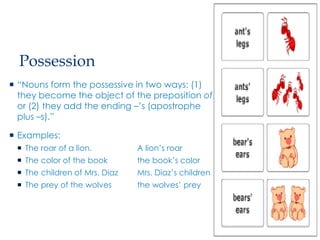
Possession
 “Nouns form the possessive in two ways: (1)
they become the object of the preposition of,
or (2) they add the ending –’s (apostrophe
plus –s).”
 Examples:
 The roar of a lion. A lion’s roar
 The color of the book the book’s color
 The children of Mrs. Diaz Mrs. Diaz’s children
 The prey of the wolves the wolves’ prey
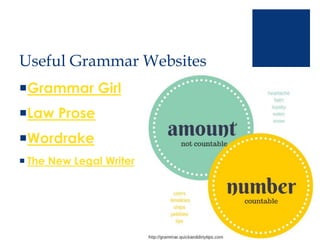
Useful Grammar Websites
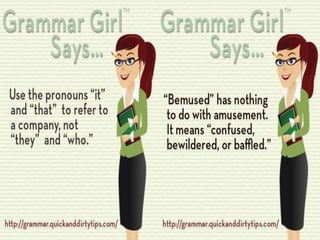
Grammar Girl
Law Prose
Wordrake
 The New Legal Writer
Useful ESL Websites
English Grammar
Conversation Questions
ESL Video
Using English
Busy Teacher
Grammar & ESL

Grammar & ESL

  • 1.
  • 3.
    Effective Legal Writing “Writingis the great invention of the world.” ~ Abraham Lincoln
  • 4.
    Legal Language  Legallanguage functions to:  Establish rights and obligations  Direct audience to authority  Distribute information  Convince or persuade  Dissuade, control damage, mediate  Enable communication within the legal profession
  • 5.
    Legal Language  UniversalFeatures:  Extreme precision  Obscurity and ambiguity  Archaism (structures and vocabulary)  Formalism, ritualism, and ceremonialism  Wordiness and redundancy  Lengthy and complex sentences  Impersonal constructions  Terms of art and technical terminology
  • 6.
    Characteristics of GoodLegal Writing  Conciseness  Completeness  Courtesy  Clarity  Correctness  Accurate + Analytical  Relevant + Organized  Thorough + Specific and Concrete  Logical + Correct  Persuasive + Clear
  • 7.
    Seven Suggestions forEffective Legal Writing 1. Credibility 2. Clarity 3. Brevity 4. Know Your Audience 5. Using Your Facts to Tell Your Story 6. Organizing Legal Arguments 7. Avoid Visual Fatigue
  • 8.
    Dictionary & Thesaurus Take the time to find the definition ( Black’s Law Dictionary).  Learn how it is used by the courts ( Words & phrases).  Understand the context. Example: “Stipulate”
  • 9.
    Grammar – Connectors  Theuse of connectors makes your writing easier to understand.  Connectors are used for transitions, i.e. moving from one idea to another. Connectors link sentences and paragraphs.  Transitional expressions include phrases for (a) amplification or addition; (b) cause and effect; (c) comparison or analogy; (d) contrast or alternative; (e) conclusion; (f) emphasis; (g) illustration or example; and (h) relationship in time.
  • 10.
    Commas  English doesnot use commas in the following situations:  Before the word that  I trust that you will return the money I lent you.  Before the word because  I trust him because he has always paid me in the past.  After the word please  Please do not hesitate to contact me if you have further questions.
  • 11.
    Active vs. Passive Active voice  the subject of a clause or sentence expresses the agent of the main verb, i.e. the subject commits the action the verb designates.  Passive voice the subject of a clause or sentence is the patient or theme indicated by the main verb, i.e. the person or thing undergoes the action or has its state changed.  Example:  Active: Joe pulled down the tree.  Passive: The tree was pulled down by Joe.
  • 13.
    Double Negatives  Adouble negative happens when two forms of negation are used in the same sentence.  Example: You cannot not use the book. (two negatives)  Interpretation: You can use the book.  Multiple negation happens when there are three or more forms of negation used in the same sentence.  Example: You cannot not use none of the books.  Interpretation: You cannot use the books.
  • 14.
    Subject-Verb Agreement  Theverb should agree with the subject of a sentence.  In person: In English this only occurs in the third person singular, present tense form of verbs  add “-s” or “-es”.  In number: In English, the verb should agree with the number of the subject, i.e. if the subject is singular, the verb should be singular. If the subject is plural, the verb should be plural.  Example: The dogs eat food. The dog eats food.
  • 15.
  • 21.
    "Punctuation and Grammar" http://www.cali.org/lesson/585 "Punctuationand Grammar: Advanced" http://www.cali.org/lesson/108 3
  • 22.
    Diagramming Sentences “A diagramarranges the parts of a sentence like a picture in order to show the relationship of words and groups of words within the sentence.” Sentence Diagramming
  • 23.
    Synonyms & Antonyms Using synonyms and antonyms in your writing can help break up the monotony of what you’re trying to express.  Example:  Without synonyms: The specific doctor must look at the specific patient in a specific manner on a specific day.  With synonyms: The specific doctor must look at the single patient in a particular manner on a distinct day.
  • 24.
  • 25.
    Contractions  “Contractions area combination of two words. Often they are a pronoun and a verb. . . . Use only these verbs: have, has, is, are, am, would, and will.
  • 27.
    Plurals  “Most Englishplurals are formed quite simply. Just add –s to the end of a noun:  Dog  dogs  Building  buildings  However, if the noun ends in –s, -ss, - z, -x, -ch, or –sh, add –es to form the plural:  Boss  bosses  Box  boxes  Witch  witches  Dish  dishes  If the noun ends in a consonant plus –y, change the –y to –I, then add – es:  Lady  ladies  Penny  pennies
  • 28.
    Possession  “Nouns formthe possessive in two ways: (1) they become the object of the preposition of, or (2) they add the ending –’s (apostrophe plus –s).”  Examples:  The roar of a lion. A lion’s roar  The color of the book the book’s color  The children of Mrs. Diaz Mrs. Diaz’s children  The prey of the wolves the wolves’ prey
  • 29.
    Useful Grammar Websites GrammarGirl Law Prose Wordrake  The New Legal Writer
  • 31.
    Useful ESL Websites EnglishGrammar Conversation Questions ESL Video Using English Busy Teacher