Using
Appropriate
Multi-media
resources
Presented by Jhoevic Anne J. Casim
At the end of 60 minute lesson, the students should master
the following with 75% proficiency:
a) determine the different multi-media resources; and,
b) utilize varied multi-media resources to recount a
significant past.
Objectives
Multimedia is a broad term for combining multiple media
formats. Whenever text, audio, still images, animation,
videos are combined, the result is multimedia. Slides for
example, are multimedia as they combine text and images,
and sometimes video or audio.
What is multimedia?
YouTub
Google
Facebook
Twitte
Messenger
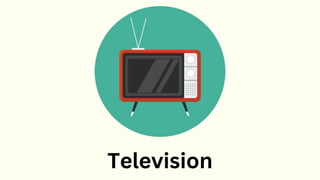
Television
Instagra
Photo
Multimedia
Multimedia plays an important role in today's society.
- It has made communication fast, easy and fun.
- It also bridges the gap of the past and the present in an
interesting and entertaining way.
-It is a good communication tool that uses animation, music,
video and the like which suits the type of learners today
Dr. Cleofe M. Bacungan
Different cultures vary in their ethical manifestations.
There are prohibitions about food, especially meat and
styles of clothing. Status of women differs. Free
enterprise and socialism have different economic
values.
There are the values of hiya and pakikisama, expressing
the Filipino's manner of communication and behavior.
These are actual modes of conduct subjective and
situational. Their attitude depends on the accepted
practices and ways of behavior of a given people at a
given time.
But beneath such diversity, there is a clear convergence
on some basic values which can truly be called
universals. No culture tolerates indiscriminate lying,
stealing, or violence within the group. Incest is taboo by
all cultures. Health, safety, productivity, efficiency,
integrity, freedom, justice, beauty, love, family,
solidarity, and respect for the dignity of man are valid
for all mankind at all times.
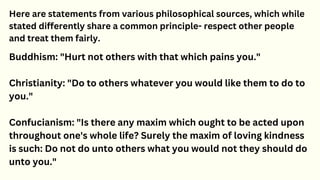
Here are statements from various philosophical sources, which while
stated differently share a common principle- respect other people
and treat them fairly.
Buddhism: "Hurt not others with that which pains you."
Christianity: "Do to others whatever you would like them to do to
you."
Confucianism: "Is there any maxim which ought to be acted upon
throughout one's whole life? Surely the maxim of loving kindness
is such: Do not do unto others what you would not they should do
unto you."
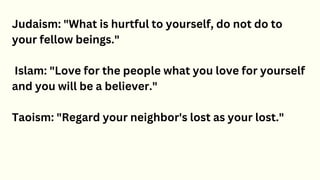
Judaism: "What is hurtful to yourself, do not do to
your fellow beings."
Islam: "Love for the people what you love for yourself
and you will be a believer."
Taoism: "Regard your neighbor's lost as your lost."
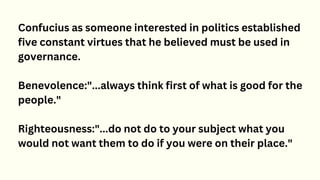
Confucius as someone interested in politics established
five constant virtues that he believed must be used in
governance.
Benevolence:"...always think first of what is good for the
people."
Righteousness:"...do not do to your subject what you
would not want them to do if you were on their place."
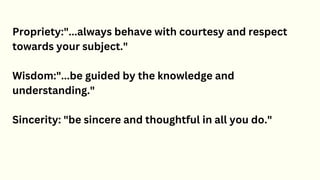
Propriety:"...always behave with courtesy and respect
towards your subject."
Wisdom:"...be guided by the knowledge and
understanding."
Sincerity: "be sincere and thoughtful in all you do."
Conclusion
What would people disagree with the statements above?
The timelessness of ethical universals in different
environments suggests that virtues such as union and
righteousness are deeply embedded in man's nature and
are necessary to maintain a happy life.
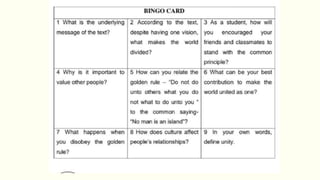
·Directions: Study the questions
listed in the TIC-TAC-TOE box
below. Choose a pattern
(horizontal, diagonal or vertical) to
form a TIC-TAC-TOE, and answer
the three questions in the pattern
you chose.
Additional Activity
·Directions: Give what is asked in each number.
1.What is multimedia? Give at least three (3)
example
Example
1.
2.
3.
2. Enumerate at least 2
significance
of multimedia.
Assignment
Directions: On a 1/2 sheet of paper,search
some information that is given in the
following.
1. Sipa
2. Mayon Volcano
3. Banaue Rice Terraces
Thank
You

Grade7_Module1_ppt_20240201_065929_0000.pptx

  • 2.
  • 3.
    At the endof 60 minute lesson, the students should master the following with 75% proficiency: a) determine the different multi-media resources; and, b) utilize varied multi-media resources to recount a significant past. Objectives
  • 4.
    Multimedia is abroad term for combining multiple media formats. Whenever text, audio, still images, animation, videos are combined, the result is multimedia. Slides for example, are multimedia as they combine text and images, and sometimes video or audio. What is multimedia?
  • 5.
  • 6.
  • 7.
  • 8.
  • 9.
  • 10.
  • 11.
  • 12.
  • 13.
    Multimedia Multimedia plays animportant role in today's society. - It has made communication fast, easy and fun. - It also bridges the gap of the past and the present in an interesting and entertaining way. -It is a good communication tool that uses animation, music, video and the like which suits the type of learners today
  • 14.
    Dr. Cleofe M.Bacungan Different cultures vary in their ethical manifestations. There are prohibitions about food, especially meat and styles of clothing. Status of women differs. Free enterprise and socialism have different economic values.
  • 15.
    There are thevalues of hiya and pakikisama, expressing the Filipino's manner of communication and behavior. These are actual modes of conduct subjective and situational. Their attitude depends on the accepted practices and ways of behavior of a given people at a given time.
  • 16.
    But beneath suchdiversity, there is a clear convergence on some basic values which can truly be called universals. No culture tolerates indiscriminate lying, stealing, or violence within the group. Incest is taboo by all cultures. Health, safety, productivity, efficiency, integrity, freedom, justice, beauty, love, family, solidarity, and respect for the dignity of man are valid for all mankind at all times.
  • 17.
    Here are statementsfrom various philosophical sources, which while stated differently share a common principle- respect other people and treat them fairly. Buddhism: "Hurt not others with that which pains you." Christianity: "Do to others whatever you would like them to do to you." Confucianism: "Is there any maxim which ought to be acted upon throughout one's whole life? Surely the maxim of loving kindness is such: Do not do unto others what you would not they should do unto you."
  • 18.
    Judaism: "What ishurtful to yourself, do not do to your fellow beings." Islam: "Love for the people what you love for yourself and you will be a believer." Taoism: "Regard your neighbor's lost as your lost."
  • 19.
    Confucius as someoneinterested in politics established five constant virtues that he believed must be used in governance. Benevolence:"...always think first of what is good for the people." Righteousness:"...do not do to your subject what you would not want them to do if you were on their place."
  • 20.
    Propriety:"...always behave withcourtesy and respect towards your subject." Wisdom:"...be guided by the knowledge and understanding." Sincerity: "be sincere and thoughtful in all you do."
  • 21.
    Conclusion What would peopledisagree with the statements above? The timelessness of ethical universals in different environments suggests that virtues such as union and righteousness are deeply embedded in man's nature and are necessary to maintain a happy life.
  • 22.
    ·Directions: Study thequestions listed in the TIC-TAC-TOE box below. Choose a pattern (horizontal, diagonal or vertical) to form a TIC-TAC-TOE, and answer the three questions in the pattern you chose.
  • 24.
    Additional Activity ·Directions: Givewhat is asked in each number. 1.What is multimedia? Give at least three (3) example Example 1. 2. 3.
  • 25.
    2. Enumerate atleast 2 significance of multimedia.
  • 28.
    Assignment Directions: On a1/2 sheet of paper,search some information that is given in the following. 1. Sipa 2. Mayon Volcano 3. Banaue Rice Terraces
  • 29.