•Which of the following is an active
volcano in the Philippines?
A.Apo in Davao C.Isarong in Camarines Sur
B. Bud Datu in Sulu D. Kanlaon in Negros Oriental
•Ana is asked to give examples of
inactive volcanoes. Which should she
not mention?
A. Taal
B.Iraya
C.Tamburok
D.Kanlaon
•Which of the following
characteristics of a volcano depends
on its magma emission?
A.Age
B.Size
C.Shape
D.Silica Content
•What determines the nature of eruption?
A.Temperature C. Amount of dissolve gases
B. Chemical composition D. All of the above
•What makes up the cone of a volcano?
I. Pyroclastics only
II. Lava only
III. Combination of Lava and Pyroclastics
A.I & III
B.I & II
C.I, II, & III
D.None of the above
•How does composition of magma affects
its viscosity?
A.The higher the silica content; the lower
the viscosity
B.The lower the silica content; the higher
the viscosity
C.The lower the silica content; the lower
the viscosity
D.There is no relationship
•What type of volcanic eruption is a
steam-driven eruption as the hot rocks
come in contact
with water.?
A.Vulcanian B. Plinian
C.Hydrothermal D.
Strombolian
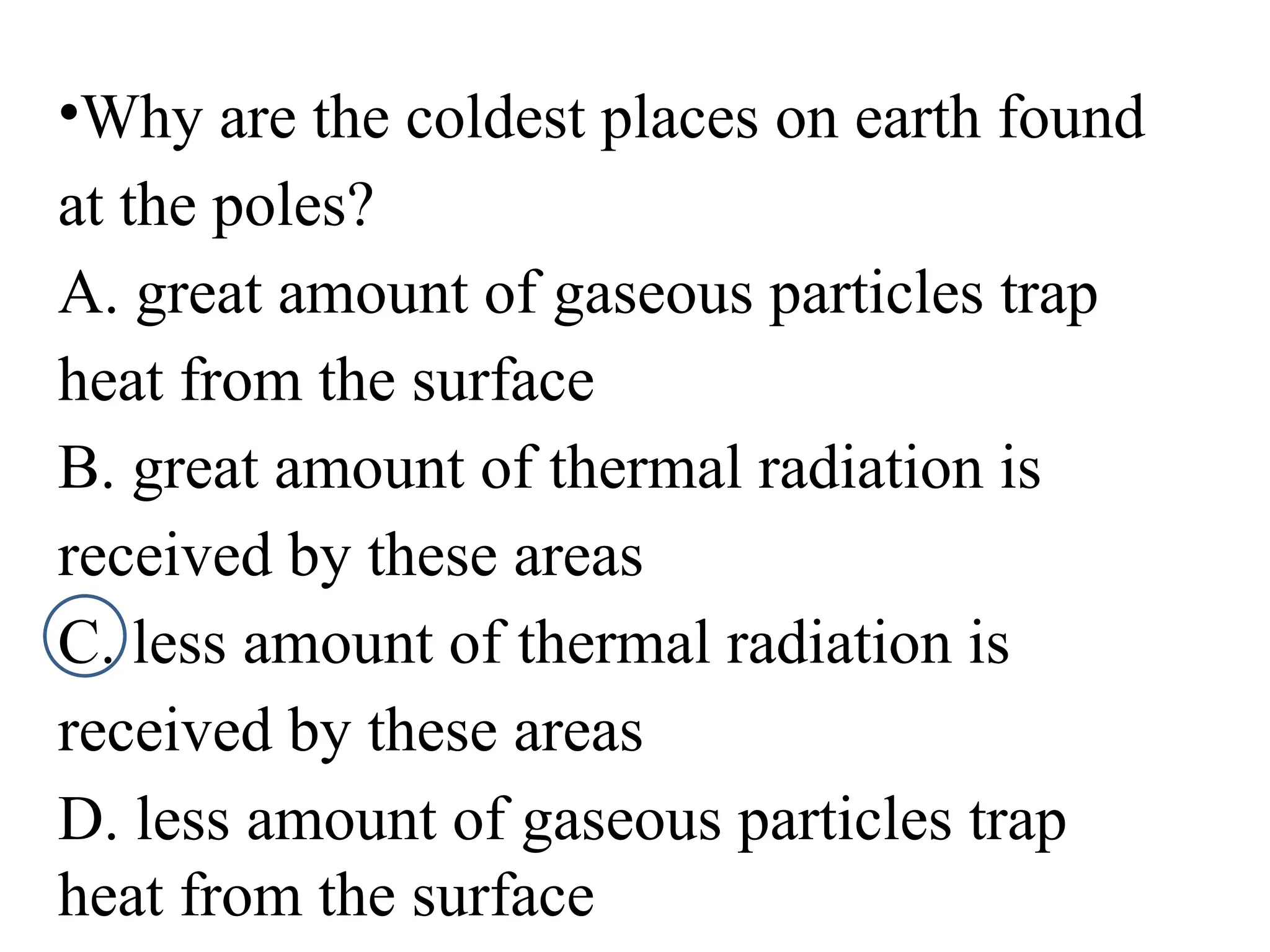
•Why are the coldest places on earth found
at the poles?
A. great amount of gaseous particles trap
heat from the surface
B. great amount of thermal radiation is
received by these areas
C. less amount of thermal radiation is
received by these areas
D. less amount of gaseous particles trap
heat from the surface
•How does the windward side differ from the
leeward side of a high land?
A. The windward receives more precipitation than
the leeward.
B. The leeward side has more vegetation than the
windward side.
C. The windward side receives more heat than the
leeward side.
D. The leeward side receives more precipitation
than the windward side.
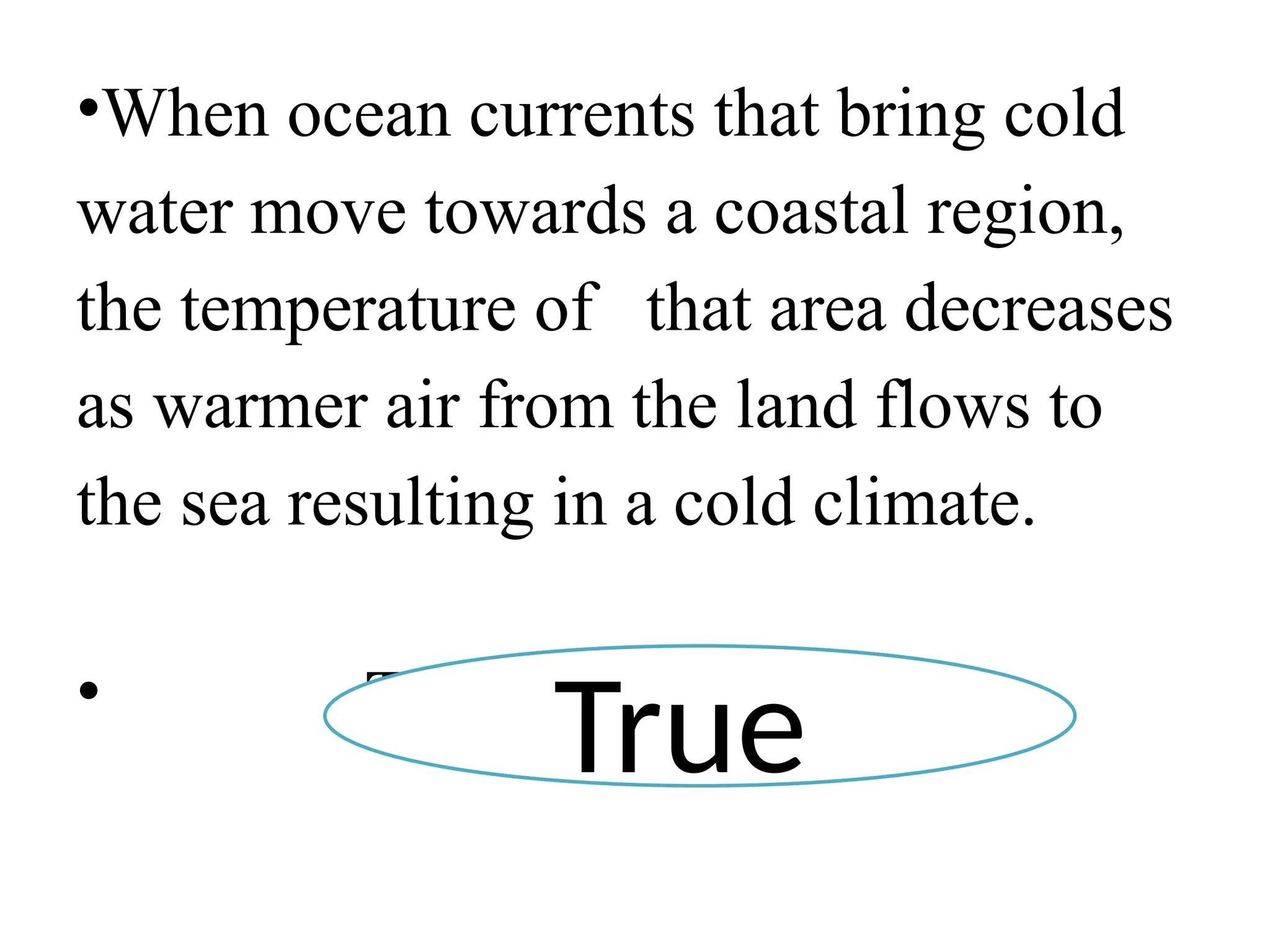
•When ocean currents that bring cold
water move towards a coastal region,
the temperature of that area decreases
as warmer air from the land flows to
the sea resulting in a cold climate.
• The statement is :
True
•What is the direction and temperature
of the ocean current in the Southern
Hemisphere?
A.Counter clockwise; warm
B.Counter clockwise; cold
C.Clockwise; warm
D.Clockwise; cold
•City A is surrounded by bodies of
water and has a moderate climate. It is
located near the equator. What will
most likely affect the climate of the
city?
A. latitude B. altitude
C. topography D. all of
these
• Why does cloud formation disappear
as the air moves slowly towards the
leeward side of a mountain?
• A. The air condenses as it moves to the
leeward side.
• B. The amount of water vapor is not
enough.
• C. The temperature becomes lower.
• D. There is too much water vapor.
•Which of the following can cause
global warming?
A. volcanic eruptions
B. the amount of rainfall
C. the rising of warm air into the
atmosphere
D. increase of the amount of CO2 in the
atmosphere
•Which of the following is an
indication of global warming?
A.rising of sea level
B.decrease of global temperature
C.coastal erosion
D.strong waves in the ocean
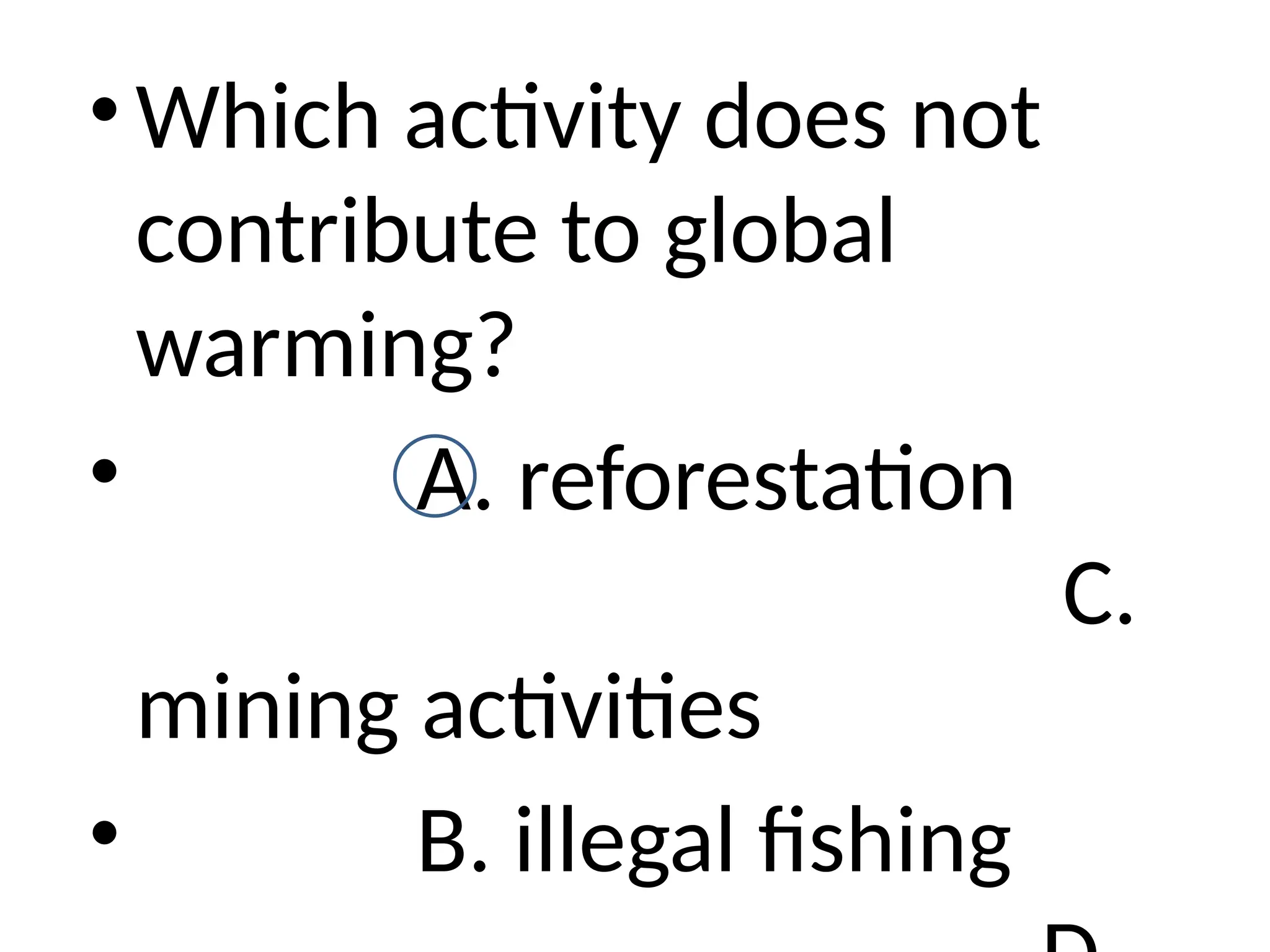
• Which activity does not
contribute to global
warming?
• A. reforestation
C.
mining activities
• B. illegal fishing
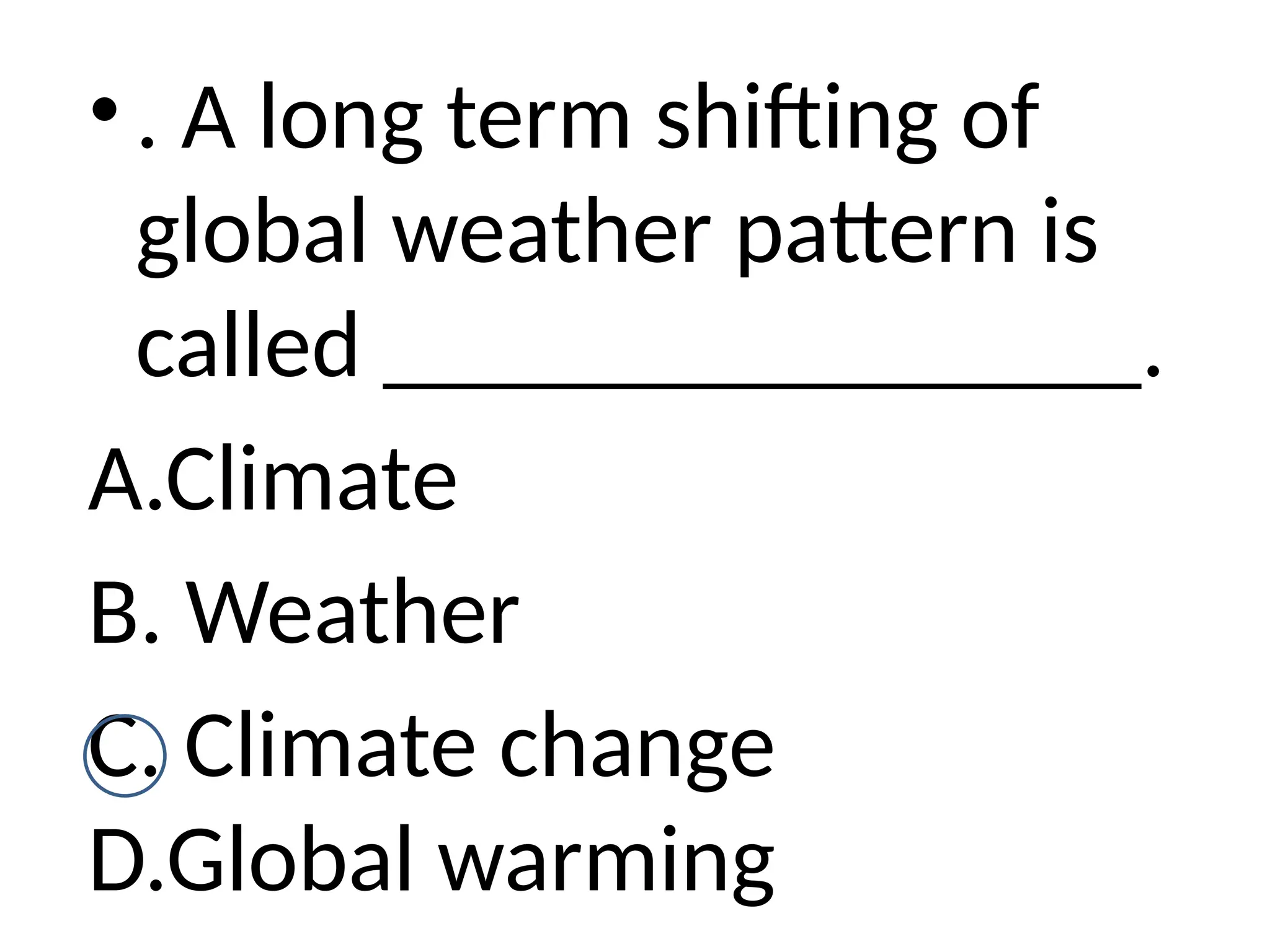
• . A long term shifting of
global weather pattern is
called ________________.
A.Climate
B. Weather
C. Climate change
D.Global warming
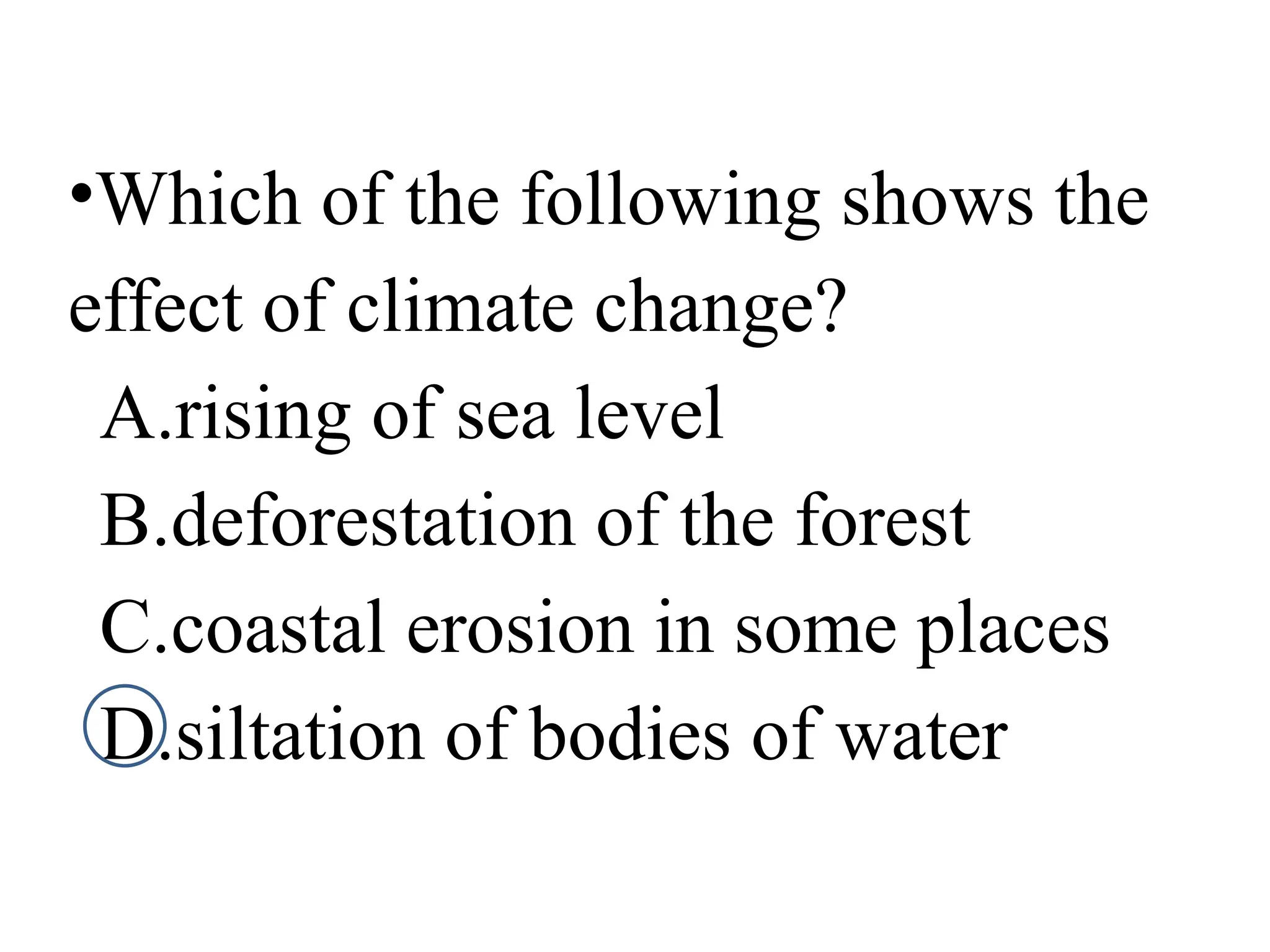
•Which of the following shows the
effect of climate change?
A.rising of sea level
B.deforestation of the forest
C.coastal erosion in some places
D.siltation of bodies of water
• When does greenhouse effect happen?
A. Greenhouse gases on the surface absorb
heat from the atmosphere.
B. Greenhouse gases on the surface absorb
heat from the earth’s interior.
C. Greenhouse gases in the upper
atmosphere absorb heat from outer space.
D. Greenhouse gases in the lower
atmosphere absorb heat from the earth’s
surface.
• A thick layer of volcanic ash can be heavy
enough to collapse the roofs of buildings
because
• ________________?
• is solid
• it can be blown by winds
• it becomes heavier as it cools
• it consists of tiny fragments of rocks that
becomes heavy as they pile up.
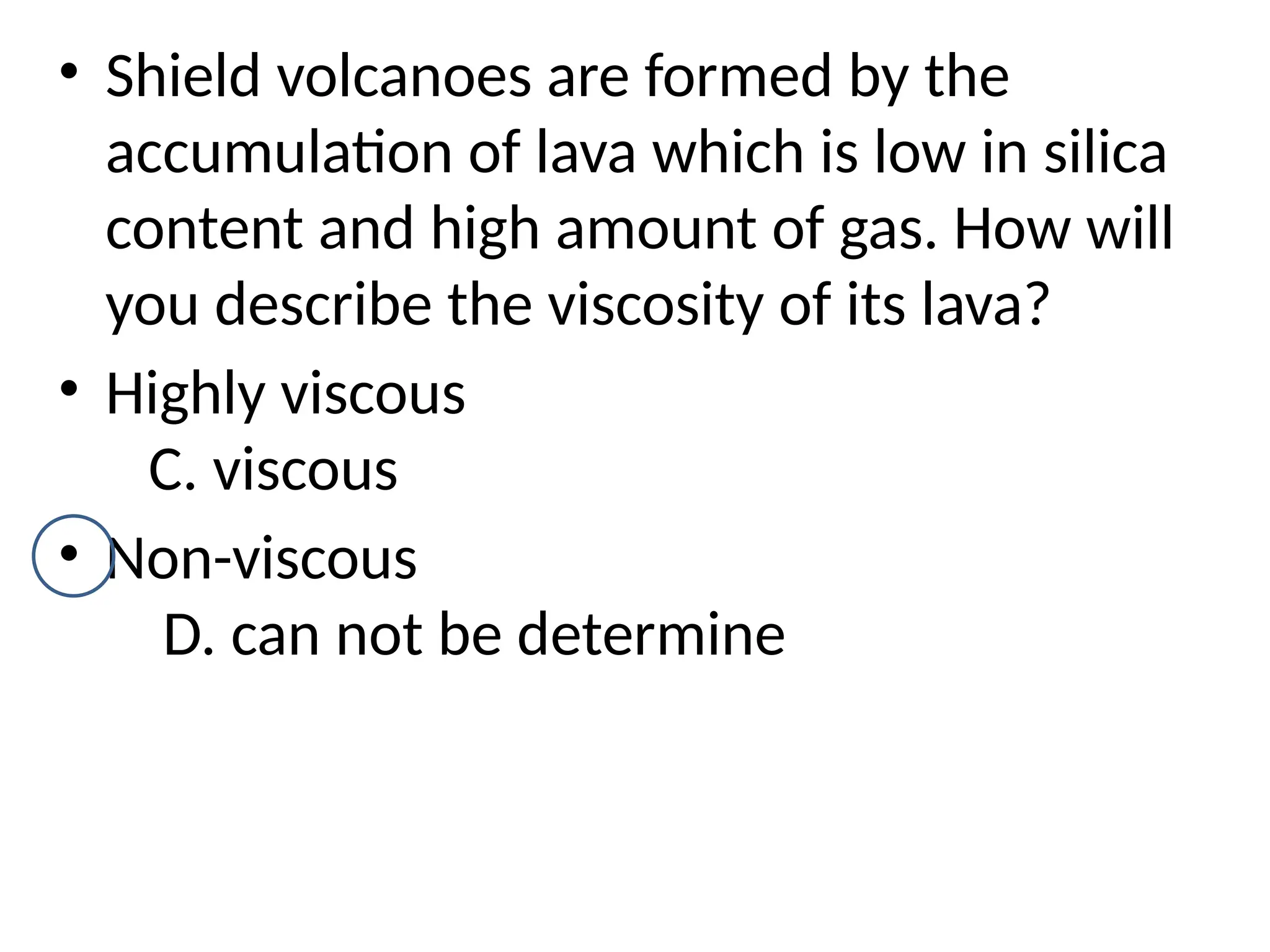
• Shield volcanoes are formed by the
accumulation of lava which is low in silica
content and high amount of gas. How will
you describe the viscosity of its lava?
• Highly viscous
C. viscous
• Non-viscous
D. can not be determine
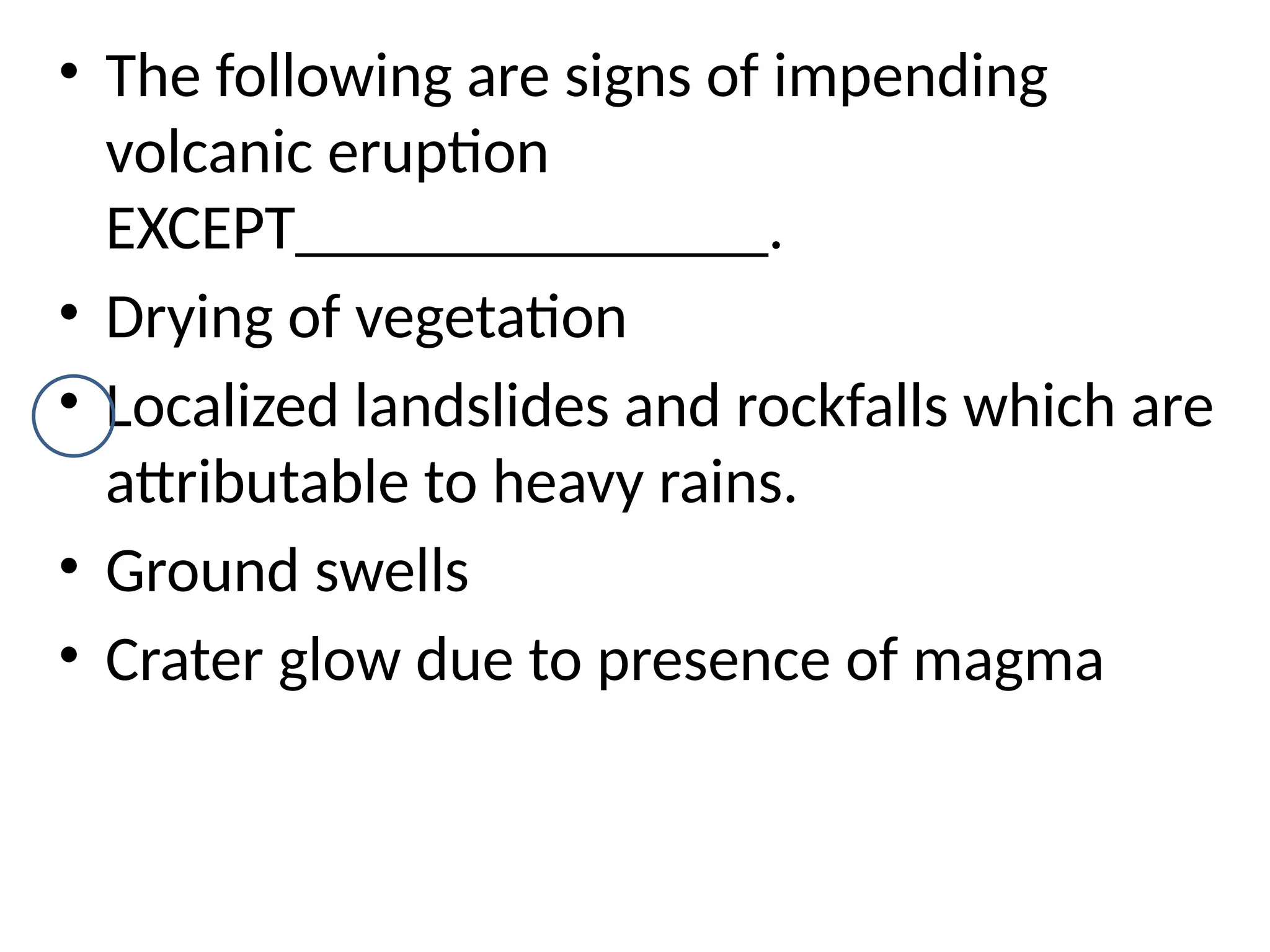
• The following are signs of impending
volcanic eruption
EXCEPT_______________.
• Drying of vegetation
• Localized landslides and rockfalls which are
attributable to heavy rains.
• Ground swells
• Crater glow due to presence of magma
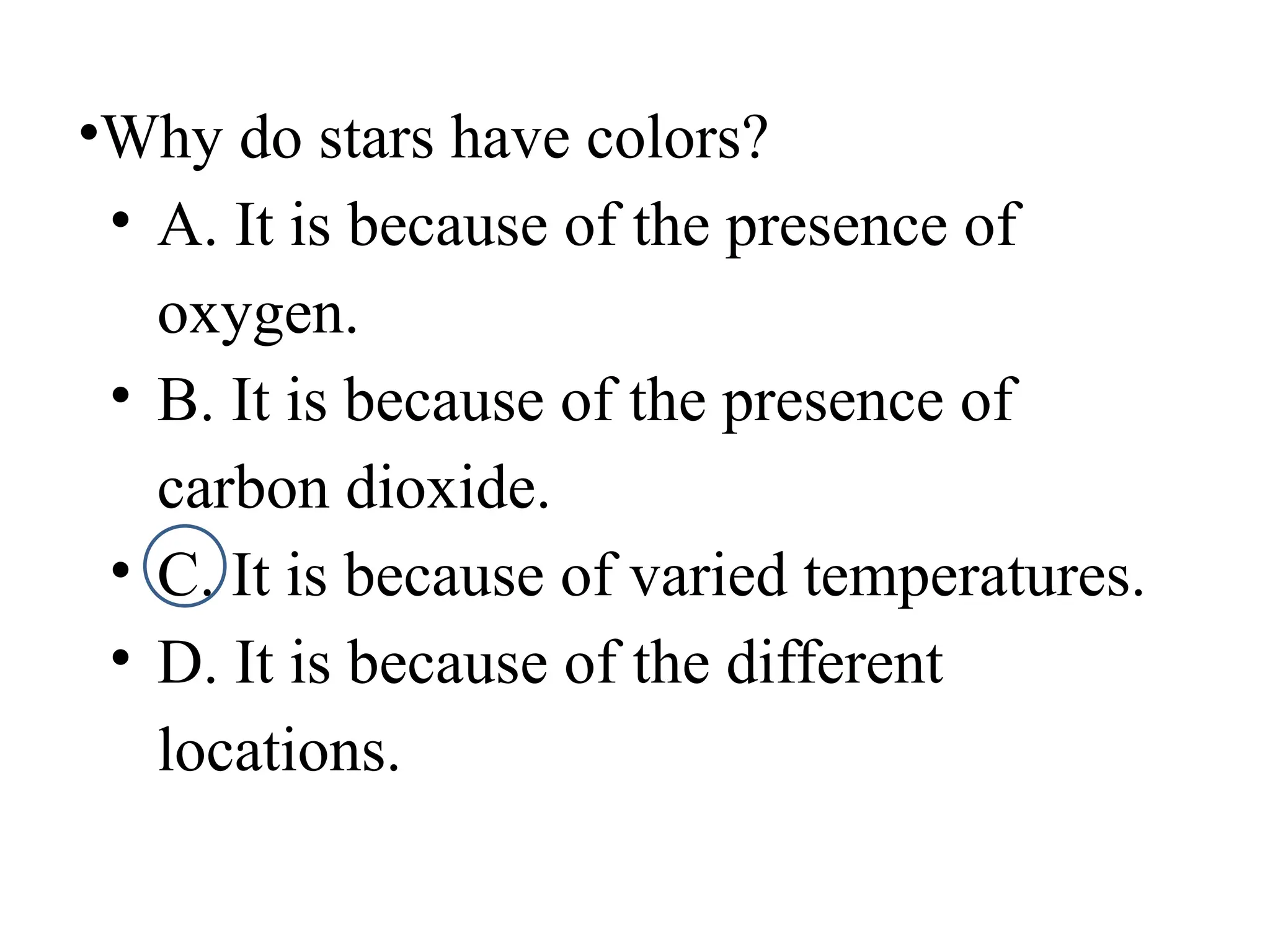
•Why do stars have colors?
• A. It is because of the presence of
oxygen.
• B. It is because of the presence of
carbon dioxide.
• C. It is because of varied temperatures.
• D. It is because of the different
locations.
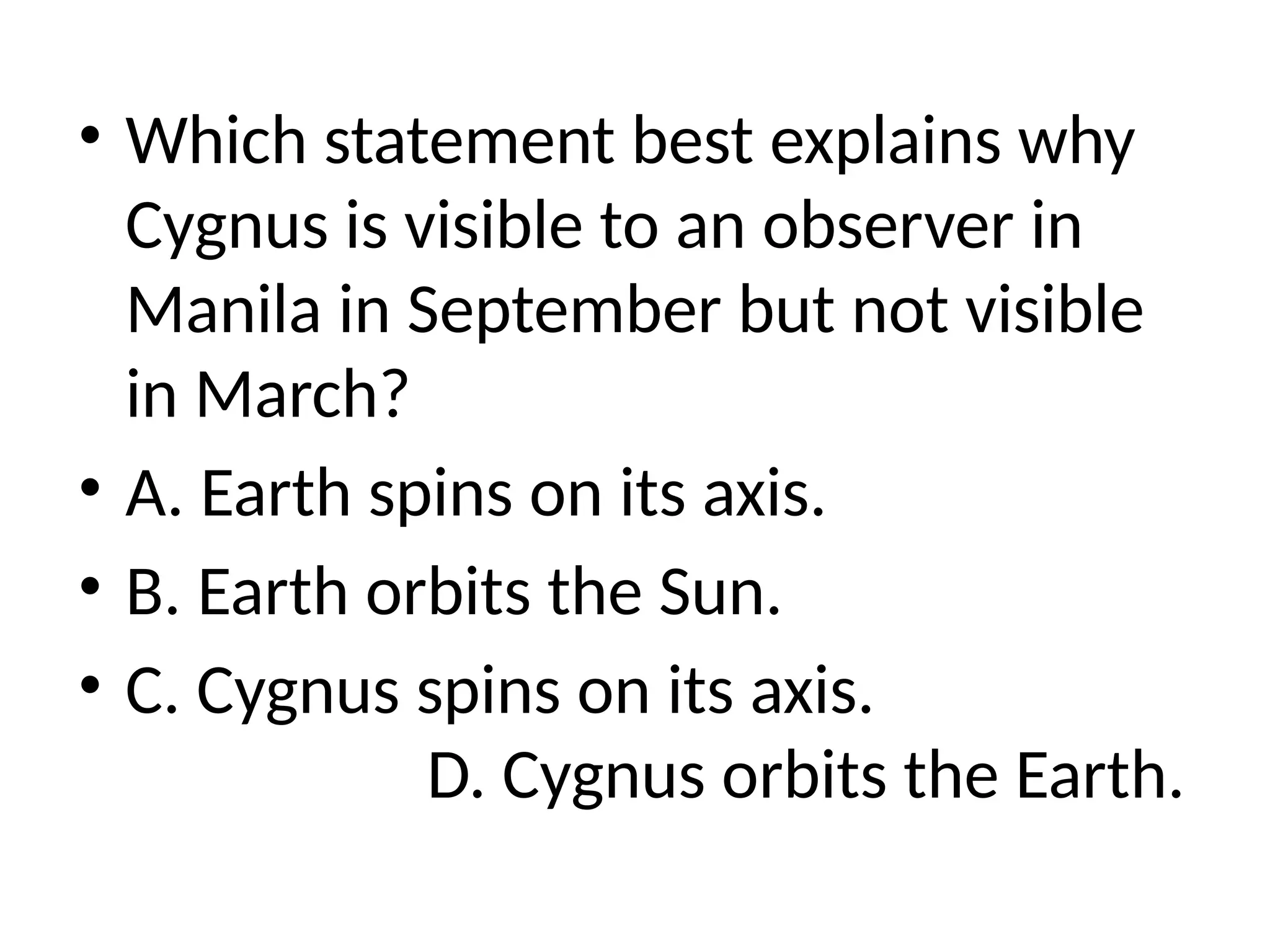
• Which statement best explains why
Cygnus is visible to an observer in
Manila in September but not visible
in March?
• A. Earth spins on its axis.
• B. Earth orbits the Sun.
• C. Cygnus spins on its axis.
D. Cygnus orbits the Earth.
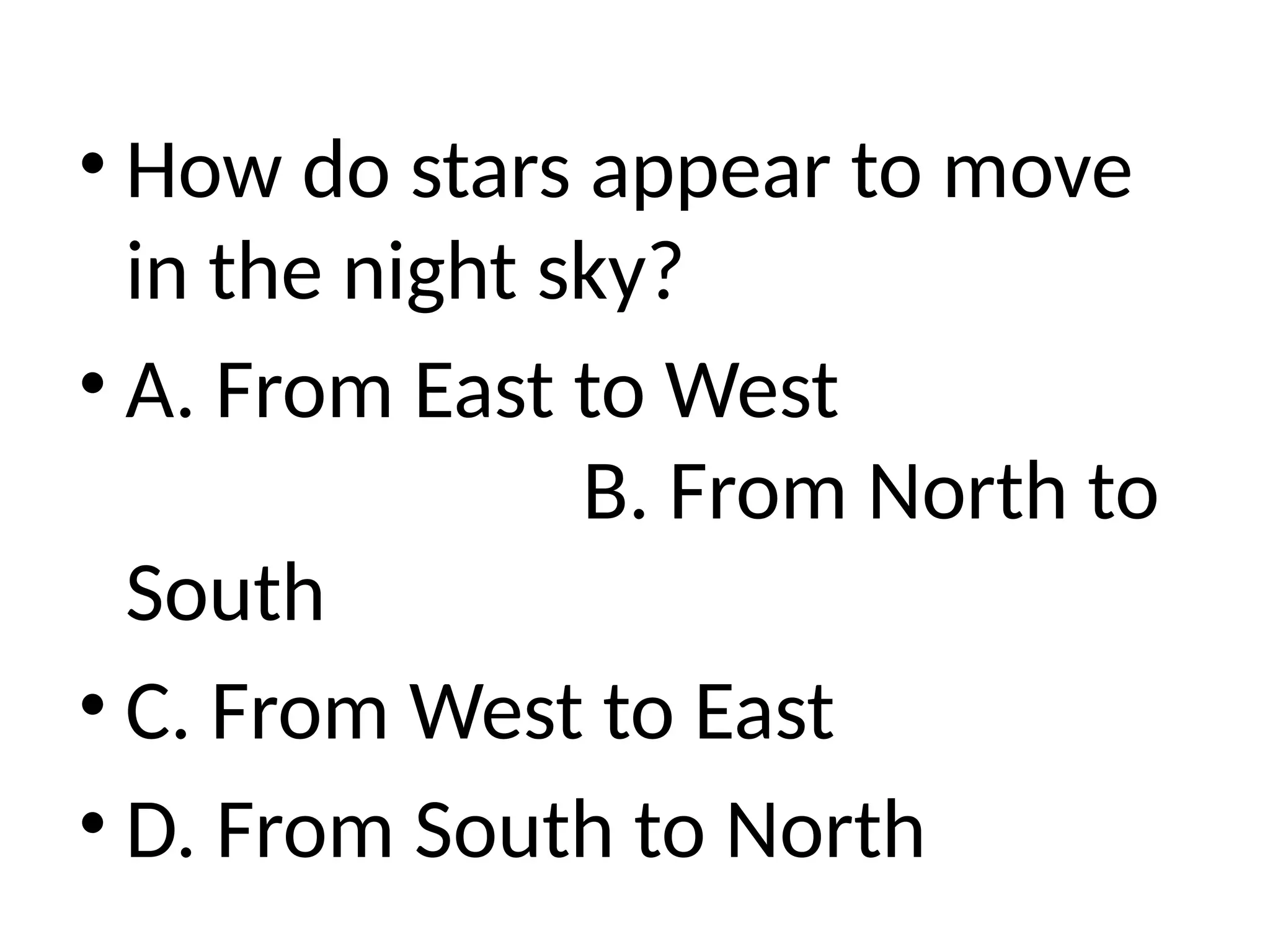
• How do stars appear to move
in the night sky?
• A. From East to West
B. From North to
South
• C. From West to East
• D. From South to North
• Which constellation is prominent in
the Northern Hemisphere during
spring?
• A.Andromeda B. Lynx
• C. Orion D. Ursa Major
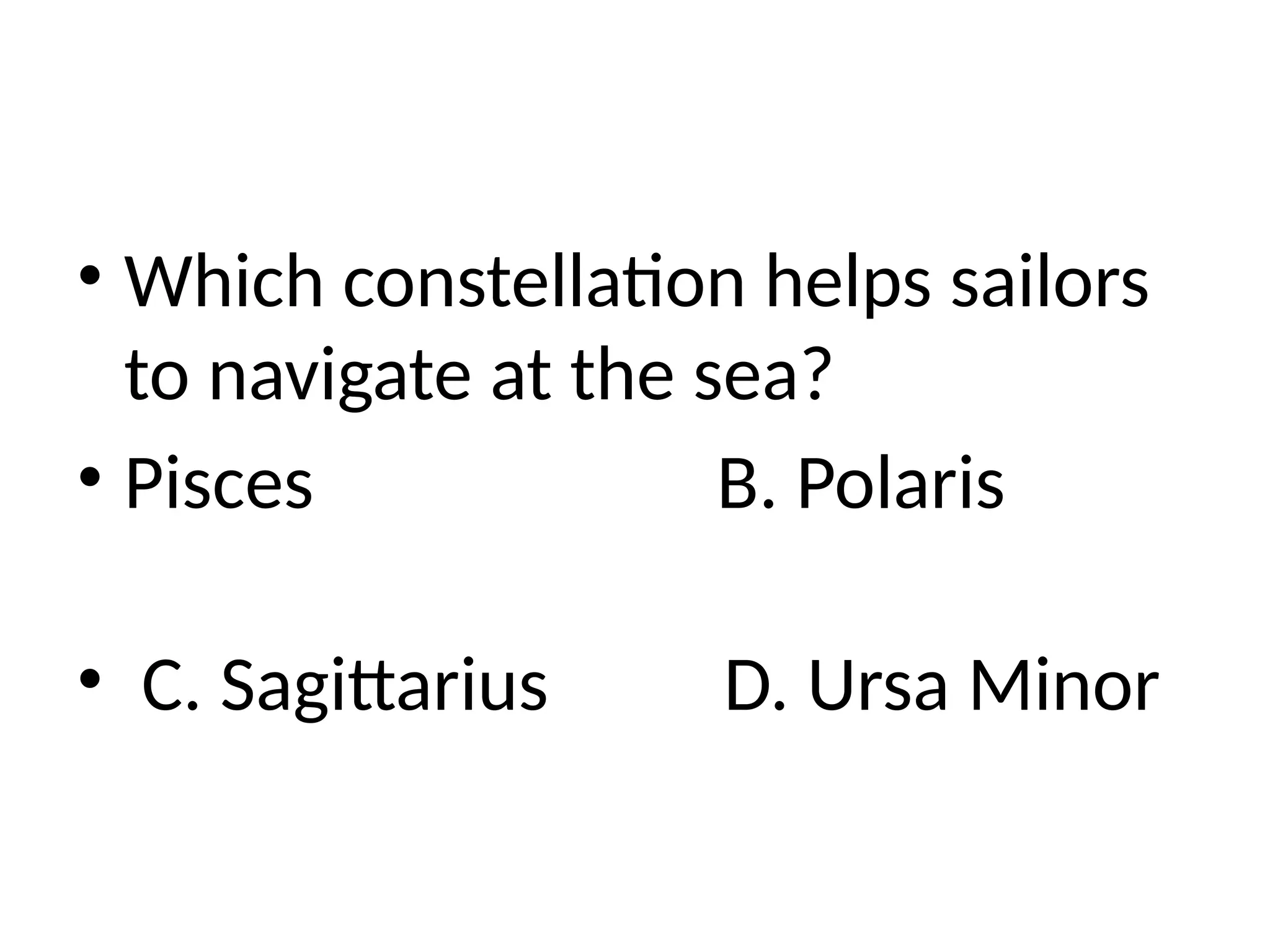
• Which constellation helps sailors
to navigate at the sea?
• Pisces B. Polaris
• C. Sagittarius D. Ursa Minor
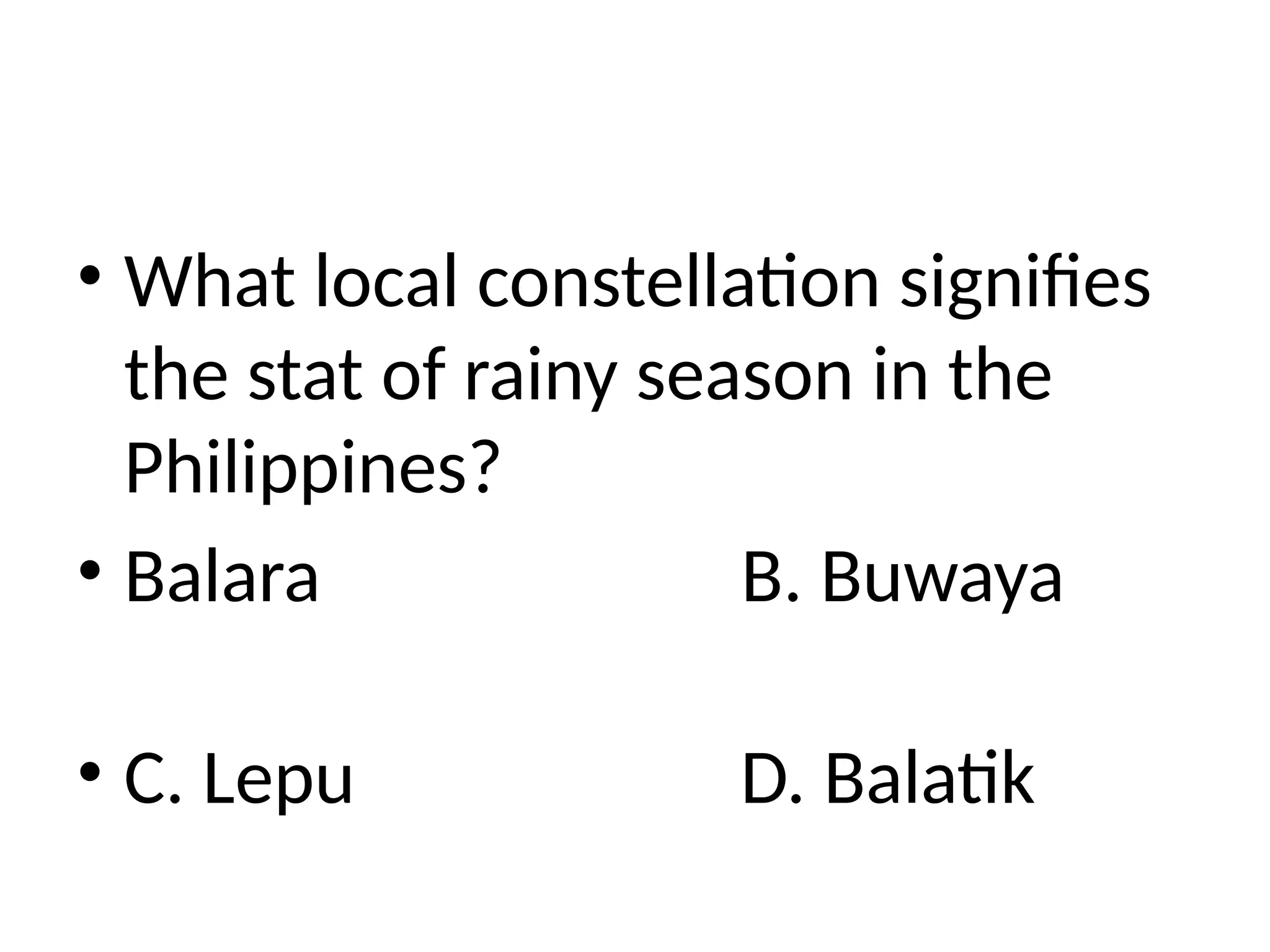
• What local constellation signifies
the stat of rainy season in the
Philippines?
• Balara B. Buwaya
• C. Lepu D. Balatik

Grade 9 reviewER THIRD QUARTER EARTH SCIENCE

  • 2.
    •Which of thefollowing is an active volcano in the Philippines? A.Apo in Davao C.Isarong in Camarines Sur B. Bud Datu in Sulu D. Kanlaon in Negros Oriental
  • 3.
    •Ana is askedto give examples of inactive volcanoes. Which should she not mention? A. Taal B.Iraya C.Tamburok D.Kanlaon
  • 4.
    •Which of thefollowing characteristics of a volcano depends on its magma emission? A.Age B.Size C.Shape D.Silica Content
  • 5.
    •What determines thenature of eruption? A.Temperature C. Amount of dissolve gases B. Chemical composition D. All of the above
  • 6.
    •What makes upthe cone of a volcano? I. Pyroclastics only II. Lava only III. Combination of Lava and Pyroclastics A.I & III B.I & II C.I, II, & III D.None of the above
  • 7.
    •How does compositionof magma affects its viscosity? A.The higher the silica content; the lower the viscosity B.The lower the silica content; the higher the viscosity C.The lower the silica content; the lower the viscosity D.There is no relationship
  • 8.
    •What type ofvolcanic eruption is a steam-driven eruption as the hot rocks come in contact with water.? A.Vulcanian B. Plinian C.Hydrothermal D. Strombolian
  • 9.
    •Why are thecoldest places on earth found at the poles? A. great amount of gaseous particles trap heat from the surface B. great amount of thermal radiation is received by these areas C. less amount of thermal radiation is received by these areas D. less amount of gaseous particles trap heat from the surface
  • 10.
    •How does thewindward side differ from the leeward side of a high land? A. The windward receives more precipitation than the leeward. B. The leeward side has more vegetation than the windward side. C. The windward side receives more heat than the leeward side. D. The leeward side receives more precipitation than the windward side.
  • 11.
    •When ocean currentsthat bring cold water move towards a coastal region, the temperature of that area decreases as warmer air from the land flows to the sea resulting in a cold climate. • The statement is : True
  • 12.
    •What is thedirection and temperature of the ocean current in the Southern Hemisphere? A.Counter clockwise; warm B.Counter clockwise; cold C.Clockwise; warm D.Clockwise; cold
  • 13.
    •City A issurrounded by bodies of water and has a moderate climate. It is located near the equator. What will most likely affect the climate of the city? A. latitude B. altitude C. topography D. all of these
  • 14.
    • Why doescloud formation disappear as the air moves slowly towards the leeward side of a mountain? • A. The air condenses as it moves to the leeward side. • B. The amount of water vapor is not enough. • C. The temperature becomes lower. • D. There is too much water vapor.
  • 15.
    •Which of thefollowing can cause global warming? A. volcanic eruptions B. the amount of rainfall C. the rising of warm air into the atmosphere D. increase of the amount of CO2 in the atmosphere
  • 16.
    •Which of thefollowing is an indication of global warming? A.rising of sea level B.decrease of global temperature C.coastal erosion D.strong waves in the ocean
  • 17.
    • Which activitydoes not contribute to global warming? • A. reforestation C. mining activities • B. illegal fishing
  • 18.
    • . Along term shifting of global weather pattern is called ________________. A.Climate B. Weather C. Climate change D.Global warming
  • 19.
    •Which of thefollowing shows the effect of climate change? A.rising of sea level B.deforestation of the forest C.coastal erosion in some places D.siltation of bodies of water
  • 20.
    • When doesgreenhouse effect happen? A. Greenhouse gases on the surface absorb heat from the atmosphere. B. Greenhouse gases on the surface absorb heat from the earth’s interior. C. Greenhouse gases in the upper atmosphere absorb heat from outer space. D. Greenhouse gases in the lower atmosphere absorb heat from the earth’s surface.
  • 21.
    • A thicklayer of volcanic ash can be heavy enough to collapse the roofs of buildings because • ________________? • is solid • it can be blown by winds • it becomes heavier as it cools • it consists of tiny fragments of rocks that becomes heavy as they pile up.
  • 22.
    • Shield volcanoesare formed by the accumulation of lava which is low in silica content and high amount of gas. How will you describe the viscosity of its lava? • Highly viscous C. viscous • Non-viscous D. can not be determine
  • 23.
    • The followingare signs of impending volcanic eruption EXCEPT_______________. • Drying of vegetation • Localized landslides and rockfalls which are attributable to heavy rains. • Ground swells • Crater glow due to presence of magma
  • 25.
    •Why do starshave colors? • A. It is because of the presence of oxygen. • B. It is because of the presence of carbon dioxide. • C. It is because of varied temperatures. • D. It is because of the different locations.
  • 26.
    • Which statementbest explains why Cygnus is visible to an observer in Manila in September but not visible in March? • A. Earth spins on its axis. • B. Earth orbits the Sun. • C. Cygnus spins on its axis. D. Cygnus orbits the Earth.
  • 27.
    • How dostars appear to move in the night sky? • A. From East to West B. From North to South • C. From West to East • D. From South to North
  • 28.
    • Which constellationis prominent in the Northern Hemisphere during spring? • A.Andromeda B. Lynx • C. Orion D. Ursa Major
  • 29.
    • Which constellationhelps sailors to navigate at the sea? • Pisces B. Polaris • C. Sagittarius D. Ursa Minor
  • 30.
    • What localconstellation signifies the stat of rainy season in the Philippines? • Balara B. Buwaya • C. Lepu D. Balatik