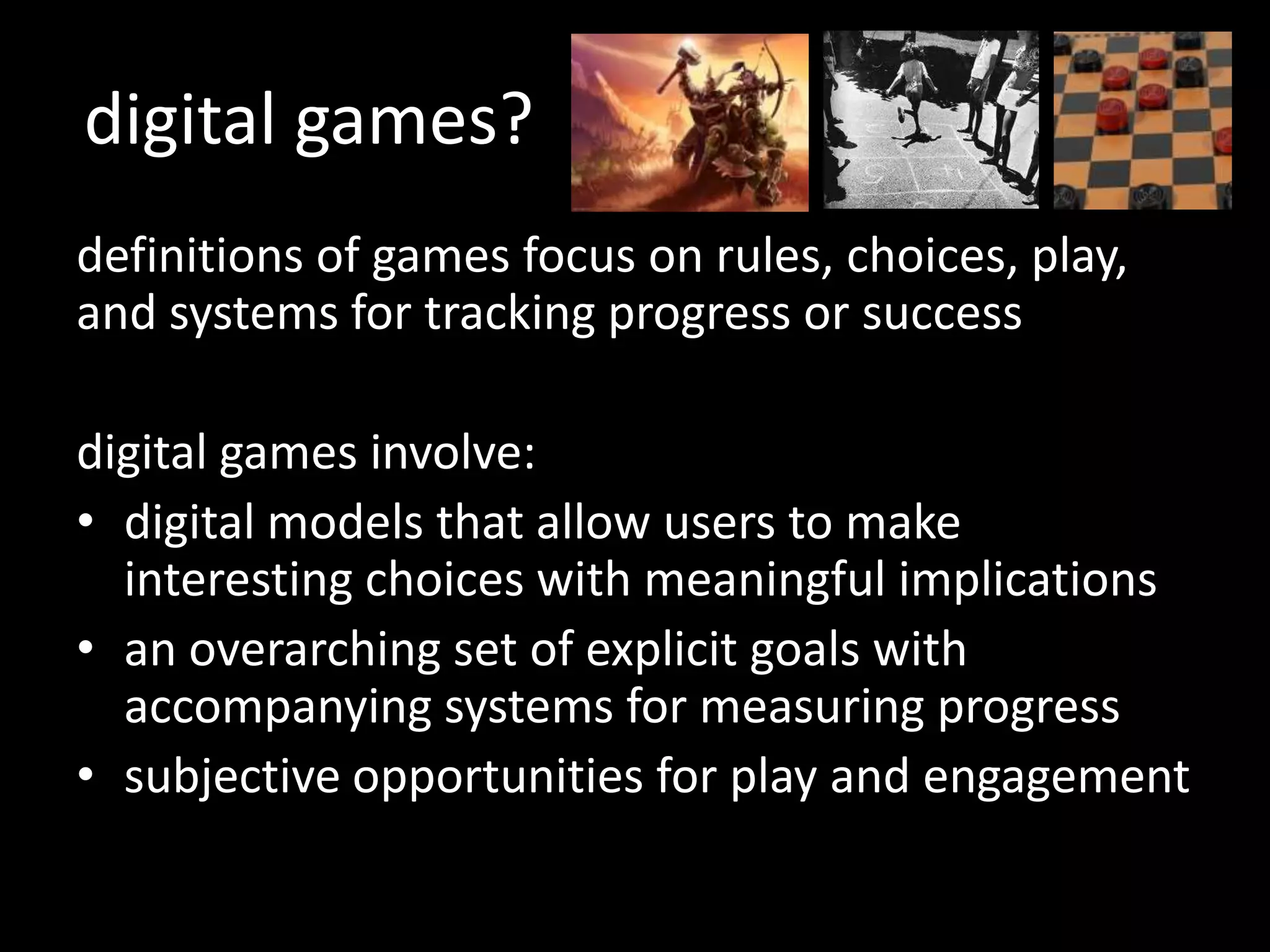
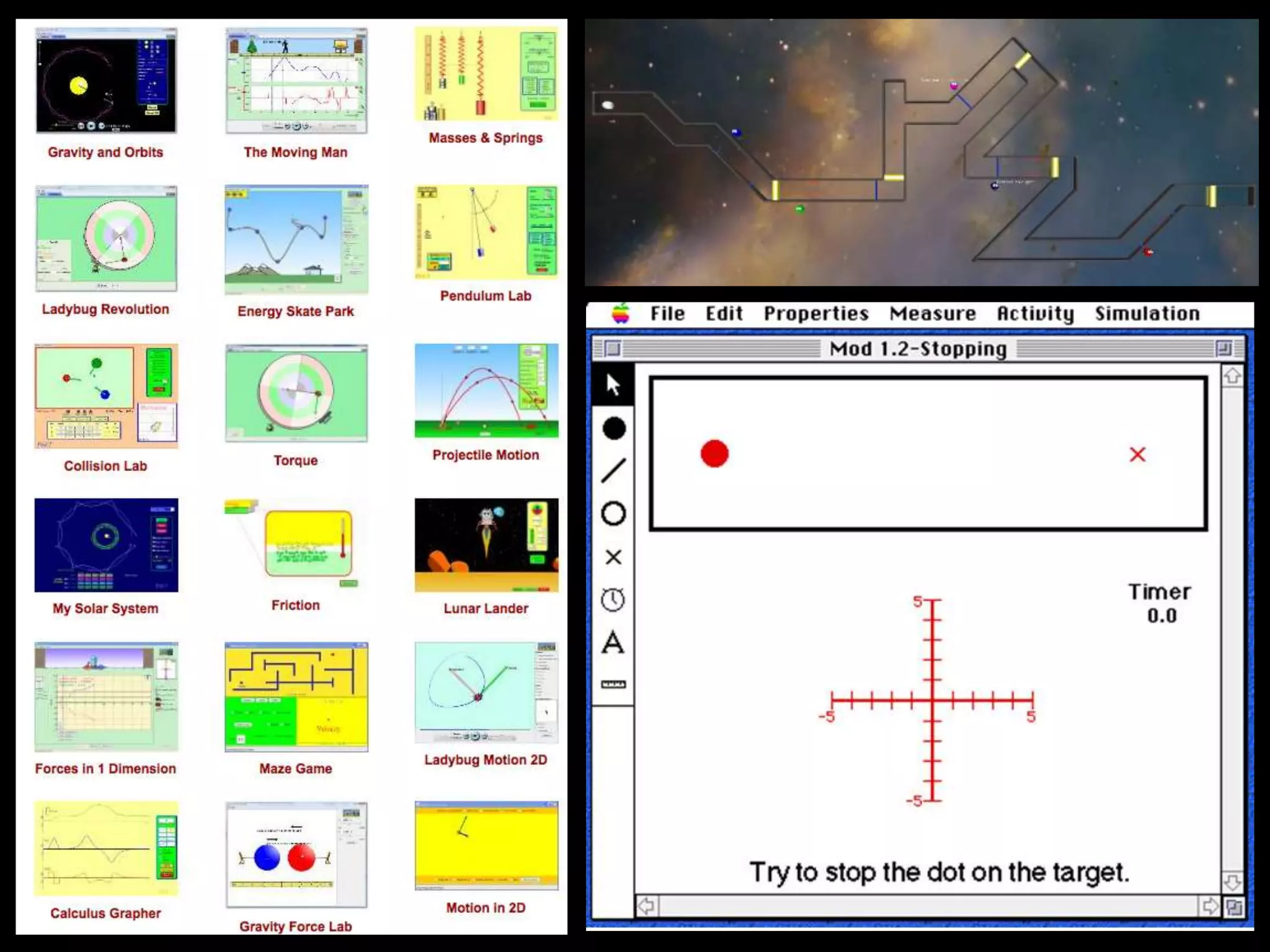
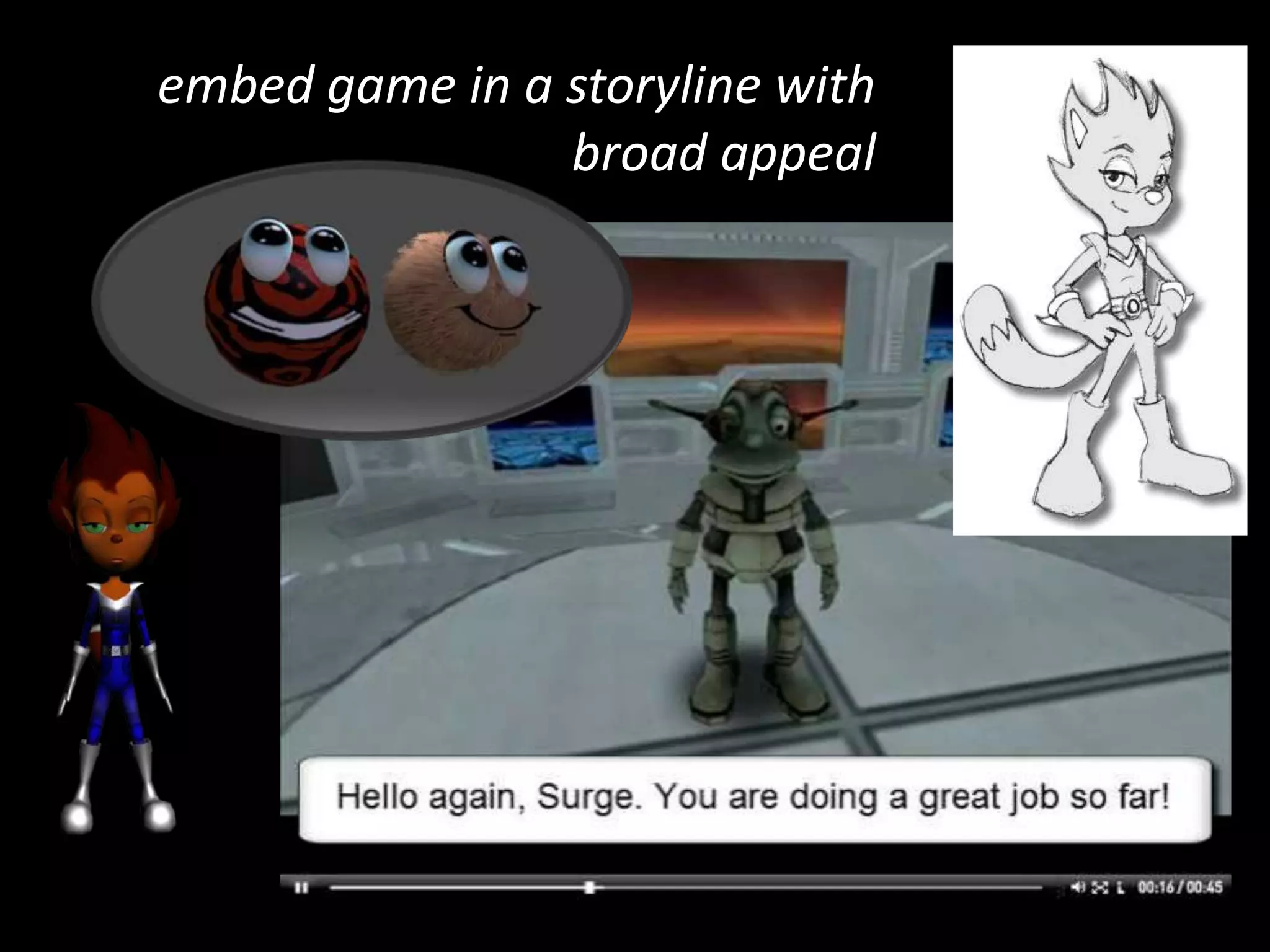
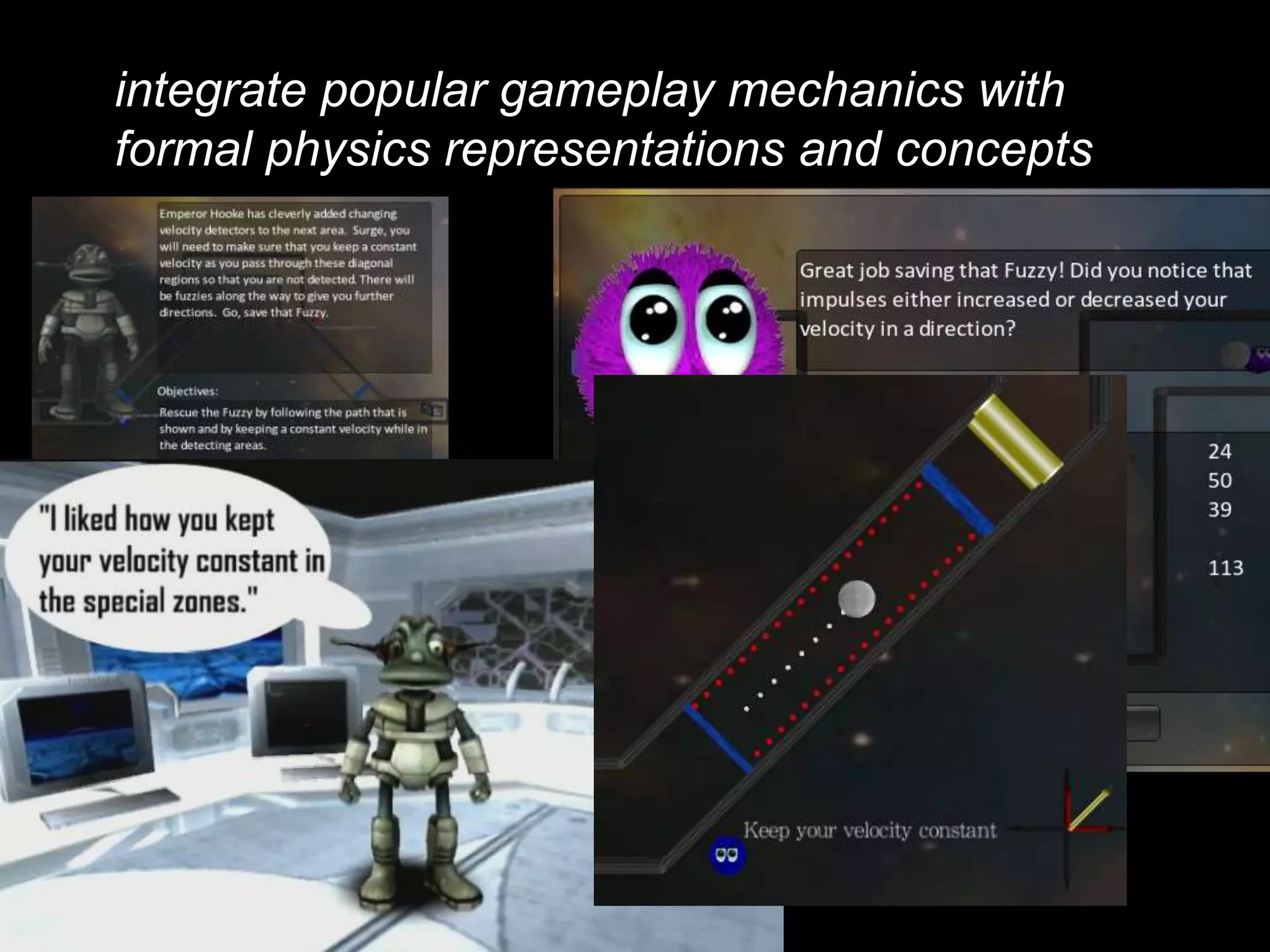
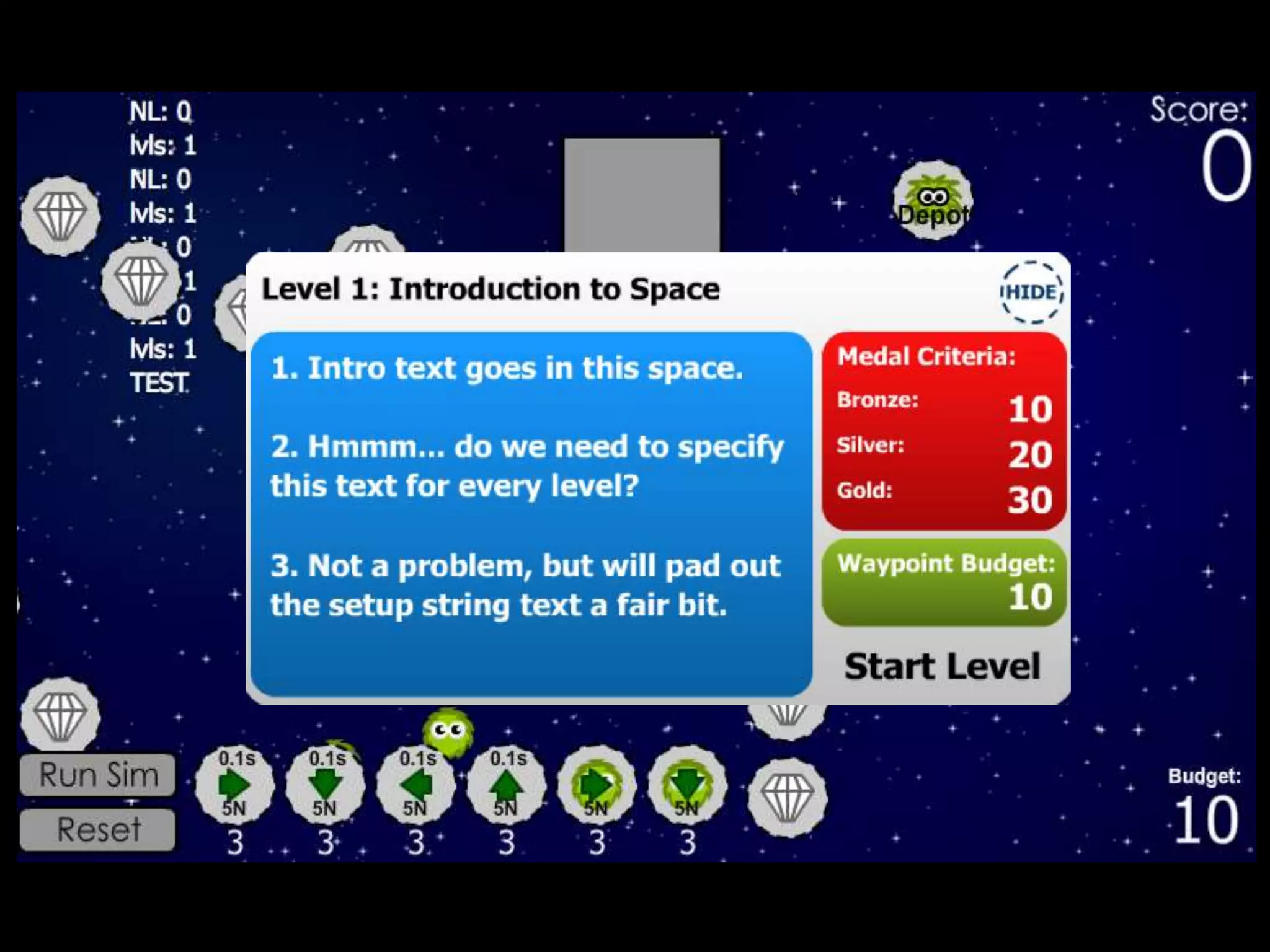
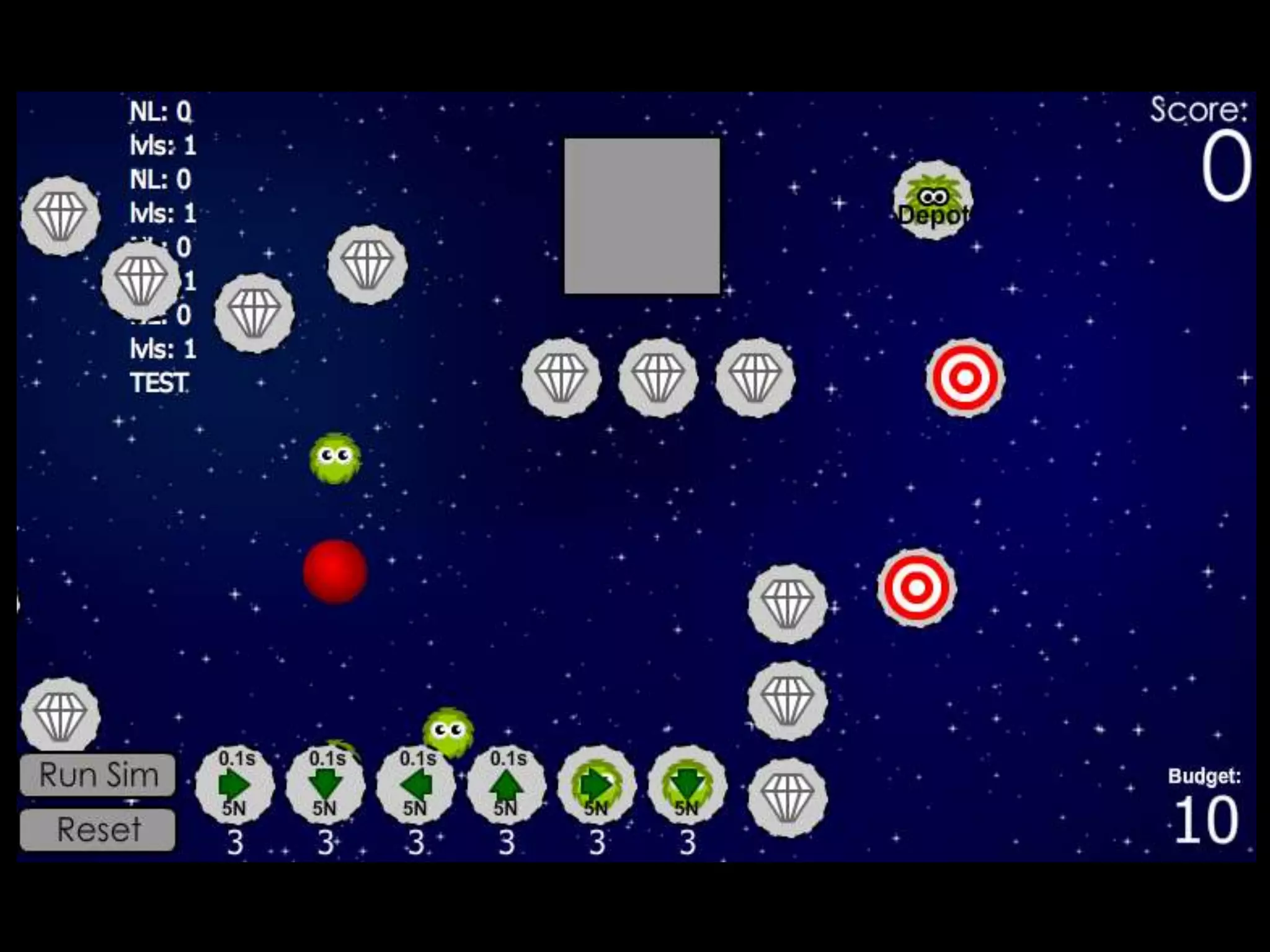
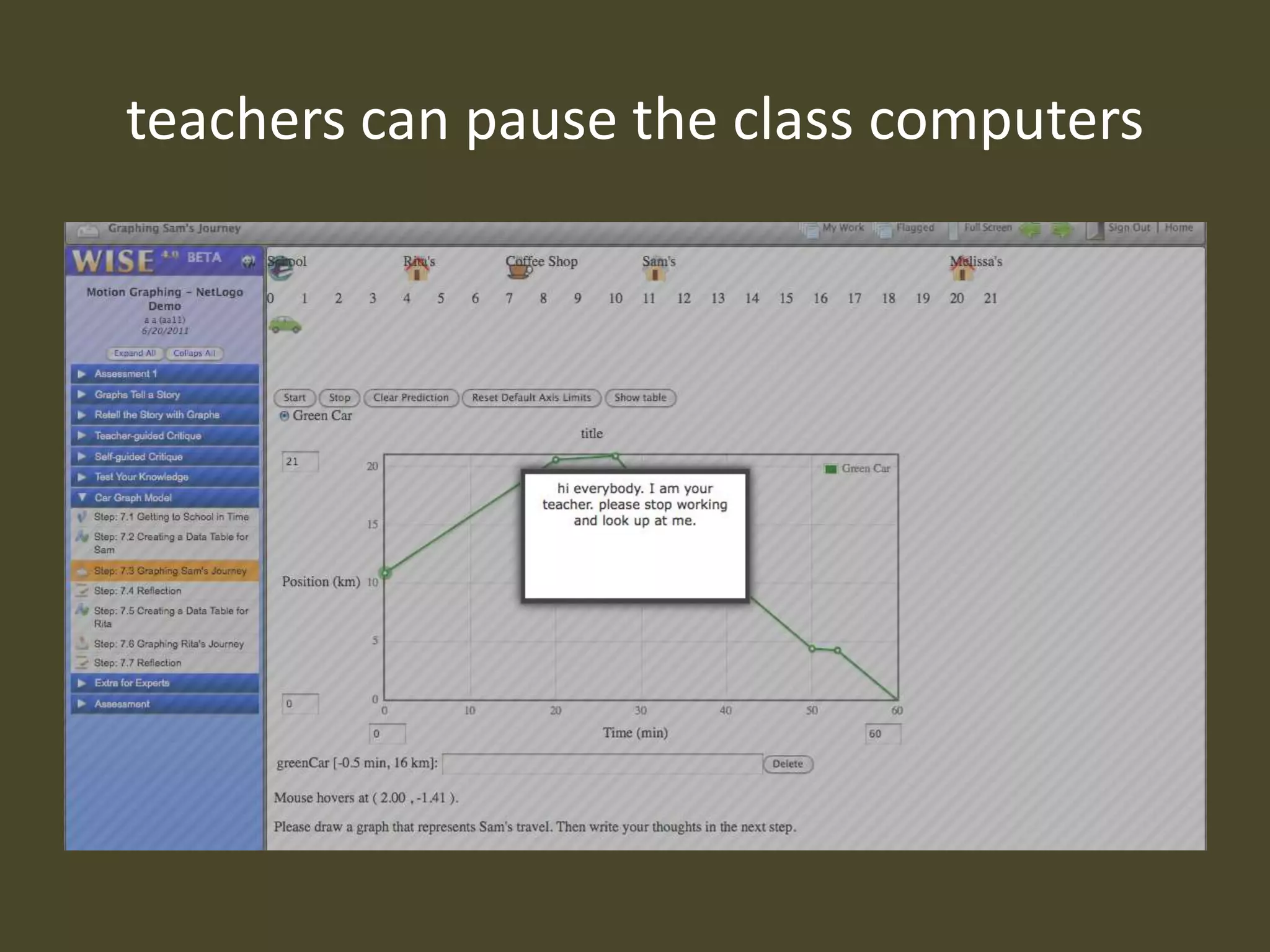
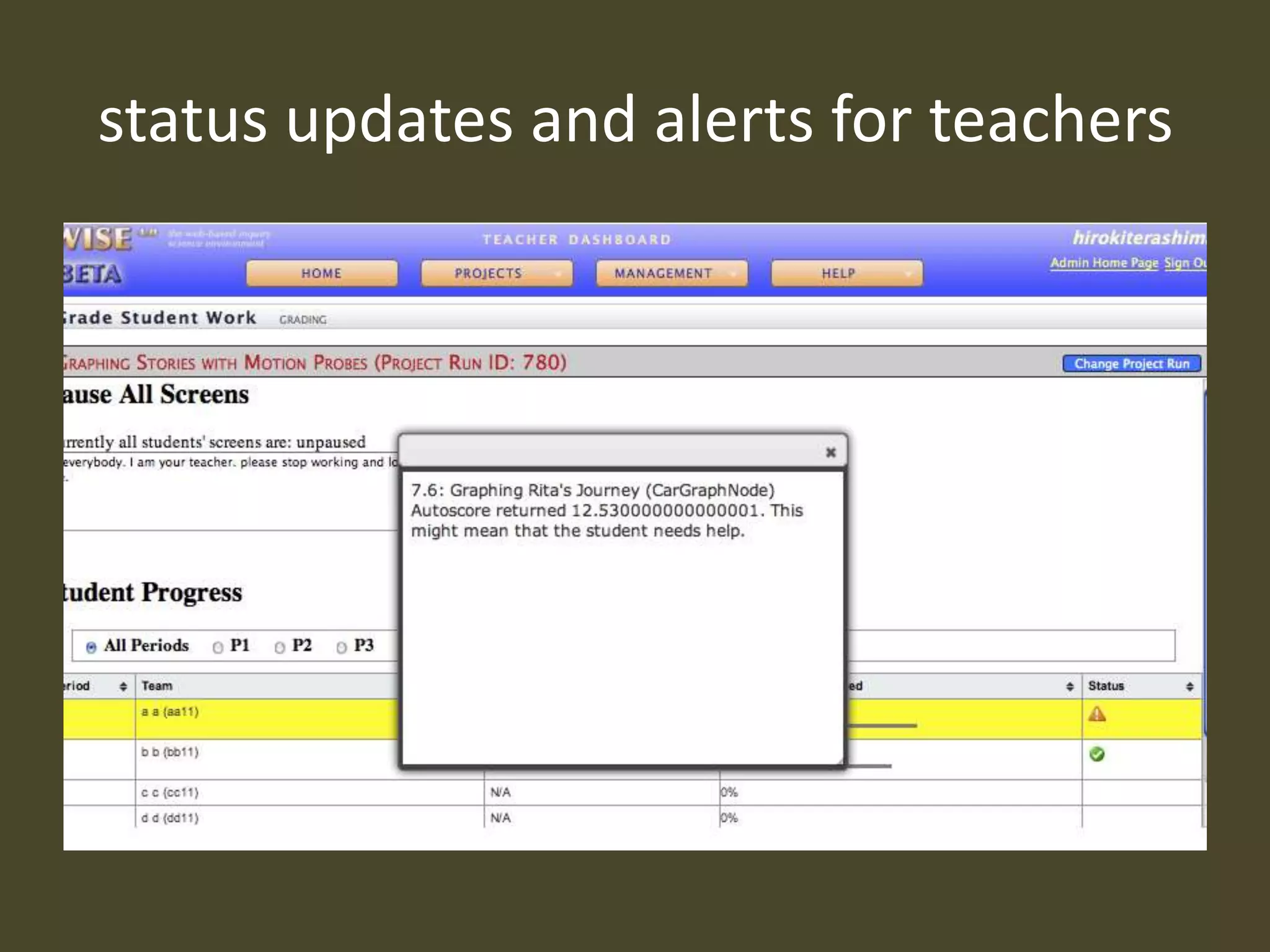
The document summarizes research on using digital games and simulations to bridge intuitive and formal understandings of physics. It discusses how games can engage students and provide meaningful feedback to support learning concepts. It presents early findings that students using a physics-based game called SURGE showed improved performance on challenging physics items and no significant differences in learning or gameplay based on gender. The researchers propose visualizing gameplay data and integrating popular mechanics to further develop the game's ability to scaffold learning.