Gooti vitraažmaal


   Merille Hommik
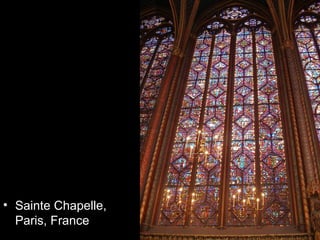
• Sainte Chapelle,
  Paris, France
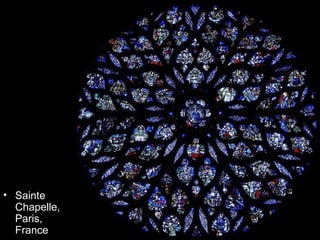
• Sainte
  Chapelle,
  Paris,
  France
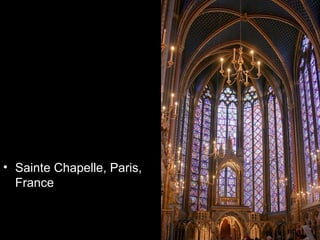
• Sainte Chapelle, Paris,
  France
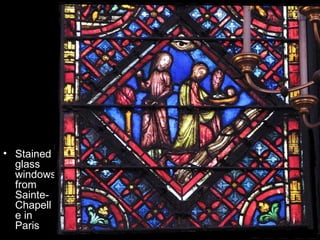
• Stained
  glass
  windows
  from
  Sainte-
  Chapell
  e in
  Paris
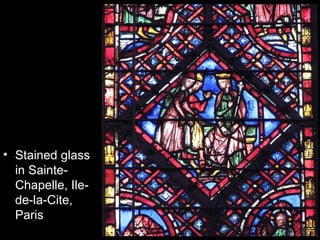
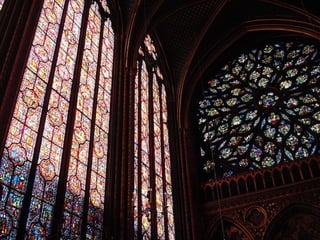
• Stained glass
  in Sainte-
  Chapelle, Ile-
  de-la-Cite,
  Paris
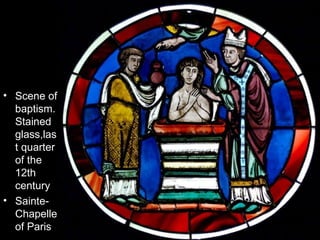
• Scene of
  baptism.
  Stained
  glass,las
  t quarter
  of the
  12th
  century
• Sainte-
  Chapelle
  of Paris
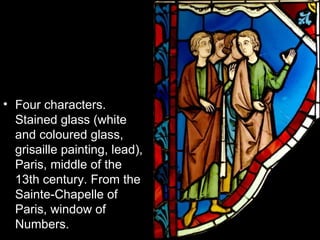
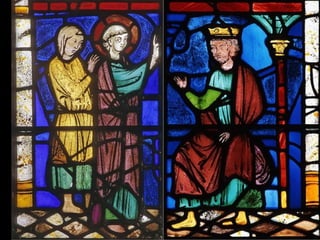
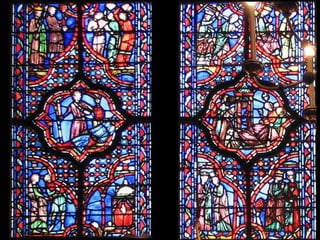
• Four characters.
  Stained glass (white
  and coloured glass,
  grisaille painting, lead),
  Paris, middle of the
  13th century. From the
  Sainte-Chapelle of
  Paris, window of
  Numbers.
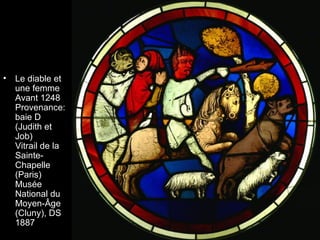
•   Le diable et
    une femme
    Avant 1248
    Provenance:
    baie D
    (Judith et
    Job)
    Vitrail de la
    Sainte-
    Chapelle
    (Paris)
    Musée
    National du
    Moyen-Âge
    (Cluny), DS
    1887
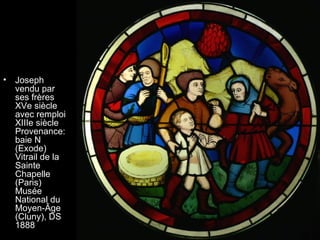
•   Joseph
    vendu par
    ses frères
    XVe siècle
    avec remploi
    XIIIe siècle
    Provenance:
    baie N
    (Exode)
    Vitrail de la
    Sainte
    Chapelle
    (Paris)
    Musée
    National du
    Moyen-Âge
    (Cluny), DS
    1888
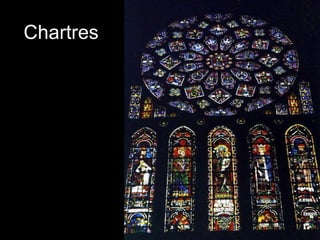
Chartres’


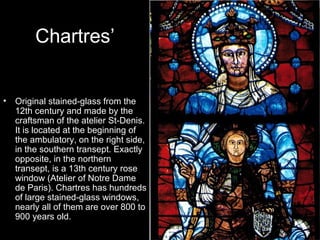
•   Original stained-glass from the
    12th century and made by the
    craftsman of the atelier St-Denis.
    It is located at the beginning of
    the ambulatory, on the right side,
    in the southern transept. Exactly
    opposite, in the northern
    transept, is a 13th century rose
    window (Atelier of Notre Dame
    de Paris). Chartres has hundreds
    of large stained-glass windows,
    nearly all of them are over 800 to
    900 years old.
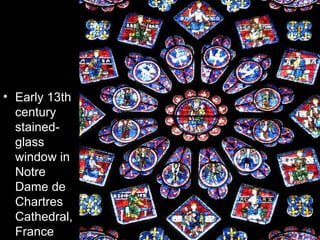
• Early 13th
  century
  stained-
  glass
  window in
  Notre
  Dame de
  Chartres
  Cathedral,
  France
Chartres’


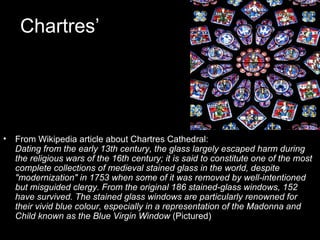
•   From Wikipedia article about Chartres Cathedral:
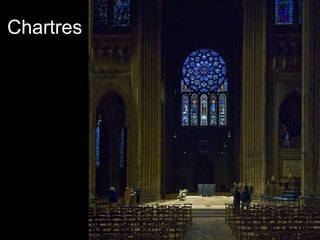
    Dating from the early 13th century, the glass largely escaped harm during
    the religious wars of the 16th century; it is said to constitute one of the most
    complete collections of medieval stained glass in the world, despite
    "modernization" in 1753 when some of it was removed by well-intentioned
    but misguided clergy. From the original 186 stained-glass windows, 152
    have survived. The stained glass windows are particularly renowned for
    their vivid blue colour, especially in a representation of the Madonna and
    Child known as the Blue Virgin Window (Pictured)
Chartres
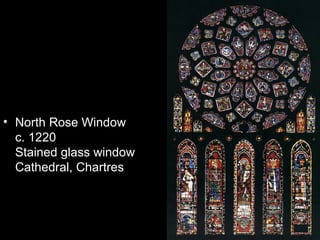
• North Rose Window
  c. 1220
  Stained glass window
  Cathedral, Chartres
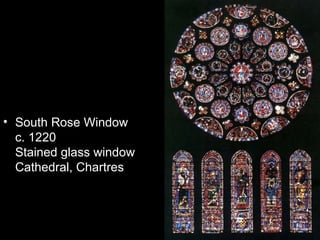
• South Rose Window
  c. 1220
  Stained glass window
  Cathedral, Chartres
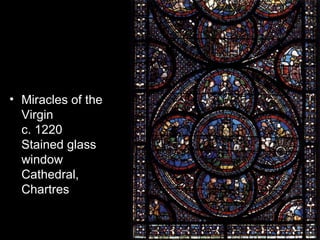
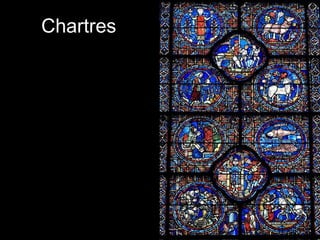
• Miracles of the
  Virgin
  c. 1220
  Stained glass
  window
  Cathedral,
  Chartres
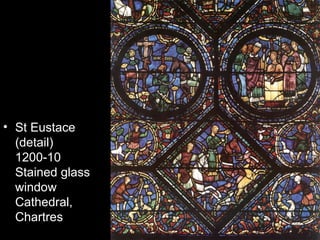
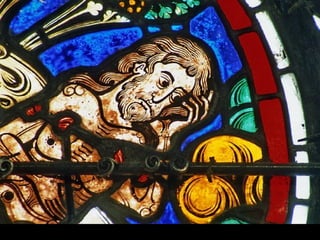
• St Eustace
  (detail)
  1200-10
  Stained glass
  window
  Cathedral,
  Chartres
Chartres
Chartres


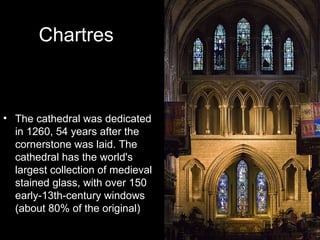
• The cathedral was dedicated
  in 1260, 54 years after the
  cornerstone was laid. The
  cathedral has the world's
  largest collection of medieval
  stained glass, with over 150
  early-13th-century windows
  (about 80% of the original)
Chartres
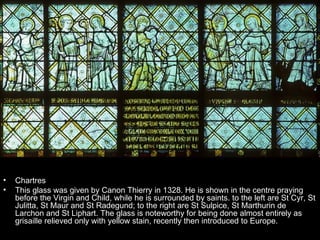
•   Chartres
•   This glass was given by Canon Thierry in 1328. He is shown in the centre praying
    before the Virgin and Child, while he is surrounded by saints. to the left are St Cyr, St
    Julitta, St Maur and St Radegund; to the right are St Sulpice, St Marthurin de
    Larchon and St Liphart. The glass is noteworthy for being done almost entirely as
    grisaille relieved only with yellow stain, recently then introduced to Europe.

Gooti vitraažmaal

  • 1.
    Gooti vitraažmaal Merille Hommik
  • 2.
    • Sainte Chapelle, Paris, France
  • 3.
    • Sainte Chapelle, Paris, France
  • 4.
    • Sainte Chapelle,Paris, France
  • 5.
    • Stained glass windows from Sainte- Chapell e in Paris
  • 6.
    • Stained glass in Sainte- Chapelle, Ile- de-la-Cite, Paris
  • 7.
    • Scene of baptism. Stained glass,las t quarter of the 12th century • Sainte- Chapelle of Paris
  • 8.
    • Four characters. Stained glass (white and coloured glass, grisaille painting, lead), Paris, middle of the 13th century. From the Sainte-Chapelle of Paris, window of Numbers.
  • 9.
    Le diable et une femme Avant 1248 Provenance: baie D (Judith et Job) Vitrail de la Sainte- Chapelle (Paris) Musée National du Moyen-Âge (Cluny), DS 1887
  • 10.
    Joseph vendu par ses frères XVe siècle avec remploi XIIIe siècle Provenance: baie N (Exode) Vitrail de la Sainte Chapelle (Paris) Musée National du Moyen-Âge (Cluny), DS 1888
  • 15.
    Chartres’ • Original stained-glass from the 12th century and made by the craftsman of the atelier St-Denis. It is located at the beginning of the ambulatory, on the right side, in the southern transept. Exactly opposite, in the northern transept, is a 13th century rose window (Atelier of Notre Dame de Paris). Chartres has hundreds of large stained-glass windows, nearly all of them are over 800 to 900 years old.
  • 16.
    • Early 13th century stained- glass window in Notre Dame de Chartres Cathedral, France
  • 17.
    Chartres’ • From Wikipedia article about Chartres Cathedral: Dating from the early 13th century, the glass largely escaped harm during the religious wars of the 16th century; it is said to constitute one of the most complete collections of medieval stained glass in the world, despite "modernization" in 1753 when some of it was removed by well-intentioned but misguided clergy. From the original 186 stained-glass windows, 152 have survived. The stained glass windows are particularly renowned for their vivid blue colour, especially in a representation of the Madonna and Child known as the Blue Virgin Window (Pictured)
  • 18.
  • 19.
    • North RoseWindow c. 1220 Stained glass window Cathedral, Chartres
  • 20.
    • South RoseWindow c. 1220 Stained glass window Cathedral, Chartres
  • 23.
    • Miracles ofthe Virgin c. 1220 Stained glass window Cathedral, Chartres
  • 24.
    • St Eustace (detail) 1200-10 Stained glass window Cathedral, Chartres
  • 26.
  • 27.
    Chartres • The cathedralwas dedicated in 1260, 54 years after the cornerstone was laid. The cathedral has the world's largest collection of medieval stained glass, with over 150 early-13th-century windows (about 80% of the original)
  • 28.
  • 30.
    Chartres • This glass was given by Canon Thierry in 1328. He is shown in the centre praying before the Virgin and Child, while he is surrounded by saints. to the left are St Cyr, St Julitta, St Maur and St Radegund; to the right are St Sulpice, St Marthurin de Larchon and St Liphart. The glass is noteworthy for being done almost entirely as grisaille relieved only with yellow stain, recently then introduced to Europe.