By: 
Sushmita Golder 
SY-C 
PRN: 13020621266 
Roll No.: 2173
Why clothing? 
 Three basic needs of mankind- roti, kapda aur makaan (food, clothing and 
shelter) But most people/ agencies work only on food and shelter. 
 But what about clothing? 
A basic need noticed only at the time of disaster.. 
Reality-more than half of this country doesn't need a disaster to be 
helped. 
 A range of issues right from domestic violence to global warming for 
development agencies 
BUT no mention of clothing? It has never been an issue -to work.. To 
support. 
 Figures for people dying in earthquakes, floods and other natural or man 
made disasters.. 
 What about winters? -An annual and predictable disaster affecting life of 
thousands of people every year. A warm cloth we hold in our cupboards (in 
search of a real needy or waiting for a disaster) can help prevent these 
deaths ? 
 What does a poor woman do during menses every month? 
Oblivious of the health risk some are even forced to use sand or ash. Millions 
who don't have enough cloth to cover themselves end up using the most 
useless & dirty cloth.
Mission statement 
We aim to re-position cloth beyond charity, add 
dignity and turn it into a big resource for 
development. 
Our objective is to spread awareness about the 
concept at a nationwide level so that anytime an 
urban household thinks of disposing off reusable 
material it should have a channel to reach it to the 
most needy. Using clothing as an entry point, 
channelize a whole lot of under utilized household 
material considered wastage in urban India, as 
resource to the rural/slum India.
Initiatives 
 Vastra-samman- A nationwide movement highlighting 
cloth as a basic need and mark of dignity. 
 Cloth for work- Villagers get clothes as motivation for 
initiating development activities in their own area. 
 School to School- Sensitising urban schools to the 
educational needs of their counterparts in remote village 
schools. Channelising school material from one end to the 
other by building a long term relationship among them. 
 Not Just a piece of cloth- Turning old cotton cloth into 
sanitary napkins for women in slums and villages. 
 Rahat- Reaching relief and supporting victims of natural 
and manmade disasters. 
 Recycling: a step ahead- Making notebooks, schoolbags, 
skipping ropes, balls, sitting mats etc. from waste paper & 
cloth.
How do they do it? 
URBAN INDIA 
Collection Centers 
(houses of our volunteers) 
GOONJ Processing hub 
(Need based sorting and packaging) 
Implementation in 
the remote villages 
(under GOONJ’s various initiatives)
Just some important facts.. 
 Over the last two years, over 900 development 
activities AND.. 
 Over 2.1 million pieces of clothes 
 Over 300,000 pieces of educational material and 
stationery items 
 Over 200,000 pieces of toys and games 
 200,000 kg of cloth turned into quilts (sujni) by 
village women 
 2 million sanitary pads from waste cloth which 
mean taking care of 500,000 metres of cloth 
 Channelizing a million kg of material utility
And all this in a budget of approx. 
(about half a million USD) anually..
Achievements 
 Nov’10: Listed in Forbes as one of the India's most powerful rural entrepreneurs 
 May’10:Innovation for India award by Marico for developing innovative solution by using 
old cloth and other material. 
 March‟10:Jamnalal Bajaj CFBP Award for „Fair Practices‟ 
 Oct’09: Cloth for Work‟ wins L ien i3 Challenge Award in Singapore 
 June’09: „Not just a piece of cloth‟ wins Ashoka‟s Changemakers Innovation Award 
 March’09: CNN IBN‟s ‘Real Heros’ Award to Mr. Anshu Guptain women welfare segment. 
 March’08: GOONJ wins the prestigious 'India NGO of the year‘ Award 
 May’07: „Not just a piece of cloth‟ wins World Bank’s Global Development Market Place 
Award. 
 July’07: GOONJ‟s first initiative “Vastra Samman” recognized as one of „The Good 
Practices’ in Dubai International Awards. 
 2006: Won Ashoka‟s prestigious Changemakers Innovation Award, the second time, for 
its disaster relief initiative „RAHAT‟. 
 2004:Prestigious Ashoka Fellowship to Anshu Gupta. 
 2004: GOONJ wins Chanemakers Innovation Award for its “SCHOOL to SCHOOL” 
initiative.Recognitions
Some of GOONJ’s initiative’s with 
partner organisations
My Contribution as an intern 
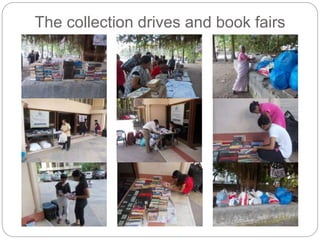
 Carried out two collection 
drives and two book fairs- One 
at Shivalaya Tower and the 
other at Shyamnarayan 
Zagdusingh Thakur 
Entertainment Park. Both at 
Kandivali East, Mumbai. 
 Sorted and priced the books to 
be put up for the book fair. 
 Created a database of schools 
in Thane and Mumbai districts. 
Attached the database and 
submitted it. 
 Sorted out books and 
stationary for village schools.
The collection drives and book fairs
Learning 
Being Associated with GOONJ was a great experience. It was a 
great opportunity to learn the various facets and aspects of NGO 
functioning which can be summarized as follows:- 
 Learnt a lot about NGOs functioning, their vision, objectives and 
the problems it faces in the various departments like finance, 
marketing and others. 
 Also understood the initiative taken by private institutions as a 
part of corporate governance social responsibility and its impact 
on the society. 
 Studied about how to help the society and what GOONJ is doing 
in this field. 
 It broadened my horizon about thinking about life and spurred 
me to think about helping the poor and needy in our society.
Goonj NGO Internship Presentation

Goonj NGO Internship Presentation

  • 1.
    By: Sushmita Golder SY-C PRN: 13020621266 Roll No.: 2173
  • 2.
    Why clothing? Three basic needs of mankind- roti, kapda aur makaan (food, clothing and shelter) But most people/ agencies work only on food and shelter.  But what about clothing? A basic need noticed only at the time of disaster.. Reality-more than half of this country doesn't need a disaster to be helped.  A range of issues right from domestic violence to global warming for development agencies BUT no mention of clothing? It has never been an issue -to work.. To support.  Figures for people dying in earthquakes, floods and other natural or man made disasters..  What about winters? -An annual and predictable disaster affecting life of thousands of people every year. A warm cloth we hold in our cupboards (in search of a real needy or waiting for a disaster) can help prevent these deaths ?  What does a poor woman do during menses every month? Oblivious of the health risk some are even forced to use sand or ash. Millions who don't have enough cloth to cover themselves end up using the most useless & dirty cloth.
  • 3.
    Mission statement Weaim to re-position cloth beyond charity, add dignity and turn it into a big resource for development. Our objective is to spread awareness about the concept at a nationwide level so that anytime an urban household thinks of disposing off reusable material it should have a channel to reach it to the most needy. Using clothing as an entry point, channelize a whole lot of under utilized household material considered wastage in urban India, as resource to the rural/slum India.
  • 5.
    Initiatives  Vastra-samman-A nationwide movement highlighting cloth as a basic need and mark of dignity.  Cloth for work- Villagers get clothes as motivation for initiating development activities in their own area.  School to School- Sensitising urban schools to the educational needs of their counterparts in remote village schools. Channelising school material from one end to the other by building a long term relationship among them.  Not Just a piece of cloth- Turning old cotton cloth into sanitary napkins for women in slums and villages.  Rahat- Reaching relief and supporting victims of natural and manmade disasters.  Recycling: a step ahead- Making notebooks, schoolbags, skipping ropes, balls, sitting mats etc. from waste paper & cloth.
  • 6.
    How do theydo it? URBAN INDIA Collection Centers (houses of our volunteers) GOONJ Processing hub (Need based sorting and packaging) Implementation in the remote villages (under GOONJ’s various initiatives)
  • 7.
    Just some importantfacts..  Over the last two years, over 900 development activities AND..  Over 2.1 million pieces of clothes  Over 300,000 pieces of educational material and stationery items  Over 200,000 pieces of toys and games  200,000 kg of cloth turned into quilts (sujni) by village women  2 million sanitary pads from waste cloth which mean taking care of 500,000 metres of cloth  Channelizing a million kg of material utility
  • 8.
    And all thisin a budget of approx. (about half a million USD) anually..
  • 9.
    Achievements  Nov’10:Listed in Forbes as one of the India's most powerful rural entrepreneurs  May’10:Innovation for India award by Marico for developing innovative solution by using old cloth and other material.  March‟10:Jamnalal Bajaj CFBP Award for „Fair Practices‟  Oct’09: Cloth for Work‟ wins L ien i3 Challenge Award in Singapore  June’09: „Not just a piece of cloth‟ wins Ashoka‟s Changemakers Innovation Award  March’09: CNN IBN‟s ‘Real Heros’ Award to Mr. Anshu Guptain women welfare segment.  March’08: GOONJ wins the prestigious 'India NGO of the year‘ Award  May’07: „Not just a piece of cloth‟ wins World Bank’s Global Development Market Place Award.  July’07: GOONJ‟s first initiative “Vastra Samman” recognized as one of „The Good Practices’ in Dubai International Awards.  2006: Won Ashoka‟s prestigious Changemakers Innovation Award, the second time, for its disaster relief initiative „RAHAT‟.  2004:Prestigious Ashoka Fellowship to Anshu Gupta.  2004: GOONJ wins Chanemakers Innovation Award for its “SCHOOL to SCHOOL” initiative.Recognitions
  • 13.
    Some of GOONJ’sinitiative’s with partner organisations
  • 15.
    My Contribution asan intern  Carried out two collection drives and two book fairs- One at Shivalaya Tower and the other at Shyamnarayan Zagdusingh Thakur Entertainment Park. Both at Kandivali East, Mumbai.  Sorted and priced the books to be put up for the book fair.  Created a database of schools in Thane and Mumbai districts. Attached the database and submitted it.  Sorted out books and stationary for village schools.
  • 16.
    The collection drivesand book fairs
  • 17.
    Learning Being Associatedwith GOONJ was a great experience. It was a great opportunity to learn the various facets and aspects of NGO functioning which can be summarized as follows:-  Learnt a lot about NGOs functioning, their vision, objectives and the problems it faces in the various departments like finance, marketing and others.  Also understood the initiative taken by private institutions as a part of corporate governance social responsibility and its impact on the society.  Studied about how to help the society and what GOONJ is doing in this field.  It broadened my horizon about thinking about life and spurred me to think about helping the poor and needy in our society.