Google Summer of Code
Experience
“Flip bits, not burgers”
PeWe Ontoparty
10th November 2017
Jakub Macina
@dmacjam
Motivation - my summer story
● Got more practical experience which boosted my resume
● Got mentorship
● Got paid
● Gave back to the community
● Enjoyed summer after finishing university
2
Google Summer of Code Programme
● Global university student programme
● Open source software development
● Remote work
● Students:
○ inspire and involve to open source community
○ exposure to real-world software development
○ improve your skills & get feedback
○ collaborative coding & building network
● Open-source communities:
○ bring new developers
○ try new ideas
● More open source code released to benefit of all
○ 12 years and over 30M lines of code
3
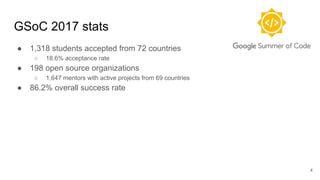
● 1,318 students accepted from 72 countries
○ 18.6% acceptance rate
● 198 open source organizations
○ 1,647 mentors with active projects from 69 countries
● 86.2% overall success rate
GSoC 2017 stats
4
Open source culture
● Openness, sharing, transparency
● Volunteers with enthusiasm
5
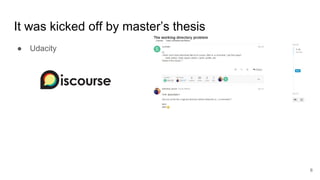
It was kicked off by master’s thesis
● Udacity
6
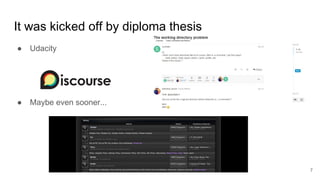
It was kicked off by diploma thesis
● Udacity
● Maybe even sooner...
7
Discourse
● discussion platform built for the next decade of the Internet
● open source (GNU General Public License Version 2.0)
● trust system
● 10 000+ forum instances in total
● 700+ paying customers - Udacity, Imgur, Facebook React, …
https://www.discourse.org/
8
So I started reading and discussing on meta
community forum
https://meta.discourse.org/
9
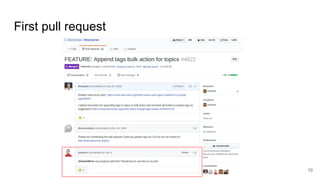
First pull request
10
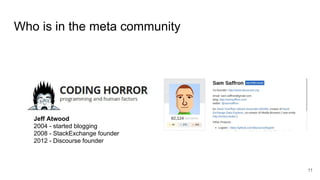
Who is in the meta community
Jeff Atwood
2004 - started blogging
2008 - StackExchange founder
2012 - Discourse founder
11
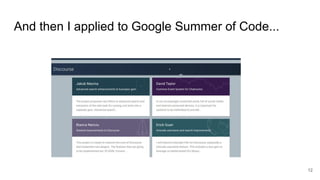
And then I applied to Google Summer of Code...
12
Timeline
● Organizations apply - January
● Students apply - March
● Accepted students - May
● Community bonding period
● Coding Dates: May 30th - August 29th
○ 3 milestones
■ Phase 1 evaluation after 1 month
■ Phase 2 evaluation after 2 months
■ Final evaluation
13
Find organizations
● Check the list of open source organizations - 198 open source organizations
● Introduce GSoC to an open source organization
14
How to get in touch with the community
● Sign up to mailing lists, IRC channels, …
● Check bug/issue tracker
○ Github issues, JIRA, Bugzilla
● Read community and contribution guidelines, follow netiquette
● Observe
● Introduce yourself
● Ask questions
● Check project ideas - do not limit on them
15
Ideal GSoC applicant
● student, available for 3 months during summer
● prior open source contribution (involvement in the project)
○ Proved experience
○ Or enough motivation to learn
https://blog.discourse.org/2016/03/the-ideal-gsoc-applicant/
16
How to write good proposal
● Synopsis - project scope, focus on benefits to community
● Project details
○ description, mockups
○ user story, use cases, task breakdown
○ extensions
● Groundwork
● Project schedule - your commitment, holidays
● Schedule
● Experience - why do you fit?
○ free time projects, work experience, university studies
● My project proposal for inspiration: https://gist.github.com/dmacjam/887e50a4d1b349f6b7e44f6302314d62
17
Project proposal
● Tip: Ask for a feedback before submission
○ Me: 3 different proposals @ Discourse
● Up to 5 proposals
● Prioritize
● Tip: focus on one project
18
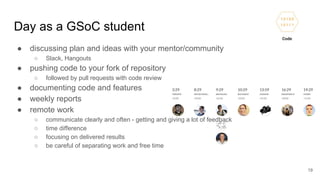
Day as a GSoC student
● discussing plan and ideas with your mentor/community
○ Slack, Hangouts
● pushing code to your fork of repository
○ followed by pull requests with code review
● documenting code and features
● weekly reports
● remote work
○ communicate clearly and often - getting and giving a lot of feedback
○ time difference
○ focusing on delivered results
○ be careful of separating work and free time
19
Lessons learned
● Be confident about your skills and submit your proposal
● Writing unit tests and integration tests
● Full stack skills
○ Database design, product upgrades
○ Impact of code performance in real world product
● Bonus: Certificate, cool t-shirt, Google one-time referral, tour visit and lunch in
Google office in Silicon Valley, possibility to attend GSoC meetups around the
world
20
It’s all about the community
● Applications opens in March, 2018 - apply early, get early feedback
● Great learning experience
● Prestigious programme
jakub.macina@gmail.com
● My final report:
https://summerofcode.withgoogle.com/archive/2017/organizations/487885628
8731136/
● Blog post: https://dmacjam.github.io/gsoc17-discourse/
21
Useful resources
http://groups.google.com/group/google-summer-of-code-discuss
https://google.github.io/gsocguides/student/
https://summerofcode.withgoogle.com/archive/2017/organizations/
22

Google Summer of Code 2017: Experience at Discourse

  • 1.
    Google Summer ofCode Experience “Flip bits, not burgers” PeWe Ontoparty 10th November 2017 Jakub Macina @dmacjam
  • 2.
    Motivation - mysummer story ● Got more practical experience which boosted my resume ● Got mentorship ● Got paid ● Gave back to the community ● Enjoyed summer after finishing university 2
  • 3.
    Google Summer ofCode Programme ● Global university student programme ● Open source software development ● Remote work ● Students: ○ inspire and involve to open source community ○ exposure to real-world software development ○ improve your skills & get feedback ○ collaborative coding & building network ● Open-source communities: ○ bring new developers ○ try new ideas ● More open source code released to benefit of all ○ 12 years and over 30M lines of code 3
  • 4.
    ● 1,318 studentsaccepted from 72 countries ○ 18.6% acceptance rate ● 198 open source organizations ○ 1,647 mentors with active projects from 69 countries ● 86.2% overall success rate GSoC 2017 stats 4
  • 5.
    Open source culture ●Openness, sharing, transparency ● Volunteers with enthusiasm 5
  • 6.
    It was kickedoff by master’s thesis ● Udacity 6
  • 7.
    It was kickedoff by diploma thesis ● Udacity ● Maybe even sooner... 7
  • 8.
    Discourse ● discussion platformbuilt for the next decade of the Internet ● open source (GNU General Public License Version 2.0) ● trust system ● 10 000+ forum instances in total ● 700+ paying customers - Udacity, Imgur, Facebook React, … https://www.discourse.org/ 8
  • 9.
    So I startedreading and discussing on meta community forum https://meta.discourse.org/ 9
  • 10.
  • 11.
    Who is inthe meta community Jeff Atwood 2004 - started blogging 2008 - StackExchange founder 2012 - Discourse founder 11
  • 12.
    And then Iapplied to Google Summer of Code... 12
  • 13.
    Timeline ● Organizations apply- January ● Students apply - March ● Accepted students - May ● Community bonding period ● Coding Dates: May 30th - August 29th ○ 3 milestones ■ Phase 1 evaluation after 1 month ■ Phase 2 evaluation after 2 months ■ Final evaluation 13
  • 14.
    Find organizations ● Checkthe list of open source organizations - 198 open source organizations ● Introduce GSoC to an open source organization 14
  • 15.
    How to getin touch with the community ● Sign up to mailing lists, IRC channels, … ● Check bug/issue tracker ○ Github issues, JIRA, Bugzilla ● Read community and contribution guidelines, follow netiquette ● Observe ● Introduce yourself ● Ask questions ● Check project ideas - do not limit on them 15
  • 16.
    Ideal GSoC applicant ●student, available for 3 months during summer ● prior open source contribution (involvement in the project) ○ Proved experience ○ Or enough motivation to learn https://blog.discourse.org/2016/03/the-ideal-gsoc-applicant/ 16
  • 17.
    How to writegood proposal ● Synopsis - project scope, focus on benefits to community ● Project details ○ description, mockups ○ user story, use cases, task breakdown ○ extensions ● Groundwork ● Project schedule - your commitment, holidays ● Schedule ● Experience - why do you fit? ○ free time projects, work experience, university studies ● My project proposal for inspiration: https://gist.github.com/dmacjam/887e50a4d1b349f6b7e44f6302314d62 17
  • 18.
    Project proposal ● Tip:Ask for a feedback before submission ○ Me: 3 different proposals @ Discourse ● Up to 5 proposals ● Prioritize ● Tip: focus on one project 18
  • 19.
    Day as aGSoC student ● discussing plan and ideas with your mentor/community ○ Slack, Hangouts ● pushing code to your fork of repository ○ followed by pull requests with code review ● documenting code and features ● weekly reports ● remote work ○ communicate clearly and often - getting and giving a lot of feedback ○ time difference ○ focusing on delivered results ○ be careful of separating work and free time 19
  • 20.
    Lessons learned ● Beconfident about your skills and submit your proposal ● Writing unit tests and integration tests ● Full stack skills ○ Database design, product upgrades ○ Impact of code performance in real world product ● Bonus: Certificate, cool t-shirt, Google one-time referral, tour visit and lunch in Google office in Silicon Valley, possibility to attend GSoC meetups around the world 20
  • 21.
    It’s all aboutthe community ● Applications opens in March, 2018 - apply early, get early feedback ● Great learning experience ● Prestigious programme jakub.macina@gmail.com ● My final report: https://summerofcode.withgoogle.com/archive/2017/organizations/487885628 8731136/ ● Blog post: https://dmacjam.github.io/gsoc17-discourse/ 21
  • 22.