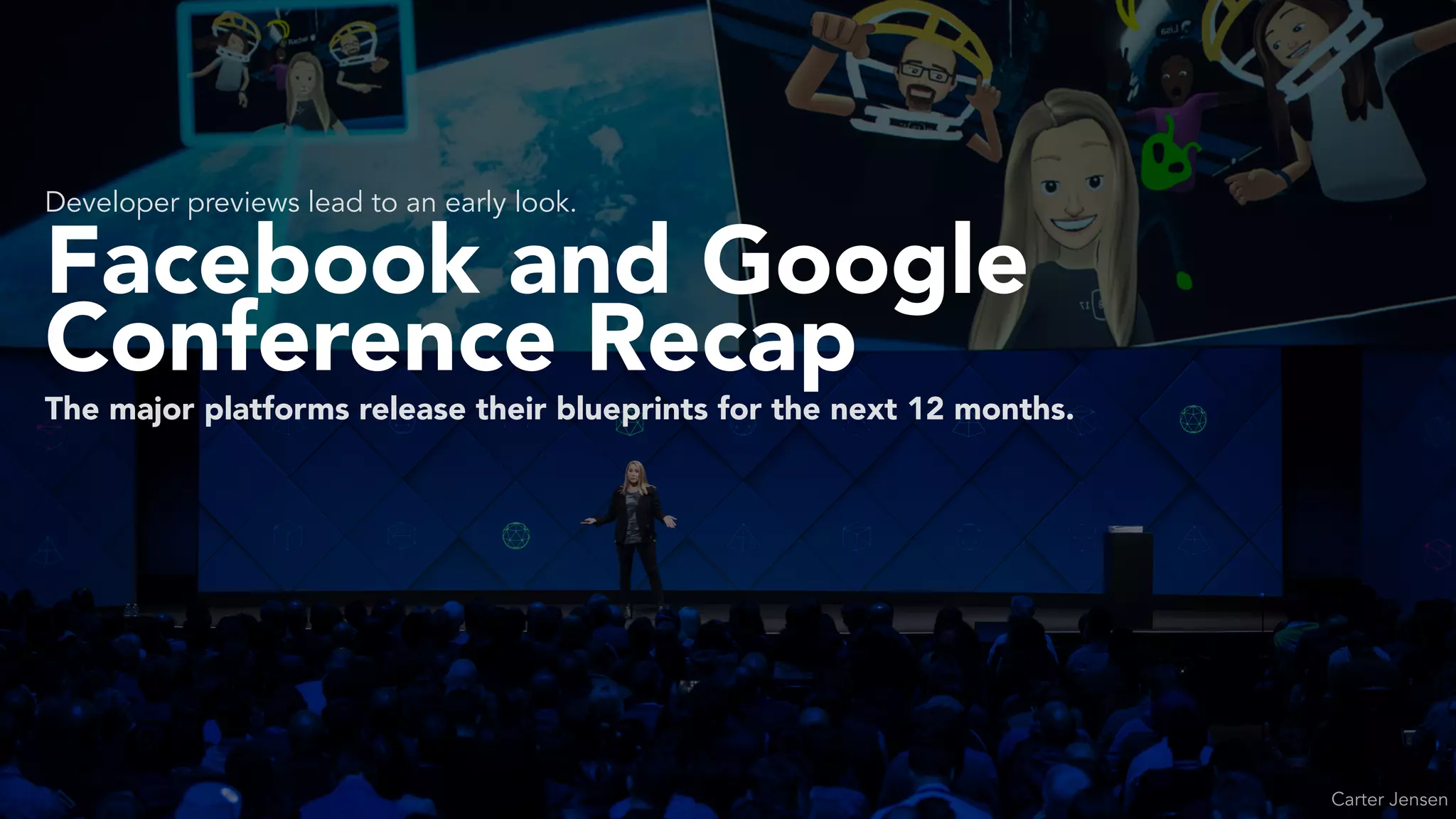







Facebook and Google
Conference Recap
The major platforms release their blueprints for the next 12 months.
Developer previews lead to an early look.
Carter Jensen
Google i/o
Search creates a continued foundation.
The Conferences
Why care about developer conferences?
Platform Domination
The two to rule them all.
Facebook F8
The social network goes far beyond friends.
Why this all matters
Determining actionable takeaways.
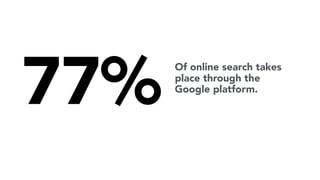
Of online search takes
place through the
Google platform.
77%
2Billion
Carter Jensen / 2017
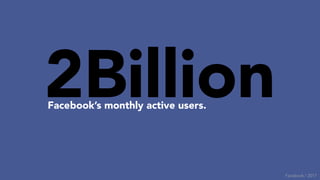
Facebook’s monthly active users.
Facebook / 2017
2Billion
Facebook / 2016
KPCB / Mary Meeker, 2016
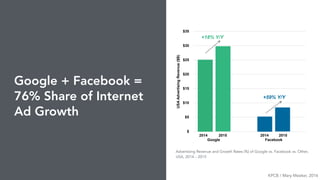
Google + Facebook =
76% Share of Internet
Ad Growth
$
$5
$10
$15
$20
$25
$30
$35
USAAdvertisingRevenue($B)
Google + Facebook =
76% (& Rising) Share of Internet Advertising Gr
Source: IAB / PWC 2015 Advertising Report, Facebook, Morgan Stanley Research
Note: Facebook revenue include Canada. Google USA ad revenue per Morgan Stanley estimates as company only discloses total ad revenue and total USA revenue. “Others” includes all other USA
internet (mobile + desktop) advertising revenue ex-Google / Facebook.
Advertising Revenue and Growth Rates (%) of Google vs. F
USA, 2014 – 2015
2014 2015 2014 2015 2
Google Facebook
+18% Y/Y
+59% Y/Y
$0
$5,000
10,000
15,000
20,000
25,000
30,000
35,000
Advertising Revenue and Growth Rates (%) of Google vs. Facebook vs. Other,
USA, 2014 – 2015
Developer Conferences
Tech companies have taken to the practice of holding annual
conferences to update their platform’s most important contributors.
Topics often include updated usage data, platform growth, new
features and upcoming products.
Why Care?
Listening into conferences like these gives the public an early
preview of what is to come in the next 12 months.
As advertisers, it is imperative to pay close attention as these
early releases are the blueprint for future consumer connections.
Carter Jensen / 2017
My Take — A Consumer Focus
We talk a lot about platforms that seem way out of reach. Things like
VR, AR and AI are all great but it is often difficult to see how these will
actually have an effect on the way we reach the common consumer.
As platforms like Google and Facebook release features and products
that include this once new-age tech, it instantly becomes ‘mainstream’
due to the massive reach and accessibility of these platforms.
Carter Jensen / 2017
Conversational
Always Available
Ready to Help
Carter Jensen / 2017
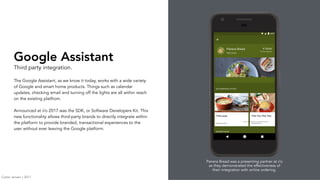
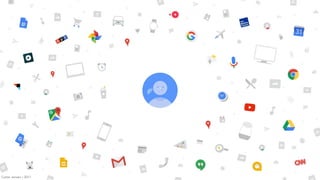
Google Assistant
Third party integration.
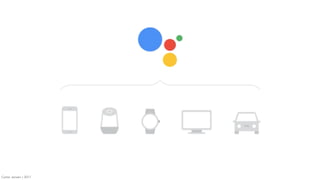
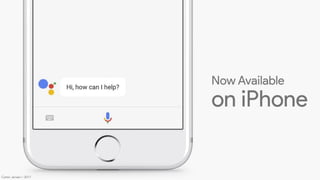
The Google Assistant, as we know it today, works with a wide variety
of Google and smart home products. Things such as calendar
updates, checking email and turning off the lights are all within reach
on the existing platfrom.
Announced at i/o 2017 was the SDK, or Software Developers Kit. This
new functionality allows third-party brands to directly integrate within
the platform to provide branded, transactional experiences to the
user without ever leaving the Google platform.
Panera Bread was a presenting partner at i/o
as they demonstrated the effectiveness of
their integration with online ordering.
Carter Jensen / 2017
Understand
Take Action
Download
Today
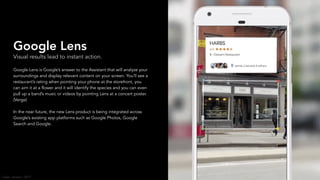
Google Lens
Visual results lead to instant action.
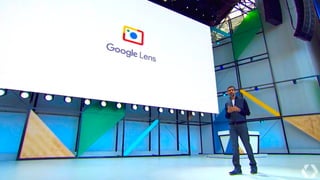
Google Lens is Google’s answer to the Assistant that will analyze your
surroundings and display relevant content on your screen. You’ll see a
restaurant’s rating when pointing your phone at the storefront, you
can aim it at a flower and it will identify the species and you can even
pull up a band’s music or videos by pointing Lens at a concert poster.
(Verge)
In the near future, the new Lens product is being integrated across
Google’s existing app platforms such as Google Photos, Google
Search and Google.
Carter Jensen / 2017
Google Photos
Carter Jensen / 2017
≈
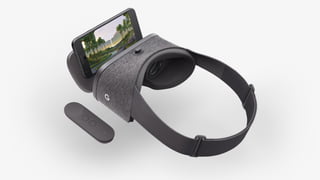
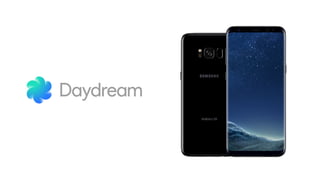
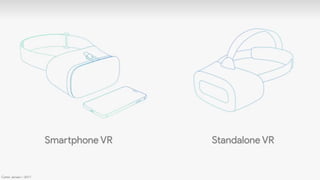
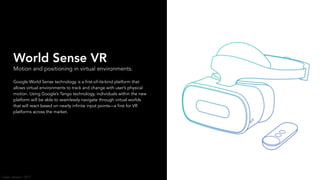
World Sense VR
Motion and positioning in virtual environments.
Google World Sense technology is a first-of-its-kind platform that
allows virtual environments to track and change with user’s physical
motion. Using Google’s Tango technology, individuals within the new
platform will be able to seamlessly navigate through virtual worlds
that will react based on nearly infinite input points—a first for VR
platforms across the market.
Carter Jensen / 2017
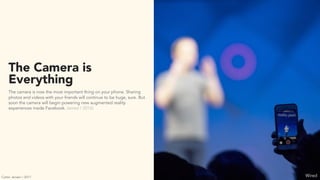
The Camera is
Everything
The camera is now the most important thing on your phone. Sharing
photos and videos with your friends will continue to be huge, sure. But
soon the camera will begin powering new augmented reality
experiences inside Facebook. (wired / 2016)
WiredCarter Jensen / 2017
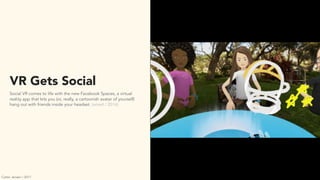
VR Gets Social
Social VR comes to life with the new Facebook Spaces, a virtual
reality app that lets you (or, really, a cartoonish avatar of yourself)
hang out with friends inside your headset. (wired / 2016)
Carter Jensen / 2017
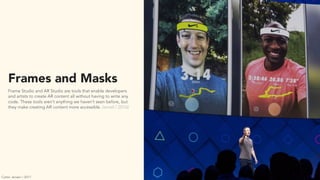
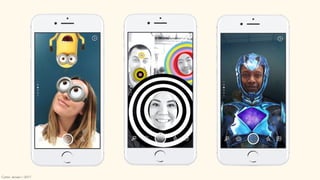
Frames and Masks
Frame Studio and AR Studio are tools that enable developers
and artists to create AR content all without having to write any
code. These tools aren’t anything we haven’t seen before, but
they make creating AR content more accessible. (wired / 2016)
Carter Jensen / 2017
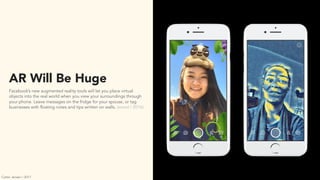
AR Will Be Huge
Facebook’s new augmented reality tools will let you place virtual
objects into the real world when you view your surroundings through
your phone. Leave messages on the fridge for your spouse, or tag
businesses with floating notes and tips written on walls. (wired / 2016)
Carter Jensen / 2017
Gaming, on Facebook, with AR.
Without a single line of code…
AR - Overlay enhancements bring
social to life.
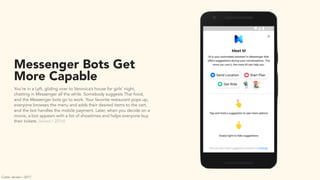
Messenger Bots Get
More Capable
You’re in a Lyft, gliding over to Veronica’s house for girls’ night,
chatting in Messenger all the while. Somebody suggests Thai food,
and the Messenger bots go to work. Your favorite restaurant pops up,
everyone browses the menu and adds their desired items to the cart,
and the bot handles the mobile payment. Later, when you decide on a
movie, a bot appears with a list of showtimes and helps everyone buy
their tickets. (wired / 2016)
Carter Jensen / 2017
25 minutes
Ok. But why does this matter?
The new tech is great, but when you sit back down at your desk today, how will this
affect the work you are doing…
Carter Jensen / 2017
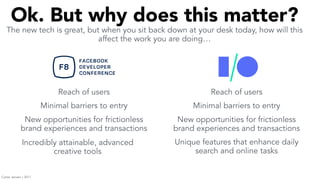
Ok. But why does this matter?
The new tech is great, but when you sit back down at your desk today, how will this
affect the work you are doing…
Reach of users Reach of users
Minimal barriers to entry Minimal barriers to entry
New opportunities for frictionless
brand experiences and transactions
New opportunities for frictionless
brand experiences and transactions
Incredibly attainable, advanced
creative tools
Unique features that enhance daily
search and online tasks
Carter Jensen / 2017
Questions &
Discussion
Facebook and Google
Conference Recap
The major platforms release their blueprints for the next 12 months.
Developer previews lead to an early look.
Carter JensenPublic House - May 30th 2017

Google I/O & Facebook F8 Developer Conference Recap — The major platforms release their blueprints for the next 12 months.

  • 1.
    Facebook and Google ConferenceRecap The major platforms release their blueprints for the next 12 months. Developer previews lead to an early look. Carter Jensen
  • 2.
    Google i/o Search createsa continued foundation. The Conferences Why care about developer conferences? Platform Domination The two to rule them all. Facebook F8 The social network goes far beyond friends. Why this all matters Determining actionable takeaways.
  • 4.
    Of online searchtakes place through the Google platform. 77%
  • 6.
  • 7.
    Facebook’s monthly activeusers. Facebook / 2017 2Billion
  • 8.
  • 9.
    KPCB / MaryMeeker, 2016 Google + Facebook = 76% Share of Internet Ad Growth $ $5 $10 $15 $20 $25 $30 $35 USAAdvertisingRevenue($B) Google + Facebook = 76% (& Rising) Share of Internet Advertising Gr Source: IAB / PWC 2015 Advertising Report, Facebook, Morgan Stanley Research Note: Facebook revenue include Canada. Google USA ad revenue per Morgan Stanley estimates as company only discloses total ad revenue and total USA revenue. “Others” includes all other USA internet (mobile + desktop) advertising revenue ex-Google / Facebook. Advertising Revenue and Growth Rates (%) of Google vs. F USA, 2014 – 2015 2014 2015 2014 2015 2 Google Facebook +18% Y/Y +59% Y/Y $0 $5,000 10,000 15,000 20,000 25,000 30,000 35,000 Advertising Revenue and Growth Rates (%) of Google vs. Facebook vs. Other, USA, 2014 – 2015
  • 11.
    Developer Conferences Tech companieshave taken to the practice of holding annual conferences to update their platform’s most important contributors. Topics often include updated usage data, platform growth, new features and upcoming products.
  • 12.
    Why Care? Listening intoconferences like these gives the public an early preview of what is to come in the next 12 months. As advertisers, it is imperative to pay close attention as these early releases are the blueprint for future consumer connections.
  • 13.
  • 14.
    My Take —A Consumer Focus We talk a lot about platforms that seem way out of reach. Things like VR, AR and AI are all great but it is often difficult to see how these will actually have an effect on the way we reach the common consumer. As platforms like Google and Facebook release features and products that include this once new-age tech, it instantly becomes ‘mainstream’ due to the massive reach and accessibility of these platforms.
  • 17.
  • 18.
  • 19.
    Google Assistant Third partyintegration. The Google Assistant, as we know it today, works with a wide variety of Google and smart home products. Things such as calendar updates, checking email and turning off the lights are all within reach on the existing platfrom. Announced at i/o 2017 was the SDK, or Software Developers Kit. This new functionality allows third-party brands to directly integrate within the platform to provide branded, transactional experiences to the user without ever leaving the Google platform. Panera Bread was a presenting partner at i/o as they demonstrated the effectiveness of their integration with online ordering. Carter Jensen / 2017
  • 20.
  • 21.
  • 22.
  • 23.
  • 24.
  • 26.
    Google Lens Visual resultslead to instant action. Google Lens is Google’s answer to the Assistant that will analyze your surroundings and display relevant content on your screen. You’ll see a restaurant’s rating when pointing your phone at the storefront, you can aim it at a flower and it will identify the species and you can even pull up a band’s music or videos by pointing Lens at a concert poster. (Verge) In the near future, the new Lens product is being integrated across Google’s existing app platforms such as Google Photos, Google Search and Google. Carter Jensen / 2017
  • 27.
  • 28.
  • 32.
  • 33.
    ≈ World Sense VR Motionand positioning in virtual environments. Google World Sense technology is a first-of-its-kind platform that allows virtual environments to track and change with user’s physical motion. Using Google’s Tango technology, individuals within the new platform will be able to seamlessly navigate through virtual worlds that will react based on nearly infinite input points—a first for VR platforms across the market. Carter Jensen / 2017
  • 38.
    The Camera is Everything Thecamera is now the most important thing on your phone. Sharing photos and videos with your friends will continue to be huge, sure. But soon the camera will begin powering new augmented reality experiences inside Facebook. (wired / 2016) WiredCarter Jensen / 2017
  • 39.
    VR Gets Social Social VRcomes to life with the new Facebook Spaces, a virtual reality app that lets you (or, really, a cartoonish avatar of yourself) hang out with friends inside your headset. (wired / 2016) Carter Jensen / 2017
  • 40.
    Frames and Masks FrameStudio and AR Studio are tools that enable developers and artists to create AR content all without having to write any code. These tools aren’t anything we haven’t seen before, but they make creating AR content more accessible. (wired / 2016) Carter Jensen / 2017
  • 41.
  • 42.
    AR Will BeHuge Facebook’s new augmented reality tools will let you place virtual objects into the real world when you view your surroundings through your phone. Leave messages on the fridge for your spouse, or tag businesses with floating notes and tips written on walls. (wired / 2016) Carter Jensen / 2017
  • 43.
  • 44.
    Without a singleline of code…
  • 45.
    AR - Overlayenhancements bring social to life.
  • 46.
    Messenger Bots Get MoreCapable You’re in a Lyft, gliding over to Veronica’s house for girls’ night, chatting in Messenger all the while. Somebody suggests Thai food, and the Messenger bots go to work. Your favorite restaurant pops up, everyone browses the menu and adds their desired items to the cart, and the bot handles the mobile payment. Later, when you decide on a movie, a bot appears with a list of showtimes and helps everyone buy their tickets. (wired / 2016) Carter Jensen / 2017
  • 47.
  • 48.
    Ok. But whydoes this matter? The new tech is great, but when you sit back down at your desk today, how will this affect the work you are doing… Carter Jensen / 2017
  • 49.
    Ok. But whydoes this matter? The new tech is great, but when you sit back down at your desk today, how will this affect the work you are doing… Reach of users Reach of users Minimal barriers to entry Minimal barriers to entry New opportunities for frictionless brand experiences and transactions New opportunities for frictionless brand experiences and transactions Incredibly attainable, advanced creative tools Unique features that enhance daily search and online tasks Carter Jensen / 2017
  • 50.
  • 51.
    Facebook and Google ConferenceRecap The major platforms release their blueprints for the next 12 months. Developer previews lead to an early look. Carter JensenPublic House - May 30th 2017