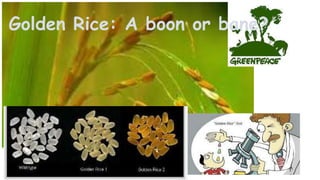
Golden Rice: A boon or bane?
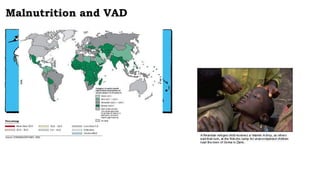
Malnutrition and VAD
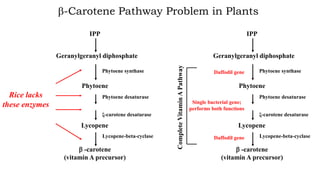
IPP
Geranylgeranyl diphosphate
Phytoene
Lycopene
 -carotene
(vitamin A precursor)
Phytoene synthase
Phytoene desaturase
Lycopene-beta-cyclase
ξ-carotene desaturase
Daffodil gene
Single bacterial gene;
performs both functions
Daffodil gene
-Carotene Pathway Problem in Plants
IPP
Geranylgeranyl diphosphate
Phytoene
Lycopene
 -carotene
(vitamin A precursor)
Phytoene synthase
Phytoene desaturase
Lycopene-beta-cyclase
ξ-carotene desaturase
Rice lacks
these enzymes
Complete
Vitamin
A
Pathway
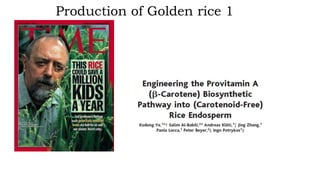
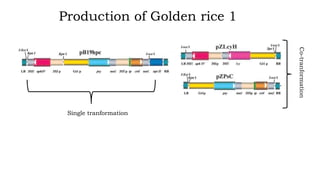
Production of Golden rice 1
Single tranformation
Co-tranformation
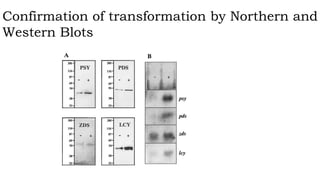
Confirmation of transformation by Northern and
Western Blots
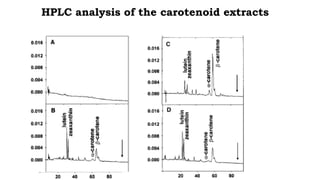
HPLC analysis of the carotenoid extracts
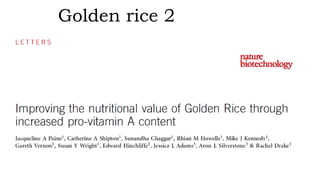
Golden rice 2
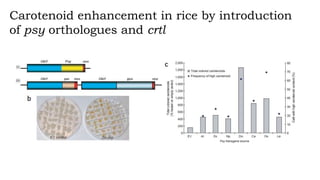
Carotenoid enhancement in rice by introduction
of psy orthologues and crtl
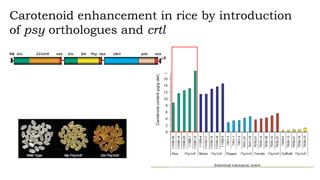
Carotenoid enhancement in rice by introduction
of psy orthologues and crtl
Differences between Golden rice 1 and 2
• 35 μg of carotinoids per gram of dry Golden rice 2 instead
of 1.6 μg of carotinoids per gram of dry Golden rice 1.
• More efficient phy gene introduced.
• Removal of CaMV 35S by polyubiquitin gene.
• Incorporation of phosphomannose-isomerase sugar-based
selection system instead of antibiotic selection system.
Human trials
• Golden Rice 2 plants were grown hydroponically with
heavy water (deuterium oxide) to generate deuterium-
labeled [2H]β-carotene in the rice grains.
• Golden Rice servings of 65–98 g (130–200 g cooked
rice) containing 0.99–1.53 mg β -carotene were fed to
5 healthy adult volunteers (3 women and 2 men) with
10 g butter.
• A reference dose of [13C10]retinyl acetate (0.4–1.0 mg)
in oil was given to each volunteer 1 week before
ingestion of the Golden Rice dose.
• Blood samples were collected over 36 d.
Results
Human trial resulted in a speculation that 50 g uncooked Golden
Rice, which is a reasonable serving size for children aged 4–8 y in
rice eating regions, who eat ~130–200 g rice/d , would be able
to provide >90% of vitamin A estimated average requirement (EAR)
(275 μg retinol/d) or >60% of the Recommended Dietary Allowance
(RDA) which is 400 μg retinol/d.
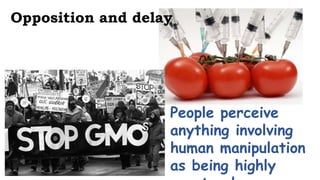
People perceive
anything involving
human manipulation
as being highly
Opposition and delay
Issues surrounding commercialization
of Golden rice
• Social
• Political
• Environmental
Major concerns
• Eat several kilograms of it to get their daily requirement.
• Will change the food habit of the developing countries
• Small farmers will lose their land and income for being
unable to compete with the corporate industries
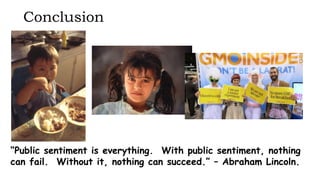
“Public sentiment is everything. With public sentiment, nothing
can fail. Without it, nothing can succeed.” – Abraham Lincoln.
Conclusion

Golden Rice.pptx

  • 1.
    Golden Rice: Aboon or bane?
  • 2.
  • 3.
    IPP Geranylgeranyl diphosphate Phytoene Lycopene  -carotene (vitaminA precursor) Phytoene synthase Phytoene desaturase Lycopene-beta-cyclase ξ-carotene desaturase Daffodil gene Single bacterial gene; performs both functions Daffodil gene -Carotene Pathway Problem in Plants IPP Geranylgeranyl diphosphate Phytoene Lycopene  -carotene (vitamin A precursor) Phytoene synthase Phytoene desaturase Lycopene-beta-cyclase ξ-carotene desaturase Rice lacks these enzymes Complete Vitamin A Pathway
  • 4.
  • 5.
    Production of Goldenrice 1 Single tranformation Co-tranformation
  • 6.
    Confirmation of transformationby Northern and Western Blots
  • 7.
    HPLC analysis ofthe carotenoid extracts
  • 8.
  • 9.
    Carotenoid enhancement inrice by introduction of psy orthologues and crtl
  • 10.
    Carotenoid enhancement inrice by introduction of psy orthologues and crtl
  • 11.
    Differences between Goldenrice 1 and 2 • 35 μg of carotinoids per gram of dry Golden rice 2 instead of 1.6 μg of carotinoids per gram of dry Golden rice 1. • More efficient phy gene introduced. • Removal of CaMV 35S by polyubiquitin gene. • Incorporation of phosphomannose-isomerase sugar-based selection system instead of antibiotic selection system.
  • 12.
    Human trials • GoldenRice 2 plants were grown hydroponically with heavy water (deuterium oxide) to generate deuterium- labeled [2H]β-carotene in the rice grains. • Golden Rice servings of 65–98 g (130–200 g cooked rice) containing 0.99–1.53 mg β -carotene were fed to 5 healthy adult volunteers (3 women and 2 men) with 10 g butter. • A reference dose of [13C10]retinyl acetate (0.4–1.0 mg) in oil was given to each volunteer 1 week before ingestion of the Golden Rice dose. • Blood samples were collected over 36 d.
  • 13.
    Results Human trial resultedin a speculation that 50 g uncooked Golden Rice, which is a reasonable serving size for children aged 4–8 y in rice eating regions, who eat ~130–200 g rice/d , would be able to provide >90% of vitamin A estimated average requirement (EAR) (275 μg retinol/d) or >60% of the Recommended Dietary Allowance (RDA) which is 400 μg retinol/d.
  • 14.
    People perceive anything involving humanmanipulation as being highly Opposition and delay
  • 15.
    Issues surrounding commercialization ofGolden rice • Social • Political • Environmental
  • 16.
    Major concerns • Eatseveral kilograms of it to get their daily requirement. • Will change the food habit of the developing countries • Small farmers will lose their land and income for being unable to compete with the corporate industries
  • 17.
    “Public sentiment iseverything. With public sentiment, nothing can fail. Without it, nothing can succeed.” – Abraham Lincoln. Conclusion