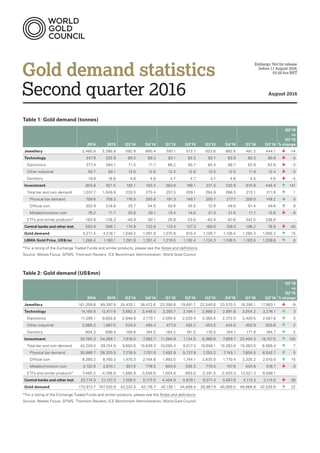
Table 1: Gold demand (tonnes)	
2014 2015 Q3’14 Q4’14 Q1’15 Q2’15 Q3’15 Q4’15 Q1’16 Q2’16
Q2’16
vs
Q2’15
% change
Jewellery 2,485.8 2,396.9 592.9 685.4 597.1 513.7 623.6 662.6 481.2 444.1 		 -14
Technology 347.9 332.9 89.3 89.3 83.1 83.3 82.7 83.8 80.3 80.9 		 -3
	Electronics 277.4 264.1 71.5 71.7 66.2 65.7 65.4 66.7 63.9 63.9 		 -3
	 Other industrial 50.7 50.1 13.0 12.8 12.2 12.8 12.5 12.5 11.9 12.4 		 -3
	Dentistry 19.8 18.8 4.8 4.8 4.7 4.7 4.7 4.6 4.5 4.6 		 -4
Investment 853.8 921.5 192.1 183.4 283.0 186.1 231.5 220.9 615.6 448.4 		141
	 Total bar and coin demand 1,037.7 1,049.8 233.0 275.4 257.3 209.1 294.9 288.5 273.1 211.6 		 1
		 Physical bar demand 758.6 759.3 176.5 200.8 191.3 149.7 200.7 217.7 200.0 149.2 		 0
		Official coin 202.9 218.8 35.7 54.5 50.6 45.5 72.9 49.8 61.4 49.6 		 9
		Medals/imitation coin 76.2 71.7 20.8 20.1 15.4 14.0 21.3 21.0 11.7 12.8 		 -9
	 ETFs and similar products* -183.8 -128.3 -40.9 -92.1 25.6 -23.0 -63.4 -67.6 342.5 236.8 	-	 -
Central banks and other inst. 583.9 566.7 174.9 133.9 112.4 127.3 168.0 159.0 108.2 76.9 		 -40
Gold demand 4,271.4 4,218.1 1,049.2 1,091.9 1,075.6 910.4 1,105.7 1,126.4 1,285.3 1,050.2 		 15
LBMA Gold Price, US$/oz 1,266.4 1,160.1 1,281.9 1,201.4 1,218.5 1,192.4 1,124.3 1,106.5 1,182.6 1,259.6 		 6
*For a listing of the Exchange Traded Funds and similar products, please see the Notes and definitions.	
Source: Metals Focus; GFMS, Thomson Reuters; ICE Benchmark Administration; World Gold Council
Table 2: Gold demand (US$mn)	
2014 2015 Q3’14 Q4’14 Q1’15 Q2’15 Q3’15 Q4’15 Q1’16 Q2’16
Q2’16
vs
Q2’15
% change
Jewellery 101,209.8 89,397.9 24,435.1 26,472.6 23,390.6 19,691.7 22,540.6 23,570.3 18,295.1 17,983.1 		 -9
Technology 14,165.6 12,417.6 3,682.3 3,448.0 3,255.7 3,194.1 2,989.2 2,981.6 3,054.2 3,276.1 		 3
	Electronics 11,295.1 9,850.8 2,948.8 2,770.1 2,594.6 2,520.4 2,365.6 2,372.5 2,429.5 2,587.8 		 3
	 Other industrial 2,066.2 1,867.5 534.0 493.4 477.0 492.2 453.5 445.0 452.9 503.6 		 2
	Dentistry 804.3 699.4 199.6 184.5 184.2 181.5 170.0 164.1 171.9 184.7 		 2
Investment 34,764.3 34,368.1 7,918.0 7,082.7 11,084.9 7,134.5 8,366.6 7,859.7 23,404.3 18,157.5 		155
	 Total bar and coin demand 42,249.5 39,154.9 9,603.8 10,639.3 10,080.3 8,017.4 10,658.1 10,263.0 10,383.0 8,569.4 		 7
		 Physical bar demand 30,886.7 28,320.5 7,276.5 7,757.9 7,492.9 5,737.9 7,253.2 7,745.1 7,604.0 6,042.7 		 5
		Official coin 8,260.2 8,160.3 1,470.3 2,104.8 1,983.5 1,744.1 2,635.0 1,770.4 2,335.2 2,010.0 		 15
		Medals/imitation coin 3,102.6 2,674.1 857.0 776.5 604.0 535.3 770.0 747.6 443.8 516.7 		 -3
	 ETFs and similar products* -7,485.2 -4,786.8 -1,685.8 -3,556.6 1,004.6 -883.0 -2,291.5 -2,403.3 13,021.3 9,588.1 	-	 -
Central banks and other inst. 23,774.0 21,137.3 7,206.5 5,173.5 4,404.9 4,879.1 6,071.4 5,657.9 4,113.3 3,114.0 		 -36
Gold demand 173,913.7 157,320.9 43,242.0 42,176.7 42,136.1 34,899.4 39,967.9 40,069.5 48,866.8 42,530.6 		 22
*For a listing of the Exchange Traded Funds and similar products, please see the Notes and definitions.	
Source: Metals Focus; GFMS, Thomson Reuters; ICE Benchmark Administration; World Gold Council
Gold demand statistics
Second quarter 2016 August 2016
Embargo: Not for release
before 11 August 2016,
05.00 hrs BST
02Gold Demand Trends  |  Second quarter 2016
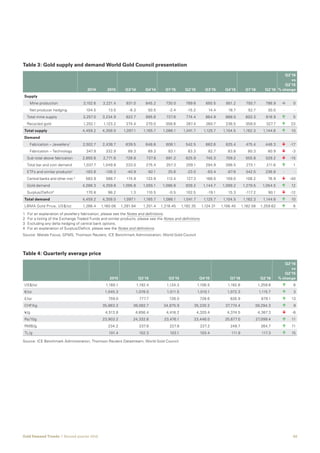
Table 3: Gold supply and demand World Gold Council presentation	
2014 2015 Q3’14 Q4’14 Q1’15 Q2’15 Q3’15 Q4’15 Q1’16 Q2’16
Q2’16
vs
Q2’15
% change
Supply
		Mine production 3,152.6 3,221.4 831.0 845.2 730.0 789.6 850.5 851.2 750.7 786.9 		 0
		 Net producer hedging 104.5 13.5 -8.3 50.5 -2.4 -15.2 14.4 16.7 52.7 30.0 	 -	 -
	 Total mine supply 3,257.0 3,234.9 822.7 895.6 727.6 774.4 864.9 868.0 803.3 816.9 		 5
	 Recycled gold 1,202.1 1,123.2 274.4 270.0 358.6 267.4 260.7 236.5 359.0 327.7 		 23
Total supply 4,459.2 4,358.0 1,097.1 1,165.7 1,086.1 1,041.7 1,125.7 1,104.5 1,162.3 1,144.6 		 10
Demand
		 Fabrication – Jewellery1
2,502.7 2,438.7 639.5 648.6 608.1 542.5 662.6 625.4 475.4 448.3 		 -17
		 Fabrication – Technology 347.9 332.9 89.3 89.3 83.1 83.3 82.7 83.8 80.3 80.9 		 -3
	 Sub-total above fabrication 2,850.6 2,771.6 728.8 737.8 691.2 625.9 745.3 709.2 555.8 529.2 	 	-15
	 Total bar and coin demand 1,037.7 1,049.8 233.0 275.4 257.3 209.1 294.9 288.5 273.1 211.6 		 1
	 ETFs and similar products2
-183.8 -128.3 -40.9 -92.1 25.6 -23.0 -63.4 -67.6 342.5 236.8 	 -	 -
	 Central banks and other inst.3
583.9 566.7 174.9 133.9 112.4 127.3 168.0 159.0 108.2 76.9 		 -40
	 Gold demand 4,288.3 4,259.8 1,095.8 1,055.1 1,086.6 939.2 1,144.7 1,089.2 1,279.5 1,054.5 		 12
	Surplus/Deficit4
170.8 98.2 1.3 110.5 -0.5 102.5 -19.1 15.3 -117.2 90.1 		 -12
Total demand 4,459.2 4,358.0 1,097.1 1,165.7 1,086.1 1,041.7 1,125.7 1,104.5 1,162.3 1,144.6 		 10
LBMA Gold Price, US$/oz 1,266.4 1,160.06 1,281.94 1,201.4 1,218.45 1,192.35 1,124.31 1,106.45 1,182.56 1,259.62 		 6
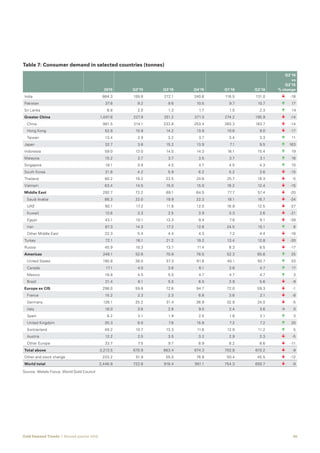
1	 For an explanation of jewellery fabrication, please see the Notes and definitions.								
2	 For a listing of the Exchange Traded Funds and similar products, please see the Notes and definitions.						
3	Excluding any delta hedging of central bank options.										
4	 For an explanation of Surplus/Deficit, please see the Notes and definitions.						
Source: Metals Focus; GFMS, Thomson Reuters; ICE Benchmark Administration; World Gold Council		
Table 4: Quarterly average price	
2015 Q2'15 Q3'15 Q4'15 Q1'16 Q2'16
Q2’16
vs
Q2’15
% change
US$/oz 1,160.1 1,192.4 1,124.3 1,106.5 1,182.6 1,259.6 	 	 6
€/oz 1,045.3 1,078.0 1,011.5 1,010.1 1,072.3 1,115.7 	 	 3
£/oz 759.0 777.7 726.0 728.6 826.9 879.1 	 	 13
CHF/kg 35,863.3 36,082.7 34,875.9 35,230.2 37,774.4 39,294.3 	 	9
¥/g 4,513.8 4,656.4 4,416.2 4,320.4 4,374.5 4,367.3 	 	 -6
Rs/10g 23,903.2 24,332.8 23,476.1 23,446.0 25,677.0 27,099.4 	 	 11
RMB/g 234.2 237.8 227.8 227.2 248.7 264.7 	 	 11
TL/g 101.4 102.3 103.1 103.4 111.9 117.3 	 	 15
Source: ICE Benchmark Administration; Thomson Reuters Datastream; World Gold Council
03Gold Demand Trends  |  Second quarter 2016
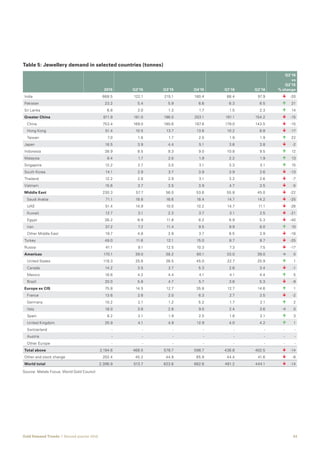
Table 5: Jewellery demand in selected countries (tonnes)				
2015 Q2'15 Q3'15 Q4'15 Q1'16 Q2'16
Q2’16
vs
Q2’15
% change
India 668.5 122.1 215.1 180.4 88.4 97.9 	 	-20
Pakistan 23.2 5.4 5.9 6.6 6.3 6.5 	 	 21
Sri Lanka 6.8 2.0 1.3 1.7 1.5 2.3 	 	 14
Greater China 811.9 181.0 196.0 203.1 191.1 154.2 	 	 -15
	China 753.4 169.0 180.6 187.6 179.0 143.5 	 	 -15
	 Hong Kong 51.4 10.5 13.7 13.6 10.2 8.8 	 	 -17
	Taiwan 7.0 1.6 1.7 2.0 1.9 1.9 	 	 22
Japan 16.5 3.9 4.4 5.1 3.6 3.8 	 	 -2
Indonesia 38.9 8.5 9.3 9.0 10.8 9.5 	 	 12
Malaysia 8.4 1.7 2.0 1.9 2.2 1.9 	 	 13
Singapore 12.2 2.7 3.0 3.1 3.3 3.1 	 	 15
South Korea 14.1 2.9 3.7 3.9 3.9 2.6 	 	 -13
Thailand 12.2 2.8 2.9 3.1 3.2 2.6 	 	 -7
Vietnam 15.6 3.7 3.5 3.9 4.7 3.5 	 	 -5
Middle East 230.3 57.7 56.0 53.6 55.8 45.0 	 	-22
	 Saudi Arabia 71.1 18.8 16.6 18.4 14.7 14.2 	 	-25
	UAE 51.4 14.9 10.0 10.2 14.7 11.1 	 	-26
	Kuwait 12.7 3.1 2.3 3.7 3.1 2.5 	 	 -21
	Egypt 38.2 8.9 11.8 8.2 6.9 5.3 	 	-40
	Iran 37.2 7.2 11.4 9.5 9.9 8.0 	 	 10
	 Other Middle East 19.7 4.8 3.9 3.7 6.5 3.9 	 	 -18
Turkey 49.0 11.6 12.1 15.0 8.7 8.7 	 	-25
Russia 41.1 9.1 12.5 10.3 7.3 7.5 	 	 -17
Americas 170.1 39.0 38.2 60.1 33.0 39.0 	 	 0
	 United States 119.3 25.6 26.5 45.0 22.7 25.9 	 	 1
	Canada 14.2 3.5 2.7 5.3 2.6 3.4 	 	 -1
	Mexico 16.6 4.2 4.4 4.1 4.1 4.4 	 	 5
	Brazil 20.0 5.8 4.7 5.7 3.6 5.3 	 	 -9
Europe ex CIS 75.8 14.5 12.7 35.8 12.7 14.6 	 	 1
	France 13.6 2.6 2.0 6.3 2.7 2.5 	 	 -2
	Germany 10.2 2.1 1.2 5.2 1.7 2.1 	 	 2
	Italy 18.0 3.6 2.8 9.0 2.4 3.6 	 	 0
	Spain 8.2 2.1 1.9 2.5 1.8 2.1 	 	 3
	 United Kingdom 25.9 4.1 4.9 12.9 4.0 4.2 	 	 1
	Switzerland - - - - - - 	 -	 -
	Austria - - - - - - 	 -	 -
	 Other Europe - - - - - - 	 -	-
Total above 2,194.6 468.5 578.7 596.7 436.8 402.5 	 	 -14
Other and stock change 202.4 45.2 44.9 65.9 44.4 41.6 	 	 -8
World total 2,396.9 513.7 623.6 662.6 481.2 444.1 	 	 -14
Source: Metals Focus; World Gold Council
04Gold Demand Trends  |  Second quarter 2016
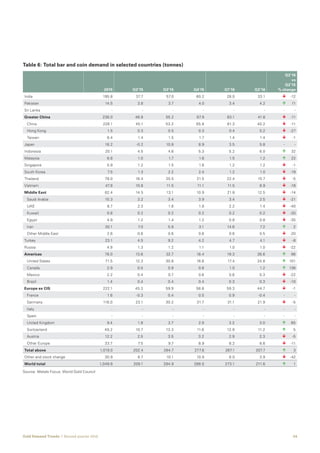
Table 6: Total bar and coin demand in selected countries (tonnes)				
2015 Q2'15 Q3'15 Q4'15 Q1'16 Q2'16
Q2’16
vs
Q2’15
% change
India 195.8 37.7 57.0 60.2 28.0 33.1 	 	 -12
Pakistan 14.5 3.8 3.7 4.0 3.4 4.2 	 	 11
Sri Lanka - - - - - - 	 -	-
Greater China 236.0 46.8 55.2 67.9 83.1 41.8 	 	 -11
	China 228.1 45.1 53.2 65.8 81.3 40.2 	 	 -11
	 Hong Kong 1.5 0.3 0.5 0.3 0.4 0.2 	 	 -27
	Taiwan 6.4 1.4 1.5 1.7 1.4 1.4 	 	 -1
Japan 16.2 -0.2 10.8 8.9 3.5 5.8 	 -	-
Indonesia 20.1 4.5 4.6 5.3 5.2 6.0 	 	 32
Malaysia 6.8 1.0 1.7 1.6 1.5 1.2 	 	 22
Singapore 5.9 1.2 1.5 1.6 1.2 1.2 	 	 -1
South Korea 7.5 1.3 2.2 2.4 1.2 1.0 	 	 -19
Thailand 78.0 16.4 20.5 21.5 22.4 15.7 	 	 -5
Vietnam 47.8 10.8 11.5 11.1 11.5 8.9 	 	 -18
Middle East 62.4 14.5 13.1 10.9 21.8 12.5 	 	 -14
	 Saudi Arabia 15.3 3.2 3.4 3.9 3.4 2.5 	 	 -21
	UAE 8.7 2.3 1.8 1.8 2.2 1.4 	 	-40
	Kuwait 0.8 0.2 0.2 0.2 0.2 0.2 	 	 -20
	Egypt 4.9 1.2 1.4 1.2 0.8 0.8 	 	-35
	Iran 30.1 7.0 5.8 3.1 14.6 7.2 	 	 2
	 Other Middle East 2.6 0.6 0.6 0.6 0.6 0.5 	 	 -20
Turkey 23.1 4.5 9.2 4.2 4.7 4.1 	 	 -8
Russia 4.8 1.3 1.2 1.1 1.0 1.0 	 	 -22
Americas 78.0 13.6 32.7 18.4 19.3 26.6 	 	 96
	 United States 71.5 12.3 30.8 16.6 17.4 24.8 	 	101
	Canada 2.9 0.5 0.9 0.8 1.0 1.2 	 	136
	Mexico 2.2 0.4 0.7 0.6 0.6 0.3 	 	 -22
	Brazil 1.4 0.4 0.4 0.4 0.3 0.3 	 	 -10
Europe ex CIS 222.1 45.3 59.9 58.8 59.3 44.7 	 	 -1
	France 1.6 -0.3 0.4 0.5 0.9 -0.4 	 -	 -
	Germany 116.0 23.1 30.2 31.7 31.1 21.9 	 	 -5
	Italy - - - - - - 	 -	-
	Spain - - - - - - 	 -	-
	 United Kingdom 9.4 1.8 2.7 2.9 3.2 3.0 	 	 65
	Switzerland 49.2 10.7 13.3 11.6 12.9 11.2 	 	 5
	Austria 12.2 2.5 3.5 3.2 2.9 2.3 	 	 -5
	 Other Europe 33.7 7.5 9.7 8.9 8.2 6.6 	 	 -11
Total above 1,019.0 202.4 284.7 277.6 267.1 207.7 	 	 3
Other and stock change 30.9 6.7 10.1 10.9 6.0 3.9 	 	-42
World total 1,049.8 209.1 294.9 288.5 273.1 211.6 	 	 1
Source: Metals Focus; World Gold Council
05Gold Demand Trends  |  Second quarter 2016
Table 7: Consumer demand in selected countries (tonnes)				
2015 Q2'15 Q3'15 Q4'15 Q1'16 Q2'16
Q2’16
vs
Q2’15
% change
India 864.3 159.8 272.1 240.6 116.5 131.0 	 	 -18
Pakistan 37.6 9.2 9.6 10.5 9.7 10.7 	 	 17
Sri Lanka 6.8 2.0 1.3 1.7 1.5 2.3 	 	 14
Greater China 1,047.8 227.9 251.2 271.0 274.2 195.9 	 	 -14
	China 981.5 214.1 233.8 253.4 260.3 183.7 	 	 -14
	 Hong Kong 52.8 10.8 14.2 13.9 10.6 9.0 	 	 -17
	Taiwan 13.4 2.9 3.2 3.7 3.4 3.3 	 	 11
Japan 32.7 3.6 15.2 13.9 7.1 9.5 	 	163
Indonesia 59.0 13.0 14.0 14.3 16.1 15.4 	 	 19
Malaysia 15.2 2.7 3.7 3.5 3.7 3.1 	 	 16
Singapore 18.1 3.9 4.5 4.7 4.5 4.3 	 	 10
South Korea 21.6 4.2 5.9 6.2 5.2 3.6 	 	 -15
Thailand 90.2 19.2 23.5 24.6 25.7 18.3 	 	 -5
Vietnam 63.4 14.5 15.0 15.0 16.2 12.4 	 	 -15
Middle East 292.7 72.2 69.1 64.5 77.7 57.4 	 	 -20
	 Saudi Arabia 86.3 22.0 19.9 22.3 18.1 16.7 	 	 -24
	UAE 60.1 17.2 11.8 12.0 16.9 12.5 	 	 -27
	Kuwait 13.6 3.3 2.5 3.9 3.3 2.6 	 	 -21
	Egypt 43.1 10.1 13.3 9.4 7.8 6.1 	 	 -39
	Iran 67.3 14.3 17.2 12.6 24.5 15.1 	 	 6
	 Other Middle East 22.3 5.4 4.4 4.3 7.2 4.4 	 	 -18
Turkey 72.1 16.1 21.2 19.2 13.4 12.8 	 	 -20
Russia 45.9 10.3 13.7 11.4 8.3 8.5 	 	 -17
Americas 248.1 52.6 70.8 78.5 52.3 65.6 	 	 25
	 United States 190.8 38.0 57.3 61.6 40.1 50.7 	 	 33
	Canada 17.1 4.0 3.6 6.1 3.6 4.7 	 	 17
	Mexico 18.8 4.5 5.0 4.7 4.7 4.7 	 	 3
	Brazil 21.4 6.1 5.0 6.0 3.9 5.6 	 	 -9
Europe ex CIS 298.0 59.8 72.6 94.7 72.0 59.3 	 	 -1
	France 15.2 2.3 2.3 6.8 3.6 2.1 	 	 -8
	Germany 126.1 25.2 31.4 36.9 32.9 24.0 	 	 -5
	Italy 18.0 3.6 2.8 9.0 2.4 3.6 	 	 0
	Spain 8.2 2.1 1.9 2.5 1.8 2.1 	 	 3
	 United Kingdom 35.3 6.0 7.6 15.8 7.2 7.2 	 	 20
	Switzerland 49.2 10.7 13.3 11.6 12.9 11.2 	 	 5
	Austria 12.2 2.5 3.5 3.2 2.9 2.3 	 	 -5
	 Other Europe 33.7 7.5 9.7 8.9 8.2 6.6 	 	 -11
Total above 3,213.5 670.9 863.4 874.3 703.8 610.2 	 	 -9
Other and stock change 233.2 51.9 55.0 76.8 50.4 45.5 	 	 -12
World total 3,446.8 722.8 918.4 951.1 754.3 655.7 	 	 -9
Source: Metals Focus; World Gold Council
06Gold Demand Trends  |  Second quarter 2016
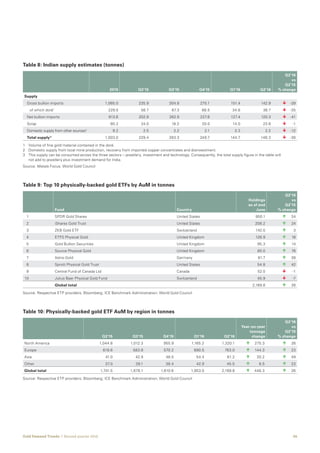
Table 8: Indian supply estimates (tonnes)		
2015 Q2'15 Q3'15 Q4'15 Q1'16 Q2'16
Q2’16
vs
Q2’15
% change
Supply
	 Gross bullion imports 1,065.0 235.9 304.8 275.1 151.4 142.9 	 	-39
		 of which doré1
229.0 56.7 67.3 66.5 34.8 36.7 	 	-35
	 Net bullion imports 913.6 202.9 262.9 227.6 127.4 120.3 	 	-41
	Scrap 80.2 24.0 18.2 20.0 14.0 23.8 	 	 -1
	 Domestic supply from other sources2
9.2 2.5 2.2 2.1 3.3 2.2 	 	 -12
	 Total supply3
1,003.0 229.4 283.3 249.7 144.7 146.3 	 	-36
1 	 Volume of fine gold material contained in the doré.
2 	 Domestic supply from local mine production, recovery from imported copper concentrates and disinvestment.
3 	 This supply can be consumed across the three sectors – jewellery, investment and technology. Consequently, the total supply figure in the table will
not add to jewellery plus investment demand for India.
Source: Metals Focus; World Gold Council 							
Table 10: Physically-backed gold ETF AuM by region in tonnes				
Q2'15 Q3'15 Q4'15 Q1'16 Q2'16
Year-on-year
tonnage
change
Q2’16
vs
Q2’15
% change
North America 1,044.8 1,012.3 955.9 1,165.2 1,320.1 	 	 275.3 	 	 26
Europe 618.6 583.9 570.2 690.5 763.0 	 	 144.3 	 	 23
Asia 41.0 42.9 46.0 54.4 61.2 	 	 20.2 	 	 49
Other 37.0 39.1 38.4 42.9 45.5 	 	 8.5 	 	 23
Global total 1,741.5 1,678.1 1,610.6 1,953.0 2,189.8 	 	 448.3 	 	 26
Source: Respective ETP providers; Bloomberg; ICE Benchmark Administration; World Gold Council		
Table 9: Top 10 physically-backed gold ETFs by AuM in tonnes				
Fund Country
Holdings
as of end
June
Q2’16
vs
Q2’15
% change
	1 SPDR Gold Shares United States 950.1 	 	 34
	2 iShares Gold Trust United States 208.2 	 	 24
	3 ZKB Gold ETF Switzerland 142.0 	 	 3
	4 ETFS Physical Gold United Kingdom 126.9 	 	 16
	5 Gold Bullion Securities United Kingdom 95.3 	 	 14
	6 Source Physical Gold United Kingdom 85.0 	 	 76
	7 Xetra-Gold Germany 81.7 	 	 38
	8 Sprott Physical Gold Trust United States 54.8 	 	 42
	9 Central Fund of Canada Ltd Canada 52.0 	 	 -1
	10 Julius Baer Physical Gold Fund Switzerland 45.9 	 	 -7
Global total 2,189.8 	 	 26
Source: Respective ETP providers; Bloomberg; ICE Benchmark Administration; World Gold Council
07Gold Demand Trends  |  Second quarter 2016
Tonnes % of reserves
21 Kazakhstan 238.2 33%
22 Belgium 227.4 38%
23 Philippines 196.0 10%
24 Venezuela 194.0 64%
25 Algeria 173.6 5%
26 Thailand 152.4 4%
27 Singapore 127.4 2%
28 Sweden 125.7 9%
29 South Africa 125.2 11%
30 Mexico 121.1 3%
31 Libya 116.6 6%
32 Greece 112.7 63%
33 Korea 104.4 1%
34 BIS 104.0 -
35 Romania 103.7 11%
36 Poland 102.9 4%
37 Iraq 89.8 7%
38 Australia 79.9 7%
39 Kuwait 79.0 10%
40 Indonesia 78.1 3%
Tonnes % of reserves
1 United States 8,133.5 76%
2 Germany 3,378.2 70%
3 IMF 2,814.0 -
4 Italy 2,451.8 69%
5 France 2,435.8 65%
6 China 1,823.3 2%
7 Russia 1,498.7 16%
8 Switzerland 1,040.0 7%
9 Japan 765.2 3%
10 Netherlands 612.5 63%
11 India 557.8 6%
12 ECB 504.8 28%
13 Turkey 474.4 17%
14 Taiwan 422.7 4%
15 Portugal 382.5 71%
16 Saudi Arabia 322.9 2%
17 United Kingdom 310.3 9%
18 Lebanon 286.8 24%
19 Spain 281.6 20%
20 Austria 280.0 45%
Table 11: Top 40 reported official gold holdings (as at June 2016)
For information on the methodology behind this data, as well as footnotes for specific countries, please see our table of Latest World Official Gold Reserves,
at http://www.gold.org/government-affairs/gold-reserves
Source: IMF IFS; World Gold Council
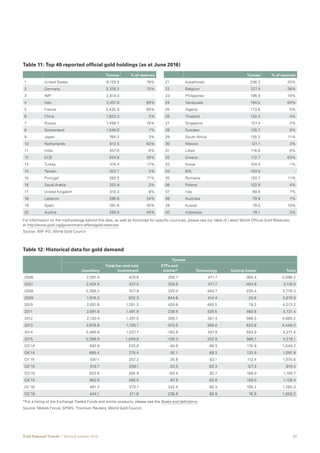
Table 12: Historical data for gold demand	
Tonnes
Jewellery
Total bar and coin
investment
ETFs and
similar* Technology Central banks Total
2006 2,301.4 429.8 258.7 471.7 -365.4 3,096.2
2007 2,424.9 437.5 259.6 477.7 -483.8 3,116.0
2008 2,306.2 917.9 325.0 464.7 -235.4 3,778.3
2009 1,816.3 832.3 644.6 414.4 -33.6 3,674.0
2010 2,051.6 1,201.2 420.8 460.5 79.2 4,213.2
2011 2,091.6 1,491.9 238.5 428.5 480.8 4,731.4
2012 2,130.4 1,297.5 306.7 381.4 569.3 4,685.2
2013 2,678.8 1,705.1 -915.5 356.0 623.8 4,448.2
2014 2,485.8 1,037.7 -183.8 347.9 583.9 4,271.4
2015 2,396.9 1,049.8 -128.3 332.9 566.7 4,218.1
Q3'14 592.9 233.0 -40.9 89.3 174.9 1,049.2
Q4'14 685.4 275.4 -92.1 89.3 133.9 1,091.9
Q1'15 597.1 257.3 25.6 83.1 112.4 1,075.6
Q2'15 513.7 209.1 -23.0 83.3 127.3 910.4
Q3'15 623.6 294.9 -63.4 82.7 168.0 1,105.7
Q4'15 662.6 288.5 -67.6 83.8 159.0 1,126.4
Q1'16 481.2 273.1 342.5 80.3 108.2 1,285.3
Q2'16 444.1 211.6 236.8 80.9 76.9 1,050.2
*For a listing of the Exchange Traded Funds and similar products, please see the Notes and definitions.					
Source: Metals Focus; GFMS, Thomson Reuters; World Gold Council
08Gold Demand Trends  |  Second quarter 2016
Notes and definitions
All statistics (except where specified) are in weights
of fine gold.
Notes
Revisions to data
All data is subject to revision in the light of new
information.
Historical data series
Demand and supply data from Q1 2014 are provided by
Metals Focus. Data between Q1 2010 and Q4 2013 is a
synthesis of Metals Focus and GFMS, Thomson Reuters
data, which was created using relatively simple statistical
techniques. For more information on this process, please
see Creating a consistent data series by Dr James Abdey
(http://www.gold.org/supply-and-demand/gold-
demand-trends/back-issues/gold-demand-trends-q1-
2015#package)
Definitions
Central banks and other institutions
Net purchases (i.e. gross purchases less gross sales)
by central banks and other official sector institutions,
including supra national entities such as the IMF. Swaps
and the effects of delta hedging are excluded.
Consumer demand
The sum of jewellery consumption and total bar and coin
investment occurring within a country i.e. the amount (in
fine weight) of gold purchased directly by individuals.
Electronics
This measures fabrication of gold into components used
in the production of electronics, including – but not limited
to – semiconductors and bonding wire.
Dentistry
The first transformation of raw gold into intermediate or
final products destined for dental applications such as
dental alloys.
ETFs and similar products
Exchange Traded Funds and similar products including,
but not limited to: SPDR Gold Shares, iShares Gold Trust,
ZKB Gold ETF, ETFS Physical Gold/Jersey, Gold Bullion
Securities Ltd, Central Fund of Canada Ltd, Xetra-Gold,
Julius Baer Precious Metals Fund – JB Physical Gold
Fund, Source Physical Gold P-ETC, Sprott Physical Gold
Trust. Over time, new products may be included when
appropriate. Gold holdings are as reported by the ETF/ETC
issuers and where data is unavailable holdings have been
calculated using reported AUM numbers.
Fabrication
Fabrication is the first transformation of gold bullion into a
semi-finished or finished product.
Gold demand
The total of jewellery fabrication, technology, total bar and
coin demand and demand for ETFs and similar products.
Jewellery
End-user demand for all newly-made carat jewellery and
gold watches, whether plain gold or combined with other
materials. Excluded are: second-hand jewellery; other
metals plated with gold; coins and bars used as jewellery;
and purchases funded by the trading-in of existing carat
gold jewellery.
Jewellery fabrication
Figures for jewellery fabrication – the first transformation
of gold bullion into semi-finished or finished jewellery – are
included in Table 4. Differs from jewellery consumption as
it excludes the impact of imports/exports and stocking/de-
stocking by manufacturers and distributors.
LBMA Gold price PM
Unless otherwise specified, gold price values from
20 March 2015 are based on the LBMA Gold price PM
administered by ICE Benchmark Administration (IBA),
with prior values being based on the London PM Fix.
London PM Fix
Unless otherwise specified, gold price values prior to
20 March 2015 are based on the London PM Fix, with
subsequent values being based on the LBMA Gold price
PM administered by ICE Benchmark Administration (IBA).
Medals/imitation coin
Fabrication of gold coins without a face value, produced
by both private and national mints. India dominates this
category with, on average, around 90% of the total.
‘Medallion’ is the name given to unofficial coins in India.
Medals of at least 99% purity, wires and lumps sold in
small quantities are also included.
Mine production
The volume (in fine weight) of gold mined globally.
This includes an estimate for gold produced as a result
of artisanal and small scale mining (ASM), which is
largely informal.
09Gold Demand Trends  |  Second quarter 2016
Net producer hedging
This measures the impact in the physical market of
mining companies’ gold forward sales, loans and options
positions. Hedging accelerates the sale of gold, a
transaction which releases gold (from existing stocks) to
the market. Over time, hedging activity does not generate
a net increase in the supply of gold. De-hedging – the
process of closing out hedged positions – has the opposite
impact and will reduce the amount of gold available to the
market in any given quarter.
Official coin demand
Investment by individuals in gold bullion coins. It equates
to the fabrication by national mints of coins which are,
or have been, legal tender in the country of issue. It is
measured at the country of consumption rather than at the
country of origin (for example, the Perth Mint in Australia,
sells the majority of the coins it produces through its global
distribution network) and is measured on a net basis. In
practice it includes the initial sale of many coins destined
ultimately to be considered as numismatic rather than
bullion.
Other industrial
Gold used in the production of compounds, such as
Gold Potassium Cyanide, for electro-plating in industrial
applications as well as in the production of gold-plated
jewellery and other decorative items such as gold thread.
India accounts for the bulk of demand in this category.
Over-the-counter
Over-the-counter (OTC) transactions (also referred to as
‘off exchange’ trading) take place directly between two
parties, unlike exchange trading which is conducted via
an exchange.
Physical bar demand
Investment by individuals in small (1kg and below)
gold bars in a form widely accepted in the countries
represented within Gold Demand Trends. This also
includes, where identifiable, gold bought and stored via
online vendors. It is measured as net purchases.
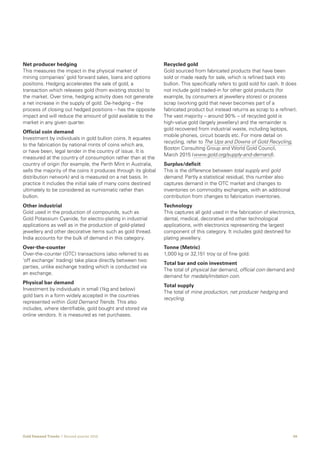
Recycled gold
Gold sourced from fabricated products that have been
sold or made ready for sale, which is refined back into
bullion. This specifically refers to gold sold for cash. It does
not include gold traded-in for other gold products (for
example, by consumers at jewellery stores) or process
scrap (working gold that never becomes part of a
fabricated product but instead returns as scrap to a refiner).
The vast majority – around 90% – of recycled gold is
high-value gold (largely jewellery) and the remainder is
gold recovered from industrial waste, including laptops,
mobile phones, circuit boards etc. For more detail on
recycling, refer to The Ups and Downs of Gold Recycling,
Boston Consulting Group and World Gold Council,
March 2015 (www.gold.org/supply-and-demand).
Surplus/deficit
This is the difference between total supply and gold
demand. Partly a statistical residual, this number also
captures demand in the OTC market and changes to
inventories on commodity exchanges, with an additional
contribution from changes to fabrication inventories.
Technology
This captures all gold used in the fabrication of electronics,
dental, medical, decorative and other technological
applications, with electronics representing the largest
component of this category. It includes gold destined for
plating jewellery.
Tonne (Metric)
1,000 kg or 32,151 troy oz of fine gold.
Total bar and coin investment
The total of physical bar demand, official coin demand and
demand for medals/imitation coin.
Total supply
The total of mine production, net producer hedging and
recycling.
Gold Demand Trends  |  Second quarter 2016
Copyright and other rights
© 2016 World Gold Council. All rights reserved. World Gold Council and the
Circle device are trademarks of the World Gold Council or its affiliates.
All references to LBMA Gold Price have been provided for informational
purposes only. ICE Benchmark Administration Limited accepts no liability or
responsibility for the accuracy of the prices or the underlying product to which
the prices may be referenced.
Other third party data and content is the intellectual property of the respective
third party and all rights are reserved to them.
Any copying, republication or redistribution of content, to reproduce, distribute
or otherwise use the statistics and information in this report including by
framing or similar means, is expressly prohibited without the prior written
consent of the World Gold Council or the appropriate copyright owners except
as provided below.
The use of the statistics in this report is permitted for the purposes of review
and commentary (including media commentary) in line with fair industry
practice, subject to the following two pre-conditions: (i) only limited extracts
of data or analysis be used; and (ii) any and all use of these statistics is
accompanied by a clear acknowledgement of the World Gold Council and,
where appropriate, of Thomson Reuters, as their source. Brief extracts from
the analysis, commentary and other World Gold Council material are permitted
provided World Gold Council is cited as the source. It is not permitted to
reproduce, distribute or otherwise use the whole or a substantial part of this
report or the statistics contained within it.
While every effort has been made to ensure the accuracy of the information in
this document, the World Gold Council does not warrant or guarantee the
accuracy, completeness or reliability of this information. The World Gold Council
does not accept responsibility for any losses or damages arising directly or
indirectly, from the use of this document.
The material contained in this document is provided solely for general
information and educational purposes and is not, and should not be construed
as, an offer to buy or sell, or as a solicitation of an offer to buy or sell, gold,
any gold related products or any other products, securities or investments.
Nothing in this document should be taken as making any recommendations or
providing any investment or other advice with respect to the purchase, sale
or other disposition of gold, any gold related products or any other products,
securities or investments, including without limitation, any advice to the effect
that any gold related transaction is appropriate for any investment objective or
financial situation of a prospective investor. A decision to invest in gold, any
gold related products or any other products, securities or investments should
not be made in reliance on any of the statements in this document. Before
making any investment decision, prospective investors should seek advice
from their financial advisers, take into account their individual financial needs
and circumstances and carefully consider the risks associated with such
investment decision.
Without limiting any of the foregoing, in no event will the World Gold Council
or any of its affiliates be liable for any decision made or action taken in reliance
on the information in this document and, in any event, the World Gold Council
and its affiliates shall not be liable for any consequential, special, punitive,
incidental, indirect or similar damages arising from, related to or connected
with this document, even if notified of the possibility of such damages.
This document contains forward-looking statements. The use of the words
“believes,” “expects,” “may,” or “suggests,” or similar terminology, identifies
a statement as “forward-looking.” The forward-looking statements included
in this document are based on current expectations that involve a number of
risks and uncertainties. These forward-looking statements are based on the
analysis of World Gold Council of the statistics available to it. Assumptions
relating to the forward-looking statement involve judgments with respect to,
among other things, future economic, competitive and market conditions all of
which are difficult or impossible to predict accurately. In addition, the demand
for gold and the international gold markets are subject to substantial risks
which increase the uncertainty inherent in the forward-looking statements.
In light of the significant uncertainties inherent in the forward-looking
information included herein, the inclusion of such information should not be
regarded as a representation by the World Gold Council that the forward-
looking statements will be achieved.
The World Gold Council cautions you not to place undue reliance on its
forward-looking statements. Except in the normal course of our publication
cycle, we do not intend to update or revise any forward-looking statements,
whether as a result of new information, future events or otherwise, and we
assume no responsibility for updating any forward-looking statements.
I106201608
World Gold Council
10 Old Bailey, London EC4M 7NG
United Kingdom
E	marketintelligence@gold.org
T	 +44 20 7826 4700 
F	 +44 20 7826 4799 
W	www.gold.org
Published: August 2016

Gold Demand Trends Q2 2016 statistics

  • 1.
    Table 1: Golddemand (tonnes) 2014 2015 Q3’14 Q4’14 Q1’15 Q2’15 Q3’15 Q4’15 Q1’16 Q2’16 Q2’16 vs Q2’15 % change Jewellery 2,485.8 2,396.9 592.9 685.4 597.1 513.7 623.6 662.6 481.2 444.1  -14 Technology 347.9 332.9 89.3 89.3 83.1 83.3 82.7 83.8 80.3 80.9  -3 Electronics 277.4 264.1 71.5 71.7 66.2 65.7 65.4 66.7 63.9 63.9  -3 Other industrial 50.7 50.1 13.0 12.8 12.2 12.8 12.5 12.5 11.9 12.4  -3 Dentistry 19.8 18.8 4.8 4.8 4.7 4.7 4.7 4.6 4.5 4.6  -4 Investment 853.8 921.5 192.1 183.4 283.0 186.1 231.5 220.9 615.6 448.4  141 Total bar and coin demand 1,037.7 1,049.8 233.0 275.4 257.3 209.1 294.9 288.5 273.1 211.6  1 Physical bar demand 758.6 759.3 176.5 200.8 191.3 149.7 200.7 217.7 200.0 149.2  0 Official coin 202.9 218.8 35.7 54.5 50.6 45.5 72.9 49.8 61.4 49.6  9 Medals/imitation coin 76.2 71.7 20.8 20.1 15.4 14.0 21.3 21.0 11.7 12.8  -9 ETFs and similar products* -183.8 -128.3 -40.9 -92.1 25.6 -23.0 -63.4 -67.6 342.5 236.8 - - Central banks and other inst. 583.9 566.7 174.9 133.9 112.4 127.3 168.0 159.0 108.2 76.9  -40 Gold demand 4,271.4 4,218.1 1,049.2 1,091.9 1,075.6 910.4 1,105.7 1,126.4 1,285.3 1,050.2  15 LBMA Gold Price, US$/oz 1,266.4 1,160.1 1,281.9 1,201.4 1,218.5 1,192.4 1,124.3 1,106.5 1,182.6 1,259.6  6 *For a listing of the Exchange Traded Funds and similar products, please see the Notes and definitions. Source: Metals Focus; GFMS, Thomson Reuters; ICE Benchmark Administration; World Gold Council Table 2: Gold demand (US$mn) 2014 2015 Q3’14 Q4’14 Q1’15 Q2’15 Q3’15 Q4’15 Q1’16 Q2’16 Q2’16 vs Q2’15 % change Jewellery 101,209.8 89,397.9 24,435.1 26,472.6 23,390.6 19,691.7 22,540.6 23,570.3 18,295.1 17,983.1  -9 Technology 14,165.6 12,417.6 3,682.3 3,448.0 3,255.7 3,194.1 2,989.2 2,981.6 3,054.2 3,276.1  3 Electronics 11,295.1 9,850.8 2,948.8 2,770.1 2,594.6 2,520.4 2,365.6 2,372.5 2,429.5 2,587.8  3 Other industrial 2,066.2 1,867.5 534.0 493.4 477.0 492.2 453.5 445.0 452.9 503.6  2 Dentistry 804.3 699.4 199.6 184.5 184.2 181.5 170.0 164.1 171.9 184.7  2 Investment 34,764.3 34,368.1 7,918.0 7,082.7 11,084.9 7,134.5 8,366.6 7,859.7 23,404.3 18,157.5  155 Total bar and coin demand 42,249.5 39,154.9 9,603.8 10,639.3 10,080.3 8,017.4 10,658.1 10,263.0 10,383.0 8,569.4  7 Physical bar demand 30,886.7 28,320.5 7,276.5 7,757.9 7,492.9 5,737.9 7,253.2 7,745.1 7,604.0 6,042.7  5 Official coin 8,260.2 8,160.3 1,470.3 2,104.8 1,983.5 1,744.1 2,635.0 1,770.4 2,335.2 2,010.0  15 Medals/imitation coin 3,102.6 2,674.1 857.0 776.5 604.0 535.3 770.0 747.6 443.8 516.7  -3 ETFs and similar products* -7,485.2 -4,786.8 -1,685.8 -3,556.6 1,004.6 -883.0 -2,291.5 -2,403.3 13,021.3 9,588.1 - - Central banks and other inst. 23,774.0 21,137.3 7,206.5 5,173.5 4,404.9 4,879.1 6,071.4 5,657.9 4,113.3 3,114.0  -36 Gold demand 173,913.7 157,320.9 43,242.0 42,176.7 42,136.1 34,899.4 39,967.9 40,069.5 48,866.8 42,530.6  22 *For a listing of the Exchange Traded Funds and similar products, please see the Notes and definitions. Source: Metals Focus; GFMS, Thomson Reuters; ICE Benchmark Administration; World Gold Council Gold demand statistics Second quarter 2016 August 2016 Embargo: Not for release before 11 August 2016, 05.00 hrs BST
  • 2.
    02Gold Demand Trends |  Second quarter 2016 Table 3: Gold supply and demand World Gold Council presentation 2014 2015 Q3’14 Q4’14 Q1’15 Q2’15 Q3’15 Q4’15 Q1’16 Q2’16 Q2’16 vs Q2’15 % change Supply Mine production 3,152.6 3,221.4 831.0 845.2 730.0 789.6 850.5 851.2 750.7 786.9  0 Net producer hedging 104.5 13.5 -8.3 50.5 -2.4 -15.2 14.4 16.7 52.7 30.0 - - Total mine supply 3,257.0 3,234.9 822.7 895.6 727.6 774.4 864.9 868.0 803.3 816.9  5 Recycled gold 1,202.1 1,123.2 274.4 270.0 358.6 267.4 260.7 236.5 359.0 327.7  23 Total supply 4,459.2 4,358.0 1,097.1 1,165.7 1,086.1 1,041.7 1,125.7 1,104.5 1,162.3 1,144.6  10 Demand Fabrication – Jewellery1 2,502.7 2,438.7 639.5 648.6 608.1 542.5 662.6 625.4 475.4 448.3  -17 Fabrication – Technology 347.9 332.9 89.3 89.3 83.1 83.3 82.7 83.8 80.3 80.9  -3 Sub-total above fabrication 2,850.6 2,771.6 728.8 737.8 691.2 625.9 745.3 709.2 555.8 529.2  -15 Total bar and coin demand 1,037.7 1,049.8 233.0 275.4 257.3 209.1 294.9 288.5 273.1 211.6  1 ETFs and similar products2 -183.8 -128.3 -40.9 -92.1 25.6 -23.0 -63.4 -67.6 342.5 236.8 - - Central banks and other inst.3 583.9 566.7 174.9 133.9 112.4 127.3 168.0 159.0 108.2 76.9  -40 Gold demand 4,288.3 4,259.8 1,095.8 1,055.1 1,086.6 939.2 1,144.7 1,089.2 1,279.5 1,054.5  12 Surplus/Deficit4 170.8 98.2 1.3 110.5 -0.5 102.5 -19.1 15.3 -117.2 90.1  -12 Total demand 4,459.2 4,358.0 1,097.1 1,165.7 1,086.1 1,041.7 1,125.7 1,104.5 1,162.3 1,144.6  10 LBMA Gold Price, US$/oz 1,266.4 1,160.06 1,281.94 1,201.4 1,218.45 1,192.35 1,124.31 1,106.45 1,182.56 1,259.62  6 1 For an explanation of jewellery fabrication, please see the Notes and definitions. 2 For a listing of the Exchange Traded Funds and similar products, please see the Notes and definitions. 3 Excluding any delta hedging of central bank options. 4 For an explanation of Surplus/Deficit, please see the Notes and definitions. Source: Metals Focus; GFMS, Thomson Reuters; ICE Benchmark Administration; World Gold Council Table 4: Quarterly average price 2015 Q2'15 Q3'15 Q4'15 Q1'16 Q2'16 Q2’16 vs Q2’15 % change US$/oz 1,160.1 1,192.4 1,124.3 1,106.5 1,182.6 1,259.6  6 €/oz 1,045.3 1,078.0 1,011.5 1,010.1 1,072.3 1,115.7  3 £/oz 759.0 777.7 726.0 728.6 826.9 879.1  13 CHF/kg 35,863.3 36,082.7 34,875.9 35,230.2 37,774.4 39,294.3  9 ¥/g 4,513.8 4,656.4 4,416.2 4,320.4 4,374.5 4,367.3  -6 Rs/10g 23,903.2 24,332.8 23,476.1 23,446.0 25,677.0 27,099.4  11 RMB/g 234.2 237.8 227.8 227.2 248.7 264.7  11 TL/g 101.4 102.3 103.1 103.4 111.9 117.3  15 Source: ICE Benchmark Administration; Thomson Reuters Datastream; World Gold Council
  • 3.
    03Gold Demand Trends |  Second quarter 2016 Table 5: Jewellery demand in selected countries (tonnes) 2015 Q2'15 Q3'15 Q4'15 Q1'16 Q2'16 Q2’16 vs Q2’15 % change India 668.5 122.1 215.1 180.4 88.4 97.9  -20 Pakistan 23.2 5.4 5.9 6.6 6.3 6.5  21 Sri Lanka 6.8 2.0 1.3 1.7 1.5 2.3  14 Greater China 811.9 181.0 196.0 203.1 191.1 154.2  -15 China 753.4 169.0 180.6 187.6 179.0 143.5  -15 Hong Kong 51.4 10.5 13.7 13.6 10.2 8.8  -17 Taiwan 7.0 1.6 1.7 2.0 1.9 1.9  22 Japan 16.5 3.9 4.4 5.1 3.6 3.8  -2 Indonesia 38.9 8.5 9.3 9.0 10.8 9.5  12 Malaysia 8.4 1.7 2.0 1.9 2.2 1.9  13 Singapore 12.2 2.7 3.0 3.1 3.3 3.1  15 South Korea 14.1 2.9 3.7 3.9 3.9 2.6  -13 Thailand 12.2 2.8 2.9 3.1 3.2 2.6  -7 Vietnam 15.6 3.7 3.5 3.9 4.7 3.5  -5 Middle East 230.3 57.7 56.0 53.6 55.8 45.0  -22 Saudi Arabia 71.1 18.8 16.6 18.4 14.7 14.2  -25 UAE 51.4 14.9 10.0 10.2 14.7 11.1  -26 Kuwait 12.7 3.1 2.3 3.7 3.1 2.5  -21 Egypt 38.2 8.9 11.8 8.2 6.9 5.3  -40 Iran 37.2 7.2 11.4 9.5 9.9 8.0  10 Other Middle East 19.7 4.8 3.9 3.7 6.5 3.9  -18 Turkey 49.0 11.6 12.1 15.0 8.7 8.7  -25 Russia 41.1 9.1 12.5 10.3 7.3 7.5  -17 Americas 170.1 39.0 38.2 60.1 33.0 39.0  0 United States 119.3 25.6 26.5 45.0 22.7 25.9  1 Canada 14.2 3.5 2.7 5.3 2.6 3.4  -1 Mexico 16.6 4.2 4.4 4.1 4.1 4.4  5 Brazil 20.0 5.8 4.7 5.7 3.6 5.3  -9 Europe ex CIS 75.8 14.5 12.7 35.8 12.7 14.6  1 France 13.6 2.6 2.0 6.3 2.7 2.5  -2 Germany 10.2 2.1 1.2 5.2 1.7 2.1  2 Italy 18.0 3.6 2.8 9.0 2.4 3.6  0 Spain 8.2 2.1 1.9 2.5 1.8 2.1  3 United Kingdom 25.9 4.1 4.9 12.9 4.0 4.2  1 Switzerland - - - - - - - - Austria - - - - - - - - Other Europe - - - - - - - - Total above 2,194.6 468.5 578.7 596.7 436.8 402.5  -14 Other and stock change 202.4 45.2 44.9 65.9 44.4 41.6  -8 World total 2,396.9 513.7 623.6 662.6 481.2 444.1  -14 Source: Metals Focus; World Gold Council
  • 4.
    04Gold Demand Trends |  Second quarter 2016 Table 6: Total bar and coin demand in selected countries (tonnes) 2015 Q2'15 Q3'15 Q4'15 Q1'16 Q2'16 Q2’16 vs Q2’15 % change India 195.8 37.7 57.0 60.2 28.0 33.1  -12 Pakistan 14.5 3.8 3.7 4.0 3.4 4.2  11 Sri Lanka - - - - - - - - Greater China 236.0 46.8 55.2 67.9 83.1 41.8  -11 China 228.1 45.1 53.2 65.8 81.3 40.2  -11 Hong Kong 1.5 0.3 0.5 0.3 0.4 0.2  -27 Taiwan 6.4 1.4 1.5 1.7 1.4 1.4  -1 Japan 16.2 -0.2 10.8 8.9 3.5 5.8 - - Indonesia 20.1 4.5 4.6 5.3 5.2 6.0  32 Malaysia 6.8 1.0 1.7 1.6 1.5 1.2  22 Singapore 5.9 1.2 1.5 1.6 1.2 1.2  -1 South Korea 7.5 1.3 2.2 2.4 1.2 1.0  -19 Thailand 78.0 16.4 20.5 21.5 22.4 15.7  -5 Vietnam 47.8 10.8 11.5 11.1 11.5 8.9  -18 Middle East 62.4 14.5 13.1 10.9 21.8 12.5  -14 Saudi Arabia 15.3 3.2 3.4 3.9 3.4 2.5  -21 UAE 8.7 2.3 1.8 1.8 2.2 1.4  -40 Kuwait 0.8 0.2 0.2 0.2 0.2 0.2  -20 Egypt 4.9 1.2 1.4 1.2 0.8 0.8  -35 Iran 30.1 7.0 5.8 3.1 14.6 7.2  2 Other Middle East 2.6 0.6 0.6 0.6 0.6 0.5  -20 Turkey 23.1 4.5 9.2 4.2 4.7 4.1  -8 Russia 4.8 1.3 1.2 1.1 1.0 1.0  -22 Americas 78.0 13.6 32.7 18.4 19.3 26.6  96 United States 71.5 12.3 30.8 16.6 17.4 24.8  101 Canada 2.9 0.5 0.9 0.8 1.0 1.2  136 Mexico 2.2 0.4 0.7 0.6 0.6 0.3  -22 Brazil 1.4 0.4 0.4 0.4 0.3 0.3  -10 Europe ex CIS 222.1 45.3 59.9 58.8 59.3 44.7  -1 France 1.6 -0.3 0.4 0.5 0.9 -0.4 - - Germany 116.0 23.1 30.2 31.7 31.1 21.9  -5 Italy - - - - - - - - Spain - - - - - - - - United Kingdom 9.4 1.8 2.7 2.9 3.2 3.0  65 Switzerland 49.2 10.7 13.3 11.6 12.9 11.2  5 Austria 12.2 2.5 3.5 3.2 2.9 2.3  -5 Other Europe 33.7 7.5 9.7 8.9 8.2 6.6  -11 Total above 1,019.0 202.4 284.7 277.6 267.1 207.7  3 Other and stock change 30.9 6.7 10.1 10.9 6.0 3.9  -42 World total 1,049.8 209.1 294.9 288.5 273.1 211.6  1 Source: Metals Focus; World Gold Council
  • 5.
    05Gold Demand Trends |  Second quarter 2016 Table 7: Consumer demand in selected countries (tonnes) 2015 Q2'15 Q3'15 Q4'15 Q1'16 Q2'16 Q2’16 vs Q2’15 % change India 864.3 159.8 272.1 240.6 116.5 131.0  -18 Pakistan 37.6 9.2 9.6 10.5 9.7 10.7  17 Sri Lanka 6.8 2.0 1.3 1.7 1.5 2.3  14 Greater China 1,047.8 227.9 251.2 271.0 274.2 195.9  -14 China 981.5 214.1 233.8 253.4 260.3 183.7  -14 Hong Kong 52.8 10.8 14.2 13.9 10.6 9.0  -17 Taiwan 13.4 2.9 3.2 3.7 3.4 3.3  11 Japan 32.7 3.6 15.2 13.9 7.1 9.5  163 Indonesia 59.0 13.0 14.0 14.3 16.1 15.4  19 Malaysia 15.2 2.7 3.7 3.5 3.7 3.1  16 Singapore 18.1 3.9 4.5 4.7 4.5 4.3  10 South Korea 21.6 4.2 5.9 6.2 5.2 3.6  -15 Thailand 90.2 19.2 23.5 24.6 25.7 18.3  -5 Vietnam 63.4 14.5 15.0 15.0 16.2 12.4  -15 Middle East 292.7 72.2 69.1 64.5 77.7 57.4  -20 Saudi Arabia 86.3 22.0 19.9 22.3 18.1 16.7  -24 UAE 60.1 17.2 11.8 12.0 16.9 12.5  -27 Kuwait 13.6 3.3 2.5 3.9 3.3 2.6  -21 Egypt 43.1 10.1 13.3 9.4 7.8 6.1  -39 Iran 67.3 14.3 17.2 12.6 24.5 15.1  6 Other Middle East 22.3 5.4 4.4 4.3 7.2 4.4  -18 Turkey 72.1 16.1 21.2 19.2 13.4 12.8  -20 Russia 45.9 10.3 13.7 11.4 8.3 8.5  -17 Americas 248.1 52.6 70.8 78.5 52.3 65.6  25 United States 190.8 38.0 57.3 61.6 40.1 50.7  33 Canada 17.1 4.0 3.6 6.1 3.6 4.7  17 Mexico 18.8 4.5 5.0 4.7 4.7 4.7  3 Brazil 21.4 6.1 5.0 6.0 3.9 5.6  -9 Europe ex CIS 298.0 59.8 72.6 94.7 72.0 59.3  -1 France 15.2 2.3 2.3 6.8 3.6 2.1  -8 Germany 126.1 25.2 31.4 36.9 32.9 24.0  -5 Italy 18.0 3.6 2.8 9.0 2.4 3.6  0 Spain 8.2 2.1 1.9 2.5 1.8 2.1  3 United Kingdom 35.3 6.0 7.6 15.8 7.2 7.2  20 Switzerland 49.2 10.7 13.3 11.6 12.9 11.2  5 Austria 12.2 2.5 3.5 3.2 2.9 2.3  -5 Other Europe 33.7 7.5 9.7 8.9 8.2 6.6  -11 Total above 3,213.5 670.9 863.4 874.3 703.8 610.2  -9 Other and stock change 233.2 51.9 55.0 76.8 50.4 45.5  -12 World total 3,446.8 722.8 918.4 951.1 754.3 655.7  -9 Source: Metals Focus; World Gold Council
  • 6.
    06Gold Demand Trends |  Second quarter 2016 Table 8: Indian supply estimates (tonnes) 2015 Q2'15 Q3'15 Q4'15 Q1'16 Q2'16 Q2’16 vs Q2’15 % change Supply Gross bullion imports 1,065.0 235.9 304.8 275.1 151.4 142.9  -39 of which doré1 229.0 56.7 67.3 66.5 34.8 36.7  -35 Net bullion imports 913.6 202.9 262.9 227.6 127.4 120.3  -41 Scrap 80.2 24.0 18.2 20.0 14.0 23.8  -1 Domestic supply from other sources2 9.2 2.5 2.2 2.1 3.3 2.2  -12 Total supply3 1,003.0 229.4 283.3 249.7 144.7 146.3  -36 1 Volume of fine gold material contained in the doré. 2 Domestic supply from local mine production, recovery from imported copper concentrates and disinvestment. 3 This supply can be consumed across the three sectors – jewellery, investment and technology. Consequently, the total supply figure in the table will not add to jewellery plus investment demand for India. Source: Metals Focus; World Gold Council Table 10: Physically-backed gold ETF AuM by region in tonnes Q2'15 Q3'15 Q4'15 Q1'16 Q2'16 Year-on-year tonnage change Q2’16 vs Q2’15 % change North America 1,044.8 1,012.3 955.9 1,165.2 1,320.1  275.3  26 Europe 618.6 583.9 570.2 690.5 763.0  144.3  23 Asia 41.0 42.9 46.0 54.4 61.2  20.2  49 Other 37.0 39.1 38.4 42.9 45.5  8.5  23 Global total 1,741.5 1,678.1 1,610.6 1,953.0 2,189.8  448.3  26 Source: Respective ETP providers; Bloomberg; ICE Benchmark Administration; World Gold Council Table 9: Top 10 physically-backed gold ETFs by AuM in tonnes Fund Country Holdings as of end June Q2’16 vs Q2’15 % change 1 SPDR Gold Shares United States 950.1  34 2 iShares Gold Trust United States 208.2  24 3 ZKB Gold ETF Switzerland 142.0  3 4 ETFS Physical Gold United Kingdom 126.9  16 5 Gold Bullion Securities United Kingdom 95.3  14 6 Source Physical Gold United Kingdom 85.0  76 7 Xetra-Gold Germany 81.7  38 8 Sprott Physical Gold Trust United States 54.8  42 9 Central Fund of Canada Ltd Canada 52.0  -1 10 Julius Baer Physical Gold Fund Switzerland 45.9  -7 Global total 2,189.8  26 Source: Respective ETP providers; Bloomberg; ICE Benchmark Administration; World Gold Council
  • 7.
    07Gold Demand Trends |  Second quarter 2016 Tonnes % of reserves 21 Kazakhstan 238.2 33% 22 Belgium 227.4 38% 23 Philippines 196.0 10% 24 Venezuela 194.0 64% 25 Algeria 173.6 5% 26 Thailand 152.4 4% 27 Singapore 127.4 2% 28 Sweden 125.7 9% 29 South Africa 125.2 11% 30 Mexico 121.1 3% 31 Libya 116.6 6% 32 Greece 112.7 63% 33 Korea 104.4 1% 34 BIS 104.0 - 35 Romania 103.7 11% 36 Poland 102.9 4% 37 Iraq 89.8 7% 38 Australia 79.9 7% 39 Kuwait 79.0 10% 40 Indonesia 78.1 3% Tonnes % of reserves 1 United States 8,133.5 76% 2 Germany 3,378.2 70% 3 IMF 2,814.0 - 4 Italy 2,451.8 69% 5 France 2,435.8 65% 6 China 1,823.3 2% 7 Russia 1,498.7 16% 8 Switzerland 1,040.0 7% 9 Japan 765.2 3% 10 Netherlands 612.5 63% 11 India 557.8 6% 12 ECB 504.8 28% 13 Turkey 474.4 17% 14 Taiwan 422.7 4% 15 Portugal 382.5 71% 16 Saudi Arabia 322.9 2% 17 United Kingdom 310.3 9% 18 Lebanon 286.8 24% 19 Spain 281.6 20% 20 Austria 280.0 45% Table 11: Top 40 reported official gold holdings (as at June 2016) For information on the methodology behind this data, as well as footnotes for specific countries, please see our table of Latest World Official Gold Reserves, at http://www.gold.org/government-affairs/gold-reserves Source: IMF IFS; World Gold Council Table 12: Historical data for gold demand Tonnes Jewellery Total bar and coin investment ETFs and similar* Technology Central banks Total 2006 2,301.4 429.8 258.7 471.7 -365.4 3,096.2 2007 2,424.9 437.5 259.6 477.7 -483.8 3,116.0 2008 2,306.2 917.9 325.0 464.7 -235.4 3,778.3 2009 1,816.3 832.3 644.6 414.4 -33.6 3,674.0 2010 2,051.6 1,201.2 420.8 460.5 79.2 4,213.2 2011 2,091.6 1,491.9 238.5 428.5 480.8 4,731.4 2012 2,130.4 1,297.5 306.7 381.4 569.3 4,685.2 2013 2,678.8 1,705.1 -915.5 356.0 623.8 4,448.2 2014 2,485.8 1,037.7 -183.8 347.9 583.9 4,271.4 2015 2,396.9 1,049.8 -128.3 332.9 566.7 4,218.1 Q3'14 592.9 233.0 -40.9 89.3 174.9 1,049.2 Q4'14 685.4 275.4 -92.1 89.3 133.9 1,091.9 Q1'15 597.1 257.3 25.6 83.1 112.4 1,075.6 Q2'15 513.7 209.1 -23.0 83.3 127.3 910.4 Q3'15 623.6 294.9 -63.4 82.7 168.0 1,105.7 Q4'15 662.6 288.5 -67.6 83.8 159.0 1,126.4 Q1'16 481.2 273.1 342.5 80.3 108.2 1,285.3 Q2'16 444.1 211.6 236.8 80.9 76.9 1,050.2 *For a listing of the Exchange Traded Funds and similar products, please see the Notes and definitions. Source: Metals Focus; GFMS, Thomson Reuters; World Gold Council
  • 8.
    08Gold Demand Trends |  Second quarter 2016 Notes and definitions All statistics (except where specified) are in weights of fine gold. Notes Revisions to data All data is subject to revision in the light of new information. Historical data series Demand and supply data from Q1 2014 are provided by Metals Focus. Data between Q1 2010 and Q4 2013 is a synthesis of Metals Focus and GFMS, Thomson Reuters data, which was created using relatively simple statistical techniques. For more information on this process, please see Creating a consistent data series by Dr James Abdey (http://www.gold.org/supply-and-demand/gold- demand-trends/back-issues/gold-demand-trends-q1- 2015#package) Definitions Central banks and other institutions Net purchases (i.e. gross purchases less gross sales) by central banks and other official sector institutions, including supra national entities such as the IMF. Swaps and the effects of delta hedging are excluded. Consumer demand The sum of jewellery consumption and total bar and coin investment occurring within a country i.e. the amount (in fine weight) of gold purchased directly by individuals. Electronics This measures fabrication of gold into components used in the production of electronics, including – but not limited to – semiconductors and bonding wire. Dentistry The first transformation of raw gold into intermediate or final products destined for dental applications such as dental alloys. ETFs and similar products Exchange Traded Funds and similar products including, but not limited to: SPDR Gold Shares, iShares Gold Trust, ZKB Gold ETF, ETFS Physical Gold/Jersey, Gold Bullion Securities Ltd, Central Fund of Canada Ltd, Xetra-Gold, Julius Baer Precious Metals Fund – JB Physical Gold Fund, Source Physical Gold P-ETC, Sprott Physical Gold Trust. Over time, new products may be included when appropriate. Gold holdings are as reported by the ETF/ETC issuers and where data is unavailable holdings have been calculated using reported AUM numbers. Fabrication Fabrication is the first transformation of gold bullion into a semi-finished or finished product. Gold demand The total of jewellery fabrication, technology, total bar and coin demand and demand for ETFs and similar products. Jewellery End-user demand for all newly-made carat jewellery and gold watches, whether plain gold or combined with other materials. Excluded are: second-hand jewellery; other metals plated with gold; coins and bars used as jewellery; and purchases funded by the trading-in of existing carat gold jewellery. Jewellery fabrication Figures for jewellery fabrication – the first transformation of gold bullion into semi-finished or finished jewellery – are included in Table 4. Differs from jewellery consumption as it excludes the impact of imports/exports and stocking/de- stocking by manufacturers and distributors. LBMA Gold price PM Unless otherwise specified, gold price values from 20 March 2015 are based on the LBMA Gold price PM administered by ICE Benchmark Administration (IBA), with prior values being based on the London PM Fix. London PM Fix Unless otherwise specified, gold price values prior to 20 March 2015 are based on the London PM Fix, with subsequent values being based on the LBMA Gold price PM administered by ICE Benchmark Administration (IBA). Medals/imitation coin Fabrication of gold coins without a face value, produced by both private and national mints. India dominates this category with, on average, around 90% of the total. ‘Medallion’ is the name given to unofficial coins in India. Medals of at least 99% purity, wires and lumps sold in small quantities are also included. Mine production The volume (in fine weight) of gold mined globally. This includes an estimate for gold produced as a result of artisanal and small scale mining (ASM), which is largely informal.
  • 9.
    09Gold Demand Trends |  Second quarter 2016 Net producer hedging This measures the impact in the physical market of mining companies’ gold forward sales, loans and options positions. Hedging accelerates the sale of gold, a transaction which releases gold (from existing stocks) to the market. Over time, hedging activity does not generate a net increase in the supply of gold. De-hedging – the process of closing out hedged positions – has the opposite impact and will reduce the amount of gold available to the market in any given quarter. Official coin demand Investment by individuals in gold bullion coins. It equates to the fabrication by national mints of coins which are, or have been, legal tender in the country of issue. It is measured at the country of consumption rather than at the country of origin (for example, the Perth Mint in Australia, sells the majority of the coins it produces through its global distribution network) and is measured on a net basis. In practice it includes the initial sale of many coins destined ultimately to be considered as numismatic rather than bullion. Other industrial Gold used in the production of compounds, such as Gold Potassium Cyanide, for electro-plating in industrial applications as well as in the production of gold-plated jewellery and other decorative items such as gold thread. India accounts for the bulk of demand in this category. Over-the-counter Over-the-counter (OTC) transactions (also referred to as ‘off exchange’ trading) take place directly between two parties, unlike exchange trading which is conducted via an exchange. Physical bar demand Investment by individuals in small (1kg and below) gold bars in a form widely accepted in the countries represented within Gold Demand Trends. This also includes, where identifiable, gold bought and stored via online vendors. It is measured as net purchases. Recycled gold Gold sourced from fabricated products that have been sold or made ready for sale, which is refined back into bullion. This specifically refers to gold sold for cash. It does not include gold traded-in for other gold products (for example, by consumers at jewellery stores) or process scrap (working gold that never becomes part of a fabricated product but instead returns as scrap to a refiner). The vast majority – around 90% – of recycled gold is high-value gold (largely jewellery) and the remainder is gold recovered from industrial waste, including laptops, mobile phones, circuit boards etc. For more detail on recycling, refer to The Ups and Downs of Gold Recycling, Boston Consulting Group and World Gold Council, March 2015 (www.gold.org/supply-and-demand). Surplus/deficit This is the difference between total supply and gold demand. Partly a statistical residual, this number also captures demand in the OTC market and changes to inventories on commodity exchanges, with an additional contribution from changes to fabrication inventories. Technology This captures all gold used in the fabrication of electronics, dental, medical, decorative and other technological applications, with electronics representing the largest component of this category. It includes gold destined for plating jewellery. Tonne (Metric) 1,000 kg or 32,151 troy oz of fine gold. Total bar and coin investment The total of physical bar demand, official coin demand and demand for medals/imitation coin. Total supply The total of mine production, net producer hedging and recycling.
  • 10.
    Gold Demand Trends |  Second quarter 2016 Copyright and other rights © 2016 World Gold Council. All rights reserved. World Gold Council and the Circle device are trademarks of the World Gold Council or its affiliates. All references to LBMA Gold Price have been provided for informational purposes only. ICE Benchmark Administration Limited accepts no liability or responsibility for the accuracy of the prices or the underlying product to which the prices may be referenced. Other third party data and content is the intellectual property of the respective third party and all rights are reserved to them. Any copying, republication or redistribution of content, to reproduce, distribute or otherwise use the statistics and information in this report including by framing or similar means, is expressly prohibited without the prior written consent of the World Gold Council or the appropriate copyright owners except as provided below. The use of the statistics in this report is permitted for the purposes of review and commentary (including media commentary) in line with fair industry practice, subject to the following two pre-conditions: (i) only limited extracts of data or analysis be used; and (ii) any and all use of these statistics is accompanied by a clear acknowledgement of the World Gold Council and, where appropriate, of Thomson Reuters, as their source. Brief extracts from the analysis, commentary and other World Gold Council material are permitted provided World Gold Council is cited as the source. It is not permitted to reproduce, distribute or otherwise use the whole or a substantial part of this report or the statistics contained within it. While every effort has been made to ensure the accuracy of the information in this document, the World Gold Council does not warrant or guarantee the accuracy, completeness or reliability of this information. The World Gold Council does not accept responsibility for any losses or damages arising directly or indirectly, from the use of this document. The material contained in this document is provided solely for general information and educational purposes and is not, and should not be construed as, an offer to buy or sell, or as a solicitation of an offer to buy or sell, gold, any gold related products or any other products, securities or investments. Nothing in this document should be taken as making any recommendations or providing any investment or other advice with respect to the purchase, sale or other disposition of gold, any gold related products or any other products, securities or investments, including without limitation, any advice to the effect that any gold related transaction is appropriate for any investment objective or financial situation of a prospective investor. A decision to invest in gold, any gold related products or any other products, securities or investments should not be made in reliance on any of the statements in this document. Before making any investment decision, prospective investors should seek advice from their financial advisers, take into account their individual financial needs and circumstances and carefully consider the risks associated with such investment decision. Without limiting any of the foregoing, in no event will the World Gold Council or any of its affiliates be liable for any decision made or action taken in reliance on the information in this document and, in any event, the World Gold Council and its affiliates shall not be liable for any consequential, special, punitive, incidental, indirect or similar damages arising from, related to or connected with this document, even if notified of the possibility of such damages. This document contains forward-looking statements. The use of the words “believes,” “expects,” “may,” or “suggests,” or similar terminology, identifies a statement as “forward-looking.” The forward-looking statements included in this document are based on current expectations that involve a number of risks and uncertainties. These forward-looking statements are based on the analysis of World Gold Council of the statistics available to it. Assumptions relating to the forward-looking statement involve judgments with respect to, among other things, future economic, competitive and market conditions all of which are difficult or impossible to predict accurately. In addition, the demand for gold and the international gold markets are subject to substantial risks which increase the uncertainty inherent in the forward-looking statements. In light of the significant uncertainties inherent in the forward-looking information included herein, the inclusion of such information should not be regarded as a representation by the World Gold Council that the forward- looking statements will be achieved. The World Gold Council cautions you not to place undue reliance on its forward-looking statements. Except in the normal course of our publication cycle, we do not intend to update or revise any forward-looking statements, whether as a result of new information, future events or otherwise, and we assume no responsibility for updating any forward-looking statements. I106201608
  • 11.
    World Gold Council 10Old Bailey, London EC4M 7NG United Kingdom E marketintelligence@gold.org T +44 20 7826 4700  F +44 20 7826 4799  W www.gold.org Published: August 2016