S U B MI T T E D B Y: S A A D I A K HA N
S U B M I T T E D T O : MA ’ A M GU L E F A R A N
Goiter
Overview
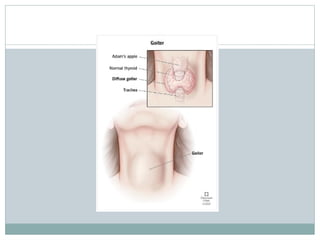
 A condition that increases the size of your thyroid is
called a goiter. A goiter may develop in anyone, but
is more common in women. Sometimes, it affects the
way the thyroid functions.
Symptoms of Goiter
 The primary symptom of a goiter is noticeable
swelling in your neck. If you have nodules on your
thyroid, they may range in size from very small to
very large. The presence of nodules may increase the
appearance of swelling.
 Other symptoms include the following:
 difficulty swallowing or breathing
 coughing
 hoarseness in your voice
 dizziness when you raise your arm above your head
Causes of Goiter
 Iodine deficiency is the main cause of goiters. Iodine is
essential to helping your thyroid produce thyroid
hormones. When you don’t have enough iodine, the
thyroid works extra hard to make thyroid hormone,
causing the gland to grow larger.
 Other causes include the following:
 Graves’ disease:
Graves’ disease occurs when your thyroid produces more
thyroid hormone than normal, which is known as
hyperthyroidism. The excessive production of hormones
makes the thyroid increase in size.
Causes of Goiter
 Hashimoto’s thyroiditis
When you have Hashimoto’s thyroiditis, also known
as Hashimoto’s thyroiditis, it predisposes thyroid to
not being able to produce enough thyroid hormone,
causing hypothyroidism.
 Inflammation
Some people develop thyroiditis, an inflammation of
the thyroid that can cause a goiter. This is different
than Hashimoto’s thyroiditis. One example is viral
thyroiditis.
Types of goiters
 Goiters have many causes. As a result, there are different
types. These include:
 Colloid goiter (endemic)
A colloid goiter develops from the lack of iodine, a mineral
essential to the production of thyroid hormones. People
who get this type of goiter usually live in areas where
iodine is scarce.
 Nontoxic goiter (sporadic)
The cause of a nontoxic goiter is usually unknown, though
it may be caused by medications like lithium. Lithium is
used to treat mood disorders such as bipolar disorder.
Types of Goitre
 Toxic nodular or multinodular goiter
This type of goiter forms one or more small nodules
as it enlarges. The nodules produce their own thyroid
hormone, causing hyperthyroidism. It generally
forms as an extension of a simple goiter.
Risk for a goiter
You may be at risk for a goiter if you:
 Have a family history of thyroid cancer, nodules, and
other problems that affect the thyroid.
 Don’t get enough iodine in your diet.
 Have a condition that decreases the iodine in your body.
 Are female. Women have a higher risk for goiter than
men.
 Are over the age of 40. Aging may affect the health of your
thyroid.
 Have radiation therapy in the neck or chest area.
Radiation may change the way your thyroid functions.
How is a goiter diagnosed?
 Blood tests
Blood tests can detect changes in hormone levels and
an increased production of antibodies, which are
produced in response to an infection or injury or
over activity of immune system.
 Thyroid scan
Your doctor may order scans of your thyroid. This is
usually done when your thyroid level is elevated.
These scans show the size and condition of your
goiter, over activity of some parts or whole thyroid.
How is a goiter diagnosed?
 Ultrasound
An ultrasound produces images of your neck, the size
of your goiter, and whether there are nodules. Over
time, an ultrasound can track changes in those
nodules and the goiter.
 Biopsy
A biopsy is a procedure that involves taking small
samples of your thyroid nodules if present. The
samples are sent to a laboratory for examination
How is a goiter treated?
 Medications
If you have hypothyroidism or hyperthyroidism, medications to treat
these conditions may be enough to shrink a goiter. Medications (
corticosteroids) to reduce your inflammation may be used if you have
thyroiditis.
 Surgeries
 Surgical removal of your thyroid, known as thyroidectomy, is an option
if yours grows too large or doesn’t respond to medication therapy.
 Radioactive iodine
 In people with toxic multinodular goiters, radioactive iodine (RAI) may
be necessary. The RAI is ingested orally, and then travels to your
thyroid through your blood, where it destroys the overactive thyroid
tissue
How is a goiter treated?
 Home care
 Depending on your type of goiter, you may need to
increase or decrease your iodine intake at home.
 If a goiter is small and doesn’t cause any problems,
you may require no treatment at all.

Goiter.pptx A brief description about goiter

  • 1.
    S U BMI T T E D B Y: S A A D I A K HA N S U B M I T T E D T O : MA ’ A M GU L E F A R A N Goiter
  • 2.
    Overview  A conditionthat increases the size of your thyroid is called a goiter. A goiter may develop in anyone, but is more common in women. Sometimes, it affects the way the thyroid functions.
  • 4.
    Symptoms of Goiter The primary symptom of a goiter is noticeable swelling in your neck. If you have nodules on your thyroid, they may range in size from very small to very large. The presence of nodules may increase the appearance of swelling.  Other symptoms include the following:  difficulty swallowing or breathing  coughing  hoarseness in your voice  dizziness when you raise your arm above your head
  • 5.
    Causes of Goiter Iodine deficiency is the main cause of goiters. Iodine is essential to helping your thyroid produce thyroid hormones. When you don’t have enough iodine, the thyroid works extra hard to make thyroid hormone, causing the gland to grow larger.  Other causes include the following:  Graves’ disease: Graves’ disease occurs when your thyroid produces more thyroid hormone than normal, which is known as hyperthyroidism. The excessive production of hormones makes the thyroid increase in size.
  • 6.
    Causes of Goiter Hashimoto’s thyroiditis When you have Hashimoto’s thyroiditis, also known as Hashimoto’s thyroiditis, it predisposes thyroid to not being able to produce enough thyroid hormone, causing hypothyroidism.  Inflammation Some people develop thyroiditis, an inflammation of the thyroid that can cause a goiter. This is different than Hashimoto’s thyroiditis. One example is viral thyroiditis.
  • 7.
    Types of goiters Goiters have many causes. As a result, there are different types. These include:  Colloid goiter (endemic) A colloid goiter develops from the lack of iodine, a mineral essential to the production of thyroid hormones. People who get this type of goiter usually live in areas where iodine is scarce.  Nontoxic goiter (sporadic) The cause of a nontoxic goiter is usually unknown, though it may be caused by medications like lithium. Lithium is used to treat mood disorders such as bipolar disorder.
  • 8.
    Types of Goitre Toxic nodular or multinodular goiter This type of goiter forms one or more small nodules as it enlarges. The nodules produce their own thyroid hormone, causing hyperthyroidism. It generally forms as an extension of a simple goiter.
  • 9.
    Risk for agoiter You may be at risk for a goiter if you:  Have a family history of thyroid cancer, nodules, and other problems that affect the thyroid.  Don’t get enough iodine in your diet.  Have a condition that decreases the iodine in your body.  Are female. Women have a higher risk for goiter than men.  Are over the age of 40. Aging may affect the health of your thyroid.  Have radiation therapy in the neck or chest area. Radiation may change the way your thyroid functions.
  • 10.
    How is agoiter diagnosed?  Blood tests Blood tests can detect changes in hormone levels and an increased production of antibodies, which are produced in response to an infection or injury or over activity of immune system.  Thyroid scan Your doctor may order scans of your thyroid. This is usually done when your thyroid level is elevated. These scans show the size and condition of your goiter, over activity of some parts or whole thyroid.
  • 11.
    How is agoiter diagnosed?  Ultrasound An ultrasound produces images of your neck, the size of your goiter, and whether there are nodules. Over time, an ultrasound can track changes in those nodules and the goiter.  Biopsy A biopsy is a procedure that involves taking small samples of your thyroid nodules if present. The samples are sent to a laboratory for examination
  • 12.
    How is agoiter treated?  Medications If you have hypothyroidism or hyperthyroidism, medications to treat these conditions may be enough to shrink a goiter. Medications ( corticosteroids) to reduce your inflammation may be used if you have thyroiditis.  Surgeries  Surgical removal of your thyroid, known as thyroidectomy, is an option if yours grows too large or doesn’t respond to medication therapy.  Radioactive iodine  In people with toxic multinodular goiters, radioactive iodine (RAI) may be necessary. The RAI is ingested orally, and then travels to your thyroid through your blood, where it destroys the overactive thyroid tissue
  • 13.
    How is agoiter treated?  Home care  Depending on your type of goiter, you may need to increase or decrease your iodine intake at home.  If a goiter is small and doesn’t cause any problems, you may require no treatment at all.