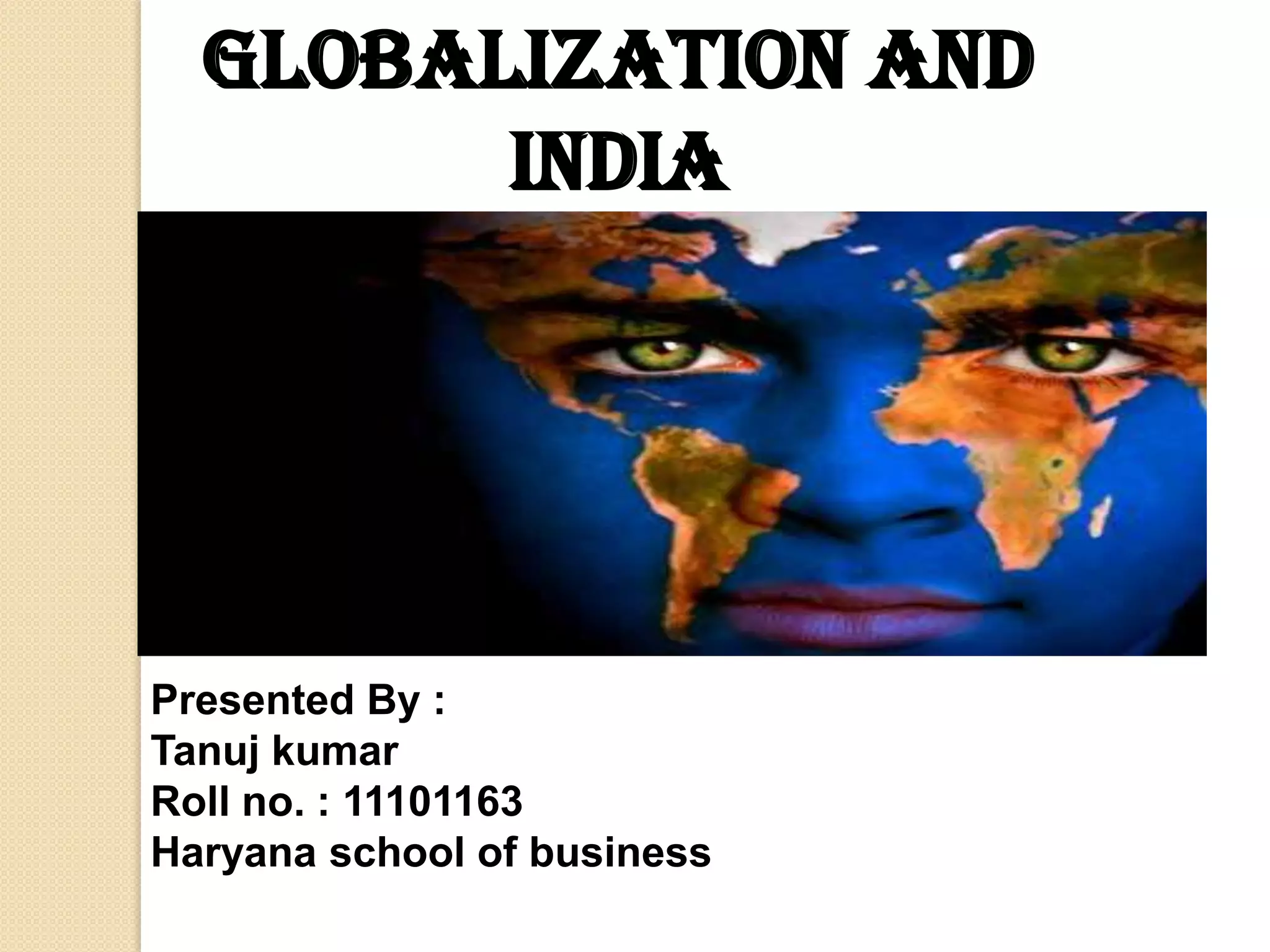
GLOBALIZATION AND
        INDIA


Presented By :
Tanuj kumar
Roll no. : 11101163
Haryana school of business
Contents
1.   Globalization and its definitions
2.   Merits of globalization
3.    Globalization impact on individual
     sector
4.   Information about The Indian trade
5.   Globalization impact on Indian
     Economy
6.   Where does India stand in terms of
     Global Integration
7.   Summary
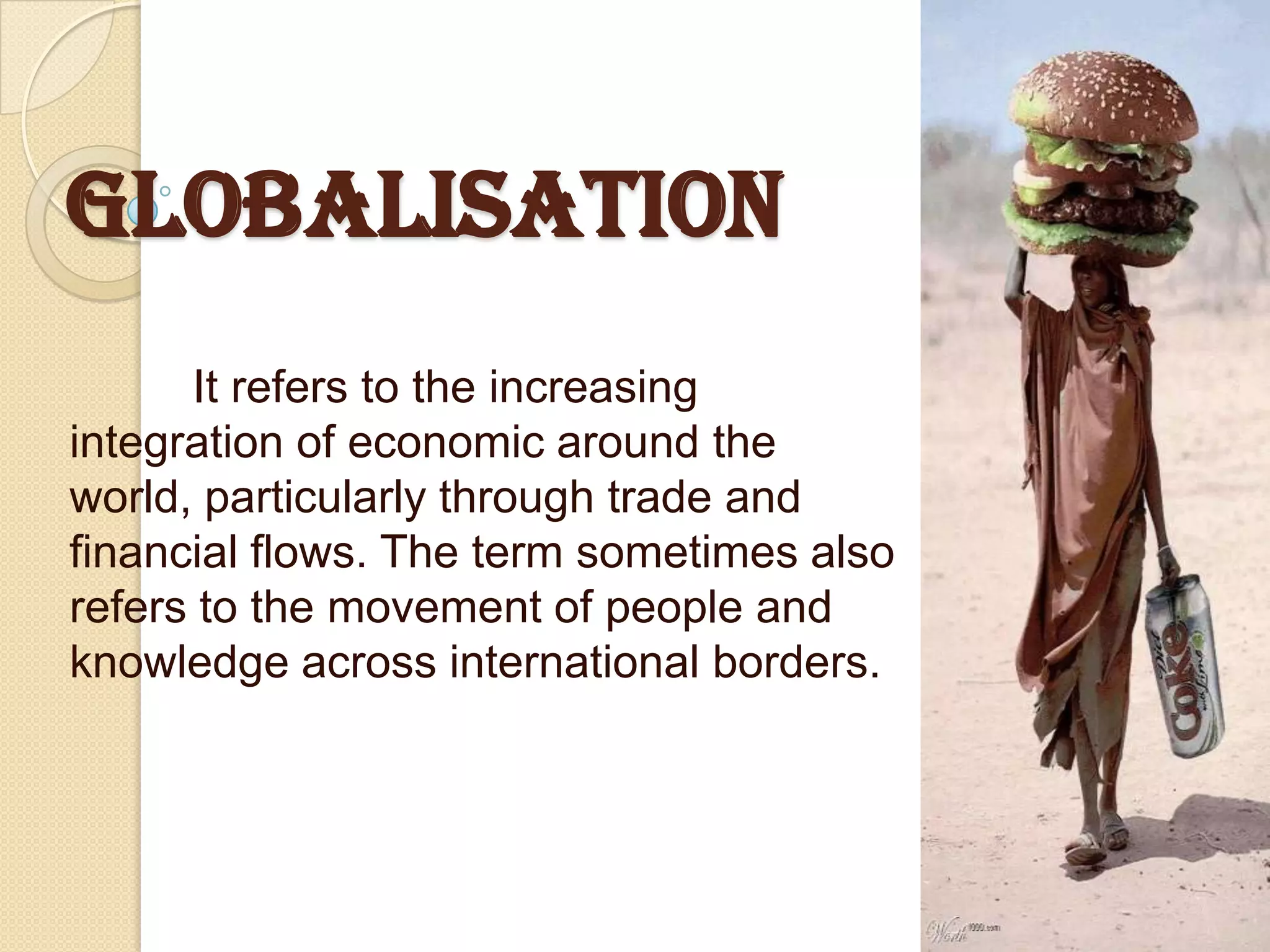
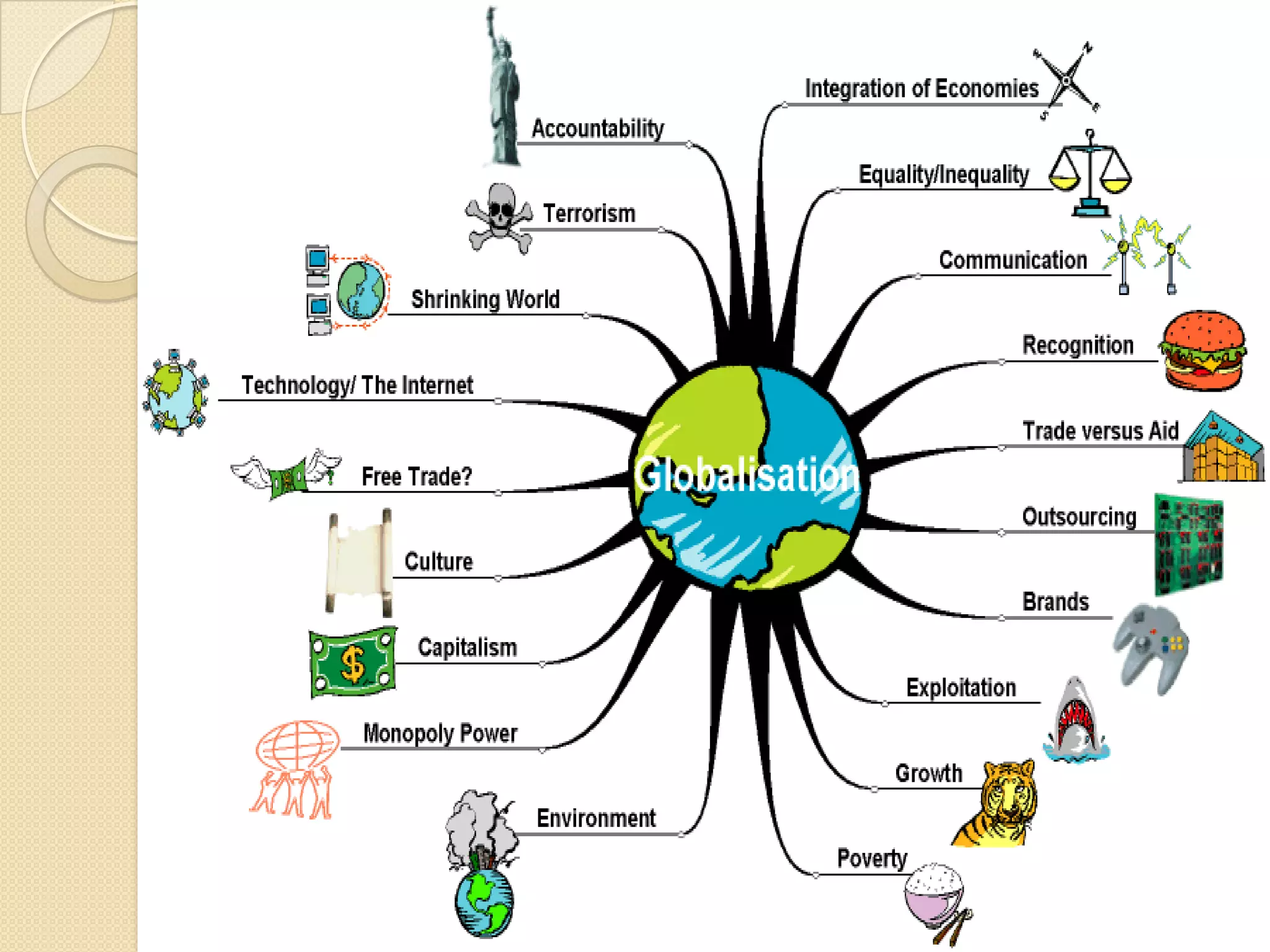
GLOBALISATION
      It refers to the increasing
integration of economic around the
world, particularly through trade and
financial flows. The term sometimes also
refers to the movement of people and
knowledge across international borders.
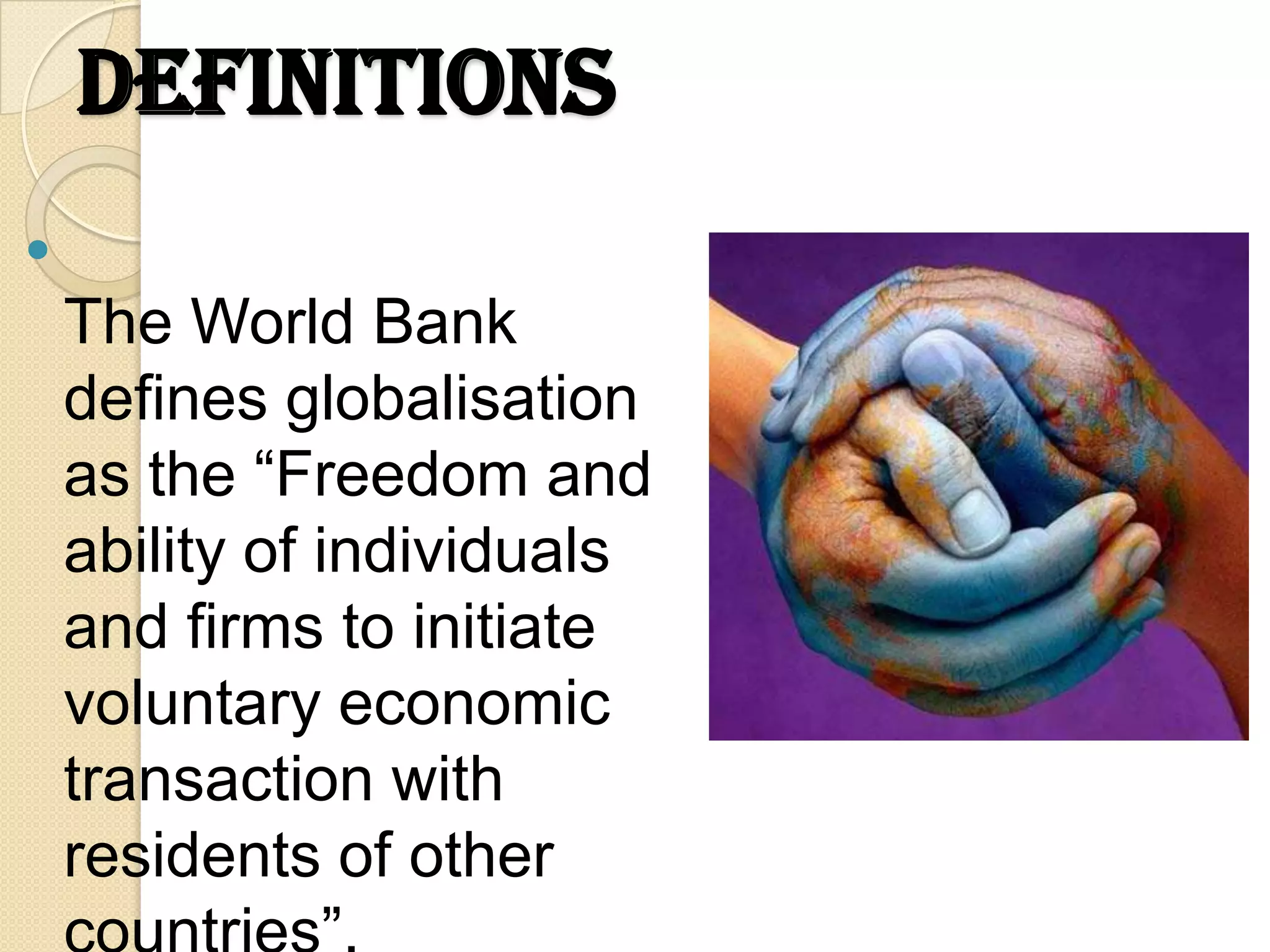
Definitions

    The World Bank
    defines globalisation
    as the “Freedom and
    ability of individuals
    and firms to initiate
    voluntary economic
    transaction with
    residents of other
merits
 Encourage nation to reduce high levels
  of protection.
 Increase trade volume.
 Reduction of import duties.
 Increase FDI.
 Increase GDP.
ADVANTAGE to a COMPANY

   Get access to more market.
   Expand their organisation.
   Increase the benefits.
   Increase international trade.
Globalization Impact on
Individual sectors

    Industry and services:
1.   Business services (IT, BPO) are among the fastest growing sectors
     contributing to one third of the total output of services .
2.   In March 2009, annual revenues from outsourcing operations in
     India amounted to US$60 billion and this is expected to increase to
     US$225 billion by 2020.
3.   India is 16th in the world in terms of nominal factory output.
.

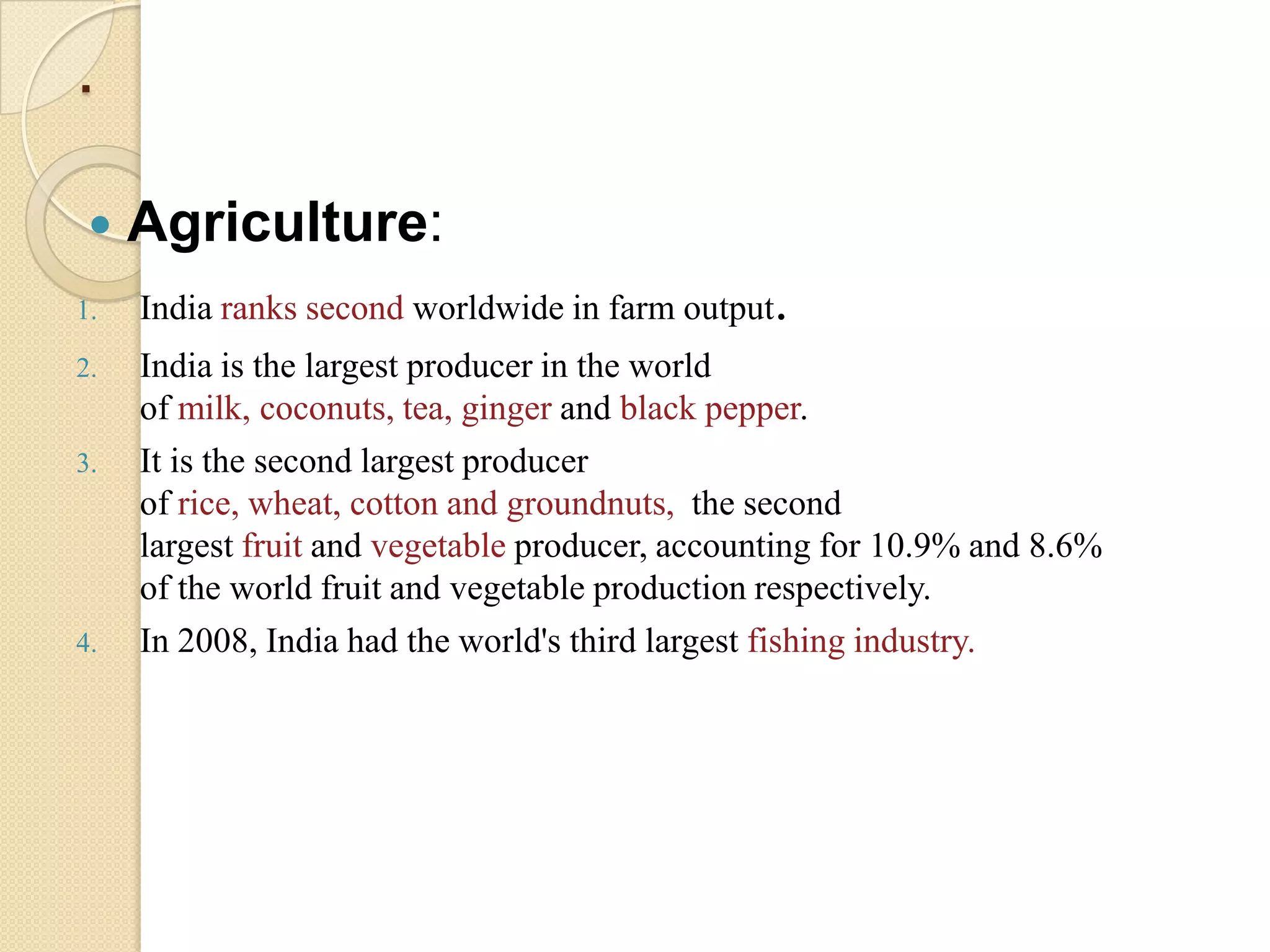
    Agriculture:
1.   India ranks second worldwide in farm output.
2.   India is the largest producer in the world
     of milk, coconuts, tea, ginger and black pepper.
3.   It is the second largest producer
     of rice, wheat, cotton and groundnuts, the second
     largest fruit and vegetable producer, accounting for 10.9% and 8.6%
     of the world fruit and vegetable production respectively.
4.   In 2008, India had the world's third largest fishing industry.
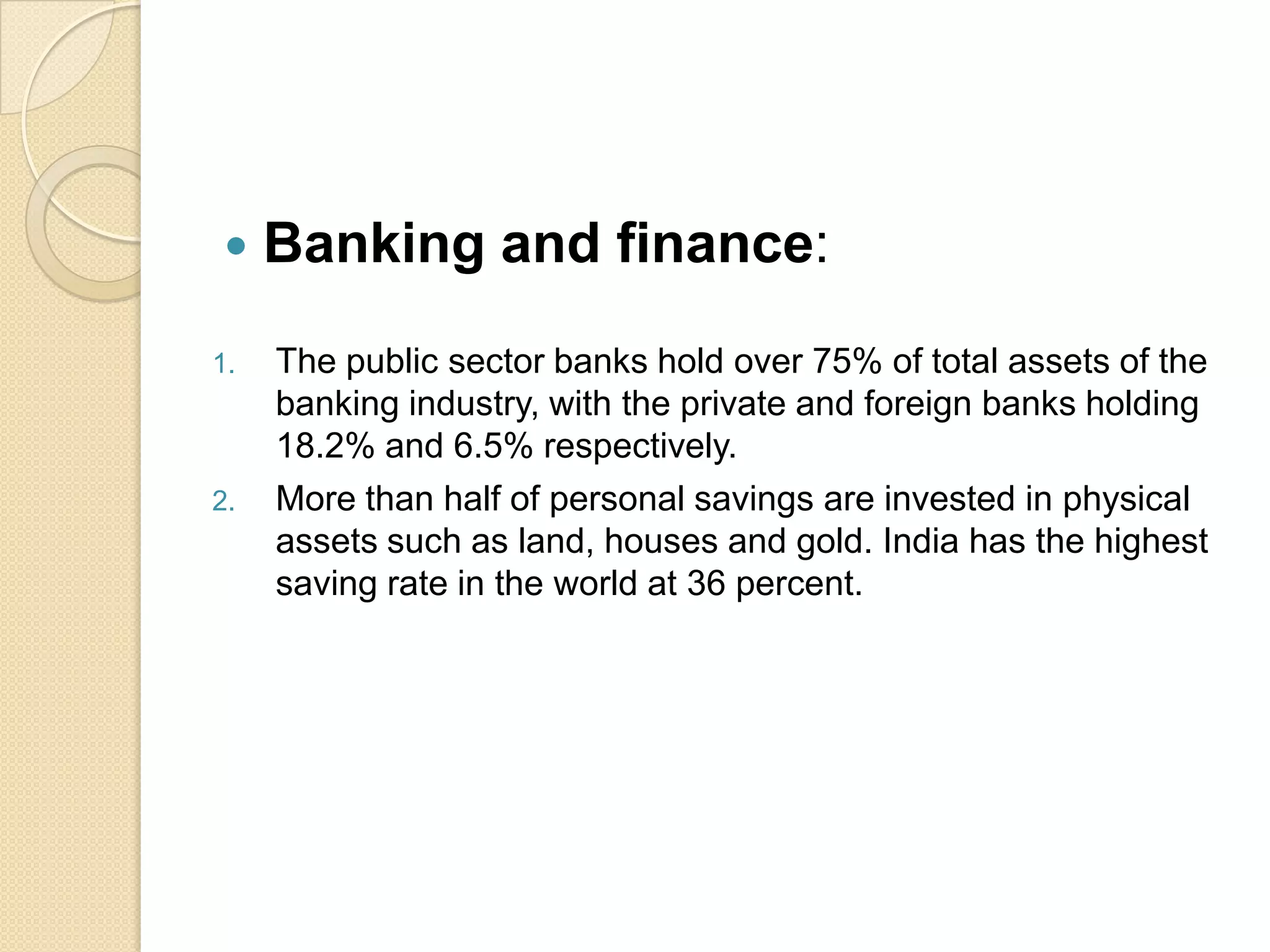
    Banking and finance:
1.   The public sector banks hold over 75% of total assets of the
     banking industry, with the private and foreign banks holding
     18.2% and 6.5% respectively.
2.   More than half of personal savings are invested in physical
     assets such as land, houses and gold. India has the highest
     saving rate in the world at 36 percent.
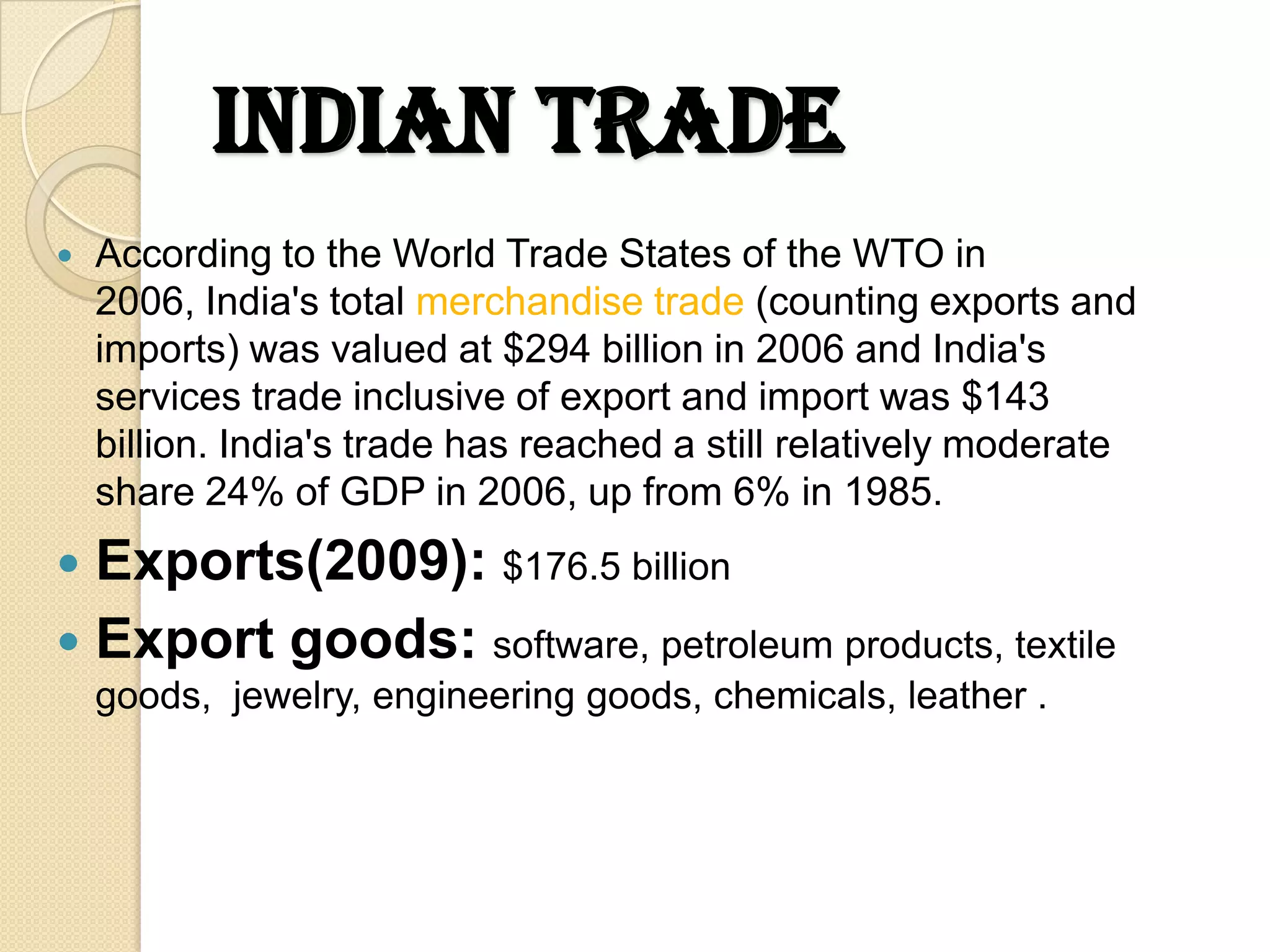
Indian trade
   According to the World Trade States of the WTO in
    2006, India's total merchandise trade (counting exports and
    imports) was valued at $294 billion in 2006 and India's
    services trade inclusive of export and import was $143
    billion. India's trade has reached a still relatively moderate
    share 24% of GDP in 2006, up from 6% in 1985.
 Exports(2009): $176.5 billion
 Export goods: software, petroleum products, textile
    goods, jewelry, engineering goods, chemicals, leather .
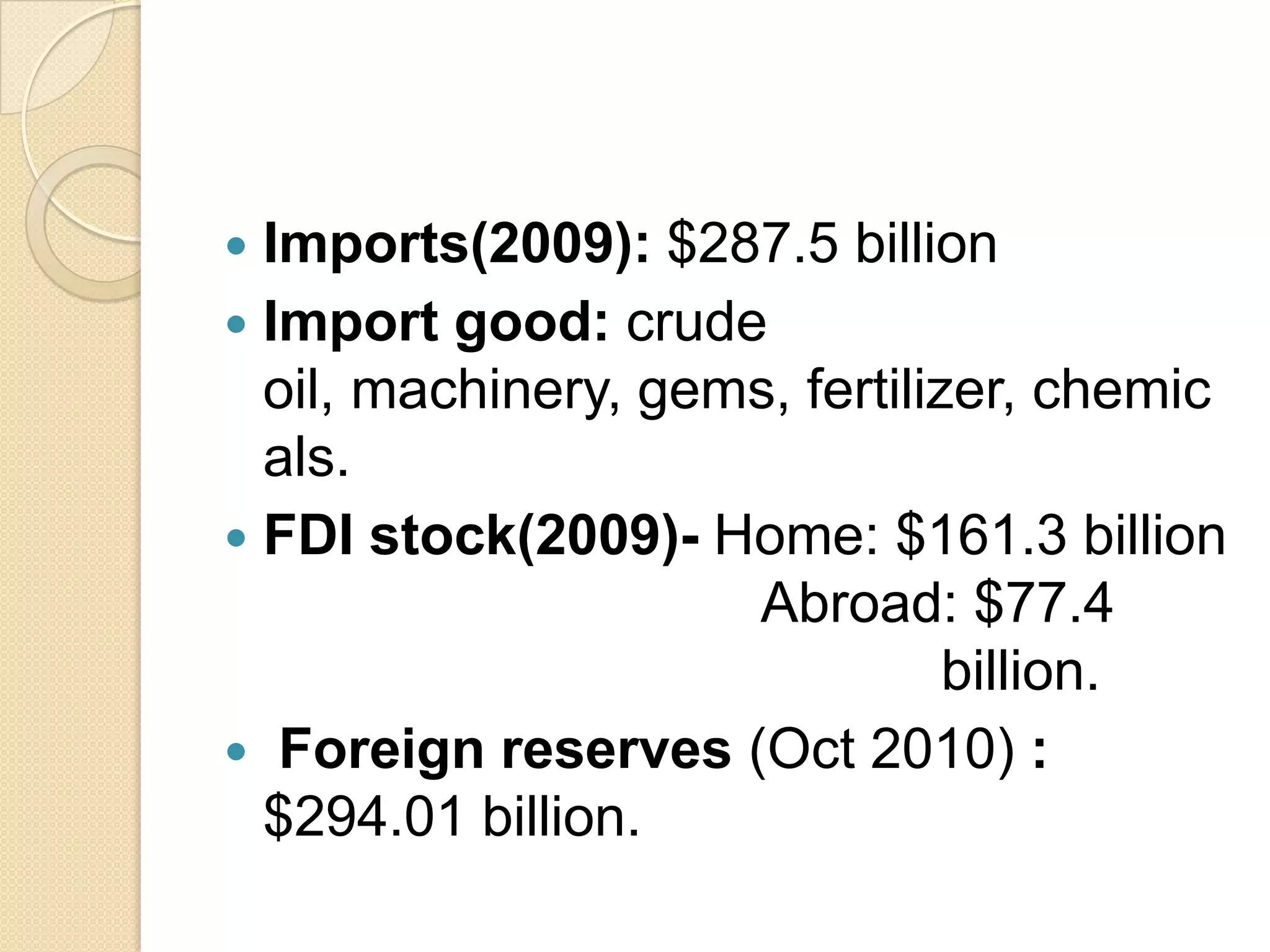
 Imports(2009): $287.5 billion
 Import good: crude
  oil, machinery, gems, fertilizer, chemic
  als.
 FDI stock(2009)- Home: $161.3 billion
                     Abroad: $77.4
                                billion.
 Foreign reserves (Oct 2010) :
  $294.01 billion.
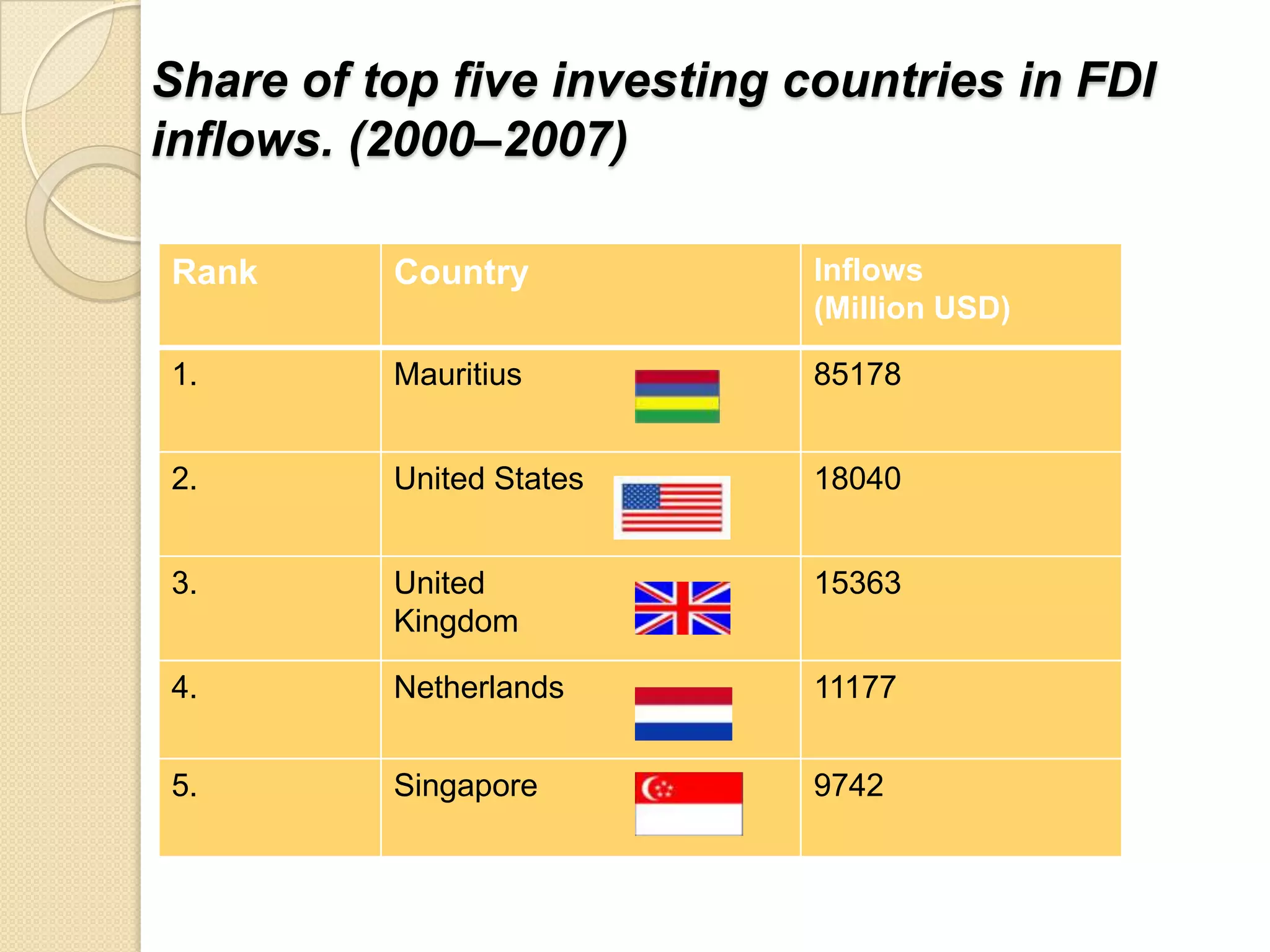
Share of top five investing countries in FDI
inflows. (2000–2007)

Rank      Country            Inflows
                             (Million USD)

1.        Mauritius          85178


2.        United States      18040


3.        United             15363
          Kingdom

4.        Netherlands        11177


5.        Singapore          9742
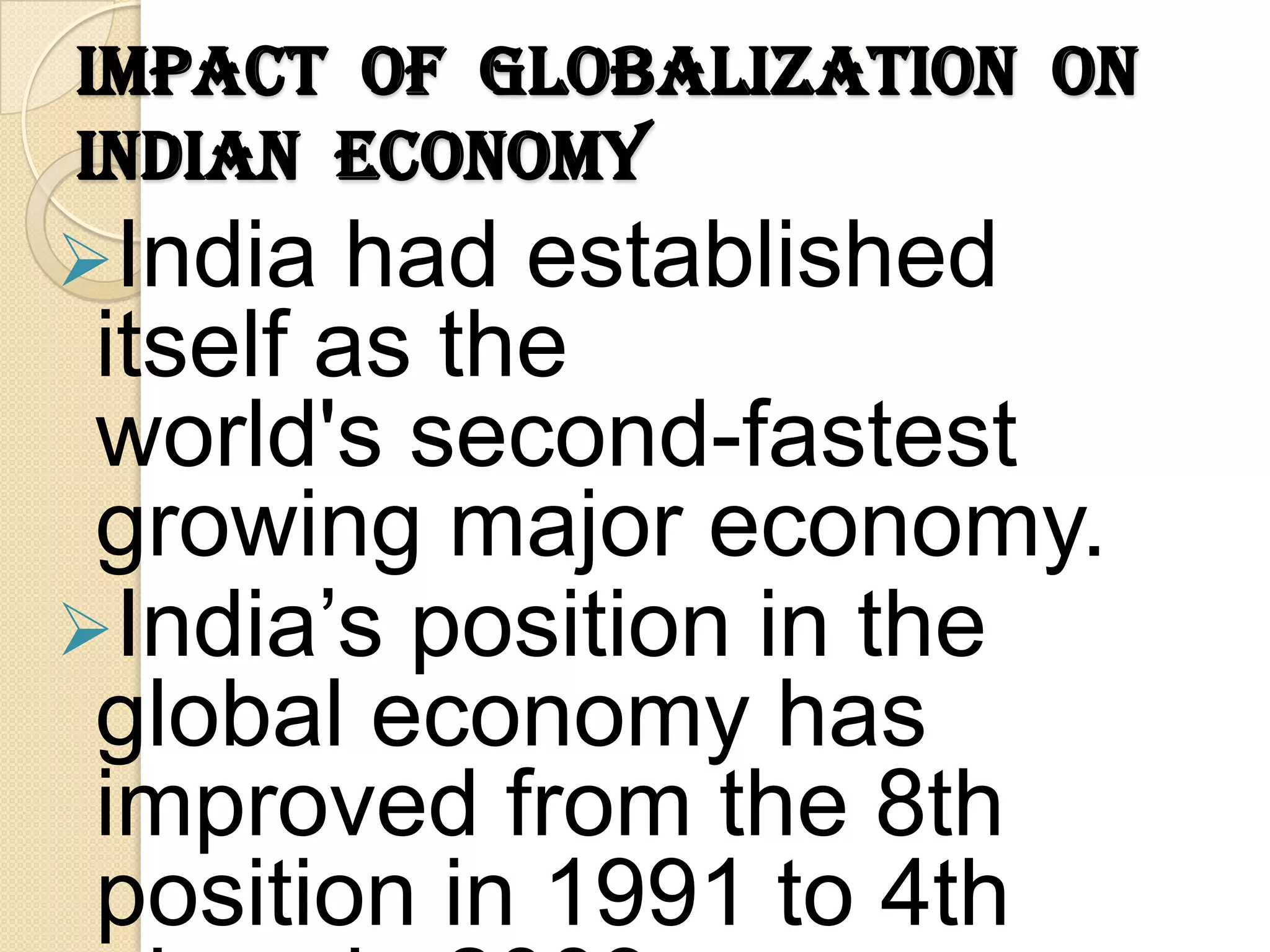
Impact of Globalization on
Indian Economy
India   had established
 itself as the
 world's second-fastest
 growing major economy.
India’s position in the
 global economy has
 improved from the 8th
 position in 1991 to 4th
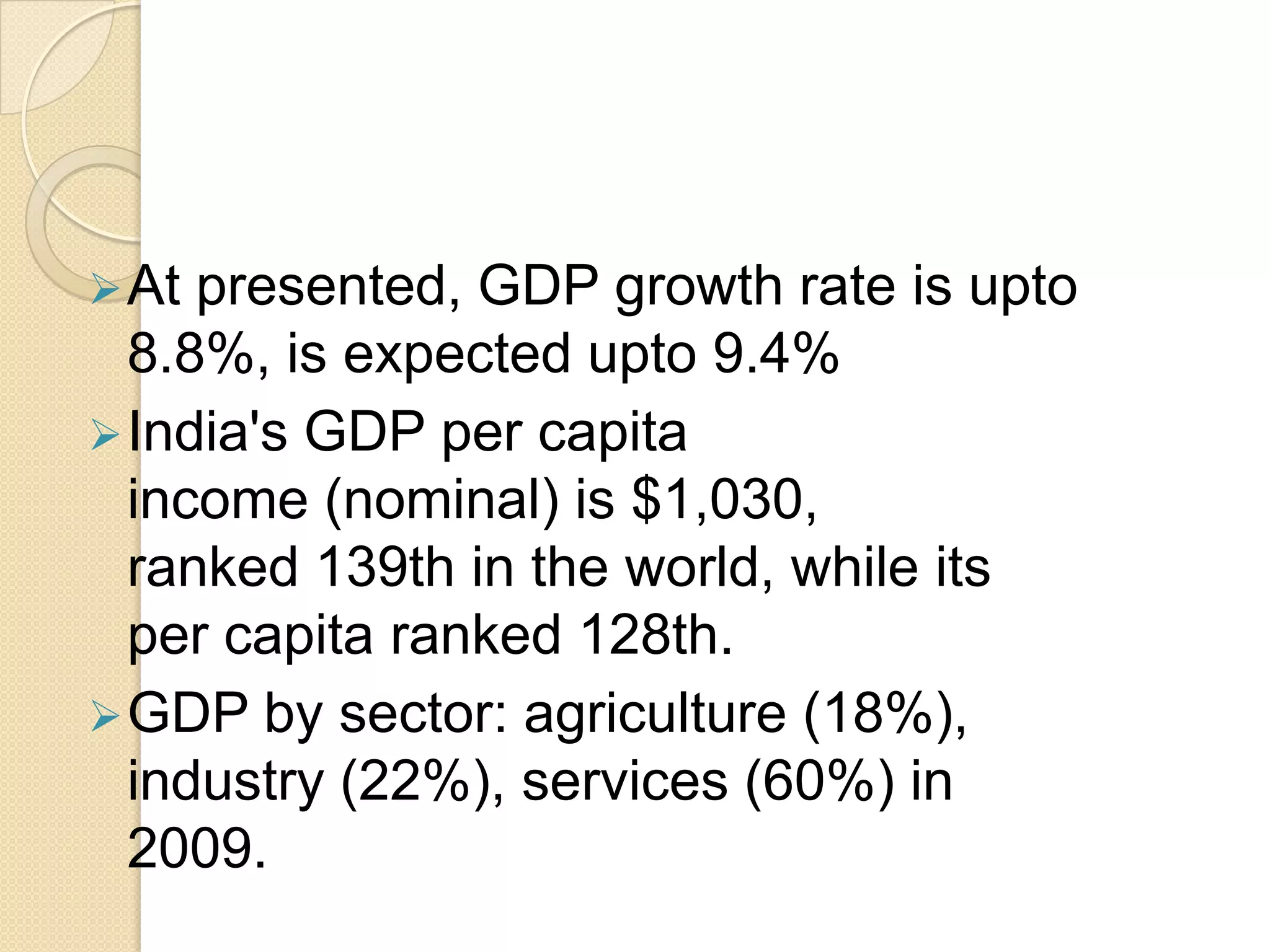
 At presented, GDP growth rate is upto
  8.8%, is expected upto 9.4%
 India's GDP per capita
  income (nominal) is $1,030,
  ranked 139th in the world, while its
  per capita ranked 128th.
 GDP by sector: agriculture (18%),
  industry (22%), services (60%) in
  2009.
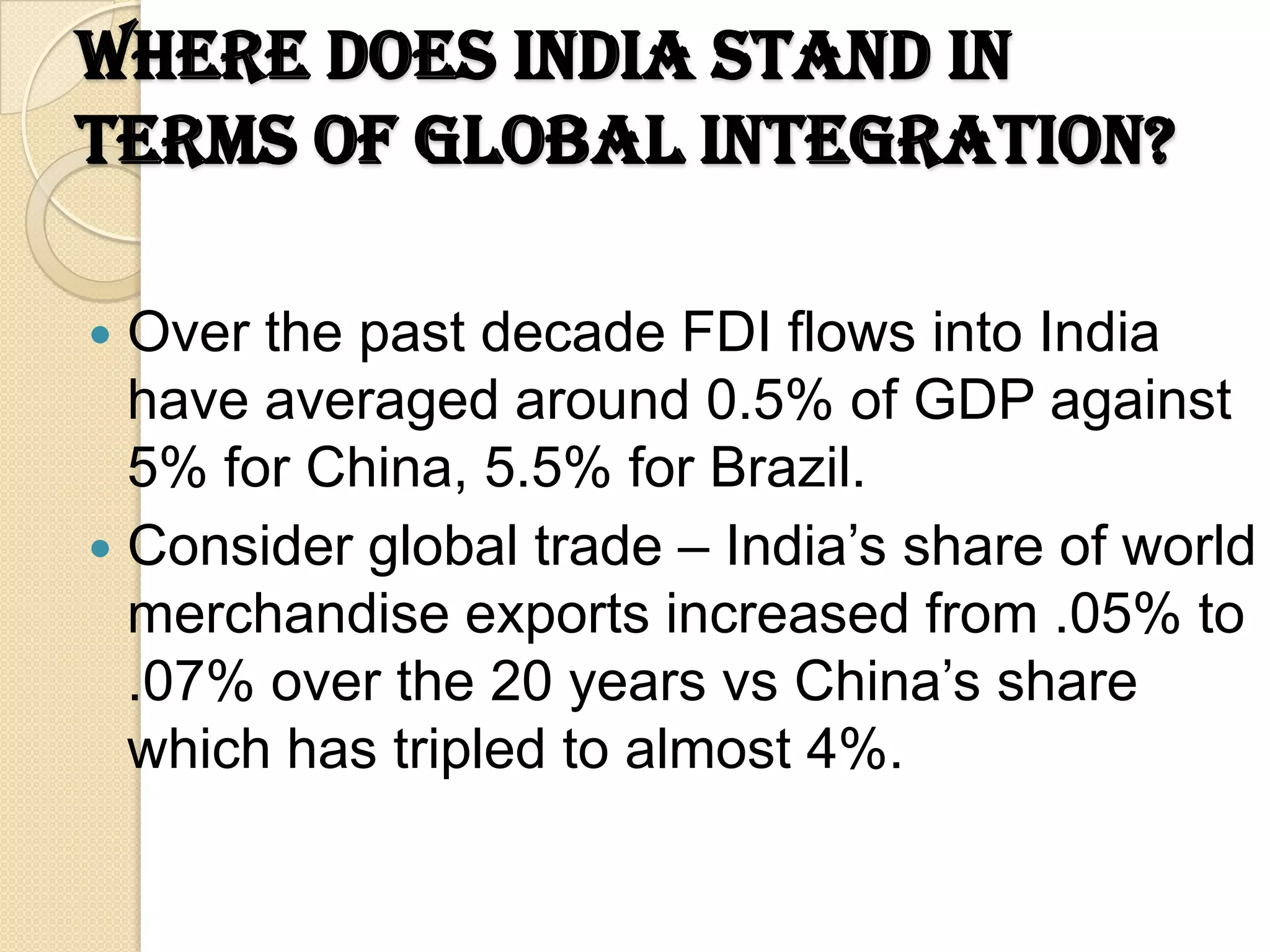
Where does India stand in
terms of Global Integration?

 Over the past decade FDI flows into India
  have averaged around 0.5% of GDP against
  5% for China, 5.5% for Brazil.
 Consider global trade – India’s share of world
  merchandise exports increased from .05% to
  .07% over the 20 years vs China’s share
  which has tripled to almost 4%.
Summary
 India gained highly from the LPG model as its
  GDP increased to 9.7% in 2007-2008.
 In respect of market capitalization, India
  ranks fourth in the world.
 But even after globalization, condition of
  agriculture has not improved. The share of
  agriculture in the GDP is only 18%. The
  number of landless families has increased
  and farmers are still committing suicide.
 But seeing the positive effects of
  globalization, it can be said that very soon
  India will overcome these hurdles too and
  march strongly on its path of development.
Globalization

Globalization

  • 1.
    GLOBALIZATION AND INDIA Presented By : Tanuj kumar Roll no. : 11101163 Haryana school of business
  • 2.
    Contents 1. Globalization and its definitions 2. Merits of globalization 3. Globalization impact on individual sector 4. Information about The Indian trade 5. Globalization impact on Indian Economy 6. Where does India stand in terms of Global Integration 7. Summary
  • 3.
    GLOBALISATION It refers to the increasing integration of economic around the world, particularly through trade and financial flows. The term sometimes also refers to the movement of people and knowledge across international borders.
  • 4.
    Definitions  The World Bank defines globalisation as the “Freedom and ability of individuals and firms to initiate voluntary economic transaction with residents of other
  • 6.
    merits  Encourage nationto reduce high levels of protection.  Increase trade volume.  Reduction of import duties.  Increase FDI.  Increase GDP.
  • 7.
    ADVANTAGE to aCOMPANY  Get access to more market.  Expand their organisation.  Increase the benefits.  Increase international trade.
  • 8.
    Globalization Impact on Individualsectors  Industry and services: 1. Business services (IT, BPO) are among the fastest growing sectors contributing to one third of the total output of services . 2. In March 2009, annual revenues from outsourcing operations in India amounted to US$60 billion and this is expected to increase to US$225 billion by 2020. 3. India is 16th in the world in terms of nominal factory output.
  • 9.
    .  Agriculture: 1. India ranks second worldwide in farm output. 2. India is the largest producer in the world of milk, coconuts, tea, ginger and black pepper. 3. It is the second largest producer of rice, wheat, cotton and groundnuts, the second largest fruit and vegetable producer, accounting for 10.9% and 8.6% of the world fruit and vegetable production respectively. 4. In 2008, India had the world's third largest fishing industry.
  • 10.
    Banking and finance: 1. The public sector banks hold over 75% of total assets of the banking industry, with the private and foreign banks holding 18.2% and 6.5% respectively. 2. More than half of personal savings are invested in physical assets such as land, houses and gold. India has the highest saving rate in the world at 36 percent.
  • 11.
    Indian trade  According to the World Trade States of the WTO in 2006, India's total merchandise trade (counting exports and imports) was valued at $294 billion in 2006 and India's services trade inclusive of export and import was $143 billion. India's trade has reached a still relatively moderate share 24% of GDP in 2006, up from 6% in 1985.  Exports(2009): $176.5 billion  Export goods: software, petroleum products, textile goods, jewelry, engineering goods, chemicals, leather .
  • 12.
     Imports(2009): $287.5billion  Import good: crude oil, machinery, gems, fertilizer, chemic als.  FDI stock(2009)- Home: $161.3 billion Abroad: $77.4 billion.  Foreign reserves (Oct 2010) : $294.01 billion.
  • 13.
    Share of topfive investing countries in FDI inflows. (2000–2007) Rank Country Inflows (Million USD) 1. Mauritius 85178 2. United States 18040 3. United 15363 Kingdom 4. Netherlands 11177 5. Singapore 9742
  • 14.
    Impact of Globalizationon Indian Economy India had established itself as the world's second-fastest growing major economy. India’s position in the global economy has improved from the 8th position in 1991 to 4th
  • 15.
     At presented,GDP growth rate is upto 8.8%, is expected upto 9.4%  India's GDP per capita income (nominal) is $1,030, ranked 139th in the world, while its per capita ranked 128th.  GDP by sector: agriculture (18%), industry (22%), services (60%) in 2009.
  • 16.
    Where does Indiastand in terms of Global Integration?  Over the past decade FDI flows into India have averaged around 0.5% of GDP against 5% for China, 5.5% for Brazil.  Consider global trade – India’s share of world merchandise exports increased from .05% to .07% over the 20 years vs China’s share which has tripled to almost 4%.
  • 17.
    Summary  India gainedhighly from the LPG model as its GDP increased to 9.7% in 2007-2008.  In respect of market capitalization, India ranks fourth in the world.  But even after globalization, condition of agriculture has not improved. The share of agriculture in the GDP is only 18%. The number of landless families has increased and farmers are still committing suicide.  But seeing the positive effects of globalization, it can be said that very soon India will overcome these hurdles too and march strongly on its path of development.