Globalization
Vlăduleanu Irina Elena
Grupa 8205
Coordinating teacher:
Mihai Daniel Frumușelu
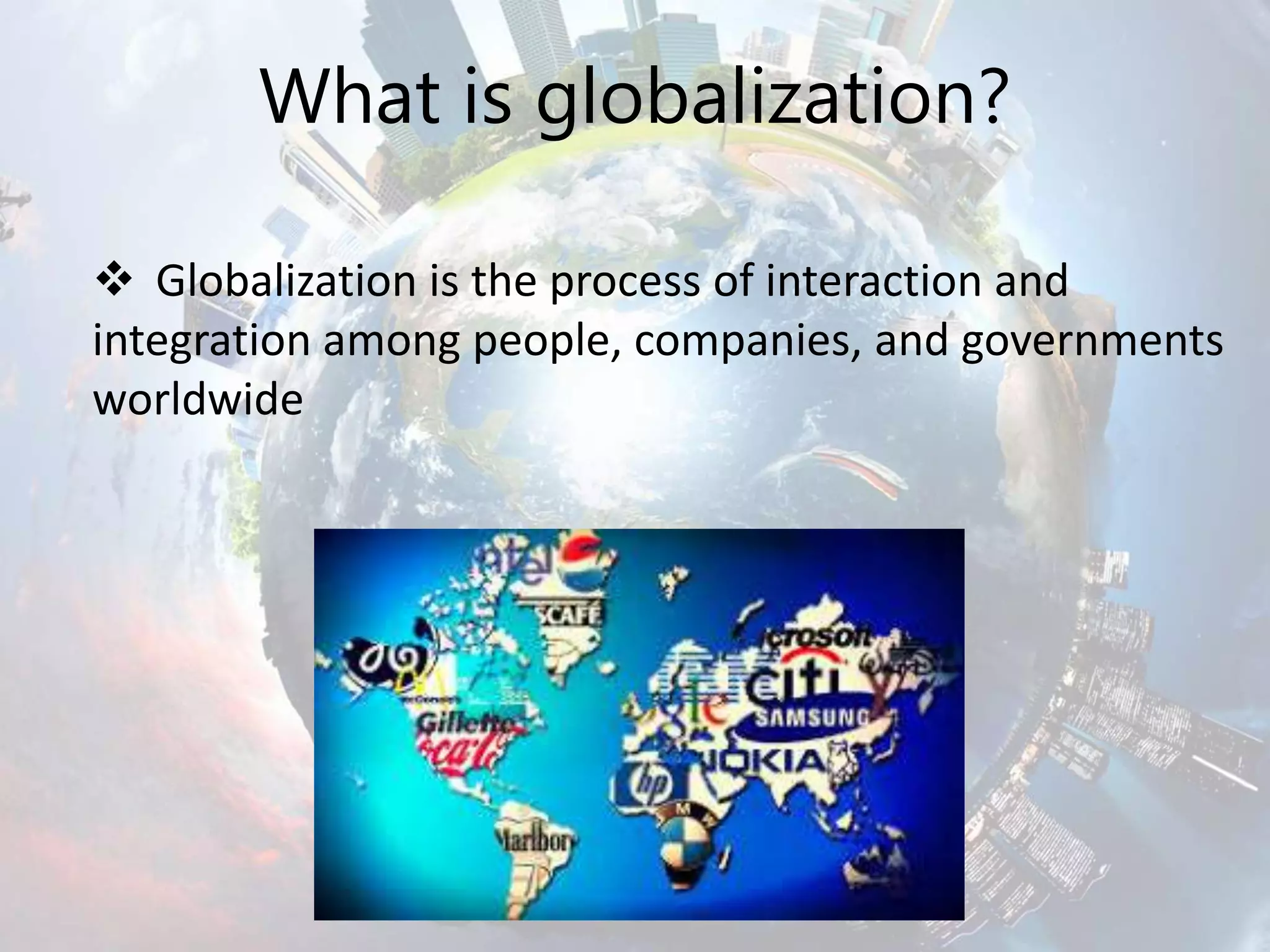
What is globalization?
 Globalization is the process of interaction and
integration among people, companies, and governments
worldwide
History
 Globalization is an historical process that
began with the first movement of people out of
Africa into other parts of the world.
 There are both distal and proximate causes
which can be traced in the historical factors
affecting globalization. Large-scale globalization
began in the 19th century.
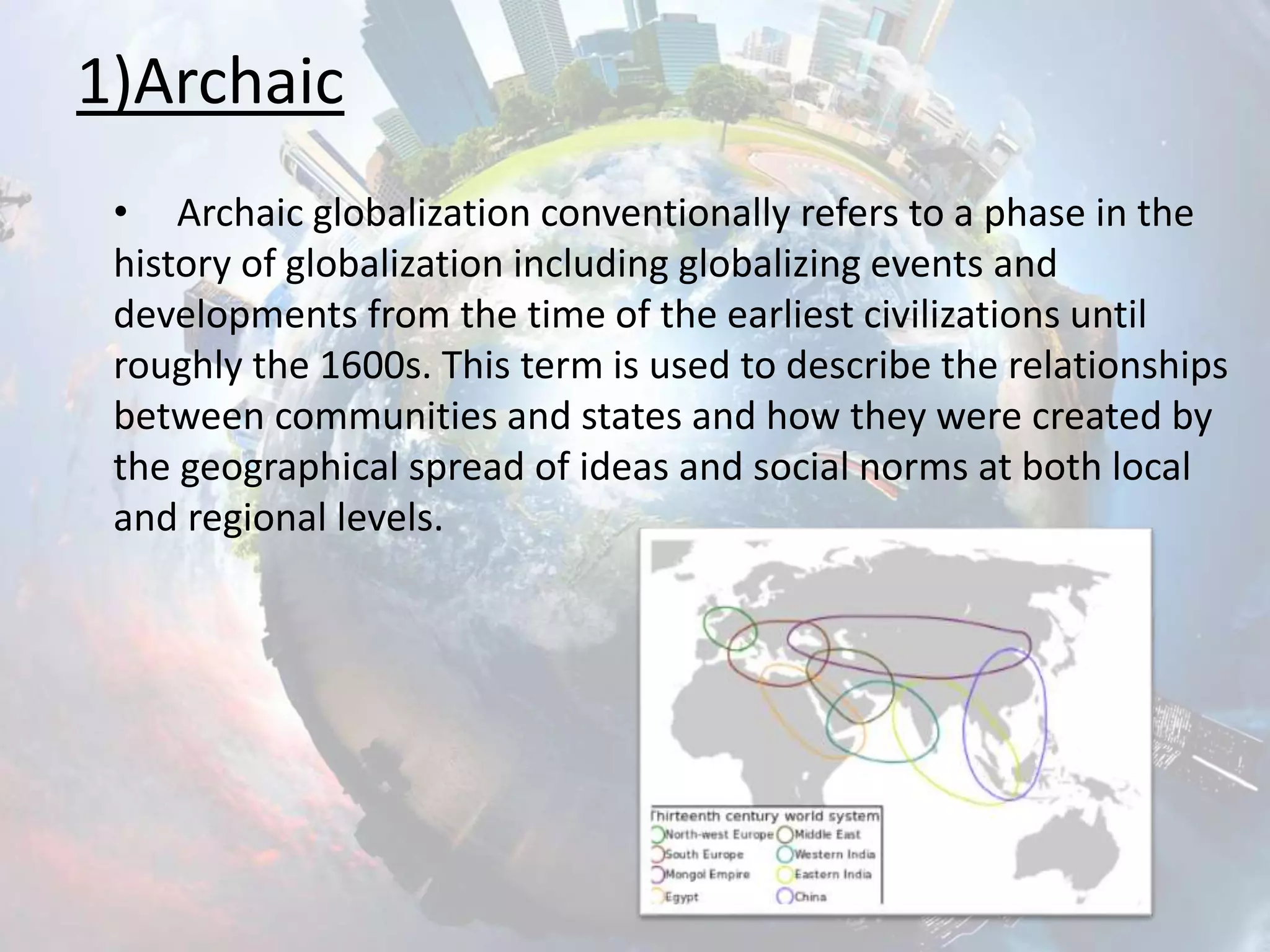
1)Archaic
• Archaic globalization conventionally refers to a phase in the
history of globalization including globalizing events and
developments from the time of the earliest civilizations until
roughly the 1600s. This term is used to describe the relationships
between communities and states and how they were created by
the geographical spread of ideas and social norms at both local
and regional levels.
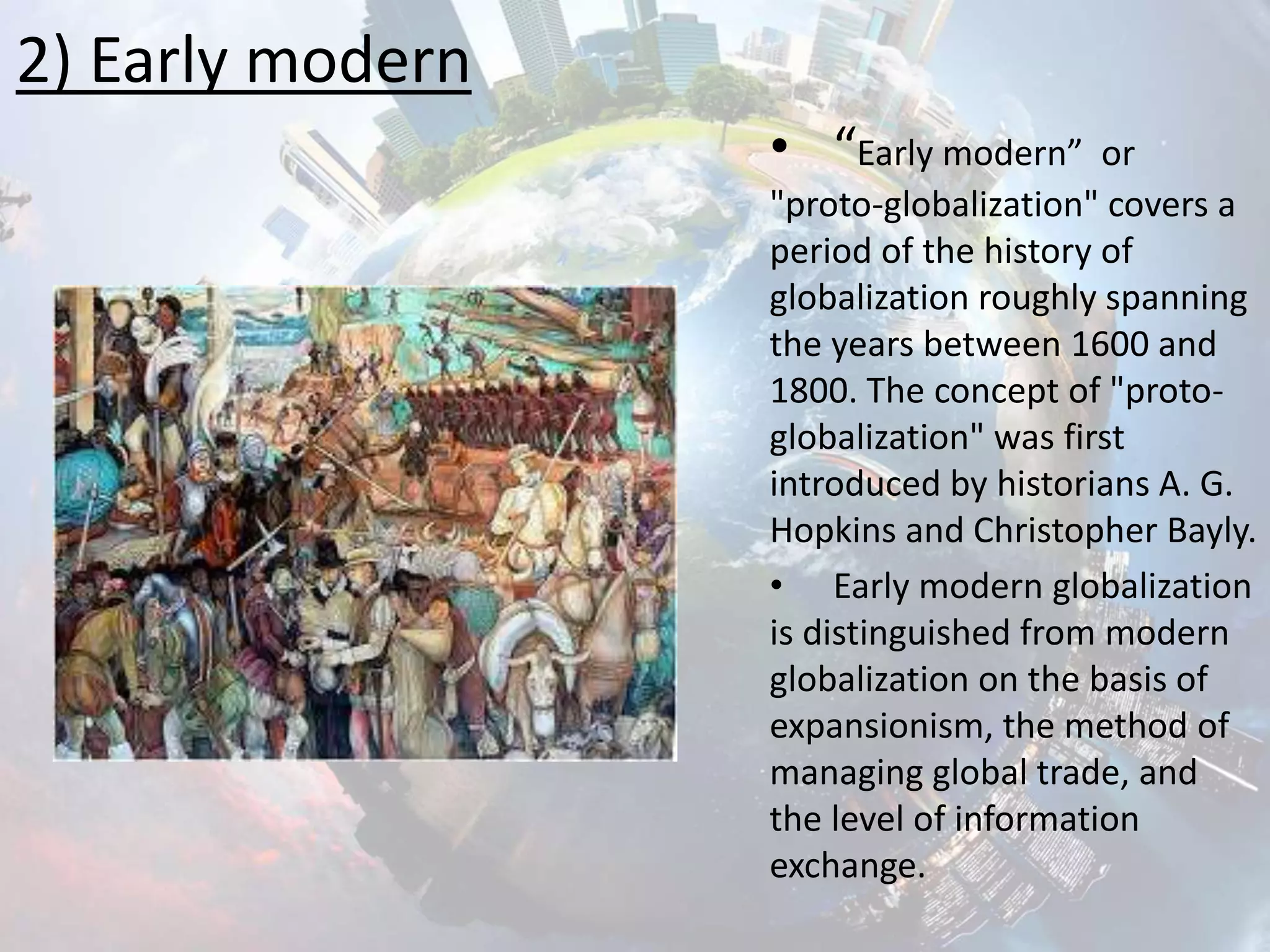
2) Early modern
• “Early modern” or
"proto-globalization" covers a
period of the history of
globalization roughly spanning
the years between 1600 and
1800. The concept of "proto-
globalization" was first
introduced by historians A. G.
Hopkins and Christopher Bayly.
• Early modern globalization
is distinguished from modern
globalization on the basis of
expansionism, the method of
managing global trade, and
the level of information
exchange.
3) Modern
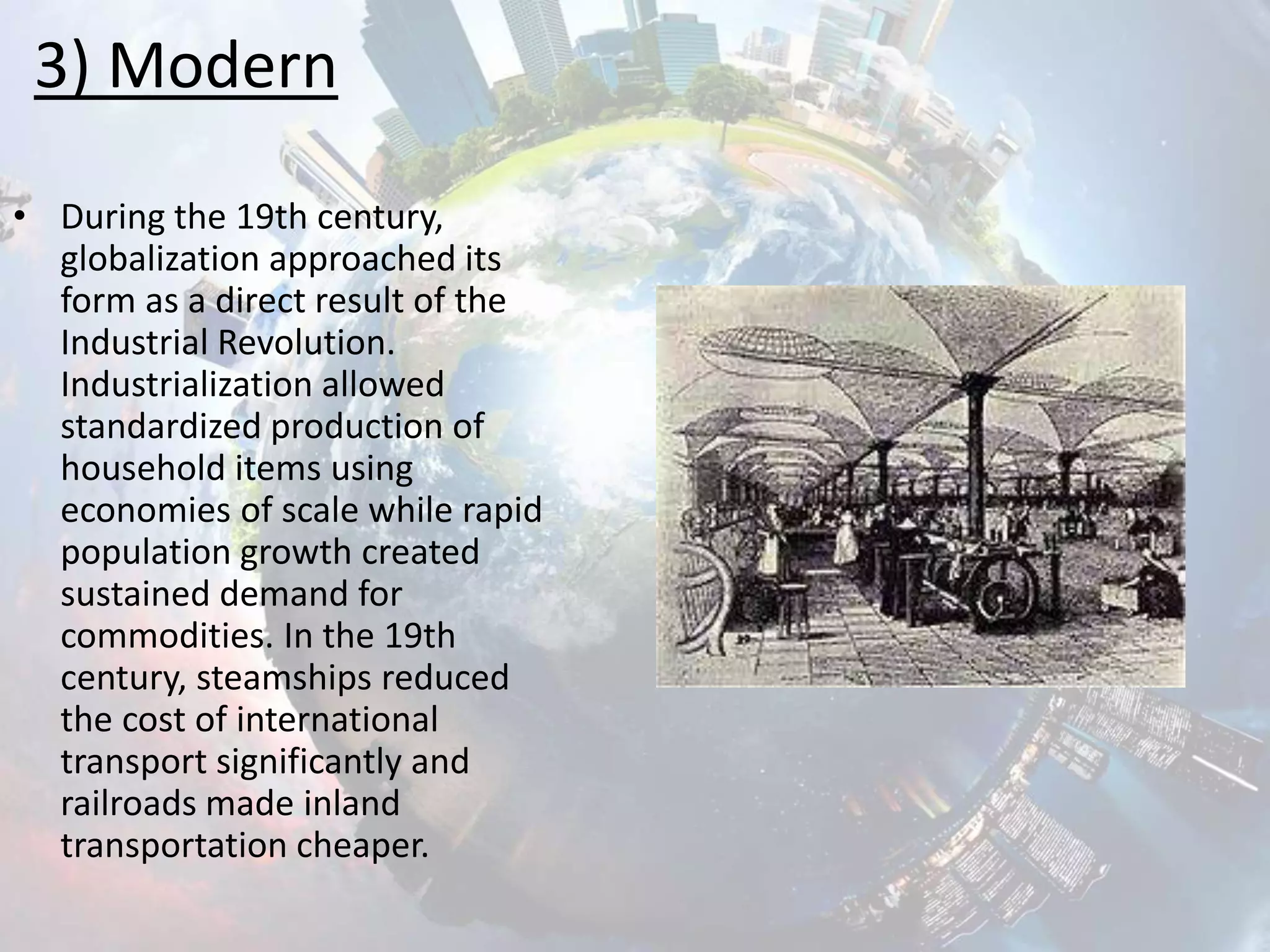
• During the 19th century,
globalization approached its
form as a direct result of the
Industrial Revolution.
Industrialization allowed
standardized production of
household items using
economies of scale while rapid
population growth created
sustained demand for
commodities. In the 19th
century, steamships reduced
the cost of international
transport significantly and
railroads made inland
transportation cheaper.
Economic globalization
 Economic globalization is the increasing economic
interdependence of national economies across the world
through a rapid increase in cross-border movement of goods,
services, technology, and capital.
 Whereas the globalization of business is centered around the
diminution of international trade regulations as well as tariffs,
taxes, and other impediments that suppresses global trade,
economic globalization is the process of increasing economic
integration between countries, leading to the emergence of a
global marketplace or a single world market.
Movement of information
 Before electronic communications, long-distance
communications relied on mail. Speed of global
communications was limited by the maximum speed
of courier services (especially horses and ships) until
the mid-19th century.
The electric telegraph was
the first method of instant long-
distance communication.
• The Internet has been instrumental in connecting people
across geographical boundaries. For example, Facebook is a
social networking service which has more than 1.65 billion
monthly active users as of 31 March 2016
2005 2010 2017
Africa 2% 10% 21.8%
Americas 36% 49% 65.9%
Arab States 8% 26% 43.7%
Asia and Pacific 9% 23% 43.9%
Commonwealth of
Independent States 10% 34% 67.7%
Europe 46% 67% 79.6%
Internet users by region
Bibliography
https://en.wikipedia.org/wiki/Globalization
https://piie.com/microsites/globalization/wha
t-is-globalization.html
https://www.globalpolicy.org/globalization.ht
ml

Globalization

  • 1.
    Globalization Vlăduleanu Irina Elena Grupa8205 Coordinating teacher: Mihai Daniel Frumușelu
  • 2.
    What is globalization? Globalization is the process of interaction and integration among people, companies, and governments worldwide
  • 3.
    History  Globalization isan historical process that began with the first movement of people out of Africa into other parts of the world.  There are both distal and proximate causes which can be traced in the historical factors affecting globalization. Large-scale globalization began in the 19th century.
  • 4.
    1)Archaic • Archaic globalizationconventionally refers to a phase in the history of globalization including globalizing events and developments from the time of the earliest civilizations until roughly the 1600s. This term is used to describe the relationships between communities and states and how they were created by the geographical spread of ideas and social norms at both local and regional levels.
  • 5.
    2) Early modern •“Early modern” or "proto-globalization" covers a period of the history of globalization roughly spanning the years between 1600 and 1800. The concept of "proto- globalization" was first introduced by historians A. G. Hopkins and Christopher Bayly. • Early modern globalization is distinguished from modern globalization on the basis of expansionism, the method of managing global trade, and the level of information exchange.
  • 6.
    3) Modern • Duringthe 19th century, globalization approached its form as a direct result of the Industrial Revolution. Industrialization allowed standardized production of household items using economies of scale while rapid population growth created sustained demand for commodities. In the 19th century, steamships reduced the cost of international transport significantly and railroads made inland transportation cheaper.
  • 7.
    Economic globalization  Economicglobalization is the increasing economic interdependence of national economies across the world through a rapid increase in cross-border movement of goods, services, technology, and capital.  Whereas the globalization of business is centered around the diminution of international trade regulations as well as tariffs, taxes, and other impediments that suppresses global trade, economic globalization is the process of increasing economic integration between countries, leading to the emergence of a global marketplace or a single world market.
  • 9.
    Movement of information Before electronic communications, long-distance communications relied on mail. Speed of global communications was limited by the maximum speed of courier services (especially horses and ships) until the mid-19th century. The electric telegraph was the first method of instant long- distance communication.
  • 10.
    • The Internethas been instrumental in connecting people across geographical boundaries. For example, Facebook is a social networking service which has more than 1.65 billion monthly active users as of 31 March 2016 2005 2010 2017 Africa 2% 10% 21.8% Americas 36% 49% 65.9% Arab States 8% 26% 43.7% Asia and Pacific 9% 23% 43.9% Commonwealth of Independent States 10% 34% 67.7% Europe 46% 67% 79.6% Internet users by region
  • 11.