What Is ‘Global Climate’?
Climate is a trend of temperature and weather in a place or area over a long period
of time.
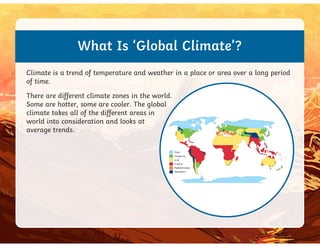
There are different climate zones in the world.
Some are hotter, some are cooler. The global
climate takes all of the different areas in
world into consideration and looks at
average trends.
What Is Global Warming?
Global warming is part of climate change and is concerned with
the rising temperatures of the global climate.
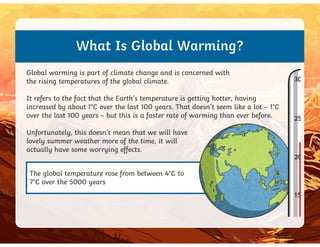
It refers to the fact that the Earth’s temperature is getting hotter, having
increased by about 1°C over the last 100 years. That doesn’t seem like a lot – 1°C
over the last 100 years – but this is a faster rate of warming than ever before.
The global temperature rose from between 4°C to
7°C over the 5000 years
Unfortunately, this doesn’t mean that we will have
lovely summer weather more of the time, it will
actually have some worrying effects.
Haven’t Temperatures Always Changed?
Yes, Earth has moved gradually between glacial events (lots of ice) and
interglacial periods (warmer weather) over time.
A whole section of glacial events and interglacial periods of time is called an ice
age. We are actually in an interglacial time now.
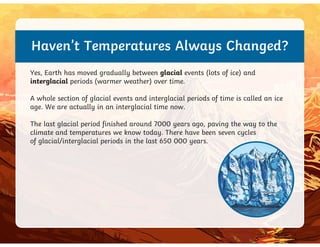
The last glacial period finished around 7000 years ago, paving the way to the
climate and temperatures we know today. There have been seven cycles
of glacial/interglacial periods in the last 650 000 years.
What Is Different about This Temperature Change?
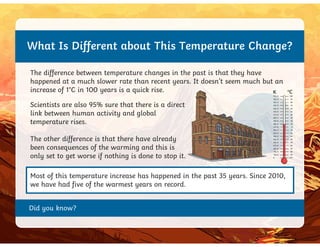
The difference between temperature changes in the past is that they have
happened at a much slower rate than recent years. It doesn’t seem much but an
increase of 1°C in 100 years is a quick rise.
Scientists are also 95% sure that there is a direct
link between human activity and global
temperature rises.
Did you know?
temperature rises.
The other difference is that there have already
been consequences of the warming and this is
only set to get worse if nothing is done to stop it.
Most of this temperature increase has happened in the past 35 years. Since 2010,
we have had five of the warmest years on record.
What Is Causing the Warming?
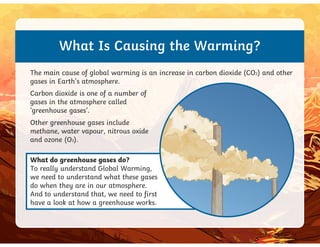
The main cause of global warming is an increase in carbon dioxide (CO2) and other
gases in Earth’s atmosphere.
Other greenhouse gases include
Carbon dioxide is one of a number of
gases in the atmosphere called
‘greenhouse gases’.
What do greenhouse gases do?
To really understand Global Warming,
we need to understand what these gases
do when they are in our atmosphere.
And to understand that, we need to first
have a look at how a greenhouse works.
Other greenhouse gases include
methane, water vapour, nitrous oxide
and ozone (O3).
The Greenhouse Effect
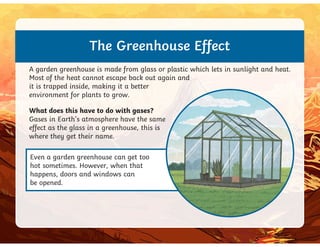
A garden greenhouse is made from glass or plastic which lets in sunlight and heat.
Most of the heat cannot escape back out again and
it is trapped inside, making it a better
environment for plants to grow.
What does this have to do with gases?
Gases in Earth’s atmosphere have the same
effect as the glass in a greenhouse, this is
Even a garden greenhouse can get too
hot sometimes. However, when that
happens, doors and windows can
be opened.
Gases in Earth’s atmosphere have the same
effect as the glass in a greenhouse, this is
where they get their name.
Greenhouse Gases at Work
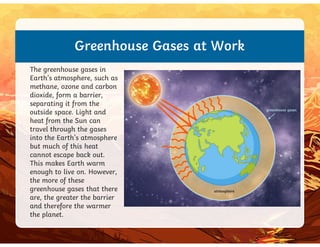
The greenhouse gases in
Earth’s atmosphere, such as
methane, ozone and carbon
dioxide, form a barrier,
separating it from the
outside space. Light and
heat from the Sun can
travel through the gases
into the Earth’s atmosphere
but much of this heat
cannot escape back out.
This makes Earth warm
enough to live on. However,
the more of these
greenhouse gases that there
are, the greater the barrier
and therefore the warmer
the planet.

Global warming pp1 notes grade 4 questions and ans

  • 2.
    What Is ‘GlobalClimate’? Climate is a trend of temperature and weather in a place or area over a long period of time. There are different climate zones in the world. Some are hotter, some are cooler. The global climate takes all of the different areas in world into consideration and looks at world into consideration and looks at average trends.
  • 3.
    What Is GlobalWarming? Global warming is part of climate change and is concerned with the rising temperatures of the global climate. It refers to the fact that the Earth’s temperature is getting hotter, having increased by about 1°C over the last 100 years. That doesn’t seem like a lot – 1°C over the last 100 years – but this is a faster rate of warming than ever before. The global temperature rose from between 4°C to 7°C over the 5000 years Unfortunately, this doesn’t mean that we will have lovely summer weather more of the time, it will actually have some worrying effects.
  • 4.
    Haven’t Temperatures AlwaysChanged? Yes, Earth has moved gradually between glacial events (lots of ice) and interglacial periods (warmer weather) over time. A whole section of glacial events and interglacial periods of time is called an ice age. We are actually in an interglacial time now. The last glacial period finished around 7000 years ago, paving the way to the The last glacial period finished around 7000 years ago, paving the way to the climate and temperatures we know today. There have been seven cycles of glacial/interglacial periods in the last 650 000 years.
  • 5.
    What Is Differentabout This Temperature Change? The difference between temperature changes in the past is that they have happened at a much slower rate than recent years. It doesn’t seem much but an increase of 1°C in 100 years is a quick rise. Scientists are also 95% sure that there is a direct link between human activity and global temperature rises. Did you know? temperature rises. The other difference is that there have already been consequences of the warming and this is only set to get worse if nothing is done to stop it. Most of this temperature increase has happened in the past 35 years. Since 2010, we have had five of the warmest years on record.
  • 6.
    What Is Causingthe Warming? The main cause of global warming is an increase in carbon dioxide (CO2) and other gases in Earth’s atmosphere. Other greenhouse gases include Carbon dioxide is one of a number of gases in the atmosphere called ‘greenhouse gases’. What do greenhouse gases do? To really understand Global Warming, we need to understand what these gases do when they are in our atmosphere. And to understand that, we need to first have a look at how a greenhouse works. Other greenhouse gases include methane, water vapour, nitrous oxide and ozone (O3).
  • 7.
    The Greenhouse Effect Agarden greenhouse is made from glass or plastic which lets in sunlight and heat. Most of the heat cannot escape back out again and it is trapped inside, making it a better environment for plants to grow. What does this have to do with gases? Gases in Earth’s atmosphere have the same effect as the glass in a greenhouse, this is Even a garden greenhouse can get too hot sometimes. However, when that happens, doors and windows can be opened. Gases in Earth’s atmosphere have the same effect as the glass in a greenhouse, this is where they get their name.
  • 8.
    Greenhouse Gases atWork The greenhouse gases in Earth’s atmosphere, such as methane, ozone and carbon dioxide, form a barrier, separating it from the outside space. Light and heat from the Sun can heat from the Sun can travel through the gases into the Earth’s atmosphere but much of this heat cannot escape back out. This makes Earth warm enough to live on. However, the more of these greenhouse gases that there are, the greater the barrier and therefore the warmer the planet.