Chapter 6
“Greenhouse effect &
Global warming”
1
Palwasha Khattak
Environmental science
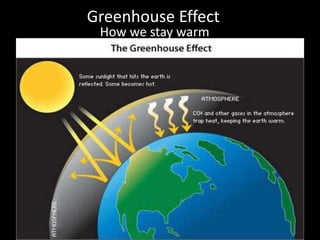
Greenhouse Effect
How we stay warm
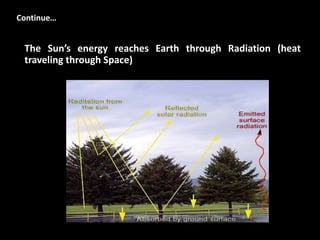
The Sun’s energy reaches Earth through Radiation (heat
traveling through Space)
Continue…
Continue…
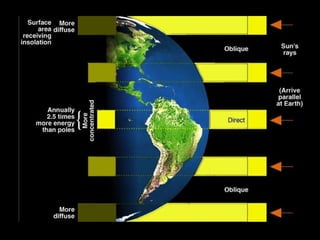
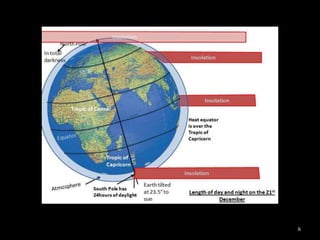
• Insolation is the solar radiation that reaches the earth's
surface. It is measured by the amount of solar energy received
per square centimeter per minute. Insolation affects
temperature. The more the insolation, the higher the
temperature.
4
6
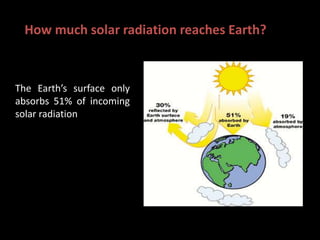
How much solar radiation reaches Earth?
The Earth’s surface only
absorbs 51% of incoming
solar radiation
Greenhouse Effect
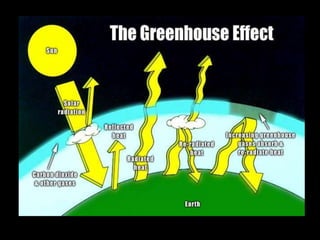
• The process by which atmosphere gases absorb heat energy
from the sun and prevent heat from leaving our atmosphere.
• In other words, greenhouse gases trap heat energy and keep it
close to earth.
• The primary greenhouse gases in Earth's atmosphere are water
vapor, carbon dioxide, methane, nitrous oxide, and ozone.
Selected Greenhouse Gases
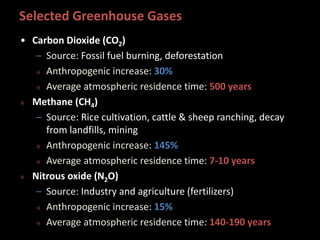
• Carbon Dioxide (CO2)
– Source: Fossil fuel burning, deforestation
 Anthropogenic increase: 30%
 Average atmospheric residence time: 500 years
 Methane (CH4)
– Source: Rice cultivation, cattle & sheep ranching, decay
from landfills, mining
 Anthropogenic increase: 145%
 Average atmospheric residence time: 7-10 years
 Nitrous oxide (N2O)
– Source: Industry and agriculture (fertilizers)
 Anthropogenic increase: 15%
 Average atmospheric residence time: 140-190 years
Summary
• Greenhouse gases absorb infrared radiation and
prevent it from escaping to space.
• Carbon dioxide, methane, and nitrous oxide are
very good at capturing energy at wavelengths
that other compounds.
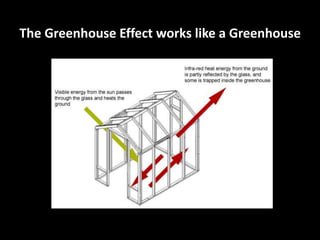
The Greenhouse Effect works like a Greenhouse
Is the Greenhouse Effect Good or Bad?
• It is necessary for life (good)- it keeps our climate
toasty warm and prevents it from fluctuating
(changing) too much.
• It is bad when: there are too many greenhouse
gasses and the climate gets warmer (global
warming)
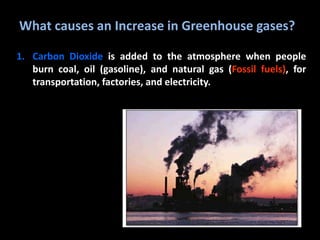
What causes an Increase in Greenhouse gases?
1. Carbon Dioxide is added to the atmosphere when people
burn coal, oil (gasoline), and natural gas (Fossil fuels), for
transportation, factories, and electricity.
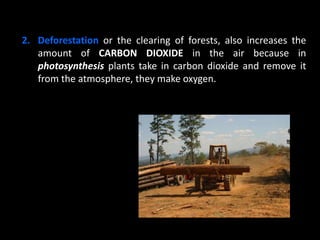
2. Deforestation or the clearing of forests, also increases the
amount of CARBON DIOXIDE in the air because in
photosynthesis plants take in carbon dioxide and remove it
from the atmosphere, they make oxygen.
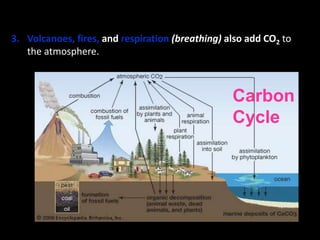
3. Volcanoes, fires, and respiration (breathing) also add CO2 to
the atmosphere.
Carbon
Cycle
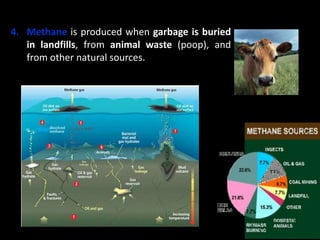
4. Methane is produced when garbage is buried
in landfills, from animal waste (poop), and
from other natural sources.
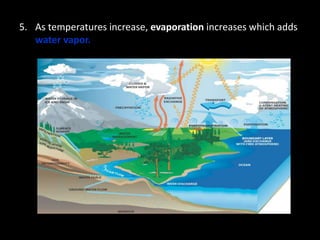
5. As temperatures increase, evaporation increases which adds
water vapor.
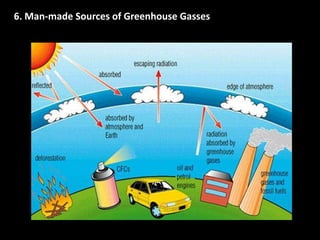
6. Man-made Sources of Greenhouse Gasses
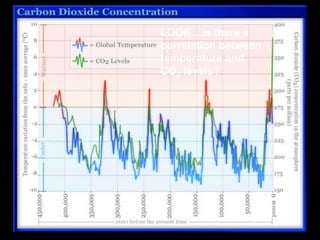
LOOK…Is there a
correlation between
temperature and
CO2 levels?
What is Global Warming?
• An increase in average global temperatures
• It is caused by an increase in Greenhouse Gases in the
Atmosphere.
Greenhouse Effect & Global Warming
• The “greenhouse effect” & global warming are
not the same thing.
– Global warming refers to a rise in the
temperature of the surface of the earth
• An increase in the concentration of greenhouse
gases leads to an increase in the magnitude of the
greenhouse effect (called enhanced greenhouse
effect).
– This results in global warming
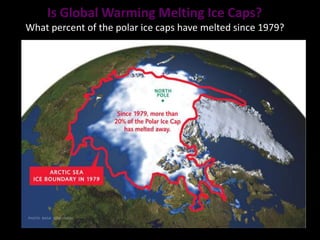
Is Global Warming Melting Ice Caps?
What percent of the polar ice caps have melted since 1979?
• Melting polar icecaps will raise ocean levels; the
Arctic Ocean could be ice free in summer by 2050.
Global warming:
• Heat waves, droughts, and wildfires will be more
frequent.
• More than a million species worldwide could be
extinct by 2050.
• Global sea levels could rise by more than 20 feet,
devastating coastal areas worldwide.
24
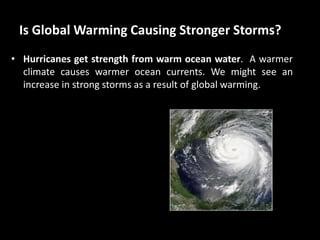
Is Global Warming Causing Stronger Storms?
• Hurricanes get strength from warm ocean water. A warmer
climate causes warmer ocean currents. We might see an
increase in strong storms as a result of global warming.
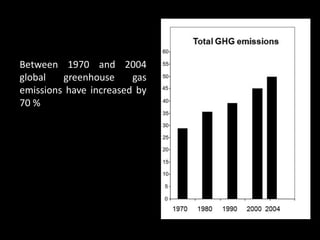
Between 1970 and 2004
global greenhouse gas
emissions have increased by
70 %
27
• From 1971 to 2005 CO2 vehicle emissions rose from 1.8
billion tons per year to 4.6 billion tons per year.
• The average global air temperature rose between 0.5 and
0.74 degrees C during the past century.
• An average 2 degrees C warming is predicted by 2100.
• Sea level has risen between 10 to 25 cm in the last 100 years.
Some Facts

Chapter 6 -Greenhouse effect and Global warming.pptx

  • 1.
    Chapter 6 “Greenhouse effect& Global warming” 1 Palwasha Khattak Environmental science
  • 2.
  • 3.
    The Sun’s energyreaches Earth through Radiation (heat traveling through Space) Continue…
  • 4.
    Continue… • Insolation isthe solar radiation that reaches the earth's surface. It is measured by the amount of solar energy received per square centimeter per minute. Insolation affects temperature. The more the insolation, the higher the temperature. 4
  • 6.
  • 7.
    How much solarradiation reaches Earth? The Earth’s surface only absorbs 51% of incoming solar radiation
  • 8.
    Greenhouse Effect • Theprocess by which atmosphere gases absorb heat energy from the sun and prevent heat from leaving our atmosphere. • In other words, greenhouse gases trap heat energy and keep it close to earth. • The primary greenhouse gases in Earth's atmosphere are water vapor, carbon dioxide, methane, nitrous oxide, and ozone.
  • 10.
    Selected Greenhouse Gases •Carbon Dioxide (CO2) – Source: Fossil fuel burning, deforestation  Anthropogenic increase: 30%  Average atmospheric residence time: 500 years  Methane (CH4) – Source: Rice cultivation, cattle & sheep ranching, decay from landfills, mining  Anthropogenic increase: 145%  Average atmospheric residence time: 7-10 years  Nitrous oxide (N2O) – Source: Industry and agriculture (fertilizers)  Anthropogenic increase: 15%  Average atmospheric residence time: 140-190 years
  • 11.
    Summary • Greenhouse gasesabsorb infrared radiation and prevent it from escaping to space. • Carbon dioxide, methane, and nitrous oxide are very good at capturing energy at wavelengths that other compounds.
  • 12.
    The Greenhouse Effectworks like a Greenhouse
  • 13.
    Is the GreenhouseEffect Good or Bad? • It is necessary for life (good)- it keeps our climate toasty warm and prevents it from fluctuating (changing) too much. • It is bad when: there are too many greenhouse gasses and the climate gets warmer (global warming)
  • 14.
    What causes anIncrease in Greenhouse gases? 1. Carbon Dioxide is added to the atmosphere when people burn coal, oil (gasoline), and natural gas (Fossil fuels), for transportation, factories, and electricity.
  • 15.
    2. Deforestation orthe clearing of forests, also increases the amount of CARBON DIOXIDE in the air because in photosynthesis plants take in carbon dioxide and remove it from the atmosphere, they make oxygen.
  • 16.
    3. Volcanoes, fires,and respiration (breathing) also add CO2 to the atmosphere. Carbon Cycle
  • 17.
    4. Methane isproduced when garbage is buried in landfills, from animal waste (poop), and from other natural sources.
  • 18.
    5. As temperaturesincrease, evaporation increases which adds water vapor.
  • 19.
    6. Man-made Sourcesof Greenhouse Gasses
  • 20.
    LOOK…Is there a correlationbetween temperature and CO2 levels?
  • 21.
    What is GlobalWarming? • An increase in average global temperatures • It is caused by an increase in Greenhouse Gases in the Atmosphere.
  • 22.
    Greenhouse Effect &Global Warming • The “greenhouse effect” & global warming are not the same thing. – Global warming refers to a rise in the temperature of the surface of the earth • An increase in the concentration of greenhouse gases leads to an increase in the magnitude of the greenhouse effect (called enhanced greenhouse effect). – This results in global warming
  • 23.
    Is Global WarmingMelting Ice Caps? What percent of the polar ice caps have melted since 1979?
  • 24.
    • Melting polaricecaps will raise ocean levels; the Arctic Ocean could be ice free in summer by 2050. Global warming: • Heat waves, droughts, and wildfires will be more frequent. • More than a million species worldwide could be extinct by 2050. • Global sea levels could rise by more than 20 feet, devastating coastal areas worldwide. 24
  • 25.
    Is Global WarmingCausing Stronger Storms? • Hurricanes get strength from warm ocean water. A warmer climate causes warmer ocean currents. We might see an increase in strong storms as a result of global warming.
  • 26.
    Between 1970 and2004 global greenhouse gas emissions have increased by 70 %
  • 27.
    27 • From 1971to 2005 CO2 vehicle emissions rose from 1.8 billion tons per year to 4.6 billion tons per year. • The average global air temperature rose between 0.5 and 0.74 degrees C during the past century. • An average 2 degrees C warming is predicted by 2100. • Sea level has risen between 10 to 25 cm in the last 100 years. Some Facts